


NASA explains why you won’t get a drone delivery anytime soon

Delivery drones are great at exactly one job right now: generating buzz. However, NASA has told the New York Times that actual widget-shipping drones from Amazon or Google are still far in the future. And the space agency should know: it has taken on the task of developing an “air traffic control” (ATC) system for drones flying below 400 feet. Such a system would be run by computers without human aid, and take into account weather, air traffic, geographic obstacles and other factors. The space agency is quite familiar with existing air traffic issues, as it has been advising the FAA on the NextGen system for “real” planes. Armed with that know-how, it sees a number of problems for UAV couriers.
For one, a decent gust could easily push a drone into a building and crash it, so tracking weather would be a must, adding a layer of complexity. Maintaining separation between low-flying drones and obstacles and manned air traffic would also be tricky, especially in urban areas. Though Google and other companies have proposed obstacle avoidance systems for drones, we haven’t seen any plans to tie it into the ATC system. And drones would have to fly within the existing system in order to avoid no-fly zones, airports and other classified airspace. Finally, there’s the acceptance issue. As one researcher put it, they’ll need to operate in the “presence of a grandma doing landscaping and kids playing soccer” — meaning noise and safety will be strong factors. The FAA will also have to be sure they can’t be commandeered by “rogue elements” for illicit or dangerous purposes.
On the other hand, NASA is optimistic about commercial drones in lightly populated areas. It sees drones doing crop or pipeline inspections, two jobs that have already been partially authorized by the FAA. However, NASA thinks it’ll take at least five years before remote deliveries over sparsely populated areas happen. And deliveries to densely populated areas — necessary to make such services economically viable — are much farther in the future. So enjoy the drone-and-pony shows for now, but don’t count on getting a Blu-ray disk dropped on your doorstep in the near future.
Filed under: Robots, Transportation
.CPlase_panel display:none;

Philips’ Hue Beyond brings smart lighting to lamps and table lights

Here’s a thing that we learned today: an enclosed light fitting, like a table lamp or a pendant light is technically called a luminaire. The reason that we now know this, is because that’s the phrase Philips is using to describe the latest addition to its lineup of connected lighting devices. Hue Beyond, despite the sci-fi sounding name, is a range of lamps and ceiling lights luminaires with a dual light source — a “tunable” white light for seeing and a color-changing bulb that you can tweak to your heart’s content. Of course, as a Hue device, it’s this second element that’ll offer the same smart integration with online services like email alerts and IFTTT recipes. It’ll hit stores in the US and Europe toward the end of this month, but be warned, adding a little bit of technical ambience to your home doesn’t come cheap. The table lamp version of Beyond, for instance, will set you back €330 ($430, £260), while both the ceiling light and pendant light editions are priced up at a whopping €530 ($695, £420)
Filed under: Misc
.CPlase_panel display:none;

Sammy Glam: Samsung announces Gear S Strap with embedded Swarovski crystals
 If I had a lot of money – and I don’t – but if I did, I would probably still not get this, but each to their own. Samsung just announced the Gear S Strap with embedded Swarovski crystals, a swanky take on Samsung’s latest smartwatch, the newest addition to Samsung’s “Swarovski with Samsung” range which includes the likes of a Samsung Galaxy S5 with crystals embedded in the back cover. The Gear S Strap also employs the use of something called “Crystal Fine Mesh” which is apparently the latest thing from Swarovski.
The newly announced Gear S was already a pretty stylish thing, so unless you’re swimming in cash, this might not be the smartwatch for you, though Samsung is interestingly mum on pricing in its press release. Apart from the crystals, there don’t appear to be any differences in the device so you will still get a dualcore 1GHz processor, a curved 2-inch AMOLED display, a 300mAh battery and a 3G modem that will enable mobile data features on the device.
What do you think about the Samsung Gear S Strap? Is this a device you would like to rock? Let us know your thoughts in the comments.
//<![CDATA[
ord = window.ord || Math.floor(Math.random()*1E16);
document.write('‘);
//]]>
The post Sammy Glam: Samsung announces Gear S Strap with embedded Swarovski crystals appeared first on AndroidSPIN.
.CPlase_panel display:none;

iWatch Said to Be at ‘Engineering Verification Test’ Stage, Components Now in Production
 Apple’s iWatch has reached the “engineering verification test” (EVT) stage of development and will likely beginning shipping in 2015, according to a new report from Digitimes. While components for the device are said to be in production, source close to the matter stated that the device must also head to production verification testing (PVT) before entering mass production.
Digitimes also claims that Apple is “unlikely” to unveil the iWatch during its upcoming September 9 media event, which contrasts reports from the likes of Re/code and Bloomberg last week stating that the device would be introduced alongside the iPhone 6. A previous report suggested that Apple would be debuting the device at an October event, but Re/code noted that the company later ended up changing its plans.
However, reports of an early 2015 launch for the iWatch has been suggested by a number of sources, as part leaks for the device have also been non-existent to this point. Recent rumors have suggested the device will include an array of sensors to track health and fitness-related metrics, and will be positioned as an iPhone accessory that tightly integrates with iOS 8.
.CPlase_panel display:none;

Samsung coats its new smartwatch in Swarovski crystal, so now you’ll want it

LG’s not the only electronics maker hoping a scattering of Swarovski will add… something to its products. Not far behind, Samsung now has the Gear S Strap, an accessory ready to pair to its just-announced (and again, just after LG) wearable. If you’re a fan of Swarovski, you’ll be glad to hear it uses the company’s newest Crystal Fine Mesh which, according to Samsung, is apparently already being sprinkled upon “top brands in the fashion industry.” And if you’re not a fan, well, you’re probably not remotely interested or even reading this. It’ll be available in Samsung’s flagship stores next month.
Filed under: Wearables, Mobile, Samsung
Source: Samsung
.CPlase_panel display:none;

BBC launches kid coding lessons as schools increase focus on computing

This week marks a new chapter in how computing is taught in Britain’s schools, with children as young as five learning how to code as part of the government’s new national curriculum. With the help of hardware like the Raspberry Pi, schools are expected to help pupils understand and exercise the basic principles of computer science, giving them a basic grounding in programming and how algorithms are implemented in the devices they use every day. It’s a tough ask, but the BBC wants to help, so it’s expanded the support materials on its Bitesize website (having already helped schoolchildren learn more about core subjects for more than 15 years) to include basic computing skills. Content will include a number of interactive games and online guides, but the BBC also intends to deliver a number of new technology-themed TV shows, 30 years after it launched its first computing initiative centred around the BBC Microcomputer. With smartphones and tablets at their disposal, younger generations are now surrounded by technology — the government now (finally) believes it’s time for them to get a better grasp of how it all works.
[Image credit: David Gilmour, Flickr]
Filed under: Internet, Software
Source: BBC News
.CPlase_panel display:none;
Elgato Unveils ‘Eve’ HomeKit Supported Smart Home Sensors, Hub-Less Smart Bulb
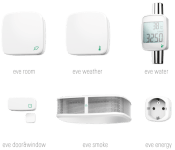
Elgato has announced its brand new line of “Eve” connected home sensors at this year’s IFA 2014 trade show in Berlin, which will feature full integration with Apple’s HomeKit home automation platform once iOS 8 launches.
 Elgato’s line of “Eve” smart home sensors
The Eve brand features Bluetooth accessories that monitor air quality, smoke, humidity, air pressure, energy, and water consumption, with all information syncing back to an iOS app. From the app, users can see an overview of the different aspects in their home along with suggestions and tips to better improve the environment.
 Elgato’s $50 “Avea” smart lightbulb
The company also announced its own $50 Avea smart lightbulb, which allows for custom profiles, colors and alarms through an iOS app. Notably, the Avea does not require a hub like the Philips’ line of Hue smart bulbs, and can utilize multiple bulbs to coordinate lighting patterns.
 Elgato’s iOS app for its line of “Eve” smart home sensors
Elgato’s Eve line of products are among the first to publicly support HomeKit, which was first announced at WWDC this past June. The platform allows home automation devices and their apps to work with Apple’s first-party services like Siri and stock iOS apps using a single, secure protocol. A report from earlier this year claimed that Apple was developing its own smart home products to work with HomeKit for a release in the near future. Apple may also look to feature HomeKit integration in its highly-rumored iWatch wearable device, which is said to “make good use” of HomeKit.
.CPlase_panel display:none;
Korean carrier upgrades eel farm, makes the Internet of (slimey) Things

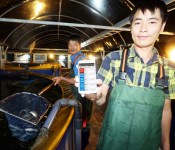
By definition, the Internet of Things (IoT) should connect with anything — even writhing, kinda gross, but often delicious eels. SK Telecom’s latest project is aimed at showcasing its IoT skills with a pilot connected eel farm that uses a network of sensors to monitor thousands of eels, mostly autonomously. Sensors dotted across multiple 20-foot-wide tanks check on water temperature, pH and oxygen levels, Data is then collated and analyzed by the Korean carrier’s cloud system, and bounced to a simplified smartphone app – all in pretty much real time. “Why?” is a good question, but there’s a good answer too: apparently minute changes in those factors above can be fatal to young eels. Before, this meant regular tank checks by workers every two-to-six hours. Now, it’s mostly automated and sudden changes will even ping a warning to eel farmers’ smartphones when needed. SK Telecom is planning to roll out the system commercially next year — who knew eel farming was big business?
.CPlase_panel display:none;

Microsoft’s New Cortana vs. Siri Ad Shows Off HTC One M8 for Windows, Mapping Features
Microsoft today launched a new commercial comparing its Cortana virtual assistant and the HTC One M8 for Windows to Siri and the iPhone 5s, showing a variety of hardware features and software integration that isn’t possible with Apple’s device.
The ad is titled “Siri vs. Cortana – Mirror Mirror” and depicts Cortana and Siri talking to each other about a number of features on the new HTC One M8 for Windows. Cortana demonstrates how it can work with a user’s calendar and traffic to provide route and mapping information, while also showing off the HTC One M8′s dual front-facing speakers. The commercial ends with Siri remarking that she only has one speaker and that she is “sitting on it,” referring to the speaker placement on the iPhone.
The new ad follows a commercial released in July showing off Cortana’s ability to perform contextually-aware tasks and poking fun at Siri’s inability to do the same. Cortana was originally announced earlier this year as a part of Windows Phone 8.1, with Microsoft emphasizing the virtual assistant’s ability to relate tasks to people and places. A Windows Phone manager also stated in June that Microsoft would like Cortana to be on other mobile platforms, perhaps hinting at an expansion of the assistant to iOS and Android.
.CPlase_panel display:none;

Peekaboo: Sony Xperia Z3 Compact breaks cover early with these press images
 Try as they might, Sony just can’t stop the device leaks from dropping. Today’s victim is the Sony Xperia Z3 Compact which is expected to be announced at IFA 2014 in just a few days. The leak comes in the form of press images which show the Z3 Compact in all its colourful glory, looking very much the evolutionary product of its predecessor, the Xperia Z1 Compact.
 Accompanying the images are some specs as well – a 4.6-inch 720p display, a Snapdragon 801 2.5GHz processor, a 2,600mAh battery and that 20.7MP camera we all love. If we had to guess, we’d say the Sony Xperia Z3, also expected to be announced in the same breath as the Z3 Compact, will likely have the same specs, if not slightly better. All the same, the Z3 Compact looks to be carrying on the fine tradition Sony has started by releasing a small-form smartphone with premium performance. It’s also said to be the first Sony Xperia device to use a nano-SIM, so watch out for that too when the Sony press conference rolls by.
 What do you think about the specs of the Sony Xperia Z3 Compact? Does it look like a phone you would buy? Let us know your thoughts below.
Source: Ausdroid via XperiaBlog
//<![CDATA[
ord = window.ord || Math.floor(Math.random()*1E16);
document.write('‘);
//]]>
The post Peekaboo: Sony Xperia Z3 Compact breaks cover early with these press images appeared first on AndroidSPIN.
.CPlase_panel display:none;
 AIVAnet