


Apple Plans to Encrypt iCloud Email in Transit Between Providers [Mac Blog]
NPR Yesterday wrote a story on the efforts of tech companies to protect consumer data, which included an extensive chart on how companies measure up when it comes to encryption.
While Apple was found to be encrypting iMessage end-to-end, as well as email from customers to iCloud, it was found to be one of the few global email providers based in the U.S. that does not encrypt customer email in transit between providers. That means emails that are sent from iCloud to iCloud are encrypted, but emails sent from iCloud to other providers, such as Gmail, are not encrypted.
Following the post, however, Apple told NPR that it is planning to encrypt those emails in the near future.
Apple encrypts e-mail from its customers to iCloud. However, Apple is one of the few global email providers based in the U.S. that is not encrypting any of its customers’ email in transit between providers. After we published, the company told us this would soon change. This affects users of me.com and mac.com email addresses.
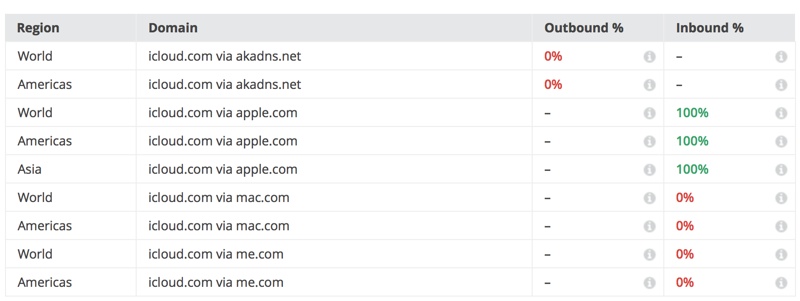
As noted by 9to5Mac, Apple’s response to NPR mentions only Me.com and Mac.com without a mention of the newer iCloud.com email addresses, but Google’s data protection transparency website suggests that outbound iCloud.com emails are not encrypted, so it is likely Apple’s plans include changes to the iCloud.com domain as well.
As noted by NPR, end-to-end encryption of emails sent back and forth between service providers requires cooperation between providers. Both email services involved (such as Apple and Google or Apple and Yahoo) must implement encryption, which means Apple will need to work with other email providers for true end-to-end encryption of iCloud.com email.
NPR’s study also noted that many app installations and iOS updates are sent unencrypted to iPhones, as are configuration files sent from telecom companies, and pre-login browsing/shopping traffic from the Apple Store.

Can Electronic Arts make a ‘Battlefield’ game that works?

I stopped playing Battlefield this year. Why did I stop playing the massively popular first-person shooter? Because it never works when it launches. For those who haven’t experienced the promise and defeat of a Battlefield launch, it goes as such:
- A multiplayer beta precedes the launch, often by a slim few months, which is chocked up to server testing.
- Players enjoy the beta, which is sometimes buggy, but often stable enough. And hey, it’s a beta.
- The game launches; millions of players splash into online servers; and it becomes unplayable for days, weeks and often months at a time.
Battlefield games come out every year. This was not always the case, but in the past four years, we’ve seen three Battlefield games. Zero of those three worked at launch (I actually wrote about this back when Battlefield 3 came out, at our sister site Joystiq). Battlefield 4 launched last October; it just started operating consistently. At E3 2014, EA announced this year’s entry in the series: Battlefield Hardline. It’s with this tremendous amount of baggage that I approached our interview with Battlefield studio head Karl Magnus Troedsson.
“You man up to the problems you’ve had, and you fix it.”
Troedsson knows my plight well. Aside from having heard as much from me in the past, my issues with Battlefield are far from unique. One look at the Battlefield help site demonstrates how widespread the issues are. In so many words, he hears complaints about Battlefield 4 quite often these days. As such, he’s prepared a characteristically positive response. Troedsson asks me, “I hear you. I hear you absolutely. But have you played Battlefield 4 lately?”
I haven’t. After several months of major issues — buggy gameplay, being kicked mid-game from online servers, unbalanced weapons, straight-up glitches — I quit. And I’m not alone. Around 150,000 people are actively playing the game across five game platforms: Xbox 360, Xbox One, PlayStation 3, PlayStation 4 and PC. Estimates put sales of Battlefield 4 in the range of 7 million. It’s pretty stark. How many of those folks will come back this holiday when the next game, Battlefield Hardline, launches?
Troedsson says the only thing he can do is be much more vocal with the community and create a great game. He says the studio culture has changed as a result of the last several years of botched launches. He says evidence already exists of that change.
“It’s a cultural thing of how we engage with the community. It’s a hardening experience to launch these kind of games, especially when we have challenges at the launch. The easiest way of going about something like that is becoming more closed off. As a company, as teams, it’s basically a human reaction to something like this. We’ve decided to opt the other way — to open up the kimono and say, ‘You know what? You know why it’s hard to make these games? Because it’s very complicated.’ That’s not an excuse!”
Except that it is an excuse. And Troedsson knows it, because he said, “That’s not an excuse!” before I could point out that customers who pay $60 for a broken product aren’t assuaged when the product maker says, “Making this product is really tough.” It absolutely is complicated making games, especially ones as sprawling as Battlefield 4. That, of course, doesn’t excuse DICE from making a working product.
So, will Battlefield Hardline function when it comes out this year? I truly doubt it, but — for what it’s worth — DICE is introducing a beta earlier than ever. Troedsson called it a “true beta.” Keep in mind that the last several Battlefield games all had beta periods ahead of launch. What’s a “true” beta, then? That remains unclear. It’s not that I didn’t ask, but this is what I was told when I did:
“The Battlefield 4 beta for instance; that was pretty close to the actual launch. That was more for the actual backend system. Because from that perspective, it is a true beta. The actual clients that people are playing on are very near final, but the backend is about doing the beta testing on those kind of systems.”
Regardless, considering Battlefield 4 only just recently started working, why in the world is EA releasing another Battlefield game this year? It’s hard to not see it as a naked cash-in on a franchise being milked for all it’s worth. Troedsson defends EA’s decision.
“We’re shipping another Battlefield game a year after, which some people feel is too close. But there is a commitment here from us that we’re gonna keep taking care of the products much more in a parallel way. People shouldn’t think of this as a serial exercise of dropping games; as soon as one is dropped, the other one dies. Naturally, unless people really scream for it, we perhaps won’t continue building a lot of paid DLC for BF4 after Hardline comes out, but will we still take care of the experience? Absolutely. If new problems occur, will we take care of them? Absolutely.”
Here’s the thing: Troedsson’s missing the whole point. It’s not just that fans who bought the past several games feel burned because they worry the game they bought will stop receiving support. The issue is that EA is asking them for money hardly a year after selling them a broken product. And the new product looks an awful lot like the broken one from last year.
Troedsson and I spoke for almost 20 minutes about mostly this. I’ve included the full audio below, which longtime Battlefield fans may be interested to hear. Troedsson is sympathetic to the plight of spurned fans, no doubt, and it’s worth hearing his tone. Though I might not agree with all his answers, he’s at least trying. Check it out for yourself below.
An interview with DICE head Karl Magnus Troedsson

Buyer’s Guide: Discounts on Retina MacBook Pro, iPad mini, Beats Headphones, and More [Mac Blog]
There are some great deals on Apple-related accessories and services this week, as well as some decent discounts on the iPad mini and the 13 and 15-inch Retina MacBook Pro.
Beats Studio over-ear headphones can be purchased (in six colors) for $180 through Groupon, which is $89 off the price when purchased directly from Beats. Target is also offering 25 percent off Beats Music gift cards, dropping the $50 card to $37.50 and the $25 card to $18.75, essentially dropping the price of a yearly subscription from $99 to $75.

Speck’s CandyShell Case for the iPad mini/Retina iPad mini can be purchased through Groupon for $14,99, a discount of $30. The iHealth Blood Pressure Monitor for iOS devices can also be purchased from Groupon for $30, a discount of $70.

Best Buy is offering the 16GB non-Retina iPad mini for $199, a discount of $100 from the standard $299 price. It’s available in both white and space gray. Best Buy is also offering a $25 iTunes gift card with the purchase of a $99 Apple TV.

The higher-end 13-inch Retina MacBook Pro with 256GB of storage and 8GB of RAM is available for $1,399 from Amazon, which is a $100 discount and one of the lowest prices we’ve seen on that configuration.

The lower-end 15-inch Retina MacBook Pro with 8GB of memory and 256GB of RAM can be purchased for $1,849.99 from Amazon, Adorama, and B&H, a $150 discount. The higher-end Retina MacBook Pro 512GB of storage and 16GB of RAM can be purchased for $2,449 from Amazon, Adorama, and B&H, also a discount of $150.
Customers in many states may find it preferable to order from Adorama or B&H, as these sites only charge sales tax in New York/New Jersey and New York, respectively.
Before making a purchase of a Mac or iOS device, make sure to consult our Buyer’s Guide to find out if it’s a good time to buy. For example, while there are some good deals to be had on the current iMac, our Buyer’s Guide does not recommend a purchase at this time because an update is coming soon — and prices will drop even lower.
MacRumors is an affiliate partner with some of these vendors. 

Facebook relaxes its policy on breastfeeding photos

Breastfeeding in public tends to bring out some strong opinions: For every person who believes there’s nothing raunchy about feeding one’s child, there’s someone who thinks women should keep it in their blouses unless behind closed doors. And while the debate rages on, Facebook, at least, has taken a stand: The company has quietly adopted a more lax approach to breastfeeding photos, wherein someone can post such a picture even if a breast is fully exposed (and that includes the one the baby isn’t nursing from). Mastectomy pictures are allowed too, though other images of topless women will still be removed.
The change came about two weeks ago, according to a Huffington Post UK report, but before that, Facebook treated breastfeeding pictures the same way it did any other photo containing nudity. Which is to say, they ran the chance of being removed under Facebook’s obscenity policy. According to a Facebook spokesperson, the company has never had a ban on breastfeeding photos. “[It’s] natural and beautiful and we know that it’s important for mothers to share their experiences with others on Facebook,” he said in a statement. And the ones that contain nudity? “It is very hard to consistently make the right call on every photo that may or may not contain nudity that is reported to us,” he said, “particularly when there are billions of photos and pieces of content being shared on Facebook everyday, and that has sometimes resulted in content being removed mistakenly.”
An understatement? Perhaps. In any case, the spokesperson did acknowledge that the company has changed the way it reviews reports of nudity “to help us better examine the context of the photo or image.” Translation: the actual process by which Facebook reviews flagged photos hasn’t changed. Now, though, if its screeners sees an exposed breast in a nursing photo, they’ll look the other way. (As should you — ever hear of the hide button?)
Filed under: Internet, Facebook
Via: Time
Source: Huffington Post UK

FCC is looking into Netflix’s issues with Comcast and Verizon

Netflix has been loudly agitating over the last few months about deals it says ISPs like Comcast and Verizon have forced it into for adequate service, and now the FCC is looking into them. While there’s no action yet, FCC Commisioner Tom Wheeler has obtained the confidential terms of the peering agreements between Netflix and the two ISPs, and says FCC staff is asking for others. At issue? Whether consumers are getting what they’re paying for, from ISPs and Netflix. Meanwhile, Dan Rayburn points out that Sandvine recently posted tests where an iPad and Apple TV on the same Comcast connection at the same time got different quality, because Netflix delivered service to the two devices over different connections. As of late, accusations have flown back and forth over who is to blame for the slow down (the image above is from Reed Hasting’s blog post arguing for “strong” net neutrality that would require free connections), and Wheeler says he wants to bring some transparency to the deals.
We’re asking for info on deals btw ISPs and content providers. We must understand impact on consumers. http://t.co/DY4Zk9gf1g
– Tom Wheeler (@TomWheelerFCC) June 13, 2014
Comcast and Netflix have issued statements welcoming the Commission’s activity, but we’ll see how long that lasts. Comcast says it has “long published our peering policies for example, and are open to discussions about further disclosures that would benefit consumers. Netflix, meanwhile says that “Americans deserve to get the speed and quality of Internet access they pay for.” Verizon meanwhile, suggested the current system for peering agreements between networks was fine without regulation, saying “Internet traffic exchange has always been handled through commercial agreements. This has worked well for the Internet ecosystem and consumers.” So far, these arrangements haven’t been covered by the old net neutrality rules or the controversial new ones currently under review, but we’ll see if this is a step towards bringing them under the same umbrella.
Sena Fitzmaurice, VP Government Communications, Comcast Corporation:
We welcome the Chairman’s attention to these important issues in the Internet ecosystem. Internet traffic exchange on the backbone is part of ensuring that bits flow freely and efficiently and all actors across the system have a shared responsibility to preserve the smooth functioning and highly competitive backbone interconnection market. We welcome this review which will allow the Commission full transparency into the entire Internet backbone ecosystem and enable full education as to how this market works.
We have long published our peering policies for example, and are open to discussions about further disclosures that would benefit consumers. We also have voluntarily shared a vast array of information about our peering and interconnection practices with the FCC. We also agree with the Chairman that the broadband consumer should be the focus of this inquiry and not any particular business model. We look forward to continuing to work with the FCC on these issues.”
Netflix:
We welcome the FCC’s efforts to bring more transparency. Americans deserve to get the speed and quality of Internet access they pay for.
Filed under: Home Entertainment, Internet, HD
Source: FCC

Sprint will provide home broadband to 50,000 students in the US

Through its ConnectED program, the White House is aiming to connect 99 percent of students with high-speed broadband in the next five years. One year in, Sprint’s making an important contribution to the initiative, announcing plans to bring broadband to as many as 50,000 students’ homes. It’s just the latest effort from a major company to improve educational resources in the US, with Microsoft having discounted the cost of Windows for public schools and Apple, Autodesk and others donating devices and software. Today select schools can apply to receive up to four years of Sprint Spark connectivity, with the program to coincide with the start of the school year in August.
Sprint will approve schools based on their digital learning programs as well as the availability of Sprint Spark services in their area. Institutions that are selected will need to purchase mobile broadband devices from the carrier, after which they’ll receive 3 gigs of wireless data per month. For students at participating schools, it’s a huge win, as learning tools beyond the classroom are increasingly incorporated into course curriculums. To learn more about other aspects of the ConnectED initiative, head here for the first-annual update.
Filed under: Networking, Sprint
Source: Sprint Newsroom, Sprint ConnectED portal

5.5-Inch iPhone 6 May Cost an Extra $100, but Consumers Willing to Pay
 Over the past several months, there have been several rumors suggesting that a move to two different screen sizes on the iPhone 6 could come with a $100 price premium for the larger model. Rumors have indicated that Apple is planning to launch a 4.7-inch iPhone 6 around the September timeframe, with an even larger 5.5-inch model coming either at the same time or up to several months later.
Raymond James analyst Tavis McCourt has now weighed in (via MarketWatch) with his own belief that the larger model will indeed include a $100 price premium. But according to McCourt’s survey data, consumers are showing an increasing willingness to pay that premium for a larger device.
“Our June consumer survey points to continued growth in the willingness of iPhone users to pay $100 more for a bigger screened iPhone, with now a full one-third of survey respondents willing to pay a $100 premium,” he added.
In fact, he added, “data seems to suggest meaningful demand for a larger screen, which should logically mean the iPhone 6-cycle will be strong for upgrade sales, which combined with modest contribution from wearables should cause a modest acceleration in revenue growth in fiscal 2015.”
Analysts and other observers unsurprisingly expect the iPhone 6 to generate a massive upgrade spike given the move to a larger screen size. The iPhone’s usual two-year design cycle typically sees stronger anticipation for new designs, and the significantly larger screen sizes appear to be boosting that excitement even more this year.

Apple Cracking Down on Fake App Store Reviews
Apple recently began cracking down on fake reviews in the App Store, a widespread problem that can affect both App Store rankings and Top Charts. According to research done by TechCrunch, Apple appears to have started removing false reviews earlier this year.
One app, Better Fonts Free, which is described by TechCrunch as “spammy,” saw thousands of its June ratings disappear overnight. While the app has just 4,000 reviews at the current point in time, it previously had more than 20,000. Developers have no way to remove reviews, which means the fake reviews were pulled by Apple.

Instead, what happened is that Apple did step in to remove this app’s ratings due to attempts by the developer to game the system. What’s more, this is not the first time the company has done this, we now understand.
In fact, any time Apple finds credible evidence of ratings fraud or manipulation, it can and “often” does take action to remove the ratings associated with that activity.
There are several websites and marketing services that allow developers to purchase fake five-star reviews in an attempt to game the App Store charts, improving their rankings and their downloads. Apple has warned against these practices in the past, suggesting that developers who utilize services to manipulate their App Store rankings could be banned from Apple’s developer program, so it is no surprise that the company has been quietly removing fake reviews.
It is unclear how Apple determines which reviews are false, but as anyone who has stumbled across a fake review in the App Store knows, they are often easy to spot. Most fake reviews use the same general wording, structure, and punctuation, in addition to being overly positive. The reviews below come from a low-quality highly-ranked app that has a perfect five star rating.

Apple has made several changes to the App Store in recent months with the aim of improving app discoverability. In late 2013, the App Store began compensating for small typos and misspellings and the company also implemented changes to the way apps are ranked for the Top Charts.
Just yesterday, Apple added a new ‘Browse by Category’ section ahead of major improvements being introduced to the App Store with iOS 8, including a new “Explore” tab and a search overhaul that includes trending and related searches.


New littleBits modules make the Synth Kit more powerful and versatile

Click ‘em together, make some noise. Littlebits are like Lego for music nerds (like us). That’s fun and all, but currently, once you’ve built your mini-modular synth creation, there isn’t really much else you can do with it. That won’t be the case for much longer though, as three new modules are coming along to spice things up.
We are raising the ceiling of complexity of what you can do with littleBits, adding wireless control, programmability, and now audio control to allow you to make sophisticated electronics in a fraction of the time and cost, allowing for whole new experiences. — Ayah Bdeir (Founder, littleBits)
A new MIDI block lets you hook into music making software like Ableton or Logic, while the CV block means you can connect your littleBits to older/analog gear. If you just want to play with sound, a USB I/O module will let you pipe the littleBits’ audio directly into your PC. No word on price, but expect to see them come to market in time for the (now noisier) holidays.
Source: littleBits

Iraq blocks Twitter, Google, YouTube and Facebook in effort to stifle insurgency

The Iraqi government has essentially shut off all social networking in the country in an effort to stem the rising tide of insurgent group Isis (Islamic State of Iraq and the Levant). The country has found itself thrown into chaos recently as the Islamist militants have overrun the cities of Mosul, Falluja and Ramadi in a march towards Baghdad. Isis, like many of the rebellions in the region recently, has made heavy use of social media for both propaganda and organization. In particular the group has spread its hard line religious and anti-western message via YouTube. Presumably prime minister Nouri al-Maliki has had the services blocked in an effort to disrupt Isis’s movement and planning, and perhaps give the government’s troops an opportunity to strike back.
Of course, it’s no surprise that the militants have turned to social media (just as it’s no surprise to see the government block it when under threat). Plenty of organizations have turned to YouTube as a means to spread their message, even if it is one hate. And uprisings that perhaps we’re more sympathetic too have relied on Twitter for organizing protests and drawing attention to government abuses. And often the response of those in power has been to block those lines of communication at any cost — even if that means taking an entire country offline. Hopefully any censorship in Iraq will prove to be short lived and citizens there can carry on Instagramming their lunch without fear of becoming yet another victim in this tireless conflict.
Update: Both Twitter and Youtube have said they are looking into the situation, confirming to VentureBeat that “some users are not able to access” the services in Iraq, according to YouTube. Facebook chimed in too, though its statement address the political situation more directly:
We are disturbed by reports of access issues in Iraq and are investigating. Limiting access to Internet services – essential for communication and commerce for millions of people – is a matter of concern for the global community.
Filed under: Internet, Google, Facebook
Source: International Business Times, VentureBeat
 AIVAnet