



iOS 8’s Variable Touch Sizing Bringing ‘Surface Pressure’ to FiftyThree’s ‘Pencil’ Stylus
FiftyThree announced today (via TechCrunch) that its “Pencil” iPad stylus will be updated with a new Surface Pressure feature when iOS 8 debuts later this year. This feature allows users to change the thickness of the lines they create by controlling how much of the pencil tip comes in contact with the iPad screen.

Pencil’s tapered tip was inspired by the expressive richness of real pencil points, which allow creators to change the character of the line with the angle of the tip. With Surface Pressure you’ll be able to control the lines you create based on how much of Pencil’s tip or eraser is in contact with your iPad. Use the point for fine details or the angled edge for broad strokes. Surface Pressure unlocks new capabilities for each of Paper’s tools—fill faster as you draw, shade as you sketch, or carve away in varying widths as you erase.
This Surface Pressure option is made possible by iOS 8′s variable touch sizing, which lets developers interpret touch along a range of point sizes that vary from a single point to a broad circle. The ability to adjust line thickness on the fly is a significant advantage over the current version of the stylus, which delivers a single line whose thickness is controlled via an in-app setting that is changed manually.
FiftyThree released the Bluetooth Pencil stylus last November as a companion to its popular Paper drawing app. It is available in either a brushed aluminum (US$50) or walnut ($60) option for consumers who live in the US or Canada. Surface Pressure will be included in a free Pencil software update, which will be released this fall following iOS 8.

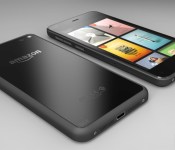
Amazon’s upcoming smartphone will be exclusive to AT&T

Due to be unveiled at an event in Seattle tomorrow, the Wall Street Journal have reported that the upcoming Amazon smartphone will be exclusive to AT&T.
Amazon are expected to continue their partnership with AT&T for which they offer their cellular versions of Kindle tablets with their smartphones, which makes sense. It could also indicate the introduction of a long rumoured Prime Data service which would offer reimbursed data rates for localised content from various companies.
With four front-facing cameras, the Amazon smartphone is expected to offer a 3D user experience without the need for glasses to indulge the user in contextual menus which adapt to the orientation of the device.
One thing is for sure, we won’t have to wait long until we see what Amazon has in store for us.
The post Amazon’s upcoming smartphone will be exclusive to AT&T appeared first on AndroidGuys.

Cyanogen Theme Showcase launches on the Google Play Store

If you like to theme your device then the new Cyanogen Theme Showcase app may be of interest to you as it’s now launched in the Google Play Store.
The app acts as a portal to access Cyanogemod themes on Google Play to the theme switcher included in the CM ROM.
Developers are being encouraged to submit their creations into the app and it supports a variety of icon packs from Nova, LauncherPro, Trebuchet, ADW, and Go Launcher.
Check it out on Google Play for free.
The post Cyanogen Theme Showcase launches on the Google Play Store appeared first on AndroidGuys.
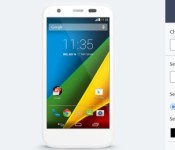
Moto G with LTE now available

Motorola are offering up the Moto G with LTE support on their website for $219 in both black and white.
The budget smartphone is a great little device, and now you can now grab it with 4G.
It is available with 8GB of internal storage but the LTE variant of the Moto G comes with a microSD card slot to raise it to 32GB.
The post Moto G with LTE now available appeared first on AndroidGuys.

FiftyThree’s Pencil stylus set to level up with pressure sensitivity on iOS 8

Even though FiftyThree’s Pencil stylus can’t completely replace a proper digital pen and tablet, it’s at least getting better over time. For instance, the arrival of iOS 8 will finally give it pressure sensitivity — bad news is, you’d have to wait for the mobile OS before you can take advantage of the new feature. Once you get the update for Apple’s latest platform, you’d have greater control over your lines: you can draw thin, mechanical pencil-like sketches by using only the very tip of the device, or shade objects using its thicker side. Depending on how much you’ve been using Pencil, these lines might not be as precise as anything you draw using a Wacom tablet. But you might be able to get pretty close, so long as you maneuver the stylus with expertise. It’s a shame you’d have to wait till fall to try it out, but note that a new iOS 8 beta’s rumored to come out soon. We don’t know whether this beta update will enable Pencil’s new capability, but keep an eye out if you absolutely can’t wait.

Spire breathing monitor can tell if you’re stressed, relaxed or focused

Samsung’s Galaxy S5 is supposed to be able to measure stress, but there’s something about its “heart-rate variability” test that just isn’t very convincing. (Namely, if you enjoy a brisk walk and raise your heart-rate slightly, the phone will sometimes report an increase in “stress.”) By contrast, a new hip-worn sensor called “Spire” ignores your pulse in favor of monitoring breathing patterns instead. Its creators claim that these patterns can reveal periods of “tension, relaxation and focus,” as well as allowing standard fitness tracking.
Until we get the chance to review the Spire, we can’t say for sure if it’ll be any more meaningful than Samsung’s approach — but it’s at least backed up by science (and funding) from Stanford University. (Besides, from a purely selfish tech blogger’s perspective, some detailed mental analysis could be a nice distraction on days when there’s been no actual, physical activity to speak of.) The Qi-charging, iOS-pairing Spire is up for pre-order today at a price of $150, but you might find it on a temporary discount if you’re quick.
Filed under: Cellphones, Wearables, Mobile
Source: Spire

Qplay’s video streaming service is now on Chromecast

When TiVo founders Mike Ramsay and Jim Barton announced their curated video stream service called Qplay earlier this year, the only way you could play those queues — or “Qs” — on your TV was if you also purchased the Qplay TV adapter for $49. Otherwise, you could only view them on the iPad app, which was opened up to everyone only a couple of months ago. Starting today, however, you can relay those video playlists to your television with a Chromecast as well, which is about $14 less and a whole lot more versatile. “We wanted to bring Qplay to a larger audience,” says Phil Peterson, the CEO of Qplay, as the reason behind opening it up to Chromecast. “We definitely want to expand the number of devices that Qplay can play on.”
Further, the company is also introducing “Party Qs,” which are video feeds that you and a group of friends can collaborate on together for viewing parties. You can also now add a hashtag to your Qs such as #worldcup or #nba so that they’re easily searchable. Last but not least, Qplay has also added support for Facebook login. At last, it seems, Qplay is attempting to really break into the mainstream with its short-form video streaming service. If that sounds like an interesting proposition for you, head over to the source for more info or peek at the introduction video below.
Filed under: Home Entertainment, HD
Source: Qplay

Terrain Android launcher helps you organize and find your content

Samsung’s Accelerator division has just spawned a new Android launcher that aims to help you see and find everything on your phone. Called Terrain, it resembles a stock Android home screen at first glance, but from there you can launch the three main features. The first is the Sidebar which brings up your content in familiar card form with a swipe from the left, letting you glance your top Spotify songs, Facebook news feed, Instagram pictures, Reddit threads and more. You can then tap each card for a deeper dive. The Phone Search option checks all your apps and contacts and also searches the web, Google Maps, Play or Yelp, to name a few. Finally, there’s the alphabetically organized All Apps drawer to see your programs at a glance. So how well does it work? Read on for more.
I’ve played with a lot of launchers, including Nova and Aviate, and Terrain seems quite robust for a first release. It was fairly simple to add and edit content from the sidebar, helped along by the initial launch suggestions. After a little time, I had a sidebar showing Facebook feeds, favorite contacts, a calendar, Spotify tracks, my Instagram feed and for lulz, the xkcd cartoon, all organized how I wanted. There are 60 content cards in total from categories like utilities, local (weather and traffic), social and news. Searching contacts was more convenient than using Samsung’s stock contact app and let me dial or send a text message without fussing. It was also arguably quicker to search less-used apps that weren’t on my home page, like Vivino. Finally, the app seemed just as fluid as my go-to launcher, Nova.
Though reasonably glitch-free, it was occasionally a bit slow to find feeds like technology (which include feeds from Engadget, Re/Code, CNET and the Verge). In addition, it was missing a few key social apps like Vine and requires you to download separate apps to pull feeds from Instagram and Spotify — a bit of a kludge. But it seemed stable on my last-gen Galaxy Note II with KitKat and came with enough news, social and entertainment apps to be useful right away — and the folks behind it said that more cards and content are rolling out soon. If you feel like giving it a try yourself, check Terrain’s home page or download it from Play.
Filed under: Cellphones, Software, Mobile
Source: Terrain

Amazon’s smartphone is an AT&T exclusive, says The Wall Street Journal

Tomorrow, Amazon is going to lift the lid on its not-so-top secret smartphone project, answering questions like “why?” and “how will six cameras and a 3D screen help you sell more books?” Before the big reveal, however, The Wall Street Journal is reporting that AT&T has already signed a deal to become the exclusive home of the handset. AT&T signing an exclusive deal for a smartphone being developed by a website? Let’s hope whatever comes, we don’t see another HTC First or HTC Status…
Filed under: Cellphones, Mobile, Amazon, AT&T
Via: Reuters
Source: WSJ

Clarification: Does Xbox One have 10% more horsepower without Kinect?

Here’s the short answer, right up front: no. The long, more explanatory answer is more complex of course.
Last week at E3 2014, GameTrailers host and well-known video game dude Geoff Keighley tweeted this:
After @xboxp3 interview I’ve been asking devs about impact of new Xbox sdk on perf. Bungie says it will get Destiny to 1080p/30fps on XB1.
– Geoff Keighley (@geoffkeighley) June 10, 2014
The “Xboxp3″ Twitter handle he referenced belongs to Phil Spencer, the head of Xbox at Microsoft (we interviewed him last week as well, right here), and the “new Xbox SDK” he referenced is part of the June update that the Xbox One received. In said update, developers received a new software development kit that — according to a statement Microsoft released at the time — “allows access to up to 10 per cent additional GPU performance.” So that solves it, right? Not quite.
Microsoft’s Ken Lobb, longtime Xbox team member (and namesake of GoldenEye 64 weapon, the Klobb), explains the situation more thoroughly in an interview with Eurogamer. “Lots of people ask, ‘so, you’re taking back the GPU reserve for Kinect. Well, does that mean I can’t say, ‘Xbox, record that?’ No. You can always say that,” Lobb says. In so many words, some folks worried that, with the new SDK, much of the Kinect functionality they’ve come to love accept will be taken away. Not so, says Lobb.
The SDK update does take advantage of the originally reserved CPU for Kinect, but it’s a variable system that allows Xbox Ones with and without Kinect to use the extra horsepower. “You have to count for that whether you’re using Kinect or not. But you get the full memory and the full bandwidth,” he explains.
So, does Xbox One get 10 percent more CPU performance without Kinect? No. The answer is still no. But the Xbox One did get an update in June which enabled developers — including Bungie, as we previously noted — to use more of the Xbox One’s horsepower reserves. Everyone wins! We think!
Filed under: Gaming, Software, HD, Microsoft
Source: Eurogamer
 AIVAnet