


Google Play Movies & TV Updated to v3.2.25 Adding Wishlist to Watch Now [APK Download]

App update Wednesday has one more update for you, and that is Google Play Movies & TV. The app gets an update bringing it to version 3.2.25, and adds wishlist content to “Watch Now”. Other than that, here is a list of other changes.
- Precise seeking. To rewind or fast-forward a few seconds, drag your finger across the video image. Drag and hold at the edge of the screen to continue seeking.
- 10 second rewind. Swipe your finger across the video image to jump back 10 seconds.
- Thumbnails. Images appear above the timeline to make seeking easier.
- Captions. More options to customize captions.
- Navigation menu. Easier switching between accounts and added Settings.
So if you feel like getting the latest Google Play Movies & TV, hit the link below to grab the apk. If you find anything else that has changed with the update, please let us know.
Download Google Play Movies & TV Here
//<![CDATA[
ord = window.ord || Math.floor(Math.random()*1E16);
document.write('’);
//]]>

Confiscated data must be returned or deleted if it’s not covered by a warrant

Picture a scenario where the government’s accused you of a crime. During its investigation, law enforcement copies your computer’s hard drive to look for evidence of your misdeeds (pursuant to a warrant, of course). Until today, it was unclear if law enforcement could hold onto copies of your data forever. A new Federal Court decision, however, has crystallized things for us all: the government can no longer keep that data indefinitely. United States v. Ganias is the name of the case in question, and the court held that indefinite retention of our digital files is an illegal seizure under the 4th Amendment to the US Constitution.
So now, when law enforcement obtains, searches, and finds the data it’s looking for pursuant to a warrant, it’s got to either return the other files it copied or delete them. Unfortunately, the Appeals court didn’t say just how long the government can keep that other data before disposing of it — meaning someone else gets to figure that little detail out. Gotta keep those lower courts busy, right?
Filed under: Misc
Via: Washington Post
Hate drones? This system tells you when to duck and cover

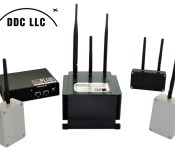
While drones can be fun and tremendously useful for huge industries like film and farming, in the wrong hands and with the right payload, they still have the capacity to invade privacy. That’s why a new Kickstarter project is offering a system that can detect drones (small, personal ones, not military-grade machines) within 50 feet. The technology, officially called the Personal Drone Detection System, consists of two sensors, a command and a control module. It’s connected to the internet via WiFi, and if it does sense a moving transmitter that could be a drone, it sounds an alarm or sends your phone or tablet a message if you’re out.
We say “could,” because the developers launched this crowdfunding campaign in order to find a group of Alpha testers who can help them improve the system. So, while the software’s designed to minimize false triggers, users might go through a few false alarms (say, from people using their phones or other electronics near their homes) until the proper software updates have been issued. Anyone interested in being an Alpha tester will have to pledge at least $499 to get a unit, which is expected to ship in November. But take note that detection’s all the system can do at the moment — it’s not exactly equipped with lasers that can blow up flying peeping toms.
Filed under: Robots
Via: The Verge
Source: Kickstarter
T-Mobile launches Un-Carrier 6.0, unRadio sets music free starting June 23

While announcing its latest “Un-Carrier” moves Wednesday night, T-Mobile launched Un-Carrier 6.0 and introduced some initiatives to “un-leash” music.
The first of the initiatives, unRadio, was announced in conjunction with Rhapsody and is a new service that aims to eliminate all issues associated with current Internet radio. T-Mobile said that unRadio is ad-free, offers unlimited skips and a catalog of over 20 million songs. It will be available starting June 23 to all T-Mobile customers with unlimited 4G LTE, while other T-Mobile customers can get it for $4 per month.
Our competitors want you to believe that Internet radio is still free on their networks — but it’s not,” said Mike Sievert, chief marketing officer for T-Mobile. “On AT&T and Verizon, you’re paying for every note of every song you stream. You even pay for the ads. Our goal with Music Freedom is different. We want people to enjoy their music worry-free — the way it’s meant to be.”
unRadio wasn’t the only thing up its sleeves as T-Mobile also announced that its Simple Choice customers will now be able to stream all the music they want from their favorite streaming services having to worry about using their data. These streaming services include Pandora, Rhapsody, iHeartRadio, iTunes Radio, Slacker, and Spotify, as well as Samsung’s Milk Music and the forthcoming Beatport music app from SFX.
Via: T-Mobile
The post T-Mobile launches Un-Carrier 6.0, unRadio sets music free starting June 23 appeared first on AndroidGuys.

T-Mobile Uncarrier 5 Announced Bringing Test Drive, VoLTE and Wideband to More Markets

We just sat through the hour or so long T-Mobile Uncarrier 5 live streaming event to see what tricks T-Mobile and John Legere had up their sleeves. The past 4 versions of the Uncarrier approach have brought some pretty amazing changes for consumers and have certainly shaken up the industry quite a bit. Some of the things that have been talked about have covered things like Simplified Billing, no prorated charges and EIP included in the first bill. Much of which was confirmed via screenshots acquired by Tmonews. So, did T-Mobile deliver and did they have a few tricks up their sleeves? Simple answer, yes.
- Data Strong – new term. Complete ubiquous voice coverage. T-Mobile customers use the most data. 69% more data than an average Verizon customer. Average T-mobile customers use 100% more data than an AT& T customer.
- The Test Drive – Test an iPhone 5 “fully loaded and ready to go” for 7 days and either keep the service or drop the phone off with no obligations, not money down, and no strings attached.
- Wideband LTE in 16 markets. 15 x 15 will be 20 x 20 147 Mbps down,
- VoLTE 15 markets 100 million. Nationwide by the end of the year.
- 2012 connected devices surpassed PC’s. 78% of Facebook users are mobile.
- 46% of americans say they have made a wireless choice and felt remorse.
- 1 in 10 have gone back.
- 17 million since the Uncarrier started.
T-Mobile Transforms the Way Americans Buy Wireless … Again
T-Mobile Test Drive offers every American an iPhone 5s with unlimited service on T-Mobile’s network for a full seven days – completely free.
As the Un-carrier puts its network’s data muscle on show, T-Mobile expands Wideband LTE to 16 total markets and VoLTE technology to 15 total markets reaching over 100 million people
SEATTLE, WA, June 18, 2014 – In another of its signature moves, T-Mobile US, Inc. (NYSE: TMUS) today introduced “T-Mobile Test Drive” and pioneered a new way to buy wireless in this country. With T-Mobile Test Drive, people can receive an iPhone 5s and unlimited nationwide service to take T-Mobile’s network for a data-intensive, seven-day spin at no cost whatsoever.
The new initiative puts T-Mobile’s data-strong network in the spotlight, as the Un-carrier rolls out yet another major network expansion ahead of the competition.
No More “Buying Blind”
The Un-carrier’s latest initiative takes aim at the painful process of buying wireless in America today. People must decide on a wireless provider without knowing how the network will really work for them – where they live, go to school, work, and play. As a result, the U.S. wireless industry has one of the highest “remorse rates” of any out there. Nearly half (46%) of wireless customers say they’ve signed up with a carrier and then wanted to leave, and one in 10 have actually left within the first 30 days of making a switch.1 It’s a pain point ripe for an Un-carrier solution.
“The way this industry forces Americans to buy wireless is completely, utterly broken. I’m here to tell you there’s a better way,” declared John Legere, T-Mobile CEO and President. “While the carriers ask you to buy blind, the Un-carrier gives you transparency. Our network kicks ass, and now people can experience for themselves what a data-strong network can do with T-Mobile Test Drive.”
Starting this Monday, June 23, people can sign up for T-Mobile Test Drive at http://www.t-mobile.com/testdrive. A few days later, they’ll receive an iPhone 5s fully loaded and ready to go, and they can put T-Mobile’s data-strong network to the test for seven full days on the “most forward-thinking” smartphone. After the test drive, just drop it off at any T-Mobile store. That’s it. Absolutely no money down. No obligation. No strings attached.
T-Mobile Test Drive is a first-of-its-kind nationwide initiative from a major carrier that the Un-carrier is rolling out at scale. During the first year of the program alone, T-Mobile expects at least one million people to take a test drive.
Network Designed Data-Strong
T-Mobile Test Drive marks a new campaign to let consumers experience first-hand how the Un-carrier’s network is different, even as the company today announced two massive network expansions. T-Mobile has expanded Wideband LTE into 16 total markets, giving all T-Mobile LTE devices a speed boost with capable peak network download speeds up to nearly150 Mbps – that comes out to a 90-minute HD movie download in under three minutes or an 11-song music album in seven seconds.Building on its data DNA, the Un-carrier also expanded Voice over LTE (VoLTE) to more than 100 million people in 15 total markets. T-Mobile was the first major provider to launch VoLTE, and now, because its network has been designed for data, is nearly doubling the amount of data dedicated to voice calls for highest fidelity, crystal-clear HD Voice and faster call setup times than ever before. The Un-carrier expects to deploy VoLTE nationwide by the end of the year.
“The old telecoms designed their networks for a time when your phone’s only app was a phone call—and they haven’t shaken that dial-tone mind-set,” said Neville Ray, Chief Technology Officer for T-Mobile. “Our 4G LTE network was built in the last year and a half, so naturally we built it differently. We built it for the way people use smartphones and tablets today, and we built it with a mobile Internet architecture, so we could roll out new technologies faster.”
Now, as mobile broadband usage skyrockets, Un-carrier customers are reaping the rewards of a network designed to be data-strong and concentrated where people use data the most – unlike older carrier networks built by phone company utilities. T-Mobile customers are using more wireless data on average than the major national carrier customers – 61% more than Sprint, 69% more than Verizon, and 100% more than AT&T. T-Mobile customers also have more network capacity per customer than with any other major national wireless company, a full 70% more network spectrum per customer than Verizon, and they’re streaming, tweeting, using FaceTime and more at lightening speeds on America’s fastest nationwide 4G LTE network.
“We’re a mobile Internet company competing against utilities, so it’s no wonder we’re faster than they are,” added Legere. “We’re out there doing it while the other guys are still scheduling a meeting to talk about doing it. And, there’s one more thing you can bank on. We won’t stop.”
Learn more about T-Mobile’s network expansion and data-strong network design in this blog post. For more information on iPhone, please visit http://www.apple.com/iphone. For more information about T-Mobile Test Drive, visit t-mobile.com/testdrive or the T-Mobile Newsroom.
//<![CDATA[
ord = window.ord || Math.floor(Math.random()*1E16);
document.write('’);
//]]>
T-Mobile Announces Uncarrier 6, Streaming Music that won’t touch Your Data
 Tonight was the T-Mobile Uncarrier 5 event in Seattle. It was pretty awesome. John is a funny guy. We will get to the Uncarrier 5 stuff in a minute, it was pretty cool, but he also announced Uncarrier 6, which is pretty damn cool if you ask me. With Uncarrier 6 T-mobile is working to set music free. Rather than force you to have an unlimited plan so you can stream to your heart’s content, they have made the top 7 music streaming apps available without touching your data plans.
 Of course this only matters to those on the simple choice plans who have a set high-speed data limit. The services they announced are Pandora, iHeartRadio, Rhapsody, Slacker, Spotify, and iTunes Radio. There are two more though, Samsung’s Milk Music and Beatport. Those 8 streaming services will never count towards your 4G LTE data allotment, ever. That leaves you free to use your data on other things. Also, if you do hit that allotment, you can still stream at full speed without cut outs or issues. This option is live as of today, so stream away without fear.
There is more though, they also partnered with Rhapsody and there will be a new T-Mobile branded Rhapsody unRadio service. This service brings in a 20 million track collection of music that is on demand. No ads, unlimited skipping, AM and FM streaming.
For those of you on the unlimited plans, you will be able to use this service free of charge when it gets released June 22nd. If you are a T-Mobile customer on a simple choice plan, it will cost you $4 a month and non-T-Mobile customers will pay $4.99 a month. Of course the $4 plan won’t touch your data allotment either.
If you don’t see the service you use and love, T-Mobile will gladly incorporate it. Well, at least they will incorporate one of the 12 others they have available to select from on their poll. Big surprise, Google Music is killing it already.
 To get the full skinny, and to vote plus enter for a chance to win a Samsung Galaxy S5, head over to Free The Music page at T-Mobile.
Video via The Verge
//<![CDATA[
ord = window.ord || Math.floor(Math.random()*1E16);
document.write('’);
//]]>

Engadget Daily: Amazon’s Fire phone, Adobe’s digital sketching hardware and more!

Today, we take a look at Amazon’s new handset, the Fire, go hands-on on with the $22,000 Vertu Signature Touch, learn about Amazon’s new Firefly feature and review Adobe’s set of premium sketching accessories. Read on for Engadget’s news highlights from the last 24 hours.

Amazon announces the Fire
The rumors were true: Today, Amazon announced its first-ever smartphone, the Fire. And yes, it’s going to be an AT&T exclusive. The 4.7-inch device packs mid-range specs, dual stereo speakers and a novel 3D interface.

This is what a $22,000 Android phone feels like
What you’re looking at is the Vertu Signature Touch, and it costs $22,000. This spectacular handset combines the experience of Android 4.4 with a grade 5 titanium body, fifth-gen sapphire screen and yes, a conditioned “Damson Lizard” skin.

Amazon’s Firefly recognizes everything you see and hear, then lets you buy it
Alongside the announcement of its first phone earlier today, Amazon unveiled Firefly: a new feature that can identify the music you hear, the art on your wall and even those fresh kicks on your friend’s feet. Why? Well, so you can buy them from Amazon (surprise!).

Adobe Ink and Slide review: A software giant tries its hand at hardware
Adobe’s breaking into the hardware space with its Creative Cloud-connected stylus and drafting ruler: the Ink and Slide. Read on as Billy Steele puts both devices through the wringer and learn whether this premium set of sketching accessories is worth its $200 price tag.
You also might like:
Filed under: Misc

Nintendo’s Shigeru Miyamoto feels a ‘bit of uneasiness’ about virtual reality

Nintendo’s Shigeru Miyamoto may have been an initial supporter of the Virtual Boy back in the ’90s, but modern virtual reality? Not so much. The Mario Bros. creator finally tried an Oculus Rift headset at E3, and he tells Time that the experience gave him a “little bit of uneasiness” as to whether or not VR is the best solution for video gaming. While Nintendo is intrigued by the tech, Miyamoto sees it as the opposite of the social experience at the heart of the Wii U. He doesn’t like the idea of a gamer strapping on eyewear and playing “over in a corner” by themselves. VR would be better suited to arcade-like public play, he says.
We can understand the cautious approach. Miyamoto saw the Virtual Boy as more of a toy even when it was new, and he was frustrated when the company sold it as a full-fledged platform. With that said, Nintendo has been hesitant to embrace a lot of technology as of late, whether or not there’s demand. It’s skittish about smartphones, and it doesn’t believe that live game streaming is fun (by itself, at least) despite the rapid rise of services like Twitch. Let’s hope that Miyamoto and crew are paying close attention to VR, especially rival projects like Sony’s Project Morpheus — if they take off, Nintendo may want to change its tune.
[Image credit: Jeff Rubin, Flickr]
MIYAMOTO!! pic.twitter.com/RiEzyeUd7F
– Callum Underwood (@DevRelCallum) June 12, 2014
Filed under: Displays, Gaming, Wearables, HD, Nintendo
Via: The Escapist, The Verge
Source: Time

T-Mobile Announces ‘Test Drive’, A One Week Network Trial With a Free iPhone 5s
At its Un-Carrier 5.0 event in Seattle, T-Mobile announced a new program called Test Drive, which allows prospective customers to try out its network for 7 days with a free iPhone 5s.
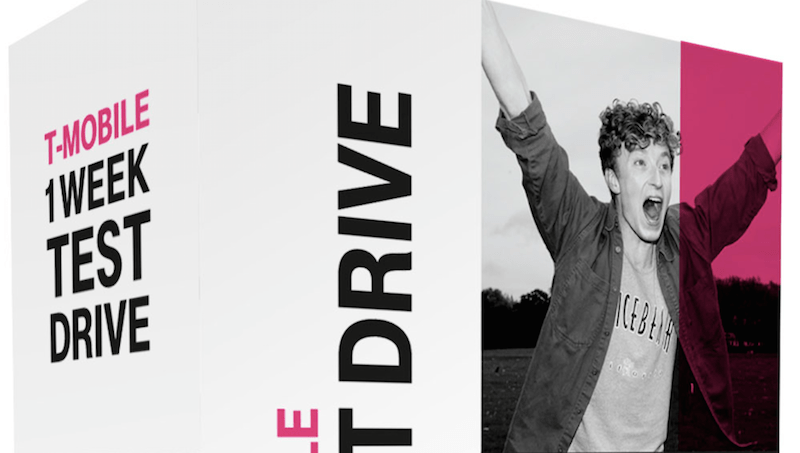
Starting this Monday, June 23, people can sign up for T-Mobile Test Drive at http://www.t-mobile.com/testdrive. A few days later, they’ll receive an iPhone 5s fully loaded and ready to go, and they can put T-Mobile’s data-strong network to the test for seven full days on the “most forward-thinking” smartphone. After the test drive, just drop it off at any T-Mobile store. That’s it. Absolutely no money down. No obligation. No strings attached.
The carrier said that Apple is providing “tens of thousands” of iPhones for Test Drive, and expects more than a million users to use the program within the first year. In 1984, Apple itself used a similar test drive program to get people to try out the original Mac.
T-Mobile CEO John Legere said the goal of the program is to change the perception some people have of the carrier’s network, according to Re/code. The carrier has been rapidly enhancing its network in recent years, adding LTE and expecting to reach 250 million customers with that LTE network by the end of the year. Additionally, T-Mobile has 16 markets with “Wideband LTE”, which lessens potential network congestion and increases speeds, and plans on introducing Voice-Over-LTE.
The carrier also announced that current T-Mobile customers will be able to stream music from Spotify, Rdio, iTunes Radio and Pandora for free. T-Mobile negotiated deals with those streaming companies so that data from those apps don’t count against a customer’s data plan, according to Engadget. The company plans to add other services, like Google Play Music and Beats Music, if enough customers request them.
Additionally, T-Mobile announced UnRadio, which allows customers on a Simple Choice plan to gain access to Rhapsody’s entire music library for free with unlimited skips and no ads. UnRadio also doesn’t count against a customer’s data plan. Customers not on the Simple Choice plan will have to pay $4 a month for the service.
Those who want to sign up for Test Drive must do so at T-Mobile’s website for the program. Once a user signs up, T-Mobile will place a $699.99 (plus taxes) hold on a user’s credit or debit card. If the phone isn’t returned at the end of the 7 day trial, T-Mobile will charge the hold amount. Additionally, if the phone has water damage, a damaged display or screen or has Find My iPhone activated, T-Mobile will charge the user with a $100 “damage fee”. If the phone is returned with no damage at the end of the 7 days, the hold is lifted.

The Fire phone is Amazon’s ultimate hardware weapon

Amazon’s first phone is finally here. But what makes it such a curious little device isn’t all that (lackluster) 3D, head-tracking stuff; it’s Firefly, the company’s new visual search engine. Amazon may have been born unto the internet as a modest bookseller, but it’s now become a services company: There’s the Kindle Lending Library for e-books, plus streaming services like Amazon Instant Video and Prime Music.
Amazon’s also a hardware maker. And this time, the company’s made something that lets you text mom and use a powerful image-based search system to shop Amazon.com with one touch. It’s the Fire phone, and it feels like the inevitable marriage of Amazon’s device and services initiative.
The thing to remember about the gadgets that Amazon and Lab 126 (its Research and Development division) craft is that they’re, on some level, mere shells. You don’t buy a Kindle Fire tablet because it’s intrinsically beautiful — you buy it because you want to read e-books, or watch movies or listen to music that comes as part of your annual Prime subscription. These Fire devices feed directly into the company’s myriad services. They’re no more than conduits for the sheer amount of content Amazon has on offer.
That said, the physical device still matters. As Amazon CEO Jeff Bezos pointed out today, making hardware is, well, hard and making good, truly valuable hardware is doubly so. The annals of smartphone history are littered with high-profile failures like Microsoft’s Kin and both of Facebook’s now forgotten phones. It’s a problem the Fire phone team grappled with, as Bezos even admitted on stage today. How do you make a smartphone that stands out amidst a sea of competitors with more experience? The answer, Bezos found, had nothing to do with specs.
“The thing to remember about the gadgets that Amazon and Lab 126 craft is that they’re, on some level, mere shells.”
Amazon’s approach to smartphone differentiation was multi-pronged: a focus on real-time customer service with pre-existing features like Mayday and alternative user interface controls and perspectives — what Amazon calls Dynamic Perspective — made possible by all those front-facing cameras. But really, it’s Firefly that seems like the real game changer for Amazon’s Fire phone.
It’s hard to overstate just how important Firefly really is. With a single press on the dedicated Firefly key, your Fire phone can recognize the material world around you. Firefly can detect and identify audio from the radio or TV similar to the way a service like Shazam does. It can also scan works of art, DVDs, books or tchotchkes sitting in front of you and return relevant information and shopping links.
Amazon’s tried stuff like this before, naturally. Remember the Dash? You could use that little LED scanner to identify your groceries by bar code and stick them in your virtual shopping cart. With the Fire phone and Firefly, Amazon has lifted that restriction on bar codes. In a sense, it’s turned the world around you into one giant showroom. Scan what you want — anything at all, really — and there’s a decent chance you’ll be redirected to an info page with a “Buy From Amazon” link mere millimeters away from your fingers.

Amazon CEO Jeff Bezos demos the Fire phone’s new visual search.
Firefly’s beauty is that it does more than just let you buy stuff; Amazon isn’t that shortsighted. It’ll show you related Wikipedia articles for objects of interest. It can show you book reviews and recognize phone numbers from street signage. It’s just useful. And if you decide you want to buy anything you’ve discovered, well, it’s right there. That lack of friction, that inherent usefulness, that subtle blurring of the line dividing the real world and Amazon’s virtual shelves — those factors could make the Fire phone the most potent selling tool the company has ever created, and you may not even notice it.
“With the Fire phone and Firefly, Amazon has lifted that restriction on bar codes. It’s turned the world around you into one giant showroom.”
Of course, all this won’t amount to much if Amazon can’t move massive numbers of Fire phones. In the months and weeks that led up to today’s unveiling, pundits called for a phone that merged worthy performance and a rock-bottom price tag. Clearly, Amazon wasn’t paying attention to the hoi polloi — the Fire phone starts at $199 with a contract and it’s an AT&T exclusive. Right out of the gate, Amazon’s looking at a limited market with that carrier lockdown. Sure, the Fire phone might be a tempting lure for customers that have already gone all-in on Amazon’s Prime ecosystem. But with so many impressive smartphones currently retailing for that same price, the Fire phone’s likely to go unnoticed by the iPhone crowd Amazon’s chasing after.
Filed under: Cellphones, Wireless, Software, Mobile, Amazon
 AIVAnet