


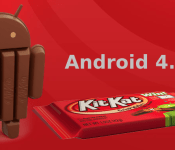
Android 4.4.4 rolling out to Nexus 4, 5, 7 and 10

Earlier this month Google started rolling out Android 4.4.3 update to certain Nexus devices and now we have yet another update by Google; 4.4.4 is here.
Suffice it to say, Android 4.4.3 update caused issues on certain devices. People have been reporting issues with bluetooth and wi-fi signal most of all. This might be the reason Google is pushing yet another update so soon after the 4.4.3 update. Other than certain Nexus and Google Play Edition devices only Moto X, G and E have received 4.4.3 update thus far. Google has released factory images for Android 4.4.4 (KTU84P) update, although it doesn’t seem to be available OTA just yet. The only differences seem to be under the hood, as we said probably squashing some bugs and stuff.
Do you have Android 4.4.3 on your device(s) and are you having issues with it?
VIA: Phandroid
The post Android 4.4.4 rolling out to Nexus 4, 5, 7 and 10 appeared first on AndroidGuys.

Disney Research uses trippy camerawork to tell a tale of immortality

Disney Research has done an awful lot of neat stuff in the past, but it hasn’t really approached Walt’s bread and butter before: video. Instead of going with animation, though, the team is using some pretty slick camera tricks to tell a live-action story about unconditional love and a mother attaining immortality through her son. We thought the premise was kinda weird, too — you aren’t alone. Stitch Kingdom initially spotted the short, dubbed Lucid Dreams of Gabriel, and the teaser features techniques like novel computational shutters, high dynamic range tone-mapping and a scene with a few different frame-rates happening all within the same shot. By applying these effects in post, the filmmakers, with help from ETH Zurich, were able to achieve results that otherwise couldn’t be produced with conventional camera equipment. Fitting, considering the title references conscious dreams, eh? The full version of the short is due out sometime in August, but you can watch the teaser for yourself just after the break.
Filed under: Home Entertainment, HD
Via: Stich Kingdom
Source: Disney Research Hub (YouTube)
Honeywell’s Lyric thermostat is a worthy Nest competitor (hands-on)

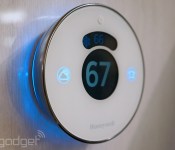
Last week Honeywell announced the Lyric, its answer to the Nest learning thermostat. Today, we got a chance to see the WiFi-connected smart device in person. Retailing for $279 starting in August, the Lyric stands out for its geofencing feature, which uses smartphone location info to know whether you’re home — and to tweak the settings accordingly. When you’re away, energy-saving mode is activated, and when you get within seven miles of your house, your preferred temperature will kick in. Honeywell thinks (well, hopes) you’ll choose its product over the Nest for this reason, citing both the convenience factor and the energy savings.
Looks-wise, at least, the Lyric is a bit more sophisticated than the Nest, with an all-white design that’s sleek and understated. The thermostat packs a proximity sensor to recognize when you’re nearby, and we saw the screen dim when we stepped away from it as promised. We like the halo of light that flashes orange (heat), blue (air) or green (away mode) to indicate the thermostat’s current setting, too. Honeywell’s also touting the Fine Tune feature, which factors in humidity levels, along with both indoor and outdoor temperatures, when adjusting your home’s climate. We couldn’t exactly test that feature out in our short hands-on time at a trade show, but in theory the feature would lower the temperature a few extra degrees to compensate for humidity.
On either side of the main display are buttons, one for viewing a weather forecast for the day and the other for telling the device that you’re leaving home. Once you’ve pressed the “away from home” button, you’ll have the opportunity to specify how long you’ll be gone so the Lyric can adjust settings accordingly. Naturally, you can change the current temperature and specify settings for recurrent events — such as bedtime at 11:30 — via the Lyric app (on Android and iOS) as well.
While we wouldn’t say the Lyric is necessarily better than the Nest — it really depends on your habits, as well as your aesthetic preferences — the thermostat is a strong contender. That said, $279 is a lot to spend on a thermostat, especially when the well-established competition costs $30 less. In any case, Honeywell’s thermostat is just the first product in its new smart-home lineup; when we asked about the Lyric name, a rep told us the idea was “keeping life in tune,” implying that the company has a few other smartphone-controlled products on the way.
Jon Turi contributed to this report.
Filed under: Household

AMC’s plans for an internet TV service leak out, but don’t expect ‘Mad Men’

AMC’s cable TV channel has evolved from the home of old movies to hosting TV series, topped by Mad Men, Breaking Bad and The Walking Dead. Now, the infamous “people with knowledge of the situation” have revealed that it’s working on a new subscription internet service. First reported in The Information, the rumors suggest AMC will launch websites focused on specific categories, like documentaries or horror, possibly with the help of a web video startup it’s invested in called DramaFever. That’s one way to go of course, instead of the “some of everything” route currently dominated by Netflix, Amazon and Hulu. A Bloomberg report says it won’t host licensed shows like Mad Men (already tied up in licenses to the other services) so it’s unclear exactly what content they might have to start. AMC has two video on-demand channels already, and its cable experience should serve it well in the suddenly crowded internet market. If this is as good as it gets for the traditional cable bundle — and AMC can’t increase rates for its channel — trying its hand on the internet could be a way to grow.
[Image credit: Jordin Althaus/AP Photo/AMC]
Filed under: Home Entertainment, HD
Source: The Information, Bloomberg

Apple Seeds OS X Mavericks 10.9.4 Build 13E19 to Developers [Mac Blog]
 Apple today seeded build 13E19 of OS X 10.9.4 to developers, just over a week after seeding the second OS X 10.9.4 beta and more than a month after the public release of OS X 10.9.3, which included enhanced support for 4K displays and syncing improvements.
The beta is available through the Software Update mechanism in the Mac App Store as well as through the Mac Dev Center.
It remains unclear what improvements the 10.9.4 update will bring to Mavericks, but it is likely to include bug fixes and stability enhancements. Apple is asking developers to focus on Graphics Drivers, Bluetooth, Audio Drivers, Finder, App Store, and Safari.
Third-Party Chargers May Damage iPhone 5 Charging Circuitry
Apple has warned consumers against using third-party power adapters with their iOS devices as they can cause safety issues such as burns and electrocutions, but as it turns out, third-party chargers may also be responsible for causing damage to one of the chips in the iPhone 5.
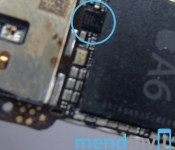
According to UK repair company mendmyi and first reported by iMore, cheap third-party iPhone chargers and USB cables can possibly damage the U2 IC chip on the logic board of the iPhone 5, which might the device to fail to boot up or charge past 1% battery life after the battery drains.

The U2 IC chip controls the charge to the battery, the sleep/wake button, some USB functions, and regulates the charging power to the power IC that actually charges the phone. When damaged, the chip can fail to work properly, which prevents an iPhone 5 from turning back on. While a fresh replacement battery will power the iPhone, once the battery is depleted, the issue resurfaces.
Mendmyi says that it has seen multiple iPhone 5 devices with a damaged U2 IC chip and has narrowed the problem down to third-party chargers and USB cables, which do not properly regulate voltage.
The cause of this component becoming faulty is really quite simple — third party chargers and USB leads!
The original Apple chargers and USB leads regulate the voltage and current to a level that protects your valuable iPhone and prevents it from damage.
Charging your iPhone using a third party charger or USB lead that does not regulate this as much allows for larger variables in voltage and current, this then damages the U2 IC and can leave you with a seemingly dead iPhone 5.
It is not clear if the issue is limited to the iPhone 5 as some users have also reported third-party charger issues with the iPhone 5c, which may use the same component, but the iPhone 5s and the iPhone 5 use different U2 IC components. Users with an iPhone 5 experiencing charging issues that have used a third-party cable may have damaged their devices, which will need to be repaired by Apple or another repair outlet.
Apple has regularly recommended against using third-party chargers and cables. In mid-2013, the company even launched a third-party power adapter recycling program, following the electrocution of a Chinese woman allegedly caused by a counterfeit charger. Apple ran the recycling program from August to October of 2013, recycling counterfeit adapters and providing customers with a $10 credit towards an Apple-branded charger.
As of iOS 7, Apple also warns customers when they are using unauthorized cables or accessories with their devices. The company’s Lightning connector, introduced with the iPhone 5, fourth generation iPad, and original iPad mini, utilizes several different chips to manage dynamic pin assignment and to recognize whether connectors came from authorized channels.

Apple’s own chargers “undergo rigorous testing for safety and reliability,” according to the company, and are designed to be safe and work properly with iOS devices.
See more of Android Wear, Google’s wrist-borne OS

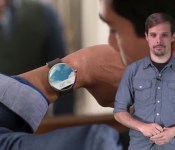
Google pretty much divulged the most important things about Android Wear when it launched the OS, but this new video lays out all the details complete with visual aid. Timothy Jordan, the company’s developer advocate, shows off a number of user interface elements in the video and explains how it doesn’t make sense putting phone icons on a smartwatch. As mentioned before, you can issue voice commands by saying “OK, Google,” and the OS uses Google Now-like cards to show you various information (weather, flight details, etc. — the usual things available on regular Android).
Jordan also details how apps made for the platform can use different types of notification, like Stacks, which, well, stacks several for easier viewing. There’s also the Pages format that shows one lengthy notification in several cards, and the Replies format, which gives you the option to respond through the watch itself using voice commands. Bottom line is that Android Wear, according to Jordan, is “glance-able” and reduces the time you need to interact with your smartwatch. The point of the video is to show you all these features before the LG G Watch and the Moto 360 come out, though, so press play below to see it all for yourself.
Filed under: Wearables, Google
Via: Android Beat

The next version of Android will enhance battery life, speed up apps

Several months ago, Google added an experimental runtime option to speed up apps in Android 4.4 KitKat. A runtime, for the record, supports the apps running on your device — without it they’d be nothing but piles of useless code. Called ART (short for Android Runtime), that same mode will become the default when Mountain View releases the next version of its operating system. Developers spotted tweaks to Android’s open-source code indicating the upcoming change, and the update looks to be a positive one. Without getting bogged down in details, ART essentially makes apps run faster and more efficiently, with the downside being that they’ll take up slightly more space on your phone, as well as lengthier install times.
ART will likely replace the current app-running software Dalvik as the default on Android, though the latter option could still be available. In addition to enhancing app performance, ART is said to slightly increase battery life. Even if the gains are small, that’s good news for anyone using the most popular mobile OS in the world. And with Google I/O just a week away, we may hear about the next version of Android very soon.
Filed under: Software, Mobile, Google
Via: Phone Arena, Android Authority
Source: XDA Developers
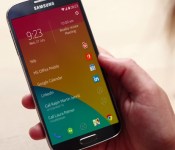
Yes, Nokia has released an Android launcher

The Android launcher scene might be getting a little out of control — even Nokia (whose X phones are now under Microsoft’s wing) is getting into the game. The Finnish firm has just released Z Launcher, a home screen replacement that gets you to frequently-used apps, contacts and sites as quickly as possible. The software learns your habits and surfaces the content you’re most likely to use based on where you are, what you’re doing and the time of day. It might put your calendar app at the top when you’re in the middle of the workday, or highlight Instagram when you’re out on the town. You also don’t have to dive into the app tray if you’re looking for something specific; you can draw an item’s first letter to bring up a narrow set of results.
Z Launcher’s interface may be simple, but getting a copy may prove tricky. It’s currently available only to a limited number of users in a rough alpha release. And while the alpha should run on many Android phones, Nokia has only tested on the Nexus 5 and recent Galaxy S models — don’t be surprised if other devices throw a fit. We’ve also noticed that the launcher download process is hit-or-miss, so you may have to be patient. Still, this is your big chance at seeing how Nokia designs an interface for other companies’ handsets.
Filed under: Cellphones, Mobile, Nokia
Source: Z Launcher
Extremely small and wireless earbuds? Kickstarter all the way

So, here’s the thing, I hate wires and I bet there are lots of you like me out there. Wires are just so annoying and not practical at all, they get tangled up all the time. There are some solutions for this as far as earbuds go, like Jaybird Bluebuds X which are great, but they’re also not exactly wire-free. Earbuds are connected via cable in order to extend battery life and you don’t misplace them by accident.
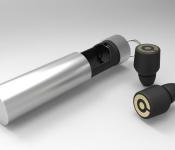
Enter Earin, the smallest wireless earbuds in the world measuring at 14x20mm which connect to your device via bluetooth. With these earbuds you won’t have to worry about tangled wires and such, although you might be a bit concerned when it comes to battery, considering these earbuds will give you only about 3 hours of audio before you’ll have to charge them. This is to be expected though, considering the size, but there’s an upside to all this as well. With Earin earbuds you’ll also get a metal capsule in which you’ll store them when you’re not using them. This capsule is also a keychain and a wireless charger for the earbuds.
Earin had a £179,000 goal and it now has over 3,500 backers and has gathered around £400,000, which is approximately 3 times more than what they were looking for. This doesn’t surprise us though, considering this has been a long time coming. If you want to contribute you can do that via the link below, there’s still plenty of time.
SOURCE: Kickstarter
The post Extremely small and wireless earbuds? Kickstarter all the way appeared first on AndroidGuys.
 AIVAnet