



Blame Canada: Google ordered to block website links worldwide

A minor Canadian court dispute has resulted in a judge’s far-reaching decision that Google must block a website’s search results worldwide, not just in Canada. It arose from a case involving a company that stole its ex-partner’s intellectual property and fled abroad to sell pirated equipment online. Following a court order, Google Canada pulled the rogue firm’s search results, but it put up new sites faster than they could be erased. As a result, a judge ordered Google to spike all its links worldwide — an unprecedented ruling against a search company. Google said that it would appeal to BC’s highest court, claiming the judge overstepped her jurisdiction. Many legal critics also found the ruling puzzling, saying it could set a legal precedent limiting the right to free speech.
As the NYT pointed out, the judge oddly didn’t order Bing, Yahoo or another search providers to pull the results, however. There’s also the thorny question of whether search sites should be held accountable for the illegal actions of others, any more than property managers are responsible for shady handbills. More importantly, many have pointed out that if such rulings stick, rogue nations could use them as an excuse to stifle free speech. Either way, along with the the EU’s recent ruling that Google must strike individual search results on demand, it’s one more headache for Google.
Via: NY Times (Paywall)

‘Computerworld’ ends its print run, becomes a digital-only magazine

After nearly half a century Computerworld is ending its existence as a print magazine. Next Monday the final issue of the stalwart publication will be circulated on processed wood pulp. Computerworld won’t be going away completely, however, an online version will continue to exist. It’s a story that is becoming increasingly familiar. Countless magazines and newspapers have closed up shop as print has suffered what can only be described as a long and slow death spiral. But plenty have carried on as digital versions, as publications try to breathe new life into their struggling properties. In addition to the website, Computerworld will launch a digital magazine on August 1st that will be optimized for tablets and desktop PCs. Oddly, it seems the initial version will neglect truly mobile formats. Now all that remains to be seen is if one of the oldest computer magazines in the world can survive the continued evolution of the publishing world.
Filed under: Internet
Source: Ars Technica
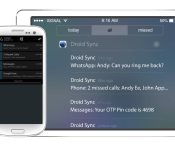
Klone: Get Notifications On Your iOS Device
In this highly competitive world, a lot of Smartphone devices come into existence in the marketplace. It is all because of a number of operating systems like, Android, iOS and many others. Many of the people prefer to buy Android devices, while others buy iOS devices like iPhone or iPad. If you are making use of an Android based mobile phone, and also have an iOS based Smartphone device that you use alternately. Sometimes, when you do not have your Android Smartphone device with you and you are having an iPad or iPhone device with you and you have missed a message or call on your Android mobile device, then what you do in these situations.

In order to stay away from these situations, there is an app available for you, known as Klone. You can install this app on your device and it displays all your notifications on your iOS based device. This app needs both the iOS (Klone) and Android (Droid Sync) app in order to work. You can download this app from the Google Play Store and iTunes App Store. Droid Sync will forward notifications coming on your Android based device to your iOS device in the form of push notifications. Features of Klone app are mentioned below:
Freedom to select either device
With this unique app, you can keep your mobile charging in another place or room or in your purse or bag and do not need to be concerned about missing out on messages or calls when you are involved with your iPad or iPhone device.
Acquire essential notifications
With this app, you have given a chance to select from a list of apps in order to decide on what notifications acquire mirrored to your iOS based Smartphone device.
Answer later if you want
Several persons play a more important role in your life than others. The same is true for notifications. Several notifications are more essential as compared to others. With this kloneapp option, you can determine whether you must require responding to that notification or neglect it for right now.
You can remain your notification, secure with this app as all the notifications are deleted in an instant manner, once they are transferred to Apple push servers. All logs are as well filter of content for any of your notification. So, get started with this to take all the possible benefits of it in an easy and quick manner. For more info, visit the official website of the company.

Benchmarks reveal two versions of Samsung Galaxy Note 4

Samsung is prepping at least two versions of the Galaxy Note 4, both of which have been found on benchmark website AnTuTu. Not that we’d expect anything else –Samsung routinely releases handset variants– but we’re digging the specs for these two.
Reportedly, one model (SM-N910S) is expected to feature a Qualcomm Snapdragon 805 processor while the other (SM-910C) figures to pack a 64-bit Exynos chipset. Both figure to include 3GB RAM, 32GB internal storage, a 16-megapixel rear camera, and front-facing 3.6-megapixel shooter. Powered by Android 4.4.3 (for now), the display should also be 5.7-inches and offer 1440×2560 resolution.
We should look for Samsung to introduce the next-gen Galaxy Note 4 at IFA which kicks off in early September.
The post Benchmarks reveal two versions of Samsung Galaxy Note 4 appeared first on AndroidGuys.

Simplistic ‘Yo’ Messaging App Soars in App Store Charts, Proves Vulnerable to Hacking
The Yo messaging app [Direct Link] debuted earlier this year and recently rocketed up the iOS App Store charts, where it currently sits at number five among top free iPhone apps in the United States. The simplistic app that does nothing more than allow users to ping contacts with a simple “Yo” message may be gaining traction with its quirky ease of use, but a hack, confirmed by Yo founders to TechCrunch, may put users’ personal information at risk.

According to the TechCrunch report, a student at Georgia Tech discovered a flaw that allows a nefarious user to discover the phone number of another Yo user, spoof a message from any Yo member and send a text-based push notification to recipient devices. Yo founder Or Arbel confirmed to TechCrunch the service was having “security issues,” but did not provide details on the vulnerability, only stating that the issues will be resolved soon.
Founder Or Arbel has now confirmed that Yo was “having security issues”.
He told TechCrunch: “Some of the stuff has been fixed and some we are still working on. We are taking this very seriously.”
He said he could not reveal which hacks were still live. He said the company has brought in a specialist security team to deal with the issues
Arbel said he hoped the security problems would be fixed “in next few hours.”
According to Valleywag, the idea for Yo came from Israeli investor and Mobli CEO Moshe Hogeg, who wanted an easy way to communicate with his secretary. Developer Or Arbel ran with the idea and created the Yo app, which Hogeg uses. Life Before Us LLC, the company created by Abel, recently received $1 million in angel funding to continue development of the Yo app.

LAPD embraces the clean and silent electric motorcycle

If we were ever asked to ride an electric motorcycle, our first instinct would be to make NYEEEEAWWWW noises to compensate for the vehicle’s silent engine. That’s precisely why we’re not employed by the Los Angeles police department, which has just bought an electric motorcycle for stealth operations. The department has only ordered one of the vehicles so far, purely as a test of its potential, but given that it produces no emissions and can be charged for less than a dollar, shouldn’t displease the force’s bean-counters. Of course, the lack of a tailpipe also makes this ideal for activity within buildings, so expect police chases in the near future to be a lot more exciting than the average freeway dash.
Unfortunately for everyone else, the Zero MMX in question isn’t available on general sale, since it’s tailored for special forces units and police departments. That’s just as well, since it’s capable of fording rivers of depths up to three feet, goes from 0-to-60 in under five seconds and has a top speed of 88 miles per hour. In fact, this electric superbike only has one real flaw: it’ll only run for two hours before you need to plug it in again. Perhaps, if you’re planning to do a crime in Los Angeles, you should be to go get a full tank of gas before you begin.
Filed under: Transportation
Via: Wired
Source: PRNewsWire

Path spins out dedicated messaging app that’ll let you text businesses too

Today, Path has joined the likes of Facebook by splintering off one of its most popular features — messaging — into its own app. Simply called Path Talk, the standalone messenger comes just a year after the introduction of private messaging into the social network. But that’s not all. In concert with Path Talk’s launch, the company has also announced the acquisition of TalkTo, a service that lets you text any local business like you would a person and get a response. And, you guessed it, one of the standout new features of Path Talk will include the ability to do exactly that.
But before we delve into that, let’s begin by explaining what Path Talk brings to the table. When Path started in 2010, its aim was to be a social network unlike any other. It was focused on close personal friends instead of just random acquaintances or high school classmates you hardly remember. It’s why the app initially restricted the friend list to just 50 people, to force you to be selective in what and to whom you share your life’s private moments. Since then, the niche network has evolved, loosening that restriction to 150 and most recently, it’s released that limit entirely. Now you can have as many friends on Path as you want, and it’s reporting as many as 4 million daily active users. As other social networks like Facebook and Twitter are gaining more traction, it seems it’s a good time as any to seek out new ways to grow.
“We feel that breaking out messaging into its own app was by far the best way to go about delivering it to users,” Dave Morin, CEO and co-founder of Path, tells us. Additionally, Path Talk is just the first of many apps the outfit plans on breaking out from its main offering. “We want to break Path up into multiple applications […] Our vision really is to be an application company.” Indeed, that’s why Path Talk and Path can be used independently. If you don’t want to use the Path app, but want to use Talk, you can do that.

When you first download Path Talk, you’re prompted to log in with your Path credentials. “Path is this umbrella, and you have these two apps under that,” explains Cynthia Samanian, a Path product manager. Indeed, Path Talk looks and feels a lot like the main Path app, and maintains a similar design language throughout.
If you’re already a Path user, the people list will have all your friends already on it. You can also give the app access to your address book, which will tell the app who among your contacts has a Path account, and those people will also be added. If your friends aren’t on Path, you’re able to add them by sending them a SMS invite to download the app.
Just like Snapchat and Slingshot, Path Talk messages are ephemeral — they expire after 24 hours. “Most conversations aren’t recorded and saved forever,” explains Cynthia Samanian, a Path product manager. “We’ve all opened up message threads only to find a conversation that happened two weeks ago and gotten confused,” says Morin. “Thinking about context is really important — we want you to have the best possible conversation you can have as soon as you enter a messaging thread with somebody.”
To that end, one of the key features of Path Talk is something called ambient status. It essentially lets your friends know a little something about you based on the data it gleans from your phone. When enabled, ambient status can display your location (along with weather, if applicable), whether you’re nearby, the name of the song you’re listening to, if you’re low on battery, if you’re working out or even if you’re in transit, say in a car or a bus. There’s a special ambient status tab that lists them all, or you can simply figure it out based on the icon or colored dot on the Friends or Messages tab.
“Most people start a messaging app thinking they need to start a conversation with someone for a reason,” says Samanian. “What this ambient status thing does is give some information about him or her beforehand, to act as kind of a conversation starter.” Morin says, for example, that different status types can lead to different interactions. If you see some friends are nearby, you can text them to meet up. A low battery status would indicate the person you’re texting is likely about to drop out. “How many times are you just about to tell someone you love them and then their phone dies?” asks Morin. “This makes sure that’s never a problem.”
Music sharing has always been a key feature of Path’s core app, and it’s the same with Talk. If you see a friend is listening to a song, you’re able to tap the music icon to see what he’s playing and get a short preview of the tune. The app will display the song that’s playing in the default Music app if you’re using iOS, but if you’re on Android, songs played on any app — say Rdio or Spotify — will show up. However, Morin says that might change with the arrival of iOS8 in the next few months.

If you happen to have all of these ambient status options turned on, Path Talk has a prioritization system that figures out which status to best display. For instance, a low battery status is probably more important than where you are or what music you’re rocking out to, so that’ll show up next to your name over all the other options.
As for actual messaging, it works much the same way it did on the Path app. With Talk, you’ll just have to tap the top to open a new conversation tab with either one or more people. Just as before, you’re able to incorporate stickers, photos, song embeds, voice messages and location pins mid-conversation. If you’re short on time, you can also choose to drop in a green check as a quick “Yes” response. If you hold down on the check, you’ll see three other options: an X to indicate “No,” a question mark as a sort of ping and a phone icon. When selected, it’ll drop a “Call me” link that opens up the phone dialer complete with the sender’s phone number.
Now, back to the acquisition of TalkTo. A three and a half year old service, it essentially lets you send a text to a phone number of a place instead of having to call it. So rather than calling up a restaurant to see if it has reservations or phoning Best Buy to find out if it has a particular item, you can just send a text message to the phone number via TalkTo. Acting as a broker, TalkTo will then figure out the best way to get that request across, either by email or sending an actual text to someone’s cell phone. If a place isn’t yet responding on their own, well, TalkTo actually has a call center with agents to make an actual phone call on your behalf.

“In every case that you’re asking the question, in the same way you text a friend, you’ll get a response,” says Stuart Levinson, CEO and co-founder of TalkTo. “This is the service — you’ll never have to worry about if it’ll work for this store or that. It’ll be ubiquitous.” This very feature will be added to Path later this summer, and it’ll be called Place Messaging.
“We really envision messaging as a hub for your life,” says Morin. “Not just friends and groups, but also businesses […] Having all of it in one central messaging hub is a very powerful idea.”
Aside from Path Talk, the company is also making a few interface changes to its main app. Obviously, the messaging function is now gone from Path — tapping on a message bubble will simply kick you over to Talk instead. The UI has improved as well, with a new tabbed navigation bar for quicker access to various sections and a new chooser that’s more intuitive.
Path Talk is available for Android and iOS, and should be ready to download from both app stores starting today.
Source: Path

What you need to know about 3D-printed organs

Sure, 3D printers that can spit out chocolates, create shoes, handcraft cars and help astronauts sound fun and magical, but a lot of scientists are working to make models that aren’t just fun. They’re developing 3D printers that can also save and change lives by printing out functional human organs. Think about it: If we can make organs on demand, patients don’t have to wait as long for transplanted organs. In the United States alone, 78,837 patients are waiting for organ donations (at the time of publication), but only 3,407 donations have been made since January 2014. Machines capable of creating functional human parts could significantly shorten — or nullify — that line. Sadly, we’re still at the early stages of the technology. As it turns out, printing working human organs is a lot more complex than printing out plastic toys.
WHAT IS IT?

Researchers have been looking into growing organs in labs for a long time, but it wasn’t until the late 1990s that bio-printing was thrust into the limelight. It was all thanks to the scientists at the Wake Forest Institute for Regenerative Medicine, who 3D-printed the synthetic building blocks they needed to grow human bladders. They didn’t print the actual bladders; it was only in the early 2000s that Clemson University bioengineer Thomas Boland started modifying ink-jet printers to dispense biological ink and make 3D objects.
In 2010, one of the first bio-printing companies was founded: Organovo. At the moment, Organovo’s printing out liver tissue samples used for drug testing and research. The company’s hoping to develop a functional liver in the near future. We’re getting close, but we’re not quite there yet.
HOW DOES IT WORK?
Let’s get this straight: while there’s a huge gap in complexity between printing an organ and printing a typical plastic figurine, the processes are quite similar. The machines used for both have cartridges and nozzles that squirt out ink (biological ink, in this instance), layer-by-layer on a platform. But, they do have a few key differences:
- We know what most organs look like, but to be able to create them for individuals, scientists need to perform CT scans or MRIs on the patient. Then, they need to run the results through computer software to create a blueprint that’ll serve as their guide on how cells are positioned in each layer.
- Instead of PVC plastics or metals, bio-printers use human cells of whatever organ they’re making, along with binding agents to keep everything together. Aside from the actual organ’s cells, printers could also use stem cells, bioengineered materials (like a polymer called Alginate that was previously used to make aortic valve tissue) and other substitutes the human body won’t reject. For instance, in 2012, a 3D-printed titanium jaw was implanted into an 83-year-old woman, while a man in the US has been walking around with a 3D-printed plastic skull since 2013.
- Once a specimen is printed, it needs to go into the incubator so the cells can fuse and start working together like a real organ.
That last part is where the real issue lies, and is mostly the reason why we don’t have organ creation machines in hospitals worldwide yet.

WHAT’S THE HOLD UP?
According to Anthony Atala (who led the Wake Forest team that created those famous lab-grown bladders), it’s a combination of several issues. Prime among them those issues is finding materials that can be used to create body parts, and then getting them to grow adequately outside the body. Most of all, though, you can’t just stick an organ fresh from a 3D printer inside a patient. As we’ve mentioned, real organs are complex, and just because the printed cells fused together doesn’t mean they’ll work as intended. In the words of Cornell engineer Hod Lipson:
“You can put the cells of a heart tissue in the right place together, but where’s the start button? The magic happens after printing has taken place.”
Lipson also notes that there’s still no software powerful enough to make very detailed organ models that researchers can consult before printing.
Aside from difficulties making a 3D-printed organ’s cells behave like the real thing, scientists also find it hard to create blood vessels. Organs need arteries, veins and capillaries to pump blood through them and deliver the nutrients they need to stay alive, but these are long, thin, tubular and… hard to print.
Still, it’s not like nobody’s trying: just this June, a team from Brigham and Women’s University used sugar-based molecule agarose as blood vessel templates. Fraunhofer researchers have also been developing their own technique since 2011, and Harvard scientist Jennifer Lewis is looking into printing organs that already come with tiny spaces from the get-go for blood and nutrient flow.
THE FUTURE OF 3D-PRINTED ORGANS
Thus far, there’s been quite a number of semi-successful attempts at printing organs. We say semi-successful, because most of them aren’t functional, or they survive just a few days. Organovo, for instance, created a mini human liver that actually works — except it lasts only 40 days. A team from the University of Louisville, on the other hand, successfully printed heart valves and small veins in April, with hopes of making a functional heart using a patient’s cells in the future. Let’s not forget those Cornell bioengineers who crafted that faux ear (which works just fine, by the way) out of living cells and injectable gels.

According to Atala, though, roughly 90 percent of the patients in the organ waiting list are looking for kidneys. Maybe that kind of demand is what fueled a group of Chinese scientists to develop small, working printed kidneys, which unfortunately only stay alive for four months. Atala himself is looking for ways to make a kidney via 3D printing; he even showed off a non-working model on stage during his TED talk (seen below).
During that same presentation, the surgeon shared how the technology could mature. He spoke of a future where flatbed scanners could look at and assess a patient’s wounds and then go back up to print directly on the patient’s body. Before we get there, bio-printed tissues and organs are headed to labs and med schools, followed by perfect specimens that can be transplanted into the bodies of waiting patients soon after.
WANT TO KNOW MORE?
Watch this excellent TED talk from Anthony Atala, for starters:
The American Society of Mechanical Engineers’ Mark Crawford wrote a piece about creating valve tissue with 3D printing that informed this piece, as Anthony Atala’s study (which is published here) did. And finally, CNN‘s got a relatively up-to-date piece right here.

AnTuTu benchmark leaks supposed Samsung Galaxy Note 4 specs including Snapdragon 805
 It’s always a good idea to keep an eye on the AnTuTu benchmark database because you never know what will turn up. The latest discovery from the depths of the database is what appears to be benchmarks from two different variants of the upcoming Samsung Galaxy Note 4. With the release of the Galaxy S5 LTE-A earlier this week, we know that Samsung has Quad HD displays and the new Snapdragon 805 processor ready for use in its devices, and sure enough, at least one of these benchmarks come from a device with just that.
 The other device also sports a Quad HD display, but instead has what will be Samsung’s new octacore Exynos 5433 processor; presumably, the different variants will be available in different regions and markets depending on the availability of LTE services. Along with those headlining specifications, the Note 4 looks like it will also have 3GB RAM, 32GB storage, will be running Android 4.4.3 (presumably at least Android 4.4.4 by release), and a 16MP rear camera paired with a 3.68MP front camera. The Note 4 is expected to make its annual appearance at IFA in September, however as with all leaks of this nature, it’s best taken with a grain of salt.
What do you think about these Samsung Galaxy Note 4 specs if they were real? Are you going to get the Note 4? Let us know your thoughts in the comments.
Source: AnTuTu via Phone Arena
//<![CDATA[
ord = window.ord || Math.floor(Math.random()*1E16);
document.write('’);
//]]>

Google adds new market availability for Play Books, Play Movies

Google this week expanded the number of countries offering its Play Books and Play Movies apps and services. The former picks up nearly a dozen new markets while the latter gets almost twice as many new areas. There are quite a few countries left for each property however we’re glad to see Google pushing forward with these. Below is a breakdown of the new markets.
Google Play Movies
- Albania
- Argentina
- Armenia
- Azerbaijan
- Belarus
- Croatia
- Czech Republic
- Estonia
- Greece
- Kazakhstan
- Kyrgyzstan
- Lao People’s Democratic Republic
- Latvia
- Lithuania
- Moldova
- Poland
- Slovakia
- Tajikistan
- Thailand
- Turkmenistan
- Uzbekistan
Google Play Books
- Bolivia
- Costa Rica
- Dominican Republic
- Ecuador
- El Salvador
- Guatemala
- Honduras
- Nicaragua
- Panama
- Paraguay
- Uruguay
Click here for a full list of all of Google’s Play services and their respective availability.
The post Google adds new market availability for Play Books, Play Movies appeared first on AndroidGuys.
 AIVAnet