


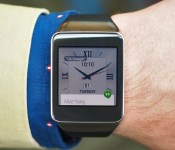
We just got to see (and touch) Samsung’s new Gear Live smartwatch

Here at Google’s yearly developer conference we just learned a whole lot more about Android Wear, the company’s OS tailored to wearables. With that info came word that Samsung’s rolling out the newest member of the Gear family, the Live, and I just laid my hands and eyes on one firsthand. Problem is, the smartwatch was only running Android Wear in “retail mode.” That means that I couldn’t actually explore the ins and outs of Android Wear, but I did get to strap the newest member of Samsung’s wrist-worn family on my arm.
The Live fits right into the design aesthetic we’ve seen on the Gear, Gear 2 and the Gear Neo, and shares their solid build quality. It’s got a seamless silver housing tightly fitted around its screen and a rubber wristband that clasps together with a pair of prongs studding the back of a brushed silver buckle. Unlike its brethren, however, the Live has a slimmer profile and has no buttons or screws adorning its housing — an omission meant to keep with Android Wear’s professed love for voice controls, no doubt.

Unfortunately, you still need to navigate through swipes, and it turns out that the shiny screen and the silver surrounding it were both great at acquiring fingerprints. So, while the watch is handsome to behold at first, it was soon decorated with evidence of my use. The watch is relatively unobtrusive to wear, light on the wrist, and comfy for the five minutes or so that I wore it. Swiping through the demo screens went off without a hitch, and the Live even picked up my “OK, Google” voice command in a noisy environment from a couple feet away without issue.
Attendees of the conference will be taking one of these home with them tomorrow, at which point we’ll be better able to put the Gear Live through its paces. Until then, our hands-on video will have to suffice.
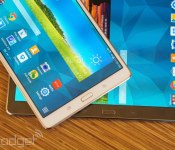
Samsung’s latest flagship tablets launching July 4th for £319 and up

Samsung has such a fondness for tablets it’s sometimes hard to keep up. The recently announced Galaxy Tab S, 8.4- and 10.5-inch Android slates stand out from the crowd as Samsung’s newest flagship line, and the company said today they’ll arrive in the UK on July 4th (aka next Friday). Both models, which marry high-end internals with WQXGA (2,560 x 1,600) displays, will be available online and through several retails stores (including Samsung’s own) from £319 for the WiFi-only, 8.4-inch version and £399 for the full-sized slate.
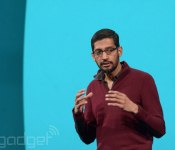
You can now relive the Google I/O 2014 opening keynote

Did you nod off a few times during the last half hour of Google’s opening keynote of I/O 2014 earlier today? No worries! The full video has been archived for your post-event viewing pleasure on YouTube. Hop down past the break to take a good long look at the nearly three-hour event spanning Android “L,” Auto, Wear and more.
Filed under: Internet, Software, Google
Source: Google I/O
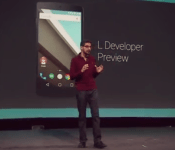
Google previews Android L features

As expected, Google today showed off some of the upcoming features that will make their way into the next build of Android. Known, for now as the “L” release, we should look for it later this fall.
It’s going to be a long summer of anticipation as the set list is quite deep. As Google puts it, this is the biggest release of Android to date. And, based on what we saw today at Google I/O, we can’t argue the point.
There is no official name or release version just yet, but there’s tons of new features coming. Due “in the fall”, the “L” version of Android brings about a much more intuitive layout and interaction. Using real-time light sourcing, developers can add depth to their menus instead of making things two dimension. Slight shadows and rich animations ensure users are able to pick it up more quickly and play with device. The Roboto font has been given a punch-up and everything just feels consistent across the platform.
There are more than 5,000 new API’s for developers to play with, many of which will work beyond simple mobile form factors. This is the stuff that will power your phones and tablets as well as watches, wearables, and even your car.

The lock screen experience will be upgraded to include features from the notification shade and will get a brand new look. Android will serve up the most relevant stuff to users and allow them to act, dismiss, reply, etc. all from the lock. Speaking of which, you’ll also be able to bypass any lock security protocols when using certified Bluetooth devices or when in trusted environments. In other words, you can skip your PIN if you happen to be wearing an Android Wear device that’s trusted by your phone.
Improvements are also being made to battery life, garbage collection, graphics, and overall performance. The “L” release will be fully 64-bit compatible and will include enhanced security. Toss in some platform integration of Samsung Knox, separate enterprise environments, and ART runtime support and you’ve got the making of one hell of a release.
If you’re like us then you’d probably prefer to see this in action. To do so, simply watch the YouTube video embedded below! Skip to the 39-minute mark to see the “L” developer preview stuff.
The post Google previews Android L features appeared first on AndroidGuys.
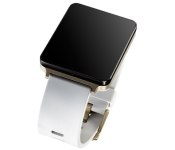
LG G Watch specifications released, they’re rather solid for a smartwatch

Google announced LG G Watch’s availability at Google I/O today and now we have official specs of said smartwatch.
It turns out LG G Watch is rather powerful considering we’re talking about a smartwatch here. It is powered by a Snapdragon 400 chip and has 512MB of RAM, which we could categorize as a low to mid-range Android smartphone. It has 4GB of internal storage is powered by a 400mAh battery. On the front you’ll find a 1.65″ 280×280 LCD IPS panel. As far as sensors go, the watch carries 3 of them, Gyro, Accelerometer and a Compass and supports Bluetooth 4.0 connectivity. The watch itself weights 63 grams is available in White Gold and Black Titan colors. LG G Watch is water and dust resistant and is compatible with smartphones running Android 4.3 and above.
The watch will be available from Google Play later today.
Via: Pocketnow
The post LG G Watch specifications released, they’re rather solid for a smartwatch appeared first on AndroidGuys.
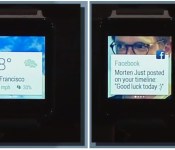
Google Launches First Android Wear Devices, Featuring Always-On Displays and Card-Based Interface
At today’s Google I/O event in San Francisco, Google demoed its Android Wear platform and announced availability of the first Android Wear devices. First announced in March, Android Wear is designed to bring the Android platform to a range of wearable devices from several of Google’s manufacturing partners.

As described on stage, Google has designed Android Wear with many of the features and functions that rumors have suggested Apple’s own iWatch might include. Android Wear supports screens of multiple sizes and styles, including both square and circular. With its always-on display and card-based UI, it displays information like notifications and location-based reminders.
Largely controlled by voice via Google Now integration, Android Wear also supports contextual apps that display information at a glance and it also integrates with several sensors, such as those that monitor steps taken and even heart rate on supported devices. It includes Google Maps support, offering turn-by-turn directions on the wrist and it can be used to control other devices, such as speakers.
Android Wear devices are reliant on a connected smartphone, much like the iWatch is expected to be reliant on the iPhone. Apps that are downloaded from the Google Play Store are able to include a wearable portion, which is automatically installed on a compatible Android Wear device when downloaded on a smartphone, extending available app functionality to the wrist.
On stage, demonstrations of Android Wear gave a clear idea of what we might expect from other wearables in the future, including the iWatch. A Lyft car was ordered via a simple voice command, with the watch automatically detecting a location. Ordering the car, payment, and update notifications on the driver’s location were all displayed directly on wrist, without the need to access a smartphone.
 Samsung Gear Live
Google announced the release of the full Android Wear SDK, along with the launch of the first devices supporting Android Wear. The LG G Watch is available for order today, as is the Samsung Gear Live, a new Samsung watch that supports Android. The platform’s first circular watch taking advantage of the round UI, the Moto 360, will be available later this summer, and additional devices are in development by various partners.
By focusing on a platform rather than a device of its own, Google has managed to get Android onto wrists several months ahead of Apple. According to the most recent rumors, Apple’s much-rumored smart watch won’t launch until later this year, possibly at an October event. The iWatch expected to have a strong focus on health and fitness, with more than ten sensors to collect various types of data.
Google Announces ‘Android Auto’ CarPlay Competitor
At its Google I/O developer’s conference in San Francisco, Google today announced Android Auto, its answer to Apple’s CarPlay. Much like CarPlay, Android Auto is designed to bring the Android experience to a car’s in-dash infotainment system.
As described by Google, Android Auto is contextually aware and puts the apps that users need front and center on the car’s dashboard. Google stressed that Android Auto is “completely voice enabled,” relying on Google Now much the way CarPlay relies on Siri for voice commands. Google also noted that it’s able to offer a completely personalized experience that is mobile, working with any Android Auto compatible car as it is reliant on an Android phone.
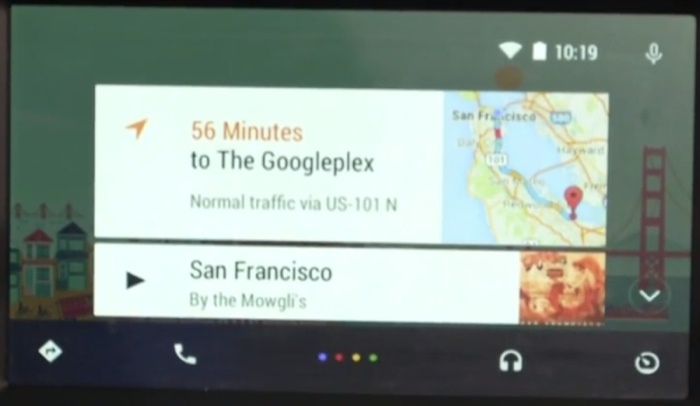
Android Auto integrates deeply with Google Maps, providing drivers with access to all Google Maps features like local search, personalized suggestions, live traffic information, and turn-by-turn navigation.
On stage, Android Auto was demoed planning a trip to the DeYoung Museum in San Francisco. Android Auto was first asked how late the museum was open, providing a response, before it was ordered to navigate to the location, where it offered turn-by-turn directions. It was also demoed composing and sending messages entirely via voice.
Like CarPlay, Android Auto integrates with several different app partners to provide music and other audio, such as MLB at Bat, Pandora, Spotify, Songza, Stitcher, iHeart Radio, and more.
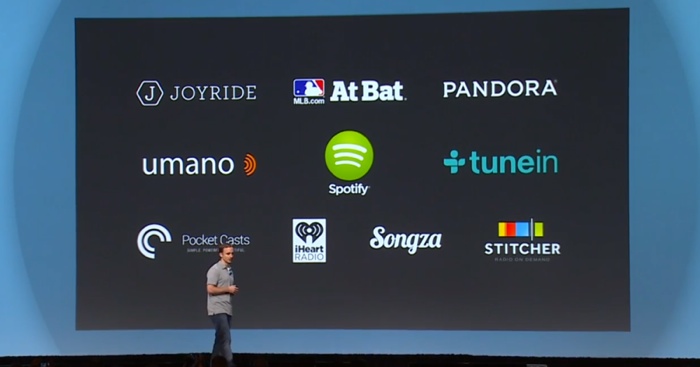
Google also announced 40 new partners for its Open Automotive Alliance, which is a group of “technology and auto industry leaders” that are committed to bringing Android to cars in 2014. The goal of the alliance is to make “technology in the car safer, more seamless, and more intuitive for everyone.”
According to Google, Android Auto will be available in 25 different car brands, with the first cars rolling off dealer lots before the end of the year. Google is also releasing an Android Auto SDK in the coming weeks so developers can create apps for the platform. Apple’s CarPlay is also expected to be available in several different cars before the end of the year.
Android L can squeeze out 90 extra minutes of battery life with a new mode

Even as smartphones are getting bigger and better, battery life is often an issue. Google announced today at I/O that it’s upcoming version of Android includes “Project Volta” to take the problem head-on. A “battery historian” gives more info on exactly what’s draining energy, while a battery saver mode lets users squeeze up to an extra 90 minutes out of each charge by doing things like lowering the screen refresh rate. Following Project Butter to make the OS more responsive and Project Svelte to optimize it for cheaper phones, Volta could quickly have a very tangible effect on how we use our smartphones (and other Android devices). Developers can make their apps much smarter about battery usage, by avoiding updates or holding off on energy intensive tasks when energy is running out. If you want ot try out the new modes immediately, keep an eye out for the L Developer Preview arriving tomorow for the Nexus 5 and Nexus 7.
Filed under: Cellphones, Mobile, Google
Samsung unveils Gear Live, its first smartwatch using Android Wear

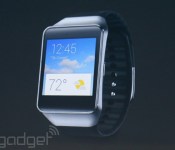
So the rumors were true: Samsung has revealed its first Android Wear-powered smartwatch, the Gear Live. The device mates a familiar, squared-off design (much like the Tizen-powered Gear 2) with Google’s wrist-worn interface. It includes the Gear 2′s 1.63-inch Super AMOLED screen, 300mAh battery and 4GB of storage; fitness gurus will be glad to hear that the heart rate monitor has also carried over. You’ll get to pre-order both Gear Live and its LG-made counterpart, the G Watch, later today; Samsung’s hardware will sell for $200 and ship on July 7th through Amazon, Best Buy and Google Play.
Filed under: Wearables, Samsung, Google
Source: Samsung
Google boosts in-car connectivity with Android Auto

The Open Automotive Alliance finally shows a product at Google I/O after its launch in January this year: Android Auto. Members including Google, Audi, Honda, GM, Hyundai, and chipmaker Nvidia have been collaborating to bring Android safely to the car in 2014. Rather than the more traditional model that sees smarts baked-into the car’s headunit, your phone will project its OS and the app in play onto the car’s screen — much like AppRadio does now. The big benefit here is as your phone updates, your car’s center stack gets better without you needing to fiddle with it.
Android Auto is a completely voice-enabled contextually based system, so speaking to your car will allow it to pass along info on opening and closing times of places near you, restaurant listings, send messages, play music and make calls. The info is then displayed on screen on cards much like you’re used to seeing in Google Now. Apps like Spotify, Songza, MLB.com at Bat are on-hand at launch though we expect that list will grow. In the on-stage demo, the phone was tethered to the car with a cable — likely HDMI — though we expect that it may well use Bluetooth for audio as well. The APIs used in Android Auto are shared by Android Wear, so devs will have the ability to easily port between watch and car or even integrate them. 25 car brands have signed up so far bringing the total member count to 40 including the technology partners that have jumped on board thus far. Car makers like Acura, Alfa Romeo, Audi, Bentley, Chevy, Chrysler, Dodge, Honda Hyundai, VW, Subaru, Maserati and Volvo will have models rolling off the assembly line this year. The SDK isn’t available just yet but will be available soon.
 AIVAnet