



Funding push would put Reading Rainbow on phones and game consoles

LeVar Burton had no trouble crowdfunding Reading Rainbow for the web; now, he’d like your help bringing it to living rooms and pockets everywhere. His team has announced a $5 million stretch goal that, if reached, will port his literary initiative to mobile devices, game consoles and set-top boxes. Yes, that would return the program to TV (if not quite in the traditional sense) after an eight-year hiatus. The goal would also expand free student access to from 1,500 classrooms to 7,500. Burton already has over $3 million as we write this, but there’s still some distance to go — if you’re interested in putting Reading Rainbow on your kid’s Android tablet or Xbox, you’ll want to make a pledge at the source link.
Filed under: Cellphones, Gaming, Internet, HD, Mobile
Via: Polygon
Source: Kickstarter

Huawei’s WiFi is ten times faster than yours

Don’t look now, but the speedy WiFi router you just bought may already be old hat. Huawei has tested WiFi based on a future standard (802.11ax) that can hit 10.5Gbps — about 10 times faster than what you typically get out of an 802.11ac connection today. The trick, the company says, is making more efficient use of the airwaves. The new technology is smarter at allocating wireless spectrum, juggling data between multiple antennas and cutting back on interference. Huawei doesn’t even have to switch to ultra-high frequencies to make the magic happen; its approach works on the same 5GHz band that many WiFi networks already use.
You’re still a long way from picking up a 10-gigabit router at the local electronics shop. Huawei estimates that super-fast routers might not hit the market until 2018, and that’s assuming that both the 802.11ax standard and matching chipsets are ready. Don’t despair at being stuck with “only” single-gigabit wireless for four years, though. An updated 802.11ac spec (802.11ac-2013) is expected to launch in 2015 with 7Gbps speeds, so you’ll soon have plenty of bandwidth to spare.
[Image credit: Getty Images]
Filed under: Wireless, Networking
Source: Huawei

Google I/O 2014: What to expect

Now we’re in June, our attention naturally turns to the event scheduled for the 25-26th of the month, and with Google I/O 2014 only a few weeks away, what has the company got in store for us?
We take a look at some of the more likely headlines that we think the rumours have been solid enough to predict, those that could and would be nice to happen, to those which we probably won’t be seeing Google announce at their Keynote.

Google I/O is usually reserved for major operating system releases as it’s the perfect chance to showcase the new features and also demonstrate the new API’s and system-level components to developers. Codenamed ‘Moonshine‘ internally at Google, but expected to be called Android 5.0 Lollipop staying true to the dessert inspired naming convention, the next version of Android seems all but due given that Android 4.4 KitKat was released back in October 2013 and we’ve been in the 4.x naming convention since Ice Cream Sandwich back in 2011. It seems only fitting that the next release of Android finally sees us into the 5.x numbering scheme with a major update to support Android Wear.
However, with Sundar Pichai, Google’s new head of Android, going on record saying Google I/O was “not a time when we have much in the way of launches of new products or a new operating system”, you have to wonder if Android 5.0 will be on the agenda, and for that matter any products at all. Likelihood 6/10

What a better way to mark a new major version of Android than two new tablets? We’ve already heard a device codenamed Flounder appearing on various leaked documents which is heavily believed to be a new Nexus 8 tablet, but what about Google’s other tablet, you know the one that hasn’t been updated since October 2012?
We expect that Android 5.0 will be heavily geared towards optimisations for tablets and Google is stalling the next Nexus 10 to showcase the new optimised software with an updated version of the 10-inch device. HTC are expected to be the manufacturer of choice for the Nexus 10 2014 edition with LG looking to put their mark on the Nexus 8.
It seems almost certain given the leaks we’ve seen that a Nexus 8 will appear at Google I/O, with hints that a free one might be given out to the attendees. As for the Nexus 10, it would appear Google are holding out for perfecting the optimisation of Android for tablets, which although moving forward over the last few versions of Android, is nowhere near where it needs to be. Likelihood 8/10

Whilst a new Nexus phone device will happen in 2014, unfortunately it won’t happen at Google I/O. The last Nexus 5 phone was released in November 2013 with the Nexus 4 October/November 2012, and it looks like Google will be sticking with the pre-holiday shipping window of the Nexus 5 2014 edition. Likelihood 2/10

This is one that could really go either way, as rumours have pegged Android TV as something that exists but Google will be very wary of how much of a flop their Nexus Q was. Rather than attempt hardware and software, Android TV will take a leaf out of it’s name and instead offer a platform for hardware manufactures to use, much like Android Wear and the Android OS.
Whilst the Google Play Store has all the ingredients it needs to offer a media-rich offering for TV’s, Android TV will most likely be delayed by licensing deals with the cable companies. It wouldn’t make sense for Google to make a Chromecast competitor; the Android TV will most likely overlay TV guides and information for content, taking the TV experience one step further to work in unison with, or potentially replace, your cable box. Likelihood 5/10

Google has already teamed up with a number of car manufacturers including Audi, Honda and Hyundai to integrate Android into a handsfree media entertainment console at the center of your car. However, we’ve seen very little of what Android has to offer when it comes to the car, expect a brief look at their implementation at Audi during CES 2014.
Expect to see a heavy focus on Android in the Car at this years Google I/O 2014, with potentially even some demos of how far the Open Automotive Alliance has come since CES 2014. Likelihood 8/10

This is expected to be the big focus of Google I/0 2014. With the platform in its infancy, and many manufacturers already gearing up their smartwatches for the platform, expect to see a big developer push to get supported apps ready for the platform. In addition, it is extremely likely that now Google has had time to polish off the edges of Android Wear, that we could see a live demo on Android Wear and potentially even a prototype device.
Whilst Android Wear is a given focus for the developers conference, could Google surprise us with undercutting every manufacturer and releasing a Nexus smartwatch running Android Wear? Very possible. Much like their Nexus brand of phones and tablets, it makes every sense for the company to offer up a Nexus smartwatch, and also beat everyone else to market. Likelihood 10/10

We’ve heard varying reports when it comes to Android Silver: some are actually calling this the next Android 5.0 release, whereas others believe the Android Silver program will be a high-end locked down heavily Google influenced and controlled line of smartphones and tablets. However, we’ve been hearing that Android Silver isn’t expected to land until early 2015 so believe that it’s separate to Android 5.0 and will instead form the beginning of an elite line of hardware that meets Googles specifications, update cycle, and experience, to be used in their retail presence to advertise the Android brand. Likelihood 4/10

A big part of Android 5.0 is an app codenamed Google Babble which aims at unifying its various chat services which include Talk, Hangout, Voice, Messenger, Chat for Google Drive and Chat on Google+. The aim is to enable VoIP calls in the Hangout app using your Google Voice number, as well as amalgamating its various other chat services into a single app.
If not part of Android 5.0, then this one seems like a dead cert anyway. Google has already blended SMS into the Hangout app, and it seems a unified app is simply the way Google want to go. Likelihood 9/10

Google’s entry into the home automation market was canned with mentions of Android@Home from their at-the-time partners website disappearing overnight, and the companies declining to comment.
Speculation was sparked again when Google acquired NEST, prompting thoughts that Android@Home was back in business. This isn’t the case, and it makes no sense to try and rebrand NEST. The footprint they have in the home automation market will for the foreseeable future be represented solely by NEST, and Google I/O will certainly not bring any developments to that. Likelihood 1/10

Is Glass ready for the mainstream? Google teased wide availability of the Google Glass with their one-day event where anybody could order a Glass in the US, but was this a retail experiment to gauge interest in the device, or simply a way of shifting stock? Whilst it doesn’t look likely that Google will already have another hardware to their Google Glass to 3.0, perhaps we will see an update to the wider availability of the Glass program for the Glass 2.0 at Google I/O. Likelihood 3/10
Think we’ve missed anything that you have a feeling will make an appearance at Google I/O? Drop us a comment in the section below.
The post Google I/O 2014: What to expect appeared first on AndroidGuys.
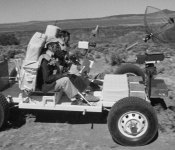
The Big Picture: Preparing for the Moon

During the Apollo program, NASA sent many of its astronauts to Hawaii’s Big Island for field training in the run up to missions. The surface of the Moon isn’t an environment that’s easy to replicate, and the volcanic island chain’s barren, rocky terrain is as close as it gets on earth. The picture above shows astronauts from Apollo 17 — the last manned mission to the lunar surface — test driving the Moon buggy in 1971. It’s one of a series of recently rediscovered images documenting these training exercises, which can be viewed in its entirety here.
Via: Phys.org
Source: Pacific International Space Center for Exploration Systems

Covered Banners on Upper Floors of Moscone at WWDC 2014
Apple’s WWDC Keynote kicks off tomorrow, and while we’ve posted about iOS 8 banners and OS X 10.10 banners, there are also covered banners on the upper floors of Moscone that we neglected to point out.
Appleinsider points out the existence of the covered banners, but only were able to get poor quality shots from afar.
In the two levels above, Apple has additional banners, but they’re still covered up. While the floors aren’t accessible to outsiders (or even registered attendees yet), is has been possible to catch a sneak peak in previous years by trespassing on the top floor of the Fifth and Mission parking garage, which is technically closed.
TheVerge, however, was able to get a peek of one in their WWDC photo gallery.

Covered banners aren’t unusual at WWDC, and will show technologies and features that are introduced in the Monday keynote address. We already know Apple will be featuring iOS 8 and Mac OS X 10.10 at the show.
Apple is offering a live video stream of the Keynote on Monday. We’ll have live text and photo updates here on MacRumors, as well as live Twitter updates at MacRumorsLive.


Apple Expected to Introduce Health Tracking App and Smart Home Toolkit at WWDC
The New York Times reports that Apple will be delving into two new areas on Monday — connected health and the smart home.

At WWDC 2014, Apple is expected to introduce a new health tracking app that will track statistics for health and fitness. Author Brian Chen cites an anonymous source “briefed on the product”
The health app will initially pull data from third-party fitness and health-monitoring hardware, the person said, but it will most likely be able to connect with a smart watch that Apple is widely expected to release this year.
Apple has also been rumored to be announcing their efforts in the connected smart home. On this front, Chen reports that Apple may introduce “tool kits for developers” to make smart home integration easier for developers and consumers. This initiative was previously described as a “Made for iPhone”-like certification.
Both of these products have been rumored in the lead up to WWDC, but last minute rumors and reports frequently leak out in the hours and days before the keynote. Apple’s WWDC Keynote kicks off tomorrow at 10am Pacific. We’ll provide live coverage here at MacRumors.com.
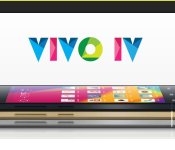
First look at the Blu VIVO IV

The VIVO IV from Blu Products arrived on my porch on Friday, the same day the device was announced with thee first look on their YouTube channel. At only 5.5 mm thick, the VIVO IV is truly pushing the boundaries of phone design. The device has a gorgeous 1080 x 1920 5 inch super AMOLED display, the same exact display found in the Samsung Galaxy S 4. This device is truly a design departure for Blu, with a CNC cut design and Corning Gorilla Glass 3 on front and back the VIVO IV is by far the most premium feeling device from Blu Products as of yet.
With a 1.7 Ghz octa-core processor, this device should be the number one-pick your anyone with heavy multi-tasking needs.
VIVO IV Design
Aside from being only 5.5 mm thick, notable things about this device include the volume and power keys both on the left side, a reverse from the norm, the 3.5 mm headphone jack is on the bottom offset to the right, while the micro USB charging port is slightly left of center on the top. The 13 megapixel camera sensor protrudes about a half millimeter from the top left corner when looking at the rear of the VIVO IV and the lone speaker flanks the “16 GB” badge below the Blu symbol at the lower portion of the back Gorilla Glass panel.
The three capacative buttons only illuminate when you touch one, left to right they are; menu, home, and back. Like other popular devices the buttons are completely invisible when they aren’t illuminated and Blu has taken notes from custom ROMs and included an option in the display settings to turn off the button lights labeled “Close button lights.”

VIVO IV Software
The VIVO IV runs Android version 4.2.2 and has the same UI as the Life Pure series with the “NAVI Launcher.” No app drawer and no widgets limit this stock launcher quite a bit, but they’re shooting for more of an iPhone-like user experience. The recent app menu, accessed by long-pressing the home button, is a horizontal layout, but as that style is a function of the launcher, it switches back to the stock Android style when you install third-party launchers.
The quick settings in the notification shade are editable and abundant. There is also a built-in option which will automatically populate the notification shade with the quick-settings if it is pulled when there are no notifications.
The lock-screen on the VIVO IV is also similar to that on the Life Pure series. Sliding right on the lock screen shows the only widget available with a quick camera, voice recorder, torch, and my personal favorite, the fake call button which will provide you a quick way out of an uncomfortable situation. The lock-screen must be pulled upwards to unlock and shows an aesthetically pleasing animation wherein your prior app follows the lock-screen up to take its place.

Final Thoughts
The Blu VIVO IV is such an advanced feeling device, it is so wonderfully thin and sleek. What I like most about this device, is what it means for Blu. Having a device of this kind of quality come from this company is huge. I want to see more devices of this quality come from Blu as I think it would mean a huge jump in their business. We don’t have any official info on pricing as of yet, but that will be the deciding factor on whether this device is a success. I’m hoping for a sub $300 price tag. If so, I know a lot of people would line up to get one.
Website: Blu VIVO IV
The post First look at the Blu VIVO IV appeared first on AndroidGuys.

Apple Giving $25 App Store Gift Certificates to WWDC Attendees
Apple’s 2014 WWDC kicks off tomorrow with a Keynote at 10am Pacific. Today, attendees are registering for the conference and receiving their usual WWDC badges and WWDC jackets, but Apple also included a $25 App Store gift card.
The gift card is in celebration of “25 years and coding”, as noted by @HarrisonW1998:

$25 App Store gift card for WWDC Attendees. $1/year of #wwdc pic.twitter.com/qGbHrBLvzI
— Harrison Weinerman (@HarrisonW1998) June 1, 2014
Apple is offering a live video stream of the Keynote on Monday. We’ll have live text and photo updates here on MacRumors, as well as live Twitter updates at MacRumorsLive.

IRL: Trading in Fujifilm’s X-E1 camera for the X-E2

A quick look at my Engadget profile can confirm I’ve owned too many cameras over the years. For the most part, they’ve been unassuming tools that have helped me make a living. Fujifilm’s recent X-Trans cameras, however, have been something more — they’ve been conversation starters. From random passersby to billionaire CEOs, folks have often commented on the aesthetics and image quality of my previous X-100 and X-E1 models. Now that the X-E2 is here ($999 for the body), I expect that trend to continue.
To be fair, I found precious little to be wrong or lacking in the 16-megapixel X-E1. It was a compact mirrorless camera with fantastic image quality and eye-catching retro looks — so much so that it’s garnered a bit of a nickname as the “sexy one.” The few aspects I found wanting, like sluggish write times and fairly slow autofocus speeds, appear to have been handily fixed in this updated version. And really, the X-E2 is more of an update than a brand-new model; other than an improved LCD and some button rearranging, the exterior is nearly identical to the X-E1.
Most of the changes are on the inside, including an upgraded autofocus system that uses both contrast- and phase-detection AF (its predecessor used contrast AF only). The result is noticeably faster and more accurate autofocus, especially on lenses like the XF 35mm f/1.4, which tended to hunt for focus more often on the X-E1. While Fujifilm’s claims of having the “world’s fastest AF speed” are more marketing speak than anything else, the improvement in both speed and accuracy are certainly welcome. Write speeds are thankfully better as well.
Image quality remains a strong suit of the X-Trans sensor line and I have no reservations about taking photos at up to 6400 ISO. The lack of a low-pass filter, not to mention the strong lens lineup, allows for clean and sharp images throughout the native ISO range, though I would only use the optional, boosted 25,600 ISO option as a last resort.
As for the minor exterior changes, the 3-inch LCD has been bumped up to a 720 x 480 resolution (or roughly 1 million dots, as camera companies like to say). Exposure and focus lock can now be handled by separate buttons, a feature I loved on Nikon and Canon DSLRs. Unfortunately, the handy “Q” quick-settings button has been moved more toward the top-center of the body, which feels less convenient when you’re used to the X-E1′s placement.
Overall, the Fujifilm X-E2 fixes what few things I disliked about its predecessor, and for that, it’s a winner. Owners of the X-E1 will have to weigh the $999 body-only upgrade carefully to make sure those improvements are indeed worth the price. For those considering their first foray into the world of Fuji’s retro X-Trans gear, the X-E2 (or the companion X-T1) is the perfect place to start. It takes what made the X-E1 the “sexy one” and makes it, well, sexier. Which begs the question: Why isn’t it just called the “X-ER”?
Filed under: Cameras

Google wants you to (safely) search the web while driving

While phones like the Moto X let you issue voice commands without touching the device, they’re still not ideal for driving; if you search for something on the web, you’ll still have to take your eyes off the road to see the results. That could change in the near future, Android Police claims. Google is reportedly testing a new Android feature, nicknamed KITT, that would help you focus on your driving even as you scour the internet. When you’re in a situation where you can’t pay much attention to your phone, an always-on voice command system would walk you through every step of performing common tasks, whether you’re searching the web or sending a text message. It would also read back more information than you get today — a weather result would speak back the entire Google search card, rather than just the basic forecast.
The apparent scoop also shows more of how previously rumored voice elements would work. For the most part, you’d need to stay plugged in (to a car’s 12-volt socket, for instance) to use touch-free commands; you’d also have to use a Bluetooth headset or speakerphone when the handset is locked. However, you could wave your hand over the device to wake it up, and you’d only have to go to Google Now to get started. Provided the leak is accurate in the first place, there’s no certainty that Google will launch KITT at its I/O conference this month — or any time soon, for that matter. Still, it raises the possibility that you’ll get to use more of your phone’s features in the car without putting people at risk.
[Image credit: Robert Couse-Baker, Flickr]
Filed under: Cellphones, Transportation, Mobile, Google
Source: Android Police
 AIVAnet