



The next Batman game on Xbox One and PlayStation 4 just got delayed to 2015

Remember when we told you that the next big Batman game was arriving on Xbox One, PlayStation 4 and PC in 2014? That was apparently a stone cold lie. Well, at the time it wasn’t, but as of today, we’re in the wrong — Batman: Arkham Knight is now heading to the aforementioned game playing devices in 2015. When in 2015? That remains shrouded in darkness, like so much of The Dark Knight’s life. But when it does arrive, it’ll come with a tank-like virtual Batmobile (pictured above). And apparently the game has a tank mode? Find out whatever that means in the trailer below.
Filed under: Gaming, Software, HD, Sony, Microsoft
Source: Joystiq

Apple attempts to conquer the connected home

It was only one announcement among many at WWDC 2014′s opening keynote, and Craig Frederighi, Apple’s VP of software engineering, made mention of Apple’s new foray into home automation practically in passing. HomeKit is a common network protocol that seeks to make Siri your preferred method of controlling all of the smart things in your home. We’re talking garage door openers, lighting, thermostats, door locks, the works. Frederighi spent just one and a half minutes of a two hour keynote talking about HomeKit — scant attention paid to such a massive undertaking.
[Image Credit: Brian Jackson / Alamy]
However, its mere mention at Apple’s hallmark developer event means that HomeKit’s no passing fancy. Still, the home automation/internet of things market is a tough nut to crack. There are countless companies building countless devices that use myriad wireless protocols, and few, if any, of those devices can talk to each other. It remains to be seen whether HomeKit is just another doomed attempt to unify this fragmented industry.
You may recall a similar effort from Apple’s biggest rival. Google’s Android @ Home was first announced over three years ago. It too promised to give you control over the various smart things in your abode — though that system required a hardware hub to work with Google’s custom wireless networking protocol. After its initial announcement, hopes ran high that it would fulfill its promise, but we haven’t heard much from Android @ Home since.
Can Apple succeed where Google has (thus far) failed?
Apple’s uniquely positioned to drive adoption of HomeKit due to sheer market power — iOS devices are the only Apple hardware needed for HomeKit to work, and the iPhone and iPad are two of the most popular mobile gadgets on the planet. Once iOS 8 is released, Apple will, in short order, have hundreds of millions of HomeKit-compatible devices in customer hands. That massive, built-in user base could make HomeKit an attractive option for home automation hardware makers. However, iOS only accounts for a portion of the world’s mobile market, and because HomeKit isn’t on Android, its reach doesn’t extend to the bulk of smartphone users. Plus, hardware makers already have their own apps for controlling their devices, and it’s unclear whether they’re willing to cede software control to Siri.
Apple’s already “working with” 18 companies on HomeKit, including some well-known names in the home automation industry (Phillips, Chamberlain, Honeywell) and a pair of chipmakers (Marvell and Broadcom) that should ensure there’s compatible silicon to be had for other OEMs who want to hop on the HomeKit bandwagon. Problem is, no compatible door lock or thermostat yet exists (at least none that Apple’s willing to show us), so skepticism about HomeKit’s viability rightfully remains.
Conspicuously absent from Apple’s list of HomeKit partners is Nest. That’s due, no doubt, to Apple’s general distaste for all things Google, but it could come back to haunt Cupertino. Nest is the biggest name in home automation right now, and it seems inevitable that the company will expand beyond thermostats and smoke detectors. As Nest’s footprint grows, so will the number of consumers finding fault with HomeKit’s lack of support for its hardware.
Most existing OEMs have already made their wireless choice: be it Z-wave, Zigbee or some other protocol. If existing home automation hardware cannot be made to work with Apple’s new networking tech, then it’ll have to wait for such hardware to make its way to retail. Of course, Apple’s got several months before iOS 8 is disseminated to the public, so that might be all the time OEM’s need.
It’s hard to see how HomeKit, given what we know about it, can be the great unifying force of the home automation industry. Still, it seems to be a step in the right direction. Here’s hoping Apple can, in Frederighi’s words, “bring some rationality to this space.”
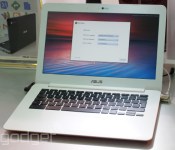
ASUS’ Chromebook C300 is yet another well-made budget laptop

Lenovo, HP and other big-name laptop makers are on board; now ASUS is embracing the Chromebook movement with its first two laptops running Google’s browser-based software. The 11.6-inch Chromebook C200 is already available for pre-order, but its larger sibling, the C300, has yet to received a launch date. Still, the 13.3-inch laptop is here at Computex, and I spent a few minutes playing with the $249 device.
At just over 3.1 pounds, it’s not feather-light, but the C300 still feels very manageable. The chiclet keyboard is well-spaced and comfortable overall. Design-wise, there’s not much to distinguish this laptop from the growing list of Chromebooks, though it does run Intel’s new Bay Trail-M chip under the hood. Based on a few minutes of use, nothing about the C300 stands out as particularly remarkable; instead, it looks to be the latest addition to a sea of well-made, cheap laptops — possibly with a small performance edge thanks to its latest-gen processor. ASUS says the C300 will go on sale soon, so stay tuned.
Zach Honig contributed to this report.

Android 4.4.3 OTA rollout started for Nexus devices, factory images also available

Long awaited, or better said rumored, Android 4.4.3 has started rolling out on LG Nexus devices after reaching Sprint’s Nexus 5 in April.
First in line is Asus Nexus 7 (2013) which is now receiving Andoid 4.4.3 build KTU84L. This update is just a bit shy of 74MB, so have that in mind. Other Nexus devices should follow in the coming days. Have in mind though that not everyone will get the update in the coming days, this rollout (like usual) will come in waves to owner of certain Nexus devices and it might take a while ’till it reaches your device. The update itself brings a lot of bug fixes and a refreshed Phone app.
Android 4.4.3 factory images are also available for certain Nexus devices, you can get them here.
VIA: Android Central
The post Android 4.4.3 OTA rollout started for Nexus devices, factory images also available appeared first on AndroidGuys.
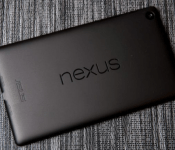
[Download] Android 4.4.3 for the 2013 Nexus 7 captured in OTA Form
 Earlier today, we heard about the availability of Android 4.4.3 through factory images for all the Nexus devices which is great if your bootloader is unlocked, however if you just wanted the OTA update, you have so far been out of luck. Luckily, XDA member, EthanFirst, was able to capture Android 4.4.3 for the 2013 Nexus 7 captured in OTA form (i.e. build KTU84L), which can be downloaded from the forum page here. The update comes in at about 74MB so it’s much more manageable and perfect for those with locked bootloaders.
Note that the captured OTA update is only for the 2013 Nexus 7 Wi-Fi; the update for the 4G version isn’t yet available. Likewise, OTA’s for the other Nexus devices have not yet been found, so if you spot them somewhere, or you start getting the update, we’d love to hear about it in the comments. Updates for all Nexus devices should be slowly rolling out as we speak, but will vary region to region, so don’t freak out too much if you haven’t gotten it yet.
Are you hoping that Android 4.4.3 fixes up issues that you have been experiencing? Let us know your inconveniences in the comments.
//<![CDATA[
ord = window.ord || Math.floor(Math.random()*1E16);
document.write('’);
//]]>

Sony retires the decade-old PSP in Japan to make way for the Vita

It had a good run, but Sony has decided to bring the curtain down on the PlayStation Portable. The company has announced that June’s shipment of the hardware will be the last in Japan, and local users looking to upgrade to the PS Vita can earn a $30 or $40 trade-in discount across the summer. The Verge is reporting that the handheld was quietly discontinued in North America back in January, and we’d assume that European sales of the ten-tear-old device will be next to face the chop. It looks as if Sony is now doing its best to push buyers toward the newly-resurgent PS Vita, which has ridden a wave of success kickstarted by indie titles like Hotline Miami.
Via: The Verge, Dengekionline
Source: Sony Japan

HTC’s ‘Vogue Edition’ One (E8) is around half the cost of the M8

Just as we were getting bored of the leaks about the plastic HTC One “Vogue Edition,” the company has finally decided to announce the only thing that we actually care about: its price. Well, according to the announcement in China, this dual-SIM LTE phone — codenamed “E8″ — is launching there for CN¥2,799 or about $450 unsubsidized. That’s almost half as much as the metallic M8 and, more importantly, the Samsung Galaxy S5 — both of which pack near-identical guts as the E8. That’s certainly very competitive, though not quite OnePlus-level competitive. While we wait for an actual launch date for both China and elsewhere, we’ve got a detailed spec sheet after the jump comparing the E8 to the M8. Enjoy!
| HTC One (M8) | HTC One (E8) | |
|---|---|---|
| Dimensions | 146.4 x 70.6 x 9.35mm | 146.42 x 70.67 x 9.85mm |
| Weight | 160g | 145g |
| Screen size | 5.0 inches | |
| Screen resolution | 1,920 x 1,080 (441 ppi) | |
| Screen type | S-LCD3 with Gorilla Glass 3 | |
| Battery | 2,600mAh (non-removable) | |
| Internal storage | 16GB / 32GB | 16GB |
| External storage | MicroSD (up to 128GB) | |
| Rear camera | 4MP UltraPixel, f/2.0, 2.0µm pixel size, 1/3″ sensor size, 28mm lens | 13MP, f/2.2 |
| Front-facing cam | 5MP, f/2.0, BSI, wide-angle lens | |
| Video capture | 1080p | |
| NFC | Yes | |
| Radios |
GSM/EDGE (850/900/1800/1900) (All); CDMA (800/1900) (Verizon, Sprint). HSPA+ EMEA: (850/900/1900/2100) with HSPA+ up to 42 Mbps LTE EMEA: (800/900/1800/2600) |
GSM/EDGE 850/900/1800/1900 MHz (SIM1 & SIM2) HSPA+ 850/900/1900/2100 MHz (SIM1) LTE China: FDD 1800/2100, TDD 2600 (SIM1) |
| Bluetooth | v4.0 with AptX | |
| SoC | Quad-core Qualcomm Snapdragon 801 (2.5GHz in Asia/China; 2.3GHz in other regions); Adreno 330 GPU | |
| RAM | 2GB | |
| SIM slot | Nano SIM | Dual Nano SIM |
| Connectivity | MHL, DLNA, IR, GPS/GLONASS | DLNA, GPS/GLONASS |
| WiFi | Dual-band, 802.11a/ac/b/g/n |
Dual-band, 802.11 a/b/g/n |
| Operating system | Android 4.4.2, Sense 6.0 | |
Filed under: Cellphones, Mobile, HTC

Apple’s App Store Guidelines Now Allow for ‘Approved’ Virtual Currencies in Apps
 Apple has updated its App Store review guidelines to allow for “approved” virtual currencies in apps, paving the way for new types of currencies to be traded and maintained on iOS devices, reports Reuters.
11.17 Apps may facilitate transmission of approved virtual currencies provided that they do so in compliance with all state and federal laws for the territories in which the app functions.
The move is interesting given Apple’s past tendencies to remove and deny apps that promote virtual currencies, namely those having to do with the popular Bitcoin currency. Last year, Apple notably required the developers behind private messaging app Gliph to remove the app’s Bitcoin sending capabilities, or face deletion from the App Store.
Apple’s actions on Gliph also shed light on the company’s overall relationship with Bitcoin apps. It was reported that Apple had told a number of developers behind Bitcoin-related apps that their apps contained content “that is not legal in all the locations in which the app is available,” and were non-compliant with Apple’s policies.
However, with Apple’s new App Store guidelines on the matter, it is now possible that apps like Gliph could indefinitely allow for virtual currencies like Bitcoin to be traded. While it is ultimately up to Apple as what is allowed in its apps, the company’s updated policy marks a completely new position on the issue of virtual currencies.

Google’s first fashionable Glass frames are designed by Diane Von Furtstenburg

Diane Von Furstenberg may be better known for wrap dresses than wraparound shades, but her fashion label has actually been a long-term collaborator with Google Glass. The partnership has now resulted in a new “DVF” collection of Glass options, including five new frames and eight new shades with which to customize (and perhaps soften) your futuristic appearance. They’ll be available to Explorers in the US from June 23rd, both via Google’s own site and from Net-a-porter, although there’s no word on how much extra you’d need to spend beyond the $1,500 cost of the beta device itself. On the same day, Google’s own Titanium collection will also become available through the Mr Porter online store. Meanwhile, we’re still waiting on more sporty options from the likes of Oakley and Ray-Ban, although these might not arrive until Google Glass finally shifts into full commercial mode.
Filed under: Wearables, Mobile, Google
Source: Google Glass (G+)

Multinational operation busts Windows botnet that infected half a million PCs

The FBI, UK’s National Crime Agency and Europol hope to squash the insidious Gameover Zeus botnet to bits under a joint project called Operation Tovar. According to US Deputy Attorney General Cole, the three agencies (with help from various security firms) have successfully disabled not only the botnet itself, but also associated malware Cryptolocker. Authorities have apparently taken control of the Gameover bots and seized its command servers over the weekend, effectively freeing 300,000 of the 500,000 to 1 million infected Windows computers. Even better, they’ve found the crime ring behind the botnet and have charged alleged Russian mastermind Evgeniy Mikhailovich Bogachev with hacking, different types of fraud, money laundering and conspiracy.
Gameover Zeus, for those who’ve never heard of it in the past, is a P2P malware that pilfers banking information and initiates wire transfers to overseas bank accounts. It’s typically propagated through spam emails disguised as bills or invoices embedded with malicious links — the kind you tell your grandparents to never click. Once Gameover worms its way into a system, that computer becomes part of the extortion ring’s global network of infected machines, which funnel ill-gotten info back to the criminals. The perpetrators would sometimes also install compromised PCs with Cryptolocker, a “ransomware” that takes users’ files hostage until they pay up. According to the FBI’s estimates, the criminals have stolen over $100 million using both Gameover and Cryptolocker. But whether that’s enough for Bogachev to stand trial in the US (home to 25 percent of the affected machines) remains to be seen, as Russia does not extradite accused criminals. For now, all the authorities can do is spread word about the botnet and help people remove it from their computers.
Via: Reuters
Source: The United States Department of Justice, US-CERT, FBI
 AIVAnet