



ASUS crams 4K gaming into sleek and distinctive laptop

What should a company do immediately after unveiling an incredible 4K laptop that’s only 19 mm thick? Why, repeat the feat while throwing in some gamer-level GFX from NVIDIA on the way. You might have heard that we were particularly impressed with ASUS’ Zenbook NX500: Besides the specifications, it was quite the looker too. However, if brushed-metallic finishes aren’t your thing, maybe the moody black and red undertones of the ROG GX500 will be more to your liking. Has the Razer Blade finally got competition in the slimline gaming laptop market? We prodded and poked ASUS ROG’s new beast earlier today, and we reckon it’s a yes.
Back to that screen. Yes, it’s 4K and that’s incredible in its own right, but ASUS is also ensuring it delivers on color reproduction to, with 100 percent of NTSC’s color gamut, and 106 percent of Adobe’s RGB. In the flesh, the display is astoundingly crisp, while the fact that it’s IPS means it’s probably going to be Netflix-friendly too — especially when that 4K content starts rolling.

Streaming only video would be a gross underuse of the GX500, however, which crams in a powerful NVIDIA GeForce GTX 860M GPU for gaming muscle, while still weighing just shy of five pounds. The burning question remains: How do games run? We wish we could tell you, but unfortunately ASUS’s ROG launch event was mostly showcasing on-the-rails gaming footage, and the throng of pro gamers and reporters made gaming pretty much impossible. At least for now, early impressions are that it’s yet another impressive laptop screen from ASUS, while the keyboard felt far more responsive than we thought it would, given the shallow frame of the GX500. We’re also hoping it’s just the next step in a gaming rig design revolution.

Vertu’s Signature Touch puts the luxury back into specs

It’s been a year and a half since luxury phone maker Vertu ditched Symbian in favor of Android, thus slowly catching up with the rest of the mobile market. Its first Android phone, the Ti, fell behind the curve with its dual-core processor, tiny battery and low screen resolution; then the more affordable Constellation arrived with a larger screen but also let down by a similar chip. Somewhere along the line, though, Vertu finally decided “enough is enough.” The result is this good-looking Signature Touch which, for a change, packs pretty much everything you’d expect on a modern flagship smartphone: a 2.3GHz quad-core Snapdragon 801 chip, a 4.7-inch 1080p display, Cat 4 LTE radio (with bands covering many parts of the world), NFC plus Qi wireless charging.

The goodies don’t stop there. Most notably, the 13-megapixel main camera is actually certified by the renowned camera maker Hasselblad, so we look forward to giving it a test drive. Then there’s the acoustics part: This new model packs a pair of speakers that are tuned by Bang & Olufsen, which should sound just as loud and crisp as the ones on the Ti. And if you’re into it, the speakers also support Dolby Digital Plus surround sound. While they’re at it, Vertu also got B&O to help craft the optional over-ear headphones, which feature aircraft-grade aluminum, lamb leather and volume remote control. You can even get a Vertu-branded Bluetooth speaker for the phone, but it likely won’t sound as good as the B&O-tuned headphones.
The Signature Touch also features a 2.1-megapixel front-facing camera, 64GB of storage (no microSD expansion) and a modest 2,275mAh battery. Like its predecessors, this Android 4.4 device is hand-assembled with several tough materials, including Grade 5 titanium for the casing, toughened zirconia for the ear pillow and a large piece of fifth-gen sapphire crystal for the screen. Then you get to pick the skin — calf, lizard or alligator — and a color it offers, if any (we dig the Claret Leather and Pure Jet Red Gold editions). You end up with a 192g-heavy, 10.65mm-thick device, which is a given for such a tough, masculine luxury device.
Speaking of luxury, Vertu’s renowned concierge service plus exclusive access to events are included with this new phone, and you can check them out via their respective apps. However, it’s worth reminding that the concierge service is only free for the first year, and then it’s about $2,800 each year should you wish to keep using it. The Signature Touch also comes with the Vertu Certainty package, which includes iPass’ complimentary global WiFi, as well as Kaspersky’s security apps plus Silent Circle’s communication encryption service.

As nice as the Signature Touch sounds, let’s face it: Most of us here will never splash out $10,300/€7,900 for the base model, let alone $14,900/€11,500 for the maxed-out Pure Navy Lizard flavor. But then again, it’s made for folks with extraordinarily deep pockets, instead of us mere mortals. On the bright side, we won’t need to feel sorry for those who end up buying this surprisingly up-to-date bling phone, and Vertu deserves at least a pat on the back for finally recognizing and fixing its age old problem. Now, do excuse us while we set up a crowdfunding page to help us get a, ahem, review unit.
Filed under: Cellphones, Mobile

Study claims that virtual drug dealing cuts back on real violence

Few would say the FBI was doing something wrong by shutting down Silk Road’s online black market, but new research suggests that there may have been a silver lining to the service’s dark cloud. Researchers Judith Aldridge and David Decary-Hetu claim in a recent study that Silk Road was cutting back on violence. Since many of the sales were dealer-to-dealer rather than to customers, that supposedly reduced the chances for real-world confrontations — you can’t start a gun battle over prices when you’re on the other side of the country.
There’s some merit to the claims. Silk Road founder Dread Pirate Roberts designed his service in part to take away power from cartels, which regularly use violence to maintain their grip on the drug trade. An ordinary street dealer could avoid encountering cartels altogether while selling on a larger scale.
However, there are some holes in the study. For a start, it notes that most trades on Silk Road were focused on relatively soft drugs like ecstasy and pot. It doesn’t account for violence over harder stuff like cocaine, where dependency and “chaotic” (that is, frequently criminal) lifestyles are larger factors. An addict can’t wait for a mail order, for example, and many of the hardest drugs ultimately come from cartels and other criminal organizations. It’s also difficult to know whether online transactions were replacing in-person sales or merely supplementing them. In some cases, Silk Road may have just been a way to clear out drugs that didn’t sell at the street corner. You’ll have to take the findings with a grain of salt, then, even if they do illustrate how criminals can change their behavior when they go digital.
[Image credit: AP Photo/Fernando Vergara]
Filed under: Internet
Via: Wired
Source: Social Science Research Network

Instagram adds nine new editing tools, makes filters adjustable

The problem with trying to be unique on Instagram, is that there are millions of other users spoiling that, using the same darn filters. How dare they. Starting today, things should get a little more varied, as the food photo sharing network has just introduced a host of new features, but most importantly those popular filters are adjustable, too. The new controls include: filter strength, brightness, contrast, warmth, saturation, highlights, shadows, vignette and sharpen. Instagram’s no doubt hoping these new options put it’s free app on a par with some big name paid apps when it comes to editing power. But, unless you like your images square, it might not be a full editing replacement just yet. It’s available for iPhone and Android right now. Fill yer boots.
Filed under: Cellphones, Software, Mobile
Source: Instagram, App Store, Google Play

Moto Stream turns any regular speaker into a shareable Bluetooth one

You’d be forgiven if you looked at the Moto Stream and were immediately reminded of the Nexus Q. But there’s a couple of key differences here. One, this does not connect to your TV and two it’s only $50. The Stream is a pretty basic accessory that turns any speaker or stereo you already own into a wireless audio system. Not only that, but you can connect up to five phones, tablets or computers to it simultaneously using Bluetooth. If you can’t stand that damn Foster the People track your friend insists on looping, you can enter “Heist Mode” and fire up the new Trash Talk record instead. Of course, you probably shouldn’t do that too often, since anyone can connect and hijack the stream if they want. (Just imagine how quickly that could deteriorate into a contest over who has the worse taste.) While you can pair it the old fashioned way, there’s also NFC inside so you can quickly tap to connect. And it’s super tiny, so you can take it with you almost anywhere. You can order it today through Motorola’s website, or pick it up at Radio Shack on June 6th.
Filed under: Peripherals, Mobile
Source: Motorola
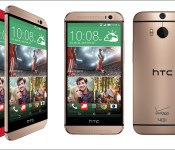
Verizon calls up red and gold HTC One M8 options

Verizon will soon offer a Glamour Red and Amber Gold version of the HTC One M8 later this week. Arriving on June 5, the new colors will be exclusive to Verizon and sold online and in retail stores. Pricing should be the same as the standard colors.
To help jump start sales, Verizon will shave $100 off any smartphone that normally runs $199.99 or higher (with a two year service agreement). Indeed, all colors of the HTC One M8 qualify for the savings. It’s unclear how long the promotion will run so be sure to hop on it if you’re weighing a purchase.

The post Verizon calls up red and gold HTC One M8 options appeared first on AndroidGuys.
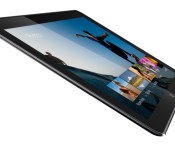
Intel Unveils Fanless PC Reference Design Based on Upcoming Broadwell Chips
Intel today showed off a new reference PC design built around the company’s upcoming Broadwell Core M processor. The Core M is based on a 14 nm process and will the first Broadwell chip to be made available to manufacturers, who are expected to debut the chip in retail products by the end of this year.
With Intel experiencing difficulties and delays with the development of Broadwell, the current Haswell generation has been stretched out somewhat with only modest “Haswell refresh” bumps taking place in recent months to tide users over until Broadwell. With improved performance and efficiency, Broadwell is seen as a significant opportunity for innovation in personal computers.
 Intel’s reference design for hybrid tablet-notebook running on Broadwell
At Computex, Intel president Renee James showcased the first Core M device — a 12.5-inch tablet-notebook hybrid that is thinner than the iPad Air, has a fanless design, and provides energy-efficient performance for mobile users.
The innovative design is based on the first of Intel’s next-generation 14nm Broadwell processors that are purpose-built for 2 in 1s and will be in market later this year. Called the Intel Core M processor, it will deliver the most energy-efficient Intel Core processor in the company’s history. The majority of designs based on this new chip are expected to be fanless and deliver both a lightning-fast tablet and a razor-thin laptop.
Apple has been rumored to planning to release a fanless Retina MacBook Air later this year, but it is unclear exactly what technology Apple will use to achieve that design. The Core M processor being shown by Intel today is part of the Broadwell-Y series that runs at just a handful of watts, while the MacBook Air currently includes Haswell-U series chips running in the 15-watt range. Broadwell-U chips are expected, although perhaps not in significant quantities until early 2015.

Intel’s Windows 8.1 Pro Broadwell tablet is thinner than the iPad Air

When Intel announced the new 14nm Core M (Broadwell) processor to enable thinner, fanless convertible devices, I knew the “Llama Mountain” reference design would be impressively svelte. But hearing a spec is different than seeing it; this laptop-tablet hybrid is insanely skinny. At 7.2mm (0.28 inch), the slate is thinner than the iPad Air (7.5mm), and it’s also significantly lighter than two-in-one devices already on the market; it’s a notebook-class PC running Windows 8.1 Pro, yet it weighs just 1.47 pounds, compared to 1.76 pounds for the Surface Pro 3.
The prototype’s light and slim footprint is made possible the Core M’s efficiency and low heat production — the chip allows for a fanless design. Despite its slimness, the slate can fit a 32Wh battery, which should get you at least eight hours of regular use on a full charge. Of course, different OEMs may opt to use a different-sized fuel pack, so once devices running the Core M come to market we could see even longer run times.
ASUS announced its own similar computer at Computex yesterday — the Transformer Book T300 Chi — which you’ll actually be able to pick up in stores, unlike Intel’s reference design, which won’t ship to consumers. The ASUS slate, which is only a hair thicker at 7.3 millimeters, also includes a 12.5-inch touchscreen. The Chi’s display features a 2,560 x 1,440 display, and while Intel reps were unable to confirm the Llama Mountain reference design’s resolution, it’s not unreasonable to expect a similar pixel density from other manufacturers.

Since we’re talking about a device category that’s part-work, part-play, it’s only natural that Intel’s reference design includes a separate media dock. To that end, the base of the device — the only edge that isn’t hair-thin — is just barely thick enough to accommodate the requisite dock connector, along with a 3.5mm headphone jack and a USB 3.0 post. It’s kind of hard to imagine tablets getting even skinnier, but with Intel’s ever-evolving technology, they probably will. For now, though, we can all look forward to carrying a tablet (and keyboard base) that’s shockingly thin.
Zach Honig contributed to this report.
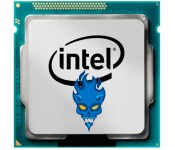
Intel’s ‘Devil’s Canyon’ chip will break the 4GHz barrier for $339

Sure, we’ve seen 4GHz base clock speeds before, but never in an Intel chip. Such a part is just weeks away, however, in the form of the refreshed Haswell Core i7-4790K, codenamed “Devil’s Canyon.” The new chip shifts from 4GHz up to 4.4GHz in turbo mode, with the only downside being a slight increase in wattage from 84W to 88W — a change that might be partly mitigated by Intel’s use of a better thermal interface material underneath the lid of the CPU. The $339 price tag is identical to what you’d pay for the existing Core i7-4770K on Newegg (base clock: 3.5GHz), so it’s definitely worth holding onto your cash until the end of the month. There’s also a Core i5-4690K to look out for, priced at $242, which notches base and turbo speeds up by 100MHz compared to the current product — not a huge gain, but enough to send a message that Intel isn’t entirely preoccupied with Broadwell and ultra-portables. Meanwhile, here’s some useful coverage of the latest overclock-friendly Z97 motherboards, just in case you’re looking to accessorize.
Filed under: Desktops, Gaming, Intel
Source: Anandtech

Engadget giveaway: win a pair of Bose QuietComfort headphones courtesy of Amazon!

In case you’ve forgotten, Father’s Day is approaching and it wouldn’t hurt to grease the skids with the old man by setting him up with some fresh technology. Amazon’s Electronics Father’s Day Gift Guide is a great spot to find a variety of gadgets for dear old dad, but the company has also done us a solid by offering up a pair of Bose QuietComfort 20i Noise Cancelling headphones for two lucky Engadget readers. We’re sure you’ll consider re-gifting them when you understand the dual-purpose solution these earbuds can provide. Dad could tune out all your racket by using Bose’s noise cancellation tech and you wouldn’t have to suffer through his golden oldies playlist or daliance with Skrillex’s latest when he has those headphones popped in. And just in case he’s a bigger tech junkie than yourself, you’ll always have some sweet hand-me-downs in your future. Just head down to the RaffleCopter widget below for up to three chances at winning a pair of these Bose earbuds. It’s always good to have a bargaining chip at the table when it comes time to mow the lawn.
- Entries are handled through the Rafflecopter widget above. Comments are no longer accepted as valid methods of entry. You may enter without any obligation to social media accounts, though we may offer them as opportunities for extra entries. Your email address is required so we can get in touch with you if you win, but it will not be given to third parties.
- Contest is open to all residents of the 50 States, the District of Columbia, and Canada (excluding Quebec), 18 or older! Sorry, we don’t make this rule (we hate excluding anyone), so direct your anger at our lawyers and contest laws if you have to be mad.
- Winners will be chosen randomly. Two winners will each receive one (1) pair of Bose QuietComfort 20i Acoustic Noise Cancelling headphones.
- If you are chosen, you will be notified by email. Winners must respond within three days of being contacted. If you do not respond within that period, another winner will be chosen. Make sure that the account you use to enter the contest includes your real name and a contact email or Facebook login. We do not track any of this information for marketing or third-party purposes.
- This unit is purely for promotional giveaway. Bose, Amazon and Engadget / AOL are not held liable to honor warranties, exchanges or customer service.
- The full list of rules, in all its legalese glory, can be found here.
- Entries can be submitted until June 4th at 11:59PM ET. Good luck!
Filed under: Announcements, HD, Mobile, Alt
 AIVAnet