



‘Orange Is The New Black’ season two is ready for streaming on Netflix

House of Cards is often recognized as Netflix’s flagship original, but there’s another award-winning show that’s returning for a second season: Orange Is The New Black. Piper Chapman’s prison-based predicament is back for another 13-episode sentence after we last saw her rearranging the face of another inmate. We already know that Laura Prepon won’t return as a regular on the show, but Danielle Brooks (Taystee) and Taryn Manning (Pennsatucky) will, suggesting that our main protagonist showed some restraint in the first season’s finale. Orange is now Netflix’s most-viewed show (although the company doesn’t share numbers) and chances are it will enjoy even more success this time around. The streaming giant has already ordered a third season, so go and binge-watch safe in the knowledge that it’ll almost certainly return next year.
Via: Netflix UK
Source: Netflix

iOS 8 Prompt Asks Users Whether Apps Can Continue Using Location Data [iOS Blog]
A MacRumors reader has sent in a screenshot of a prompt in iOS 8 that double checks with users asking if they want to continue giving location info to apps.

Since iOS 6, Apple has required apps to get explicit user permission before accessing personal data and device information, with iOS 8 now allowing users to determine whether they want apps to keep using location data.
Apple’s original move to require apps to ask for permission came in 2012 after it was discovered that apps such as Path were uploading users’ address books without asking for authorization. While Path eventually deleted the information, a pair of U.S. Congressmen sent a letter to Apple asking for information on specific data collection policies, causing Apple to make changes.
Since then, Apple has made a number of moves to better comply with concerns over privacy, which include adding the ability to report apps that do not comply with privacy requirements and asking iOS users if Location Services should be enabled during setup.

Google and Twitter join forces for disaster alerts

Google’s and Twitter’s relationship has been a bit rocky since the former launched a social network of its own, but, for the greater good, that’s changing. When a “more extreme” natural disaster strikes, Google Now, Search and Maps will populate with tweets related to the Public Alert event in an effort to add context, both on mobile and the desktop. On Google+, the search giant notes that these related tweets will serve to answer questions about school closings, nearby evacuations and to display what people closest to a storm are seeing. At the moment, this is only available for English-speaking countries, but Mountain View says it’s working to add new kinds of social content to more places and its other products for the future. It isn’t quite the Realtime Search of yore that added everyone’s tweets to Search results, but it is something. If you had bets on The Blue Bird and Big G never ever getting back together, it’s time to pay up.
Filed under: Cellphones, Mobile, Google
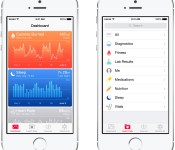
HealthKit Includes Native Bluetooth Support for Some Accessories, Eliminating Need for Companion Apps
HealthKit supports some medical Bluetooth accessories natively, allowing accessory makers to skip developing apps for iOS and focus on their hardware, according to 9to5Mac.

The accessories that will be built-in and supported natively by HealthKit include heart rate and blood pressure monitors, glucose sensors, and health thermometers. Apple is using official standard specs for Bluetooth LE devices from http://Bluetooth.org, which is what allows iOS 8 to automatically establish a connection with the devices listed above without the manufacturers worrying about anything on the software side.
HealthKit can automatically detect these Bluetooth medical devices and gather data from them, syncing them to the new Health app without the user having to do anything in a third-party app, making it easy for users to find health information in a single place. Additionally, device makers won’t have to spend resources and time making an app rather than focus on their hardware.
HealthKit and the Health app are available to developers in the iOS 8 now. All three will launch in the fall for the general public.

University of Michigan will open fake city to test self-driving cars this fall

The University of Michigan will open the doors to its unique Mobility Transformation Facility this fall to test automated and wirelessly connected vehicles. The 32-acre research center will give researchers at the school access to roadways, a four-lane highway, city streets with road signs and street lights, roundabouts and all manner of road surfaces. For a dash of fun, pop-up pedestrians and mechanized bikes add a bit of motion to the mix to simulate any of a million worst-case scenarios. Street lights, for example, could be programmed to turn completely off and bicycles could unexpectedly roll out from between parked cars.
All these made-up hazards and features will be put to the test to ensure every eventuality has been checked off the list to make this tech as safe as can be. Research will initially be carried out with a Ford Fusion Hybrid as the test vehicle of choice, but General Motors and Toyota are also involved so expect toys from them too. The staff hopes that when armed with the knowledge gleaned from the facility, they’ll be set for a working system ear-marked for debut in Ann Arbor by 2021. Other lofty goals include three deployments of up to 20,000 automated cars across southeast Michigan aimed at observing how people like you and me will get on with self-driving cars like these.
Filed under: Transportation, Science
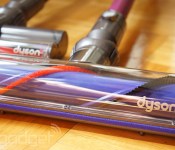
Dyson’s Motorhead cordless vacuum challenges your classic upright

Like many companies, when Dyson’s not trying to develop a genre-busting product, it’s usually at the drawing board fine-tuning existing lines. That’s certainly the case with its recent twist on the DC59 Animal cordless, aptly named the Motorhead. While the original model was a step up from the electric brooms I’ve used in my appliance-poor youth — both in performance and price — this newest iteration challenges conventional vacuums at tackling bare floors and carpets with the gusto of a full-sized machine. It’s only a fraction of a pound heavier than the earlier model and just as petite and portable, but it boasts a 75 percent increase in suction with its new motorized cleaning head. It arrives today on Dyson’s website and other select retailers costing $550 — a slight jump in price over the previous version — and should hit more retail outlets in the fall. I took it for a quick test-drive through my Brooklyn apartment to see how it stacks up against its portable predecessor and find out if that price boost delivers a significantly better machine.

The overall package on the Motorhead model is almost a mirror image of the original Digital Slim, right down to the accessories. However, you’ll notice its wand extension has a fresh pink color to help differentiate it from the other’s purple tone. If you were hoping to save some money and simply buy the new motorized head for your last-gen DC59 Animal, you’re out of luck. We’re told that the new brush portion isn’t compatible with the body of the previous model.
On the inside, the Motorhead model sports the same V6 digital motor as before, but Dyson claims that it’s “1.5 times more efficient than its predecessor.” Audibly, there is a noticeable difference between the two, as the Animal delivers a higher-pitched whine than the new model. The Motorhead’s battery life is listed at 24 minutes on a charge (without the power-draining Boost Mode engaged), which is only a couple minutes short of the Animal’s 26 and isn’t too shabby considering the extra power needed to run an additional motor.
So what’s the deal with this new motorized head? If you’ve used the DC59 Animal, you’re probably familiar with its modular flexibility, wall-mountable docking station and multiple brush extensions that let you roam free throughout the apartment to keep entropy and dust at bay. The downside to the Animal’s lightweight, cordless convenience is that its suction power is decent for hardwood floors and just middling on carpets. It’s a bit like poking a stick around since since there’s zero traction or feedback. The Motorhead model definitely addresses that problem and manages to grip the floor as you push it around, making the experience more tactile and improving its ability to suck up dirt and debris from difficult surfaces like rugs and carpets.

There are some additional changes to the brush head beyond the power boost. Fewer and shorter bristles wrap around the rotor, reducing potential tangles and helping to capture dust and dirt a bit more effectively than before. It did mitigate the amount of dusty dreck that can build up on and around the brush head, and seemed to pull in debris better than the standard version, whose bristles now seem rather flimsy in comparison.
The DC59 Motorhead is definitely an improvement over the previous Digital Slim, in that you feel like you’re pushing a more robust vacuum about when using the motorized brush head attachment. For environments with mixed hardwood and carpet surfaces, urban space limitations and various nooks to get at, the Motorhead could be a good fit — as long as you can handle the sticker shock. There’s still a bit more oomph in traditional upright models, but if dealing with cords and limited mobility keeps you from doing your chores, that extra expenditure on a cordless might be worthwhile.
Filed under: Household
Apple Acquitted in Mexican ‘iPhone’ Naming Lawsuit [iOS Blog]
The Mexican Institute of Industrial Property (IMPI) has resolved the dispute between Apple and Mexican telecommunications company iFone over the rights to the phonetic name “iPhone”, acquitting Apple of any wrongdoing, reports El Universal [Google Translate].
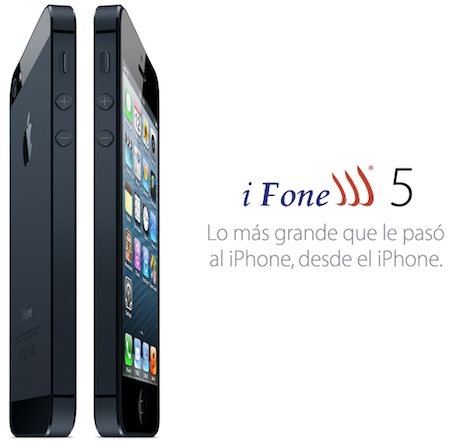
The IMPI found that the “iPhone” trademark can only be infringed by iFone’s fellow telecommunications companies. Because Apple is a hardware company and does not own a wireless network, it is not technically infringing the trademark.
Instead, the IMPI will fine Mexican telecommunications companies Telcel, Iusacell and Movistar and require them to remove “iPhone” advertising and branding from its stores within 15 days. Apple will still be allowed to sell iPhones, however.
Apple has been fighting this case since 2009, losing the court case in November 2012 and then losing an appeal in March 2013.
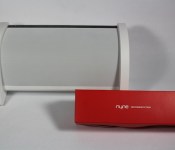
NYNE Bass: The Speaker You Want At Your Next Party

When people usually think about Bluetooth speakers portability is the first thing that comes to mind. With almost every speaker maker out there aiming for the smartphone and tablet market it is no surprise that the speaker has to be just as portable, I mean lets face it our mobile devices are the entertainment hub of our lives. Music, movies, Youtube cat videos, and pictures our mobile devices do it all. While the viewing pleasure is more than enough sometimes the sound just doesn’t cut it. I know that on my Note 3 the screen is big enough but the one speaker on the bottom just isn’t enough when watching a movie or listening to music in my home. I need a bigger speaker to fill my home, something that I can take to parties and use as the main sound system, something like the NYNE Bass. When it comes to portability this thing doesn’t have much but I don’t mind because what it lacks in portability it more than makes up for in sound. Let me show you what I mean in this week’s review of the NYNE Bass.

What’s In The Box:
- NYNE Bass
- Wall Charger
- Auxiliary Cable (Not in Photo, was lost)
- Assorted Charging Tips
Performance:

Sound:
This is the first thing I want to touch on just because the sound on this thing is different from what i’m used to. Portable speakers are usually pretty small and while some do provide great sound it isn’t so loud that it can take over a party. The NYNE Bass can. This thing provides some monster sound and I love it. Coming from a Salvadorean family there are a lot of old school music played at family gatherings. This gave my speaker a unique test and it passed with flying colors. For the highs I used a song by a group called Menudo called “Subete A Mi Moto”. The speaker handled it beautifully and even at maximum volume there was little to no distortion. For the lows I used a song by The Sugar Hill Gang called “Rapper’s Delight,again the NYNE handled the low ends of the bass perfectly thanks to the active subwoofer boasting 35 watts of power under the hood. There is also 3.5mm Aux in on the back of the speaker, well you know what that is for.

NFC:
The NYNE Bass has NFC support which is always nice to have if you have a supported device because all you have to do is tap and hold to pair the the Bass. One thing I did not like is how small the area to pair via NFC is. At first glance it is easy to assume that the whole grey panel with a small white NFC marking would be for, well NFC, but it isn’t. The top left corner is where the NFC technology is actually located, the rest of the giant panel is just plastic. So it took a bit of guessing to get it to pair with my Note 3, HTC One M8, and Meizu MX3 because of the small NFC area on the NYNE Bass.

Design:
The NYNE Bass has a pretty simple design nothing too complicated. On the grey and white version I received it has a greyish white grill on the front, a rubberized material on the sides and leading into the lining around the grill and back of the speaker, two plastic grey panels on the side, and plastic buttons for the controls. There is also a hidden handle on the back that makes it easier to grab and move the speaker in a hurry.

Built in Charger:
The NYNE Bass can also double as a charger for your mobile device. Albeit it isn’t that much of a portable charger it can still give you some juice to keep the party going. The only downside for me is the fact that it can only push out 1 amp, which with the devices nowadays isn’t much. My Note 3 requires a 2.1 amp output to charge at a decent rate. Come to think of it that’s becoming true of almost all smartphones these days. I am now seeing 2.4 more and more so NYNE might want to step that up.

Phone Speaker:
This is a pretty neat feature but sadly due to the size of the speaker not something I really used during my time with the NYNE Bass. The one time I did the the caller came in clear and loud but when it came to them hearing me they said it sounded a bit distorted and cut off. This doesn’t mean it was the speaker particularly could have been they had a bad signal or maybe I did who knows. When it comes to the NYNE Bass speakerphone capabilities are there, whether you use it or not is up to you.


Two Power Buttons:
One thing that really through me for a loop was the fact that there are two power buttons on the NYNE Bass. I don’t really get the thought process on this or why it came to be but common standard is one power button to rule them all  (get it). The other thing I don’t like is the feel of the control buttons on top of the speaker. The material is a bit loose and feels flimsy at best.
Pros:
- NFC
- Big Sound
- Speaker Phone
- Built-in Charger
- Aux-in
Cons:
- Small NFC Area
- Built-in Charger outputs 1 amp.
- Flimsy button controls
Conclusion:
All in all the NYNE Bass provides huge sound in a small package that is sure to be a hit at any gathering. It gives you a few extras that are pretty much standard in the portable speaker realm and does so at a pretty damn good price. As of this post you can purchase the NYNE Bass for $139 on Amazon. All things considered I’d say this speaker is definitely worth the sound and the price is perfect for the NYNE Bass. So hit up the link down below and get your hands on this booming speaker.
//<![CDATA[
ord = window.ord || Math.floor(Math.random()*1E16);
document.write('’);
//]]>

OpenSSL bug allows hackers to see private communication

The world hasn’t yet recovered from the Heartbleed vulnerability in OpenSSL and now there’s news of a new bug affecting the popular open-source security package. This recently announced, and already patched, exploit could allow an attacker to see and modify traffic between an OpenSSL client and an OpenSSL server. This sounds worse than it really is. The extent of the issue is extremely limited because we’re talking about specific versions of OpenSSL server. Plus, you need to be using that same server software on a client application, and the attack itself is quite a complicated affair.
The vulnerability, originally discovered in May by researcher Masashi Kikuchi, could allow for an attacker to lower the security of the communication between a client and a server using OpenSSL. In fact, this point is key: the package has to be present on both ends and then the attacker has to use what’s known as a “man-in-the-middle” attack, something not necessarily easy to do. For the uninitiated, a man in the middle attack could be accomplished through a bit of compromised hardware — like, say a router in your local coffee shop — that strips the encryption from the information.
The bug affects all client versions of OpenSSL and servers on version 1.0.1 or 1.0.2-beta1, though it is recommended to update earlier versions as a precaution. The biggest problem is that we don’t really know how many of our applications are using this security package, as this information is not normally disclosed. That said, Adam Langley, a security engineer from Google, confirmed that desktop browsers such as “IE, Firefox, Chrome on Desktop and iOS, Safari, etc.” are not vulnerable, as they don’t use OpenSSL.
The problem is serious if all the required variables are in place, but you shouldn’t worry about it too much. That is, if you’re not a systems administrator. And you shouldn’t even worry about using software with OpenSSL in general. You may be surprised to hear this after the Heartbleed issue and this new problem, but the fact is that this latest exploit was discovered because there are more eyes reviewing the OpenSSL code, which means that the software is getting even better and safer.
Via: ArsTechnica, CERT, ImperialViolet
Google Play Movies & TV gets offline viewing on Chromebooks, info cards in Chrome browsers

Google has unleashed a Chrome add-on for the video on-demand arm of its Play store, a move that also to combat the notion that Chromebooks die and wither away from internet connections. Just as promised, the add-on lets the ChromeOS devices store movies for offline playback — you know, those long flights or camping trips in places where Netflix doesn’t reach, like anywhere with Verizon FiOS. Unfortunately the trick doesn’t extend to Chrome browsers on other platforms, although you can still use the extension to view your library of content or purchase new stuff to watch. The Google Play Movies & TV extension also promises a better Chromecast experience, and the info cards about actors in a scene that rolled out on Android last year. Those are now available in all countries with Google Play Movies, so head to the Chrome store to try it out for yourself.
[Image credit: David Paul Morris/Bloomberg via Getty Images]

Filed under: Desktops, Home Entertainment, Laptops, HD, Google
Source: Google Play (G+)
 AIVAnet