


Corel Looking to Attract Aperture Users to AfterShot Pro 2 With $59 Pricing, Easy Migration [Mac Blog]
While Adobe has responded to Apple’s announcement that it is ending development of its Aperture professional photo editing and management app for OS X by promising to “double down” on Lightroom, there are other players in the market. Corel is one of those competitors, and the company is hoping to attract some current Aperture users to switch to its AfterShot Pro 2 software launched last month.
AfterShot Pro 2 is normally priced at $79.99, but Aperture (and Lightroom) users qualify for special $59.99 competitive upgrade pricing. The offer was announced as a limited time promotion alongside the debut of AfterShot Pro 2, but with Apple’s announcement today Corel is reminding users that it remains in effect. In addition, Corel notes that it will be looking at additional ways to help Aperture users migrate to AfterShot Pro 2.
Launched last month, the new AfterShot Pro 2 offers competitive upgrade pricing ($59) to Aperture users. We’re getting ready for Yosemite now and unlike Lightroom, AfterShot Pro already supports use of a more Aperture-like file system to manage your photos. In the coming weeks, we’ll be looking for more ways we can make the transition easy for Aperture users and you can expect to see more from us with AfterShot on the Mac in the near future.
Corel promotes AfterShot Pro 2 as significantly faster than competing photo editing and management apps, with a host of advanced non-destructive editing features and pricing on par with Aperture and significantly lower than Lightroom.

ASUS is reportedly making the cheapest Android Wear smartwatch yet

If the first crop of Android Wear smartwatches falls just outside of your price range, don’t fret — ASUS may soon come to your rescue. TechCrunch claims that the Taiwanese firm is developing Google-powered wristwear with a target price between $99 and $149, or at least $50 less than LG’s relatively frugal G Watch. There’s no mention of what if anything would make this wearable truly special, but it would have an AMOLED screen like that in Samsung’s Gear Live. ASUS had also hinted that it could use gesture controls in a smartwatch on top of the usual taps and swipes. The device would show up in September (possibly around Europe’s IFA tech expo) if the scoop is accurate, so it won’t be long before you find out whether or not an affordable Android timepiece is in your future.
Source: TechCrunch

Google Chrome gets one-click video chats, no download required

It used you be that if you wanted to round up some chums on a Google+ video hangout in Chrome to figure out how Sherlock really faked his death, you all had to download and install a plugin first. ‘Twas hardly a dealbreaker for most, but the process was just annoying enough to keep some people from bothering. Thankfully, those days will soon be over — Google has just confirmed that you’ll no longer need to install anything to initiate a video chat in Chrome. Alas, not all of you will be able to join the streamlined fun immediately though: those of you using Dev Channel and Canary builds of Chrome can claim the feature for yourselves now, but the rest of us will have to wait a few weeks for the change to hit our more stable builds.
Source: Google+

Google strikes back at the big screen with Android TV

Google announced its plan to take on the billions of TV viewers in the world with a groundbreaking product that would blur the lines between internet and broadcast — four years ago. Executives from Dish Network, Best Buy, Sony, Logitech, Sony and Intel joined the stage with Google’s then-CEO Eric Schmidt to herald the coming of a new era — which never came. Several generations of Google TV devices failed to catch on and it was eventually squeezed out by set-top boxes, game consoles and other “smart TV” platforms.
The idea seemed to come right on time; according to market research firm Strategy Analytics as many as 76 million smart TVs shipped last year, and companies like Apple and Roku have sold millions of connected boxes. So why didn’t Google TV get a major piece of that action? And what makes Google’s latest initiative, Android TV, any different?
Out with the old

To start with, the concept has been reimagined, with Android TV coming in as a one size fits all platform through devices people actually want — not what Google thinks they want. The large QWERTY-keyboard remote combos are nowhere to be seen, gone in favor of traditional remotes and actual gamepads for gaming. Where Google TV sought to dominate your home TV ecosystem with passthroughs and overlays, its successor is ready to fit in. It could solve problems for those who want a cheap streaming box, a game console or even (maybe) a DVR, with apps that work everywhere and add features as easily and frequently as our phones do.

The original Google TV demo focused on showing how good it was at bringing the web to TV, highlighting a picture-in-picture letting you browse or tweet with TV in a small window. The plan was to make a platform that could play any web video easily without requiring custom apps, at least until Hulu and the rest blocked it. Now? Google’s own developer site includes this passage:
We discourage including web browsing in games for Android TV. The television set is not well-suited for browsing, either in terms of display or control scheme.
What Google TV product manager Rishi Chandra said on stage then about the existing pay-TV experience and its terrible guides is still mostly true, and years of cord cutting / cord never behavior has even more viewers looking for an alternative. The internet TV market is still fragmented between services (Netflix, Amazon, Hulu) and hardware manufacturers are all desperately pushing their own platform, with varying levels of success. While the reality of Apple TV has seen slight upgrades, the rumors are as loud and unfounded as ever, so there’s plenty of time for Google to turn back the clock and just try again.
In with the new
What is truly different about this push starts with Google and Android. Google TV was a team separated from Android, with its own developer tools, software that wasn’t the same version and even an odd set of mismatched features (like shipping with the Chrome browser before Android even had it). Android L is one platform that pulls both sides forward together all at once. That’s good for developers and ultimately good for anyone using Android TV, with apps and a UI that can (theoretically) stretch across platforms, and work together as easily as Chromecasting. Its ability to work as a Cast receiver makes using one easier than the old version. The same goes for a revamped remote app, which isn’t any prettier than the one it’s replacing, but is much simpler.
Voice search and personalized recommendations that came later to the Google TV platform, combined with Google Now, can change TV viewing in a way that wasn’t possible in 2010. Google’s Dave Burke was able to ask a natural question “Who played Katniss in The Hunger Games” to his phone, and get an immediate response on the TV that I can see actually cutting down the amount of time spent figuring out what to watch, and just jumping into watch. As far as availability, Android TV will have better hardware support from just Sony (probably more than willing to offload R&D costs from its freshly independent TV division) next year than Google TV ever did, not to mention others like Razer, Asus and Sharp. I’ll need some hands-on time — and actual retail devices — to tell for sure, but on paper the hardware requirements (2GB of RAM, 8GB of flash storage, WiFi and/or Ethernet, Bluetooth) seem ready to avoid the combination of overpriced and underpowered that doomed the first attempt.

Google TV seemed so concerned about trying to partner with traditional TV providers — which never took off in the US — that it wasn’t ready for cord cutters or people without a standard cable box. This time around that’s changed. The suite of potential video apps for viewers to go streaming-only has grown drastically, however the list announced onstage was disappointingly short with YouTube, Netflix and Showtime Anytime at the top, but no HBO Go, Vudu, Amazon or Hulu.
It has support for PlayReady DRM, which could eventually make it a viable Windows Media Center or HTPC alternative for the enthusiasts that want that. It can tune directly into live TV broadcasts with the support of third-party hardware. SiliconDust makes TV tuners for viewers to watch TV over antenna or cable on a computer (or PS3), and that’s what provided the live feed you saw at the keynote. It has a plugin for Android TV that will let it work with the company’s current hardware, and unspecified future products. Lessons learned from Google TV and improved Android “L” support means companies like Plex are already in position with impressive media apps, and hopefully that list will grow before Android TV debuts this fall.
The competition
The four year time gap has introduced some downsides, as former friends and enemies alike have found new partners or built formidable setups of their own. Logitech is apparently no longer interested in building a TV box, LG released multiple Google TV devices but has turned its attention (fully) to webOS and HTML5 apps, and Vizio ditched Android for its recent products as well. Samsung never came through with the Google TV hardware it reluctantly demonstrated, now it seems poised for a Tizen-based approach and has even acquired the team and tech behind Boxee.
Comcast’s march to world domination is coming with a juiced up cable box platform called X1 that has internet access, cloud-powered apps and voice search (also, maybe games), while TiVo has a much improved follow-up to the Premiere DVR and cloud-based plans of its own. Microsoft left Media Center behind, but its Xbox One is a living room trojan horse in the way Google always wanted to be, and Amazon has seemingly beaten Google to the punch with its own TV box based on Android.

The bottom line
Despite all of those attempts, and even Google’s patchy track record (Chromecast good, Nexus Q so, so bad), no one company or platform is ready to dominate the internet-connected TV future yet. The new Android TV effort seems ready to just make popular internet features better on the big screen, instead of dominating all living room media as the price of entry. That’s probably not enough to justify any more lofty predictions from Eric Schmidt (he said Google TV would be in most TVs by mid-2012), but I expect it will be enough to keep Google in the game this time.
Filed under: Home Entertainment, HD, Google
Source: Android (G+), Android TV
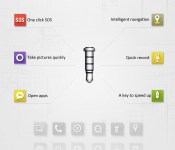
[STEAL ALERT] KLICK: Android 3.5mm Shortcut Device for 39¢

Today a deal comes from GearBest that you would be crazy to pass up. For just 39¢ + free shipping you get Klick a 3.5mm push button for your android phone. Klick allows you to set up shortcuts for your phone like flashlight and camera with a press of a button.
To get Klick head on over to GearBest.com and use promo code GBSMR. This code will drop the already cheap push button down to 39¢ and free shipping. Payment is made through Paypal. This discount expires July 19th so head on over and pick one up today.
The post [STEAL ALERT] KLICK: Android 3.5mm Shortcut Device for 39¢ appeared first on AndroidGuys.

Toyko, Zion National Park Added to Apple Maps Flyover Feature [iOS Blog]
Apple has added two new locations to its Maps Flyover feature in iOS, including Tokyo, Japan and Zion National Park in Utah. The new additions to Flyover allow users to take a close 3D look at the areas, zooming in on buildings and landmarks.
First introduced with iOS 6 and based on technology acquired from the purchase of C3 Technologies, Flyover is now available in 88 different locations across the world.
 Zion National Park in Utah
The new additions to Flyover come as Apple works to continue to improve its Maps app. Recently, users have reported significant improvements in Apple Maps data, with errors being fixed with quick turnaround and additional POI locations added in many places. Apple also made notable updates to Maps in China, Japan, and several other countries back in March.
iOS 8 is expected to bring new features to Maps, though not at release. Transit directions and other Maps improvements are in the works, but may not be available to customers until the first significant iOS 8 update, possibly iOS 8.1, in 2015. iOS 8 also includes a new “City Tours” Flyover feature hidden within the code that lets users view a city’s major points of interest via Flyover, but it is not yet unlocked.
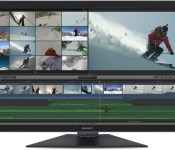
Apple’s Professional Video Apps Final Cut Pro, Motion, and Compressor Updated [Mac Blog]
After announcing plans to cease development of its professional photo editing software, Aperture, Apple is assuring users of its other professional-oriented software that it plans to continue video development with a series of new updates.

Final Cut Pro, Motion, Compressor, and MainStage Pro are all being updated today, with Final Cut Pro receiving the largest update. The update for the professional video software includes a range of new features and improvements:
– Optimized, proxy, and rendered media can be stored at any location outside of the library
– Easily delete optimized, proxy, and rendered media from within Final Cut Pro X
– Used media indicators for Compound clips, Multicam clips, and Synced clips
– Option to show only unused media in the Browser
– Apply a standard (Rec. 709) look in real time to high dynamic range and wide color gamut video from ARRI, Blackmagic Design, Canon, and Sony cameras
– Automatically apply an ARRI embedded 3D LUT from the new AMIRA camera
– Support for Apple ProRes 4444 XQ
– Improved speed and accuracy when synchronizing clips
– Audio recording improvements including countdown and automatic Audition creation from multiple takes
– Fast export of cuts-only projects containing XDCAM media
– Export entire library as a single XML file
– Selecting a library displays key metadata in the Inspector
– Adjust relative and absolute volume of a clip or range selection
– Create Keywords from Finder Tags when importing media
– Option to sort events by date or name in the Libraries list
– Import a clip by dragging directly into the Browser
– Share 4K video to Vimeo
The other apps have gained minor improvements, such as support for Apple ProRes 4444 XQ in both Motion and Compressor along with improved sequence text behavior in Motion and improved performance in Compressor.
All of the apps are available from the App Store, with Final Cut Pro priced at $299, and Motion and Compressor priced at $50. According to TechCrunch, a MainStage update is also coming later today.
– Final Cut Pro [Direct Link]
– Motion [Direct Link]
– Compressor [Direct Link]
Update 11:46 AM: The MainStage 3.0.4 update is now live, addressing several bugs.

Adobe ‘Doubling Down’ on Lightroom in Wake of Apple’s Aperture Announcement
Following Apple’s announcement that it plans to cease further development on its professional photo editing software, Aperture, Adobe has released a statement encouraging Aperture users to check out its Creative Cloud plan or its standalone Lightroom app, a longtime Aperture competitor. The company says it is committed to helping former Aperture and iPhoto customers transition to Lightroom.
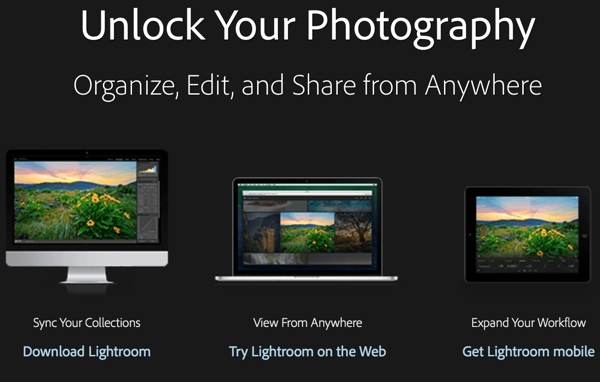
Put simply we’re doubling down on our investments in Lightroom and the new Creative Cloud Photography plan and you can expect to see a rich roadmap of rapid innovation for desktop, web and device workflows in the coming weeks, months and years. We also continue to invest actively on the iOS and OSX platforms, and are committed to helping interested iPhoto and Aperture customers migrate to our rich solution across desktop, device and web workflows.
Known as Aperture’s biggest competitor, Lightroom is another solution for professional photo editing. Adobe has a Creative Cloud subscription plan aimed specifically at photographers, offering access to both Photoshop and Lightroom for $9.99 per month. While this plan used to be temporary, Adobe recently made it a permanent addition to Creative Cloud. Adobe also offers access to its full suite of Creative Cloud apps, including Lightroom, for $49.99 per month.
Adobe has developed Lightroom mobile apps for both the iPhone and the iPad, both of which seamlessly connect to the desktop version of Lightroom, allowing users to edit and manage their library of photos on any device.
While both Aperture and Lightroom offer similar professional photo editing capabilities, Lightroom has enjoyed regular updates as part of Adobe’s Creative Cloud, while Aperture has been falling behind for quite some time now. Lightroom received an update earlier this month, while Aperture was last updated in November of 2013.
Buyer’s Guide: Discounts on New iMac, iPhones, iPod Touch, and More [Mac Blog]
There are some great deals on Apple-related software and accessories this week, as well as some decent discounts on the iPhone 5s, iPhone 5c, and the new iMac.
For the next day, customers can get the new low-end 21.5-inch iMac for just $830 from Best Buy with a $120 discount on the iMac itself combined with a $150 discount on all Macs for students with an .EDU email address, a total price drop of $269. Students can also get a $150 discount on all iMacs and MacBooks through July 12.

The 16GB iPhone 5c and iPhone 5s are available for $29 and $99, respectively, from Walmart. Walmart’s new prices are permanent, and offer $79 off the iPhone 5c and $100 off the iPhone 5s.

Following the introduction of new 16GB iPod touches for $199, Best Buy has discounted the original 16GB iPod touch with no rear facing camera to $170.99, $58 off its original price and $29 less than the new iPod touches. Best Buy is also offering a slight discount of $12.50 on the 32GB iPod touch, selling it for $237.49, down from $249.99.

As far as accessories go, Best Buy is offering discounts on several different iPad mini Smart Covers. Light Gray, Dark Gray, and Pink, for example, can be purchased for $16.99, a $23.00 discount from the standard $39.99 retail price. Green and Red are available for $19.99.
New users of the Hotel Tonight app, which is designed to find deals on last minute hotel bookings can get a $25 credit by entering the promo code “TONIGHT” during account sign-up.
The Incase Hard-Shell Case for the MacBook Air and MacBook Pro is available for $14.99 from Groupon, a discount of $35 off the regular $50 price tag.

Before making a purchase of a Mac or iOS device, make sure to consult our Buyer’s Guide to find out if it’s a good time to buy. For example, since a new iPod touch variant was recently released, it’s unlikely another update is in the works for the near future, making it a good time to buy.
MacRumors is an affiliate partner with some of these vendors.
Apple puts Aperture out to pasture, moving users to new Photos app

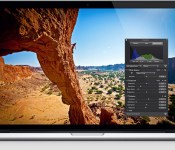
Apple’s pro photo editing suite Aperture is coming to the end of its life. In 2005 Cupertino decided to take on the entrenched powers in that field, including Adobe, but clearly the company has decided there are better uses for its resources. Instead, with the next version of OS X, will be ushered towards a new app called Photos. Apple will even provide a tool for seamlessly moving your existing library to Photos. While it may pack some of the more advanced editing features of Aperture, the new app is actually aimed more at replacing iPhoto (which will also be getting the boot). Users that are unwilling to give up Aperture can rest assured that will provide compatibility updates for OS X Yosemite, but there will be no other changes to the software. For those that would rather move over to the Adobe family, there’s always Lightroom, which is part of the Creative Cloud suite and has proven popular. Of course, that means paying a $10 monthly subscription. It’s less than ideal, but at least Lightroom has a history of frequent updates.
Update: This story originally stated that Apple was building a tool to aid those looking to transition to Lightroom. Instead the tool is for moving users to Photos. Apple is, however, working to provide documentation for those that wish to move to Lightroom.
Source: TechCrunch
 AIVAnet