



Shazam, Duolingo and several other apps head to Google Glass

Just ahead of Google I/O, a slew of new Google Glass apps are hitting the MyGlass store. The new downloads include the popular music-recognizing service Shazam and Duolingo, which offers free foreign-language courses. Two fitness-focused apps, Runtastic and 94Fifty Basketball, are also new additions to the Glassware family. Rounding out the list are the GuidiGO personal tour guide, an app for The Guardian, Livestream, MusicXmatch, Goal.com and the game Zombies, Run! Finally, the Allthecooks app has been updated with voice commands, so you can use Glass hands-free while following recipes.
While I/O is expected to be all about Android Wear, Google’s platform for wearables, Google Glass will likely make an appearance as well. The Glass team says Glassware — the fancy term for Glass-specific apps — has grown 80 percent in the past six months, and we may get a look at some of the just-announced additions at the keynote tomorrow.
Filed under: Wearables, Software, Google
Source: Google Glass
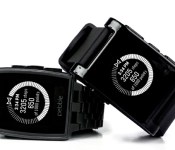
Misfit’s fitness tracker is now available as a Pebble app

We’re calling this “wearable-ception.” Misfit’s Shine is a waterproof fitness tracker. With an accelerometer and 5 ATM rating, so (potentially) is the Pebble smartwatch. Color us surprised then, to find out Misfit and Pebble are partnering to re-imagine Shine as a Pebble app. Misfit’s experience and bespoke fitness tracking software is being shoe-horned into a watch-friendly format, and will be available in the Pebble appstore today — no Shine required. If you already have a Shine, and are an iOS user, an updated app will fold in support for Pebble watches, should you prefer to keep things separate. The updated app also includes some new metrics, such as calories burned, and distance traveled. Pebble already has a number of fitness apps, but the company claims this is the first stage in an ongoing collaboration with Misfit — so expect even more fitness functionality in the future.
Filed under: Cellphones, Wearables, Mobile
Source: Pebble, Pebble (appstore)

Android Wear could make or break the smartwatch

Google is about to determine the future of smartwatches. When it announced Android Wear — its new platform for wearable technology (watches in particular) — I was in London for an industry trade show, along with a number of wearables manufacturers. I’m not sure the timing was deliberate, but there’s no doubt the mood in the room changed once the news broke. If you’re in the business of smartwatches (or wearables in general), with products already in development, and one of the biggest names in technology enters the fray, you’re going to face some big decisions. Get on board with the new platform, or go it alone? Given Google’s success in the smartphone world, Android Wear could make or break smartwatches.
The problem

Right now, the smartwatch corner of the technology “garden” is wild and unkempt. A tangle of different form-factors, software platforms, feature-sets and compatibility issues. Some solve single problems, others want to do it all. The current smartwatch market is a mess. The problem seems to be finding a problem to solve. Phone notifications are usually the starting point, but more specific tasks (often fitness related) are also candidates for upgrading an otherwise regular watch to a “smart” one.
The fact is most smartwatches are flawed. If it’s not poor battery life, or limited phone compatibility, poor app support or niche functionality, it’s cumbersome design, a high price tag or limited geek appeal. There are big names involved, too. But that doesn’t seem to help. Samsung released four Gear watches in the last eight months, and even with the company’s considerable marketing clout and brand recognition, it’d be hard pressed to call any of them a hit with the public.

One watch has, perhaps, caught people’s attention more than most: Pebble. It famously obliterated its Kickstarter goal, and has enjoyed media accolades ever since. But even the mighty Pebble is a rarity to spot out in the wild (beyond certain tech hubs at least). Ask most pedestrians to name a smartwatch brand, and they’ll be more likely to reach for Casio than Samsung, Sony, LG, or Motorola etc..
Why is this? Partly because choosing a smartwatch today is like choosing a smartphone circa 2006 — multiple platforms, designs and features that make each one feel like an island. One from which there is no escape should you not like the weather, or the lack of food. The analogy is true even down to the bespoke chargers that phones once required. Hunting out that specific Motorola/Nokia/whatever charger was a problem we all thought we’d left behind, surely? But here it is again in wrist-worn form.
Wear’s the solution?
The smartphone problem was solved with software. Phone makers (mostly) stopped backing their own horses, and settled on a common solution (Android, Windows or iOS etc.). This allowed hardware makers to concentrate on gear, and gave users some sort of stability in their experience (without diminishing choice altogether). This is the first task Android Wear has to achieve if smartwatches are to progress. The second is that slightly thornier one of problem solving. With phones killing off the need for a watch at all, if we’re to keep glancing at our wrist, it’d better be for a good reason. Most of what we know about Android Wear’s functionality right now is shown off in the video below and looks like a mixture of Google Now and Siri. Of course, we’re going to reserve judgement until we’ve seen it for ourselves.
In the next 24 hours, via Google’s I/O event, we’re going to learn a lot more about Android Wear, and what it can actually do. Beyond the notification and Google Now-like functionality, there are hints at it hooking in to other ecosystems. In the advert above, it ends on what can only be a massive tease about an Android @ Home revival (or refresh), surely? It’s big, mass-appeal functionality like this that could really push smartwatches out of the darker corners of the tech-club and into the warm light of the Main street.
The technical aspects of Android Wear might not be the most important factor though. With Wear, we see Google’s first official dalliance in the watch space. Possibly only Apple’s entrance to the market is more anticipated. In a sense, Wear gives Google’s blessing to smartwatches, which in turn adds legitimacy. Not to mention, with Motorola and LG (and, probably, Samsung) having hardware more or less ready to go, there’s already solid manufacturer support. This is the biggest reset of the smartwatch market so far. If Android Wear can’t gain traction with the buying public now, no number of iWatches is going to help.
Best Buy Selling New Entry-Level iMac for $830 With EDU Discount [Mac Blog]
Best Buy is now offering the new entry-level iMac for $979.99, a $120 discount off its standard price of $1099. Combined with the recent educational discount that takes an additional $150 off the price of Apple iMacs and MacBooks, the new iMac model can be purchased by qualifying customers for just $829.99.

While the $980 sale price is available to all customers until June 28, the extra $150 discount is part of Best Buy’s current College Student Deals that run until July 12. You need a valid .edu email address and must sign up at Best Buy’s website to be eligible for the extra student discount on all iMac and MacBook models.
The new entry-level 21.5-inch iMac includes a 1.4GHz dual-core Intel i5 processor, a 500GB hard drive, 8GB of memory, and an Intel HD 5000 Graphics chip. The new iMac ships with the same ultra-low voltage Intel processor used in the current MacBook Air and scores similarly on benchmarks.
MacRumors is an affiliate partner of Best Buy.
Icon packs that you must have on your Android device…Round Two

I’m an icon addict to the point of where I really need some serious intervention. But don’t call anyone quite yet, just let me present to you what I want to show off today, then decide if you want to make that call. That’s right, I’m going to show you some of the newest, hottest, most amazing icon packs in the Google Play Store today that you need to have installed on your mobile device. You can check out some of our older posts on this same subject here: Android Icons You Must Have as well as my first edition of this post from a couple of weeks ago here: Icon Packs You Must Have(Round One)
The good thing about the icon packs that I’m going to show you today is that they are so very simple to install and easy to set on your device. And when you do get them set on your device, they will theme your homescreen icons as well as all of your icons in your app drawer. That way everything looks nice, neat and uniform. Now, let’s get started with the first icon pack of several for the day.
NOTE: THIS ARTICLE IS SPREAD ACROSS FIVE PAGES
OffCorner Round by OffCorner Dev

I’m a sucker for round icons and I think OffCorner Dev knows this because he first released OffCorner Icons in a square format. Then I mentioned how nice they were and that I’d love to see them in a round version, and a couple of days later, even though he was doing finals and such, he provided me with a beta APK. I instantly fell in love with icons as you can see, the icon image itself isn’t centered on the background like you see in most all other icon sets. Something unique and different, along with the flat/simple design.
With over 880 icons, a dashboard app and an icon request tool, you can’t go wrong for only $1.29. Updates are quite frequent as well, making OffCorner Round a must have icon pack for all icon addicts like myself!

The1Lucent by The1Dynasty

The1Lucent by The1Dynasty is something a bit different than what we’ve been seeing here as of late. It’s not a long shadow icon set and this is really nice to see Roberto do something totally original. Using no background behind the icon, this set really stands out, especially with the bright, vibrant colors he chose to use along the way for a lot of the icons. You won’t find another icon set similar to The1Lucent anywhere around town.
Priced at only $1.99, The1Lucent provides you with 750+ hand-crafted icons to make your homescreen and app drawer superb to all others. Plus you get several custom made wallpapers as well as full support for the Muzei Live Wallpaper app.

The post Icon packs that you must have on your Android device…Round Two appeared first on AndroidGuys.
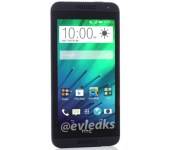
HTC Desire 610 rumored to be headed to AT&T

HTC has always had a pretty solid grasp on the midrange market, particularly with their Desire line. With decent specifications, low price, and solid build quality, it’s sometimes extremely hard to not think about picking one up. HTC is set out to make that decision a little bit more difficult, now, with the rumor of the Desire 610 making its way to AT&T.
Earlier this morning, popular leaker, @evleaks, outed a picture of the Desire 610. We don’t have any details as to when it will officially launch, but rest assured, it should be here sometime in 2014. In case you forgot, the 610 offers up a 4.7-inch, 960×540 display, Snapdragon 400 processor, 8GB of internal storage, 1GB of RAM, and an 8MP rear-facing camera.
It’s great to see a phone that will do well in emerging markets make its way to a giant US carrier. What do you all think? Would you pick one of these up if the price is right?
Source: @evleaks
The post HTC Desire 610 rumored to be headed to AT&T appeared first on AndroidGuys.

Engadget took over Austin for a night and here’s what happened

Bombs were dropped on our Editor-in-Chief while he innocently drove away in a Jeep. Engadget readers enjoyed alcohol in both vaporized and brewed form. A totally retro retailer crashed the party with its unique helmets. Those are just some of our favorite things that happened last Friday when we took over Austin Music Hall to kick off our Engadget Live series!
Chaotic Moon Studios, who introduced us to “Shark Punch” at SXSW, showed off its two-player experience game, “Death From Above.” Our Editor-in-Chief strapped on an Oculus Rift to enter the virtual Jeep as player one, while player two (me!) grabbed an iPad and dropped bombs on him. Ironically, as the social media guy who diffuses bombs on a regular basis, it was I who emerged victorious in the end.
This right here is a Vapshot, a machine that instantly vaporizes alcohol and services it up as a shot or mixed drink. Though the Engadget team was too busy running around greeting fans to partake, the long line to try it out indicated the company earned a ton of new fans.
Re3d showed off its enormous Gigabot 3D printers at the event as well. It won’t fit on your desktop, but you’ll be able to build items up to 2 feet tall!
Atlas Wearables, Brewbot, Huawei, Optical Cables by Corning, Plum, Snakable, Techjango, TiVo, and Zero Motorcycles filled the Austin Music Hall as well, showing fans what they’ve been up to. Speaking of electric motorcycles, we’re hopeful we didn’t break any fire regulations by letting this happen.
If you missed out on Austin, we’re already itching to come back, so stay tuned. Next on the list is our Engadget Live event in Seattle on July 18th. After that, we’ll head to Boston and Los Angeles to wrap up the series before Engadget Expand takes over New York City!
Zach Honig contributed to this report.
Filed under: Announcements

What’s on tap for Google at I/O 2014

Don’t let its DevCon facade fool you: Google I/O has plenty of interesting stuff for everyone. Most of the company’s big announcements come during the day one keynote, which we’ll be liveblogging tomorrow morning. This year’s theme is “Design, Develop, Distribute,” a slogan that doesn’t reveal any major clues about what we can expect (aside from the fact that Google is focused on new design, which we’ll cover in more detail later). But that’s what we’re here for — to figure it out! We’ve compiled a handy guide that discusses what to expect — and not expect — to see at San Francisco’s Moscone Center this week.
Android Wear

We’re not exactly taking a shot in the dark by predicting that Google’s new wearables platform will get a lot of attention at the company’s developer conference. Ever since it was officially announced three months ago, Google has given devs access to the platform via emulators and fed them with videos on the subject. Two of its hardware partners, LG and Motorola, also showed off their first Wear-enabled smartwatches, and all three companies have hinted that we should expect more details near the end of June.
While we feel safe placing bets on the chance that Wear will get plenty of face time during Wednesday morning’s keynote, we’re less sure of which hardware we’ll see — aside from the LG G Watch and Moto 360, that is. A Samsung-built Wear device is a solid guess, but what about the handful of other companies committed to supporting Google’s new platform (Fossil, HTC and ASUS)? Those camps have been pretty quiet of late, so it’s unlikely we’ll see a smartwatch from those manufacturers this soon.
Android redesign
Quantum Paper. Sounds like something straight out of science fiction, but it’s actually the rumored code name for a new design framework Google’s been working on for some time. First detailed by Android Police, this project is intended to offer a consistent user experience on the company’s products over multiple platforms, such as Android, iOS and the web. (We wouldn’t be surprised if this extended to Chrome OS as well.) We expect to hear more of this project at I/O, and it would make sense to see the new design elements implemented in a fresh version of Android. It’s been 2.5 years since Android 4.0 Ice Cream Sandwich introduced a completely different user experience; even if we don’t see a full upgrade, we’ll at least come out of I/O with a much better idea of what the next version of Android should look like when it’s ready.
Google Fit
Health monitoring is trendy this year, it seems. In 2014, Apple and Samsung have already introduced platforms that give users the opportunity to gather data about their personal health and provides them with advice on how to improve it. Now it’s Google’s turn to crank out a similar platform, according to Forbes. Known as Google Fit, the service is expected to collect and aggregate health data from apps and fitness trackers. While it’s unclear if this will be baked into Android or just available as a standalone app of some sort, it makes sense for Google to offer a health-related platform for developers and wearables companies. In fact, Fit may encourage more manufacturers to give Android Wear a shot, if Google makes it easy to tie the two platforms together.
Android TV
Television is a tough nut for Google to crack, so the company’s next effort in the space is Android TV. It’s rumored to be a platform that offers a simple user interface (known internally as Pano) focused on helping you find new entertainment options through recommendations. It’ll be similar to the company’s failed Google TV in a few ways, but it’s supposed to feature online media services and games. Developers will be able to create TV apps that have access to voice input and notifications, and content suggestions will sit on the home screen. Netflix and Hulu Plus are expected to be included, as are several other unnamed services.
Google will face the challenge of courting hardware manufacturers to the platform, especially those who may have had lackluster experiences with Google TV or are currently committed to other platforms (such as LG, which uses webOS on its televisions). Still, any company eager to take on Amazon, Apple, Roku and other set-top boxes may adopt Google’s new platform in the hopes of grabbing market share.
ATAP

Google’s Advanced Technology and Projects division is hard at work on two publicly known initiatives: Project Ara, which is focused on building a modular smartphone, and Project Tango, centered on 3D mapping and gaming using phones and tablets. At least one of the I/O sessions is dedicated to the group, so there’s a solid chance we’ll get some more details about one or both projects during the conference — and who knows, maybe the company will even reveal something completely new that we haven’t seen before, but we won’t hold our collective breath for that.
Wild cards

Now, we’ll go over a few of Google’s other projects that may show up at I/O. First up is the connected-car experience. Earlier this year at CES, Google announced the Open Automotive Alliance. The coalition, which consists of partners like Audi, Hyundai, GM and Honda, was formed to create an Apple CarPlay-esque platform that would let you use your car’s dashboard as a control center for your Android phone. It’s possible that we’ll hear some more details about the project, which is currently rumored to be known as Auto Link.
But what about Nexus? Over recent months, we’ve heard buzz about a new HTC-built tablet called the Nexus 9, but we’ve also heard the same thing about a Nexus 8 as well. Regardless, we don’t expect to hear much about either device this week, but we won’t rule it completely out of the picture either.
Speaking of which, there likely won’t be any details about the rumored Android Silver program. With Silver, Google reportedly wants to offer a premium Nexus-like experience with multiple manufacturers in which Google itself will volunteer to help with marketing and development costs; these phone and tablet makers would also get preferential treatment when it comes to getting updated with new versions of Android.

Nest’s recent acquisition of Dropcam is still too fresh for Google to discuss strategy or plans of any sort, but don’t count the thermostat maker completely out of the picture. The company announced yesterday that third-party devs can now build apps and devices capable of talking to the hardware, so there’s a very good possibility that we’ll hear more about this from Nest this week. We’d also love to hear more from Google’s home automation group known as Android@home. It was announced in 2011, but has gone largely untouched since it initially began. Could Nest help tie it in with some of Google’s other products? Perhaps.
Lastly, Google Glass has opened up to UK developers (as well as the public) recently, but it’s still technically not a consumer-facing product yet. Google’s mentioned that it’ll arrive for consumers sometime this year, so there’s a possibility that we’ll see the next version of the wearable and get more details on public availability and pricing.
[Image credit: Getty Images]
Filed under: Announcements, HD, Mobile, Google

Europe’s next roaming charge cut comes into force on July 1st

From July, anyone travelling in any of the EU member countries with their smartphone will enjoy a few less numbers on their bill. As part of new roaming caps coming into effect next week, the European Commission has cut the price of data downloads by 55 percent. This means the most you’ll pay for a megabyte is 20 cents instead of 45. As promised by the Commission’s VP Neelie Kroes, the new price caps will also drop call charges by 21 percent to 19 cents per minute, while receiving calls will be reduced to 5 cents per minute. Text message costs are down 25 percent to 6 cents, but it’s the lower cost of data roaming that’s the banner announcement, meaning smartphone owners can safely sneak in a quick tweet or Instagram upload while they’re making their way across Europe. Some customers, like those on Three in the UK, can bypass charges completely by way of free roaming plans, but for those who find themselves in an unsupported country, the new rates could lighten possible bill shocks in the future.

Source: Europa

Prototype NASA rover can ride on the underside of frozen lakes

We’ve built rovers to deal with arid planets like Mars, but what about trips to Titan’s hydrocarbon puddles and Europa’s ice lakes? NASA’s Jet Propulsion Laboratory is working on a robot that’ll dive into the frozen water, riding along the underside of the surface of Jupiter’s moon. BRUIE (Buoyant Rover for Under-Ice Exploration) is currently being tested out in the Alaskan wilderness, not only to determine if such technology could work, but also to study the water itself, measuring its salt content and temperature. If all goes well, then the first tentative steps towards a launch could begin in a few decades, but until then, you can catch BRUIE in action in the video below.
Filed under: Robots
Via: Sploid
Source: National Geographic
 AIVAnet