



How to Disappear (almost) Completely: the illusion of privacy

Can anyone ever really leave the internet? And if you had the choice, is that something that you’d want to do? After all, abandoning the connected world might help you reclaim some privacy, but even if you smashed your PC, burned your tablet and tossed your smartphone, you might still not be able to escape constant surveillance. In our three-part series How To Disappear, we’re going to look at why you’d think about going offline, what you can do to tidy up your digital footprint and what happens to those who have made the leap into the darkness.
Back in 2009, Wired sent contributing editor Evan Ratliff on assignment to go “off the grid,” with the publication offering a bounty of $5,000 to the first person who caught him. It took the community less than a month to track him down using the electronic trail left by his ATM history, travel records and browsing activity. This effort wasn’t led by some obscure government organization either, but by a group of ordinary members of the public participating in a competition. That well-funded game of cat and mouse took place five years ago, and with advances in technology since, it’s safe to assume the hunt would be much easier to complete today. Which is all the more reason we need to take a long, hard look at how we live our lives online.
The fact is, simple metadata records can be used to easily draw conclusions about your activity; to “connect the dots,” so to speak.
Pamela Jones is a paralegal based in New York City who worked part-time editing Groklaw, a website that reported on legal news around the open-source movement. But on August 20th, 2013, Jones left the internet forever. She would never again browse websites, correspond with her former collaborators or idly browse Amazon in her downtime. Why? Because she, like the rest of us, had learned the terrible truth about the National Security Agency’s PRISM program. Suddenly, online privacy was a commodity that no longer existed.
Two months before Jones fled her digital life, government contractor Edward Snowden had leaked the files that would send a shockwave through the media, causing worldwide alarm. The NSA’s PRISM program, it was revealed, was harvesting all of our emails, videos, photos and VoIP data from the servers of companies like Microsoft, Google and Yahoo, whether they knew about it or not. That data harvesting was done in the name of counter-terrorism: Scores of analysts at the NSA’s Fort Meade headquarters were scouring through our online histories to identify and track known criminals and suspicious persons of interest.

Then, more cracks in our perceived privacy began to show. It wasn’t just our online activity that was being scrutinized, as it was soon revealed the US security agency was also bulk-collecting the phone records of every US citizen. Former NSA chief General Keith Alexander defended that policy during an appearance on HBO’s Last Week Tonight with John Oliver, saying that his team was merely collecting “two phone numbers, data, time and duration of [the] call.” In other words, the NSA wasn’t transcribing your every word; it was just innocently keeping records of our metadata.
Heartbleed enabled hackers to easily access both secure servers and your password at the same time.
That form of surface snooping may come off as innocuous, but the fact is simple metadata records can be used to easily draw conclusions about your activity; to “connect the dots,” so to speak. Consider this example of the power of metadata from the Electronic Frontier Foundation, a nonprofit that advocates for our digital rights: You make a phone call from a bridge to a suicide prevention hotline. The contents of the call aren’t recorded, but your location is. And well, the general purpose of that call is, more or less, clear. Or ponder this: A person’s file shows that they spoke to an HIV-testing service, a doctor and their HMO all within the space of an hour. Again, none of the conversations have been logged, but is it really even necessary? What conclusions would you naturally come to?
The revelations of our digital insecurity didn’t stop at pilfered web and phone call histories, either. Months later, news hit that national retailers had left our private information wide open for criminal use. Over the 2013 holiday season, Target revealed that 40 million credit and debit card numbers were stolen from the company’s servers. And then shortly after, the company conceded that the data breach also leaked the names, addresses, phone numbers and email addresses of up to 70 million people. Neiman Marcus was next, announcing a similar breach that leaked 60,000 data entries and around 350,000 credit card numbers between July and October of 2013. Then Michaels, a US arts-and-craft supplies store, revealed in April that around 2.6 million of our credit card numbers may have been compromised. Are you sufficiently paranoid, yet?

But wait there’s more. If it wasn’t bad enough that the government had violated our privacy and the nation’s retailers had left us open to fraud, a vulnerability was then discovered that shook the fundamental infrastructure of the internet. Heartbleed, as it was called, enabled hackers to easily access both secure servers and your password at the same time. Essentially, every time you logged in to a site, you could have been handing your email address and password over to anyone savvy enough to scrape it. Heartbleed was a nightmare for almost every company on the internet that had relied upon open-source security protocols in the hope of avoiding this exact problem. Many scrambled to fix the hole, which was found in around 18 percent of all internet servers, but by that point it was too late. The backdoor had been left open for too long.
“It behooves us as individuals to behave as if the battle is lost, and privacy is dead.”
And it’s not like this increasing trend toward insecure data is going to improve in the next few years. David Barroso, who runs Telefónica’s security business Eleven Paths, is concerned that the next vulnerability will be even more detrimental to the privacy of internet users. Barroso fears Branch Distribution Points, the facilities that control a nation’s internet infrastructure, are next on the list of potential targets. And if someone manages to gain access to these BDPs, Barroso believes they’d be able to make man-in-the-middle attacks on a near-global scale.
It makes you wonder if the illusion of privacy is even worth upholding anymore. Why bother hiding when another leak, another break, another vulnerability is lurking just around the corner? Perhaps we should just heed the advice of Nathan Borenstein, the original inventor of email and now chief scientist at Mimecast: “It behooves us as individuals to behave as if the battle is lost, and privacy is dead.”
It very well may be.
[Image credit: Glenn Greenwald and Laura Poitras/AP Photo/The Guardian (Snowden); Kurt Opsahl/Electronic Frontier Foundation/‘Through a PRISM, Darkly’ (EFF Slide)]
Filed under: Internet

Google Glass goes on sale in the UK for £1,000

Although technically still in the beta phase of development, anyone with the right wallet size can now buy Google Glass in the US. The UK has had little exposure to the eminent wearable outside of special projects, but Google’s decided it’s time to let Brits get in on the fun, too. Early adopters of the UK can hand now over a cool £1,000 ($1,700) in exchange for a pair of Big G’s spectacles, in the first general sale program outside of the US. You can opt for the generic frame, of course, or spring for one of the prescription Titanium collection for a hair extra. Whichever you choose, though, don’t expect to escape funny looks from the vast majority of Brits that’ll finally be seeing the mythical wearable in the flesh for the first time.

Text-to-voice your own ringtone with Type Your Ringtone

Is using music as a ringtone too fancy for you? Type Your Ringtone lets you take advantage of the text-to-speech engines to type your own ringtone.
Instead of having “MMMbop” as your ringtone, you can now modernize it with the sounds of an English lad tell you that “The President is calling”. The app gives you a couple of nice features including the ability to choose from a variety of languages, the option to see all custom sounds that you’ve created and making it easy to play or delete them, or set theme s your new notification or ringtone sound.
If you feel like ponying up a buck, you can get the pro version that will remove the ads and give you a few bonus features like setting the notification sound for a specific app (Android 4.3 or higher required), the ringtone for a specific contact, set your notification sound for a specific contact (Android 4.4 or higher required), no ringtone limits, and most importantly you can control both the speed and pitch of the ringtones voice.
Type Your Ringtone uses the default text-to-speech (TTS) voices that come preinstalled on your device. You can create endless possibilities for different voices by installing different engines and setting them as the default.
The app is easy and fun to use with its intuitive interface making it so that anybody can create their own “speechtones” with ease. The app is available in a slightly more limited, ad supported free version, and a more ample, ad-free paid version for only 99 cents. Both are available on Google Play.
The post Text-to-voice your own ringtone with Type Your Ringtone appeared first on AndroidGuys.
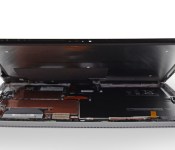
The Surface Pro 3 is nigh-on impossible to repair, just like its ancestors

If you had dreams of upgrading your shiny new Surface Pro 3, you’d better shelve them. The crew at iFixit has torn down Microsoft’s latest slate, and it proves just as daunting to repair as both of its predecessors. About the only replaceable part is the solid-state drive, and there’s a good chance that you’ll destroy your tablet trying to reach that component — even iFixit cracked the glass while removing the display. Just about everything (including the screen) is held in place with adhesives, and unconventional connectors only add to the challenge. You may not mind the unrepairable design given that the Pro 3 is much thinner and lighter than earlier Surfaces, but this definitely isn’t the tablet for tinkerers.
Filed under: Tablets, Microsoft
Source: iFixit

Hailo launches in Manchester a month later than Uber

App-based taxi services are the subject of anger and frustration over in London, but Manchester looks set to become the next major battleground for two of the UK’s biggest. Hailo, which has served around 12,000 of London’s black cabs since 2011, today went live in the north west (its first city outside of the capital), just a month after Uber officially opened its (virtual) doors to customers there. While Hailo’s app currently books registered taxis for customers, the company recently announced that it was becoming a fully-featured Uber rival, which saw disgruntled London black cab drivers vandalise the company’s headquarters and leave the service in their droves. According to the Manchester Evening News, 300 drivers have already signed up, but the company expects that number to grow rapidly. Nothing like a fresh competitor, it seems, to stop you resting on your laurels.
Source: Manchester Evening News
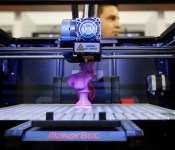
What you need to know about 3D printing

Dutch designer Iris van Herpen used one to send collections down the runway. Mink hopes you’ll rely on one to create custom makeup at home. Andrey Rudenko is optimistic that he can use one to help him build his next home. And soon we’ll create new human organs with them.
The mysterious agent of change I’m referring to is 3D printing, of course. Though these machines were previously accessible to only a small group of wealthy hobbyists, that’s no longer the case. As 3D printer prices have decreased and accessibility has increased, it seems like the possibilities are endless. But before each home has its own 3D printer, the technology is poised to dramatically impact how the industries we depend on manufacture the gadgets — and everything else — we know and love.
WHAT IS IT?
3D printing, also known as additive manufacturing, is making an object layer-by-layer. How does that differ from the usual methods? Simple: traditional manufacturing takes material away to create a desired shape.
On a macro scale, 3D printing is already transforming the way goods are manufactured in the US. According to a report released by data group PwC US in conjunction with The Manufacturing Institute, when over 100 industrial manufacturers were surveyed, it was revealed that two-thirds were already implementing 3D printing either experimentally or by already using it for prototypes or final products.
Early 3D printers were expensive, and difficult to handle without special training. But with companies like MakerBot and 3D Systems offering personal 3D printers, home manufacturing is now reality. With a little bit of an investment at the outset, you can now make parts for an appliance at home, a pair of glasses, toys, jewelry, shoes and more. It’s easy to imagine a marketplace in which, instead of buying an actual product online, you pay for the materials/intellectual property fees and make it on your own.
HOW DOES IT WORK?

It all starts with a digital file, the Computer-Aided Design file (one example seen above), which serves as the instructions for what to print. Think of the file as a blueprint. The machine then prints layer after layer of plastic, metal, nylon, or another of the many materials that can be used. These layers eventually create the final shape.
There are several different methods that can be used to 3D print, depending on variables such as what material you want to use and how much you want to spend. The most common method is Fused Deposition Modeling (FDM). With this method, an object is produced by use of melted thermoplastic material to form layers. Each layer stacks on top of and fuses with the previous layer as the material hardens almost immediately to create a 3D object.
WHY SHOULD I CARE?
3D printing offers manufacturers in the US the opportunity to actually manufacture in the US. With clothing, for example, 3D printing offers hope that clothing could be assembled in the United States — a rarity in the garment business. Why is this important? A variety of factors, least of all working conditions (think: the Bangladesh factory that recently collapsed, killing over a thousand garment workers). And it offers the possibility of the return of manufacturing jobs to an ailing US job market.
On a less serious note, 3D printing also offers far more room for personalization than traditional manufacturing. Let’s say you have a 3D printer of your own and you purchase the file for a pair of shoes. Other than the general shape the shoes will take, there’s a lot of room to make personal choices about aspects like color and the way the shoe fits. Or maybe you want to add some sweet wings? Go right ahead and add those sweet wings, friend.
WHAT’S THE ARGUMENT?
There’s no getting around it: 3D printing is likely the future of counterfeiting. For those not familiar, counterfeiting is using someone’s trademark (i.e. brand name and/or logo), for example, and passing it off as the real thing. If you live in New York (like us!) or another major city, just think about the folks selling “designer” bags out on the street. Counterfeits — unlike knockoffs — are always illegal, and they’re a huge concern for both companies and consumers.

With high-fidelity 3D printers, someone could easily create a pair of Ray-Ban Wayfarers, and the result would be a pair of glasses that’s hard to distinguish from the real thing. Individuals doing this for their own use could impact a brand’s bottom line, but the real nightmare is counterfeiters who have access to those printers. The customer gets ripped off — having bought fake sunglasses — and Ray-Ban (well, Luxottica) loses out on some cash. Nobody wins! That situation gets much more serious when you move beyond the world of luxury goods into more basic goods.
If you’re not sympathetic to multibillion-dollar international corporations losing dough because of 3D printers, consider this: counterfeit items are more that just intellectual property theft, as they can also be dangerous. These items don’t go through any sort of official inspection, so there’s no telling what materials or chemicals might be used in creating items for sale.
And while 3D printing is good for manufacturing in the sense that prototyping and production can be done locally, there may be a downside for workers involved in the manufacturing process. If more and more manufacturers start relying on 3D printers as opposed to workers to make goods, some jobs could become obsolete.
WANT TO KNOW MORE?

Make is for makers, but it’s also a great place to get started with 3D printing as it stands now and to read up on the community of makers support it. But perhaps you’re feeling far more serious? The Massachusetts Institute of Technology has a class on the subject. Okay, okay — that’s probably too much. For a more introductory approach, the folks at MakerBot have a vast array of videos on the subject. And if you’re audio-inclined, Josh Clark and Chuck “Chuckers” Bryant of Stuff You Should Know fame just recently did an episode on 3D printing.
[Image credit: AP Photo/Jae C. Hong (MakerBot printer), AP Photo/Mary Altaffer (bag/glasses)]
More Durable Touch ID Sensors for iPhone 6, iPad Air, and iPad Mini Coming From TSMC
 A report from China Times (via GforGames) claims Taiwan Semiconductor Manufacturing Company is expanding its 8-inch chip plant in order to produce Touch ID sensors for the iPad Air 2 and iPad mini 3. TSMC is planning to produce 120 million Touch ID units in 2014, a 233 percent year over year increase as the sensor expands beyond the flagship iPhone to other iOS devices.
In line with a previous report from KGI Securities analyst Ming-Chi Kuo, today’s report claims Apple and TSMC are using tin to increase the durability of the sensor compared to the current version found in the iPhone 5s.
Supply chain sources say TSMC is scaling its mass production of new Touch ID units to begin delivery to Apple by early July, with third quarter production more than doubling over the previous quarter. A previous report had indicated that the first shipments of new Touch ID sensors began by early May, but these may still have been early batches for testing.
Similar to the iPhone’s Touch ID, the iPad version will support the expanded functionality made possible by iOS 8′s new SDK that allows third-party apps to access the fingerprint scanner for verification purposes. Touch ID also is rumored to be part of a mobile payment system under development by Apple.
Recent leaks hint at how the next-generation iPad Air and iPad Mini may appear with a Touch ID module and other design refinements such as a changed speaker grille and recessed volume buttons.

Watch lightning strike around the world in real time

There’s a mesmerizing new project from an organization called Blitzortung.org that lets you see real-time lightning strikes around the world. It works using a network of volunteers willing to purchase and set up a $275 or so detection kit consisting of an antenna system, amplifier and controller. Once activated, each station can spot the radio signals from a lightning strike and transmit the precise time and location to the Blitzortung.org’s servers. From there, the lightning is displayed (complete with bug-zapper sound) on one of five maps including North America and Europe, along with a line between the strike and detecting station. Curiously, a sensor in New York can pick up lightning in Cuba, for instance, since the low frequency RF waves from lightning can travel thousands of miles. Hit the source if you want to participate, or just check the maps to marvel at another striking example of crowd-sourcing in action.
Via: Reddit
Source: Blitzortung.org

Sky Go streaming no longer free on Xbox 360 from July 29th

Sky has begun to inform Xbox 360 owners who watch TV on their console via the Sky Go app that come the end of July, they’ll need to start paying for the privilege. Sky Go is free to anyone with a subscription to the satellite TV service, and allows you to use your smartphone, tablet, computer or console (for the next month, anyway) to watch TV when you’re out of set-top box range. Sky Go Extra is a paid version that also lets you download content for offline viewing, as well as upping the number of devices you can use to four instead of two. It’s this Extra tier that Xbox 360 users will need to pony up £5 per month for (after an introductory price of half that) if they wish to continue using Sky Go on their console after July 29th. This only affects the 360 currently, and ironically it comes just after Microsoft cut the requirement for a paid Xbox Live Gold account to use video streaming apps. With Sky Go coming to the PS3 and PS4 later this summer, however, it feels very much like Sky is making a calculated move to turn a free service into a paid one just before a bunch more people get access.
[Image credit: Alfred Hermida/Flickr]
Filed under: Gaming, Home Entertainment, Internet
Via: Digital Spy
Source: Sky Community forum

Wink wants to simplify the smart home with a universal app and $80 hub

You’ve probably never heard of Wink, but you may soon encounter its logo (“Wink app ready”) or its smart home router (the “Wink Hub”) the next time you go shopping at Home Depot. The logo will appear on a range of WiFi-connected devices from different manufacturers, including air conditioners from GE and thermostats from Honeywell, signifying that they can all be controlled via the Wink app for Android and iOS. The hub unit, which will go on sale July 7th priced at $80, will act as a secondary router for Wink-compatible devices that communicate over Bluetooth, Z-Wave or Zigbee wireless protocols instead of regular WiFi — it’s something Wink describes as a reluctant but necessary addition in order for these other sorts of devices to be easily controlled via its platform
Speaking of smart home “platforms,” now might seem like a strange time for a newcomer to try to build one, what with Google creating its own empire out of Nest and Dropcam, Apple pushing HomeKit, not to mention other eager players like Revolv and SmartThings also getting into the mix. But Wink isn’t any back-of-an-envelope startup. It’s an offshoot of Quirky, which is already producing hoardes of Wink-compatible devices, plus the platform has some major partners on board: the aforemention GE and Honeywell, plus Philips, Rachio and around ten others. Besides, if future devices can happily support numerous platforms, without forcing consumers to pick one and stick to it, then a bit of jostling between rivals could be a very good thing.
Filed under: Household, Wireless
Source: NY Times
 AIVAnet