


Skybox Can Predict iPhone Launch Using Satellite Imagery

The Wall Street Journal profiles one of Google’s recent acquisitions which has implications on mapping, competitive intelligence and even privacy. Skybox Imaging is an intelligence company that by the year 2018 will be able to take satellite imaging to the next level:
By the time its entire fleet of 24 satellites has launched in 2018, Skybox will be imaging the entire Earth at a resolution sufficient to capture, for example, real-time video of cars driving down the highway. And it will be doing it three times a day.
The ability to take such frequent imaging will certainly aid Google’s Maps product, but it also opens up a market for competitive intelligence. Skybox says they are already looking at Foxconn every week and are able to pinpoint the next iPhone release based on the density of trucks outside their manufacturing facilities.
Google plans on initially using the technology to improve their Maps product, potentially providing more up-to-date satellite images, but Skybox executives have long term plans for offering their data to outside developers for a fee.

Kyocera Hydro XTRM (T-Mobile Business) Review

At First Glance
The Kyocera Hydro XTRM is a 4G LTE capable Android powered handset with an IP57 Rating against water and dust. This device is available in the United States (see: U.S. Cellular), on the T-Mobile Business and MetroPCS networks. Maybe it’s just me but I feel the Samsung Galaxy S5 Active borrows a few design cues from the Kyocera Hydro XTRM; however, stylistically this is pretty standard with durable devices these days.
Design and Hardware
The XTRM features a standard dark panel around the display with average bezels around the sides. The top and bottom, however, have quite a bit more bezel, providing less of a screen-to-device ratio than we would have preferred.
Around the sides, there is a thick border trim that almost feels like a bit of a metal border. On the rear of the device, you’ll have a removable “micro diamond-cut” plastic battery door with an O-ring seal to protect against water.
There’s a 2000mAh removable battery packed in, with microSIM and microSD card support. The dual-core Qualcomm Snapdragon S4 Plus SoC (MSM8960) powered at 1.2GHz runs the device with 1GB RAM, and allows for basic/standard smartphone. It, of course, also comes with your basic GPS, WiFi, Bluetooth, etc. Memory will be 4GB, with only 1GB user available, however storage can be expanded via a MicroSD card up to 32GB.
Display
With a color plastic overlaid TFT LCD display and 480 x 800 resolution, the 4-inch display isn’t wonderful but gets the job done without looking bad or vastly hindering visibility. It’s worth noting that this unit feels much smaller in hand as compared to other smartphones on the market.
Durability

The Hydro XTRM can sit under water (~1m deep) for up to 30 minutes and is dust and shock resistant. In other words, you’ll be better protected against accidental damage than with most other devices. To be extra safe, it is always best to ensure that the battery door with the water-seal is fully and securely tight and sealed before getting this phone anywhere near water. This smartphone does not have any of those potentially annoying MicroUSB or headset port covers, yet manages to be water resistant.
We’ve dunked this phone in water, dropped it here and there, ran water directly over the device and much more; the Hydro XTRM was not phased by any of our bad behavior. It’s able to take life’s spills without problems, but do remember the phone should not be used regularly underwater and should be dried immediately after getting wet of course.
Sound Quality
Audio quality was surprisingly pleasing with this device. Our test calls proved to be loud and crisp, which we expected as many users will be using this phone around construction or loud noise areas. The area where we were most impressed by was the speaker/speakerphone volume which was loud but not as quite crisp as the earpiece.
Software and Battery Life
This smartphone runs Android 4.1.2 Jelly Bean out of the box. While certainly not the latest, it definitely runs just fine and is compatible with most everything found on the Google Play Store. There is, of course, a small downside to not having Android 4.4 KitKat. Specifically, we’re referring to usage of resources and security improvements. Hopefully we’ll see an update at some point for this model.
Kyocera has a bit of a funky skin running over 4.1; frankly, it reminds me of Android 2.3 manufacturer overlays (with a 4.1 hybrid style). Simplicity was kept in mind, while keeping the best features of Jelly Bean.
Battery Life is tricky with this phone, averaging at around 5-6hrs with light usage with data on. Strangely, on some days with heavier usage we received around 10-14hours, or the polar opposite of 3-6hrs. Sadly, it was pretty inconsistent in our testing. It is worth mentioning that the coverage area during testing was being upgraded on T-Mobile which may have contributed to the fluctuation in consistency. The phone does features a Battery ‘MaxiMZR’ similar to other Power Saving modes with other devices, something we have yet to see in stock Android in even the latest versions as of the publish of this article.
Camera
There is a 5-megapixel camera on the rear of the phone with a 1.3-mgapixel front-facing shooter. Both are pretty basic in terms of quality with no standout features to share here. Note there is an LED flash included on the rear of the phone.Overview & Cost
This device did take a bit of getting used to as a daily driver during our testing period as we came from a higher powered smartphone. Indeed, we noticed the differences after using something more robust. Average, and first time buyers, though, may not see any visible lag or under-performance. Kyocera sticks to what’s important for industrial users and the more accident prone customer. If you are looking for the latest and greatest (with or without element resisting features), this device is most certainly not for you.
The Hydro XTRM is a great choice for those needing a basic and durable Android smartphone that can handle the elements. Summarily, it’s a decent 4G LTE handset with essential functions and few extra gimmicks.
Whether you need this as a basic device, backup, or nearly weatherproof phone, check out the XTRM. U.S. Cellular has recently discontinued this model however you can find the Kyocera Hydro XTRM at T-Mobile Business (pricing varies) and for $79.99 at MetroPCS.
The post Kyocera Hydro XTRM (T-Mobile Business) Review appeared first on AndroidGuys.
Kyocera Hydro XTRM Beyond Cell TriShield Kombo review

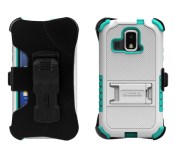
The TriShield Kombo for the Kyocera Hydro XTRM by Beyond Cell (While/Blue) is a super durable dual layered protection system with an optional screen protector. Beyond Cell was amazing enough to let us check out this case and test it out along with the XTRM.
The case does make the phone significantly larger and thicker, however it offers the best protection for this device. We loved the durability that this case adds to the already durable XTRM. Buttons clicks are now easier with the TriShield. Dust ports cover the microUSB and headset jacks for added protection. To make this case even better, Beyond Cell provides a big lip and shock protection around the display and camera areas. If by chance you drop your device you are less likely to damage these spots.
There is a built in media kickstand that helps when viewing videos on this device. While this case may not be everyone’s preference due to the thickness, this is nearly the best protection offered for this device. The only downside that we found was that on occasion during a drop, the frame layer of the case may disconnect, but is an easy fix. You can find this case and the combo belt clip holder for $19.99 at Beyond Cell. We loved this case and give it a 4.35/5.
The post Kyocera Hydro XTRM Beyond Cell TriShield Kombo review appeared first on AndroidGuys.
OnePlus outlines rollout plans, pre-orders by Q3

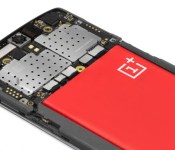
Over at its forum this morning, OnePlus outlined its plans for the next couple months of the rollout if its “flagship killer,” the One smartphone, which includes pre-orders possibly coming in Q3.
The startup said there’s a lot of confusion around the goals of its invite system, which means “we haven’t done our best to communicate this,” but they’ve also noticed that once someone gets an invite, their attitude changes.
While it was never their plan to make it a stressful experience to be able to get an invite and they want to find a solution to reward early fans, as well as provide a pain free and efficient way for busy people to buy the device, OnePlus will be launching the devices in multiple stages with invites only initially, transitioning into invites and pre-orders.
During the first few months, to ensure consistency in their product and service, it will be invite-only as they ensure the device performs as stated and they fix any issues that could “hinder a higher yield rate as production ramps up.” They also want to make sure they can meet the higher demand.
OnePlus hopes to reach a stable period in the next couple months by Q3, about sometime between July 1 and Sept. 30. At this time, they want to be able to not only provide invites, which means you can order immediately when you have one, but also pre-orders. The company is currently developing the pre-order functionality, which means you will be given an estimation on when your order can be shipped and before it’s processed, you can cancel for a full-refund.
Although OnePlus said some people are interpreting this as an additional delay, nothing has changed on the production front and many people will be receiving their phones this month. For a company that was only announced in January and already delivered its first product within the first half of the year, maybe not to everyone but to many, they’re not doing too bad of a job delivering on their initial promises.
All this said, are you still interested in the OnePlus One if you have to wait a few months to get your hands on it or do you think you’ll move on to the LG G3 or even the Moto X+1 when it’s announced this summer? We all know the rumors as well that could even see a new Nexus smartphone at Google I/O 2014 and 64-bit devices before the end of the year.
VIA: OnePlus forums
The post OnePlus outlines rollout plans, pre-orders by Q3 appeared first on AndroidGuys.
BlackBerry launches BBM Protected, bringing secure IM to the enterprise crowd

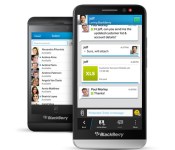
While BlackBerry has traditionally been a favorite among business users, Android and iOS have made significant inroads into the enterprise area in the past few years — bad news for a company that’s already been struggling this year. The BBM maker is still in the game, though, having just launched a product aimed at its base of government, insurance and banking customers: BBM Protected, the first piece of its eBBM suite. The “e,” of course, stands for enterprise, and the BBM Protected app lets BlackBerry owners instant-message with several layers of encryption to protect sensitive data.
Originally announced earlier this year, BBM Protected allows users to communicate securely with colleagues and chat with friends and family from the same app. As BlackBerry’s customers require, the protection is pretty heavy-duty: each message has its own encryption key, making it very difficult for anyone to decode an entire conversation. Protected chats aren’t limited to users within a single company, either; all BBM Protected users can exchange messages, even if they’re not on the same BlackBerry Enterprise service. Currently, BBM Protected is available on smartphones running BBOS 6.0 or later as well as handsets running BlackBerry 10 in Regulated mode. Expect versions tailored for Android and iOS — as well as one for BlackBerry 10 using BlackBerry Balance — to arrive later this year.
Filed under: Software, Mobile, Blackberry
Source: BlackBerry

US government wants tighter controls for in-car navigation

Many are in favor of rules that prevent texting while driving, but in-car navigation is a murkier legal area — how do you minimize distractions without limiting the ability to get from point A to point B? Like it or not, the US government may settle that debate before long. The proposed Grow America Act would let the National Highway Traffic Safety Administration (NHTSA) set rules for dash-mounted GPS units, smartphone mapping apps and anything else you’d use for driving directions. While it’s not clear what the NHTSA would do with its power, the Department of Transportation’s voluntary guidelines ask for limits on eye-catching visuals (think videos) and interaction times; don’t be surprised if these enter the rulebooks.
While the tentative measure might keep drivers’ eyes on the road, there are concerns that it could go too far. Would the agency have to screen phone apps before they launch? Advocate groups like the Intelligent Car Coalition also contend that the government would have trouble keeping up with the rapid pace of navigation software development. Regulators are trying to assuage those fears, however; they’ve pledged to take a largely reactive approach that only asks for changes when features prove to be too dangerous. That promise won’t satisfy critics who believe that any rules would stifle innovation, but it suggests that the government’s safety gurus are aware of the potential pitfalls.
[Image credit: Karlis Dambrans, Flickr]
Filed under: GPS, Transportation
Via: New York Times
Source: Department of Transportation
WebMD Launches ‘Healthy Target’ Biometric Data Collection Service
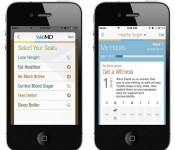
WebMD today announced Healthy Target, a service that collects biometric data from activity trackers, wireless scales and other health monitoring devices and uses this information to deliver tips on healthy living. The release comes as a number of companies, including Apple, are looking at ways to integrate health and fitness tracking from a variety of sensors and devices to give consumers an overall look at their health profiles.
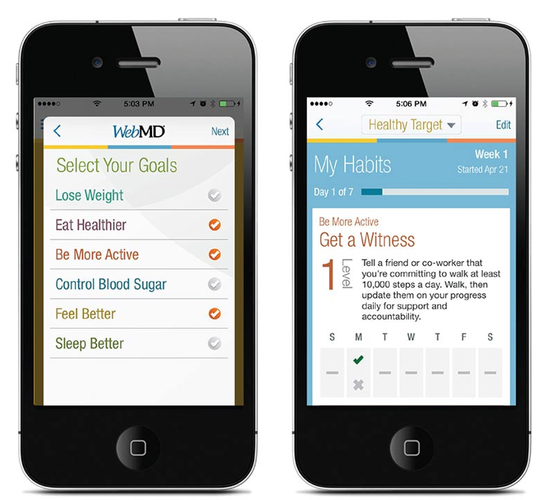
Healthy Target will be integrated into WebMD’s mobile app [Direct Link], allowing iPhone owners to aggregate all their health and fitness data into one application. Users will then receive health recommendations and fitness insights using WebMD’s physician-reviewed content.
“Consumers will appreciate the ease of incorporating their biometric data into our Healthy Target program and the health insights and recommendations offered to help them sustain a healthier life,” said David Ziegler, Director of Product Management for WebMD. “With more than 40%[1] of consumers using mobile devices to access health information, the time is right for a mobile app that can help translate data into life-improving insights.”
Besides pulling in step information from the iPhone 5s’ M7 coprocessor, Healthy Target also connects to devices from Entra, Fitbit, UP by Jawbone and Withings, with additional manufacturers expected to be announced in the coming weeks and months. According to Re/Code, the service uses the FDA-approved, secure online health repository 2net Platform from Qualcomm to sync this health data.
Healthy Target is one of several recent new health app initiatives including HealthKit from Apple, Samsung’s S.A.M.I, and the rumored Google Fit, which may be unveiled at Google’s I/O developer conference later this month.
Earlier this month, Apple briefly introduced its new HealthKit platform and associated Health app. Using HealthKit APIs, device manufacturers and app developers can share health and fitness data with Apple’s Health app, which will debut with iOS 8. Apple’s rumored iWatch product also is expected to be a primary focus of this health and fitness-related platform.
The updated WebMD mobile app with Healthy Target [Direct Link] is available today in the iOS App Store.
MacBook Airs as Low as $649 With Best Buy EDU Deals [Mac Blog]
 Best Buy is offering a $100 discount on all of the newest 2014 MacBook Air models, bringing the entry-level 11-inch model down to $799.
Best Buy is also offering a second deal for students with a valid .EDU email address that gives $150 off any Mac, and these two deals can be combined, cutting prices to the absolute lowest we’ve seen.
– 11.6″ MacBook Air, 4GB, 128GB SSD: $899 -> $799 -> $649
– 11.6″ MacBook Air, 4GB, 256GB SSD: $1099 -> $999 -> $849
– 13.3″ MacBook Air, 4GB, 128GB SSD: $999 -> $899 -> $749
– 13.3″ MacBook Air, 4GB, 256GB SSD: $1199 -> $1099 -> $949
Apple’s MacBook Air was last updated in April, and is considered safe to buy in our Buyer’s Guide. This is a significant discount on recently released MacBook Air computers, and one of the best deals we’ve seen. The combined deal will last until June 21, 2014, while the $150 off deal for students lasts until July 12, 2014.
Best Buy is also offering students $50 off the iPad Air and the Retina iPad mini.
MacRumors is an affiliate partner of Best Buy.

Angry Birds Transformers Headed Our Way Soon
Rovio‘s big franchise, Angry Birds, took off like a bolt of lighting when it first debuted on the mobile scene. Whether or not you have all, or some, of the various installments on your device right now, you are surely able to admit that you have played many of them over the years. The last Angry Birds game was Angry Birds Epic. That would be the RPG styled variation of the bird flying game. Another variations that is still on track for a fall release, as far as we know, is Angry Birds Stella. It would seem that Rovio has no intentions of letting the birds go by the wayside though as we have just learned that Angry Birds Transformers is in the works with a Hasbro.
 The game will be similar to how Rovio approached Angry Birds Star Wars. You will have your various characters from the Transformers as birds. Surely they will have their own special little powers and various power–ups you can purchase/earn to make your journey a little easier.
Unfortunately Rovio states it will be out “later this year”. Not exactly what I was hoping for since Transformers 4 is slated for theaters June 27th. Keep an eye out on the official landing page for the new title.
Source: 9to5Google
//<![CDATA[
ord = window.ord || Math.floor(Math.random()*1E16);
document.write('’);
//]]>

Ecommerce mobile app development: Is it worth the money?
With news that mobile viewing is set to over take desktop viewing this year, it is no surprise that many ecommerce businesses are gearing up their mobile strategies. Whilst many business owners understand the benefits of mobile-friendly and responsive web designs, very few consider the advantages of developing a mobile app. Here we will examine the benefits of ecommerce mobile app development to help you decide whether it is worth the money.

Mobile users prefer using apps to their device’s internet browsers.
Image source: https://farm3.staticflickr.com/2176/1955464307_2daa2fa068.jpg
Increase customer engagement
According to a study by Nielsen released in May this year, mobile users spend more time using apps than searching the internet. The study found that eighty six per cent of users were spending their time using apps, rather than their mobile internet browsers. With so many people using smartphone apps to do everything from making shopping lists to making actual purchases, it seems like far too good of an opportunity for ecommerce businesses to miss out on.
Using an ecommerce mobile app, businesses can deepen and personalise their engagement with customers. One of the ways they can do this is through using push notifications. These are messages that pop up on users’ phones. You can use them to communicate all sorts of information to your target audience, such as the fact your summer sale has now started or that you are offering free delivery, to entice them to re-visit your app and re-engage with your business.
Improve user experience for customers
Another advantage of mobile apps for ecommerce businesses is that providing they have been designed well, they can offer a greater user experience for customers than a desktop or mobile website can. This is due to the fact that they are optimised for the users’ phone model and tailored to meet their needs and requirements. Mobile apps also tend to load and run faster than traditional websites, allowing them to offer an even better user experience for customers. Allowing customers to make purchases quickly and easily, using your app, is a great way to increase your sales figures.
Learn more about your target audience
Having a mobile app developed for your ecommerce business will also allow you to learn more about your target audience. Just like websites, mobile apps can be integrated with analytics tools so you can see who is using the app, when they are using it and what for. Knowing this information will allow you to make better decisions for your business.

Mobile apps can be integrated with analytics tools so you can get to know your target audience better.
Image source: https://farm4.staticflickr.com/3346/3542294246_0f5de61b48_o.jpg
Create a whole new revenue stream for your business
Although mobile apps are certainly not cheap to design and develop, providing they are made to a high standard, they should prove to offer a great return on investment. If you think about it, you are essentially creating a brand new revenue stream for your business. Run it alongside your traditional ecommerce website and you will stand the best chance at increasing your profits.
Conclusion
Although there are many advantages to building a mobile version of your ecommerce store or designing a responsive website that can adapt to all devices, there are also many benefits to developing a mobile app. Whilst many ecommerce business owners assume that a mobile app will be too expensive, it is worth considering the potential it has to increase customer engagement and generate higher levels of sales.
The results from the Nielsen survey are proof enough that mobile users prefer mobile apps. With this in mind, it only seems sensible that you cater for your customers’ needs by providing them with a mobile app version of your ecommerce store. An ecommerce mobile app will allow them to make their purchases quickly and easily, whether they are in the comfort of their own house or on the go.
Image credits:Marco Arment&Search Engine People Blog
 AIVAnet