


With the PlayStation TV, Sony’s going after families with kids

The PlayStation TV is a curious oddity. The $100 device, a rebranded Vita TV that’s slated to launch in North America and Europe later this fall, is Sony’s direct answer to the Apple TV, Roku and Amazon Fire TV streaming boxes currently flooding the market. It’s also the only box of the bunch capable of offering a video game experience that goes beyond just casual gaming. In fact, the PlayStation TV’s library of titles spans several platforms: the PS Vita, PSP, PS One, PS3 (via PS Now’s cloud streaming) and PS4 over Remote Play. It’ll also offer consumers the ability to stream video content. But with the PS4 occupying the top spot in the PlayStation totem pole, we have to wonder: Just who is the PlayStation TV for?
“We’re really going after this new audience of families with kids that can play [PlayStation TV] together, with games that are accessible.” That’s what Sharon Kapitula, platform planning manager for PlayStation, had to say about Sony’s plan to launch the tiny streaming/gaming box in the US. In fact, you can see this approach in the company’s decision to offer a bundle with The Lego Movie Videogame and a DualShock 3, the controller that shipped with the PS3, in the box. “[We] feel like that’s the easiest and most accessible [way] for people just coming into the PlayStation ecosystem,” she said. “We figure the guys or girls that already have a PS4 will already have a DualShock 4, so they can transfer it… if they’re buying the standalone hardware.”

The PlayStation TV is a Trojan horse of sorts for PlayStation; it’s a low-cost way for non-gamers to enter the ecosystem. Sony’s hoping the device will help reintroduce consumers who may have lost interest in gaming back into the fold with familiar experiences.
The company’s also making sure to educate developers working on PS Vita titles so that controls remain compatible when played with the DualShock 3. That said, Sony’s not mandating developers tailor every experience to the PlayStation TV. Kapitula said that most are “keeping that in mind … when they’re building their titles. And most games, if it makes sense, they’ll have it on both. But that’s not to say that if we did happen to have another amazing title like Tearaway that needs to be Vita exclusive, then it wouldn’t happen.”
There’s just one major unknown in Sony’s announcement of the PlayStation TV and that’s what third-party streaming-video apps it’ll launch with, if any. Kapitula wouldn’t directly comment on which apps we’d see make their way to the device, but she did say Sony is “looking to partner with the different companies [it] partnered with on other platforms.” It’s the strongest hint that we’ll be seeing the likes of Netflix, Hulu, Amazon and even HBO Go arrive on PlayStation TV. Whether they’ll be around on day one, though, is an entirely different matter.
[Image credit: Sony PlayStation]

Military’s ‘Plan X’ would put cyberweapons into the hands of soldiers

A soldier’s natural home is on the battlefield. So what happens when to infantry when conflicts move online? It turns out that DARPA, America’s mad science division, has a solution called “Plan X.” The project is designed to make cyber-weapons as easy to use as a pistol, but also to use technology to turn soldiers into digital warriors. One of the more realistic aspects of the project is to equip marines with hardware that’ll sniff out wireless networks that could be hosting booby traps.
At its furthest reaches, however, the project aims to turn the digital world into a 3D world that could be accessed with an Oculus Rift. Rather than simply hiring legions of hackers to fight on the front-lines, trained military personnel would wander around the internet, shooting down malicious attacks as if they were on the front line. Project manager Frank Pound has said that he wants to “get rid of the keyboard,” but use harness a human’s natural ability to improvise to out-think hostile attackers. Yes, this does sound as if everyone involved has been reading far too much cyberpunk literature before bedtime.
Filed under: Wearables
Via: The Verge

What you need to know about Amazon Prime Music

Remember all those rumors about Amazon launching a music streaming service? Well, they were absolutely true: Amazon pulled back the curtain on Prime Music earlier today, which gives paying Prime subscribers access to over a million songs for no additional cost and without a single obnoxious ad in earshot. Amazon Digital Music VP Steve Boom told us that customers have been clamoring for this little development for ages now — here are a few answers to the burning questions surrounding Amazon’s newest media play.
How do I get it?
Assuming you’ve already paid Amazon for the year, you can use one of its existing Cloud Player apps for iOS, Android, OS X, Windows and the web to start digging through that catalog of free tracks. Speaking of which, doesn’t the name “Cloud Player” seem a little clunky? Amazon seemed to think so, because all those apps will fly under the new “Amazon Music” banner starting today. If you’ve got a Kindle Fire HD or HDX kicking around, they’ll get an automatic update that grants them access to that gratis music — we’re keeping our eyes peeled and will update you once it goes live.

What does it do for me?
There are already plenty of streaming services out there, but Amazon’s lateness to the game only means it had time to figure out what its rivals were getting right. You can, for example, save high-quality Prime tracks to your device for offline listening (take that Pandora). Itching for the perfect party mix? You can check out curated playlists for specific moods and activities (sorry Songza).
Meanwhile, one of Amazon’s mainstays will help you discover music to add to your collection — Prime Music will chew on your preferences to recommend other artists and albums worth checking out. For now you’ll just get recommendations based on your what you’ve listened to, but Boom said it wouldn’t be impossible for future suggestions could draw from a wider array of shopping signals.

What’s the catch?
Here’s the rub, friend: Amazon’s library pales in comparison to the over 20 million tracks available with services like Spotify or Rdio. Sure, some big names are part of the deal — Daft Punk, Bruno Mars, Beyoncé, Celine Dion, Bruce Springsteen — but a closer look at the catalog reveals there’s nothing there that’s currently racing up the charts. The only one of Billboard’s current top songs that can be found in Prime Music is John Legend’s All Of Me, and that’s only because it first charted back in 2013. Boom promised that the catalog would grow at a steady clip, but make no mistake — unless Amazon’s licensing deals change drastically, Prime Music won’t be your source for the hottest new releases.
So why does this exist?
“We’d love it if people spent all their time listening to Prime Music,” Boom noted. “But music isn’t a zero-sum game.”
He’s got a point. The company has always said it goal is more about delighting customers than crushing competitors, and one need only look at its catalog to see why it isn’t a huge threat to others… yet. The service’s real value seems clear. Prime Music is another way to make that $99 annual subscription fee seem even more valuable. Think about it: in addition to getting ridiculously fast shipping and loads of premium video, you now have access to a small (but not insignificant) pool of music to flesh out your collection. It’s no secret that Prime customers buy more than regular ones do, and that’s what’s going to fuel Amazon’s continued dominance. The company has been around since 1995, and it survived a bursting tech bubble to become a global force — in short, it lives to play the long game.

Starbucks to offer a wireless charging method that you likely won’t use

Wireless charging has always been extremely convenient way to get some extra juice, whether that be at home, at an airport, or in your car. But what about a coffee shop? Starbucks is aiming to make your life a little easier by offering wireless charging technology in its tables and counters, but you may not be able to use it.
Let’s begin by saying that wireless charging is a mess. There are so many types of wireless charging technology built into devices around the world that there is no standard. Most phones nowadays offer Qi technology, but it still isn’t the norm for all devices. Here’s the unfortunate thing: Duracell will soon power your Starbucks table a counter with the same technology they use for their Powermat series – PMA wireless charging.
For the most part, if it’s not Qi, it requires a special case or back cover to charge wirelessly. And that being said, it will likely perpetuate the wireless charging standard to move every which way, giving users more headaches than ever.
So why would Starbucks partner with Duracell to offer a horrible form of wireless charging in their stores? Who knows. Duracell is a popular brand, and so is Starbucks. It makes just as much sense as the Apple/Beats acquisition.
Source: Wall Street Journal (Tech)
The post Starbucks to offer a wireless charging method that you likely won’t use appeared first on AndroidGuys.

LG deploys G Pad series to Europe

LG began rolling out its new G Pad series of tablets to Europe this week, starting with the G Pad 7.0. The next few weeks will see the G Pad 8.0 and G Pad 10.1 deployed, and then, hopefully, a bit of global expansion. Pricing and exact availability will be shared in the run-up to launch.
The three tablets feature a 1.2GHz quad-core processor, 1GB RAM and IPS HD display (1280 x 800); each come in a variety of colors ― Black, White, Red, Luminous Orange and Luminous Blue.
G Pad 7.0 Key Specifications:
- Display: 7.0-inch IPS (1280 x 800, WXGA)
- Chipset: 1.2GHz Quad-Core
- Memory: 8GB eMMC / 1GB RAM / microSD slot
- Camera: Rear 3MP / Front 1.3MP
- Battery: 4000mAh
- Size: 189.3 x 113.8 x 10.1mm
- Weight: 293g
- Connectivity: Wi-Fi
- Color: Black, White, Luminous Orange, Luminous Blue
- Other: QPair 2.0, Smart Keyboard, Knock Code
G Pad 8.0 Key Specifications:
- Display: 8.0-inch IPS (1280 x 800, WXGA)
- Chipset: 1.2GHz Quad-Core
- Memory: 16GB eMMC / 1GB RAM / microSD slot
- Camera: Rear 5MP / Front 1.3MP
- Battery: 4200mAh
- Size: 210.8 x 124.2 x 9.9mm
- Weight: 342g
- Connectivity: Wi-Fi
- Color: Black, White, Luminous Orange, Luminous Blue
- Other: QPair 2.0, Smart Keyboard, Knock Code
G Pad 10.1 Key Specifications:
- Display: 10.1-inch IPS (1280 x 800, WXGA)
- Chipset: 1.2GHz Quad-Core
- Memory: 16GM eMMC / 1GB RAM / microSD slot
- Camera: Rear 5MP / Front 1.3MP
- Battery: 8000mAh
- Size: 260.9 x 165.9 x 8.9mm
- Weight: 523g
- Connectivity: Wi-Fi
- Color: Black, Red
- Other: QPair 2.0, Smart Keyboard, Knock Code
The post LG deploys G Pad series to Europe appeared first on AndroidGuys.

IN BRIEF: 5 Android related things you might have missed (June 11)

Welcome back to another IN BRIEF. Today were going to look at some apps, accessories, and a unique device that you may like to know more about.
If you are a fan of racing games you may be interested in “DESERT RAGE” produced by developer TIMUZ. In the game you play as a desert rider collecting as many coins as you can to upgrade your bike while trying to avoid crashing into one of the many obstacles throughout the course. The game is free to play and available now.
Over the years we’ve seen Android power a wide range of devices, from T.V.’s to computers, to gaming consoles. One thing that we haven’t seen is an “Android smart projector that you can carry in your pocket”. “ODIN” is a new kickstarter project created by Alex Yoo of Dos Owls. ODIN “projects online content from a compact, battery-operated device allowing sharing and viewing in unlimited way”. If this sounds interesting to you there are still 26 days left to pledge your support. “ODIN” has already reached $148,443 of its goal of $250,000 so it is highly likely that the device will come to be. More information is available at the link below.

ODIN: Android ‘Smart’ Projector to Carry in Your Pocket
Developer MADFINGER Games is celebrating their 4th anniversary and on Wednesday June 12th will offer the hit game “SHADOWGUN” for just .99¢. Last week MADFINGER offered SAMURAI II: VENGEANCE in a similar deal. You many want to act fast as the sale ends Saturday June 14th.
Popular home replacement app “BUZZ LAUNCHER” released a new performance update last week. Developer HOMEPACK BUZZ TEAM is saying that the app is now up to 28 times faster than before. Some other features that were added include…
- Improved graphic rendering performance of screen transition effects, making screen transition response much faster and smoother
- Increased frames per second (FPS) for overall user experience. This update can improve a user’s FPS up to 28 times more (the more on-screen information you have, the higher difference you will see in FPS % increase – thus enabling users to have more apps/widgets)
- 5 new screen transition effects (bringing total to 10)
The updated app is free to use and available now.
Lastly, if you have a multitude of devices and accessories to accompany your devices you may be interested in “MOD” (magnetically modifiable folio). The “MOD” looks as if its made of premium materials and offers a plethora of options for the arrangement of your, well, stuff. Its available now for as low as $250. Who said premium was cheap.


The post IN BRIEF: 5 Android related things you might have missed (June 11) appeared first on AndroidGuys.

Huawei brings unlocked Ascend Mate2 to U.S. for $299

Huawei on Thursday announced that Ascend Mate2 is available to U.S. consumers through a new web site. First announced back in January at CES, the Ascend Mate2 features a 6.1-inch 720p display, 1.6GHz quad-core Snapdragon 400 processor, 13-megapixel rear camera, and front-facing 5-megapixel camera. Unlocked and capable of working AT&T and T-Mobile LTE networks, the phone boasts a simply ridiculous 3900mAh battery. The Ascend Mate2 runs Android 4.3 Jelly Bean with Huawei’s Emotion UI 2.0 and can be purchased for only $300, without contract.

The post Huawei brings unlocked Ascend Mate2 to U.S. for $299 appeared first on AndroidGuys.
Trove the world anew with Trover’s redesigned app

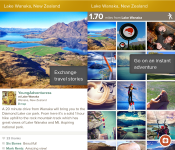
Looking for adventure? And whatever comes your way? If you were born to be wild, Trover’s newly refreshed travel app will help you find that instant adventure.
The app that lets you explore visually everywhere, has just redesigned its mobile app adding some new great features and giving it a fresh look. Unlike other social outlets that ultimately make it about you and interactions with other people (or places), Trover spins it around and makes it a place-centric app and the interactions that individuals have with a place.
Trover originally made it’s appearance on the Google Play Store back in 2012. However, the app was quickly pulled after the startup realized that they just did not have the resources to fully commit to the app. Since the removal of the app from the Play Store, the number one request received from their members has been the addition of Android once again. It appears that the timing is just right as the newly designed app has just started a new Android adventure.
“Android has been the #1 request from our members, particularly from overseas. We’re excited to see all the new photos, travel stories and tips flowing through this new app, inspiring more people to get out and experience the world.” — Jason Karas, co-founder and CEO
The app promises to fuel your passion for exploration by offering hundreds of thousands of original geo-tagged photos, place-based tipos, and shared travel stories. The goal is to make it easy to visually explore the best of everywhere, across the street or across the globe.
Besides just showing some great photos around the world, Trover also offers a vibrant social community that is alive right behind every photo, offering members the opportunity to socialize about their discoveries, and allow members to build wish lists on places they’d like to see someday.
By offering a more visual experience over sites like TripAdvisor or Yelp, Trover will help you find hidden wonders that otherwise may have gone undiscovered by you.
Trover is a free app available on the Google Play Store.
The post Trove the world anew with Trover’s redesigned app appeared first on AndroidGuys.

Intel forced to pay record $1.4 billion fine for unfair sales tactics

The European Union’s second-highest court has upheld a $1.4 billion fine levied against Intel for anti-competitive practices against chip foe AMD. In the original decision, way back in 2009, the European Commission found that Intel harmed its rival and consumers by giving unlawful rebates to retailers and PC makers like HP, Dell and Lenovo. Intel then appealed, saying the commission “ignore(d) the reality of a highly competitive microprocessor marketplace.” But the Luxembourg General Court found that Intel had a long-term game plan to shut out AMD and “attempted to conceal the anti-competitive nature of (those) practices.” It therefore ruled that the record fine representing 4.15 percent of Intel’s 2008 revenues was fair, saying the EU could have levied a penalty as high as 10 percent. Intel expressed disappointment with the decision, but it does have one more shot at an appeal: the EU’s Court of Justice. So far, however, it hasn’t said whether it’s willing to drag out the six-year-old case any further.
Filed under: Misc, Peripherals, Intel
Via: Reuters
Source: European Commission
Huawei launches an online store to sell its own unlocked phones

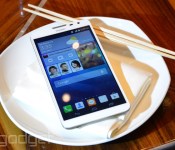
Remember Huawei’s Ascend Mate 2? The decidedly mid-range phablet that, among other things, can charge lesser phones for you? When the company revealed the thing at this past CES, about the only thing it didn’t proclaim was when you could get one in the US. Not so any more: Huawei says it’s going to sell for $299, and you can lay claim to one right now. Normally, that wouldn’t be such a huge deal. After all. everyone runs pre-orders promotions, right? What’s really new here is that Huawei has launched an online store — GetHuawei.com — that promises some shiny new Huawei hardware on a regular basis, plus a slew of free goodies to go with it.
Let’s say you pick up an Ascend Mate 2 after all — you’ll get a SIM card with a month of free service, along with a case, and 20GB of cloud storage courtesy of Bitcasa. Zhiqiang Xu, the newly installed head of Huawei’s US devices group, was quick reassure a gaggle of reporters in New York that there would be plenty of new unlocked devices making their debut in the Get Huawei store as time marches onward.
So yes, that’s pretty neat if you’re itching to pick up some solid hardware without breaking the bank. Make no mistake, though: this is a big, big bet on Huawei’s part. It’s striking out on its own and trying to directly convince people that Huawei phones are worth owning, that the brand has value beyond just being a magnet for espionage allegations. In some ways, it’s a culmination of the work Huawei’s been doing to improve its international image — the United States is one of those markets that can be tough but worthwhile to crack, and the company clearly isn’t giving up without a fight.
 AIVAnet