



Barnes & Noble teams up with Samsung for its newest Nook tablet

It’s no secret that Barnes & Noble has been trying to save money by offloading its tablet development to someone else, but more than a few people expected that “someone” to be Microsoft. Mmm, not quite. The bookseller revealed today that its (first) tablet partner is none other than Samsung, and that the 7-inch Galaxy Tab 4 Nook they’ve been working on will launch in August.
We’re not just looking at a version of Samsung’s existing tablet that ships with the Nook app preinstalled, either. BN’s statement makes mention of “customized” Nook software, but we’re digging further to see what exactly sets this thing apart from the rest of Samsung’s wares. What is clear is that this is a savvy move for all parties: Samsung gets yet another avenue through which it can push for global electronics domination, and BN gets a solid (if perhaps unremarkable) tablet that it didn’t have to sink gobs of money into. Will it be enough to unseat Amazon’s Kindle Fire series, or any other claimants to the reading tablet throne? It seems unlikely, but hell, kudos to Barnes & Noble for taking the shot anyway.
As a reminder, BN hasn’t completely given up on selling its own Nook devices — the existing Nook with GlowLight will still be on offer, though we have to wonder how that might change if this mashup with Samsung takes off. After all, the last time the scrappy bookseller posted its quarterly earnings, it pointed to a nearly 60 percent drop in Nook and Nook accessory sales.
Source: Barnes & Noble

Intel: Where we’re going, we don’t need cables

If you ask us, Intel’s “Llama Mountain” design — a PC even thinner than the iPad — is already pretty futuristic. “Futuristic” might be an inaccurate word, though, considering that thing (or devices like it) will arrive later this year. No, if you want futuristic, you’ll have to look toward Intel’s next-next-generation chips, slated to debut sometime in 2015. A couple years from now, PCs might be missing cables, ports and even passwords — not that Intel gets total say on that last one.
Here at Computex, Kirk Skaugen, GM of Intel’s PC client business, showed off a reference design called “Skylake,” a PC that can charge wirelessly through a table (pictured above), with enough power left over to charge a phone and tablet as well. In particular, the device uses the Alliance For Wireless Power’s (A4WP) standard, which now supports laptops and tablets. As it happens — and forgive the inside baseball here — Intel is already on the board of A4WP, and just succeeded in getting a few more PC makers, including Dell, Fujitsu and Lenovo, to join the consortium. That means this wacky concept is increasingly likely to come to fruition, what with all the major players gradually getting on the same page.
Over time, there’s no reason to have ports. No reason to have wires.
But it’s not just charging cables that Intel seeks to eliminate: it envisions PCs without any ports at all. That same Skylake concept used the WiGig standard to connect with a wireless dock, transferring data at up to 7Gbps. As for hooking up displays, the computer would use Intel Wireless Display to stream content onto TVs and monitors. Then again, though, every modern Ultrabook can already do that.
“Today there’s basically four reasons you have a wire, and remember that Centrino was all about unwiring the Ethernet cable,” Kirk Skaugen, GM of Intel’s PC client business, said in an interview. “The processor after Broadwell [Intel’s fifth-generation Core processors], we’ll do reference designs where you literally do not have to hook a cable to your machine, ever. Over time, there’s no reason to have ports.”
Our vision, very simply, is we’re gonna eliminate all passwords.
Not so fast, though: While we’re likely to see PCs with wireless charging, wireless docking and wireless display as early as 2016, the “no ports” thing could still be a ways off. “Like, how long does it take before you’re really comfortable getting rid of your Ethernet cable?” asked Skaugen, who said it took him five years after the introduction of Centrino to feel comfortable traveling without an Ethernet cord. In any case, you get his point: If Intel has its way, ports will eventually go the way of the optical drive. And if you look at any modern Ultrabook, you’ll see some of them already have.
Ditto for passwords. “Our vision, very simply, is we’re gonna eliminate all passwords,” said Skaugen, who claims the average US person has 18 passwords. Rather, he says, voice, facial recognition and gesture control will one day be sophisticated enough to count as multi-factor authentication, with a PIN becoming redundant. “We think that with multi-factor authentication, your voice and your face can be enough to authenticate you into the world’s most secure websites. Into Windows.” Then again, fingerprint readers have been around for years, and yet passwords are in no danger of extinction.
Even if Intel is getting carried away on the security front (and it might be), the wireless charging, wireless docking, wireless streaming PC of Skaugen’s dreams seems plausible, if only because all of the core technology is already there, if not already in use. And if it can get enough PC makers on board, laptops without ports — without a mess of cables — would be a thing of beauty indeed.
[Image credit: Intel]
Source: Intel

Edyn’s smart gardening system gives your plants exactly what they need

Smart home gardening devices frequently tell you that your plants need a little TLC, but they don’t always deliver it; you frequently have to bring out a hose or watering can. If Edyn successfully funds its Smart Garden System, you may not have to trudge out to the backyard quite so often. The core is a WiFi-connected sensor that detects both the soil quality and ambient conditions, cross-checking those against your choice of greenery. If the sensor decides that your plants need some hydration, Edyn’s iOS app automatically tells an optional smart valve to deliver just the right amount of water– yes, you can be waste-free and lazy. Both the sensor and valve combine solar power with lithium-ion batteries, so you don’t have to worry about watering on cloudy days.
Should you be enamored with the concept, you can pledge $79 to get the sensor alone ($99 if you’re not an early backer) or $159 for both the sensor and its valve companion. You can also spend $175 for a buy one/give one offer that donates a sensor to a school garden, while $275 will do the same for a sensor-and-valve combo. Edyn won’t necessarily give you a green thumb, but it could be just the ticket if you can’t always be around to care for your horticultural projects.
Filed under: Household
Source: Kickstarter, Edyn

Sainsbury’s teams up with Google to stop you wasting food

It turns out that us Brits are a wasteful bunch. Studies suggest we’re throwing out as much as £60 worth of food and drink each month when we could be putting it to better use. Instead of trying to convince you to head over to one of its stores to replenish your supplies, Sainsbury’s has teamed up with Google to create a tool that provides suggestions on how to use the food you’d otherwise be chucking out. It’s called Food Rescue, and Google plays a small but vital role in proceedings by lending the same voice-recognition tech that powers its search engine to the supermarket’s new mobile and online tool. When you visit the website, you can say (or type) what foodstuffs you have an it’ll find a range of recipes that use those ingredients. In a bid to get more people involved, the supermarket chain will record the weight of food rescued and calculate the money saved in each recipe. That information will then be added to a real-time leaderboard of top ‘rescuers’ across the UK. You say tomato, I say tomato, it’ll still work the whole thing out.
Filed under: Internet, Software, Mobile, Google
Via: Sainsbury’s
Source: Sainsbury’s Food Rescue

Intel’s super-thin ‘Core M’ tablets will be cheaper than you think

It’s OK if you’re not a chip geek: All you need to know is that Intel’s 7.2mm-thick reference PC was the most important thing we saw this week at Computex. Designed for 2-in-1′s, the company’s Core M-series processors will usher in full-fledged computers that are even skinnier than the iPad Air. Exciting, right? Seriously — and maybe you just have to see for yourself — these things are impressive. Futuristic, even. Given that, then, we would have assumed they’d hit the market later this year with steep prices in tow. After all, aren’t we used to paying a premium for thin?
In fact, Intel has confirmed to us that these devices will cost far less than typical Ultrabooks, which are already ridiculously skinny. In particular, Intel’s PC client chief Kirk Skaugen says prices could dip as low as six hundred dollars, putting them on par with mid-range PCs. “[Core M 2 PCs] will be aggressively priced over premium tablets,” he said in an interview, referring to competing devices like the iPad. He added, however, that for a 2-in-1 to be that cheap, it would have to be slightly thicker than the “Llama Mountain” reference PC we told you about earlier; that kind of machine might cost closer to $799. “I think Llama Mountain could deliver $799 kind of price points,” he added. “Maybe they go a little thicker, but they’d still be fanless and hit $599, $699.”
Accordingly, performance will fall short of a typical Ultrabook with a Core i5 or i7 processor, though it should still be an improvement over Intel’s “Bay Trail” chips, found in many of today’s 2-in-1′s. Other than that, Intel isn’t making any specific claims, other than hinting at longer battery life (which would make sense, given the lower TDP). Whatever the performance is, though, we suspect it’ll be good enough for mainstream users — especially at this price.

Microsoft admits the Xbox One performs better without Kinect

Prepare to be confused: Despite everything we’ve heard about the Xbox One’s Kinect sensor containing its own onboard processor, so that it doesn’t weigh down the main console with voice- and image-recognition tasks, it’s now clear that the add-on imposes quite a significant burden. Microsoft has admitted to Eurogamer that the new, cheaper Kinectless Xbox One has “up to 10 percent additional GPU performance,” simply by virtue of system resources that no longer have to be reserved for the motion-sensing peripheral. Does this mean that owners of the original Xbox One can get less screen-tearing in Titanfall simply by unplugging Kinect? Actually it probably could, because a future SDK will enable a boost for game developers who are happy to sacrifice access to the “natural interface” in favor of better performance. In any case, Microsoft’s initial justification for regarding Kinect as an “essential and integrated” part of Xbox One is starting to wear pretty thin.
Filed under: Gaming, HD, Microsoft
Via: Polygon
Source: Eurogamer

Pebble update lets you pump up the jam from your wrist

The Pebble smartwatch nicely alerts you to most of your smartphone’s activities, but it’s pretty limited in controlling it — there are just a few functions, like music track skipping. A new 2.2 firmware update finally gives a much-requested feature, however: changing the volume of your phone’s music player. That, along with a new iOS-only track progress bar, will help you avoid reaching for your handset when you’re grooving while running or biking. You can finally rearrange apps directly on the watch too, and will get longer alarm sounds and some bug fixes. You can grab it by going to “support” in your smartphone app, then choosing “check for updates.” Apple users will first need to hit the App Store for an iOS update.
Filed under: Wearables
Source: Pebble

IN BRIEF: 5 Android related things you might have missed [June 4th]

It’s that time again my Android friends. Today were going to take a look at some gaming related news. Here are 4 games you may want to try out plus some big news from a well known developer.
If all that Game of Thrones watching this weekend has put you in a medieval mood you may want to check out Gamelofts new game “Rival Knights”. “Rival Knights” is an epic jousting simulation and is free to play. Check it out now via the link below.
Rival Knights
Sticking with the gaming, a big congratulations goes out to Imangi Studios for reaching a truly epic milestone. Imangi Studios is responsible for the fan favorite Temple Run franchise and today has announced that they have reached over one billion downloads! That’s only the second mobile game to ever reach that milestone. The studio is hard at work on their next project but here are some interesting stats
- Players have collectively spent over 216,018 years playing Temple Run
- Over 32 billion games have been played
- Temple Run players have run a total of 50 trillion miles

After your done running from crazed monkeys you might want to give Cie Games “Racing Rivals” a chance. “Racing Rivals” was a hit on the iPhone with over 5 million downloads and counting. The game was recently brought over to our favorite OS and is available for free from the link below.


This next app is for you young andrioid fans (Very Young), or for those of you like me who have toddlers. The game is “Kids Shuffle” and it helps children learn the alphabet and numbers. “Kids Shuffle” has 3 difficulty levels and offers some slick animations. Available free from developer Greensparkers at the link below.


Lastly we have a very nice looking game for all of you action fanatics. “Ninja Time Pirates” brought to you by developer HappyGiant lets you travel back in time uncovering an epic conspiracy while saving the planet from an alien invasion (YES!). This game offers awesome graphics and is actually one of my favorite games at the moment. Its free to play and available at the link below.

The post IN BRIEF: 5 Android related things you might have missed [June 4th] appeared first on AndroidGuys.
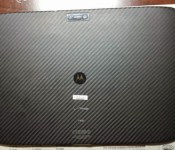
Motorola XOOM 3 leak appears online

A new picture has been leaked online that is claiming to be the Motorola XOOM 3, giving an insight into what could have been.
The abandoned tablet features a slim bezel and what appears to be a kevlar rear casing, similar to that found on DROID smartphones last year.
The source states that the XOOM 3 pictured has been abandoned so we more than likely won’t be seeing this hit the market anytime soon, but it does give an insight into what could have been.
SOURCE: +hellomotoHK
The post Motorola XOOM 3 leak appears online appeared first on AndroidGuys.
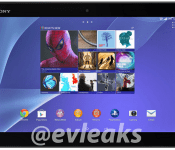
Verizon Xperia Z2 tablet on the way

Sony Xperia Z2 is one of the most powerful smartphones on the market today, same goes for its tablet counterpart. According to a new leak Z2 tablet is going to reach Verizon soon.
@evleaks is at it again, this time he brings us an image of an alleged Xperia Z2 tablet for Verizon (LTE variant). This device should pass certification soon and make its way to Verizon’s lineup. To refresh your memory we’re talking about a device carrying a Snapdragon 801 processor along with an Adreno 330 GPU and 3GB of RAM. On the front it has a 10.1 full HD Triluminos display with Sony’s X-Reality Engine and a 2.2MP secondary camera, while on the back it sports an 8.1MP shooter. The device is powered by a 6000mAh battery.

Are you going to buy one when it becomes available?
SOURCE: @evleaks
The post Verizon Xperia Z2 tablet on the way appeared first on AndroidGuys.
 AIVAnet