


Apple Introduces Lightning Cable MFi Specifications for Headphones
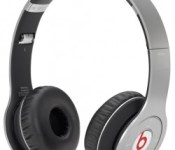
Apple has introduced new specifications for manufacturers in the company’s Made for iPhone (MFi) program that allow them to create headphones that connect to iOS devices via a Lightning cable rather than a regular 3.5mm headphone jack, according to 9to5Mac.

The Lightning headphones will be capable of receiving lossless stereo 48 kHz digital audio output from Apple devices and sending mono 48 kHz digital audio input. The input means that the headphones will also support a microphone for audio input following Apple’s upcoming update. Manufacturers will be able to take advantage of Apple Headphone Remote controls like Volume Up/Down/etc, as well as other buttons for launching specific apps such as iTunes Radio or initiating playback controls on iOS. In addition, the headphones can be made to work specifically with a companion iOS app and launch a specific app when connected to an iOS device.
The specification includes two configurations for headphones. The first is called Standard Lightning Headphones, which uses minimum components when paired to a digital-to-analog converter. The second is called Advanced Lightning Headphones, which allows for more complex features like active noise cancellation.
The Lightning cable-equipped headphones would also allow iOS devices to power or charge headphones that require electricity, and would also allow for headphones to potentially power or charge up iOS devices.
Reports suggest Apple is planning to allow high definition music downloads and playback on iOS devices as well as new in-ear headphones that could take advantage of high-quality audio and take advantage of Lightning Cable MFi specifications. It is also possible Apple uses newly purchased Beats Electronics’ popular headphone line to accelerate adoption for the new standard.

Turkey finally drops its ban on YouTube

YouTube joined in Twitter’s freedom last night as the government of Turkey lifted its two-month ban. The move, unsupported by Turkey’s Prime Minister Recep Tayyip Erdogan, follows an April 4th ruling of the country’s Constitutional Court. After Google filed its complaint, the legislature came to the consensus that the ban did indeed violate human rights and ordered a repeal, which was reluctantly carried out by the Turkish government almost a month later.
Why was Google’s video service, like Twitter, blocked at all? On the surface, both banishments were part of an attempt to squash politically controversial media, including several posts and videos that allegedly leaked top-secret military plans (which, per the ruling, are still restricted). At its core, however, this debacle spins from a larger movement of authoritarian censorship affecting similar social media companies like WhatsApp and even the internet itself.
Let’s take another look at Twitter. Yes, it may have escaped the blockade, but Turkey still has tight grips on the micro-blogging site. Thanks to its Communications Minister Lütfi Elvan, the country and social giant are working together to neutralize “malicious” content. The TIB also has the power to censor offensive posts and accounts at its discretion. So, what counts as malicious or offensive content? That’s the million dollar question — and it’s scary. The implications of such extensive social control are vast, but for now, at least YouTube is available once more.
Filed under: Misc, Internet, Google
Source: Wall Street Journal

Apple: Putting doctors, trainers and nutritionists in your pocket

It’s been a long day. You were in meetings from nine in the morning until five in the evening, with barely enough time to eat in between. So you gorged on donuts from the cafeteria and indulged in a slice of pizza on the way home. When you enter that dietary data in your nutrition-tracking app on your iPhone, you get a notification that you’ve exceeded your daily caloric amount, sidelining your weight loss goals. Feeling guilty, you lace up your running shoes and head out to the park with a Fitbit in tow, knowing that you need to burn at least 500 calories to get back on track. Feeling pretty good after the run, you get a text from your doctor reminding you to have a good night’s sleep tonight to rectify the erratic sleep patterns she’s been tracking via a daily health report app. You tell her that will definitely not be a problem.
This is a picture of the future that Apple is envisioning with HealthKit, one of the more interesting features of yesterday’s iOS 8 announcement. In essence, it’s Apple’s attempt to unify and share the disparate data of your health and fitness apps with each other, and — if you want — with your medical institution as well. With HealthKit, Apple wants to be the one-stop shop for your health and fitness needs. It’s a rather ambitious goal, but it’s also a necessary one given the increasingly crowded fitness field. And, of course, it also lays the groundwork for that long-rumored iWatch.
Before we get into the ramifications of HealthKit, let’s dive a little deeper into what it is. It’s essentially a set of tools that lets developers integrate health data into other apps, including one from Apple called Health that houses all of that info in one central hub. Currently, information from different apps and devices is siloed — you can’t sync Fitbit data with any other app, for example. With HealthKit, devs can build that kind of cross-app syncing.
This means that you could use devices and apps from different companies — say a Nike FuelBand, a Withings Blood Pressure Monitor and an iHealth Wireless Smart Gluco-Monitoring System — and have information from all of them gathered in the Apple Health app, which serves as a dashboard for your health and fitness data. You could also have applications talk to each other, like a nutrition app syncing with a fitness app to calculate just how many calories you need to burn to lose that extra pound.
But the really interesting part of HealthKit is its potential to enable fitness trackers and health apps that are out there to work together.
Obviously, HealthKit could very well be the foundation for the iWatch, the wearable that Apple’s supposedly been working on for a while. We imagine it could be used to sync with Apple’s Health app so you could view all of your fitness data in one handy, wrist-worn location. After the rumor that Nike would be ending its FuelBand production, we were hoping to hear more on Nike’s and Apple’s collaboration on this front, but sadly that didn’t happen. However, Apple did use Nike’s Fuel on stage as an example of one app that’s HealthKit-compatible, so we wonder if that’s a hint of a hardware partnership to come.
But the really interesting part of HealthKit is its potential to enable fitness trackers and health apps that are out there to work together. Use both a Fitbit and a FuelBand? Not a problem, as the Health app will be able to track info from both. It gives you a much more holistic view of your health, as you could potentially see how the lack of sleep affects your blood pressure, for example. It could also enable a much more advanced and intimate take on health care, allowing patients to interact with their doctors in real time. This lets you, along with your health care provider, make more informed decisions to enhance your overall well-being.

However, in order for HealthKit to truly live up to its potential, a whole mess of developers will need to get on board. There’s certainly a strong incentive for them to do so, but big names need to be involved beyond just Nike. Fortunately, Withings, Fitbit and iHealth already appear to be on the docket, but we’re hoping smaller apps like MapMyRun and Strava get in on the action as well.
Further, there’s a surprising lack of standards compliance across different devices and apps, and it’s not entirely clear how Apple’s HealthKit would resolve it. For example, the number of calories that my Fitbit says I’ve burned can be very different from the number that my FuelBand reports. Will it know to prefer one over the other? Even a metric as simple as the number of steps taken can differ wildly from app to app. Additionally, will companies that deal in proprietary metrics be okay with opening that up to other apps? Nike, to its credit, has agreed to share its made-up Fuel stat with at least a few third-party applications, though it’s still relatively locked down compared to the competition. It remains to be seen how Apple will put all of this together to paint an accurate picture of your health.
Letting different apps and devices talk to each other essentially makes your iPhone the ultimate all-in-one fitness tool.
And, of course, we have to consider the competition. Samsung announced last Wednesday that it’s planning on launching Simband, a modular, wrist-worn reference platform that might inspire a multitude of different Samsung-powered wearables, which could provide serious competition to the fabled iWatch. Simband will also work in concert with SAMI (Samsung Architecture for Multimodal Interactions), the company’s open-source data-collection effort that’ll make all that fitness data accessible to other services and devices — perhaps the very same ones that’ve signed on for Apple’s HealthKit.
HealthKit is iOS 8-only for now, so it likely won’t be compatible with older iOS devices or desktop apps on OS X, which at least hints that Apple is still testing the waters as HealthKit slowly gains momentum. Regardless, the future for HealthKit is great if Apple can pull it off. Letting different apps and devices talk to each other essentially makes your iPhone the ultimate all-in-one fitness tool. As a stream of new wearables and apps place a heavier focus on health and fitness, HealthKit is a clever attempt by Apple to keep those loyal to the iPhone within the fold.
Filed under: Apple

Automatic launches on Android, dismisses your friends when you drive

If you’re a car fan making do with a slightly older ride, Automatic’s $99 Link dongle is a neat thing to have around: it tracks your trips, monitors your fuel consumption, and lets you know when you’re being a leadfoot. It used to be that only Apple acolytes could get their Automatic dongles syncing with their phones, but the company says that’s the case no longer: it has just released its Android app to bring the word of realtime driving feedback to all. As a reward for their patience (or, you know, because Android lets devs can get down and dirty with low-level access to hardware), Android users get an extra feature, too. The app can silence your phone while driving, and tell your chums to buzz off (via text message, anyway) if they contact you at the wheel. Combine that with the ability to store and transmit information about a crash, and you’ve got yourself a pretty nifty car companion — just don’t try testing that latter feature on your own.
Source: Automatic
New ‘Send Last Location to Apple’ Feature Added to Find My iPhone in iOS 8 [iOS Blog]
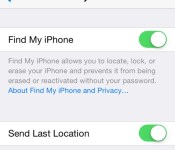
iOS 8 introduces a new feature to the Find my iPhone and Find my iPad functionality on iOS devices, allowing users to select a “Send Last Location” option that will notify Apple of a device’s last known location when the battery drains to a critical level.
Currently, if a device is lost with Find My iPhone on and the battery drains and it cannot be located, iCloud will display the last known location for up to 24 hours, but after that, there is no way for end users to determine the last location of a device.

It appears this new Find My iPhone feature will authorize Apple to store the last known location of an iOS device after 24 hours have passed, potentially allowing customers to contact the company for location information after it is no longer available on iCloud.
The new option can be found in the iCloud section of the Settings app, listed under a new entry for Find My iPhone (or iPad). Tapping on Find My iPhone gives an option to enable the feature and to enable Send Last Location. With iOS 7, Find My iPhone was bundled into the rest of the iCloud settings, with a simple toggle to turn the feature on and off.
(Thanks, John!)

GOgroove Pal Bot Android Speaker review

If you’re an Android fan, which you probably are if you’re reading this, you should take a look at this speaker. It’s called the GOgroove Pal Bot Android Speaker, here to add a bit of character to your nightstand or desktop. It’s portable, loud, and pretty darn cute!
The folks that sell these are offering a price cut solely for the readers of AndroidGuys, so head to Amazon to take advantage of the deal. And while you’re at it, check out our review of the Pal Bot below.
Build

The Pal Bot is made to mimic the design of the Bugdroid, and is composed entirely of plastic. It only stands about 5″ tall and weighs a little less than 13 ounces. Around back, there is a volume knob, awake/sleep switch, 3.5mm audio cable (2-foot long), and a Micro USB port for charging. The bottom features four rubbery legs to ensure that the speaker stays in place. There are two speakers on the left and right sides of the back, and a subwoofer in the bottom-center of the device.
The speaker can play any type of audio, as long as it’s connected to a device with a 3.5mm audio jack. We haven’t had any issues connecting the speaker to phones, tablets, or laptops, but the 2-foot long audio cable can feel a bit short sometimes.
Oh, and when the speaker is off, the eyes are black. If its in “awake” mode, the eyes are blue, and turn purple when it needs a charge. This is a nice touch and adds some character to your speaker.
The battery in the Pal Bot is 850mAh, which GOgroove is quoting about 24 hours worth of audio before needing a charge. We’d say that’s pretty accurate, especially if the volume is down low. We should probably quote it at 18-20 hours, just to be safe.
In all, the build is great. It adds a bit of fun to your desktop or wherever you may keep it.
Sound
 The performance of this speaker may surprise you. For such a small device, the sound blew us away. While playing music, bass notes are always present (something we wouldn’t usually see from a speaker this size). The treble is balanced, and offers an overall great sound.
Seriously… when you turn this thing on, it will blow you away.
Should I buy?

The short answer: YES. This speaker is usually $29.99 on Amazon, but for today only (6/3/2014), it will be offered for only $19.99 BECAUSE YOU GUYS ARE SO AWESOME. No really, the deal is going on for the awesome readers of AndroidGuys. That’s one heck of a deal, if you ask me.
To be honest, I’d recommend this if it was at it’s normal price, but now that it’s $10 cheaper, it’s really a no-brainer. Head over to Amazon to pick one up before this awesome deal goes away!

The post GOgroove Pal Bot Android Speaker review appeared first on AndroidGuys.

New smartphone chip will beam high-definition holograms as early as 2015

Just imagine: a smartphone that projects 3D holograms into thin-air. If you can wait until the end of next year, and if you can believe the claims being made by a well-funded company called Ostendo, then your next handset could be capable of just that. Thanks to breakthroughs by the Californian display startup, 5,000ppi projectors the size of Tic Tacs are now powerful enough to control the color, brightness and angle of individual beams of light across one million pixels. Just one chip is said to deliver a usable image, but adding additional chips provides scope for even more complex and detailed images. The Wall Street Journal was treated to a demo involving six chips which beamed green dice spinning in the air and noted how “consistent” the motion appeared, irrespective of where it was viewed from.
Development of the technology is still in the early stages, meaning the first chip will be limited to only 2D video when it begins shipping in summer 2015, capable of being projected onto nearby surfaces at sizes of up to 48 inches. However, Ostendo founder Hussein S. El-Ghoroury says that its second chip, which is capable of creating 3D images that float in the air and appear almost like a solid object, will enter manufacturing just months after the first. If you’ve dreamed of seeing your friends projected in Star Wars-like holographics while you chat, Ostendo hopes it can make such a thing a reality. It’s already got some major handset manufacturers on board, but the next step will see the company make the pixels smaller to boost the resolution of its holograms. After that, it’ll try and embed its chips in anything with a 3D display, including TVs, smartwatches and even holographic tables.
[Image credit: Sam Hodgson, Wall Street Journal]
Filed under: Cellphones, Mobile
Source: Wall Street Journal

The Secret Service’s proposed Twitter sarcasm detector is totally going to work

Governments are often eager to watch out for online threats, but it’s sometimes tough to spot the real dangers when the internet is rife with sarcasm; just witness the confusion when someone jokingly threatens to blow up an airport. For the US Secret Service, spotting humor is important enough that it has posted a request for automated Twitter monitoring software that, among other things, detects “sarcasm and false positives.” In theory, officials wouldn’t have to read every poor attempt at comedy just to find the few tweets from those who mean real harm.
The proposed technology wouldn’t just be for identifying sarcastic posts. A spokesman tells the Washington Post that the tool will help the Secret Service gauge its online influence, and even address complaints. If such code had been available during the President’s 2009 inauguration, for instance, the agency could have resolved a security bottleneck preventing people from getting in. We’re a long way from seeing a finished tracking system in action, so it’s tough to know how well it’ll work — it’s difficult for computers to interpret literal meanings, let alone subtexts. If agents don’t knock on your door after you make an off-color remark, though, you’ll know the software is doing its job.
[Image credit: Saul Loeb/AFP/Getty Images]
Filed under: Internet
Via: Nextgov, Washington Post
Source: FedBizOpps.gov

Move aside graphene, there’s a new wonder-material on its way

Everyone talks about graphene as if it’ll solve all of the world’s problems, forgetting that it’s got a few of its own, too. The biggest issue is that the substance only works in two dimensions, making it hard to use to build complex pieces of hardware. That’s why researchers from Oxford, Stanford and the Lawrence Berkeley National Laboratory are turning their attentions to Cadmium Arsenide. Like its more famous frenemy, the substance can transmit electricity at tremendous speeds, but will also work in three dimensions, which is far more useful when building transistors and sensors. Researcher Yulin Chen goes so far as to say that this “family of materials could be a good candidate for everyday use.” It’s easy to make bold claims before the locked doors of a university lab, but still, if smartphones are ever going to make use of graphene in the real, three-dimensional world, then this could be the missing piece in the puzzle.
[Image Credit: Greg Stewart / SLAC]
Filed under: Science
Via: SLAC
Source: Nature

Join the Engadget HD Podcast live on Ustream at 9:30PM ET

It’s Tuesday, which is time for the Engadget HD Podcast and we hope you’ll join us for the live recording at 9:30PM. Although it’s the week of Apple’s WWDC, the big news for the HD world is what wasn’t announced. So we’ll go over life with a home theater without apps on the Apple TV as well as a few small bones Cupertino did throw our way. The Chromecast continues to fill in its list of sources with the likes of ESPN and Simple.TV, the FCC never stops meddling and there’s some new content headed our way we’ll talk about before discussing what we’re watching this week . If you’ll be joining us, take a peek at the topics after the break and then get ready to participate in the live chat.
AirPlay on iOS 8 doesn’t need a network to stream your media
Apple’s smart home initiative is called HomeKit
Google brings WatchESPN, MLS and more to Chromecast
Simple.TV’s streaming DVR now sends shows to your Chromecast
Head of Intel’s former internet TV project abandons ship
FCC considers improving its definition of broadband to a video-friendly 10Mbps
Microsoft is getting the Xbox One ready for World Cup action
Netflix has a new original series for kids, courtesy of DreamWorks
What’s on your HDTV this week: NBA & NHL Finals, Orange is the New Black
Filed under: Home Entertainment, HD
 AIVAnet