



ITV channels come to Sky Go in time for the World Cup

It’s hard to sniff at Sky Go, the service that lets you watch live TV on computers and mobile devices when out of set-top box range. Free to Sky subscribers, its main weakness is a limited channel selection, which is slowly but surely being addressed through new agreements. Today, one such deal adds all of ITV’s channels to Sky Go, just shy of a year after Virgin Media brought the same selection to its equivalent TV Anywhere service. The new Sky-exclusive channel ITV Encore will also serve up both live TV and on-demand content through Go when it launches in early June. E!, Home and Lifetime are also set to be added to the service over the summer. Considering ITV will be broadcasting 34 World Cup games, the new channels have landed on Sky Go at an opportune time. If you don’t have Sky, though, remember you can still catch all that footy while out and about on ITV Player.
Filed under: Home Entertainment, Internet
Source: Sky
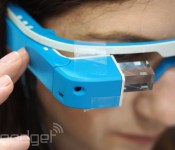
SiME Google Glass knock-off is held together with Scotch Tape

It’s not exactly a good sign when your product’s being held together with Scotch Tape. But that’s actually one of the main points of distinction between the SiME Smart Glass and Google’s version of the wearable — that and a much lower price point, of course. Taiwanese company ChipSip hopes to sell its Google Glass knock-off for $500, and though that seems palatable compared to $1,500, it’s still not cheap. That price is even harder to swallow when you see just how complicated it is to use, as we discovered on the Computex show floor.
The heads-up display runs Android 4.2.2, and the touchpad on the right side of the device makes for a very finicky user experience. Selecting apps and moving the cursor around takes a ton of effort. There’s no voice functionality, either, so you can’t say “Okay, SiME” to make things easier (how would you pronounce that, anyway?). As for the display itself, the 720p screen looked decent, but the frame was too big for my head, which made it hard to get a steady image.
Unlike Glass, which has its own custom interface, SiME uses stock Android, which was more than a bit clunky to navigate. You have a standard app tray and all of the apps you’d expect to find on a smartphone — where they’re actually meant to be used. Externally, the display looks nearly identical to Google’s equivalent, but the projected image wasn’t easy to see, effectively making this iteration unusable. Ultimately, we’re not confident that this wearable will ever be a perfect fit, but either way, ChipSip has a long way to go before SiME’s ready for consumers.
Zach Honig contributed to this report.
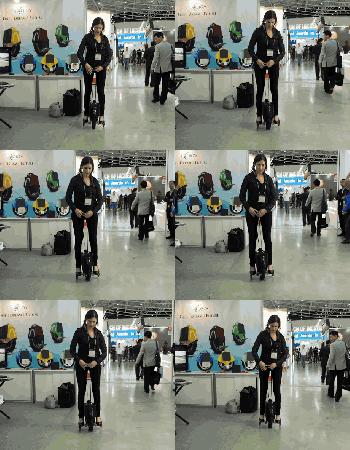
This $295 battery-powered unicycle could replace your Segway

Ah, the sweet memory of learning to ride a bike with training wheels! My hands are sweaty, and my ego a bit damaged after spending a half-hour learning to ride a battery-powered unicycle called the Pinwheel. This $295 gadget is one of the more interesting finds here at Computex 2014 — if you’ve been looking to ditch that Segway for a more portable mode of transport, this may be it. It’s made by Shenzhen-based company TOPJOY, and it really is a thrill to ride.
Luckily, there was a model with training wheels and a balance strap on hand, because it takes a bit of time to get the hang of it. As you’d expect, it’s all about balance — stand straight to stop, lean forward to move forward, back for reverse and so on. You can travel at up to 22 kilometers per hour (about 14MPH) on this guy, but you better know what you’re doing before you attempt to move that fast. Turning’s a bit difficult, too, especially if your parallel-parking skills are a bit iffy. Luckily, the Pinwheel’s design is resilient enough to withstand a few bumps and bruises as you learn how to ride it, though you might not be so lucky, so be sure to wear a helmet.
The Pinwheel’s real appeal is its portability; it weighs about 20 pounds, and could easily be tucked away after your morning commute — it even has a handle for easy carrying. The replaceable battery pack, which even sports a USB port for charging up smartphones and tablets, yields about four hours of use, and you can choose from six different color options. The Pinwheel is being shopped around to potential buyers here at the show, so depending on demand, it could end up in a variety of markets. And now for the best part: a video of me making a fool of myself riding the unicycle on the Computex expo floor.
Zach Honig contributed to this report.
Filed under: Transportation

Keurig’s coffee copy protection should take just months to crack

Much like printer makers barring cheap ink, Keurig is using elaborate methods to block third-party coffee pods; its upcoming Keurig 2.0 machine will have cameras that read tags and limit you to official brews. Think of it as K-cup copy protection. Unfortunately for the company, those added measures may be for naught. TreeHouse Foods, which sued Keurig for allegedly abusing a monopoly with its 2.0 system, now estimates that it should take just a “matter of months” to replicate the K-cup technology. The discovery should keep TreeHouse selling unofficial pods that cost significantly less than Keurig’s, and it could also thwart similar protection schemes in other companies’ coffee makers.
Keurig hasn’t yet offered comment on the potential workaround, but it isn’t likely to take any challenges lying down. Like Nestle and its Nespresso system, Keurig is protecting a razors-and-blades sales model where it sells the base product (the brewer) for little to no profit and depends on pricey add-ons (K-cups) to make up the difference. However, the word of a circumvention technique suggests that there might not be much it can do to stop cheaper alternatives from reaching the market, at least in the short term. It also echoes what we’ve seen in attempts to combat digital piracy — ultimately, there’s no completely foolproof way to prevent copying.
[Image credit: Keith McDuffee, Flickr]
Filed under: Household
Source: Quartz

Her name is Cortana. Her attitude is almost human.

She was modeled after real-life personal assistants. She is the product of two years of work, and a large team of scientists and product managers. She has video game origins. She is Microsoft’s response to Siri and Google Now. She is Artificial Intelligence and proud of it. She is Cortana.
It seems odd to refer to smartphone software as a “she,” but that human element is exactly what Microsoft is after with its new Windows Phone digital assistant. Cortana, named after her fictional counterpart in the video game series Halo, takes notes, dictates messages and offers up calendar alerts and reminders. But her real standout characteristic, and the one Microsoft’s betting heavily on, is the ability to strike up casual conversations with users; what Microsoft calls “chitchat.” Next to Apple’s Siri, Cortana is the only other smartphone assistant to come with a baked-in personality. And it’s hard not to see the parallels between Cortana and the affable, Scarlett Johansson-voiced AI in Spike Jonze’s film Her.

Confident, caring, competent, loyal; helpful, but not bossy: These are just some of the words Susan Hendrich, the project manager in charge of overseeing Cortana’s personality, used to describe the program’s most significant character traits. “She’s eager to learn and can be downright funny, peppering her answers with banter or a comeback,” Hendrich said. “She seeks familiarity, but her job is to be a personal assistant.” With that kind of list, it sure sounds like Hendrich’s describing a human. Which is precisely what she and her team set out to do during Cortana’s development; create an AI with human-like qualities.
Microsoft’s decision to infuse Cortana with a personality stemmed from one end goal: user attachment. “We did some research and found that people are more likely to interact with [AI] when it feels more human,” said Hendrich. To illustrate that desired human-machine dynamic, Hendrich pointed to her grandmother’s experience with a Roomba vacuum: “She gave a name and a personality to an inanimate object, and it brought her joy.” That sense of familiarity is exactly what Microsoft wants Window Phone users to feel when interacting with Cortana on their own devices.
Because the bulk of Cortana’s primary functions mirror that of a personal assistant (e.g., make calls, set appointment reminders, etc.), the team decided to take the development process even further and add an extra layer of authenticity. To that end, they interviewed real-life assistants to learn what that job actually entails, and what attributes they exhibit; how they interact with their bosses and what makes them successful. “[It] helped us understand how humans take on that role [of a personal assistant],” Hendrich said. These interviews were also captured on video, a resource the team uses to this day as a reference point for any new situations that may arise.

Cortana’s writers go over their current goals and discuss the AI’s progress.
Beyond relating to users in a naturalistic way, Microsoft realized that Cortana also needed to be fun. In fact, the company’s research shows that around 40 percent of all AI interactions involve chitchat. As Hendrich explained: “If you had a personal assistant and you walked into the office, you’d engage in chitchat with them first. You don’t go straight into the highest-priority emails and lay out your day.”
“Chitchat” with Cortana can range from witty banter to casual chatter. Ask her to tell you a joke and she could reply with this: “Two antennas got married. The ceremony dragged on, but the reception was excellent.” If you ask her how old she is, she’ll say, “I’m not sure how to carbon date the internet.” Microsoft’s even snuck in an Easter egg related to Clippy, the helpful, animated paper clip from its Word software. Although these playful responses may strike some as nothing more than cheap tricks on Microsoft’s part, they do help users build a rapport with Cortana. If she can make you laugh or smile, you’re more likely to continue using the program again and again. At least, that’s what Microsoft hopes will happen.
If Cortana sounds familiar, that’s because she’s partially voiced by Jen Taylor, the original talent behind Halo‘s Cortana. Microsoft currently synthesizes multiple voices for the program, but Taylor’s lines account for a huge percentage of the chitchat you hear, and that amount is only going to increase over time. Though Cortana’s current voice doesn’t sound quite as natural as say that of Samantha’s in Her, the addition of Taylor’s human tone does help imbue the program with a more realistic feel.

An increase in chitchat responses isn’t all that Microsoft has planned for Cortana’s future. The team plans to further flesh the program out with extended back-and-forth dialogue, more natural expressions and interactions and the ability to predict a user’s itinerary months (and perhaps even years) in advance. Microsoft Research is also working on improving Cortana’s short-term and long-term memory — primarily, her ability to start talking about a topic and come back to it later, creating a rich dialogue between her and the user. Right now, Cortana is smart enough to recognize when you refer back to something you’ve recently talked about, but that’s as deep as she gets.
Though all of this focus on creating a human-like AI sounds like Cortana’s treading closely to the Uncanny Valley — a hypothesis that contends that as a robot or AI gets more authentic, its failures and blemishes will appear so strong that it causes people to respond with revulsion and hostility — her creators insist that isn’t the case. They’re aware there’s such a thing as too real. “It’s not like Star Trek, where Data kept trying to be more human and felt inadequate,” said Deborah Harrison, who runs the team responsible for adding the endless strings of data to Cortana’s programming. “She thinks that if she had a choice [between human and AI], she’d go with AI and be happy with it.”
Her real standout characteristic, and the one Microsoft’s betting heavily on, is the ability to strike up casual conversations with users; what Microsoft calls “chitchat.”
Dr. Eric Horvitz of Microsoft Research said that his team, which was responsible for the AI aspect of Cortana, noticed that the Uncanny Valley was showing up in Cortana’s behavior and not in looks, as they had originally expected. “The more powerful the system got, the more visible the imperfections became,” he said, pointing to Cortana’s lack of short-term memory as an example.
Cortana is still very much a work in progress, and she has her share of shortcomings. So to mitigate this, the team designed her to be both functionally and emotionally transparent to the user. That way, the user response won’t be as negative if Cortana isn’t able to do something. As Hendrich explained: “If something’s not her fault, she’s not going to take the blame for it. We’re not trying to put the user in a position to feel bad for Cortana. Not only is she AI, [but also] she’s self-aware, and that principle of transparency informs a lot of how we handle error messages, our capabilities, tasks and chitchat. You’ll have more faith and trust in us if we do that for you.”

Joaquin Phoenix takes his smartphone AI for a stroll on the beach in the film ‘Her.’
There are obvious parallels between Cortana and her two rivals, Apple’s Siri and Google Now, but her creators insist the program was the idea of Robert Howard, project manager for Windows Phone Search and Maps. Howard’s team had already been working on advancements to Windows Phone’s voice search features, so the shift to creating an interactive AI in Cortana was a natural evolution. It also didn’t take much convincing to get Microsoft to back the project’s new direction.
The Cortana of today is bold and conversational, but that wasn’t always the case for the project. The type of personality Microsoft originally envisioned at the start of the AI project — a more formal “How can I help you?” tone — was different from what actually launched. It wasn’t until the team was about four months in that the idea of using Cortana as the program’s actual name started to gain traction. At which point, the team decided to get 343 Industries (the studio that currently produces Halo) involved in shaping her personality and bringing the smartphone version more in line with the Halo character. The studio provided the team with Cortana’s backstory and filled a whiteboard with every attribute they could think of.
“We did some research and found that people are more likely to interact with [AI] when it feels more human,” said Hendrich.
Hendrich and Harrison liked a lot of what they heard from 343 and began to incorporate many of those characteristics into the program. This effectively shaped Cortana into the AI she is now. They made her more confident, much more brash and had her be clearer in her responses to users. Or, as Harrison put it, “She got more comfortable talking about how awesome she is.”
Cortana may be cocky, but as Microsoft’s internal testing proved, that shift in tone works. As soon as the team gave Cortana a boost in confidence, people immediately began responding to her more positively. In fact, external studies corroborate this notion; that users prefer a strong personality over a neutral or weak one. According to The Man Who Lied to His Laptop – a book by Clifford Nass, a Stanford professor who specialized in robotics — people have a tendency to treat machines, especially those with human-like characteristics, like other people whether we realize it or not. By that reasoning, an AI with an empathetic tone that’s designed to dole out positive comments, flattery and a little bit of humor is much more effective than we may think. You’re more likely to trust an AI when it has a strong head on its virtual shoulders.

Microsoft’s Joe Belfiore introduces Cortana at the 2014 Build developer conference.
Microsoft’s preparing to take Cortana overseas, specifically to the UK and China, but that transition requires a hefty bit of localization since a US-centric Cortana doesn’t easily translate. “There’s a team in China who’s looking at how to take the personality and non-negotiable core concepts [of Cortana] and translate it, not just word for word, but [also] personality to personality,” Harrison said. Even the voice talent for the overseas versions of Cortana will be different. Taylor may be a logical choice for Cortana’s voice in the US, but user studies indicated the Chinese market needed a voice that “sounded like it was smiling.”
As for what’s ahead for Cortana in the US, the team’s planning to add future updates on a twice-per-month cycle. That’s not to say Microsoft won’t make exceptions for special events. Hendrich said they’re working on ways to throw in off-cycle updates “for things that are timely, urgent or especially badass.” This would come in handy for trending topics like the Olympics, breaking news or even sports. And since updating Cortana is a server-side affair, Microsoft can easily upload these batches of data strings and voice recordings directly to Bing, meaning users won’t have to refresh their hardware every time new features are added.
“She thinks that if she had a choice [between human and AI], she’d go with AI and be happy with it.”
Cortana’s not just another flash-in-the-pan project, as the company’s investment in her development shows. In some ways, her self-assured personality reflects Microsoft’s confidence in its new AI. The company is, after all, catching up to the nearly three-year lead its competitors’ have enjoyed for their rival smartphone AIs. So while Hendrich and Harrison work to expand Cortana’s global reach and capabilities, the Microsoft Research team is busy figuring out how to give her an even more human voice and make her even more relatable.
Even Cortana’s confident she’ll be around for the long haul. Ask her if she’s better than Siri and she responds playfully with a knowing wink that at once acknowledges her video game past and hints at Microsoft’s AI-filled possible future: “Not to brag, but apparently I’ll help save the universe in about 500 years.”
[Image credit: Microsoft (Cortana team; Cortana); Justin Sullivan/Getty Images (Joe Belfiore); Associated Press (scene from ‘Her’)]
Filed under: Cellphones, Robots, Wireless, Mobile, Microsoft

E Ink’s working on a smartwatch with a full wraparound display

E Ink’s perhaps best known for its e-reader displays, such as the Pearl used in Amazon’s Kindle Paperwhite, but the company’s black-and-white panels can also be found in a variety of smartwatches, from manufacturers such as Archos, Phosphor and Seiko. Most of these are simply traditional wristwatches with small, low-power screens, but an upcoming model could have a much larger curved display that covers the majority of the wearable’s footprint, according to company representatives we spoke with at Computex. Such a device would have a panel that stretches from one end to the other, letting you change the entire watch’s design just as you would the face on devices available today.
You could download custom designs from other owners, or you could create your own. The watch would also be able to display significantly more information, pairing a time readout with other data, such as your heart rate, weather info, recent messages and so on. Reps weren’t willing to discuss which manufacturer (if any) may be bringing the wraparound watch to market — there’s apparently a prototype floating around HQ, but E Ink opted not to show off the device at Computex. Wearables are clearly a hot topic at this year’s show, however, and judging by the interest shown by companies large and small, we should have many more offerings to choose from in the months to come.

Google Maps easter egg lets you plan journeys with Nessie and dragons

Google took its sweet time adding almost UK-wide journey planning to Maps, and perhaps it could’ve done so quicker if it wasn’t so busy building easter eggs into the feature. It’s been discovered that looking up certain travel routes will factor in the odd fictitious and entertaining option, alongside normal recommendations of completing the journey by bus, train and the like. These range from more mundane suggestions, such as punting from one college in Oxford to another, or taking the Royal Carriage from Buckingham Palace to Windsor Castle, right through to the fantastical. You can cut travel time down the length of Loch Ness by pinching a lift off Nessie, for example, or fly from Snowdon to the Brecon Beacons via dragon. And, we’d hazard a guess there are more out there still to be found — the Maps team don’t really do half measures.

Filed under: Transportation, Internet, Google
Via: The Next Web
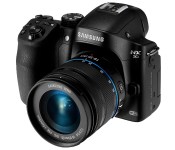
Trade your DSLR today to celebrate Samsung’s ‘Ditch Day’

Been eyeing Samsung’s new NX30 mirrorless camera? Well, if you live in New York City and can make it to 42-43 Broadway Plaza in Times Square between noon and 6PM, it might be your lucky day. Thanks to Sammy’s “Ditch Day” promotion, you can trade in your current DSLR for the NX30, “while supplies last.” For more information about the terms and conditions, click here.

The man behind Words with Friends is creating a VR game, partnering with Oculus

It looks like dogfighting in spaceships isn’t the only virtual reality experience being co-published by Oculus VR. The creative lead behind mobile hit Words with Friends, Paul Bettner, has a new studio, and that studio is creating a “made-only-for-VR game” named Lucky’s Tale. No, not “Luckey’s Tale,” like the last name of Oculus founder Palmer Luckey, but some other Lucky. Besides, Palmer’s already living his tale, right? Very little info about the game exists thus far; it’s a third-person platforming game, apparently, which the PR (adorably) describes as, “unconventional for a VR title.” Fact! We’re gonna check it out next week at E3 in person, but there isn’t even a single screenshot to share of the game in action.
Bettner’s new game studio, Playful Corp., is “comprised of the core team of developers that created the highly successful game Words With Friends.” Bettner and co. are no doubt using some of that Zynga money they earned back in 2010 when their last studio, Newtoy, was purchased by Zynga (thus forming “Zynga with Friends”). The Bettner pedigree beyond Words with Friends goes back far further, to Microsoft-owned Ensemble Studios, the company behind Age of Empires. Post-Ensemble, Bettner’s had a history of exploring new formats. Newtoy struck it big with mobile gaming, and his new company took a chance last year on the OUYA. Now, virtual reality.
This isn’t Oculus VR’s first publishing deal with a third-party game studio. EVE Online creators CCP are working with Oculus on EVE Valkyrie, the aforementioned dogfighting game. Unlike Valkyrie, which is also headed to Sony’s VR headset, Lucky’s Tale is supposedly “developed exclusively for the Oculus Rift platform.”
Correction: The post originally had Playful’s game as, “Lucky’s Dream,” though it’s called, “Lucky’s Tale.” Sorry about that!

Xbox One getting Twitter, Vine, and HBO Go by year’s end

There you were, using your Xbox One, thinking how much you’d like to watch a variety of six second video clips. Right? Maybe? Okay, maybe you were using your Xbox One, thinking how much you’d like to see a list of what’s trending on Twitter? Alright, let’s stop kidding ourselves: there’s a high likelihood no one is doing those things, but Microsoft is answering the non-existent call regardless and adding both services to the Xbox One. Those are just two of the 45 new apps heading to Xbox One, including the long-promised HBO Go app, Comedy Central, Watch ABC and more. Moreover, the “most popular experiences” are scheduled to launch “by the end of this holiday season.” Head below for the full, lengthy list of new apps and a video showing off Twitter integration. Spoilers: it’s pretty silly!
- Antena 3. Xbox One: ES
- ChiliTV. Xbox One: IT
- Comedy Central. Xbox One: US
- Crunchyroll. Xbox One: AU, AT, BR, CA, DE, ES, FR, IE, IT, MX, NZ, UK, US
- ENCORE Play. Xbox One: US
- EPIX. Xbox One: US
- Filmbox Live. Xbox 360: AR, AU, AT, BE, BR, CA, CL, CO, CZ, DK, FI, FR, DE, GR, HK, HU, IN, IE, IL, IT, JP, MX, NL, NZ, NO, PL, PT, RU, SA, SG, SK, ZA, KR, ES, SE, CH, TW, TR, AE, UK, US
- Fox Play. Xbox One: MX, BR. Xbox 360: MX, BR, AR, CO, CH
- Frightflix. Xbox One: US
- FXNOW. Xbox 360: US
- Gol TV. Xbox One: ES
- GoPro. Xbox One: US, CA, MX, UK, FR, DE, IT, ES, AU, BR, AT, NZ, IR
- HBO GO. Xbox One: US: Xbox 360: MX, BR, AR, CO, CH
- iHeartRadio. Xbox One: US
- Infinity. Xbox One: IT
- IVI. Xbox 360: RU
- KDrama. Xbox One: AU, AT, BR, CA, DE, ES, FR, IE, IT, MX, NZ, UK, US. Xbox 360: AR, AU, AT, BE, BR, CA, CL, CO, CZ, DK, FI, FR, DE, GR, HK, HU, IN, IE, IL, IT, MX, NL, NZ, NO, PL, PT, RU, SA, SG, SK, ZA, ES, SE, CH, TW, TR, AE, UK, US
- maxdome. Xbox One: AT, DE
- MLG. Xbox One: US, UK, CA, AU
- MOVIEPLEX Play. Xbox One: US
- MTV. Xbox One: US
- NBA. Xbox One: AT, AU, BR, CA, FR, DE, IE, IT, MX, ES, NZ, UK, US
- NHL. Xbox One: US, CA, MX, UK, FR, DE, IT, ES, AU, BR, AT, NZ, IR. Xbox 360: US, CA, MX, UK, FR, DE, IT, ES, JP, AU, BR, NL, SE, RU, TW, PL, IN, HK, TR, BE, AT, NZ, SA, AR, NO, CH, SG, ZA, IR, DK, CO, CL, FI, CZ, HU, IL, GR, PT, SK
- Now TV. Xbox One: UK
- Picturebox. Xbox 360: UK
- Popcornflix. Xbox One: US
- ShowTime Anytime. Xbox 360: US
- Sky News. Xbox One: UK, IE, US, CA. Xbox 360: UK, IE, US, CA
- Sky Online. Xbox One: IT
- STARZ Play. Xbox One: US
- STV. Xbox 360: UK
- Syfy Now. Xbox One: US
- Target Ticket. Xbox One: US
- TuneIn. Xbox One: US, CA, MX, UK, FR, DE, IT, ES, AU, BR, AT, NZ, IR
- TV2. Xbox 360: DK
- Twitter. Xbox One: US
- USA Now. Xbox One: US
- VEO. Xbox One: MX. Xbox 360: MX
- Vevo. Xbox One: CA, US, AU, FR, DE, IR, BR,ES, IT, UK, NZ
- VH1. Xbox One: US
- Vine. Xbox One: US
- WATCH ABC. Xbox 360: US
- WATCH Disney Channel. Xbox 360: US
- WATCH Disney Junior. Xbox 360: US
- WATCH Disney XD. Xbox 360: US
- Watchever. Xbox One: DE
Filed under: Home Entertainment, Software, HD, Microsoft
Source: Microsoft
 AIVAnet