


iOS 8 to Include Battery Usage Per App and Much More
During today’s Worldwide Developers Conference keynote, Tim Cook and other Apple executives gave us a fast-paced, broad-ranging look at some of the features we can expect with iOS 8, including improvements to Messages, keyboard enhancements in the form of QuickType and access to third-party keyboards, HealthKit, Extensibility, and more.
Along with the features that were demoed on stage, an iOS 8 graphic displayed some additional functions that went largely under the radar, many of which look quite interesting. For example, iOS 8 will apparently display battery usage by app, a handy feature that will let users monitor the battery drain of specific apps, shutting down those that are drawing too much power.
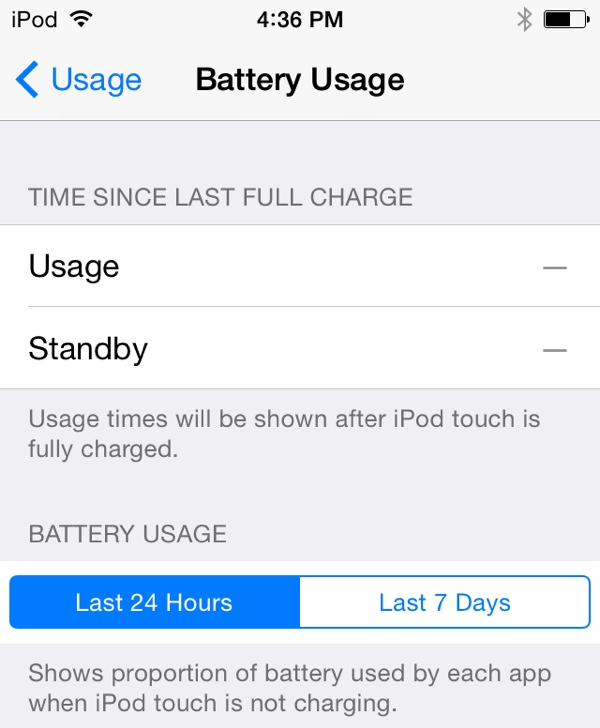 Image courtesy of Evan Coleman
iPads will gain the ability to take Panoramic photos like the iPhone, while the Camera will gain an instant burst mode, a timer mode, and separate controls for focus and exposure. iBooks will support an auto night mode and the ability to organize books by series, while notifications will include travel time.
A mysterious Tips app, which was first depicted in an early screenshot of iOS 8, is also mentioned, though it is unclear what this app will do. It is possible Tips will provide iOS users with information on lesser known iOS features, serving as a tutorial app for those who want to learn the ins and outs of their devices.
 Click to make larger
An “In Case of Emergency” card will be added to iOS 8, displaying contact information and possibly health-related information as well. Users will be able to use Siri to purchase iTunes content, Notes gains a new rich text editing feature, and RSS feeds are displayed within Shared Links in Safari.
Other mentioned features offering unknown functions include Place cards in other apps and Speak Screen.
Finally, there are also several accessibility improvements coming, including an Alex voice, Braille keyboard, improved zoom, and multi-device support for MFi hearing aids. Guided Access, which limits an iPad or iPhone to opening a single app, will gain time limits, a countdown timer, and Touch ID integration.
These are of course, only a small selection of the hundreds of new features and minor functions that will likely be added to iOS 8 as it is in development. iOS 8 is available to developers immediately, while the public will get access to the new mobile operating system later this year.
(Thanks to Phil for the image!)
Xcode 6 Allows Developers to Test Larger iPhone and iPad Screen Sizes
With the release of Xcode 6 today after Worldwide Developer Conference, developers have found an option within Xcode to size apps for devices referred to as “Resizable iPhone” and “Resizable iPad”, as pointed out by Mac4Ever [Google Translate]. The option is next to other Apple devices, including iPad Air, iPhone 5s, and iPad Retina.
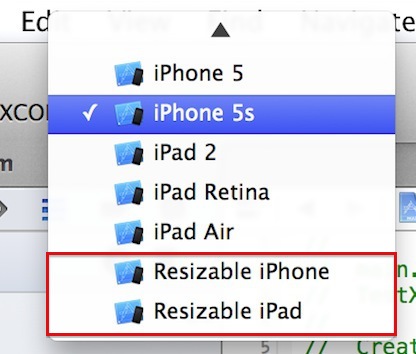
The options are likely to enable developers to start developing apps that fit on the rumored larger 4.7 and 5.5 inch screens of the iPhone 6 and, perhaps, the rumored 12-inch iPad Pro. Another photo of the Xcode simulator shows the difference between an app visually optimized for an older iPhone in what appears to be the resolution for one of the two iPhone 6 models.
It’s not yet known what the exact resolutions are for the 4.7 and 5.5 inch iPhone 6 models or even the rumored 12-inch iPad Pro, but the “resizable” functionality would allow developers to explore building versions of their apps for larger screens that are currently available.

OS X Yosemite Public Beta Limited to First Million Registered Users [Mac Blog]
Earlier today as Apple was unveiling OS X Yosemite for the first time at the Worldwide Developers Conference, software chief Craig Federighi announced that there would be a public open beta for the new operating system ahead of its launch this fall. Now, users on our forums have discovered an AppleSeed sign up page for the program, with Apple noting that the program is open to the first one million users who register.

How can I participate?
To join the OS X Beta Program, just sign up using your Apple ID. When the beta software is ready, you’ll receive a redemption code that will allow you to download and install OS X Yosemite Beta from the Mac App Store. Then go ahead and start using it. When you come across an issue that needs addressing, report it directly to Apple with the built-in Feedback Assistant application.
Users will also need to be running OS X Mavericks, and Apple recommends that the OS X Yosemite beta be installed on a secondary Mac in the event of possible bugs and errors.
OS X Yosemite includes a brand new user interface design alongside major new features focusing on seamless integration between Mac and iOS devices. The new operating system also includes a new cloud storage solution called iCloud Drive, as well as the ability to make phone calls and texts through an iPhone.
A Look at ‘Health’ and ‘HealthKit’, Apple’s New Health Initiative
Ahead of WWDC, perhaps one of the most hyped features for iOS 8 was “Healthbook,” which was said to serve as a Passbook-style app that aggregated a variety of health-related information in a colorful card array.
While Apple did indeed announce a new health initiative and accompanying app, “Healthbook” turned out to be off the mark. The app is called simply “Health,” and appears to differ a bit from how it was described in early rumors. According to Apple, Health is designed to be an “easy-to-read” dashboard of health and fitness data, which can pull in information from several different sources. “It might just be the beginning of a health revolution,” reads Apple’s iOS 8 Health page.

Heart rate, calories burned, blood sugar, cholesterol — your health and fitness apps are great at collecting all that data. The new Health app puts that data in one place, accessible with a tap, giving you a clear and current overview of your health.
The Health app keeps track of several different health metrics measured by various devices, including heart rate, calories, cholesterol, and more. It also features an “emergency card” that includes all of a user’s important health information, including blood type and allergies, which can be displayed directly on the lock screen of an iOS device.

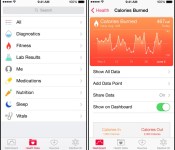
As can be seen in screenshots of the app, it aggregates information into a selection of categories such as Diagnostics, Fitness, Lab Results, Medications, Nutrition, Sleep, and Vitals. Many of these categories can also be displayed on a dashboard chart, giving users an at-a-glance view of their overall health.
Accompanying Health is the HealthKit tool for developers, which can be incorporated into both new and existing health and fitness apps to allow them to access the health data stored within the Health app. Users are able to choose exactly what’s shared and can, potentially, chose to share data from a blood pressure app with a doctor. Apps can also be authorized to share information with each other. A nutrition app might share how many calories are consumed with a fitness app.
According to Dr. John H. Noseworthy, CEO of the Mayo Clinic, Apple’s HealthKit has the potential to “revolutionize how the health industry interacts with people.” The Mayo Clinic is already working with Apple and HealthKit, creating an app that allows patients to monitor their blood pressure, sending alerts to doctors automatically.
Despite all of the focus on Apple’s health related initiative before WWDC, the company spent very little time going over the Health app. It is likely we’ll see an additional focus on health in the coming months as it is likely to also integrate with Apple’s much-rumored wearable device, the iWatch. Health and HealthKit, both part of iOS 8, are available to developers today with a public release expected in the fall.

AT&T to Bring the Galaxy Tab 4 10.1 and Note Pro 12.2 June 6th
A new round of Samsung tablets is headed to AT&T in just 4 days time. AT&T has announced that they will launch the new Samsung Galaxy Tab 4 (10.1 version) and the Note Pro 12.2 on June 6th for willing and able buyers.
The Galaxy Tab 4 sports a 1.2GHz quad-core processor, 16GB of storage with a SD card slot that is stated to support a 64GB card. It runs Android 4.4.2 and will be powered by a 6,800 mAh battery that has a rating of 9 hours usage time. That is about all AT&T tells us. As for other specs that should be inside, there should be a 3MP rear camera, 1.3 MP front camera and offer 1.5GBs RAM. The 10.1 inch screen is stated at a resolution of 1280 x 800 with a 149 pixel density. AT&T plans to let the Tab 4 go at $479.99 full price, $379.99 on contract or for $24 a month with the AT&T next program for 24 months. AT&T has a landing page for the Tab 4, but it doesn’t seem to work.
 Next up they have also announced the Galaxy Note Pro 12.2. This is the power house of the bunch with a 2.3 GHz quad-core processor, 32GB on board storage with SD slot for another 64GB, 8MP rear camera with 4x zoom, Android 4.4.2 and is powered by a 9,500 mAh battery rated for just over 10 hours of use. Of course it also comes with the S-Pen and all the airview hover features of the Note line. Additional specs should put the screen at a 2560 x 1600 resolution with a 247 pixel density. A 2MP front shooter and 3GB of RAM. Price wise, you will be looking at $89.99 at full price, $799.99 on a two year contract or spend just $48 a month for 24 months to pay it off. The Note Pro landing page is set up here.
We are just piecing some of that together from the specs Samsung has listed for the devices. Unfortunately AT&T didn’t offer up a really detailed spec rundown yet. If you take a look at the video for the Tab 4 10.1 you can see they are focusing more on the software and not the hardware.
In addition to the devices, AT&T is also going to take another $50 off the purchase price if you also pick up a Galaxy S5 or Galaxy S5 Active at the same time. I wonder if they will honor the $50 off on a Galaxy Gear too when you get the S5?
Source: AT&T
//<![CDATA[
ord = window.ord || Math.floor(Math.random()*1E16);
document.write('’);
//]]>
 AIVAnet