


Sprint unveils $30 ZTE Optik 2 tablet
Sprint this morning announced the ZTE Optik 2, an Android 4.1.2 Jelly Bean tablet with a rock bottom price tag. Powered by a 1.2GHz quad-core Qualcomm Snapdragon processor with 1GB RAM, addition details include 8GB storage, a 5-megapixel rear camera, front-facing 2-megapixel camera, and 3G connectivity. The 7-inch ZTE Optik 2 is available through Sprint’s website and business sales and requires a two-year service agreement on a qualified plan.
The ZTE Optik 2 can be paired with any of Sprint’s Tablet Connection plans, including a special limited time offer featuring 2GB of data for $15. Additional plans allow for 25MB ($5), 100MB ($10), 3GB ($34.99), 6GB ($49.99) or 12GB ($79.99). The tablet can also operate as a mobile hotspot allowing up to five users to connect; an additional fee $19.99 (2GB) or $49.99 (6GB) is required.
The post Sprint unveils $30 ZTE Optik 2 tablet appeared first on AndroidGuys.

CES 2014, Day 4: Top five must-see stories you must see

CES may almost be over, but there’s still plenty to talk about at the Las Vegas Convention Center. We learned why Microsoft’s presence at CES may be subtler these days, and that GoPro’s obsession for extreme sports has found a home on Xbox Live. We also saw Fleksy bang out emails on a smartwatch and had our faces digitally rearranged by a Kinect-equipped makeover machine — but that’s nothing compared to what we’ve hidden past the jump. Read on for a look behind the show, technology and awards that define CES 2014, day 4.
The best of the best

Remember those finalists we told you about yesterday? We finally picked through them, and after heavy deliberation, heated discussion and an impromptu water bottle fight, we finally made a call: The winners of the Best of CES 2014 Awards are here. Innovation, clever design and potentially industry-changing tech fill out all 14 categories, and we couldn’t be happier to gush over them. We didn’t do all the work though; 54,511 readers voted on the People’s Choice Award, selecting the Razer Nabu smart band by a landslide. Already scope out the winners? Why not take a look back at how we made their trophies, then?
Creative directions

Celebrities often drop by CES to help promote products, build hype or awkwardly stumble off stage. Sometimes, however, they’re here for more than mere marketing. When The Black Eyed Peas’ will.i.am was named creative director of 3D Systems, we knew we had to ask the musician exactly what he would be doing for the 3D printing giant. “Geeks are the coolest people on the freaking planet,” he told us. “Every young kid in the inner city needs to know that.” will.i.am has big dreams for emerging technologies, education and sustainability, and has a passion for making sure groundbreaking devices like 3D printers don’t get stuck in a stagnant niche. It certainly wasn’t the interview we expected. Check it out.
Autonomous parking

BMW’s self-driving cars may not be ready for consumers until 2020, but its ConnectedDrive parking technology is ready right now. We dropped by the automobile manufacturer’s car lot one more time to check out the BMW i3′s parking package, a $1,000 add-on that outfits the vehicle with ultrasonic sensors and the ability to pass the parallel parking segment of the driver’s exam. It’s not the first automated-parking system on the market, but it is the only one we’ve used that doesn’t require any user input throughout the entire process.
Modular mobile

Here’s a compelling idea: don’t like your smartphone’s camera? Detach it, drop it and add a better one. The concept of a modular cellphone has been floating around for a few months now, but ZTE has actually shown us one. The company’s Eco-Mobius prototype teased us with a device capable of swapping out LCD, processor, RAM, camera and battery modules on the fly — a move that could potentially give users full control over their smartphone’s specifications. Unfortunately, ZTE’s kit was under glass at the show, but it’s still a fascinating look at where the mobile market could be going in the near future.
Behind the scenes

You saw snapshots of what it was like to live a day of CES through an Engadget editor’s eyes; now join us for a more personal tour of the show floor, the Engadget stage and the trailer we’ve lovingly called home for the last week. On this week’s Engadget Show, Michael Gorman and Mat Smith take a behind-the-scenes look at our CES operations. It’s the next best thing to flying out to Las Vegas yourself, and it doesn’t even come with the risk of contracting the trade-show flu.
Filed under: Misc
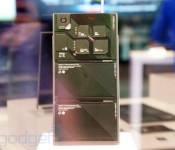
ZTE’s modular smartphone could make part-swapping a reality within two years
Smartphones with interchangeable parts is the future… or so companies like Motorola and ZTE believe. Both manufacturers are currently working on prototypes of what’s known as modular smartphones. Such a device, if it comes to market, will give consumers a few benefits: the chance to customize their phone exactly the way they want, the ability to upgrade specific parts (or modules) of your device without having to upgrade to a completely new version, the option to buy and sell individual modules to others and less electronic waste left over as a result. Neither Motorola or ZTE has exactly kept their efforts a secret, but what we’re unsure of is when we can expect to see real hardware show up on the market. Fortunately, ZTE showed off its first concept device (under glass, unfortunately) on the CES floor this week, and reps told us that we should plan on seeing this concept come to fruition within the next two years.
The phone, known as the Eco-Mobius, looks a lot sleeker than what we’ve seen of Ara so far, and is divided into four separate swappable modules for LCD, core (processors, RAM and ROM), camera and battery. This comes in quite handy for enthusiasts of all kinds who want to take advantage of different modules; if you’re into photography, you could theoretically take multiple modules with you, each one with its own strengths and weaknesses — we’d fancy having a macro lens module for specific shots. Perhaps you want to change the size of your screen, depending on whether you’re at the office, at home or a party? No problem. Need a stronger battery? Sure thing. In addition to making this kind of phone a reality, its designers are also putting together a platform in which users can buy, sell and trade modules with each other. Hopefully we’ll see more of this concept as things come together, but so far we’re very curious about how the final product will look down the road. While we wait for the future to catch up with our dreams, enjoy our images below.
Joseph Volpe contributed to this post.
Filed under: Cellphones, Wireless, Mobile
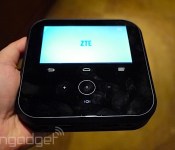
ZTE crams a 1080p projector, a 4-inch display and an LTE hotspot in one Android-powered package (hands-on)

ZTE’s Projector Hotspot is exactly what its name suggests: a 1080p projector and an LTE hotspot bundled in one highly portable box. Strangely, it even has a 4-inch touchscreen display and Android 4.2 as its operating system, so you could potentially surf the web and send emails from it. The entire package is very compact, measuring only 4.72 x 4.72 x 1.12 inches and weighing in at about 400 grams. We held it for a few minutes at a ZTE meeting, and it does indeed feel quite lightweight, which will be good for business travelers who yearn to pack light. It also packs a 5,000mAh battery in case you want to project your presentations on the go. As far as the video quality goes, we thought it was decent enough from the demonstration we saw, though we’re not sure if we recommend using this for movie night (we’ll need more than a few minutes to judge that). The hotspot functionality accommodates up to eight WiFi-enabled devices. Other features include 802.11b/g/n, HDMI, a headset jack, Bluetooth and audio output. We asked a ZTE representative if you could make calls with it, and while he said there aren’t any phone capabilities, we imagine it might be possible to ring someone using Google Voice if you wanted to be completely ridiculous. The projector is set to be available sometime this year, though the price has yet to be determined.
Filed under: Peripherals
Source: ZTE

ZTE Iconic Phablet: a ridiculous name for large-screen fans on a budget (hands-on)

Regardless of what feelings you may have towards the term “phablet,” as soon as it officially becomes part of the name of a device, you know that word isn’t going away any time soon. It’s just double the trouble when the phone in question is actually called the Iconic Phablet. As the name implies, the Phablet is a large smartphone with a 5.7-inch 720p display, but it doesn’t seem that much different from the Grand S II, which is just two tenths of an inch bigger. It actually feels pretty comfortable to hold, despite the fact that it’s slightly larger, taller and thicker, but the lackluster display is a bit of a disappointment unless it’s marketed at a low price point.
The feature we found most interesting on the phone was ZTE’s version of Multi-Window, which the company threw into its half-stock, half-skinned version of Android 4.3 Jelly Bean. We’ve seen this feature in the Galaxy Note series for a long time now, but ZTE’s option doesn’t require a developer kit, which means any third-party or native app will work just fine no matter what. The Phablet has a three-segmented back, with a standard grey plastic matte build on top and bottom and solid sheet of plastic sandwiched in between. You’ll get an 8MP rear camera with LED flash and a 1MP camera on the front, as well as a 3,200mAh battery, dual-core Qualcomm Snapdragon chipset, 1GB RAM, Bluetooth 4.0+LE and a groan-worthy 8GB internal storage. Finally, the back features a trio of wireless charging pins that will work as long as you get the supported case that clips onto the phone (sold separately, of course).
Curiously, ZTE tells us that the Iconic Phablet will offer a radio with LTE, CDMA and EVDO support, while GSM/EDGE and HSPA+ are nowhere to be found. We’re told that there’s a very good chance that this device will eventually be sold in the US, which means that it’ll land on a CDMA carrier — that is, unless ZTE comes out with a special version that makes it compatible with AT&T and T-Mobile. As with the company’s other CES products, availability and pricing aren’t known just set. We got a few minutes with the device and have uploaded it into our image gallery, and we hope to have a video of the device up soon.
Filed under: Cellphones, Wireless, Mobile
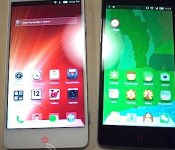
ZTE’s Nubia 5s and 5s mini show off premium yet playful design (hands-on)

Aside from the Grand S II, ZTE also took the opportunity at CES to show off a couple of other handsets that have so far only made an appearance in China. Both the Nubia 5s and the 5s mini are essentially follow-ups to the Nubia 5 we saw a few months ago, with slightly different designs and specs. The 5s has a very similar look to the 5, with a 5-inch 1080p display and a slim chassis that marries a plastic back with aluminum sides. Measuring 137mm by 68.8mm by 7.6mm and weighing in at 126 grams, the 5s has a surprisingly premium feel thanks to the cool sharp edges on the front and curves on the back. Unlike the 5, the 5s has a dedicated camera button.
Another nice upgrade is that the 5s comes packed with a 2.3GHz Snapdragon 800 SoC, which is certainly an improvement over the S4 Pro on the 5. We didn’t notice any discernible lag while navigating the phone and it feels quite zippy overall, though admittedly we only tried it out for a few minutes. Other specs include a 5-megapixel front camera, a 13-megapixel rear one with optical image stabilization, a 2,300mAh battery, 4k video capture, 2GB of RAM, DLNA, Bluetooth and NFC support. As far as software goes, the Nubia 5s runs a custom ZTE version of Android 4.2. We’re especially intrigued by the camera software, which allows you to fine-tune the exposure, focus and even white balance by dragging certain shape icons across the screen. And of course, there are built-in camera filters a la Instagram as well.

While the 5s is positioned as a higher-end consumer handset, the 5s mini is aimed at a slightly younger audience. This is evident the moment we turned on the screen — the UI was adorned with adorable cartoon animals as shortcut icons. A ZTE rep tells us that this can be customized to the users’ delight via a Nubia store where you can purchase such skins. Also, the back covers come in an array of different sporty colors and can be swapped out if you wish.
Even though it’s called the “mini”, it really isn’t too much smaller than the 5s. Indeed, the 5s mini has a 4.7-inch display, which is just 0.3 inches smaller than its bigger brother. With the measurements of 134.8mm by 65.8mm by 7.6mm and 120grams, the 5s mini has a relatively slim bezel and sports a microSD card expansion slot. Features include a 13-megapixel rear camera, a 5-megapixel front shooter, a 2,000mAh battery, Bluetooth 4.0 and DLNA. The UI is fairly similar to the 5s, and as it sports a 1.7-GHz Snapdragon 600 chip, navigation felt snappy enough. It has the same camera software as the 5s, but it lacks the ability to fine tune the white balance as easily.
So far, the phones are only available in China, though ZTE seems to hint that it could come to the US at a later date. Until then, avail yourself to the gallery photos above to see what you’re missing out.
Filed under: Cellphones, Mobile
Source: ZTE
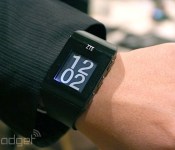
ZTE’s BlueWatch brings Pebble-like features to China (hands-on)

Trends rule at CES, and one of the biggest themes we’ve noticed before the show even officially begins is wearables. Smartwatches, HUDs/glasses and fitness trackers are popping up all over the place, and ZTE is hoping to be part of the excitement by showing off a prototype of its upcoming smartwatch known as the BlueWatch. It’s due in the first half of this year in China, but the company isn’t ready to discuss details on expanding it outside the country yet. The early model we saw was admittedly not a final unit, so we won’t make final judgments on the device just because of a few tweaks that still need to be made (as you can see in the above image, the unit we demoed suffered from bleeding lights underneath the display and wasn’t as bright as we’d like). There was, however, one particular thing that stood out to us when we played with it.
While we’re not going to call it a Pebble clone, the BlueWatch at least has quite a few similar traits. It uses a small e-paper display, tethers via Bluetooth, it features the same trio of buttons on the side to help you navigate the UI and it boasts three watchfaces and a menu setup that Pebble fans will feel eerily at home using. Additionally, you’ll notice a home button on the left, next to a magnetic charger port. Of course, it’s not all alike; the BlueWatch uses a different build and non-detachable wristband. Since the device doesn’t have a SIM, it doesn’t take calls; however, you’ll be able to receive notifications, use the pedometer and check on your social networks like Twitter and Facebook. We’re still awaiting word on more opportunities for third-party developers, but at the moment it doesn’t seem quite clear. As we’re currently seeing a beta product, we have a feeling that we could see a few enhancements in several areas as the project develops.
Filed under: Cellphones, Wireless, Mobile
ZTE Grand S II has a smooth look and clever customizable voice recognition (hands-on)

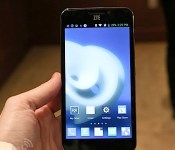
ZTE brought a handful of products to show off at CES 2014, and they range from your run-of-the-mill flagship to projectors and smartwatches. Leading the pack is the Grand S II, an obvious follow-up to the Grand S announced at last year’s January extravaganza. As the company announced this morning, the sequel features a 5.5-inch 1080p display, Snapdragon 800, 13MP rear camera and a respectable 3,000mAh battery. ZTE hasn’t made any official announcements on when and where it plans to launch the device, but we’re not holding our breath for US availability.
We were able to spend a few minutes with the new Grand S, and it’s just fast as we’d come to expect from a Snapdragon 800 device; it features ZTE’s custom skin on Android 4.3, which certainly takes a little getting used to. But one thing that really aroused our curiosity is its voice control capabilities, which are completely customizable and can recognize multiple voices. Just like the Moto X, you can completely unlock the screen verbally; no training is necessary, and ZTE tells us that it’s even possible to add your own trigger phrases. The phone was able to recognize voices and process commands with only a short delay, and we imagine this will continue to improve as the company works on the finishing touches.
The device has a removable plastic back which looks a lot like brushed metal, and it looks smooth and classy. However, while ZTE couldn’t confirm what kind of plastic it’s using, we weren’t terribly convinced that it’ll stand the test of time. Just adding a little bit of pressure on the back resulted in a hefty amount of creaking, and while a little bit of give can actually be beneficial if you’re hard on the phone, this offered generous amounts of it. We’ll have a hands-on video from the show floor tomorrow, but enjoy our image gallery in the meantime.
Filed under: Cellphones, Wireless
ZTE releases the Grand S II at CES
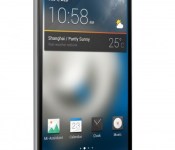
Last year at CES, ZTE revealed the Grand S, and this year they decided to reveal its successor, the Grand S II. Just like every smartphone comes with at least one unique feature, the same case is with the Grand S II. A lot of Android devices comes with voice recognition for command, but the Grand S II can recognize its owner’s voices. ZTE said that the phone can recognize known voices of its different owners, and can differentiate between them.
 Users can unlock their phone by just speaking to it, and also take ‘selfies’ without clicking. Running on Android 4.3, it comes with 5.5-inch touchscreen with a full HD resolution, a 2.3GHz quad-core Snapdragon 800 processor, 2GB RAM, 16GB internal memory, 13-megapixel rear and 2-megapixel front cameras and a 3,000mAh battery.
“We pulled out all of the stops with the Grand S II; we built upon the success of the original Grand S, and added the latest high-performance hardware and features, including voice control,” said Mr. Zeng Xuezhong, EVP and head of the Mobile Devices Division, ZTE. We developed this technology internally and feel that it represents a significant leap forward in man-machine interaction. The Grand S II will be the first of many ZTE products that will demonstrate our innovation in this area.”
Are you planning to grab the ZTE Grand S II? Tell us about it in the comment box below.
VIA: Softpedia
The post ZTE releases the Grand S II at CES appeared first on AndroidGuys.
Mozilla kicks off Firefox OS tablet developer program, teases new ZTE phones

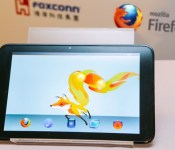
As it turns out, Mozilla’s Panasonic smart TV deal is just the start of its Firefox OS plans for this year. The web pioneer has just unveiled a tablet developer program that will give dedicated contributors both reference hardware (initially from Foxconn) and other resources; they’ll help create the tablet-native Firefox OS in the same communal fashion that Mozilla builds its desktop browser. The firm tells us that it wants to start the program shortly after CES, with a goal of finishing its slate interface sometime this year.
The company is also providing the first details of ZTE’s second-generation FFOS smartphones. The Open family is expanding to include two upgraded models, the Open C and the dual-core Open II; there isn’t much more to say at this point, although we should learn more in the near future. If you’re looking for something more tangible, you’ll be happy to hear that VIA Technologies has released a version of its tiny APC Rock desktop PC with Mozilla’s OS pre-installed. The bare system is available by itself for $59, while those who want it in a recycled case (Paper) will pay $99.
Filed under: Cellphones, Desktops, Tablets, Mobile
Source: APC (1), (2), Mozilla Blog
 AIVAnet