



ZTE Boost Max review
The Boost Max aims to give users a premium phablet experience with a small price tag.
Do you remember when smartphones were upwards of $500? Some still are, like the Samsung Galaxy S4, Note 3, and the HTC One. Recently in the United States, prices of handsets have gone significantly down, allowing more and more users to purchase their phones outside of a 2-year agreement.
In turn, the phones that have a cheap off-contract price are selling like hot cakes, and more and more manufacturers are trying to join the US market. ZTE certainly doesn’t have much presence in the United States, but they’ve made a recent effort to change that with the ZTE Boost Max.
It can be found for $299 on the Sprint MVNO Boost Mobile, weighing in as one of the more expensive “premium” phones that the prepaid carrier offers.
Recently, the bar has been set pretty high for budget smartphones. The Moto G, Moto X, and Nexus 5 are prime examples of premium handsets for a very cheap price tag. Can the Boost Max rival the price of the Moto G, while offering a great phablet experience like the Galaxy Note 3? Find out in our review below.
Specs
When you first read the list of the specifications, you might not be interested, at all. But remember: this phone is relatively inexpensive, and ZTE obviously has to make money on it, so try giving them the benefit of the doubt.
With it’s 5.7-inch, 720×1280 IPS LCD display, the Boost Max houses a 1.2GHz dual core Snapdragon 400 processor, 8GB of on-board storage, and 1GB of RAM. It has an 8MP rear-facing camera, a 1MP front-facing camera, and a non-removable 3200mAh battery. It also has Bluetooth 4.0 LE, WiFi 802.11 b/g/n, and 4G LTE.
Hardware

If you’re looking for the most positive part of the phone, look here. The look and feel of this phone is well-built and beautiful. With the brushed metallic back and the matte-finished top and bottom portions, it is a really good-looking device. But don’t read too far into the metallic back of the phone – it’s only plastic. It’s easy to see why ZTE made that material decision, given the $299 price point.
The button layout on the Boost Max is a little different from what most people are used to. The power button sits on the right edge, along with a physical camera button. The left side holds a microSD card slot and the volume rockers. You’ll also find a micro USB port on the lower-left side – this makes it a bit awkward to hold while charging. This is definitely a two-handed device, so you’ll find yourself bumping into the charging cable more than you might like.

It also has capacitive navigation buttons – back, home, and… a menu button – one design aspect that we wish would just go away.
The top matted portion covering the camera snaps off to reveal a SIM card slot, while the rear portion holds a single speaker. It’s decently loud, but very tinny. When playing media without headphones, there are a few fixes for poor audio quality, due to ZTE’s custom software. (We’ll revisit this in the software section).
The display on the Boost Max could be better, but arguably not, solely because of the price tag. It has a 5.7-inch, 720×1280 IPS LCD display. Viewing angles are fine, and we weren’t able to see any pixelation anywhere on the screen. We did, however, find one major flaw – whites aren’t white – they’re very visibly off-white. Tainting almost every screen we viewed, this is the major downfall to what is otherwise a beautiful display.
Software

Probably the most unappealing part of the software is that it ships with Android 4.1.2 Jelly Bean. This is a very old build to be shipping on a smartphone that was released in January 2014. Though Boost informed users that they intend to push Android 4.4 KitKat sometime in 2014, that is a very vague description. This is one of the sacrifices we wish didn’t make it to the Boost Max.
The phone offers a near-stock Android experience, while only throwing in a few minor design changes. The homescreens and app drawer don’t stray away from the “stock” look. The only changes they made in the user interface are the lock screen, notification tray, and the quick settings. There are, of course, a huge amount of custom apps. Most of them are from Boost and can be uninstalled very easily.

ZTE also opted to throw in some surprisingly useful features. The main feature being a multi-window clone called Smart Viewer. Hold down the back button to pull up a list of apps, and drag them to one half of the screen. Smart View lets you mute one window at a time, which we found to be very useful. On the Samsung’s Multi-Window feature, only a handful of apps are compatible for some reason. On Smart Viewer, any installed app can be used.
We did experience a good amount of lag in odd places. This mainly happened while accessing Chrome, Google Search, YouTube, or Smart Viewer. Sometimes, the webpage we were trying to load would take more than a minute to fully show. The amount of lag we came across hinders the otherwise positive experience with the software.
Now, to talk about audio quality. The speaker, though very loud, has some EQ issues. It’s a bit like listening to music in a tin can, but Boost hopes to change that with their Dolby Digital Plus EQ app. We actually found this to be very useful, though a bit cumbersome. If you use it frequently, it’s easy to get the best sound possible out of the given hardware. However, if you frequently switch between podcasts and music, revisiting the app over and over to change sound modes gets old very fast.
The overall software experience was just… okay. You can tell ZTE tried, but due to the processor and other hardware slumps, it fell a bit short.
Battery Life
The battery life on this phone is tremendous. With it’s huge 3200mAh battery, we failed to drain it in an entire day. Stand by time was great, only draining 1% overnight, while connected to the Boost network. Watching hour-long HD videos on YouTube and streaming music from Spotify barely brought the battery down to 70% in a few hours. If you’re a normal-heavy multimedia consumer, you should have no qualms with the battery.
The only factor that remotely drained the battery was the the Boost network. Even though we had some trouble in this area, you should have no problem making it through much more than a day of use.
Camera

The Boost Max’s 8MP rear-facing camera is good at times, and horrible at others. There aren’t many things to nit-pick about it, considering the price. Shutter speed is normal, and focusing didn’t cause us any problems. They’re not perfect, but they’ll do.
We did have a lot of trouble with color. Colors are washed out and dull, no matter the lighting conditions. Also, the hardware shutter key isn’t a two-step button, so you’ll find yourself with a lot of blurry photos if you try to focus beforehand. We found ourselves better off just using the on-screen shutter key.
If you hope to get a decent camera on a budget phone, you could certainly do worse. But that doesn’t mean it’s particularly good, either.
Availability
If you’d like unlimited everything (minutes/messaging/data) on Boost Mobile, plans begin at $55. If you pay your bill on-time, your plan shrinks by $5 every month, until it’s as low as $35. This is definitely a good incentive to move over to Boost, but is the Boost Max good enough to keep people on the network?
Conclusion

The Boost Max tries to offer as much as it’s competitors, but ultimately falls short in some important areas. Most of our experiences can be summed up with a, “This feature is nice, but…”.
ZTE’s Smart Viewer is a great addition, adding functionality and innovation to the size of the device. But it’s buggy and slow, and that made us not want to use it. The look and feel of the device is beautiful. It has a nice weight to it, and it offers a loud speaker and a hardware camera button. But the speaker is tinny, and the camera button makes it difficult to keep your focus.
All things considered, if you’re on Boost Mobile, and absolutely have to stick with it, you could do worse than the Boost Max. It’s the best option for someone who wants a phablet experience, but doesn’t want to break the bank. If you’re in the market to purchase a new phone off-contract and you don’t mind the screen size, buy a Moto G. It has better software, hardware, and is two-thirds the price.
If the Boost Max was $200, I would recommend it immediately. It’s a bit slow, but offers a beautiful look and feel, while giving you the experience you’re looking for. But for $300, I have a difficult time recommending this one.
The post ZTE Boost Max review appeared first on AndroidGuys.
ZTE shows off 6-inch Grand Memo II LTE
ZTE on Monday formally showed off its latest big Android smartphone, the 6-inch Grand Memo II LTE. Powered by Android 4.4 KitKat, this behemoth of a device features a Snapdragon 400 processor with 2GB RAM, 16GB internal storage, and a 13-megapixel/5-megapixel camera duo.
Other specifications include ZTE’s custom MiFavor 2.3 user interface, a 3,200mAh battery, Wi-Fi, Bluetooth, GPS, Corning Gorilla Glass 3, and LTE connectivity. At only 7.2mm thick, the Grand Memo II LTE is one svelte experience; 80% of the front surface is display.
ZTE expects to begin selling the Grand Memo II LTE in April in China, followed by simultaneous launches in Europe, North America and Asia Pacific.
The post ZTE shows off 6-inch Grand Memo II LTE appeared first on AndroidGuys.

ZTE’s 6-inch Grand Memo II LTE arrives with bigger display, slimmer body

ZTE, like fellow Chinese ODM Huawei, is hoping to become more famous for the hardware that it makes under its own flag, instead of the gear it makes for other people. A year after the Galaxy Note-troubling Grand Memo, the follow-up has made its public debut here in Barcelona. Beneath the 6-inch HD display, you’ll find a Qualcomm Snapdragon 400, paired with 2GB RAM, 16GB storage, LTE radios and a 13-megapixel f/2.2 primary camera. Selfie enthusiasts, meanwhile, will be pleased to see their faces are captured in five glorious megapixels with the forward-facing lens. Android 4.4 (KitKat) has been squeezed into the handset’s 7.2mm frame, coated in a thick skin of the company’s MiFavor 2.3 user interface. ZTE is promising that you’l get a few days of normal use out of the phone’s 3,200mAh battery, and that it’ll last for a full 16 hours playing HD video. It’ll start out in China at some point during April, with Europe, North America and Asia Pacific to follow, and while the company hasn’t talked pricing, we assume it’ll undercut its rivals in the 6-inch market.
Filed under: Cellphones, Tablets, Mobile

The Grand Memo II LTE is ZTE’s phablet sequel (hands-on)

ZTE’s back with yet another take on the phablet it introduced at Mobile World Congress last year, except this time, the device isn’t touting a world’s first with its Qualcomm CPU. The Grand Memo II LTE marks the company’s second attempt at the smartphone category created by the Galaxy Note and G Pros of the world with a 6-inch 720p display, 13-megapixel rear camera and 7.2mm thickness. To ZTE’s credit, it’s whipped up quite a sleek and attractive design. Not only is the handset ultra slim, but its curved edges and thin bezels somehow conspire to make the device appear slighter than its massive size.
Developing…
Inside, the Grand Memo II LTE sports a Snapdragon 400 processor buffered by 2GB RAM, a 3,200mAh cell to power all the pixels on that 6-inch display, as well as radios for Bluetooth 4.0, WiFi a/b/g/n and GPS. It’s also only available with 16GB of internal storage, which is surprising given its otherwise outsized reputation. You’ll be glad to know the Grand Memo II LTE currently runs Android KitKat 4.4, although that OS is hidden beneath ZTE’s MiFavor 2.3 UI.
In truth, ZTE’s particular Android skin isn’t that offensive, though we were warned by reps on the showfloor it also wasn’t a final build and that features could change. What’s curious is that the Grand Memo II LTE’s two major software additions are exact clones of the ones we saw LG debut on the G Pro 2 just yesterday. For ZTE, that would be SmartShare and miniview. By enabling the SmartShare button from within the app, users will have access to an onscreen shortcut that’s triggered with a longpress of the back button. This floating icon, when selected, brings up an app window that’s geared towards multitasking. So users need only drag and drop their desired apps to the two halves of the screen. Those windows can then also be adjusted according to user preference.
Filed under: Cellphones, Wireless, Mobile

Hands-on with ZTE’s Open C: a 4-inch Firefox OS 1.3 device

We knew the Open C was coming before the start of Mobile World Congress because, well, ZTE spilled the beans on it early. And here at Mozilla’s press event, we’re finally getting a first look at the diminutive 4-inch device and the 1.3 build of Firefox OS it runs. But before you judge its modest specs too harshly, bear in mind these FFOS devices are geared towards emerging markets and are priced accordingly.
Owing to its budget nature, the Open C sports a chunky plastic build and, from the looks of the two models we saw on display, will be available in Mozilla’s two signature colors: orange and blue. The handset’s equipped with a 4-inch WVGA display and runs FFOS 1.3 atop a dual-core 1.2GHz Snapdragon 200 with 512MB of accompanying RAM. There’s also a 2-megapixel fixed focus camera on back and 1,200mAh battery powering it.
On the whole, Firefox OS 1.3 seems much the same as in its previous incarnations, but we’ve been assured by ZTE’s reps that this new build focuses on enhancing stability and performance. Certainly, in our brief time with the Open C, we didn’t notice any crashes or sluggish behaviour when browsing the UI and launching its HTML5 apps, but that’s something only extended real-world use can attest to properly.
Mozilla’s said before that we won’t be seeing its FFOS handsets coming to the US anytime soon, so don’t expect the Open C to make an appearance stateside. That said, ZTE’s assured us the Open C should launch in Q2 of this year, though pricing has yet to be determined.
Filed under: Cellphones, Wireless, Mobile
ZTE to debut Grand Memo II LTE at Mobile World Congress
ZTE on Tuesday confirmed that it will be bringing a new 6-inch smartphone, the Grand Memo II LTE, to Mobile World Congress. Unfortunately we’ll have to wait until the conference to see the full details, but it is expected to introduce a new mobile interface, MiFavor 2.3.
In addition to the Android device, ZTE will also bring a new Open C device which runs FireFox OS and a ZTE Grand Watch (smartwatch).
The post ZTE to debut Grand Memo II LTE at Mobile World Congress appeared first on AndroidGuys.

ZTE’s MWC plans include new 6-inch Android smartphone and Firefox OS device

It’s not unusual for companies to pre-announce stuff that they’re going to announce at trade shows, and let’s face it — ZTE does it more frequently than most of its competition. The company just sent out word that we can expect at least two new devices in just a little under a week from now: the Grand Memo II LTE with a 6-inch screen, and a smartphone called the Open C, which will run Firefox OS 1.3. It also made mention of a new version of its MiFavor UI, which likely will debut on at least one or more Android devices at the show. Sadly, ZTE leaves a lot to the imagination for now, but it gives us at least a little bit to chew on for the moment.
Filed under: Cellphones, Wireless, Mobile

The week’s best Android rumors: Galaxy Tab 4, HTC Nexus 10, Desire 8, Nokia Normandy, and more
Samsung Galaxy Tab 4
Samsung will possibly introduce the Galaxy Tab 4 line of tablets at Mobile World Congress, according to whispers. Details include a 7-inch, 8-inch, and 10.1-inch model are in order; common specs include 1280×800 resolution, microSD, and 1.2GHz processors. Storage will range from 8GB to 16GB and cameras jump around from 3.-megapixels to 8-megapixels.
Oppo Find 7
Chinese handset maker Oppo is expected to debut two versions of its Find 7 smartphone. Reportedly, one model will feature a 1080p HD display while the other offers users a 2K (2,560 x 1,440) resolution.

HTC Desire 8
HTC should soon introduce a 5.5-inch Desire 8, possibly at Mobile World Congress. Specs include a 13-megapixel rear camera, stereo front-facing speakers, on-screen navigation, and a plastic body (in multiple color options).
HTC M8 Mini
Specs leaked this week for the so-called Mini version of the HTC M8 figure to include a 4.5-inch 720p display, a quad-core 1.4GHz processor, 13-megapixel rea camera, 5-megapixel front-facing camera, Android 4.4.2 with Sense 6, on-screen buttons, 1GB RAM, and 16GB storage. Rounding things out are Wi-Fi (802.11 a/b/g/n/ac), microSD expansion, and Bluetooth 4.0.
HTC Nexus 10
Word on the street is that HTC has been working with Google to develop the next-generation of Nexus 10 tablet. No hard details to share yet; rumored arrival is scheduled for the second half of the year.

ZTE Nubia Z7
ZTE’s next big (translate: huge) release is expected to be the 6.44-inch Nubia Z7. Specs leaked thus far include Android 4.4 KitKat, a 2.3GHz quad-core processor, and a whopping 128GB internal storage. Launch is tentatively March or April, or so say the sources.
Sony Sirius
Details surfacing this week indicate that the Sony D6503 “Sirius” could feature a 15.5-megapixel camera at 16:9 aspect ratio in addition to the 20-megapixel setting. Recording at 1080p, users should have the option to toggle 30fps or 60fps.
Nokia Normandy
If a Vietnamese retailer’s price is any indicator, Nokia’s upcoming “Normandy” may come in around $110. We’ve been expecting a low sticker because of the leaked specs, but we’ll know more around Mobile World Congress.
The post The week’s best Android rumors: Galaxy Tab 4, HTC Nexus 10, Desire 8, Nokia Normandy, and more appeared first on AndroidGuys.
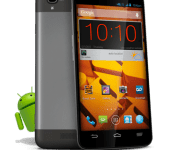
Boost Mobile launches Boost MAX 5.7-inch phablet
 Boost Mobile just announced its latest addition to its smartphone lineup, the Boost MAX.
The marquee feature of the MAX is its 5.7-inch HD IPS display, with Gorilla Glass on top for scratch resistance. The phones packs an average spec sheet, with a dual core chip clocked at 1.2GHz, 1 GB RAM and 8GB of internal storage. To accommodate the gigantic high resolution display, Boost bumped up the handset with a 3200 mAh battery, that should last for two to three days of light usage and fourteen hours of heavy.
The device has a 8MP shooter on the back, a 1MP camera on the front and it also supports LTE, Bluetooth and WiFi. As far as software goes, Boost has loaded Android 4.1 Jellybean on the phone with pre-installed Boost apps on board as well. ZTE is behind the hardware of the phone, hence the MAX comes with a glossy polycarbonate back.
 An exclusive feature on MAX’s software is Dolby Digital Plus, which allows the user to rock two apps on the screen simultaneously. And in my opinion, that’s the right way to make use of such a screen, though the phone might struggle to display two apps concurrently with only one gigabyte of RAM underneath the hood though, so that is something we should all be aware of.
The MAX retails for $300 off-contract and comes in only one colour flavor. In case you are interested, the handset is available for purchase from Boost Mobile’s website; link is in the source below.
Are you guys planning to pick one up? Let us know in the comments below.
Source: Boost Mobile
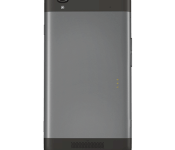
Boost Mobile debuts 5.7-inch Boost MAX
The $300 device is the no-contract carrier’s first crack at the so-called phablet form factor
 Boost Mobile on Tuesday introduced its first plus-sized smartphone, the 5.7-inch Boost MAX. Powered by Android 4.1 Jelly Bean, the handset features a 1.2GHz dual-core processor, 8-megapixel rear camera, and 4G LTE support. Additionally, the device offers 1GB RAM, 8GB internal storage, Bluetooth 4.0, Dolby Digital Plus audio technology, and a 3200mAh battery.
The Boost MAX retails for $299.99 and can be paired with the carrier’s $55 Monthly Unlimited Plan with Shrinking Payments. For every six on-time payments (consecutive or not), the rate plan drops by $5; ultimately, it results in a $40 plan. Included in the plan is unlimited talk, text, and 2.5GB data.
Boost Max is available now at Boost Mobile’s exclusive retail stores, select independent wireless dealer locations nationwide and at www.boostmobile.com/max with free shipping.
The post Boost Mobile debuts 5.7-inch Boost MAX appeared first on AndroidGuys.
 AIVAnet