


Renders of the Nubia Z9 reveal edge-to-edge display

ZTE has already launched the Nubia Z9 mini and the Nubia Z9 Max, with the standard Nubia Z9 prepping launch. Now, we are having our very first glimpse of the smartphone courtesy of a leak from China. This image which is said to be of the Nubia Z9, reveals yet another bezel-less device like the Oppo R7.
The press render above reveals a mild curve on both sides as well, indicating that this won’t be a conventional smartphone. Bezel-less devices are quickly becoming a trend now and with Chinese manufacturer competing amongst each other in this area, the future certainly looks good.
The image of the Nubia Z9 also reveals a physical home button on the bottom bezel, which will supposedly double as a fingerprint scanner as well. The back is pretty standard with the camera sensor and the dual tone LED flash located on the top left. We should get more details on the hardware of the Nubia Z9 very soon.
Source: Mobile Dad
Via: Gizmo China
Come comment on this article: Renders of the Nubia Z9 reveal edge-to-edge display
ZTE Nubia Z9 confirmed to have a “borderless” design

ZTE recently introduced a couple new devices to their Nubia line, the ZTE Nubia Z9 Max and the Nubia Z9 Mini. Oddly enough, sitting in the middle as a flagship device, ZTE did not launch the Nubia Z9. ZTE’s general manager for Nubia devices, Ni Fei, took to Weibo today to let users know the company is still working on the Nubia Z9 and it will be launched “soon.” Readers were likely interested in Fei’s statement that the Nubia Z9 will have “no border” as previously hinted at in earlier leaks.
The Nubia Z9 is expected to come with a 5.2-inch display being run by a Snapdragon 810 processor and 3GB of RAM. The device should be competitive with other flagship level devices from manufacturers like Samsung and HTC. One big question though will be pricing and availability. Although the other new Nubia devices come with attractive price tags, they are only available in Asian markets.
source: Weibo
via: G for Games
Come comment on this article: ZTE Nubia Z9 confirmed to have a “borderless” design
ZTE launches the Blade S6 Plus globally on eBay

ZTE’s Blade S6 handset was just announced in January, carrying a Snapdragon 615 processor, LTE connectivity and Android 5.0 Lollipop. The company is back with its next handset in the Blade lineup, aiming its focus on the budget-friendly market. The Blade S6 Plus, which has just debuted globally on eBay, is now available for the temporary price of just $269.99 (£182.99, €252.99). After the launch sale is over, the price will jump up to its normal price of $299.99 (£199.99 and €276.99).
The Blade S6 Plus features a 5.5-inch 720p IPS LCD display, a 1.5GHz octa-core Qualcomm Snapdragon 615 processor backed by 2GB of RAM and an Adreno 405 GPU. It has a 13MP rear-facing camera, 5MP front-facing camera, 16GB of on-board storage and a big 3000mAh battery. It also has two Micro SIM card slots and runs ZTE’s MiFavor 3.0 software atop Android 5.0 Lollipop.
#gallery-1
margin: auto;
#gallery-1 .gallery-item
float: left;
margin-top: 10px;
text-align: center;
width: 33%;
#gallery-1 img
border: 2px solid #cfcfcf;
#gallery-1 .gallery-caption
margin-left: 0;
/* see gallery_shortcode() in wp-includes/media.php */


The device is now available throughout most parts of the world including France, Spain, Italy, the United Kingdom, Germany, Brazil, Poland and many more. While the United States isn’t specifically listed, you’ll be able to pick up the device in the U.S. by following the first link below.
- Ebay link – Russia, Brazil, Poland, Czech Republic, Austria, Slovakia, Croatia, Hungary, Romania, Bulgaria, Greece, Lithuania, Latvia, Belarus, Ukraine, Moldova
- Ebay link – Germany, Portugal, Belgium, Holland, Denmark, Finland, Norway, Sweden
- Ebay link – United Kingdom
- Ebay link – France
- Ebay link – Spain
- Ebay link – Italy
Considering the price of the ZTE Blade S6 is just $50 less than this new version, the Blade S6 Plus may be a great option if you’re looking to save some cash on a decent smartphone. We reviewed the Blade S6 not too long ago, and you can check that out here. If you’re interested in picking up ZTE’s newest offering, you may want to do so before the price increases.
Profits almost doubled for ZTE last year

To consumers in the United States, ZTE is not nearly as recognizable as other hardware manufacturers. The company, though, sits behind Apple, Samsung, and LG as the fourth largest smartphone manufacturer in the United States. Its performance around the world has improved so much that the company came close to doubling its profits in 2014. So, yes, ZTE is a company that is alive and well in various markets.
ZTE’s profits rose to $423.4 million last year, up from $219 million in 2013. That is an increase of almost 100%. The company has no plans to stop here and accept its current status. Unlike other Chinese manufacturers (such as Xiaomi), ZTE has committed to North America. ZTE already sells devices in the market but plans to expand its recognition by spending more on marketing. Already having ties with the NBA helps, but ZTE really wants people to know its name.
Hit the break for the full press release.
ZTE Posts 94% Jump in Full-Year Net Profit as 4G Sales Surge
Innovative 4G solutions including Cloud Radio, QCell and UBR made ZTE the fastest-growing provider of 4G solutions in the world in 2014
25 March 2015, Shenzhen, China – ZTE Corporation (0763.HK / 000063.SZ), a major international provider of telecommunications, enterprise and consumer technology solutions for the Mobile Internet, today announced a 94% rise in full-year net profit, as higher sales of 4G network equipment and smartphones lifted the company’s profit margins.
Net profit attributable to shareholders of the listed company increased to RMB 2.63 billion (US$423.5 million) in 2014, according to the annual results announcement posted by ZTE Today. Basic earnings per share climbed to RMB 0.77, while revenue rose 8.3% to RMB 81.47 billion.
ZTE proposed a cash dividend of RMB2.0 (including tax) for every 10 shares held, in addition to the issue of 2 bonus shares for every 10 shares by way of capitalization of capital reserve.
ZTE was the fastest-growing provider of 4G solutions globally in 2014, as the introduction of innovative network solutions including Cloud Radio, QCell, UBR and Magic Radio helped the company win business internationally, and consolidated its leadership in China’s 4G market. ZTE is leveraging its strong position in 4G to take the lead in research of 5G technology,becoming the first company in the industry to offer pre5G base stations.
In 2014, ZTE unveiled its new M-ICT strategy to put the company in a better position to harness its capabilities in telecommunications, enterprise ICT and consumer devices to offer customers converged solutions and technology innovations in the era of mobile broadband and Internet of Things.
In cloud computing and IT products, ZTEachieved increased penetration of the financial services market, helped by the company’s industry-leading large data processing platforms and distributed database technologies. ZTE also posted growth in its data center products business.
In ZTE’s Mobile Devices division, the company posted growth in sales of 4G smartphones and 3G mobile phones internationally. ZTE streamlined its product lines in smartphones, and benefited from improved branding, channel distribution and services.
In wireline and optical communications products, ZTE achieved increased market share in the optical transport networks market, maintained industry leadership in PTN, EPON products, and posted growth in access terminals and GPON products.
ZTE posted revenue of RMB 40.89 billion from international operations, accounting for 50.2% of revenue. Operations in China contributed revenue of RMB 40.58 billion.
Looking ahead to 2015, growth in the traditional telecom market is facing a bottleneck, but due to the high growth data services, carriers are also transitioning to Internet services. At the same time all the mobile Internet era will become the main theme of the development of the telecommunications industry, from traditional interpersonal communication, gradually expand to the communication of persons and objects.
In Carriers’ Networks, operators are demanding network optimization solutions to increase capacity, maximize performance and depth of coverage. ZTE is in a strong position to help customers deploy networks with enhanced intelligence and flexibility, through the multidimensional data management and large-enabled platforms. ZTE is committed to helping operators transition to next-generation business models to generate increased business value.
In enterprise ICT, converged solutions combining telecommunications and ICT technologies, cloud computing, big data and high-power wireless charging and other emerging technologies are bringing transformative changes to industries and workplaces. ZTE will pursue opportunities in RCS, cloud services, smart city to help enterprise customers navigate the “Industry 4.0″ or “Industrial Internet” transformation.
In connection with mobile terminals, the next generation of intelligent machines will be more intelligent, flexible, fusion, new generation of voice control technology, artificial intelligence and mobile security will become the Group’s new strategic focus. At the same time, ZTE’s CGO innovation laboratory will be the focus of incubation of emerging technologies including smart voice, artificial intelligence, wireless charging, and distributed power generation, large data platforms and applications, Internet banking, and mobile payments.
Come comment on this article: Profits almost doubled for ZTE last year
ZTE Star 2 review
brightcove.createExperiences();
At A Glance
- Crisp 1080p display
- 4G
- Sleek design
- Great camera app
- Voice commands
- microSD card slot
- Non-removable battery
- Internal storage divided into two
- Not Android 5.0
The ZTE Star 2 is a premium device without a premium price. The processor is excellent, and it is the same package used by many of 2014’s flagship devices. The design of the device is sleek, and the display is as about as good as you can get for an LCD screen at this resolution. The software is advanced, and you are getting much more than just a stock Android experience.
(function($)
$(document).ready(function()
$(“#aa_bottom_line .aa_bl_pros_cons”).each(function()
var aa_bl_pc=$(this).find(“.aa_bl_pc”);
var aa_bl_pros=$(this).find(“.aa_bl_pros”).height();
var aa_bl_cons=$(this).find(“.aa_bl_cons”).height();
if(window.innerWidth > 480 && aa_bl_pros != aa_bl_cons)
if(aa_bl_pros > aa_bl_cons)
aa_bl_pc.height(aa_bl_pros);
else
aa_bl_pc.height(aa_bl_cons);
)
);
)(jQuery);

ZTE is one of the top smartphone manufacturers in the world, however in some countries it isn’t as well known as some of the other major brands. ZTE’s product range is impressive and it has a large range of devices, in order to fit almost every budget. ZTE’s latest top-tier offering is the ZTE Star 2. Its recommended retail price is $399, which places it at the premium end of the market. It is more expensive than the recently released ZTE Blade S6, but the Star 2 brings a lot of features to the table.

Spec sheet
| Display | 5 inch, Full HD (1920 x 1080). Corning Gorilla Glass 3. |
| Processor | Qualcomm Snapdragon 801 processor with 2.3GHz quad-core CPU, Adreno 330 GPU. |
| RAM | 2GB |
| Storage | 16GB plus microSD card slot |
| Camera | 13M AF with Dual LED + 5M |
| Battery | 2300 mAh |
| Connectivity | GPS, microUSB 2.0, Wi-Fi b/g/n, Bluetooth |
| Networks | 2G: GSM 850/900/1800/1900MHz, 3G: WCDMA 850 / 900 / 1900 / 2100MHz; 4G: FDD 1800/2100/2600MHz, TDD 1900/2300/2500/2600MHz |
| Software | Android 4.4 based Mi-favor 3.0 UI with Google Play |
| Dimensions | 140.5 x 69.2 x 6.9 mm |
| Colors | Black or white |
| SIM slots | 1x micro SIM |
Design
The Star 2 is one of the sleekest 5 inch devices I have reviewed recently, it is easy to hold and feels comfortable in the hand. It certainly isn’t bulky at just 6.9mm thick, and carrying it around in my pocket wasn’t a problem at all.

One of the first things you will notice about the Star 2 is that it has glass on the back. Thanks to the Corning Gorilla Glass 3, which is also used on the front, the back of the device is smooth and sleek. The chassis is plastic, and feels pretty durable. The top and bottom edges of the device curve around, continuing the sleek feel. In many ways, it uses the same design language as the ZTE Blade Vec 4G. Josh said in his initial hands-on that it, “reminds us of a Sony Xperia Z3/iPhone 4 hybrid, which isn’t a bad design in the slightest!”
Joining the glass on the back are the camera and a dual-tone LED flash. Looking around the rest of the phone, you will find the IR blaster on the top edge, while the micro USB port and the headphone jack are on the bottom. All the controls are on the right: first the volume rocker and below that the power button. On the left side are two trays, one for the micro SIM card and one for the microSD card, plus the speaker. The position of the power button and the volume rocker means that if you hold the phone in your left hand it is very easy to reach the buttons with your fingers, however the position of the speaker means that the sound can be easily muffled by your palm.

Since the phone includes some very clever voice activation software, the ZTE Star 2 has a multitude of microphones. I have counted 3 separate holes, two on the top and one on the bottom. Presumably they are for noise reduction and better audio pick-up, and they certainly seem to do their job, as the voice commands work really well, but I am jumping ahead of myself.
#gallery-1
margin: auto;
#gallery-1 .gallery-item
float: left;
margin-top: 10px;
text-align: center;
width: 20%;
#gallery-1 img
border: 2px solid #cfcfcf;
#gallery-1 .gallery-caption
margin-left: 0;
/* see gallery_shortcode() in wp-includes/media.php */


Display

The display on the Star 2 is very good, it has great viewing angles and a good level of brightness. For me personally, a 5 inch display is still the sweet-spot and the ZTE Star 2 brings everything that I would expect from a phone in this category. The 5-inch LCD display has a 1920 x 1080 resolution and a pixel density of 441ppi. Overall the display provides a very nice viewing experience with a good level of sharpness. The colors are bold and the display gives the device a sense of vibrancy, making it a pleasure to use.
The display is flanked by nicely sized bezels, which my crude measurements show at under 3mm each. Above the display is the space for the earpiece, front facing camera, the sensors, and a multi-colored notification LED. Below the display are the three back-lit capacitive keys.
Performance
The performance of the ZTE Star 2 is excellent. It has the same Qualcomm Snapdragon processor as the Samsung Galaxy S5, the HTC One M8, and the OnePlus One. Although the Snapdragon 801 is being superseded, the processor has a proven performance track record and it will easily handle just about any task you throw at it.
Using the ZTE Star 2 was a joy in terms of its fluidity and responsiveness. The extra features, like the voice commands, worked really well and didn’t seem to overly tax the processor.
As you would expect, the benchmark scores are good and on par with all the 2014 flagship devices. The AnTuTu score was 39503, while Epic Citadel, the demo app for the Unreal 3D engine, reported 59.8 frames per second (fps) on the High Performance setting, 59.4 fps on High Quality mode, and 46.4 fps on Ultra High Quality mode. Using GameBench I tested Riptide GP2 and found that the device managed an average of 39 fps, while Temple Run 2 did much better at 58 fps.

In terms of GPS performance, the Star 2 is good. I was able to get a lock outdoors and indoors without any problem. The indoor resolution was around 10 meters, but outdoors and in the car, the resolution was 3 meters. I tested turn-by-turn navigation with Google Maps and Nokia Here, both worked as expected.
Hardware

The Star 2 has a reasonable sized battery at 2300 mAh. Since we are used to seeing devices with 3000 mAh or more batteries, I was a little skeptical about the battery performance. However, I was happily proved wrong. During my time using this device as my daily driver, I often saw 20 to 24 hours of off-charger time with a screen on time of around 3 hours. My experience is that the device will last a full working day without any problems.
The Power Manager settings also provide a couple of interesting power saving options. The first is the “Auto adjust CPU” option, which allows Android to more aggressively control the CPU frequency. With “Auto adjust CPU” enabled, I estimate that the overall performance of the system decreases by about 25%, as the software forces the CPU to run at lower clock speeds. However such a drop in performance is unnoticeable, mainly because the Snapdragon 801 is already such a high performer. The other option is the “Long standby mode” which shuts down everything but the essentials for phone calls to give you extended battery usage. This is very useful when you are getting low on battery life but need to remain in contact, but not necessarily connect to the Internet or use the GPS, etc.
I ran some battery life tests. When running Epic Citadel, in its Guided Tour mode, the device lasts just over 3.5 hours before it runs out of juice. Using the same data-set collected when I tested the performance of Riptide GP2 and Temple Run 2, GameBench calculates that you can play the former for just over 4 hours on one charge, while the latter can be enjoyed for more than 5 hours.

For YouTube streaming (over Wi-Fi) the device can handle around 6 hours on one charge. All the tests were carried out with the screen on half brightness, syncing enabled, Wi-Fi on, and the “Auto adjust CPU” option enabled under the Power Manager settings.
The ZTE Star 2 is a single SIM device and supports 3G on 850/900/1900/2100MHz and 4G-LTE FDD on 1800/2100/2600MHz. It also supports 4G LTE TDD on 1900/2300/2500/2600MHz. Each 4G provider around the world uses one of the pre-defined frequency bands. My carrier uses 1800MHz (band 3), so the Star 2 worked on 4G without any problems.
The supported FDD bands (1/3/7) are used in many parts of Africa, some but not all parts of Central and South America, and large parts of Asia. In Europe, you should be able to find a carrier that uses one of these bands without any problems, the same is true in the Middle East. The biggest omission in terms of full European coverage is the lack of band 20 support. For example, this means that the ZTE Star 2 will work with EE in the UK but not with O2 or Vodafone, which both use 800MHz (i.e. band 20). The supported TDD bands (38/39/40/41) are basically for China and India, however they are also used by several different operators around the world.
Unfortunately none of the North American carriers use these 4G frequencies. Before buying the phone you should check with your carrier to ensure compatibility, or if you trust Wikipedia, then it has a global list of LTE networks.
This device is compatible with four 3G frequencies: 850/900/1900/2100MHz. Like the 4G coverage, compatibility depends on your carrier. The supported bands should give you 3G access on most carriers in Africa, South America, Asia, Europe, and the Middle East. In North America you should get 3G on AT&T but not on T-Mobile. You should always check with your carrier to ensure compatibility, or look at Wikipedia’s List of UMTS networks page.
Camera

The camera app on the ZTE Star 2 is excellent. As well as the normal point and shoot auto mode there are lots of different modes including HDR, Panorama and Front/Rear. The Front/Rear mode combines the image from the rear facing camera with a shot from the front facing camera. Another mode is called Photo Clear, it removes moving objects, like cars, from photos by taking sequential images and removing the bits that move.
There is also a Group photo mode which takes photos of up to five people in a group and allowing you to pick the best facial expression of each member to create a new photo with everyone smiling and nobody blinking!
Besides the auto mode there is a Pro mode (a manual mode) which gives you full control over all the various settings like ISO, exposure, and white balance. It also gives you control over the focus. This means you can manually focus images, and with a bit of care you can create nice pictures with a narrow depth of field.
Other interesting settings in the camera app are Voice control and Time lapse. The first allows you to activate the shutter by saying “capture” or “cheez”, while the second is used on the video camera to only record 1 frame per second (or 1 frame per 1.5, 2, 2.5 seconds). The video camera can record at VGA, 720p HD, 1080p HD, and UHD. UHD means 4K, i.e. 3840 pixels wide by 2160 pixels tall ( or just over 8 megapixels).
Here are some samples so that you can judge for yourself:
#gallery-2
margin: auto;
#gallery-2 .gallery-item
float: left;
margin-top: 10px;
text-align: center;
width: 33%;
#gallery-2 img
border: 2px solid #cfcfcf;
#gallery-2 .gallery-caption
margin-left: 0;
/* see gallery_shortcode() in wp-includes/media.php */


Software
On the software side, the Star 2 uses Android 4.4, but it has a custom UI known as Mi-favor UI. Overall Mi-favor is colorful and light, without being too overbearing. One of the big differences, in terms of the UI, is the lack of an app drawer. All installed apps appear on the home screen, like on the iPhone. Personally I don’t mind this, as I tend to keep the majority of my apps on the home screen anyway, and with the judicious use of folders you can keep the device organized and clean.

Tapping the menu button ,or swiping up from the bottom of the screen, brings up the launcher customization panel. Here you can choose from a series of solid colored or abstract wallpapers, or download one from ZTE’s online library. Like the software on the ZTE Blade S6 there is a built-in slider to give your wallpapers a blurred look. You can also alter the desktop transition effects.
The other thing that is the quite different on the ZTE Star 2 is the Settings page. It is completely different from other Android handsets, however it is still very easy to use. Inside the settings you will find a plethora of new features that help set the Star 2 apart from the rest of the field.

Along with features like double-tap to wake, and settings for the display temperature, there is also the always-on voice recognition service called Voice Assistant. Even when the device is offline, you can still access a number of different areas of the phone just by voice control. Calling contacts, controlling music and waking up the device are just a few of the voice commands users can use with Voice Assistant.
The first step is to give your phone a name. This is the key phrase that the phone will be listen for. I used “OK phone” and it works very well. Once the phone is listening it can respond to a variety of commands like “Call mom” or “Wi-Fi off”. You can even open apps with commands like “Open twitter.”
The only thing you can’t do is say a complete phrase like “OK phone open twitter” when the phone is sleeping, you need to say “OK phone”, wait for it to respond and then issue the second command. However this minor problem is slightly alleviated by the magic words features.
You can record special commands (magic words) which are associated with an action which will be performed when the phone hears that command. Possible actions include calling a contact or opening an app. The difference between the magic words and the normal commands is that the magic words don’t need to be prefixed with the phone’s name. For example, I defined a command called “quick camera” which opens the camera app. To start the camera all I need to do is say “quick camera” to the phone and it will open the camera app, even when it is sleeping.
The Voice Assistant is a lot of fun and simultaneously quite useful. Talking to the phone in this way reminds me of the Transparent Aluminum scene from Star Trek IV.
Another cool feature are the motions. As well as motions like Flip to mute there are lots of other motions available including Auto answer, Pocket mode and Change from speaker to earpiece during a call. The first will automatically answer a call when you bring the phone up to your ear, the second ensures that the phone rings with the maximum volume when it is in your pocket, and the third will automatically switch from speaker to earpiece when you lift the phone to your ear.

These are all very cool features and I hope they become standard on all phones in the future. Each motion can be enabled/disabled individually so you can pick which ones you like and don’t like.
The device comes with full Google Play support and all of the normal Google apps are available. For those Google apps not pre-installed, a quick trip to the Play Store gets you everything you need.
The 16GB of internal storage is probably a bit limiting for some people, especially those who like to store lots of media on their phones. The 16GB is divided up into a system area, of 3.84GB; a user area of 3.93GB, which is used for installing apps; and phone storage of 8.23GB, which is used for data and media. There is an option to move apps from the user area to the phone storage. The good news is that there is a microSD card slot which supports cards upto 32GB. Unfortunately there is no option to move apps from either the user storage or the phone storage to the SD card.

You are able to set the default write location to the external SD card, however this seems to be a bit hit-and-miss in terms of which apps respect or understand this setting. For example, offline videos from YouTube were stored on the external SD card, however movies downloaded from Google Play Movies and TV went to the phone storage. But having said that, the “Manage downloads” section of Google Play Movies and TV shows a combined free space from the internal storage and the SD card. So I guess some internal algorithm decides where to put the downloaded media. The camera app has a separate setting for where the images are stored, and it can be set to use the external SD card.
Pricing and conclusion

The recommended retail price of the ZTE Star 2 is $399, however I have seen it online for $350. That is certainly a great price for a premium device. The processor is excellent and it is the same package used by many of 2014’s flagship devices. The design of the device is sleek and the display is as about as good as you can get for an LCD display at this resolution. The software is advanced and you are getting much more than just a stock Android experience. The voice commands work well and the bundled camera app is excellent. Lanh gave the
Lanh gave the ZTE Blade S6 a score of 8.5, mainly due to its competitive price, its 64-bit processor, and because it is running Lollipop. I am going to give the ZTE Star 2 a score of 8.8. The Star 2 has more features than the Blade S6, and a better design. It costs more, however, I think the extra money is worth it!
ZTE profits doubled in 2014, eyes third place in the US
The rise of China’s home-grown smartphone brands continues. ZTE has just announced a 94 percent increase in its net profit in 2014, led by strong smartphone sales and growth in China’s 4G carrier networks.
Profits reached 2.63 billion yuan ($423.4 million) in 2014, up from 1.36 billion in the previous year, while operating revenue rose 8.3 percent to 81.4 billion yuan. Strong demand for low-cost handsets have helped to drive ZTE’s bottom line, the company is riding the same wave that has seen Xiaomi, Huawei, Meizu and other low-cost Chinese manufacturers rise to prominence in Asia’s booming smartphone industry.
Like others, ZTE has its sights set on further overseas expansion this year. To do so, ZTE has increased its marketing expenses by 50 percent in 2015 and, unlike most of its rivals, is directly targeting the US market next. The company aims to make it into the top three smartphone vendors in the US by 2017. ZTE currently sits in fourth position in the North American market, behind Apple, LG and Samsung, and the company saw its smartphone shipments jump by 50 percent in the US last year, so the goal may not be as out of reach as some may think.
http://embed.chartblocks.com/1.0/?c=546b7359c9a61de60f999f8a&t=e94e61e0cea6d94
In addition to smartphone growth, ZTE is also benefiting from the adoption of faster 4G data speeds throughout China. A separate arm of company supplies telecommunication equipment for networks and the division is expected to build a further half a million 4G base stations around China in 2015, according to Phillip Capital.
2015 is likely to be another bumper year for China’s smartphone manufacturers, with competition only likely to increase as companies look to expand into overseas markets.
ZTE unveils Z9 Mini and Z9 Max

While likely to be overshadowed by today’s Galaxy S6-related announcements, ZTE has now taken the wraps off the Nubia Z9 Mini and Z9 Max at a special press event in Beijing.
The Mini model is a budget oriented offering powered by a Snapdragon 615 with 2GB RAM, 16GB storage, microSD support, a 5-inch 1080p display, LTE, and a 2,900 mAh battery. The larger 5.5-inch Max offers more upscale internals, such a Snapdragon 810 processor with 3GB RAM. The display is still just 1080p, with other specs including 16GB storage, microSD, LTE, and a 2,900 mAh battery.
Both phones share a few things in common, including reasonably attractive metal-framed designs with all-glass rears. The designs aren’t identical, but they are certainly similar. The camera experience on both phones is also quite similar, with both offering an 8MP front cam and a 16MP rear cam. That said, the Mini caps out a 1080p recording for the 16MP shooter, while the Max supports 4K. Both phones also include Android 5.0.2 Lollipop right out of the box.
The phones are expected to be priced at $240 (CNY 1,499) for the Z9 Mini and $400 (CNY 2,499) for the Z9 Max. It’s unclear what markets, outside of Asia, we can expect to see the Z9 Mini and Max arrive in. What do you think of ZTE’s latest? Impressed or not?
ZTE Nubia Z9 leaks in photos showing fingerprint scanner and all-metal body
 ZTE’s latest Zubia Z9 has appeared in some photos online, showcasing the general design of the device. The Z9 is supposed to use a 5+ inch screen, and it’s pretty clear that this is going to be a very large device when you see it next to an iPhone 6.
Aside from screen size, we can see the phone sports smoothed, rounded edges and an all-metal body. It looks very, very thin, too, which makes sense for a flagship device in 2015.
The back of the phone houses the camera and what will likely end up being the fingerprint scanner, plus an LED flash and speakers at the bottom of the device. It does have capacative buttons, not on-screen buttons, which could be a deal breaker for some. That ultra thin bezel might change some minds, though.
source: Gizmochina


Come comment on this article: ZTE Nubia Z9 leaks in photos showing fingerprint scanner and all-metal body
ZTE Nubia Z9 specs surface online

Chinese technology manufacturer ZTE has been hard at work developing its flagship smartphone of 2015 for the past year or so, and now, thanks to a leaked benchmark test, we’re getting our first peek at its specifications.
The “Nubia Z9″ is a thoroughbred flagship device expected to compete against the likes of the Galaxy S6 and HTC One (M9). The handset packs a 5.2-inch Full HD display, a Snapdragon 810 System-on-Chip, 3GB of RAM, a 16-megapixel primary camera and 32GB of internal storage.
With regards to its raw performance, the folks over at AnTuTu state that the “results are not quite up to scratch with what other Snapdragon 810 devices have managed to obtain,” but it’s possible that ZTE will be able to optimize the Z9’s OS to run smoother.
Whatever the case may be, we’re pretty excited to see what ZTE comes up with for its next flagship smartphone. Are you? Be sure to let us know your thoughts below.
Source: AnTuTu
Come comment on this article: ZTE Nubia Z9 specs surface online
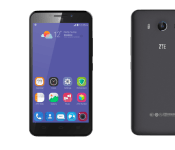
ZTE lets you unlock the Grand S3′s lock-screen with eye-recognition

There’s a variety of ways to unlock your smartphone or tablets these days. You can simply swipe away the lock screen, tap in a passcode, trace a pattern or biometric methods such as fingerprint and facial recognition. As if that isn’t enough choices, ZTE has another option for you. Eye-recognition. The function is called Eyeprint, and we have more details after the break.
ZTE has partnered with EyeVerify to bring Eyeprint to the ZTE Grand S3 smartphone, offering a password-free smartphone experience. Eyeprint works by using the Grand S3′s front camera to trace the unique vein patterns in the human eye. This means that the Grand S3 could be one of the most secure smartphones in the world when it comes to trying to unlock the lock-screen. It also means you will never forget your passcode.
Eyeprint works by creating a map of the veins in your eyes, creating a secure ID. Then, when your device is locked, you press the power button and swipe down from the top of the display. You then look at the screen, from a distance of around 15cm, and after around half a second, the Eyeprint function identifies you, allowing access to the inner workings of your smartphone. Depending on your perspective, the fact that Eyeprint can only be set-up to identify one person at a time could be a good or a bad thing.
In what seems to be a natural progression, ZTE is also planning on integrating the Eyeprint function with mobile payments. The ZTE Grand S3 with Eyeprint launched in China back in January with a RMB 2,999 ($478) price tag.
Come comment on this article: ZTE lets you unlock the Grand S3′s lock-screen with eye-recognition
 AIVAnet