



Viber’s new desktop app arrives with a huge focus on stickers

There’s no doubt that people have a common interest in emojis and stickers, so Viber knows how important it is to keep that market content. With that in mind, the service is now getting a revamped version of its desktop calling/messaging app, featuring a much more accessible way to find stickers than in previous versions. You can now search for those colorful (and mood-telling) stickers in a quicker way within the application, as well as have them docked as a menu right alongside your conversations. Viber also revealed that there are now over 100 million users on the platform, which is a pretty good number if it wants to keep up with the big players in the game — hey, Skype, Viber’s looking at you.
Filed under: Desktops, Internet
Source: Viber
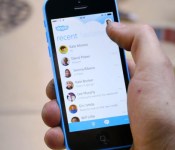
Skype’s redesigned iPhone app is all about sharing things faster

Skype has been lavishing attention on its Android and Windows Phone messaging apps as of late, but it’s now time for the iPhone client to get a makeover — and it’s one of the company’s biggest overhauls in recent memory. The new software brings a much fresher-looking interface that’s both in step with other platforms (chiefly Windows Phone) and lets you accomplish many common tasks faster. You can now start group chats right from the hub, and you don’t have to wait until someone hops online to send a message.
There are a lot of subtler tweaks that should go a long way toward improving the experience, too. The app’s overall performance is up to five times faster, and it’s much better at syncing message statuses as you move from device to device. So what’s the catch? Simply put, the app isn’t ready yet; Skype is launching the new iPhone version in about a week. Until it’s available, you’ll just have to make do with the teaser video below.
Filed under: Cellphones, Mobile, Apple, Microsoft
Source: Skype

Viber looks to challenge Skype with backing from Japanese internet giant

Let’s face it: The tech industry is starting to get used to big-name companies acquiring young, relatively successful startups. To wit, such was the case for Viber, a Tel Aviv-based service that lets you use an app to communicate through phone calls and instant messages. Viber’s acquisition by Rakuten, a Japanese e-commerce and internet giant, came after the platform welcomed more than 300 million users worldwide since 2010, making it one of the most popular applications across iOS, Android, Windows Phone and BlackBerry. That growth, along with its flourishing appeal, have made Viber a real threat to services like Skype — though, on the messaging front, it is still trying to catch up to WhatsApp, which is at 500 million active users and counting. But despite all of this, Viber still wants to keep growing, and it plans to use Rakuten’s resources to help it get to where it wants to be.
“We continue to have fun, develop our product and introduce new and exciting updates.”
Viber’s CEO Talmon Marco told me that life at his company hasn’t changed since joining the Rakuten family: “We operate the same way [we] did before. This means we continue to have fun, develop our product and introduce new and exciting updates.” And keeping the Viber apps full of useful features is something that’s very important to Marco, which is why they’re constantly being updated on every platform. For its part, Rakuten isn’t new to the acquisition game: Back in 2012, the company completed its purchase of Kobo’s e-reading business. In a recent interview with Re/code, Hiroshi Mikitani, Rakuten’s co-founder and CEO, said spending $900 million on Viber was a “no-brainer,” citing the popularity of similar services as the driving force behind the acquisition.

To outsiders, it wasn’t easy to pinpoint why Rakuten would want to own Viber. However, Marco thinks this is a perfect match. “We believe mobile messaging apps like Viber are rapidly becoming the communication method of choice for most people. Both Rakuten and Viber felt user experience on many of Rakuten’s services could become better once you let people communicate with them via Viber,” Marco said. But as to which Rakuten services he’s referring to, he didn’t specify. Still, even with any future integration with products from its parent company, Viber will “continue to operate independently [from] Rakuten, but with extensive cooperation.”
“Tapping into Rakuten’s resources and know-how should help us accelerate our growth in the US and elsewhere.”
Marco also told Engadget that one of the main goals for Viber going forward is to keep expanding in the US. As popular as the app is outside of the States, Viber said the US remains its biggest market. With Rakuten on its side, Marco said Viber will have to make the most of the opportunity. “Tapping into Rakuten’s resources and know-how should help us accelerate our growth in the US and elsewhere,” he added. And if Rakuten hadn’t come into the picture, the additional resources could have come from elsewhere; Marco said that there was interest from other companies, but didn’t share the names of any of them.

Of course, as has happened on numerous occasions with these types of services, not everything has gone smoothly for Viber. In 2013, the service caught a lot of heat for an exploit that allowed hackers to bypass the Android lockscreen, and while Viber was quick to react, users weren’t too happy that this happened in the first place. But Marco told me user privacy and security are his company’s number one priority. “After all, we ourselves use the product constantly and care about our own privacy. Viber has never experienced a breach of user data or our production system,” he said. “Multiple third-party tests have demonstrated our top-notch attention to security and we continue to work hard [for] things to stay this way.”
Marco feels that combining Viber’s solid calling and messaging features with the ability to keep your data secure is a recipe for success. Ultimately, as he’s told us in the past, the goal is to bring the best talking and chatting experience to you, regardless of which operating system you are using. But will this be enough for you to pick it over a big player like Skype? Well, that call is for you to make.
[Image credits: Flickr, Sam Azgor; Getty Images]
Filed under: Cellphones, Internet, Mobile

Viber’s first major redesign makes it look right at home on the iPhone

Internet calling and messaging service Viber does a solid job of constantly bringing new features to its apps, regardless of the platform. Now, some seven months after iOS 7 was released, Viber is finally changing the looks of its iPhone app to match that flat, minimalist appearance of Apple’s OS. Aside from overhauling the UI, the Viber application now also lets you create a list of numbers you’d like to block and send longer video messages to people. The company’s CEO, Talmon Marco, tells us this update isn’t just about iOS 7, however. “This is the first time we are introducing a new look and feel for Viber. Our goal was to create a simple and friendly interface but at the same time establish a solid foundation for future updates,” Marco stated. In other words, don’t be surprised when you see some of these design cues make their way to other Viber apps, like those on Windows Phone 8 and Android.
Filed under: Cellphones, Internet, Software, Mobile, Apple
Source: App Store
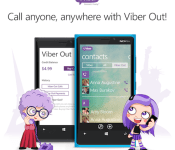
Viber’s Windows Phone 8 app now allows you to call any number you want

How does Viber celebrate being acquired for a ton of money? By bringing one of its most popular features, Viber Out, to Windows Phone 8 — that’s how. In second thought, we’re probably way off. Still, the Skype rival has indeed updated its WP8 application, celebration or not, allowing users to now make calls to any phone number thanks to Viber Out. This new version also lets you send video messages and multiple photos at a time, while added Bluetooth support should make it easier for you to enjoy some hands-free action. As usual, you can grab the update from the Windows Phone Store — and feel free to share your Viber 4.1 impressions with us in the comments below.
Filed under: Cellphones, Internet, Software, Mobile, Microsoft
Source: Windows Phone Store

LINE’s internet calling service goes live on Android, starting at 2 cents per minute

If you’ve been waiting to give LINE’s Call service a try, now’s your chance — so long as you live in the right country, anyway. Those using LINE’s Android app in Colombia, Japan, Mexico, Peru, the Philippines, Spain, Thailand and the US can dial most any phone number at rates that might well beat what their carriers would offer. Americans get one of the best deals: their calls start at 2 cents per minute using prepaid credit, and they can pay 70 cents per month for an hour’s worth of talk time. The Chinese will get a similar bargain when Call reaches them in the near future, and LINE-to-LINE conversations are always free. There’s no iOS support yet, but we wouldn’t be shocked if the corresponding app update arrives relatively soon.
Filed under: Cellphones, Mobile
Via: TechCrunch
Source: LINE, Google Play
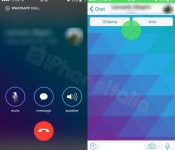
WhatsApp’s VoIP feature for iOS revealed in leaked screenshots

Just a few weeks after WhatsApp CEO Jan Koum hinted that his Facebook-owned service will integrate voice communication features (VoIP, specifically) into its apps by this summer, we’re finally seeing alleged screenshots that show off what it’ll look like on iOS. The shots, which were leaked by iPhoneItalia, show an interface that looks awfully similar to the iOS 7.1 phone UI — complete with circular buttons, blurred background and even a similar keyboard (is the shift key on or off?), albeit with a camera button on top. We’re hearing that you’ll be able to make calls for free over WiFi or cellular, which will help WhatsApp compete against the litany of other VoIP apps and services available on the market.
Filed under: Cellphones, Wireless, Mobile, Apple, Facebook
Via: 9to5Mac
Source: iPhoneItalia

Here’s how the NSA can collect data from millions of PCs

We know that the NSA has been ramping up its efforts to collect data from computers, but it’s now clear that the intelligence agency has the tools to compromise those computers on a grand scale. Information leaked by Edward Snowden to The Intercept has revealed that the NSA has spent recent years automating the way it plants surveillance software. The key is Turbine, a system launched in 2010 that automatically sets up implants and simplifies fetching data; agents only have to know what information they want, rather than file locations or other app-specific details. A grid of sensors, nicknamed Turmoil, automatically spots extracted info and relays it to NSA staff. The combined platform lets the organization scrape content from “potentially millions” of PCs, instead of focusing only on the highest-priority targets.
The spies also have a wide range of weapons at their disposal. They can grab data from flash drives and webcams, remote control PCs and intercept the content from both internet calls as well as virtual private networks. The NSA doesn’t always go directly after a target, either. It frequently compromises IT administrators to reach people on the networks they run, and it will both spoof websites and alter traffic to trick targets into installing code. Snowden’s latest leak isn’t all that surprising given that we’ve seen governments use similar espionage methods in the past, but it suggests that the NSA can easily watch a large number of computer users without sweating the exact techniques that it uses.
Filed under: Networking, Internet
Via: CNET
Source: The Intercept
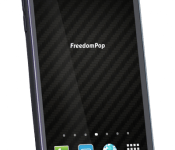
FreedomPop announces the Privacy Phone, its “Snowden Phone” with encrypted communications

With all of the privacy concerns in the U.S. with the National Security Agency, some smartphone makers are trying to provide their customers with more security and privacy.
You may be familiar with one that was recently launched at Mobile World Congress, Blackphone, that runs its own PrivatOS and is built on Android, offering anonymous search functions, smart disabling of WiFi, private calling, anonymous anti-theft and remote wiping features, all for $629.
Today FreedomPop launched the Privacy Phone, its own smartphone to address monitoring and Internet tracking, which the company nicknamed the “Snowden Phone.”
It comes at a much cheaper price than Blackphone, at $189, and uses FreedomPop’s VoIP network. It uses 128-bit encryption to encrypt both voice calls and text messages, while apps and Internet data will be sent through an encrypted virtual private network, or VPN.
All that being said, if FreedomPop wanted to ensure more security, it could use more than 128-bit encryption and VPNs aren’t safe from everyone.
Some interesting things to note are that the phone is a modified Samsung Galaxy SII, a fairly outdated smartphone running Android Jelly Bean with a 1.2GHz duel-core Samsung Exynos processor, 16GB of storage, a microSD card slot, 8-MP front-facing and 2-MP back-facing cameras and an 1800mAh battery.
Taking its security even further though, FreedomPop is now accepting bitcoin payments so its customers can pay their bills anonymously, plus customers may request a number change at any time and as many times as they want.
The Privacy Phone can be purchased from the FreedomPop website now and the $189 price tag includes unlimited voice and text, 500 MB of data for three months and then costs $10 a month after that.
VIA FreedomPop
The post FreedomPop announces the Privacy Phone, its “Snowden Phone” with encrypted communications appeared first on AndroidGuys.
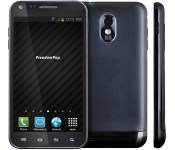
FreedomPop’s new smartphone keeps your calls and data private for $189

When surveillance agencies collect large volumes of cellular data, it’s easy to understand why you’d want an extra-secure smartphone. Those devices aren’t always affordable, though, which is why FreedomPop has launched the Privacy Phone for $189 contract-free. It’s ultimately an old Galaxy S II, but its software boasts some strong secrecy measures — all of its internet-based calls and messages are encrypted, and data goes through a virtual private network (VPN) that masks your identity. Don’t count on total security. FreedomPop isn’t using more than 128-bit encryption, and VPNs aren’t always safe from prying eyes. Still, the Privacy Phone may fit the bill if you’re looking for better-than-usual anonymity at a low price.
Filed under: Cellphones, Mobile
Source: FreedomPop
 AIVAnet