


What does Twitter want with Cover’s Android lock screen? A smarter smartphone, duh

Imagine your Twitter app immediately surfacing tweets about a nearby earthquake or disaster without you having to enter a single keyword search. Or one-step switching between Instagram and Twitter so you can see if that filtered photo of your cat received any favorites. Or a notification that brings up a favorite restaurant’s Twitter account around dinnertime so you can see its daily specials. And imagine if it was all only possible because you had an Android phone.
When the news broke yesterday that Twitter bought Cover, a company that makes an Android lock screen app, the first question that hit me, was, well, why? Much like Facebook’s Oculus buy, the deal doesn’t make much sense at first blush. The seemingly obvious answer would be that the company plans to build a Twitter-based lock screen — essentially a Twitter version of Facebook Home. Which, let’s face it, doesn’t sound like a great idea. Not only does it seem rather shortsighted for Twitter just to mimic another company’s mobile efforts, but also Facebook Home wasn’t exactly a resounding success. Instead, I think it’s another example of Twitter’s penchant for experimentation. If you combine Cover’s context-aware tricks along with Twitter’s desire to build a better Android experience, you could get one very intelligent Twitter app.
Much like Facebook’s Oculus buy, the deal doesn’t make much sense at first blush.
Twitter, as we already know, is not afraid of experiments. In a blog post published by the company last year, it states the developer and design teams constantly perform test trials in order to suss out what Twitter needs to evolve. Some efforts are more experimental than others of course, but the end goal is always to come up with a better product, be it improvements to login verification or simply a new profile page. Perhaps due to some criticism of its Android app, Twitter has been particularly keen on improving the experience on Google’s mobile OS. Indeed, it launched a beta tester program for Android users back in August and then an even earlier Alpha program in November, both of which were rich ground for these so-called experiments. Results have been mixed. A major redesign seeded out to testers late last year for example, was completely scrapped partially due to poor feedback. This is where Cover comes in.

In our interview with Cover co-founder Todd Jackson last October, he was extremely bullish on Android as a platform. “We’re making a huge bet on Android, that this will be the operating system that billions of users will adopt over the next several years,” he said. Not only can you not customize the iPhone’s lock screen to your heart’s desire, he told us, but also developers simply do not have the keys to the iPhone’s sensors like they would with Android.
“We’re making a huge bet on Android, that this will be the operating system that billions of users will adopt over the next several years,” Cover co-founder Todd Jackson said.
Tapping into those sensors is exactly how Cover differentiates itself from just an ordinary lock screen replacement. Rather than just a static list of app shortcuts, Cover utilizes the phone’s internals to surface the most oft-used apps depending on your location, time of day and even whether you’re in the car or on foot. If you’re at home, for example, your lock screen might float Netflix and Pandora to the top, while work-related apps like email and stocks would be more prominent when you’re in the office. More than just a lock screen replacement, Cover also works throughout the phone as a smarter app switcher. When you’re in the email app, for example, you can easily swap out to an app like the browser or maps, because those two are the ones you’d most likely reference while typing out a letter. “We want this to be like Alt-Tab for mobile, so you can jump directly between apps lightning fast,” said Jackson. You can test it out while Cover is still available from the Play Store.
I don’t doubt that it’s these unique quirks that won the hearts and minds at Twitter. In Cover’s announcement yesterday, the newly acquired firm stated: “Twitter, like Cover, believes in the incredible potential for Android. They share our vision that smartphones can be a lot smarter — more useful and more contextual — and together we’re going to make that happen.” And who wouldn’t want a smarter smartphone?
Filed under: Cellphones, Mobile, Google

Twitter overhauls profile pages, adds “cards” interface

On desktops, Twitter and Facebook have always been different, and for good reason. The type of content that flows through each feed isn’t nearly the same. That being said, Twitter is unveiling a new desktop UI for profile pages.
Complete with profile pictures tucked away in banner images, the new Twitter profile is doing almost exactly what Facebook and Google+ are doing. Not that it’s a bad thing, but one might think they’d be a bit more original about the layout. They’ve added the familiar “cards” UI to their profile pages. Tweets are now bigger, easier to read, and give more of a focus on pictures.

Along with the new layout, here are a few more features they’ve added.
- Best Tweets: Tweets that have received more engagement will appear slightly larger, so your best content is easy to find.
- Pinned Tweet: Pin one of your Tweets to the top of your page, so it’s easy for your followers to see what you’re all about.
- Filtered Tweets: Now you can choose which timeline to view when checking out other profiles. Select from these options: Tweets, Tweets with photos/videos, or Tweets and replies.
So far there are only a few popular users that have the redesigned pages, and it should begin rolling out to users in the coming weeks. If you’d like to take a look, check out Weezer’s profile. There’s no word yet as to whether or not the update will roll out to the Android app, but we’d bet it won’t. For awhile now, the web view and Android app have been so far apart in terms of UI, and we can’t imagine Twitter sending out a giant update like this one.
But who knows, maybe they’ll surprise us and push out a good update for once. Do you have any thoughts on the new web interface? Let us know in the comments!
Source: Twitter
The post Twitter overhauls profile pages, adds “cards” interface appeared first on AndroidGuys.
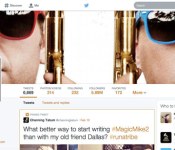
Twitter’s new profile design kinda looks like Facebook

Twitter’s forever tweaking its service with new features and visual touch-ups, and today its revealed a fresh redesign for web profiles which makes imagery ever more prominent. We actually saw much of what’s new teased on Twitter’s test channels a couple of months ago, including the larger, G+ like header photo and bigger, Facebook-esque profile pictures. There are several changes to how Tweets appear on your user page, too. You can pin a Tweet, forum-style, to the top of your ramblings as a sort of extension to your bio, which is less visible under the left-aligned profile pic setup. Furthermore, your “best Tweets,” defined by how much other users have interacted with it, will be enlarged to draw attention to them. Also, when you’re scanning the profile pages of others, you can now filter out Tweets that don’t contain any visual media, or those that don’t have replies. New accounts get the redesign straight away, and all others will see their profile pages change in “the coming weeks.” There are various celeb profiles that’ve received preferential treatment you can peek at right now, if you’d like to see what your profile’s in for. What’s the big deal with Channing Tatum, anyway?
Filed under: Internet
Source: Twitter

‘Cover’ Lockscreen App Picked up by Twitter
 Homescreen and lock screen apps are all over the place. Facebook has their own little twist on things and now it looks like Twitter is breaking into the game. Not on their own of course. Rather, they have purchased ‘Cover‘ and the announcement went out this morning via Cover’s website. Cover is currently a beta app on the Play Store that is a context aware lock screen replacement. Neither party disclosed any details on the price tag that was eventually agreed upon.
Twitter, like Cover, believes in the incredible potential of Android. They share our vision that smartphones can be a lot smarter — more useful and more contextual — and together we’re going to make that happen. We’ll be building upon a lot of what makes Cover great, and we’re thrilled to create something even better at Twitter.
The future of Cover and Twitter is still a little closed door right now though. Cover states that the app will remain in the Play Store as it is for now while they focus their attention to Twitter.
 Source: Cover
Via: 9to5Google
Check out Cover in the Play Store
//<![CDATA[
ord = window.ord || Math.floor(Math.random()*1E16);
document.write('’);
//]]>
Cover Lock Screen acquired by Twitter

At AndroidGuys, we’ve been long-time fans of Cover Lock Screen. It offers a customizable, beautiful lock screen replacement that other apps haven’t come close to matching. Things might change a bit around Cover headquarters as they announced today that they are acquired by Twitter.
In a press release earlier today, Cover explained their future plans to work with the social networking giant.
Twitter, like Cover, believes in the incredible potential of Android. They share our vision that smartphones can be a lot smarter — more useful and more contextual — and together we’re going to make that happen. We’ll be building upon a lot of what makes Cover great, and we’re thrilled to create something even better at Twitter.
The Cover team explains that the app will still be available in the Play Store while they focus their efforts on working closely with Twitter. They will of course give updates to their blog as to what exactly is happening with the partnership. And as for the details about the purchase, that’s about all we have so far.
What do you think this means for Cover? Let us know in the comments below!
Source: Cover
The post Cover Lock Screen acquired by Twitter appeared first on AndroidGuys.
Twitter takes context-aware lock screen app maker Cover in-house
Twitter wants to be smarter. Or, rather, it wants your smartphone (and, presumably, tablet) to be a lot smarter. To do that, it’s bringing app maker, Cover, in-house. The announcement, made today via Cover’s blog, is light on any financial details, and instead focuses on the team’s potential to make the mobile Twitter experience “more useful and more contextual” as that social service continues to scale up.
As a refresher for those of you just learning of Cover’s existence, the startup’s responsible for a contextually aware Android lock screen — hence the acquisition — that’s been available in beta since last fall. But, it remains to be seen, whether or not that app will continue to receive support from the team. At present, Cover has no plans to abandon its users and pull the app from Google Play. Although, it’s likely that app will sunset as the team gets to work on serving up Twitter when you most expect it.
Filed under: Cellphones, Tablets, Software, Mobile
Source: Cover
WSJ: Get ready for more ads in your Twitter feed

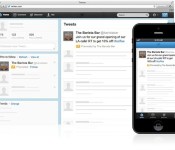
Tired of seeing inane Promoted tweets in your Twitter feed? Well, if the social media company has its way, you’ll likely see much more than that before the year’s over. According to the Wall Street Journal, Twitter plans to debut 15 new types of ad products over the next six months as a bid to gain more advertising dollars and mobile game developers over to its side. The first round of advertising will apparently be an app-install ad unit embedded within Twitter’s mobile app, which is similar to what Facebook has done. Users will see the ad in the form of an expandable tweet, or Twitter card. When they tap on the ad, they’ll be kicked over to Apple’s App Store to purchase the application, and will be reeled back to the Twitter app once the download begins. Word is that companies like Spotify are already on board, though that has not yet been confirmed. Details are scant as to the 14 other kinds of advertising Twitter wants to do, but we’ll likely see this first attempt in the next few weeks.
Filed under: Internet
Source: Wall Street Journal

Turkish court half-heartedly orders end to YouTube ban

Turkey’s Twitter ban may have come to an end, but the country’s block on YouTube remains steadfast. In the latest development to this censorship saga, Reuters reports that a court in the Turkish capital has declared the YouTube situation a human rights violation, and instructed that the block be removed. Well, almost, as the court did state 15 specific videos could stay restricted, but that a blanket ban was unnecessary. The ruling tipped its hat to a similar decision from Turkey’s Constitutional Court, which previously declared the Twitter lockdown a violation of free speech. Regardless of this official order, it’s still up to the powers that be to do the unbanning, but we doubt they’ll be up for bearing the pressure to do so much longer. If certain politically sensitive videos stay unavailable when that happens, though, then the Turkish Prime Minister and Co. have kind of won anyway, we’d say.
Filed under: Internet
Source: Reuters
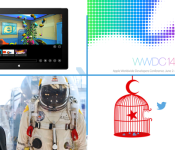
Daily Roundup: interview with Felix Baumgartner, Apple announces WWDC 2014 and more!

You might say the day is never really done in consumer technology news. Your workday, however, hopefully draws to a close at some point. This is the Daily Roundup on Engadget, a quick peek back at the top headlines for the past 24 hours — all handpicked by the editors here at the site. Click on through the break, and enjoy.

Felix Baumgartner is the man who fell to Earth and lived to tell the tale
Felix Baumartner will forever be known as the first man to free fall from the edge of space. Not only did he survive the 24 mile dive from the stratosphere, but he broke several world records in the process. Our own Joseph Volpe caught up with Baumgartner as he recollected the experience and its implications for the future of space tourism.

Turkey finally lifts Twitter ban, but YouTube is still blocked
Turkey’s two-week ban on Twitter has officially come to an end. The country’s high court ruled just yesterday that the ban was unconstitutional, but now the service is completely restored. Access to YouTube, however, is still being blocked.

Apple confirms WWDC 2014 will begin on June 2nd
Apple just announced that its annual WWDC developers conference will begin on June 2nd and commence until June 6th. Ticket sales are available on Apple’s website now, but this year, it’s switching from a first-come-first-served system to random selection of attendees.

Internet Explorer 11 now looks nicer no matter what device you’re using
Today, Microsoft announced a completely revamped version of Internet Explorer 11 for Windows 8.1 and Windows Phone 8.1. For the mobile OS, users can now take advantage of many features found on the desktop version of IE, like pinning sites to Live Tiles and using voice commands.
You also might like:
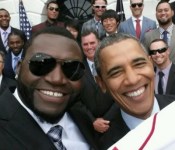
Samsung scores again with selfie of David Ortiz and Barack Obama
 First it was Ellen’s Twitter selfie at the Oscars, and now, David Ortiz of the Boston Red Sox has taken a selfie with the big man himself, Barack Obama, and posted it to Twitter. The selfie of David Ortiz and Barack Obama was snapped during the Red Sox’s visit to the White House and was taken by none other than a Samsung Galaxy Note 3, courtesy of Samsung.
Earlier this week, it has been reported that Samsung and Ortiz signed a deal, along with some other members of the Red Sox, to promote Samsung’s devices. The image was retweeted by Samsung with the hashtag #GalaxyNote3, and although the image hasn’t quite reached the Twitter-crashing viral nature of Ellen’s tweet, it’s still serving as a big part of Samsung’s marketing and advertising machine.
What do you think of all these celebrity endorsements for Samsung’s devices? Do you think they’ve figured viral marketing out for 2014? Let us know what your thoughts are in the comments.
Source: The Boston Globe via TalkAndroid
//<![CDATA[
ord = window.ord || Math.floor(Math.random()*1E16);
document.write('’);
//]]>
 AIVAnet