


Microsoft reportedly axed a smaller Surface

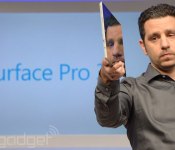
We’d surmise that a few folks were disappointed then Microsoft’s Surface event concluded earlier today. Rumors swirled that the “small gathering” tease meant a more compact version of Redmond’s tablet was imminent, but instead the festivities focused on a larger 12-inch pro model. Now, Bloomberg reports that a more compact model was on tap before being nixed ahead of its official debut. The report states that CEO Satya Nadella and EVP Stephen Elop concluded that the device didn’t offer enough pizazz to differentiate it from the options that are currently on the market — smaller Windows-powered slates from the likes of Dell and others. MS engineers had reportedly been working on the so-called Surface mini alongside Qualcomm for the better part of a year before the plug was pulled ahead of final approval.
Filed under: Tablets, Microsoft
Source: Bloomberg
Surface Pro 3’s accessories include a new Type Cover and a 4K-ready dock

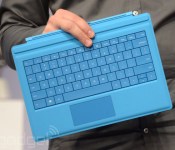
A professional tablet like the Surface Pro 3 deserves some equally high-end accessories, don’t you think? Microsoft certainly thinks so, as it just introduced some add-ons built with demanding users in mind. To start, it has a new $130 Type Cover keyboard add-on with a much-improved trackpad — the new design has a 68 percent larger area than the Type Cover 2, and 78 percent less friction. It’s better for lap use, too; you can lock in the cover’s position so that it won’t wobble around so much while you’re typing on your legs.
The company has also unveiled a $200 docking station for those who want to use the new Surface as a makeshift desktop. Besides adding a bevy of extra connections (three USB 3.0, two USB 2.0, Ethernet and audio) to the tablet, the dock also lets you output video at 4K through its Mini DisplayPort. If you need an extra-sharp secondary display for Photoshop, you’ve got it. Both the station and the new Type Cover should be available when the Pro 3 launches in North America on June 20th, and there are promises of extra peripherals in the future.
Filed under: Peripherals, Tablets, Microsoft
Source: Microsoft (MarketWatch)
Box’s redesigned Android app opens almost any file you put in the cloud

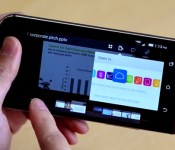
Box overhauled its iOS cloud storage app early this year with a simpler, speedier interface; now, it’s Android’s turn. The just-launched Box 3.0 for Android shares much of its iOS cousin’s look and feel, including minimalist controls and a high-speed previewer that opens over 100 file types right in the cloud. In other words, you won’t have to fire up Office Mobile just to get a quick peek at that PowerPoint presentation. You can search text in any document, too, and it’s easier to open content in Box-friendly apps through a built-in OneCloud gallery. The upgrade won’t necessarily lure you away from the likes of Dropbox or Google Drive, but it may be welcome if you regularly deal with exotic file formats — or if you just have to catch up on work while on the road.
Filed under: Cellphones, Storage, Internet, Mobile
Source: Google Play, Box Blog

Groupon lets merchants process cards, track customers with iPad-based Gnome

Gone are the days when restaurants and retailers needed to drop five figures for the privilege of tracking and ringing up customers. Square’s Register app has been letting merchants process transactions with “cheap” consumer hardware since 2012, and now Groupon’s reinforcing its own position in the point of sale game with a new iPad-based solution. Gnome, which is expected to cost merchants $10 per month, will let customers redeem their Groupons via Bluetooth, or simply by providing their name at checkout. Customers can receive email or printed receipts, and they can pay entirely with cash or a credit card whenever they’re not redeeming a voucher. The company plans to move all merchants over to Gnome within the next few months, so expect a more streamlined Groupon experience soon.
Samsung’s tablet for schools carries a tougher shell and extra smarts

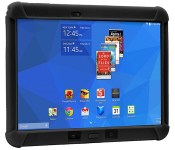
We don’t envy schools that have to go tablet shopping; many slates can’t survive roughhousing by playful kids, let alone impart some wisdom. Teachers will be glad to hear, then, that Samsung has fulfilled its promise of a classroom-ready tablet by releasing the Galaxy Tab 4 Education in the US. Hardware-wise, it boils down to a Galaxy Tab 4 10.1 with a rugged case — nothing truly special, but enough to survive a fall from a desk. The real highlight may be the software, which includes educational apps, books and videos alongside easy access to Google Play for Education. Samsung’s smarter Galaxy Tab carries just a slight premium at $370, although schools will want to tack on another $30 if they want Google Play’s help with their lessons.
Via: AnandTech
Source: Samsung (1), (2)
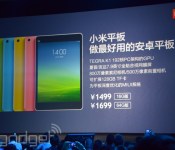
Xiaomi’s first tablet offers powerful gaming on the cheap

Just over two years ago, Xiaomi CEO Lei Jun told this author that he wasn’t sure about making a tablet at the time; but today, he confessed that he’d been developing one all this time. What we have here is the conveniently named Mi Pad, which was just unveiled in Beijing with super attractive price points: CN¥1,499 (about $240) for the 16GB version, and CN¥1,699 (about $270) for the 64GB flavor. To be honest, we saw this coming when MIUI was released for the Nexus 7 back in March, but what surprised us was that this new slate happens to be the first to feature the powerful Tegra K1 SoC. This follows Xiaomi and NVIDIA’s earlier collaboration on the Tegra 4 variant of the MI3 smartphone.
Xiaomi’s Android 4.4 tablet comes with a 7.9-inch display (made by LG or AUO) with a high resolution of 2,048 x 1,536, which works out to be a sharp 326 ppi density with a 4:3 aspect ratio. Underneath that you’ll find the Tegra K1 SoC, which includes a 2.2GHz “4+1″ core CPU plus a 192-core PC-class Kepler GPU. There’s also 2GB of RAM, 16GB or 64GB of built-in storage, microSD expansion of up to 128GB, a 6,700mAh battery and stereo speakers. Unsurprisingly, you can also take photos with this slate’s two cameras: 8 megapixels on the back and 5 megapixels on the front. These are all tucked into a 8.5mm-thick glossy plastic body (which does look a bit like a scaled up iPhone 5c), weighing a total of just 360g. By the way, there’s no 3G or 4G version announced just yet, but you’ll find the usual 802.11ac WiFi and Bluetooth 4.0 radios.
Unfortunately, no date’s been announced for the Mi Pad’s global availability. All we know now is that there will be a beta test program in China in early June, so it may be a while before the device actually hit the market anywhere on this planet.
Filed under: Tablets
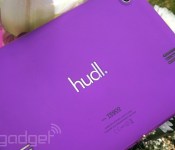
Tesco fixing Hudl screen responsiveness issues with new update

It’s safe to say Tesco’s Hudl has been a success: the company has sold more than half a million units and is prepping a new model for release later this year. It hasn’t been all plain sailing for the supermarket giant though, as some of its Android slates shipped with a display issue that would often cripple the tablet by rendering the screen unresponsive. Tesco, to its credit, has been quick to replace customers’ Hudls no questions asked, but it may not need to anymore after it’s begun rolling out an Android update that eliminates those exact issues. The company tells us that some updates have passed Google certification and are already hitting affected Hudls, but it could take up to three weeks for the fix to reach everyone.

Details uncovered for Samsung’s 13.3-inch tablet, and Super AMOLED tablets

More info has surfaced on the rumours that Samsung are developing three new Tablet devices, two of which have AMLOED screens but all three will have a WQXGA (2,560 x 1,600) screen resolution with 3G and WiFi versions in the pipe line.
Codenamed “Chagall”, this first device could be the Galaxy Tab S with its super AMLOED screen being 10.5″ in size and running with either flavours of the Exynos 5 chipset which are reported to boast 1.9GHz four Cortex-A15 cores or four Cortex-A7 cores. To help with keeping the device running smoothly, 32-bit dual-channel 933MHz LPDDR3e RAM is on the list along with graphics being handled by an hexa-core Mali-T628 GPU.

The final two devices with the codename of “Klimt” & “Warhol” will be of similar spec as the first but will see “Klimt” with a super AMOLED screen of only 8.4″ in size. Meanwhile the “Warhole is set to be more impressive with its, possible LCD and not AMOLED, 13.3″ screen size which could see it be a high-end Samsung device something along the lines of a Galaxy Tab Pro.
Android 4.4 KitKat will be power all three Tablets with Samsung’s software customisation.
SOURCE: gsmarena.com
The post Details uncovered for Samsung’s 13.3-inch tablet, and Super AMOLED tablets appeared first on AndroidGuys.
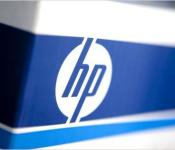
HP tablet render leaks with way too much bezel on it

You all know of a company called Hewlett-Packard, or HP for short, a California based tech giant founded in 1939. Well, they’re back in business, sort of, considering they never went out of business… oh well, let me explain.
Let me clear up the above sentence. Basically every person who knows something about technology knows of HP, but they didn’t make much noise in smartphone/tablet industry in the last few years. HP is constantly trying to leave their mark but it’s just not working for them. They introduced a few devices for Indian market a few months back, something between a smartphone and a tablet, you can read more about it here.
This time around they’re going to try leave their mark with yet another tablet, if evleaks are to be believed that is. Images below reveal an unknown HP tablet and there’s not much to go on here, but that doesn’t seem to be Android KitKat running on the device, rather something that came before it. If it’s any consolation at least it looks like a near-stock Android experience. Front side of the devices looks hideous, I’m not one to hate on imperfections, but this is just awful. The bezels are way too thick and it just looks… well, not good. Back side of the device is somewhat better though. We’re really rooting for HP, competition is always good, but they have got to step up their game. What do you think about these images?

VIA: AndroidCentral
The post HP tablet render leaks with way too much bezel on it appeared first on AndroidGuys.

Gadget Rewind 2005: Lenovo X41 Tablet

Lenovo made headlines earlier this year when it took Motorola Mobility off of Google’s hands, giving it a boost in smartphone markets outside of its usual stomping grounds. But that wasn’t the first time it snatched up another company for industry leverage. In 2005, IBM gave up majority control of its PC business, allowing Beijing-based Lenovo to take over and effectively expand its reach to a global audience. The timing of the deal was a little bit off, however. One of the first products to launch under Lenovo’s new ownership was the ThinkPad X41 Tablet, a laptop/tablet hybrid, which had already rolled off the assembly line and was still sporting an IBM logo.
It was a niche product back in 2005, but if you were an early adopter, it might have been the perfect tool. Though the X41 wasn’t the first hybrid tablet/PC to debut in the ThinkPad line, it did arrive with significant upgrades over its predecessors, like wireless networking, a 12.1-inch display, vastly improved processor capability and a 180-degree rotatable display.
The X41 Tablet also sported many familiar ThinkPad flourishes, including the iconic red TrackPoint nub, a stowable stylus and an irksome display latch that got caught on just about anything when the device wasn’t snapped shut. Lenovo eventually eradicated that latch from the ThinkPad’s oeuvre of quirks during its 2013 overhaul, and continues to make progressive changes to the line’s design.
At the time of its launch, consumers appreciated the X41′s relatively slim 3.5-pound weight and the pleasant paper-like feel of its screen when used in tablet mode. Its software experience, however, wasn’t exactly polished — it was the first ThinkPad to run Windows XP Tablet PC Edition software. Sure, it had a dose of digital pen support, handwriting recognition and speech input added to the mix, but it was still undeniably Windows XP underneath. Some users who tried the X41 Tablet remember it more for its glitchy software experience than the convenience of its combined form factors.
The X41 Tablet may have been an ungainly oddity when it first launched, but its hybrid form has gone on to become something of an industry standard for today’s post-PC devices.
Did you own a ThinkPad X41 tablet PC? Add it to your Engadget profile as a device you had (or still have) and join the discussion to reminisce or share photos of your device with other like-minded gadget fans.
 AIVAnet