


T-Mobile brings the LG G3 to the US on July 16th for $599 up front

Americans, your wait for LG’s G3 is (nearly) over. T-Mobile has become the first big US carrier to take pre-orders for the 2K-capable Android smartphone, and now expects the device to hit retail shops on July 16th. Be prepared to fork over a lot of cash if you want that pixel-packed display as soon as possible, though. The G3 will cost $599 if you buy it outright, and it doesn’t currently qualify for an easier-to-swallow installment plan. Other stateside carriers haven’t revealed their plans to carry LG’s brawny handset, but we’d expect matching announcements from at least the larger networks before long.
Filed under: Cellphones, Mobile, LG, T-Mobile
Source: T-Mobile (1), (2)
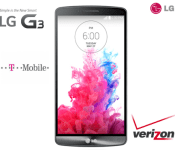
T-Mobile beats Verizon to punch with LG G3

As some of you already know, the LG G3 will be touching down at T-Mobile’s front door on July 16. With pre-orders being offered for the flagship device, the Un-carrier looks to be first out of the gate with the smartphone. For those keeping track, T-Mobile is the only carrier to offer up a retail data; Verizon could be close, however, with a July 17 launch rumored. Suggested pricing for Verizon’s LG G3 may start at $199 but it’s unclear whether the specifications will be the same across the board.
If you are interested in learning about our impressions of the G3, check out our early review.
The post T-Mobile beats Verizon to punch with LG G3 appeared first on AndroidGuys.
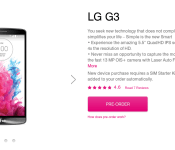
T-Mobile’s LG G3 due July 16; pre-orders now available

T-Mobile on Monday kicked off the week with an announcement that the LG G3 will be available starting from July 16. Pricing for the flagship phone figures to $598.80, but if you break the price out over 24 months it amounts to about $25 per month.
Specifications for the T-Mobile version include 2GB RAM, 32GB internal storage, 5.5″ Quad HD display, Qualcomm Snapdragon 801 processor, and 13-megapixel camera with bells and whistles.
The post T-Mobile’s LG G3 due July 16; pre-orders now available appeared first on AndroidGuys.
Android L Wallpaper, Keyboard, and More! Nexus isn’t Dead! – The ManDroid Show
Happy Friday Android friends. TIme to talk more about all the fantastic goodies we were blessed with this week. Android L is storming through the Android Community, and hopefully you Nexus 5 or 7 users out there are trying it out. Factory images are being sift through, and some wallpaper, and the new Android L […]
T-Mobile whitelists more apps from using your data Allotment
Not everyone on T-Mobile sports an unlimited high-speed data plan. For the rest of us, we sometimes have to watch what we have left in our allotment. Not out of fear of exceeding it and having a costly bill, because T-Mobile did away with overage. More so because we still want the high-speed service and […]
Full list of Samsung Galaxy Note 4 model numbers leak

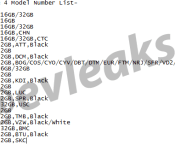
Twenty-two model numbers for Samsung’s successor to the Galaxy Note 3 have leaked thanks to @evleaks, showing where it will be available worldwide.
From the leaked model numbers, we can see that there will be 16 and 32 GB models and both black and white, as well as that it will be available on numerous carriers, including AT&T, Sprint, T-Mobile, and Verizon in the U.S. While it seems it will be available around the globe, some other carriers we can pick out from the list are DoCoMo and KDI.
Previous leaks about the Note 4 have suggest that there will be one model (SM-N910S) that is expected to feature a Qualcomm Snapdragon 805 processor while the other (SM-910C) figures to pack a 64-bit Exynos chipset. Some other rumored specs include 3GB RAM, a 16-megapixel rear camera, and front-facing 3.6-megapixel shooter. Powered by Android 4.4.3 (for now), the display should also be 5.7-inches and offer 1440×2560 resolution.
There’s been talk that the device will make a debut at the annual IFA trade show in Germany that starts Sept. 5.
VIA @evleaks
The post Full list of Samsung Galaxy Note 4 model numbers leak appeared first on AndroidGuys.
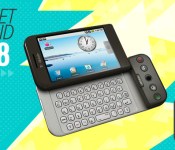
Gadget Rewind 2008: T-Mobile G1 (HTC Dream)

In 2005, a small Palo Alto-based mobile software company called Android Inc. was quietly folded into Google’s growing empire. The acquisition led to the release of the company’s first-ever “Google phone” three years later: the T-Mobile G1 (or HTC Dream as it was mostly known outside of the US). Google’s philosophy for the G1 centered on one-click search and a rich web experience, and leveraging T-Mobile’s 3G network was essential to its success. The G1 was also the first smartphone to run the open-source Android operating system and after just six months on the market, it earned a fifth-place spot amongst top-selling smartphones in the US.
 Andy Rubin, one of the co-founders of Android who went on to become SVP of mobile and digital content at Google, wasn’t new to the mobile device game. His earlier venture, Danger Inc., had found success in 2002 with its Hiptop smartphone, which was rebranded by T-Mobile as the Sidekick. It’s not surprising then that the G1 ended up as a T-Mobile exclusive — after all, its pop-out keyboard was reminiscent of the Sidekick’s swivel screen design. And for consumers in search of an alternative to the BlackBerry smartphones that dominated at the time, the G1 was a welcome option.
The T-Mobile G1 was an odd-looking duck. It was chunky due to the phone’s pop-out keyboard, with slightly larger dimensions than the sleek iPhone 3G released the same year. The G1′s physical keyboard was a necessary evil considering the inaugural Android operating system (1.0) didn’t include a virtual one — this despite its 3.2-inch capacitive touchscreen. That wasn’t the G1′s only design quirk: It also featured a slanted “lip” on its front face that housed a trackball and physical navigation buttons.
Its unique build aside, the G1′s main attraction was its open-source Android environment. With it, Google aimed to stimulate app development and “future proof” the OS with developer contributions over time. The Android Market (now known as Google Play) also debuted in tandem with the G1, offering around 50 applications at the time. All those apps were free, too, since the Market had yet to implement a payment system.
Multitasking, copy and paste, pull-down notifications and home screen widgets: These were some of the fresh features the G1 ushered in. It also, unsurprisingly, came deeply integrated with Google services such as Gmail and Maps. And without a proprietary music application of its own at the time, Google turned to Amazon to provide an MP3 app.
The G1 may have been an unfinished product when it was released, but Google addressed its shortcomings with iterative software updates — now a common and accepted practice for Android devices. Early OS fixes tackled glaring oversights like the G1′s missing virtual keyboard and lack of video-recording ability for its 3-megapixel rear camera.
 A T-Mobile rep compares Apple’s iPhone 3G (at left) with the G1.
A year after the G1′s launch, Verizon released the massively popular Motorola Droid with a slightly tweaked version of Android; a device that would prove a boon for Android device sales and mindshare. Still, Google continued on its own parallel path with HTC, releasing the MyTouch series and the G2. Eventually, however, Google abandoned its partnership with T-Mobile and HTC in favor of its Nexus line: reference devices that would run the latest, unadulterated versions of the Android operating system.
Google’s G1 smartphone holds an important place in the company’s history. Not only was it the first of many devices to run the Android OS, but it also stood out as an open-source alternative to Apple’s iPhone and closed iOS ecosystem. Android’s openness and flexibility led to its rapid adoption by a variety of manufacturers seeking to topple Apple’s success — it also helped that it was free to license. The G1, though primitive in comparison to the current crop of Android devices, was Google’s first step toward the mobile phone market domination it enjoys today.
Did you own a T-Mobile G1? Add it to your Engadget profile as a device you had (or still have) and join the discussion to reminisce or share photos of your device with other like-minded gadget fans.
[Image credit: T-Mobile / HTC (G1 front view); JENS SCHLUETER/AFP/Getty Images (iPhone/G1)]
Filed under: Cellphones, Mobile, Google, T-Mobile

Android 4.4.4 Already Here! T-Mobile Announces Uncarrier 5 and 6! – The ManDroid Show

I hope your Saturday is going well my Android friends. ManDroid Show is a little late this week but it is here. Android 4.4.4 is already out in the ild, sadly it is not a remedy for those bugs in Android 4.4.3. T-Mobile shocked the carrier world once again, by announcing Uncarrier 5 and 6, Don;t know what else they can do to change the game. Enjoy the show!
Andorid 4.4.4
Uncarrier 5
Uncarrier 6
Amazon Phone
//<![CDATA[
ord = window.ord || Math.floor(Math.random()*1E16);
document.write('’);
//]]>

T-Mobile launches Un-Carrier 6.0, unRadio sets music free starting June 23

While announcing its latest “Un-Carrier” moves Wednesday night, T-Mobile launched Un-Carrier 6.0 and introduced some initiatives to “un-leash” music.
The first of the initiatives, unRadio, was announced in conjunction with Rhapsody and is a new service that aims to eliminate all issues associated with current Internet radio. T-Mobile said that unRadio is ad-free, offers unlimited skips and a catalog of over 20 million songs. It will be available starting June 23 to all T-Mobile customers with unlimited 4G LTE, while other T-Mobile customers can get it for $4 per month.
Our competitors want you to believe that Internet radio is still free on their networks — but it’s not,” said Mike Sievert, chief marketing officer for T-Mobile. “On AT&T and Verizon, you’re paying for every note of every song you stream. You even pay for the ads. Our goal with Music Freedom is different. We want people to enjoy their music worry-free — the way it’s meant to be.”
unRadio wasn’t the only thing up its sleeves as T-Mobile also announced that its Simple Choice customers will now be able to stream all the music they want from their favorite streaming services having to worry about using their data. These streaming services include Pandora, Rhapsody, iHeartRadio, iTunes Radio, Slacker, and Spotify, as well as Samsung’s Milk Music and the forthcoming Beatport music app from SFX.
Via: T-Mobile
The post T-Mobile launches Un-Carrier 6.0, unRadio sets music free starting June 23 appeared first on AndroidGuys.

T-Mobile Uncarrier 5 Announced Bringing Test Drive, VoLTE and Wideband to More Markets

We just sat through the hour or so long T-Mobile Uncarrier 5 live streaming event to see what tricks T-Mobile and John Legere had up their sleeves. The past 4 versions of the Uncarrier approach have brought some pretty amazing changes for consumers and have certainly shaken up the industry quite a bit. Some of the things that have been talked about have covered things like Simplified Billing, no prorated charges and EIP included in the first bill. Much of which was confirmed via screenshots acquired by Tmonews. So, did T-Mobile deliver and did they have a few tricks up their sleeves? Simple answer, yes.
- Data Strong – new term. Complete ubiquous voice coverage. T-Mobile customers use the most data. 69% more data than an average Verizon customer. Average T-mobile customers use 100% more data than an AT& T customer.
- The Test Drive – Test an iPhone 5 “fully loaded and ready to go” for 7 days and either keep the service or drop the phone off with no obligations, not money down, and no strings attached.
- Wideband LTE in 16 markets. 15 x 15 will be 20 x 20 147 Mbps down,
- VoLTE 15 markets 100 million. Nationwide by the end of the year.
- 2012 connected devices surpassed PC’s. 78% of Facebook users are mobile.
- 46% of americans say they have made a wireless choice and felt remorse.
- 1 in 10 have gone back.
- 17 million since the Uncarrier started.
T-Mobile Transforms the Way Americans Buy Wireless … Again
T-Mobile Test Drive offers every American an iPhone 5s with unlimited service on T-Mobile’s network for a full seven days – completely free.
As the Un-carrier puts its network’s data muscle on show, T-Mobile expands Wideband LTE to 16 total markets and VoLTE technology to 15 total markets reaching over 100 million people
SEATTLE, WA, June 18, 2014 – In another of its signature moves, T-Mobile US, Inc. (NYSE: TMUS) today introduced “T-Mobile Test Drive” and pioneered a new way to buy wireless in this country. With T-Mobile Test Drive, people can receive an iPhone 5s and unlimited nationwide service to take T-Mobile’s network for a data-intensive, seven-day spin at no cost whatsoever.
The new initiative puts T-Mobile’s data-strong network in the spotlight, as the Un-carrier rolls out yet another major network expansion ahead of the competition.
No More “Buying Blind”
The Un-carrier’s latest initiative takes aim at the painful process of buying wireless in America today. People must decide on a wireless provider without knowing how the network will really work for them – where they live, go to school, work, and play. As a result, the U.S. wireless industry has one of the highest “remorse rates” of any out there. Nearly half (46%) of wireless customers say they’ve signed up with a carrier and then wanted to leave, and one in 10 have actually left within the first 30 days of making a switch.1 It’s a pain point ripe for an Un-carrier solution.
“The way this industry forces Americans to buy wireless is completely, utterly broken. I’m here to tell you there’s a better way,” declared John Legere, T-Mobile CEO and President. “While the carriers ask you to buy blind, the Un-carrier gives you transparency. Our network kicks ass, and now people can experience for themselves what a data-strong network can do with T-Mobile Test Drive.”
Starting this Monday, June 23, people can sign up for T-Mobile Test Drive at http://www.t-mobile.com/testdrive. A few days later, they’ll receive an iPhone 5s fully loaded and ready to go, and they can put T-Mobile’s data-strong network to the test for seven full days on the “most forward-thinking” smartphone. After the test drive, just drop it off at any T-Mobile store. That’s it. Absolutely no money down. No obligation. No strings attached.
T-Mobile Test Drive is a first-of-its-kind nationwide initiative from a major carrier that the Un-carrier is rolling out at scale. During the first year of the program alone, T-Mobile expects at least one million people to take a test drive.
Network Designed Data-Strong
T-Mobile Test Drive marks a new campaign to let consumers experience first-hand how the Un-carrier’s network is different, even as the company today announced two massive network expansions. T-Mobile has expanded Wideband LTE into 16 total markets, giving all T-Mobile LTE devices a speed boost with capable peak network download speeds up to nearly150 Mbps – that comes out to a 90-minute HD movie download in under three minutes or an 11-song music album in seven seconds.Building on its data DNA, the Un-carrier also expanded Voice over LTE (VoLTE) to more than 100 million people in 15 total markets. T-Mobile was the first major provider to launch VoLTE, and now, because its network has been designed for data, is nearly doubling the amount of data dedicated to voice calls for highest fidelity, crystal-clear HD Voice and faster call setup times than ever before. The Un-carrier expects to deploy VoLTE nationwide by the end of the year.
“The old telecoms designed their networks for a time when your phone’s only app was a phone call—and they haven’t shaken that dial-tone mind-set,” said Neville Ray, Chief Technology Officer for T-Mobile. “Our 4G LTE network was built in the last year and a half, so naturally we built it differently. We built it for the way people use smartphones and tablets today, and we built it with a mobile Internet architecture, so we could roll out new technologies faster.”
Now, as mobile broadband usage skyrockets, Un-carrier customers are reaping the rewards of a network designed to be data-strong and concentrated where people use data the most – unlike older carrier networks built by phone company utilities. T-Mobile customers are using more wireless data on average than the major national carrier customers – 61% more than Sprint, 69% more than Verizon, and 100% more than AT&T. T-Mobile customers also have more network capacity per customer than with any other major national wireless company, a full 70% more network spectrum per customer than Verizon, and they’re streaming, tweeting, using FaceTime and more at lightening speeds on America’s fastest nationwide 4G LTE network.
“We’re a mobile Internet company competing against utilities, so it’s no wonder we’re faster than they are,” added Legere. “We’re out there doing it while the other guys are still scheduling a meeting to talk about doing it. And, there’s one more thing you can bank on. We won’t stop.”
Learn more about T-Mobile’s network expansion and data-strong network design in this blog post. For more information on iPhone, please visit http://www.apple.com/iphone. For more information about T-Mobile Test Drive, visit t-mobile.com/testdrive or the T-Mobile Newsroom.
//<![CDATA[
ord = window.ord || Math.floor(Math.random()*1E16);
document.write('’);
//]]>
 AIVAnet