


T-Mobile shows Q4 profit, Legere claims company is now a bigger carrier than Sprint as he looks on to 2015
 It should come as no surprise that T-Mobile had a stellar year. Despite being told otherwise, both CEO John Legere and the company have been pushing an uncarrier approach to how it does business. From music streaming services not eating data to rollover data, the company has done a lot to sway public and consumer opinion. As such, it looks like the move has paid off as T-Mobile posted a fourth quarter profit of $101 million.
A year ago this time, the carrier posted a $20 million loss and since then the revenue for the company has risen to $8.15 billion. In a statement earlier today, Legere had this to say:
“2014 was the best year of growth in company history. Our Un-carrier moves helped us blow away the competition. The best is yet to come as the future looks bright in 2015.”
Also in the earnings report, Legere declared that T-Mobile was victorious in overtaking Sprint as the third largest carrier in the country. He stated that given the merge with MetroPCS and the addition of 13 million customers put the uncarrier at 55 million customers, a number that Legere claims Sprint had in the beginning of 2014, and has since lost. He also cites shoddy tactics by Sprint in their number claims and suggests that T-Mobile’s jump to third place will be clearer in a quarter or two.
source: C|Net
Come comment on this article: T-Mobile shows Q4 profit, Legere claims company is now a bigger carrier than Sprint as he looks on to 2015

Legere: T-Mobile is now the third largest carrier, surpassing Sprint

Part of the “Big Four” US carriers, T-Mobile has long occupied last place in this race, but no longer — at least if John Legere’s latest statement is accurate. During T-Mobile US’s earning calls, Legere says that T-Mobile has grown to a point where it has now surpassed Sprint, taking third place in the race towards the top.
So how many subscribers does T-Mobile have? Before merging with MetroPCS, T-Mobile had 33 million subscribers, and after they jumped up to 42 million. Since then they’ve added 13 million more, coming to a grand total of 55. In contrast, Sprint went in to 2013 with 55 million customers, 2014 with 55 million, and 2015 with the same 55 million. Wait.. but isn’t that a tie? Technically yes, though Legere claims that Sprint has used some questionable moves like including inactive MVNO customers in order to bolster its numbers. Of course, we imagine that T-Mobile is also doing its best to skew the numbers in its favor. Legere does mention that “by a quarter or two” the gap should be noticeably larger.
Until an outside analyst or two takes a closer look, I’d take T-Mobile’s statement with a slight grain of salt and say it is more accurate that T-Mobile has, at least, caught up to the Now Network. Still, 13 million new subscribers is nothing to sneeze at. It is clear that T-Mobile’s uncarrier effort has sat well with mobile customers in the US, and T-Mobile doesn’t look to be slowing down anytime soon.
For what it is worth though, building up this reputation has cost T-Mobile and its parent company Deutsche Telekom a considerable amount of coin and continues to be a major expense for the company. And so it remains unseen whether T-Mobile can continue with this level of momentum long term. What do you think of T-Mobile’s progress so far? Do you think the uncarrier can find long-term fiscal success? Let us know what you think in the comments.
T-Mobile starts pushing out Android 5.0 Lollipop to Galaxy S5
The long wait is over, for the most part, for Samsung Galaxy S5 users on T-Mobile. The Uncarrier is in the process of pushing out a OTA update to devices that carries with it Android 5.0 Lollipop. The update isn’t small by any means and weighs in at 939.59MB’s. You read that correctly, nearly 1GB. […]
The post T-Mobile starts pushing out Android 5.0 Lollipop to Galaxy S5 appeared first on AndroidSPIN.
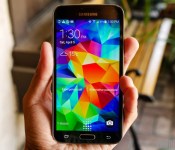
T-Mobile rolling out Android 5.0 Lollipop to the Galaxy S5

A number of US carriers have been pushing out Android Lollipop updates to their branded Samsung Galaxy S5s over the past couple of weeks and T-Mobile has now also begun doing the same.
From today, T-Mobile Galaxy S5 owners can grab the 900MB Android 5.0 Lollipop update OTA or via the Samsung Kies software package. The update contains the tweaked Material Design-esque Touchwiz UI, new notification and lockscreen features, and performance and the battery life improvements that we have seen with previous Galaxy S5 Lollipop updates.
As usual, you can manually check for the update through Settings > About phone > Software updates or by connecting your phone to your PC and using Samsung Kies. Alternatively, you can manually flash the firmware with Odin, if you so desire.
It’s great to see that carrier branded handsets are also receiving Lollipop in good time.

US carriers make it (somewhat) easier to unlock your phone

If you’ve struggled with getting your carrier to unlock your phone so that you can easily travel abroad — or, gasp, switch providers — today is an important day. As promised, seven US networks (AT&T, Bluegrass Cellular, Cellcom, Sprint, T-Mobile, US Cellular and Verizon) are now honoring a voluntary code of conduct that, among other things, lets you get your phone unlocked without a big fight. As a rule, carriers will agree to derestrict your phone after you’ve paid off your device or service contract. You’ll have to ask most of them to do it, which could take up to two days. It’s easier on a couple of carriers, however. Sprint will automatically unlock SIM-based cellular service on phones bought from today onward, while T-Mobile bundles an app with newer phones that lets you start the process yourself.
Just be aware that there are plenty of asterisks (the code is the carriers’ idea, after all). If you’re the customer of a prepaid brand like Cricket or Virgin Mobile, you may have to wait up to a year and keep service active for a “reasonable” amount. Also, Sprint will only unlock your phone for domestic use if it’s a model released after February 11th; anything earlier is limited to international access. You’re bound by the limits of cellular technology, too. Verizon unlocks GSM service on its phones as a matter of course, but you can’t switch from GSM to CDMA unless the phone has supporting CDMA hardware (like the iPhone 6 or Nexus 6). And with few LTE frequences shared between American telecoms, you’ll likely lose fast data.
It’s important to note that you don’t have to go through your telco to get this done. Thanks to last year’s cellphone unlocking law, you’re allowed to get your phone unlocked without your carrier’s explicit say-so. The catches? You’ll almost certainly have to pay, and there won’t be much consistency in their policies. The big advantage of the code of conduct is that you now have an easily accessible and reliable (if not always trouble-free) way to jump ship with your existing handset.
[Image credit: The To, Shutterstock]
Filed under: Cellphones, Wireless, Mobile, Verizon, Sprint, AT&T, T-Mobile
Source: CTIA

RootMetrics performance review for 2014: Verizon leads in all categories, T-Mobile gives impressive metro speed performance

RootMetrics, a consumer focused, independent mobile network tester, has released its latest United States report discussing where mobile carriers are leading and where they’re falling behind.
For 2014, RootMetrics has taken the crown away from AT&T and given it to Verizon, who took first place in all of the categorical breakdowns RootMetrics tested.
Focusing on network speeds and reliability, RootMetrics has six main categories:
- Overall Performance (a combination of results from data, call, and text testing)
- Network Reliability (a holistic look at reliability across all of our testing)
- Network Speed (a holistic look at speed across data and text testing)
- Data Performance
- Call Performance
- Text Performance
While Verizon took first and AT&T taking second overall, in the sub-category of metro network speed, T-Mobile delivered some impressive results. These speeds even beat 2013′s overall winner AT&T.
In the 125 markets where all carriers are present and offering 4G speeds, Verizon and T-Mobile both averaged 10+ Mbps at a higher occurrence than the other two main US carriers. Out of that 125, Verizon did these numbers in 122 of them, while T-Mobile did it in 108. AT&T was only able to accomplish this in 93 cities.
If you’re wanting to kick it up a notch, when looking at the frequency in which carriers averaged 20+ Mbps speeds in 41 metros, Verizon dominated with 40 cities and T-Mobile did half as well with 20 cities. AT&T only reached these stats in 14 cities.
To get a full look at how well the four big US carriers compared in 2014, click the source link below.
Source: RootMetrics
Come comment on this article: RootMetrics performance review for 2014: Verizon leads in all categories, T-Mobile gives impressive metro speed performance
T-Mobile brings back “Tablet on Us” for Valentine’s Day and gives you a free ALCATEL ONETOUCH Pop 7
Looking to get your hands on a tablet but can’t seem to justify the cost associated? T-Mobile might be able to help you out on that front with the reinstatement their “Tablet on Us” promotion. Beginning February 12th and running through February 16th you can get your hands on a free ALCATEL ONETOUCH Pop 7. In […]
The post T-Mobile brings back “Tablet on Us” for Valentine’s Day and gives you a free ALCATEL ONETOUCH Pop 7 appeared first on AndroidSPIN.

T-Mobile offering a free tablet with purchase of a 1GB or higher data plan for a limited time

In celebration of Valentine’s Day, T-Mobile is bringing back their “Tablet on Us” deal. The carrier is offering their most popular tablet, the Alcatel Onetouch Pop 7 to anyone who buys a postpaid data plan 1GB or higher between Thursday, February 12th and Monday, February 16th. Well, the tablet is almost free.
T-Mobile will give qualified customers the tablet for $0 down and $0 monthly payments. All you need to do is pay the sales tax. Since all states vary in sales tax rates, there isn’t a set number as to how much you’ll pay, but we couldn’t see it costing more than $10 or $15. The device costs around $7 per month regularly, so that total will be added as credit on your monthly bill. Moreover, if you decide to cancel your data plan at anytime before two years, you’ll likely have to pay the remaining balance leftover on the tablet. The carrier’s data plans start at $20 per month for 1GB and range all the way up to $70 per month for 11GB. So, you’re still paying more for this deal than if you were to buy the Wifi-only version of the tablet, so keep that in mind before you run out and grab one.
The Alcatel Onetouch Pop 7 has a 7-inch display with 1024 x 600 resolution, a dual-core 1.3GHz Cortex-A7 processor backed by 1GB of RAM, a 3240mAh battery and runs Android 4.2 Jelly Bean. The tablet only has 8GB of internal storage, though it does support MicroSD expansion up to 32GB. This clearly isn’t the best tablet on the market, but it might not be a bad option for someone looking for a cheap tablet and an inexpensive data plan.
Is anyone interested in T-Mobile’s Valentine’s Day promotion?

Google’s MVNO with Sprint and T-Mobile: Project Nova may be tablet focused

It’s rumored that Project Nova began in the fall of last year, but it was only last month that the public became aware of Google’s entry into the mobile virtual network operator (MVNO) game.
We know Google is wanting to partner with T-Mobile and Sprint, but beyond that everything has been speculation.
Talk Android’s Robert Nazarian reported on the leak of Project Nova last month, which you can view here, but details at the time were scant. Unfortunately, they still are, but Dean Bubley of Disruptive Analysis has still decided to step up to the plate and give his thoughts on the project.
You can read his blog post in full by clicking the source link below, but to summarize, Bubley feels that Project Nova may be more tablet focused, bringing better data access to our large smart devices. Alternatively, or in conjunction with the aforementioned focus on tablets, the analyst ponders if Google might be wanting to try its hand at providing a freemium method to mobile service.
Overall, just as with Apple, I don’t think this is going to be a Big Bang by Google in mobile. It will likely have one or two tactical near-term wins, but will be part of a cautious, long-term experiment and fishing-trip. While Google might have a “big strategy” in mind, with an eventual vision towards 5G, WiFi / satellite / drone overlays and so on, it cannot be certain of any given scenario at the moment. It also seems highly unlikely that Google just wants to be “another carrier” – although it might try to exert some pricing leverage. I’d say there’s also a 70%+ chance that this will be mostly/totally aimed away from conventional smartphones and plans.
Source: Disruptive Analysis
Come comment on this article: Google’s MVNO with Sprint and T-Mobile: Project Nova may be tablet focused
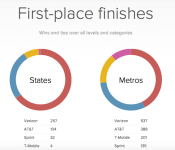
Study says that Sprint is not the worst network anymore

According to RootMetrics, Sprint is not the worst wireless network in the United States. That title now belongs to T-Mobile. RootMetrics collects mobile network performance information.
As ReCode points out, it isn’t all bad news for T-Mobile as they continued to do well in many major cities.
“We believe the metro stuff is the most important,” T-Mobile CTO Neville Ray said in a phone interview. Ray said that looking at the top 30 metro areas, T-Mobile is second to Verizon in a number of categories and first at pure LTE speed. – ReCode

In fact, RootMetrics CEO noted that every carrier saw its overall performance increase or stay the same from six months ago. As expected, Verizon and AT&T finished 1-2 in the rankings at the state and national levels.
 AIVAnet