


Microsoft reportedly talking to Sony about Windows Phone launch in 2014

Microsoft only has a few key Windows Phone partners under its belt, but it may be expanding the ecosystem very shortly — The Information hears from sources that Redmond is once again in talks to launch a Sony-made Windows Phone. While there’s no guarantee of a deal, the partnership could introduce a handset as soon as mid-2014. The device may even carry the VAIO badge, and it could serve as a vehicle for Sony’s Music Unlimited and Video Unlimited services. Even if the discussions fall apart, Microsoft may have more hardware manufacturers lined up. Tipsters claim that the company wants to renew ZTE’s interest in Windows Phone, and it could be willing to cut or even waive the OS licensing fees that frequently drive potential allies toward Android. Neither side has confirmed the talks, and Sony will only say that it “continues to assess” Windows when it’s relevant. Still, there’s now a chance that the Xperia X2 will finally get a sequel.
Source: The Information

The year in reviews: 2013’s best and worst gadgets scored and scrutinized

Fun fact: Engadget reviewed 176 products in 2013, and that’s not even counting the umpteen times we got hands-on with stuff at tradeshows and press events.
In general, we try to review just the top-tier gadgets, but even then, some of it ends up being forgettable. (Can you name-check everything we tested from memory? We can’t.) So, as the year draws to a close, we’re taking a look back at the last 12 months of reviews, and this time, we’re including only the products you’d have no trouble remembering. Across every category, we’ve noted the flagships everyone coveted — along with the duds that could’ve been so much better. Oh, and you might notice that we included some numbered scores throughout. That’s right; Engadget is bringing back numerical ratings, and they’ll follow the same format as the critic score gdgt has already been using for years. Which is to say, each rating takes into account various criteria for a given product category — things like battery life and portability. Wanna see how your favorite gadgets did? Meet us after the break for a walk down memory lane.
E-Readers
Amazon Kindle Paperwhite (2013)

Engadget Score: 93
The “all-new” Paperwhite doesn’t really offer anything all that different from last year’s edition, but an improved frontlight and some software tweaks have made an already great reading experience even better. Unless Goodreads is a must-have app for you, it’s a tempting, but largely unnecessary upgrade if you already own last year’s version.
Kobo Aura HD

Engadget Score: 83
The Aura HD is packed with features specifically aimed at the power reader, including best-in-class specs like a 6.8-inch display with blisteringly sharp text and a robust 4GB of internal storage space. Unfortunately, its niche status is further cemented by a high price and a hard-to-hold form factor that escapes easily from those with sweaty hands.
Barnes & Noble Nook GlowLight

Engadget Score: 73
Barnes & Noble giveth and taketh away with the Nook GlowLight. Sure, it’s the best Nook so far, with a better display, improved frontlight and a lighter form factor. But, all those improvements come at the cost of features like the microSD slot, physical page turn buttons and the contoured back, which all served to distinguish the line from its competition.
Gaming
Sony PlayStation 4

Engadget Score: 83
It doesn’t look like a PC, but underneath the PlayStation 4′s sleek black exterior is a powerhouse that rivals gaming PCs, with a user-friendly interface, a great controller and the ability to share your gameplay at the touch of a button. The next generation of consoles might just be getting started, but it’s one hell of a start with the PS4 at the head of the pack.
Microsoft Xbox One

Engadget Score: 81
The Xbox One may not be the prettiest belle at the next-generation ball, but with the wonders of Kinect voice control, robust media features and the ease of switching between games and apps at the drop of a hat, it certainly is vying to be the center of attention. It just needs a few more exclusives to get consumers to look past that $500 price tag.
OUYA console

Engadget Score: 66
The initial backer editions of the OUYA shipped with a flawed controller and access to a limited games selection. But even after the retail release, the OUYA’s still a system best left to hackers and developers, as it’s likely to leave most gamers disappointed by its average smartphone-level internals and rehashed games library.
NVIDIA Shield

Engadget Score: 83
The NVIDIA Shield wants to be the Swiss Army knife of hand-held game consoles, and it largely succeeds as a product — but not as a handheld. Its size and weight mean you won’t be carrying it around much, but the larger screen, great battery life and the ability to stream PC games to the Shield mean you’ll still get a lot of use out of it.
Home Entertainment
Google Chromecast

Engadget Score: 84
The Chromecast might not be as fully featured as competitors like Roku or Apple TV, but you know what? It doesn’t matter. This palm-sized dongle is easy to set up and turns any modern set into a smart TV, all for the low, low price of $35. Its app selection is still experiencing some growing pains, but even now, you’re still getting more than your money’s worth.
Roku 3

Engadget Score: 89
The newest Roku doesn’t have analog AV support like its predecessors, but it does offer incredible ease of use and a wide selection of channels, all for a nice price of $99. Even users of older Roku boxes should look into the Roku 3, whose upgraded CPU and improved UI help future-proof against new, more demanding apps.
Laptops and Hybrids
Microsoft Surface Pro 2

Engadget Score: 77
The Surface Pro 2 retains its predecessor’s durable body, but it’s equipped with a Haswell processor, boasts faster performance and has longer battery life. Microsoft has yet to find the perfect balance for a hybrid device, though — its weight and thickness make it a better notebook than a tablet, so you may want to look elsewhere for an everyday slate.
Apple MacBook Pro with Retina display

Engadget Score: 90
With a starting price that’s $400 less than the 2012 model, the new MacBook Pro with Retina display is a much better deal. In addition to its speedier SSD and better graphics, its epic battery life and thinner, lighter body might make you reconsider if you’ve been in the market for the slightly wispier MacBook Air.
Google Chromebook Pixel

Engadget Score: 79
Google infused the Chromebook Pixel with sophisticated looks and high-end specs, including a 2,560 x 1,700 touchscreen display and LTE connectivity. Even so, its $1,299 price tag might not be worth it unless you’re always connected to the web — hard to do with its poor battery life — and plan on storing huge files in the cloud.
Smartphones
MOTOROLA MOTO X

Engadget Score: 88
The Moto X doesn’t have the specs to compete with heavyweights like the Galaxy S 4 and the HTC One, especially at the same price. But, with user-friendly enhancements to the UI and the magic of customization with Moto Maker — now available for all major carriers — this truly is a phone for the people.
Apple iPhone 5s

Engadget Score: 92
Apple continues to improve on the iPhone line with the 5s, and while the phone maintains the same body as its predecessor, it packs in enough upgrades to appeal to hardcore and casual users of iOS alike. However, even with future-proofing measures like 64-bit support and the M7 coprocessor on board, only the most forward-looking Android power users will find incentive to switch.
HTC One

Engadget Score: 92
The HTC One is a top-shelf smartphone, boasting a unibody aluminum shell, a gorgeous display and a fast Snapdragon 600 processor that runs buttery smooth. The Sense 5 UI didn’t thrill us, but a solid battery and excellent call quality, among other things, made this one of the best phones to buy this year.
Samsung Galaxy S 4

Engadget Score: 88
With a familiar chassis and some impractical features, Samsung’s newest flagship isn’t exactly turning heads. Market-topping specs and minimal learning curve make this worth considering if you’re due for an upgrade from an older Samsung device, but anyone looking for something fresh would be better served by the more polished HTC One.
LG G2

Engadget Score: 87
With its bright 5.2-inch screen and phenomenal battery life, the G2 is a great phone for taking photos, watching videos or just general everyday, all-day usage. That is, if you can get used to its other standout feature — all three of its buttons are on the back, better to make room for the gorgeous screen, but not so friendly to those who like to hold their handset in a death grip.
LG Nexus 5

Engadget Score: 86
Not only is the Nexus 5 gifted with a great 1080p display and a fast quad-core processor, but it also heralds the release of a leaner and meaner iteration of Android, 4.4 KitKat. Take all that and offer it to consumers at an outstanding off-contract price of $349, and the Nexus 5 not only succeeds, but also puts rival handsets on notice to deliver more bang for your buck.
Samsung Galaxy Note 3

Engadget Score: 87
Those with small hands still need not apply, but for the third iteration of the Galaxy Note, Samsung has packed in a robust processor, a solid battery and even more useful S Pen features. The display has also gotten bigger and better, though those who want to watch videos on this thing shouldn’t depend on the built-in speakers.
BlackBerry Z30

Engadget Score: 62
The Z30 was supposed to be the phone that would make BlackBerry relevant again. And while the comfortable hold and large screen will more than please the BlackBerry faithful, an average battery, poor call quality and crash-prone software mean few, if any, will be making the switch from Android or iOS anytime soon.
LG G Flex

Engadget Score: 83
The G Flex’s top-to-bottom curve means it’s very comfortable next to your head, but not so much in your pocket. That curve comes with a chassis designed to be pretty durable, with a flexible body and screen, and a self-healing back that resists scratches. Does it work? Somewhat. Is it worth the $900 price tag? Not really.
Tablets
Google Nexus 7

Engadget Score: 90
The price may be (slightly) higher on our returning favorite tablet, but the Nexus 7 is still an obscene value. That this year’s model got a noticeable boost everywhere it counts and sells for significantly less than a comparable iPad mini is nothing short of impressive — even though Apple’s tablets still have more apps designed for bigger screens.
Amazon Kindle Fire HDX

Engadget Score: 85
The Kindle Fire HDX may be the most compelling case yet for Amazon’s tablet ecosystem. Advanced users might scoff at the device’s somewhat limited capabilities, but the display’s gorgeous color accuracy could make Bezos’ Prime directive an easy sell for just about everyone else.
Apple iPad mini

Engadget Score: 92
The iPad mini is an inexpensive way to join Apple’s tablet family, but it remains more costly than its similarly sized competition. Besides the striking Retina display, what makes the minuscule iPad so attractive this year is it’s essentially a shrunken-down version of its powerful bigger sibling. Very few sacrifices were made to accommodate the smaller stature — something the competition can’t quite claim.
Apple iPad Air

Engadget Score: 92
Tablets went mainstream thanks to the original iPad, but thanks to economies of scale and Moore’s Law, the competition’s become rather fierce — maybe unexpectedly, from Cupertino itself. The iPad Air is the best Apple tablet we’ve reviewed, but it could be hard to justify when the iPad mini now offers nearly the same experience — Retina display, similar styling, A7 64-bit processor — for less.
Microsoft Surface 2

Engadget Score: 78
If the Surface 2 existed in a world where only hardware mattered, its brawny battery and rock-solid construction might put it at the head of the tablet pack. In reality, though, Microsoft’s slate is hamstrung by the shortcomings of its OS, Windows RT, and its inability to run traditional desktop apps.
Galaxy Tab 3 10.1

Engadget Score: 65
We’re not entirely sure what Samsung’s game is with the Galaxy Tab 3 10.1. It hasn’t changed much in terms of specs from the GTab 2, packs a subpar display and severely lacks in features and power compared to the company’s line of Galaxy smartphones. Most damning? The $300 asking price.
Wearables
Samsung Galaxy Gear

Engadget Score: 65
It’s hard to justify paying $300 for the Galaxy Gear when it feels like an incomplete product and is only compatible with a handful of Samsung devices. Still, it stands out as one of the most feature-rich smartwatches we’ve tried, and as the company issues software patches and the app catalog grows, it could become better in time.
Google Glass

Engadget Score: Not Yet Scored
We’ve yet to see a consumer-facing Google Glass, but suffice to say the current version’s more of a research project — definitely not worth its $1,500 price tag for most folks. Mountain View still has to polish its features, address privacy concerns and entice developers before it hits the market. Until then, current Explorers will just have to deal with lots of confused stares when they wear it outside.
Sony SmartWatch 2

Engadget Score: 71
Unlike the Galaxy Gear, you can tell time on Sony’s SmartWatch 2 without having to interact with the screen, and it even costs $100 less. Unfortunately, few will be able to stand its buggy software and limited app selection. But, hey, at least it’s compatible with most handsets running Android 4.0 or higher.
Pebble

Engadget Score: 80
Pebble doesn’t have as many features as other smartwatches: It can only read texts, skip music tracks and tell time. Unlike its competitors, though, it costs a more reasonable $150 and offers both great battery life and an e-ink display that’s easy to read in daylight. As an added bonus, it also works with both Android and iOS devices.
Mariella Moon, Timothy J. Seppala, Kris Naudus and Dana Wollman contributed to this feature.
Filed under: Cellphones, Gaming, Laptops, Tablets, Wearables, HD, Mobile, Apple, Samsung, Sony, Microsoft, HTC, Google, Amazon, LG, NVIDIA
Just 24 hours left to win a Sony Xperia Tablet Z, QX10 camera and other great prizes in our holiday giveaway!

It’s almost 2014! Round out the year by doing yourself a favor: enter our 11 holiday giveaways by visiting each of our guides here. We’re giving away some of Sony’s best gear, including the Xperia Tablet Z and the QX10 attachable lens camera. You have until 11:59 EST on Decembert 31st to enter our raffles, so get to it!
Filed under: Announcements, Sony

The biggest stories of 2013: Console wars, Bitcoin’s boom and the NSA’s very bad year

2013 was a bust! Or so we’ve been told. Whether you follow that line of thinking or reflect on the last 363 days in a more optimistic light, it’s clear the year wasn’t all big breakthroughs and great triumphs. This was the year of government surveillance revelations, fallen giants and lackluster product releases. But it was also the year Netflix took on the studios, patent reform became a real priority in DC and two new game consoles hit the scene. No, we won’t be riding our hoverboards into the sunset at the close of 2013, but the stories that rocked the industry had a profound impact not only on technology, but also on society as a whole. So let’s raise those half-empty glasses and make a toast as we recap the year that was: Here’s to the glassholes!
The NSA’s very bad year

Former NSA contractor Edward Snowden took online privacy concerns to a whole new level when he leaked documents to The Guardian, proving the agency tapped into user data from Apple, Facebook, Google and others as part of its larger PRISM surveillance program. Companies initially denied knowledge of the NSA’s activities, but Snowden’s additional leaks showed that this was more than an isolated incident: The agency collected bulk call records from Verizon and other carriers thanks to a warrant from the secret Foreign Intelligence Surveillance Court.
Further revelations revealed the UK government also used PRISM to gather data on internet companies; the NSA’s spying covers as much as 75 percent of US online traffic; and custom software allows the government to sort collected data by country. Of course, this is only what we know so far.
Though President Barack Obama claimed that PRISM collected only metadata (rather than listening to your phone calls) and that internet monitoring pertains only to “those outside the United States,” the leaks put both the government and internet companies on the defensive. Google petitioned the FISA court – with no success — for the ability to release aggregate numbers of government data requests, and a presidential task force is currently exploring an overhaul of the NSA program. In the meantime, sites are trying to appease reluctant users with transparency reports and additional file encryption. Oh, and Mr. Snowden remains one of America’s most wanted during a one-year asylum in Russia, which he accomplished with the help of Julian Assange and the larger WikiLeaks team. – Sarah Silbert
tl;dr The NSA has your number, and yours, and yours and yours, too.
Microsoft’s mega-tough transition
 Microsoft CEO Steve Ballmer (AP Photo/Elaine Thompson)
Microsoft’s vision for itself and the road ahead is clear: It has designs on becoming a “devices and services” company. Steve Ballmer, Microsoft’s outgoing CEO, has repeatedly said as much from the moment he announced his seemingly forced “retirement” in late August and throughout all the subsequent Nokia-acquisition news. The Redmond-based tech giant is in the midst of a difficult transition; one that Ballmer couldn’t quite engineer. As it clamors for an ever-increasing slice of the mobile market — a roughly 4 percent share it wants to quadruple — and folds in much of Nokia to do so, the company’s left to ponder just who will effectively lead that charge.
The Redmond-based tech giant is in the midst of a difficult transition; one that Ballmer couldn’t quite engineer.
Though Microsoft’s $7.35 billion purchase of Nokia’s devices and services business — patents and mapping tech will simply be licensed — may seem to outsiders as if it’s following Apple’s vertical integration, that doesn’t mean it’s abandoning support for Windows Phone manufacturers. On the contrary, Microsoft believes it needs to create a halo Windows Phone product to drive adoption of the platform, which could in turn attract more manufacturer interest in the number three mobile OS. And let’s not forget about Nokia’s Asha line. Microsoft’s already laid bare its intentions to reach “the next billion” in emerging markets and with Asha under its belt, it’s positioned advantageously to do just that. Now it just needs a CEO to see it through.
Much of the press’ speculation has focused on Stephen Elop, former Nokia CEO and future head of Microsoft’s Device and Services division, as candidate numero uno for the role. And given its new slant toward a unified Windows platform and its push for a “first-rate Microsoft phone experience,” the charismatic and able Elop does seem a fitting choice. But it’s not a guaranteed coup, as other potential candidates have surfaced, most notably Ford CEO Alan Mulally and two internal picks: Enterprise head Satya Nadella and Skype’s Tony Bates. Whoever the board finally decides upon, we know that a conclusion to this CEO succession saga is still a ways off, as the board’s issued a vague “early part of 2014” target to conclude its search. Just don’t be surprised if that date slips even further into the future. – Joseph Volpe
tl;dr Ballmer’s out; Nokia’s in.
Wearables make a play for the mainstream

Google seemed to open the floodgates of consumer curiosity with the release of its first dev-focused version of Glass this April, and there was one question on everyone’s lips: Is that thing recording? Of course, there were a number of other notable gadgets in the category and a number of other unanswered questions. Among them: Is the world ready for wearable computers? It’s clear that manufacturers are, with Sony, Samsung and Pebble all offering their own takes on the smartwatch, a slew of new fitness trackers hitting the market and the promise of the Oculus Rift and similar headsets capturing the imagination of gamers everywhere. Even Apple’s Tim Cook has his eye on the market, dubbing wearables “very interesting” in an interview with AllThingsD — sounds familiar, right?
Despite the onslaught of head-mounted and wrist-friendly devices, it’s still early days. Google has yet to release a consumer version of Glass; the much-rumored iWatch is still just that; and Oculus VR still hasn’t committed to a release date. That’s not to say we won’t see head-mounted displays on every Tom, Dick and Harry in the coming years, or that mainstream interest in wearables doesn’t exist, but most of the devices we’ve tried on are still dependent on the smartphones many of them aim to eliminate. The limitations don’t stop there. Detractors have pointed to the actual wearability of most of today’s wearables — despite the fashion industry’s fetishistic embrace — and limited functionality has positioned them as playthings of the wealthy and truly nerdy. – Christopher Trout
Deep Dive: Living with Glass; Gaming the system: Edward Thorp and the wearable computer that beat Vegas; Google Glass review; Oculus Rift: Follow the saga; Sony SmartWatch 2 review; Pebble smartwatch review; Samsung Galaxy Gear review
tl;dr Like it or not, the glassholes have arrived.
Bitcoin Ballin’
 (Photo by George Frey/Getty Images)
In 2013, Bitcoin’s value against the dollar skyrocketed, suddenly thrusting the nascent system into the spotlight. At the start of the year, one Bitcoin was worth around $20, but by the end of November, it was more than $1,000. The most famous names involved with the system are the Winklevoss twins, who have plowed a reported $11 million into Bitcoin in the hope of making a fortune when its value rises even higher. With the advent of Bitcoin ATMs, people can even walk in off the street and swap their cash for the digital money.
Before it went mainstream, however, Bitcoin had a reputation for being used by the more nefarious of internet citizens. Unregulated, difficult to trace and without a central bank to keep things in check, it’s very easy to buy and sell goods without interference, which explains why it was the currency of choice for the now-defunct online black market, Silk Road. With increased notoriety comes the interest of governments, and when Fed chief Ben Bernanke says that Bitcoin may have “long-term promise,” it seems as if regulation isn’t far behind. Recently, China moved to block people from buying Bitcoins with yuan in an attempt to control the nation’s planned economy — causing the currency’s values to plummet from a high of more than $1,000 to less than $500 in the course of a few days.
At the start of the year, one Bitcoin was worth around $20, but by the end of November, it was more than $1,000.
Bitcoin differs from regular currencies in two ways. Firstly, there’s a total limit on the number of coins that can be created through “mining,” and secondly, if a coin is destroyed, there’s no way to get it back, forever reducing the total liquidity of the Bitcoin economy. Now, while dropping a few coins down a drain won’t cause you to go bankrupt, feel sorry for Briton James Howells, an early Bitcoin adopter who accidentally threw out the hard drive that contained his coinage. By the time he realized his mistake, around $8 million worth of BTC was crushed at the bottom of a Welsh trash heap.
While 2013 saw Bitcoin make headlines, 2014 will determine whether or not it’s a flash in the pan. Not only does it need to fend off the threat of rival currencies, but it also has to deal with the pressures of maturing into a stable and useful currency as both profiteers and governments begin to pull the system in two very different directions. Whatever happens, money will never be the same again. – Daniel Cooper
Deep Dive: Primed: The rise (and rise?) of Bitcoin
tl;dr The digital currency captured hearts, minds and the Winklevoss twins.
Cracking the Carrier Model

This year marked the beginning of the end for carrier subsidy models in the US, and it all started with “Crazy Eddie” himself, T-Mobile CEO John Legere. Until 2013, the carriers remained steadfastly committed to the traditional subsidy-pricing model in which you get a discount on the phone when you agree to a multi-year contract. T-Mobile, however, made a few key changes to its plans: You can now pay off your phone in monthly increments and the carrier lets you upgrade to a new phone much sooner. The “UnCarrier” strategy (as the company calls it) became quite popular, and the result was infectious — before the end of the year, the other three national networks had come up with similar plans. Unlike T-Mobile, though, its competitors chose to offer that option alongside the traditional postpaid plans. A win for consumers who like choice, we suppose.
What’s more, carriers like T-Mobile and AT&T now promise discounts on monthly service when you’re either out of contract or you’ve paid off your device. This is fantastic news for anyone who’d rather procure their phone or tablet from outlets outside of carrier stores. Additionally, there are so many more unlocked devices sold at affordable prices now: The Nexus 5 delivers flagship phone features for a mere $350, while the Moto G offers tempting value for $179, and the Nokia Lumia 520 proves that cheap Windows Phones can still be solid performers. All of these, as well as new Firefox OS phones, low-cost Asha devices and others, are setting the stage for what should be some intense competition in 2014 for emerging markets like China and India. – Brad Molen
tl;dr You can hate the phone company a little bit less now.
PlayStation 4 vs. Xbox One and the year Valve Attacked

At this time last year, Microsoft’s Xbox One and Sony’s PlayStation 4 were still “Durango” and “Orbis,” respectively. Nintendo’s Wii U was still in the spotlight — even selling well in early reports — and Valve had yet to officially unveil its “Steambox” at CES 2013. This year was transformative and evolutionary for gaming, with not just new consoles from entrenched players, but also major moves from players across the spectrum: Valve, Oculus VR, NVIDIA, Razer, OUYA and myriad others.
In January, we called 2013 “The Year That Valve Attacks.” That turned out to be truer than we expected. With the exception of Android gaming consoles, every other major volley in 2013 came with at least a dash of Valve’s handiwork. From NVIDIA Shield’s streaming tech playing nice with Steam, to Oculus VR’s direct work with Valve and the Steam Machines/Controller hardware initiative, this year marks more than an attack by the Bellevue, Wash.-based game company — it’s the beginning of a new era for PC gaming altogether.
Of course, next-gen console coverage consumed much of our time this year. The two boxes are out now and we’ve reviewed each — spoilers: Both the Xbox One and PlayStation 4 are pretty OK! — but let’s not forget all the ballyhoo leading up to their November launches. There’s the obvious (Microsoft’s DRM debacle, Sony’s YouTube cheek), the unfortunate (Watch Dogs delayed, late releases in Asia, $500?!) and the downright nasty (both consoles are paperweights before major day one updates).
We’ll assuredly see even more balkanization of gaming in 2014. Apple and Google have yet to really go after traditional gaming. Oculus VR’s retail headset is on the way, and Avegant’s competition isn’t far off either. Heck, in just over a week, we’ll see what Valve’s bringing to market with help from third-party PC makers in Steam Machines. Like late December 2012, we don’t have a perfectly clear view of the year ahead. What we can see, however, is more exciting than ever. – Ben Gilbert
Deep Dive: 2013: The Year Valve Attacks; Xbox One vs. the PlayStation 4: A battle over services, not chips; Xbox One Review; PlayStation 4 review; How the internet ruined game consoles
tl;dr It’s all about the consoles, except when it’s not.
Netflix is the new black

It’s easy to find Netflix’s low point: that mid-2011 decision to go all-in on streaming, and spin off discs-by-mail as its own business under the Qwikster brand. After a sudden drop in subscribers, however, things are looking up and 2013 will be remembered as the year Netflix cemented its place as a major industry player. Outbidding several traditional TV networks for House of Cards gave it the centerpiece for a lineup of original programming that changed its reputation. It’s hard to imagine anyone calling Netflix — the home of several series up for prestigious Primetime Emmy awards — “rerun TV” anymore.
It’s hard to imagine anyone calling Netflix — the home of several series up for prestigious primetime Emmy awards — “rerun TV” anymore.
Viewer demand for Netflix has led to partnerships with several pay-TV services in Europe for placement alongside traditional channels. There are rumors that Netflix is pursuing similar deals in the US, as it chases the revenue stream of entrenched competitors like Time Warner’s HBO. This year, Netflix passed HBO in customer count, and a second go-round for series like HoC and Orange is the New Black will be taken as seriously as anything cable channels produce. On the flipside, former video-rental king Blockbuster has trailed in its transition to the internet and announced in November that it’s closing most of its remaining retail locations.
Netflix’s subscriber base has made it a must-have for anyone launching a device that plugs into your TV — even new consoles from Microsoft, Sony and Nintendo. Now it’s using this industry clout to push a new DIAL protocol that makes streaming video on TV as easy as launching its app on your phone or tablet. Next year, its slate of original programming will include shows tied to the Wachowskis and Marvel superheroes, while in Europe, it will be the first place to watch the new Breaking Bad spin-off. Amazon and Hulu are gearing up to provide some competition with new original shows of their own, but as Netflix expands into comedy and documentaries, its lead is only getting bigger. With more than 40 million paying customers, in-demand content and a reach that spans across countries, the question for 2014 is if Netflix will go from complementing existing channels to completely replacing them for a larger number of its viewers. – Richard Lawler
tl;dr Qwikster who?
BlackBerry’s last gasp
 Thorsten Heins, president and CEO of Research In Motion (AP Photo/Reinhold Matay)
For BlackBerry, 2013 was supposed to be a turnaround year. It was finally going to make smartphones that could compete with the best from other mobile platforms. Unfortunately, the past 12 months have been anything but pleasant for the folks in Waterloo. BlackBerry 10′s inaugural devices, the Z10, Z30, Q5 and Q10, weren’t popular enough to stem the tide of customers jumping to rival products. The firm wrote off billions of dollars in unsold BB10 devices, and its quarterly shipments dwindled from 6.9 million a year ago to 1.9 million in its most recently concluded quarter. In its heyday, BlackBerry had a fifth of the market and fended off powerhouses like Apple and Google; it’s now left fighting for survival in niche markets.
Poor sales only served to fuel the corporate drama that began in 2012. Executive departures and layoffs were all too common at BlackBerry in 2013, and the once fiercely independent company spent months courting potential buyers. Even that didn’t go smoothly, however. The phone maker ultimately settled for selling itself to its largest shareholder, only to lose the deal weeks later. Thorsten Heins’ ouster in the wake of that failure was less of a tragedy and more of an inevitability. He had come to the CEO position in early 2012 to streamline the company and keep pace with nimbler rivals, but he was ineffective in reversing the firm’s decline.
Still, there is some hope left for the one-time mobile giant. New CEO John Chen is taking a different tack than his predecessor: He has a long-term plan to restore profitability, and he’s focused on growing the company rather than slimming it down. A decision to hire two key executives in December was a welcome relief from the mass exodus of the past two years. BlackBerry remains on extremely shaky ground at the end of 2013, and Chen may serve as little more than a crisis manager trying to make the best of a very bad situation. Still, he’s the first outsider to take the helm in nearly 30 years and he may represent the sort of fresh thinking that BlackBerry needs. – Jon Fingas
Deep Dive: Back to BlackBerry; RIM: A brief history from Budgie to BlackBerry 10; Cracking up: A brief history of BlackBerry’s fall from smartphone dominance
tl;dr And BlackBerry still can’t get it right.
Rethinking the Troll Toll

Odds are, you’ll have to pay the troll toll if you have anything to do with consumer electronics these days. Which is why we’re closing out 2013 with another round of patent reform winding its way up Capitol Hill. This time around, the Innovation Act, which already has the House of Representatives’ stamp of approval, aims to change the legal rules governing patent lawsuits to discourage trolls from filing them.
Under the current laws, trolls can file suit against small businesses and end users who simply sell or use products that allegedly infringe, as opposed to the company that manufactured them. Additionally, trolls don’t currently have to specify exactly how a company has infringed their patents — which makes it easier to accuse folks of infringement. The Innovation Act would let manufacturers stand in for end users and retailers in court, require trolls to specify how their patents are being infringed, reduce the costs of discovery and force those who file suit and lose to pay for the legal costs of those they accused.
In 2011, Obama signed the America Invents Act in an attempt to improve the US patent system and curb the number of patent suits clogging court dockets (and, consequently, Engadget’s pages). It did not have the desired effect. The two years since have seen more patent lawsuits filed than ever, and a disproportionate number of such cases — 62 percent of those filed in 2012 — involve patent assertion entities, aka patent trolls. So, here we are, waiting to see if this new round of reforms can have the desired effect and reduce that number.
Of course, it’s not just the quantity of patent lawsuits that’s the problem. There’s also the matter of quality — patents being granted when, maybe, they shouldn’t be. A troll without valid patents can’t cause any courtroom trouble, after all. The patentability of software has long been at issue both in the tech world and the legal world. And, late this year, the Supreme Court finally decided to weigh in on the issue when it agreed to review a case about patentability of software. Suffice to say, we won’t know whether lines of code should persist within the purview of patent law by the time Baby New Year shows up, but we should get our answer at some point in 2014. – Michael Gorman
tl;dr Patent trolls a dying breed?
Capturing Higgs boson

The decades-long search for the Higgs boson came, more or less, to a happy ending in 2013 when Peter Higgs and Francois Englert were awarded the Nobel Prize in Physics “for the theoretical discovery of a mechanism that contributes to our understanding of the origin of mass of subatomic particles.” While a preliminary announcement came in the summer of 2012, it wasn’t until several months later, in March of this year, that CERN was finally confident enough to declare the new elementary particle it had discovered was indeed the Higgs.
To call the discovery monumental would be an understatement. Scientists didn’t simply identify a new fundamental chunk of matter. The existence of the Higgs boson would seem to confirm the existence of the Higgs field, an important aspect of the Standard Model of particle physics. It would also explain why some elementary particles have mass — through interaction with the field — when other evidence suggests they should be massless. Initial reports held that the Higgs was “exotic” beyond scientists’ expectations, but further analysis showed that it was actually quite mundane — for a boson, anyway.
There’s still much, much more work to be done. Study of the Higgs boson and field could lend insight into cosmic expansion, and has implications for the so-called cosmological constant problem. The cosmological constant is, for those that don’t know, a mysterious force that Albert Einstein suggested counteracted gravity, which he eventually abandoned, calling it his “greatest blunder.” The idea has since been resurrected following the discovery that our universe is not just expanding, but also accelerating. And, of course, there are the countless researchers out there now looking for a practical application for the discovery. All of this work will need even more powerful tools, however, and so CERN shutdown the Large Hadron Collider and its many multi-story detectors to give them a healthy upgrade. (Though, its PR department is still plenty active.) – Terrence O’Brien
Deep Dive: Primed: The smashing science behind particle accelerators; Into the heart of CERN
tl;dr Physics, y’all!
Illustration by Greg Grabowy. Photos: Steve Ballmer (AP Photo/Elaine Thompson); Bitcoins (George Frey/Getty Images); Edward Snowden (AP Photo/The Guardian, Glenn Greenwald and Laura Poitras); Higgs Boson (CERN)
Filed under: Cellphones, Misc, Gaming, Home Entertainment, Wearables, Science, Internet, Software, HD, Mobile, Alt, Samsung, Sony, Microsoft, Google, Verizon, AT&T, Blackberry, T-Mobile

IRL: A look back at the original PlayStation Vita

For now, the new PlayStation Vita is available in Japan only, which leaves US gamers with a tough predicament: pay through the nose to import it, or settle for the old model. Even our own Mat Smith, who owns the original Vita, is finding it tough to recommend it over the 2013 edition. But oh, how he does miss that OLED screen.

While wrapping up my review of Sony’s new Vita, it was also a good time to reassess the original. It’s heavy, thick and the battery life stinks — most of which we mentioned in our review. However, the Vita still offers the closest approximation of portable console-level gaming — something Sony’s finally realized, with its vow to make every (yes, every) PS4 title playable on the handheld through Remote Play. I’ve tasted the future, and I like it. After trying Knack through a Vita during TGS 2013, I thought I’d give the existing Remote Play feature a go. Not many games let you, which is probably why Sony is forcing the issue this generation. I do own the HD remakes of Shadow of the Colossus and Ico, both of which were made compatible with an after-release patch.
So, after loading up the Remote Play app on my Vita — and pairing it to my PS3 — I gave it a try. It’s amazing, though there isn’t the same leap in graphical proficiency when playing a PS4 title on the handheld. It’s also a little too temperamental on the wireless connection, often timing out as you happen to leap from the back of a 100-foot giant to deal the final blow. There’s plenty that still amazes me: the bright, vivid screen, useable analogue sticks on a handheld and the ability to play entire PS1 games. Technically, the last one might not sound that amazing, but because the Vita transposes controls so smoothly from the original PlayStation controller, games are a joy to play — most of the time.
Using the rear touch panel just about covers the lack of L2 and R2 collar buttons, but this is just one of the many things the newest model does better, with a smaller rear panel making inadvertent presses even less likely. But the original model can still claim one advantage: it does have a (marginally) better screen, with improved color accuracy and contrast as a result of the OLED panel (which sadly bit the dust on the newest Vita). You’d have to be really picky to still want the old one, however, because the latest model, still only available in Japan, does everything else much better. I’d wait on that domestic launch announcement — or take another look at the import costs.
– Mat Smith
Sony Xperia Z1 Mini appears again, coming soon?
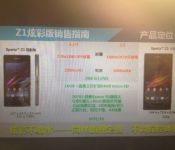
We have seen the Sony Z1 Mini passing through the FCC, and the device is already available in Japan as Sony Xperia Z1 F, and in other regions it will be known as the Xperia Z1S or Xperia Z1 Mini probably. Now according to some new leaks, the device will be available in China starting next month.
 It is said that Sony will officially revealed it at the Chinese New Year Festival on January 3rd, so we might see the Z1 Mini then. And about its pricing, it is reported to come with a hefty price tag of 4099 Yuan – or almost $675. It is really expensive, but probably it’s because of the selected region. We might see different prices for UK and USA, something around $400 would be fine, no?
The phone is almost just like the Xperia Z1, except it has 4.3-inch IPS display with a resolution of 720×1080, and a smaller battery. Are you planning to grab one? Let us know in the comment box below.
Source: GForG
The post Sony Xperia Z1 Mini appears again, coming soon? appeared first on AndroidGuys.

Vidzone brings free music-video streaming to PS4

The PlayStation 4 might not play CDs (yet) and an official YouTube app is still MIA, but that doesn’t mean music and music videos are out of reach. Vidzone has finally taken its streaming app into the next generation, and, unlike Music Unlimited, it’s free. Much like its previous-gen counterpart, the video application offers concerts, interviews, custom playlists and even crams the PS4′s native social-features in for good measure. You can share screenshots of what you’re watching to Facebook and Twitter, for instance, and recent activity in the app also populates the “what’s new” activity feed on your friends’ consoles. Unless you want your Battlefield 4 clan to know you went on a lengthy Ke$ha binge, however, we suggest turning that setting off.
Filed under: Gaming, Home Entertainment, HD, Sony
Via: Joystiq
Source: PlayStation Blog
Nikkei: Sony and Panasonic will end OLED TV partnership to focus on 4K

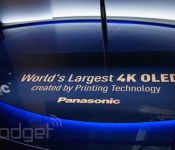
A partnership formed last year that was supposed to take advantage of Panasonic’s printing tech production capabilities and Sony’s OLED tech smarts has ended, according to a report from the Nikkei. The pair were reportedly unable to create panels that were durable or cost effective enough, and have decided to part ways when their contract ends this year. Instead, each will focus on 4K TV sales, which have only recently started in earnest but have already climbed to 1.95 million units this year, according to DisplaySearch. Of course, CES 2014 is rolling around in less than two weeks, and if last year was any indication, expect even more models — hopefully at prices that won’t make your knees weak.
Filed under: Home Entertainment, HD, Sony
Via: OLED-Display.Net
Source: Nikkei

Is Sony working on a new wearable companion for 2014?

Sony’s second-generation SmartWatch may not have impressed the critics, but those lukewarm feelings haven’t deterred the company from making another wearable. The FCC has revealed that Sony is testing a “BT Wrist Notifier” with the model number SWR10, which sounds like a step beyond the SW2 code used for the current model. Beyond that, however, the documents just show that the device packs NFC and Bluetooth — but if it’s passed through the commission, it can’t be too far away from a real announcement. You never know, maybe we’ll see it at that big trade show in less than a fortnight.
Filed under: Cellphones, Wireless, Mobile, Sony
Via: Wireless Goodness
Source: FCC
You have a week left to enter our holiday giveaway with prizes from Sony!
End-of-the-year festivities are just around the corner, so here’s hoping your holiday shopping is squared away. If not, our guides are here for some last-minute reference, and in any case you owe it to yourself to enter the giveaways. Sony’s supplied some pretty awesome gear, from its acclaimed RX100 II camera to the convertible VAIO Flip PC. Simply head to the bottom of each of our 11 guides and enter the raffle — we’re accepting entries until 11:59PM, EST on December 31st. Good luck!
Filed under: Announcements, Sony
 AIVAnet