



Daily Roundup: Sony Xperia T2 Ultra and E1, court blocks parts of FCC net neutrality rules and more!

You might say the day is never really done in consumer technology news. Your workday, however, hopefully draws to a close at some point. This is the Daily Roundup on Engadget, a quick peek back at the top headlines for the past 24 hours — all handpicked by the editors here at the site. Click on through the break, and enjoy.

Moto G Google Play edition
A Google Play edition of the Moto G popped up in the Play Store earlier today and is available for $180 (8GB) or $200 (16GB). Click through for details.

Court blocks parts of net neutrality rules
A Washington, DC appeals court voided anti-blocking and anti-discrimination requirements in the FCC’s Open Internet Order. Follow the link for more information.

Sony Xperia T2 Ultra and E1
Sony only recently released the Xperia Z1 Compact and Z1S at CES, but it’s adding yet another two additions to the Xperia line: the T2 Ultra and E1. Click the link for specs and launch information.

Next-gen game with 5K-unit population cap
Whether it’s Age of Empires or StarCraft, there comes a point where every gamer struggles with maximum population caps. However, that might not be much of an issue for the new demo game Star Swarm. By utilizing AMD’s Mantle programming tool, the title manages a whopping 5,000 AI objects. Click on through for more details.
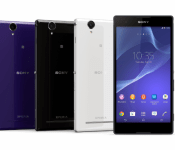
Sony Xperia T2 Ultra and Xperia E1 get Announced
Sony just recently announced the Xperia Z1S, which is up for order through T-Mobile right now, and the Xperia Z1 Compact. Apparently they werent done and have since announced two more device offerings, the Xperia T2 Ultra and Xperia E1.
The Sony Xperia T2 Ultra is the larger size phablet style style device that pulls off a sleek 6-inch 720p TRILUMINOS display. It offers a 1.1MP front facer and a 13MP rear shooter. Inside you will a quad-core Snapdragon 400 processor clocked at 1.4GHz with just 1GB of RAM. It will support an SD card slot which will be needed with the small 8GB of on board storage. It does pack in a 3000 mAh battery to keep you going long term and will be offered in a dual-sim single SIM offering. However, unlike many of its sought after higher-end counterparts, the Xperia T2 Ultra doesn’t appear to have an IP rating for water resistance.
 Moving along to the smaller size Sony brings out the Xperia E1. This little guys has a traditional 4-inch 800×480 display. It packs in a 1.2GHz dual-core Snapdragon 200 processor with 512MB of RAM and a smaller 1700 mAh battery. Storage is limited to 4GBs but does offer up a micro SD card slot. The Xperia E1 is easily aimed at the music centric users who don’t need massive screens and a ton of processing power. Its big selling point is the 100Db rear speaker and intuitive Walkman controls. Again, this is another single or dual-sim phone too.
 Both devices come out rocking Android 4.3 and easily fit into the more mid-range category of devices. Pricing and availability are still under wraps for now but are clearly aimed at overseas markets like China and the Middle East. If Sony can find the sweet spot for the pricing on these they should have no issues selling a ton of both.
Press release links: Sony Xperia T2 Ultra / Sony Xperia E1
T-Mobile now selling Xperia Z1S
T-Mobile’s latest Android smartphone, the Sony Xperia Z1S, is now available for purchase. Announced at CES last week, the waterproof handset features a 20.7-megapixel camera with BIONZ mobile image processing engine and G Lens. The 5-inch screen, which is definitely a looker, is a full 1080p HD TRILUMINOS Display with X-Reality.
Pricing is listed at $0 down with 24 equal payments of $22 when paired with a Simple Choice Plan, for a total of $528. For a limited time, customers can earn a $100 Visa gift card if they purchase the Xperia Z1S and a PlayStation 4.
The post T-Mobile now selling Xperia Z1S appeared first on AndroidGuys.
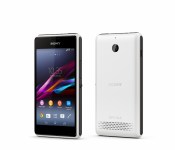
Sony adds Xperia E, Xperia T2 Ultra to Android portfolio
The 4-inch and 6-inch smartphones are introduced less than one week after CES
Sony on Tuesday added two new smartphones to its Android stable, introducing the Xperia E and Xperia T2 Ultra. Both run Android 4.3 Jelly Bean and offered with dual-SIM variants, the duo are bound for international markets.
The Xperia E1 features a 4-inch (480×800) display, a 3-megapixel rear camera, 4GB internal storage, and HSPA+ connectivity. In terms of power, the handset is equipped with a 1.2GHz dual-core Snapdragon 200 processor and 512MB RAM. Standout details include a loud 100db speaker and Sony’s WALKMAN controls.

Certainly not the sort of stuff that replaces your existing Android, no, but it’s the kind of device that makes for a good first smartphone. The Xperia E1, and its dual-SIM brother, will be offered in black, white, and purple; pricing and exact availability are unclear.
The Xperia T2 Ultra is considerably bigger at 6-inches (720p) and provides users with a 13-megapixel rear camera, 1.1-megapixel front-facing camera, and 8GB internal storage. Powered by a 1.4GHz quad-core Qualcomm Snapdragon processor, there’s 1GB RAM, microSD expansion, 4G LTE connectivity, and a 3000mAh battery. Headed for China, Asia Pacific, Africa, and the Middle East, it’s akin to Samsung’s Galaxy Mega.
The post Sony adds Xperia E, Xperia T2 Ultra to Android portfolio appeared first on AndroidGuys.

Sony grows its Xperia line by two with the 6-inch T2 Ultra and Walkman-centric E1

You’d think a company that very recently announced two new flagship smartphones at CES would slow its roll and hold off on the product announcements for a bit. But no, Sony’s introducing two more handsets to the mix with the Xperia T2 Ultra and Xperia E1, albeit for very specific markets. Neither the T2 Ultra, which gains its ‘Ultra’ distinction by virtue of a 6-inch, 720p display, nor the diminutive 4-inch E1, with its 100Db speaker and focus on music, are going after the early adopter crowd. Instead, Sony’s crafted these devices for those with less champagne tastes; the T2 Ultra’s aimed at “emerging markets”, while the E1′s a mid-tier take on Sony’s Walkman legacy. And both arrive with dual SIM variants.
For the T2 Ultra, Sony’s kept some specs consistent with the original Xperia T, like the 720p display (here of the Triluminos variety) and 13-megapixel camera, while enlarging the phone’s overall footprint and beefing up its battery life with a 3,000mAh cell. Yes, that 6-inch display means pixel density will suffer, but on the upside, the phone is relatively thin at 7.6mm — the same thickness as the iPhone 5s. Storage-wise, users are looking at meager 8GB of internal memory with the option to expand that by an additional 32GB via microSD.
Sony’s bundled a handful a camera apps for those users that want to take advantage of the T2 Ultra’s 13-megapixel module. It’s not entirely the same app suite we saw on the Z1S — Info Eye, AR Effects and Social Live didn’t make the cut — but users will have access to Background defocus, Sweep Panorama, Collage, Timeshift burst and the selfie-friendly Portrait Retouch.
Despite its emerging markets bent, the T2 Ultra is indeed an LTE handset, owing to the unspecified 1.4GHz quad-core Snapdragon processor inside. That said, HSPA-only versions will be made available in certain markets where LTE isn’t readily accessible.

As for the E1, that tiny (by today’s standards) 4-inch HSPA+ handset’s all about the music, not top shelf specs and will be available in three colors: white, black and purple. Its combination of a WVGA display (800 x 480), 1.2GHz dual-core Snapdragon 200 processor paired with 512MB RAM, and 1,700mAh battery makes the E1 a solid budget device. What saves it from mid-tier Android smartphone obscurity and sets it apart, however, is its 100Db speaker.
If you’re unfamiliar with decibel ranges, the E1′s 100Db speaker essentially means you’ll be able to blast the latest Pitbull/Ke$ha collabo over your dad’s Saturday morning lawn mowing or the soothing sounds of jackhammers attacking the pavement. We’re aware that audio quality could take a hit at those levels, but Sony’s packed in its ClearAudio+ and xLoud technologies to ensure overall balanced sound. The E1 also features a dedicated hardware key for Sony’s Walkman application, support for shake-to-shuffle play controls and a 30-day trial for Sony’s Music Unlimited catalog.
At the moment, Sony hasn’t released pricing or release info for the Xperia T2 Ultra or Xperia E1 — not even pegging them for something as vague as a Q2 launch. We do know though that the Xperia T2 Ultra is being geared towards China, the Middle East, Africa and Asia Pacific, so don’t count on seeing it show up in Europe or stateside anytime soon. The Xperia E1, on the other hand, is more of a wild card, but we’re betting that 4-inch Android boombox gets the broader market rollout.
Filed under: Cellphones, Wireless, Mobile, Sony
CES 2014: Cameras and digital imaging roundup

As in years past, CES wasn’t the premier showcase for groundbreaking digital imaging products, but we still saw our fair share of photo-centric updates. Of course, with manufacturers highlighting a wide array of 4K televisions, it wasn’t surprising to see them emphasize Ultra HD on the capture side of things, too. Most notable on that front was Sony’s compact $2,000 4K Handycam. It’s significantly smaller than the company’s pricier alternative, and it scores major points for affordability, too. Other manufacturers also peddled 4K shooters, such as Panasonic with its GH and head-mounted prototypes, but the pre-release versions on display weren’t nearly as compelling as the model Sony plans to start shipping in March.
As for still cameras, Nikon was the only manufacturer to (albeit quietly) launch a flagship. The D4S isn’t shipping to photographers any time soon, but it will debut on the sidelines at the 2014 Winter Olympics next month, as select pros cover the Games with the latest and greatest DSLR. As for consumer models, Canon’s PowerShot N100 takes the cake for most innovative point-and-shoot, thanks to its somewhat-gimmicky rear-facing camera positioned above the flip-up LCD. Sony also delivered a new mirrorless cam, the Alpha 5000 (the company ditched the NEX branding last year). Nearly all of the photography products we’ve seen this year come equipped with WiFi, expanding instant sharing functionality beyond hybrid models like Samsung’s Galaxy Camera 2.
If you didn’t get what you were hoping for on the digital imaging front at CES, stay tuned for CP+ next month. Japan’s annual camera show is sure to bring plenty of point-and-shoots, and perhaps even an up-close look at the Nikon D4S.

CES 2014: Gaming roundup

Gaming is once again a thing at CES! Since splitting from the Consumer Electronics Show in 1995 and creating E3, the game industry has sat out much of the past 20 years. Between last year’s big news from Valve and this year’s reappearance of Sony’s PlayStation, it’s never been a better time to be a journalist covering gaming at CES.
In case the resurgence of gaming news wasn’t enough to solidify our belief, the first ever Engadget-hosted Official CES Awards Best of Show trophy went to Oculus VR’s Crystal Cove Rift prototype. Gaming, as it turns out, is more innovative and exciting than the curved TVs and psuedo-fashionable vitality monitors of the world — not exactly a surprise, but validating our years-long assertion feels so, so right.
CES 2014 saw Steam Machines third-party support go official — we even told you about all 14 partners a full 24 hours before Valve loosed the info — a new, crazy/ambitious project from Razer, and Oculus VR’s latest prototype. And that’s to say nothing of Sony’s PlayStation Now and Huawei’s China-exclusive Android game console, or the dozens of interviews we did.
Steam Machines

The ongoing saga of Valve’s PC gaming living room initiative continued at CES 2014, with company head/beloved game industry leader Gabe Newell introducing just over one dozen third-party Steam Machines at a press conference. This is Valve’s second consecutive year attending CES, and the company behind Steam (not to mention gaming classics like Half-Life and Left 4 Dead) made another big splash in 2014. Pricing, specs, and rough launch windows were given to the various Steam Machines, which brings us all one step closer to the much-ballyhooed “Steambox” reality we’ve been hearing about for years now. Heck, iBuyPower’s is named “SBX” — take a wild guess what that’s short for.
Oculus VR’s Crystal Cove prototype

Depth-tracking? Check. Motion blur vastly reduced? Check check. A fancy new OLED screen? Yup, that’s in there too. The latest virtual reality headset from Oculus VR is nicknamed the “Crystal Cove” prototype — for reasons the company isn’t saying — and it offers a massive step up from even the HD prototype we tried back at E3 2013. The first of the trio of new features is accomplished by adding IR trackers to the front of the Rift headset, combined with a camera facing the player (in-tandem with other data collected via internal sensors).
After trying the latest Rift, I spent the rest of CES evangelizing the device to my colleagues. From mobile phone geeks to in-house photog Zach “Honey” Honig (Hi Zach!), no staffer came away unimpressed. Two evenings of heated arguments later, and we chose Crystal Cove for our Best of CES award.
Razer’s Nabu and Project Christine

A wearable from a gaming company? You’ll forgive my confusion, but Nabu is pretty far from normal for Razer. If anything, perhaps we shouldn’t expect Razer to be pedestrian — this is the company, after all, that created the Razer Edge and routinely names its devices stuff like “Kraken.” Between the unbelievably low price ($50 for the dev model), the two OLED screens, and the sophisticated abilities Nabu offers, though, we’re convinced it’s a great, if bizarre, idea.
Where Nabu is ambitious, Project Christine is insane. The crazy-looking modular gaming PC isn’t the same iterative, bland exercise so much of the PC world continues to produce: it’s exactly the kind of bold experiment we’re excited to share with you. Beyond the fact that it’s a modular PC — which, unto itself, is relatively unknown territory — it’s got a custom motherboard, mineral oil cooling, and a design that dramatically stands out from the pack. Christine isn’t necessarily destined for retail (Razer’s still waiting to hear how consumers respond post-CES), but we sure hope it does become widely available at some point.
The Rest
Microsoft and Xbox weren’t really at CES 2014, but I did spend some time speaking with Xbox head Marc Whitten about the Xbox One’s first big post-launch update and his thoughts on the evolving world of gaming. And beyond our hands-on time with the new Rift prototype, company CEO Brendan Iribe talked to us about Oculus VR’s internal game development aspirations. Company founder Palmer Luckey joined us on the show floor stage once again to talk Crystal Cove, as did the always gregarious Razer head Min-Liang Tan. Sony head Kaz Hirai sat down with managing editor Christopher Trout to talk PlayStation 4, “one Sony,” and the just announced PlayStation Now game streaming service. In case it weren’t already clear, there’s a ton of great original gaming coverage to pour over as the weekend rambles on. And that’s just gaming!
Filed under: Gaming, Wearables, Software, HD, Sony, Microsoft

CES 2014: HDTV & home theater roundup

Every year, CES is filled wall to wall with flat-screen televisions and the things that plug into them. 2014′s show brought its own variations to that theme. Curved TVs, OLED TVs, Ultra HD TVs or some combination popped up wherever we looked, and unlike last year, many of them will go on sale soon. Big manufacturers like Samsung, LG and Sony dominated news for high-end sets, but others like Vizio are promising an unprecedented slew of features at value prices.
Ultra HD/OLED
When even Polaroid has an Ultra HD television to announce for CES, it’s probably fair to say there’s a trend occurring. Of the ones we saw that are likely to ship this year, Vizio’s jump off the page first — both for their quality and extremely reasonable prices. Sony demonstrated black levels on its LCDs that must be seen to be believed, plus a unique new design that brings a new level of quality to integrated TV speakers. The battle to the death between LG and Samsung reached new levels of absurdity as both showed off flexible, bending displays, one LED and one OLED. Meanwhile, Samsung curved its new 9000 series UHD TVs and LG whipped up a sweet, new version of webOS for its line. Sharp’s answer? Something between 1080p and 4K, while Panasonic spiced up its TVs with voice and face recognition. This was CES 2014 for TVs… and it was bizarre.
Sony’s new UHD TVs are built to support Netflix in 4K when it arrives
We just got to watch Samsung’s big-ass 105-inch curved TV
Panasonic ups its smart TV game with the VIERA Life+ Screen, complete with voice and facial recognition
Sharp Aquos lineup for 2014 bears 1080p and 4K TVs, a revamped SmartCentral platform and the new Quattron+ Series
Vizio’s HDTV plans for 2014 focus on Ultra HD, in sizes going all the way up to 120 inches
LG’s latest 84-inch 4K TV breaks cover at CES
LG’s 105-inch UHD TV isn’t coming to CES alone: flat 65-, 79-, 84- and 98-inchers on the way
LG’s bringing Ultra HD OLED TVs in more sizes to CES, ramping up production
Samsung announces its curved 78-inch UHD TV: runs faster, works smarter
Samsung: cheap OLED TVs won’t be ready for three to four years
Samsung’s 105-inch curved UHD TV and 85-inch bendable screen hit retail this year
Samsung shows off its 85-inch curved TV that bends with the touch of a button (video)
Sony’s new Bravia HDTVs get a wedge-shaped redesign (update: hands-on photos)
Kogan’s ultra-budget 4K TV and 3G tablet arrive at CES
Toshiba enters 2014 with extra-bright 4K TVs, simpler streaming media hubs
Sceptre’s showing off 4K TVs, Roku Ready displays, earbuds and pretty much everything, ever at CES
Smart/Connected TV
Internet-connected and highly personalized services for our TVs and the devices connected to them have gone from a curiosity to the norm. Now, we may be finally entering the period where there’s enough reason to separate the wheat from the chaff and decide who has the best smart TV platform. LG is showing its hand with webOS and Roku integrating directly into TVs, but it may be another 12 months before we can pick a winner (or at least top three).
Hands-on with LG’s smart TV running webOS (video)
LG teases webOS for most of its smart TVs, Lifeband Touch with Android, iOS sync
Dish’s ‘Virtual Joey’ is a streaming app for smart TVs that takes the place of a set-top box (video)
Samsung’s new TV remote for 2014 has a new pebble shape, 80 percent smaller touchpad
Roku renews bid for the living room with streaming-ready Roku TVs
Android TV at CES 2014 highlighted by Chinese manufacturers Hisense and TCL
Netgear’s NeoMediacast is an Android-powered TV set-top on a stick
Streaming
Streaming could move from a secondary service to a top priority, with a bevy of new and smarter TVs and connected devices, plus the availability of 4K content before it hits broadcast. Is this the end for traditional pay-TV or does that market have some life left in it yet? That will be one of the many, many stories we’re following in 2014.
Netflix confirms it will stream House of Cards in 4K this year, posts full season two trailer
Samsung’s Ultra HD TVs will stream 4K video from Amazon, Comcast, DirecTV, Netflix and more
Hulu’s original TV shows for 2014 are a mix of new series, new seasons and foreign transplants
YouTube to show off lower-bandwidth 4K streaming at CES
Plex website relaunches as Plex.tv, one-stop home for all of its media streaming abilities
Panasonic will bring Firefox OS to your smart TV this year
GoPro to launch extreme sports channel on Xbox One and 360
Prototype
Flexible displays, network DVRs and ultrawide Ultra HD — this is the place to check it out.
TiVo prototype DVR recordings stay in the cloud, watch them anywhere on any screen
Toshiba cares not for 4K, has an ultra-wide 5K TV ready for CES
Take that Samsung: LG’s got a 77-inch OLED UHD TV that bends on command (video)
The projector section
We love projectors, but Sony and LG took them in an odd direction this year, courtesy of lasers.
LG sneaks a new version of its ‘Laser TV’ projector into CES 2014
Sony’s $30k+ Life Space UX projector all-in-one puts a 147-inch 4K screen on any wall
Sony’s Life Space UX demo envisions projectors, screens everywhere
Filed under: Home Entertainment, HD, Samsung, Sony, LG
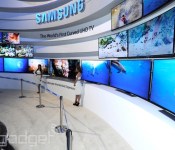
Unleashing the tech show hype beast

There’s a technological revolution going on; innovation is at all-time high; and we’ve seen it all before. While many of the devices we’ve seen this week are new and even exciting, the unending hymn of hyperbole that echoes through the halls of the LVCC is an old standard. For months leading up to the big show, small startups and tech giants flood the inboxes of tech journalists, attempting to catch their attention with bold and often ridiculous claims. And on the show floor, sprawling booths from the likes of Samsung and LG boast laundry lists of “world’s firsts.” Each year, we put all of that aside to bring you only the freshest goods CES has to offer — until now. It’s time to unleash the hype beast!
A war of words
You know something fishy is going on when Pizza Hut is touting itself as a technological tastemaker. The fast food chain was at a pre-show event celebrating the 20th anniversary of “the first physical good ever purchased over the internet.” It’s a mouthful, but that’s the sort of subtle phrasing that’s necessary to set yourself apart in a sea of “world’s firsts.” Samsung and LG are the kings of this sort of nuance. The Korean tech giants both claimed a slew of ultimate achievements, but the devil is in the details. Samsung’s booth featured the “world’s thinnest ultra narrow bezel,” while LG had the “world’s narrowest bezel 3.5mm video wall.” We didn’t bust out the measuring tape, but as you can see, there’s a fine line when it comes to promoting even the tiniest of things.

Believe it or not, bezels weren’t the main attraction at CES. The real confusion came in the 4K TV space. While LG presented its “world’s first 4K flexible OLED TV,” Samsung was just a few doors down showing off its own flexible 4K display. This one, however, was of the LED variety. The outfit didn’t publicly promote the TV as a first, but a Samsung rep told us it was the “world’s only one.” Both companies had a number of other claims scattered about their booths, with LG touting firsts with HD portable projectors, an Ultra HD 3D wall, an ultrawide QHD monitor and the world’s largest Ultra HD display at 105 inches. Nearby, Samsung staked claim to the first curved UHD TV and the world’s largest Ultra HD TV at 110 inches. It even carried the hyperbole over to its household appliances with the “world’s largest washer and dryer” and the “world’s only sparkling water refrigerator,” serving up SodaStream bubbles from its door.
Samsung’s and LG’s were among the biggest booths on the show floor both in terms of size and bombast. However, one of their biggest competitors for show floor real estate took a subtler approach to pushing its products. Sony’s booth relied more on its products than marketing jargon to set itself apart. The booth, which covered a massive corner of the LVCC, featured a number of new and impressive devices like its diminutive $2,000 4K camcorder, but there wasn’t a single proclamation of a world’s first, smallest, biggest or thinnest. Instead, three slogans featured relatively subtly above a series of the Japanese manufacturer’s new wedge-shaped 4K TVs, promoting the best brightness, color and picture ever.
World’s firsts you didn’t know you didn’t need
When it comes to hype, size doesn’t matter.
When it comes to hype, size doesn’t matter. The big brands often dominate CES coverage, but there are hundreds of smaller companies jockeying for headlines on the show floor and they’re often just as quick to yell: FIRST! This year’s show played host to an enormous amount of “revolutionary” innovations that claimed to do something no one else had. More often than not, these devices fill a gap that no one knew existed, like iToy’s “first connected fighting mini robots” or the Phantom 2 Vision, the “world’s first consumer quadcopter with a built-in high-performance camera capable of high-quality photography out of the box.” Also on display this year: Nymi’s “world’s first cardiac ID technology” that aims to replace passwords and PINs by using the wearer’s ECG as a biometric for authentication and RJ Reynolds’ “world’s first digital vapor cigarette.” Unfortunately, neither Stephen Dorff nor Courtney Love was on hand to provide a celebrity endorsement.
The Official Hype Machine of CES 2014

It wouldn’t be CES without a few grandiose statements from the CEA itself. In years past, the organization has sent out a press release just days after saying attendance has reached an all-time high. That may not be the case this year, but that hasn’t stopped the wheels of hyperbolic sentiment from turning. The CEA claimed a “record amount of innovation” in 2014 (something that’s clearly hard to measure) with 3,200 exhibitors covering 2 million square feet. In an email, it also touted itself as “the world’s largest mobile technology event.” That’s not a distinction we would have bestowed ourselves. The big brands are abandoning the trade show circuit for their own launch events, and Sony was the only major player to launch a phone at CES this year. One area where we’re more than willing to give the CEA credit is in the growth of autos. In a November 18th press release, it proclaimed a record number of automotive exhibitors. Given, that number is nine, but they came correct, so we’ll let that one slide.
If you ask the CEA, it will tell you this is the greatest show on Earth, and given the media circus surrounding it, we’d have to agree.
Lead image by Will Lipman
Filed under: Cellphones, Displays, Misc, Home Entertainment, Robots, Transportation, HD, Mobile, Samsung, Sony, LG

BBC rolls out enhanced ‘Red Button’ features to major Smart TVs

The BBC’s Connected Red Button service promised a new level of interactivity when it launched in the UK a year ago, including news and weather overlays, recommended viewing (curated by actual, real-life humans) and alternative streams during live sports events. The downside was that it was originally only available to Virgin TiVo customers, but the Corporation promised to extend it to more platforms and, finally, this seems to be happening. As of today, owners of Samsung and Sony smart TVs should both have access to a beta version of the service when they press the red button on their remotes (although a few Sony-heads may have already noticed this going live just before Christmas), while LG smart TVs are on track to gain access early this year. A long list of compatible devices can be found at the source link below, but there’s still no sign of any standalone Freesat, Freeview or YouView set-top boxes, which were supposed to get improved Red Button access in 2013.
Filed under: Home Entertainment, Internet, HD
Source: Connected Red Button TV models
 AIVAnet