


Over one million people are streaming gameplay on Twitch every month

With the inclusion of Twitch streaming functionality in the PlayStation 4 (and soon in the Xbox One), it’s no surprise that the service is now achieving over one million “monthly active broadcasters.” What that means in human speak is over one million people are streaming out gameplay via Twitch every month — that’s a ton of opportunity for both informative broadcasts and rampant nudity!
Should there be any doubt that the new game consoles are goosing the numbers, Twitch already confirmed that PS4 activations account for at least 100,000 new accounts thus far. With Xbox One support coming in the not-so-distant future, we only expect that broadcaster number to grow ever higher. Perhaps two million by summer? At the rate these consoles are selling, it’s not hard to imagine.
Filed under: Gaming, Internet, Software, HD, Sony, Microsoft
Source: Twitch

How would you change Sony’s Xperia T?

Much as we love Sony, it’s an open secret that the company has somewhat lost its way. For example, when we reviewed the Xperia T, Sony’s late-2012 flagship, we found that it really wasn’t any better than the Xperia S, its predecessor. In fact, when placed side-by-side, we struggled to work out which one best. What we want to discuss this week, therefore, is what were your impressions of the Xperia T, and more generally, where did Sony go wrong? Head on over to the forum and vent some spleen.
Filed under: Cellphones, Mobile, Sony

Weekly Roundup: Satya Nadella named Microsoft CEO, Sony sells its PC business, and more!

You might say the week is never really done in consumer technology news. Your workweek, however, hopefully draws to a close at some point. This is the Weekly Roundup on Engadget, a quick peek back at the top headlines for the past seven days — all handpicked by the editors here at the site. Click on through the break, and enjoy.

Meet Satya Nadella
The speculation has ended. Earlier this week, Microsoft named its enterprise chief Satya Nadella as the company’s third CEO. Like Ballmer, Nadella has history with Redmond, but their personalities couldn’t be more different. Click on through for more about the man tasked with reinventing Microsoft.

Kill-switch for stolen smartphones
The New York Times is reporting that smartphone theft in California is so rampant that lawmakers are stepping up their game. A proposed bill would require manufacturers to include kill-switch measures on all devices. If ignored, companies could receive a $2,500 fine for each handset sold. Follow the link for more.

Experience Rugby with an Oculus Rift
Virtual reality may still be in its infancy, but its influence on entertainment is sure to grow. And to prove it, the UK mobile network O2 and English rugby team combined nine GoPro Hero 3s and an Oculus Rift for the ultimate immersive experience. Click on through for details.

Sony sells its PC business
Sony announced it’s shifting focus toward post-PC products, and unfortunately, part of that decision means the company letting go of its VAIO business. Click through to read more about the sale.

[OP-ED] Why I think the Sony Xperia Z1 Compact is a Winner

Image courtesy of Sony Mobile
We haven’t covered the Sony Xperia Z1 Compact much on AndroidSPIN, however, I have kept an eye on it ever since it was inadvertantly spotted in a NTT DoCoMo brochure bearing the name “Sony Xperia Z1 f“. It doesn’t appeal to me personally, but I can see why the smaller form factor appeals to many people and I can definitely see why it’s going to do well, and I’m going to tell you why I think the Sony Xperia Z1 Compact is a winner.
For those who don’t know, the Z1 Compact is essentially a scaled down version of Sony’s latest flagship smartphone, the Sony Xperia Z1. The original Z1 had and impressive list of specifications including a Qualcomm Snapdragon 800 processor, 2GB RAM, a 5-inch 1080p Triluminos display, 3,000mAh battery and perhaps most impressively, a 20.7MP rear camera. What’s probably most impressive about the Z1 Compact is that it takes pretty well all the above specifications and crams it into a device with only a 4.3-inch device. Naturally, the display resolution takes a hit, reducing it to 720p but still keeping it a Triluminos display and, given the overall size of the device, the battery is also smaller at 2,300mAh. As you might have guessed, the remaining hardware in the Z1 Compact is exactly the same, even the Snapdragon 800 processor.

Image courtesy of Android Central
Now compare that to the two most popular ‘mini’ devices on the smartphone market at the moment, the HTC One Mini and the Samsung Galaxy S4 Mini; the only thing either of these devices have in common with their full-sized compatriots is the fact that they are also phones, have partly the same name and you could make one look like the other with a photocopier. If we take the HTC One Mini as an example, the original HTC One had a Snapdragon 600 processor, 2GB RAM and 1080p display whereas the One Mini instead has a Snapdragon 400 processor, 1GB RAM and a 720p display. Granted the display has to be a lower resolution, the One Mini is still a significant step down from the HTC One. Perhaps that is why Sony opted to adopt the nomenclature “Compact” as opposed to “Mini” since Mini apparently implies that your device will in no part resemble the device that it was derived from.
As you’re probably beginning to see, the Z1 Compact is a unique beast among Android smartphones, finally combining bleeding-edge hardware with a small form factor device that ‘normal’ people have been wishing for since smartphones graduated to the 5-inch size. There isn’t yet another 4.3-inch device on the Android market that even comes close to what the Z1 Compact is capable of, and I specifically said ‘Android market’ to highlight something about what the Z1 Compact represents for smartphones as a whole; the Z1 Compact is the first legitimate Android alternative to the iPhone since the Samsung Galaxy S2.
 When the Galaxy S2 arrived all ambitious and bright-faced in the smartphone market, we couldn’t have known how popular it would end up being. While it never displayed the same wildfire effect as the Galaxy S3 or Galaxy S4 in later years, the 4.3-inch Galaxy S2 still proved itself to be a legitimate challenge to the then 4.0-inch iPhone selling a very respectable 20 million handsets in 10 months. Soon after that though, the Galaxy S3 ‘upgraded’ to a 4.8-inch screen and while sales of Samsung phones have been increasing every year since then, it has arguably not been competing with Apple in the same market since that move to the larger screen size.
Which brings us back to the Z1 Compact. While Samsung and HTC made only token efforts to appeal to the market which has been craving a 4.3-inch device, Sony’s foray into the 4.3-inch market looks like a genuine one. Early reports about the device say as much with Sony improving on some of the issues the Z1 was criticized for like the viewing angles on its Triluminos screen. Some things have even worked out better for the Z1 Compact given its smaller size; it’s being reported that the battery life of the Z1 Compact exceeds even that of the full-sized device which is a huge plus and of course, the Z1 Compact still inherits the Xperia lines’ waterproofing.
While it’s all well and good to talk about what the Z1 Compact should do theoretically, it’s entirely another thing to actually do it. I can’t see the Z1 Compact selling as well as the iPhone, or even as well as the Galaxy S5 which is due for announcement in a few weeks time. It might not even sell as well as its full-sized brother, the Xperia Z1. What is important though is that the Sony Xperia Z1 Compact is a properly good device that is every bit as good as a flagship device crammed into a tiny frame and if you have been waiting for a decent 4.3-inch Android device, you’d be missing out if you didn’t see for yourself just how good it can be.
What do you think about the Sony Xperia Z1 Compact? Are you convinced that it’s a good device? Let us know what your opinion is in the comments.

Daily Roundup: Rugby on an Oculus Rift, Sony sells its PC business, and more!

You might say the day is never really done in consumer technology news. Your workday, however, hopefully draws to a close at some point. This is the Daily Roundup on Engadget, a quick peek back at the top headlines for the past 24 hours — all handpicked by the editors here at the site. Click on through the break, and enjoy.
Experience Rugby with an Oculus Rift
Virtual reality may still be in its infancy, but its influence on entertainment is sure to grow. And to prove it, the UK mobile network O2 and English rugby team combined nine GoPro Hero 3s and an Oculus Rift for the ultimate immersive experience. Click on through for more.

A peek at Firefox’s adaptive homescreen
Mozilla’s trying its hand at a Firefox launcher / homescreen for Android that’s based on its mobile browser. Though it’s just a sneak peek for now, we know the software utilizes EverythingMe’s context-sensitive app search. Click through for details.
Sony sells its PC business
Sony announced it’s shifting focus toward post-PC products, and unfortunately, part of that decision means the company letting go of its VAIO business. Click through to read more about the sale.

Google Chromebox for meetings
Earlier today, Google made a play for corporate offices everywhere by unveiling Chromebox for meetings. The $999 bundle combines an ASUS-made Chromebox with an HD camera, microphone / tabletop speaker and keyboard-equipped remote. Follow the link for more about this Hangout-esque conferencing setup.
Filed under: Misc

Sony to transition its Reader base to Kobo’s e-book platform in ‘late March’

With its eye firmly fixed on a return to profitability, Sony’s been making extensive cuts to its business arms in recent days (bye bye, VAIO!). So it’s no surprise the company would train that cost-cutting eye onto another underperforming unit — its e-reader business. Sony announced today that it’ll be shuttering its Reader store in the US and Canada come “late March” and that all Reader accounts (including library content) would be moved to Kobo’s platform during that time. Existing users shouldn’t have much to worry about though, as Sony claims the “migration process” should be painless and that it’ll issue a how-to email to walk users through it. The deal will also see Kobo’s app pre-installed on select Xperia devices, which should give Kobo a significant boost in audience reach. That’s assuming consumers start buying Xperias in bulk.
Update: Sony contacted us to clarify that the Kobo app will only come pre-loaded on select Xperia devices.
Filed under: Sony
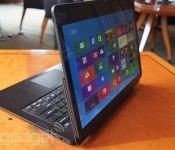
Sony sells its VAIO PC business, makes TV arm its own subsidiary

Sony said it was “addressing various options” as recently as yesterday when it came to its VAIO PC and laptop arm, and while announcing its financial results for Q3 2013, it’s apparently come to a decision. Amid reforming its TV arm (and splitting it into a standalone entity by June 2014), it’s going to sell its PC business and VAIO brand to Japan Industrial Partners (JIP), with the final deal set to be done by the end of March 2014. The company has reported a drop in demand for its PCs in prior financial statements, and (barring the VAIO Flip 11A), Sony didn’t really have much to show from its VAIO range at this year’s CES.
The company says it’s no longer designing and developing PC products, while manufacturing and sales will wrap up after the company’s final VAIO range goes on sale globally. It has decided to focus on those post-PC products (yep, smartphones and tablets), meaning that it had to make some big decisions with less successful parts of the business. During Q3 2013, Sony saw year-on-year sales increases from its mobile arm, but still forecasts an annual loss of around $1.1 billion (110 billion yen) for the full year: it had previously projected a 30 billion yen profit. The blame is leveled at the businesses its now looking to change. Other highlights include the PS4, which sold 4.2 million units and 9.7 million games in its first six weeks. The games arm also saw a “dramatic increase” in PlayStation Plus subscriptions — something that’s mandatory for multiplayer on the company’s new console.
Sony will cut a total of 5,000 jobs worldwide (1,500 in Japan) by the end of the 2014 fiscal year, while the new PC company has stated that it will hire around 250 to 300 Sony employees, encompassing design, development manufacturing and sales, and will be based in Nagano — where Sony’s current VAIO HQ resides. The company is promising to fulfill all its aftercare warranties. Sony is signed up to invest 5 percent of the new company’s capital to support its launch and smooth over the transition. Restructuring costs across both the TV and PC segments are now set to cost an extra 20 billion yen. Sony is now set to focus on its high-end sets and 4K screens, and hopes that changes will ensure the TV business returns to profitability within the next financial year.
Filed under: Home Entertainment, Laptops, HD, Mobile, Sony

Steve Jobs wanted Sony VAIOs to run Mac’s operating system

If Steve Jobs had gotten his way, that VAIO in your lap could’ve been running OS X, Apple’s operating system. It sounds like fiction, but consider the source: former Sony president Kunitake Ando. The revelation, which stems from an interview Ando gave to Japanese journalist Nobuyuki Hayashi in 2011, highlights the close relationship Jobs reportedly shared with Sony’s co-founder Akio Morita — a relationship that led Jobs to make an exception to Apple’s walled off ecosystem. And according to Ando, it was on a 2001 golf trip in Hawaii that Jobs decided to surprise Sony executives with a version of Mac OS X running on a VAIO, four years before the Intel transition was made public.
As we all now know, that Apple/Sony partnership wasn’t meant to be. For Sony, the proposal was simply a case of bad timing, as it ran counter to not only the success the VAIO line was experiencing at the time, but also the wishes of its engineering team. After having spent so much time optimizing VAIO for Windows, Ando says Sony’s engineering team saw OS X on VAIO as a diversion of resources and were “opposed [to] asking ‘if it is worth it’.” It was because of these two factors that Sony never pursued the prospect of Mac-compatible VAIOs any further.
While we’ll never know the impact Mac-compatible VAIOs would’ve had on Sony’s bottomline today, the news does come at an odd time for the struggling Japanese tech giant. Recently, its VAIO PC division’s been surrounded by rumors of a possible sale; rumors Sony isn’t exactly dismissing as inaccurate. And with Sony now looking to home entertainment and gaming as two key areas for growth, that potential sale seems right in line with the company’s current strategy.
Filed under: Desktops, Laptops, Software, Apple, Sony
Via: The Verge
Source: Nobi.com
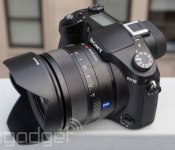
Sony Cyber-shot RX10 review: impeccable performance and versatility make this cam an industry leader

To many photographers — amateurs and professionals alike — digital SLRs represent quality. The fact that you can remove the lens and swap it for another is inconsequential to those who never buy a second optic, and it’s that segment of the market that Sony’s targeting with its Cyber-shot RX10. Everything about the RX10 is DSLR-like — its form factor, built-in EVF, focusing performance and image quality are all on par with many higher-end SLRs — but its mighty 24-200mm lens is permanently attached. By opting for this comparatively inflexible design, Sony’s able to deliver a constant f/2.8 aperture and very high-quality optics in a comfortable package, with a price tag far below what a similar removable lens would command, were it to exist in the first place. The result, put simply, is spectacular, but as $1,300 is at the high end of even deep-pocketed consumers’ budgets, you’ll want to catch our full review before making a purchase.
Hardware

Aesthetically, the RX10 is similar to a digital SLR in nearly every way. There’s a pronounced grip, a top-mounted monochrome LCD, a pop-up flash, a hot shoe (in this case, Sony’s Multi Interface Shoe), dedicated mode and exposure-compensation dials, an XGA OLED viewfinder, a 3-inch 1.23M-dot LCD that tilts up 84 degrees and down 43 degrees and a relatively large SLR-like lens up front. Internally, however, the RX10 is akin to its smaller counterparts, the RX1 and RX100 Mark II. In fact, the 10 features the same 20.2-megapixel 1-inch BSI CMOS sensor as that latter model, which, while still quite large, is smaller than the APS-C and 35mm chips in conventional DSLRs. It also includes Sony’s powerful new BIONZ X processor, which can also be found in the Alpha 7 and 7R, along with Sony’s recently announced A5000.
But back to that lens. The 24-200mm Zeiss Vario-Sonnar T* optic is undoubtedly the star of the show, thanks in no small part to its constant f/2.8 aperture. Why is that significant, you ask? Most zoom lenses, especially those permanently attached to a camera, include variable aperture lenses. While some may let you shoot at f/2.8 at the widest focal length (24mm in this case), you won’t find many point-and-shoots that offer that same aperture at the tele end as well. Typically, a lower-end lens supports apertures no larger than f/5.6 or f/6.3 at 200mm, and with f/2.8 available instead, you’ll be able to snap much sharper images in low light, or shots with creamy bokeh (shallow depth of field) during the day. You still have f/5.6 (all the way up to f/16) at your disposal, of course, directly accessible using the dedicated ring dial around the base of the lens, should you be after different imaging effects, instead.
We’ll speak more to the camera controls in the next section, but there are still plenty more hardware components to explore, too. Sony’s put a lot of emphasis on connectivity with the RX10. On the audio front, you’ll find headphone and mic jacks, stereo microphones up top and compatibility with Sony’s advanced audio accessories using the accessory port that doubles as a hot shoe — for mounting wireless receivers and shotgun mics. There’s an HDMI port with clean, uncompressed output, a micro-USB port for data transfers and charging the camera’s 1,080mAh battery pack (the same cell included with NEX cams and select recent Alphas), a dual Memory Stick/SDXC card slot and a tripod socket on the bottom. The camera is very comfortable to hold, and while it’s heavier than you’d expect, it won’t weigh you down as it dangles from the neck strap.
User interface

Sony hasn’t changed its UI much since the NEX series’ inception in 2010, but like the other RX models and recent Alphas, the RX10 features a tab-based interface that we much prefer. Settings are easy to locate and with everything presented in a linear format, it’s easy to jump from category to category to make all the adjustments you require without first returning to a home screen. Shooting options like file size, ISO and SteadyShot are presented in the first tab; custom key adjustments and display options are in the next tab, followed by wireless-connectivity features, then playback; and finally general settings like volume levels and monitor brightness are in the fifth tab.
There are also plenty of dedicated controls on the camera, so you won’t actually need to spend much time in the main menu at all. A function button to the right of the LCD launches a quick-adjust mode, with direct access to drive mode, flash options, ISO, white balance, metering, et cetera. A display button cycles through different display modes, including a full-screen live feed, an advanced settings panel with histogram and physical alignment indicators and an image preview screen with a comprehensive settings readout positioned at the border. There’s also a dedicated video capture button, a secondary settings dial and a control ring on the rear. Up top, there’s a backlight button for illuminating the monochrome LCD, a flash release button, a user-configurable button, an exposure-compensation dial and a zoom toggle around the shutter release. There’s also a focus-mode selector on the front of the camera, just below the lens.
With built-in WiFi, you can also control the camera using a smartphone or tablet running Sony’s PlayMemories Mobile app. After connecting to the camera’s wireless hotspot, you can only shoot in auto mode through the app — as soon as you connect, auto will override any of the current camera settings. Images are transferred to the connected device immediately after capture. While this is a decent solution for group self-portraits or other tripod shots, due to the lack of control options, we’d recommend shooting directly on the camera then transferring images to the app either from the camera’s playback mode or the live gallery viewer in the app. Wireless connectivity makes sharing images online a breeze, however — your Instagram account will benefit tremendously from the RX10′s large sensor and powerful lens.
Performance and battery life

At launch, Sony’s RX100 came along with an ambitious price tag — $650 was a tremendous sum for a point-and-shoot, particularly one that didn’t look much unlike a model half its price to the untrained eye. But phenomenal performance — for any camera, really; not just a pocketable compact — made this the must-have everyday cam of 2012. You could make the same argument here. The RX10 brings that level of performance to a significantly larger, albeit more versatile form factor. Shutter lag is more or less nonexistent and the camera’s speed overall is virtually flawless. Even wireless transfers are more seamless than we’ve experienced with most other cameras, including past models from Sony.
The camera can power on and capture its first shot in a hair over 1.5 seconds. When moving the frame between a dark wall six feet in the distance and a computer-based stopwatch inches from the lens, the RX10 was able to expose and refocus in about 0.25 second. Meanwhile, in the speed-priority continuous mode, we were able to shoot 20 consecutive JPEGs at nine frames per second, compared to the “approximately 10 fps” that Sony quotes in its specifications. As for transferring images wirelessly, it took 17 seconds from selecting an image on the camera to receiving a 2-megapixel image on the phone, including the time required for the phone to connect to the RX10′s WiFi. Transfers were much speedier when selecting images on the phone instead, as the two were already paired. A 2-megapixel image took about one second to transfer, while a full-resolution shot took just five seconds.
Battery life, as you’d expect from a camera this large, is excellent. The RX10 uses the same cell as every past NEX camera and the recent Alpha mirrorless cams, so you may already have spare NP-FW50 1,080mAh packs sitting around. Cheap knockoffs are available for less than 20 bucks, or you can pick up an OEM Sony model for roughly twice that price — if you’re planning to be away from an outlet for a few days, it wouldn’t hurt to grab a spare. Still, we managed to make it through each full day of shooting with plenty of juice to spare. For the sake of completing this review, we spent two days shooting without recharging the battery. The power meter reflected a 31 percent charge remaining after capturing more than 700 images and five minutes of 720p video, along with several WiFi transfers and a few on-camera image reviews.
Image quality
As if you didn’t already have enough to look forward to with the RX10… Image quality, no surprise, is spectacular. Really, with a $1,300 price tag, we wouldn’t settle for anything less. Regardless of whether you’re shooting in bright daylight or a night street scene lit by a single dim lamp, shots are sharp and free of noise, even at ISO 6400. Video looks fantastic as well, even when captured at night. Let’s take a look at some samples.

The RX10′s fast power-on and focus times make it easy to get the shot. In this case, I heard the helicopter approaching just moments before, and after a quick adjustment on the mode dial, I was able to snap this frame without delay. The exposure and color balance are accurate, and details are relatively sharp (keep in mind that both the chopper and the bird were flying along very quickly).

The tilt-up display and 24-200mm lens give you a lot of flexibility. For this shot, I was able to shoot from the waist and at a distance, allowing me to avoid alerting my subjects. For street photographers, this is a must. Details are very sharp, and while the colors appear muted here, they do accurately reflect the diffused light caused by cloudy conditions in Zurich.

This shot, from a Tel Aviv park, is accurately exposed. Again, colors don’t appear to be terribly vibrant, but they do accurately reflect what I saw at the scene. With the camera selecting a sensitivity of ISO 1250, the noise-reduction processing kicked in, resulting in slightly soft details around the dog’s eyes and nose.

ISO 3200 enabled a sharp capture in this relatively dim alcove in Jerusalem’s Old City. Colors are accurate (if you forgive the abundant fluorescent light), and details (such as the text on a cloth bag) are quite clear and noise-free, despite the high sensitivity.

The RX10′s aperture ring, mounted around the lens, lets you access specific f-stops directly. I selected f/16 for this star sun effect, but the small aperture also resulted in slightly blurry details, as you can see with the electricity poles in the inset image. The frame looks great otherwise though, with excellent exposure and color balance.

The RX10 handled these snowy Zermatt conditions with ease, snapping hundreds of photos on the slopes with excellent exposure. This frame is no exception, and with the aperture set at f/8, details in both the foreground and background are quite sharp. The camera also held up very well in the cold weather conditions — it didn’t skip a beat, even in heavy snow.

Look at that detail! The RX10 is a master of focus and exposure, as evidenced by this shot through a Swiss jewelry store window. Elements throughout the foreground are incredibly sharp, despite the relatively high ISO, while the watches in the background are properly blurred, as you’d expect with an f/2.8 aperture.
Video quality is equally impressive. We shot the majority of our sample clips at 1,440 x 1,080 with MP4 encoding for easy uploads, but the RX10 is able to capture at resolutions of up to 1080/60p with AVCHD encoding. Exposures were spot-on across the board, and even video captured at high sensitivities (ISO 12,800) looked better than expected. We stuck to ISO 3200 for the sample reel, however, which you can see embedded above. You can also click through our full gallery of images below, and download full-res samples for evaluation at the source link.
The competition
As with Sony’s QX10 and QX100 lens cameras, the full-frame Alpha 7 and 7R and even the RX100 Mark II and RX1, the RX10 doesn’t have a lot of competition from other manufacturers, particularly if you’re looking for very similar specifications and performance. That’s not to say you don’t have other options, but if an integrated, fixed-aperture, telephoto zoom lens paired with a 1-inch sensor are what you’re after, there’s ultimately nowhere else to look. You can, of course, opt for a traditional digital SLR, and if you already have a collection of lenses (or you’re planning to build one), an interchangeable-lens camera is probably your best bet.
Canon’s 70D and the D5300 from Nikon both offer serious still photo and video chops, and they include integrated WiFi, to boot. You’ll need to bring your own lens into the mix, and at $1,200 body-only for the Canon and $800 for the Nikon, plus the cost of lenses, you’ll far exceed the RX10′s $1,300 price tag once you’ve added in the necessary optics. As for superzooms, Panasonic’s Lumix FZ200 also includes a lens with a constant f/2.8 aperture, with a whopping 25-600mm focal length, but the 1/2.3-inch 12.1-megapixel sensor is considerably less capable than what you’ll get with the Sony. The FZ200 does have affordability on its side, though — it’ll run you just shy of 600 bucks.
Wrap-up

Ultimately, we love the Sony RX10. In fact, we struggled to populate the cons section down below with anything other than a high price tag. But your $1,300 goes a very long way here, and if you need to capture sharp images and full-HD video clips in pretty much any lighting condition, with a vast focal range, you’d be hard pressed to find a more suitable shooter. This is the best fixed-lens camera we’ve ever used, and we wouldn’t be surprised if the RX10 Mark II, whenever that comes about, is the only comparable model worth considering.
Source: Sample Images (Dropbox link)
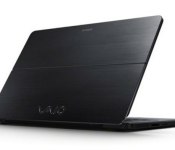
Sony is reportedly in talks to sell its PC business

Sony’s had much more success in gaming and home entertainment than with its PC division, so the latest news isn’t exactly shocking. According to Japanese news service Nikkei, the company is looking to sell its personal computer business to an investment fund for as much as 50 billion yen (or $492 million). When we reached out to Sony for comment, a rep directed us to a statement responding to a similar rumor three days ago:
A press report on February 1, 2014 stated that Sony Corporation (“Sony”) is discussing with Lenovo Group (“Lenovo”) the possible establishment of a joint venture for the PC business. As Sony has announced previously, Sony continues to address various options for the PC business, but the press report on a possible PC business alliance between Sony and Lenovo is inaccurate.
While that doesn’t address this latest report specifically, the statement makes it clear that selling off Sony’s PC business isn’t out of the question, if not extremely likely. And as Nikkei reports, parting with this division would enable Sony to shift its focus to smartphones — the company has released several critically acclaimed Xperia handsets in the last several years, though it still struggles to compete with the likes of Samsung, the top Android phone maker by a landslide. In any case, stay tuned.
Via: Reuters
Source: Nikkei
 AIVAnet