



Necessary violence: The creators of The Last of Us defend its reliance on combat

PlayStation 3 exclusive The Last of Us was the most successful game of 2013. That’s not just sales (it sold extremely well, to the tune of 3.4 million in its first three weeks), but also critical reception (an average Metacritic score of 95/100 and it swept game of the year awards across the game industry in 2013). Last week, The Last of Us earned development studio Naughty Dog a whopping 10 wins at the annual DICE awards show in Las Vegas — considered the Oscars of gaming.
With Naughty Dog’s past creating hit franchises like Crash Bandicoot, Jak & Daxter and Uncharted, The Last of Us leads Neil Druckmann and Bruce Straley aren’t strangers to success (these guys led development of Uncharted 2, another extremely successful game). Their latest work is a tremendous departure.
Critics drudge up vocabulary to describe The Last of Us that’s rarely used in game criticism: “emotionally grueling,” “I wanted to fight for them.” Beyond just being a thoughtfully told story in a video game, The Last of Us takes a bold step in largely skipping combat. Most encounters can be outright ignored, traded for tension while the game’s two main characters (Joel and Ellie) slip past “infected” or, worse, the terrible other human beings in the post-apocalyptic future. The Last of Us is the rare triple-A game that dares to be emotionally engaging and eschew violence as the only form of gameplay.
“We were unsure if people would get into it or not,” Druckmann told us in an interview last week. We’d asked about the cinematic moments — the giraffe scene, that gut-wrenching ending — and why Naughty Dog had bothered with so many combat scenarios in such a story-focused, risky game. “We were pleasantly surprised to see that people are very much into it.”
In fact, the criticism heard most loudly by the TLOU team specifically focused on combat: too much, too often, and too arduous. “For ourselves, compared to previous games we’ve made, this has way fewer encounters, and those encounters you fight way fewer enemies,” Druckmann said. That reticence to move away from combat isn’t unique to Naughty Dog, though — the majority of so-called “triple-A” games feature combat as the primary interaction (last year’s holiday hits, for instance: Call of Duty, Assassin’s Creed, Battlefield, etc.).
The Last of Us — though bold in many ways — still featured combat as the primary interaction. Rather than focusing on combat as a means to achieve objectives, it was more a necessary evil to lead the game’s fragile protagonist duo to safety. “A lot of developers, not just triple-A, but a lot of developers do use combat as a crutch,” Straley told us. He defended its use in TLOU, however, as a vehicle for contrast against the game’s emotionally resonant moments. “The contrast for us is more about trying to balance the two so that you have both ends of the spectrum, because you have to have the dark to have the light.”
Would The Last of Us work without combat? Perhaps, Druckmann said, but it’d have to tell a different story. “Say you wanted to tell a story about an archaeologist that doesn’t involve Nazis. As soon as you have conflict, where someone’s taking out the guns trying to kill you, then as people you would rise to that conflict,” he said, in reference to Indiana Jones. He argued that we accept the fantasy of that world (and the murderous protagonist who comes with it), and the same happens in games: Nathan Drake is acceptable in Uncharted because he’s built into a world where Nathan Drake makes sense.

Given the response to TLOU from players and critics alike, Druckmann and Straley explored the possibility of throwing away combat altogether in the game’s final playable addition: a side story prequel featuring Ellie and a new character, titled “Left Behind” (available this week). In the end, they decided against that, though the Left Behind addition features even less combat than the main game. Druckmann explained:
“What if there were no infected in this game? What if there was no combat at all in this additional chapter? And we feel like we would lose something that’s really integral to The Last of Us, which is that contrast. The giraffe sequence works because of all the horrible things you’ve done and experienced in the Winter section. Otherwise I think the giraffe sequence would feel pretty flat without the surrounding bits to it. The ending works well because, as Joel, you’ve done really horrible things in that hospital. Maybe we could argue about the number of encounters, or how many enemies should’ve been in the hospital, but we definitely feel strong that there should’ve been a fight, a kind of murdering spree to get to Ellie, because that says something about Joel and what he would do to save someone he loves. Because ultimately that’s what those arcs of the character were: how far they were willing to go to save someone they really care for.”
Though TLOU is finished (read: no sequels, no more DLC — Naughty Dog’s calling it one and done), the lessons learned in the process are far reaching. “We have to check in with ourselves as developers and figure out what are we after here,” Straley told us. Will the next Naughty Dog game still feature combat as the main form of interaction? Perhaps; it all depends on the story that the team wants to tell. “As long as we’re still flexible to check in on what we think is acceptable and what kind of stories and experiences we want to deliver, then we’ll constantly push ourselves. And that’s exciting,” he said. Like Naughty Dog, we can’t predict if what they make next will be a success, but we sure do want to play it — whatever it is.
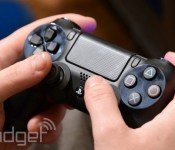
PlayStation 4 tops next-generation console sales in the US for January

As it turns out, Microsoft’s lead in US next-generation console sales was short-lived. The NPD has just released estimates which show that the PlayStation 4 outsold the Xbox One during January. Neither the NPD nor Sony is providing exact numbers, although Sony Senior VP Guy Longworth states that PS4 sales were almost twice as high as Microsoft’s. The system was certainly alluring enough to drive game sales during the quarter — the PS4 was the platform of choice for five of the top 10 games, while the Xbox One was never higher than second.
Microsoft also isn’t divulging Xbox One figures, although the NPD tells us that the system was the runner-up in hardware sales. The company can trumpet the strength of the overall Xbox brand, though. Together, the Xbox 360 and Xbox One represented 47 percent of game sales; the Xbox 360 was also the most popular system for five of the top 10 software releases. Nintendo has a silver lining on its dark cloud, too. Game sales for the 3DS and Wii U respectively increased by six and 26 percent year-over-year. That’s no mean feat when overall spending was down by a quarter. Whichever platform you prefer, we wouldn’t declare the console wars over — not when expected system sellers like Titanfall could easily shift the balance of power.
This just in: PS4 the #1 selling game console in the US in January, still #1 worldwide. Thanks, guys! pic.twitter.com/1vOFmtUukX
– PlayStation (@PlayStation) February 13, 2014
per @LuckyLongworth: PS4 was #1 in sales for next gen consoles in January, nearly doubling the nearest next gen competitor.
– Geoff Keighley (@geoffkeighley) February 13, 2014
Filed under: Gaming, Sony, Microsoft, Nintendo
Source: PlayStation (Twitter), Xbox Wire, Geoff Keighley (Twitter)

Android 4.3 Rolling out for Sony Xperia T, TX, V and SP
 The Sony Mobiles blog site has announced a fairly aggressive Android 4.3 update today that covers four different models of Xperia devices. Technically only three as the XPeria SP rollout of Android 4.3 began last week. now they are starting the process for the Sony Xperia T, Xperia TX and the Xperia V. Check out what is new and coming for you guys.
- Google’s Android 4.3; Jelly Bean as standard – bringing Project Butter performance & UI response optimisation and a smoother graphical experience
- We’re also uplifting Sony’s entire native app portfolio to the latest versions – bringing tweaked / improved / current experiences for (to name but a few): Messaging, Smart Connect, Small apps, TrackID, Sony Select and
- Sony’s Media apps: WALKMAN, Album and Movies, with Sony Entertainment Network cloud service integration* – a more converged and full Sony entertainment experience – Sony Entertainment Network & PlayMemories integration with a more intuitive UI, offering seamless access to both local and cloud conten
- The launch of our unique custom interface experience: “Xperia Themes”, with downloadable UI packs from Sony Select – more on this soon…
- The latest Android security enhancements, matched with Sony’s mobile enterprise solution: Xperia in Business
- Battery STAMINA Mode – updated version of Sony’s power management app, now with refreshed interface and more smart options for prolonging battery life
While the software is available for the various devices those carrier and market specific versions might be delayed slightly, or might not come at all. Any of our global readers seeing the magical update yet?
Source: Sony Mobile Blog
Sony delivers Android 4.3 to Xperia T, Xperia TX, Xperia V
Sony today announced that the Android 4.3 Jelly Bean update has commenced for the Xperia T, Xperia TX, Xperia V smartphones. The actual rollout, of course, depends on markets and carriers, however it’s officially pushed out the door.
In addition to the standard 4.3 stuff, the update includes updated Sony apps and services, Xperia Themes, security enhancements, and more.
The post Sony delivers Android 4.3 to Xperia T, Xperia TX, Xperia V appeared first on AndroidGuys.
Sony debuts three superzooms and two compact Cyber-shots for CP+

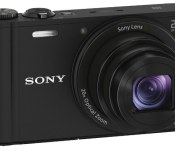
Sony announced but one camera at CES, an entry-level mirrorless interchangeable-lens model called the Alpha 5000. With CP+ gearing up just outside Tokyo, however, it’s time to lift the point-and-shoot floodgates. There are three superzooms and two pocketable cams on the docket this year, in addition to the brilliant A6000. The HX400V and WX350 are arguably the most compelling offerings in each category, and they’re joined by alternatives that should appeal to a broad range of consumers — the H400, the H300 and the (relatively) petite W800. All but that last model include 3-inch LCDs (the W800′s display is 2.7 inches), but the similarities end there.
The HX400V ($500) features a 20.4-megapixel CMOS sensor, an f/2.8-6.3, 24-1200mm (50x) lens with OIS, a top sensitivity of ISO 12,800, a 10 fps burst mode, 1080p video and 4K still image output. There’s GPS, WiFi and NFC, a BIONZ X processor under the hood and a Multi Interface Shoe for connecting a variety of Sony add-ons. The H400 ($320), which shares a nearly identical model name, falls a bit short on the spec front. There’s a 20.1MP CCD sensor, an f/3.4-6.5, 24.5-1543mm (63x) lens with OIS, a 3200 top ISO, a 0.8 fps burst mode and 720p video capture. The H300 ($220), meanwhile, sports a 20.1-megapixel CCD sensor, an f/3-5.9, 25-875mm (35x) lens with OIS, a top ISO of 3200, a 0.8 fps burst mode and 720p video. That model runs on four AA batteries, while the other four are powered by Lithium-Ion cells.
Moving on to the compacts, the WX350 ($320) shares the BIONZ X processor of its larger sibling, the HX400V. There’s an 18.2-megapixel CMOS sensor, an f/3.5-6.5, 25-500mm (20x) G lens with OIS, a top sensitivity of ISO 12,800, a 10 fps burst mode, 1080p video capture and 4K still image output. It sports WiFi and NFC connectivity, and can fire off 470 shots on a single charge. Finally, if you’re on a very tight budget, the W800 ($80) covers the basics with a 20-megapixel CCD sensor, an f/3.2-6.4, 26-130mm (10x) lens, a top sensitivity of ISO 3200, a 1 fps burst mode and 720p video capture. You can pick up that model in March, along with the HX400V, H400 and WX350, while the H300 is expected in stores later this month.
Sony’s A6000 is the mirrorless camera you’ll want to own, ships this April for $800 with lens

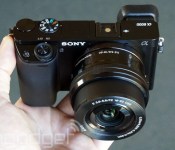
Well, Sony’s really done it this time — your still-crisp NEX-6 may now be marked for an early retirement. The A6000 is here to replace one of 2012′s most exceptional shooters, and despite the NEX-6′s success, this fresh 2014 model is the one to own. There’s a brand new 24.3-megapixel CMOS APS-C sensor paired with a BIONZ X processor at the core, enabling what Sony’s calling the “world’s fastest autofocus.” We’re talking lag of just 0.06 second, thanks to the 179 phase-detect and 25 contrast-detect AF points. You also get 11 fps continuous shooting with tracking AF. Those focusing improvements are most notable in our book, but the price drop is surely worth a mention, too. The A6000 will ship for $800 with a 16-50mm power-zoom kit lens, compared to the $1,000 Sony was commanding for the NEX-6 back in 2012.
Like other recent Alpha CSCs, the A6000 includes an OLED viewfinder with 100-percent frame coverage and a tilting 3-inch 921k-dot LCD. You have two interface options here: the love-or-hate-it six-tile NEX menu that dates back to 2010 with the NEX-3 and NEX-5, or the recently refreshed tab-style Alpha UI, which we prefer. There’s a pop-up flash, a Multi Interface Shoe, 1080/60p and 24p video capture with clean HDMI output, seven customizable buttons and 4K still image output to a compatible TV. Like its predecessor, the A6000 also includes WiFi and NFC, so you can shoot via the Android or iOS app, or transfer images from the camera to a smartphone or tablet. You also get a handful of apps on the camera itself, ranging from the free Direct Upload (for sharing images online) and Photo Retouch applications, to a few that you’ll need to purchase, such as Time-lapse and Lens Compensation (for minimizing lens distortion).
We had a few minutes to check out the A6000 ahead of CP+. We poked around the new interface, which we found to be a refreshing change from the NEX format of yesteryear. The A6000 is actually noticeably larger than the NEX-6, but not significantly so. The design aesthetic is similar, though the newer model has a slightly more premium look and feel than its predecessor. There are separate dials for shooting mode and settings adjustments, compared to the two-in-one control on the NEX, but the button layout is quite similar otherwise, and if you’re familiar with previous NEX cameras, you should feel at home here. You can try one out for yourself at retailers this April, or peruse our hands-on shots in the gallery below.

Sony’s VAIO Flip 11A convertible is now available for $799

Even though the VAIO Flip 15 and 13 are both pretty solid PCs, some people might find one to be too big and the other too expensive. To alleviate this, Sony introduced the VAIO Flip 11A, an 11.6-inch laptop with the same Yoga-like design as the other, larger Flips. Available now for $799, Sony’ newest convertible ships with Windows 8.1 and is powered by Intel’s 2.16GHz Pentium N3520 CPU. What’s more, there is also that included copy of Adobe Photoshop Elements 12, a 1,920 x 1,080 IPS screen, NFC Support and 128GB of solid-state storage alongside 4GB RAM. It appears Sony is only selling its Flip 11A in the US at this time; that being said, let us know in the comments if you see it up for grabs elsewhere. Or maybe it’s all part of the company’s new business plan.
Filed under: Laptops, Tablets, Sony
Source: Sony
Sony shows off its waterproof Walkman… by packaging it in a water bottle

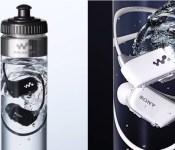
If those ads showing swimmers rocking Sony’s new Walkman haven’t convinced you it’s really waterproof, then get this: you can buy one packaged inside a full bottle of water. “The Bottled Walkman” is currently being sold from vending machines across New Zealand in places like gyms, right beside neon-blue bottles of Gatorade. The idea behind the promotion is to get the device out of electronics stores and into the places target customers actually hang out. Of course, the shock value of being encased in liquid certainly makes the Walkman a bit more enticing than if it was sitting behind the front desk. The big question is, who wants to drink a bottle of water that’s had a Walkman sitting in it for days (or weeks) on end? Check out a video of the vending machine in action after the break.
Filed under: Peripherals, Wearables, Alt
Via: The Next Web
Source: Vending Times
What We Expect: Sony Sirius
A brief overview of what Sony has in store for us
With Samsung, HTC, and LG readying their next wave of flagship phones we would expect that Sony might do the same. Indeed, it appears they are working on their next big release and it may come as soon as Mobile World Congress.
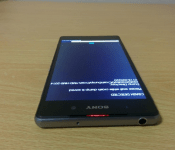
Known by its codename of Sirius, the D6503 looks to help Sony keep pace with the competition. We’ve taken this opportunity to gather up some of the juiciest and most likely rumors around the device, putting them in one place. What you’ll find below is a growing list of things we expect or feel strongly about as it pertains to the Sony Sirius.
As always, if you see something that doesn’t look right or something we may have missed, let us know! We will update this post as we learn more about the Sony smartphone.
UPDATED: February 11, 2014
The Name
Given the specifications and details that follow we might be looking at more of a Xperia Z1 refresh than an Xperia Z2.
Specifications
Leaks, rumors, and benchmarks surfacing over the last few weeks suggest the Sirius will be powered by a Qualcomm Snapdragon 800 processor. Additional hardware figures to include 3GB RAM, 16GB internal storage, and a 3300mAh battery.
 In terms of display, we should look for a 5.2-inch screen but resolution is not clear yet. We’ve seen stuff that says it could be Sony’s first with a 1440×2560 “2K” pixel resolution but most of today’s devices are 1080p Full HD.
Leaked photos show the phone as having two speakers on the front face of the device. Similar to the HTC One, this one should have one fine slit at the top above the LED indicator and one at the very bottom.
Long a key feature in Sony smartphones, the Sirius’s camera looks to be no exception. We should anticipate a 20-megapixel rear camera with LED flash, 4K video recording, and various shooting modes.
Other tidbits we’ve picked up along the way include microUSB, microSD expansion, and three microphones. Like the other Sony models of late, we ought to count on waterproof coating as well.
Android and UI
We should expect Android 4.4 KitKat at the minimum, likely the 4.4.2 version. Sony will, of course, sprinkle in its own touches and UI elements but it’s one of our favorite custom builds.
Launch
Pretty much everything we’ve heard so far tells us that Sony will bring this guy to Mobile World Congress, introducing it in late February. As for release, March seems to be the most likely.
Carrier support
Although Sony has been pretty tight with T-Mobile in the U.S. leaks say Verizon will score this one. We’re not sure if this is exclusive or whether other carriers will be in line, too. If anything, Sony will likely sell this one unlocked through its website or Amazon.
The post What We Expect: Sony Sirius appeared first on AndroidGuys.
New PlayStation Vita coming to North America this Spring for $199, packs in Borderlands 2 and 8GB memory card

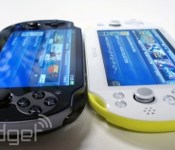
Thinking of coughing up your tax return to import one of those new, slimmer PlayStation Vitas? Hold up: Sony just announced that the revised handheld will see a North American release soon. According to Sony’s John Koller, the portable is slated to arrive sometime this Spring, complete with a copy of Borderlands 2. The company’s new home console can expect more than 100 PS4 releases during 2014, he says, and the current stable of games is already being put to good use: PS4 owners collectively spend 34 million hours playing games every week.
Developing…
Filed under: Gaming
Source: Twitter
 AIVAnet