Sony’s Xperia M2 offers respectable specs at a mid-range price

Sony’s come to Mobile World Congress with three brand new devices. Its new flagships, the Z2 smartphone and Z2 Tablet, may attract all of the attention but there’s a budget-friendly handset it also wants you to get to know: the Xperia M2. Acting quickly to replace the still youthful Xperia M, which only launched in June last year, Sony has injected new life into its mid-ranger by including a larger 4.8-inch qHD display, a 1.2GHz quad-core processor, 8-megapixel camera, 2,300mAh battery and LTE support to take care of your increasing thirst for data.
While the Xperia M was far from a benchmark buster, Sony tells us that its successor is the best in class on device thickness, display size, camera resolution and processor cores. We’d say its main competition comes in the form of the Moto G, which impressed us when it launched last year. Its slim 8.6mm profile, NFC and LTE support certainly help in that regard, especially as the Moto G is 3G-only, but the Xperia M2′s 960 x 540 display is some way off its rival’s.
For Sony, diversity certainly isn’t key when it comes to handset design. The Xperia M2 may lack the top-level internals found in the Z2, but it’s rocking the same “OmniBalance” design as Sony’s new flagship. You’ll notice on closer inspection that its lacks the premium finish of the Xperia Z2, but for those looking for flagship looks at a mid-range price, the Xperia M2 will still invoke the odd double-take.
We’re still waiting on exact pricing info, but what we do know now is that Sony is looking around the €220 ($302) mark. It’s not limiting its launch either: black, white and purple variants are all set to hit stores when the device launches the Xperia M2 globally in April.
Filed under: Cellphones, Mobile, Sony

Live from Sony’s MWC 2014 press event!

The time has almost come for Sony to pull back the curtains on its next Xperia Z flagships at Mobile World Congress in Barcelona. You’re just here a little early. But that’s okay — we admire your spunk. Just make sure to check back at 2:30AM EST / 8:30AM CET when you’ll have a live, front row look at all the news as Kaz and co. reveal it. Don’t worry, we know you like your tech news fresh and up to the minute. And that’s exactly how we’ll be serving it up!
Filed under: Cellphones, Tablets, Wireless, Mobile, Sony

We’ll be live from Sony’s MWC 2014 press event tomorrow at 2AM EST!

If history is any indication, then we have a sneaking suspicion Sony could be using this year’s Mobile World Congress as a showcase for its next, great Xperia Tablet. More specifically, it could be this fella right here, the Xperia Tablet Z2 — a minor spec update to its waterproof, “omnibalanced” Android slate. But that might not be the only Xperia flagship waiting in the wings here in Barcelona. Recent leaks have us fairly convinced Sony’s planning yet another Zed Part Deux debut, but this time it’s for the company’s rumored Xperia Z2 smartphone. Lucky you, we’ll be live at Sony’s MWC press event to report on the news as it unfolds and count how many times Kaz says, “Wow!” So make sure to tune in here tomorrow at 2AM EST / 8AM CET to catch your (Xperia) Zzzs.
Filed under: Cellphones, Tablets, Wireless, Mobile, Sony

Engadget’s smartphone buyer’s guide: winter 2014 edition

You don’t need to cast bones or read entrails to know that smartphones arrive in predictable cycles. February, home of Mobile World Congress, is likely to see the launch of new handsets from heavy hitters like HTC, Samsung and LG. Those new flagships will rule the mobile hill until the fall, when Apple and Google are likely to wheel out next-gen devices of their own. Sony, meanwhile, recently launched its latest handset, the Z1 Compact, which reverses the “bigger is better” trend to great effect.
There may have only been one top-tier phone launching in January, but the phone industry has hardly been hibernating this winter. Two years after Google bought Motorola for $12.5 billion, it sold the rejuvenated handset maker to Lenovo. AT&T, meanwhile, has rejigged its mobile share plans to shrink your monthly data bill; T-Mobile will now pay you to leave your carrier; and we’re inching ever closer to a Sprint/T-Mobile merger, the FCC permitting. If you’re already on the hunt for a new smartphone, or your deal’s only for a few more months left and you like to be prepared, this is your guide to the best handsets on the market.
Android
HTC One

HTC’s 2013-era flagship is due for a revamp, and we’re certain that the gods of irony will ensure that, as soon as we’ve published this guide, the smartphone currently codenamed as “M8″ will officially arrive. In the meantime, however, the HTC One remains a handset that we’re happy to recommend. Combining jaw-dropping unibody aluminum design, powerful BoomSound speakers and an IR blaster, it’s as at home in front of your TV as on the road. The quick performance and general polish of both hardware and software mean that it hasn’t shown its age, and the UltraPixel camera is perfect for low-light shooting. Hopefully the arrival of the One’s replacement will help knock the price down, so we’d suggest keeping your eyes peeled for a bargain in the next few weeks.
Bottom line: Good hardware, good software and some innovative little touches put the HTC One ahead of the Android pack, even though it’s now several months older than many of the other phones on this list.
Key specs: 4.7-inch 1080p (1,920 x 1,080) S-LCD 3 display, 1.7GHz quad-core Snapdragon 600, 4MP rear/2.1MP front cameras, 32GB/64GB non-expandable storage, Android 4.2 (US, to be updated shortly)/Android 4.3 (global edition).
Price: $50 (Verizon), $100 (Sprint) from Amazon and Best Buy or $200 (AT&T)
Motorola Moto X

Since our last guide, the Motorola Moto X went on sale in Europe as an off-the-shelf retail option, and the company went from being Google’s plaything to becoming part of Lenovo. The news of the purchase shouldn’t distract you, however, as the handset is still reasonably new, with much to recommend it. In the US, customization is the name of the game, with the ability to choose colors on the front, back and accent pieces. There’s even an optional wood finish. It may not appeal to those who judge a phone’s performance on its spec sheet, but Motorola (and Google) worked hard to ensure there are some neat tricks under the hood. For example, you just need to say “OK Google” at the device for it to activate and offer up its voice search prowess. Then there’s the Active Display, which will show you your notifications if it feels you holding the handset toward your face.
Bottom line: Rather than cramming in ultra-fast internals, Motorola’s tried to make the phone especially intuitive to use, with Active Display and touchless controls. Oh, and it’s assembled in the USA, which might tug at your patriotic heartstrings.
Key specs: 4.7-inch (1,280 x 720) AMOLED display, 1.7GHz dual-core Qualcomm MSM8960 Pro, 10MP rear/2MP front cameras, 16GB or 32GB non-expandable storage, Android 4.2.2 (upgradeable to 4.4 KitKat).
Price: $50 (AT&T, Verizon) from Amazon and Best Buy, $100 (Sprint) or $330 (unlocked)
Samsung Galaxy Note 3

When Samsung presented the idea of a smartphone with a display larger than five inches, we were more than a little skeptical. The Galaxy Note’s surprise success, however, has forged a trend where colossal devices are now the rule, not the exception. For the Galaxy Note 3, Samsung took everything we loved about its predecessors and turned them up to 11. Instead of mildly useful note-taking, the company has ensured that the S Pen stylus now serves a deeper purpose. It also offers whip-smart performance and a battery that’ll last close to two days with normal usage. The only downside is that you’ll still look a bit silly using one as a phone, but let’s be honest: Who uses their smartphones to make calls anymore, eh?
Bottom line: The third-generation Note is an improvement over its predecessors thanks to a more useful stylus and a longer-lasting battery.
Key specs: 5.7-inch (1,920 x 1,080) Super AMOLED display, 2.3GHz quad-core Snapdragon 800, 13MP rear/2MP front cameras, 16GB/32GB/64GB expandable storage, Android 4.3.
Price: $300 (AT&T, Verizon) from Amazon and Best Buy, $350 (Sprint) or $708 (T-Mobile)
Google Nexus 5

When Google picked LG to produce the Nexus 4, heads and eyebrows were raised, but when it launched, no one could doubt that the duo had pulled off something special. For the Nexus 5, Google raised the price to $349, but for a little extra cash, you’re getting one of the finest flagships for a mid-range price. Since it’s a Nexus device, users are entitled to the latest and greatest version of Android whenever it’s out. And, despite the low price, you’re getting speedy internals and good-quality hardware. Just be prepared for some weak battery life and poor roaming options. Otherwise, we suggest you buy it contract-free, with just a prepaid SIM plan, and don’t look back. Your wallet will thank you for it.
Bottom line: We’re baffled as to why more people don’t just buy Nexus phones over all others. After all, you’re getting a flagship smartphone for $350.
Key specs: 4.95-inch (1,920 x 1,080) IPS LCD display, 2.26GHz quad-core Snapdragon 800, 8MP rear/1.3MP front cameras, 16GB/32GB non-expandable storage, Android 4.4.
Price: $100 (Sprint) from Best Buy, $349 to $399 (unlocked) or $396 (T-Mobile)
Sony Xperia Z1 Compact

We’ve noted that a lot of Android device makers like to release a handset, like the Galaxy S 4, and then release a smaller, more pocket-friendly version shortly afterward. Unfortunately, cramming the same technology down into a tighter package causes a raft of compromises, sending prospective buyers scurrying back to the full-size edition. Sony, however, decided that it would try and produce the Xperia Z1 Compact, a shrunken down, 4.3-inch version of the original Xperia Z1, which has a 5-inch screen. The only differences of note are that the display now has 720p resolution, instead of 1080p, and the battery capacity has dropped by 700mAh due to the hardware’s reduced dimensions. If you’re interested in a top-tier waterproof smartphone, but don’t fancy carrying around a device that can double as a table tennis bat, the Z1 Compact is absolutely worth investigating.
Bottom line: Sony’s struggled to sell its Xperia handsets in the past, but this one deserves to be a hit, thanks to its 20.7-megapixel camera, great build quality and blistering performance. Oh, and it’s waterproof, so if you like dunking your phone in your friend’s drinks, this one’s for you.
Key specs: 4.3-inch (1,280 x 720) Triluminos LCD display, 2.2GHz quad-core Snapdragon 800, 20.7MP rear/2MP front cameras, 16GB expandable storage, Android 4.3.
Price: $625.50 to $689.50 (unlocked, from Negri Electronics)
Motorola Moto G

The partnership between Motorola and Google may have only produced two handsets, but the ones we got were special. Aimed squarely at the lower end of the market, the Moto G is the rare beast that doesn’t feel like it costs just $180. It can beat the HTC One mini and Galaxy S4 Mini in the benchmark stakes; it features a solid camera; and the 4.5-inch display is actually quite fantastic. If you’re not dead-set on LTE or carrying around a big music collection, but want a quick and up-to-date Android smartphone, then this is the device you should be ordering.
Bottom line: If you want a Google handset, but can’t stretch to a Nexus 5, then the Moto G is your next best option. There’s no LTE, no expandable storage and the camera’s just OK, but for this price, who cares?
Key specs: 4.5-inch (1,280 x 720) IPS LCD display, 1.2GHz quad-core Snapdragon 400, 5MP rear/1.3MP front cameras, 8GB/16GB non-expandable storage, Android 4.3 (Android 4.4 KitKat on Google Play edition).
Price: $100 (Verizon), $80 (US Cellular), $130 (Boost) or $179 to $199 (GSM, unlocked) from Amazon
iOS
Apple iPhone 5s

You know the deal by now. Apple’s flagship iPhone 5s is the best iPhone ever made, thanks to improvements both inside and outside. Though it remains dwarfed in size by many rival phones, it benefits from Touch ID, an easy-to-use fingerprint scanner built right into the home button. Then there’s the future-proof A7 chip, which offers fast 64-bit performance. Add in iOS 7, with its stark new design, and you’ve got a seventh-generation iPhone that still manages to look and feel new.
Bottom line: The best iPhone yet, and among the top smartphones, period. However, if you already own an iPhone 5, you’re probably better off waiting for the 6, as nothing here really justifies the early upgrade fee.
Key specs: 4-inch (1,136 x 640) IPS Retina display, Touch ID, A7 chip with M7 motion coprocessor, 8MP rear/1.2MP front cameras, 16GB/32GB/64GB non-expandable storage, iOS 7.
Price: $199 to $399 (AT&T, Verizon, Sprint) from Best Buy or $649 to $848 (T-Mobile)
Apple iPhone 5c

Apple’s middle child is the iPhone 5c, which is basically 2012′s iPhone 5 with a plastic shell. That switch means you’ll now be able to buy the phone in a variety of bright, Lumia-esque colors, but in every other respect, it’s the same phone that came out in 2012. So, you’ll sacrifice the headline-grabbing features you’d otherwise get with the 5s, like the aluminum shell and fingerprint recognition, but if your wallet won’t stretch the extra $100 to get the higher-end model, this is a fine choice.
Bottom line: For $100 less than the iPhone 5s, it’s 2012′s best phone in a choice of fun colors.
Key specs: 4-inch (1,136 x 640) IPS Retina display, 1.3GHz dual-core A6, 8MP rear/1.2MP front cameras, 16GB/32GB non-expandable storage, iOS 7.
Price: $99 to $199 (AT&T, Verizon, Sprint) from Best Buy or $549 to $649 (unlocked or on T-Mobile)
Apple iPhone 4s

It’s a testament to the iPhone 4s that Apple can still sell it as an entry-level device more than two years after it first went on sale. Of course, it’s missing a few key specs that early adopters will be lusting after — namely, it rocks a smaller 3.5-inch display, and makes do with a slower chip and 3G-only data. That said, it still has a fantastic camera and that 3.5-inch display is at least Retina-quality. More importantly, the phone will still run iOS 7, so you won’t feel too behind your friends on more modern hardware. Of course, you’re not eligible for every new iOS feature, and there’s no guarantee your handset will be supported in a year’s time. Still, for a free-on-contract offering, it’s tremendously compelling.
Bottom line: Despite being more than two years old, the iPhone 4s can still hold its own with brand-new budget models from its rivals — and it’s a steal if you can get it for free. Speed freaks and LTE fans won’t be interested, but it’ll beat plenty of other smartphones you can get for nothing.
Key specs: 3.5-inch (960 x 640) IPS Retina display, 1GHz A5, 8MP rear/VGA front cameras, 8GB non-expandable storage, iOS 7.
Price: Free (AT&T, Verizon, Sprint) or $450 (unlocked on T-Mobile)
Windows Phone
Nokia Lumia 1520

A handset that exists in the corridor of uncertainty between a phone and a tablet, Nokia’s Lumia 1520 is the company’s first attempt at a 6-inch device to rival the Galaxy Note. With the first 1080p display on a Windows Phone device, as well as a Snapdragon 800 processor, the 1520 offers plenty to love. Pairing this massive device with a 20-megapixel PureView module puts most other devices to shame, and it’s even reasonably comfortable in a pocket — assuming you’re not wearing skinny jeans, anyway. If you’re a Verizon customer and feel left out, then the Icon, which combines similar internals with a 5-inch display, could be right up your street.
Bottom line: It’s too early to tell if Windows Phone 8 will flourish on a massive device that sits between a fully fledged tablet and a smartphone, but nonetheless, this stands as the best Windows Phone device we’ve ever seen.
Key specs: 6-inch (1,920 x 1,080) IPS LCD display, 2.2GHz Snapdragon 800, 20MP rear/1.2MP front cameras, 16/32GB expandable storage, Windows Phone 8.
Price: $150 (AT&T) from Amazon and Best Buy or $750 (unlocked)
Nokia Lumia 1020

When Nokia announced the “experimental” 808 PureView, it set the hearts of gadget fiends afire. The device came with a 41-megapixel sensor and some clever number-crunching that gave your photos much greater depth and clarity. Best of all, you could even zoom into them to a much greater level, finally bringing a CSI-style “enhance” to your images. The common consensus was that as soon as Nokia could put that 41-megapixel sensor onto a regular Windows Phone device, people would start paying attention to the platform. Well, that phone has arrived: The Lumia 1020 combines staggering imaging technology with Windows Phone’s user-friendly interface. Moreover, now that Microsoft and Nokia are filling the holes in Windows Phone’s app catalog, a flagship like the 1020 is more appealing than ever.
Bottom line: If you want to take amazing images with a smartphone, this is the device you need.
Key specs: 4.5-inch WXGA (1,280 x 768) PureMotion HD+ AMOLED display, 1.5GHz dual-core Snapdragon S4 Plus, 41MP rear/1.2MP front cameras, 32GB non-expandable storage, Windows Phone 8.
Price: $50-$100 (AT&T) from Amazon and Best Buy
Nokia Lumia 1320

When it comes to Windows Phone devices, Nokia’s (and Microsoft’s) strategy has been easy to understand, if a bit scattergun. Produce a high-powered phone, and then whittle out features to produce sequentially cheaper versions from the 925 all the way down to the 520. The company adopted a similar approach to 6-inch units, with the 1520 acting as the “flagship,” and the 1320 being a cheaper, lower-powered version for the masses. It keeps the large display and battery, but ditches the PureView camera, large internal storage and high-power internals. That said, if you’re actively seeking out a phone/tablet hybrid, but aren’t thrilled at spending the thick end of $800, this is probably your first port of call.
Bottom line: Despite its size, this 6-inch device isn’t an all-powerful phablet — it’s more like the Lumia 620 after a bout of elephantiasis. If you want a big phone without a big price tag, however, this is probably where you’ll end up.
Key specs: 6-inch (1,280 x 720) ClearBlack LCD display, 1.7Ghz dual-core Snapdragon 400, 5MP rear/VGA front cameras, 8GB expandable storage, Windows Phone 8.
Price: $390 (unlocked, from Amazon)
Nokia Lumia 520

Nokia’s Lumia 520 (and 521) are the Windows Phone handsets that lurk at the very bottom of the company’s bargain basement. In fact, this handset is so cheap, it’s often handed out as a sweetener when you buy other Microsoft products. The price, combined with the user-friendliness of Windows Phone 8, makes it a pretty easy purchase for smartphone virgins. On the downside, the handset doesn’t have much going for it in the spec department — with a weak display, OK-ish camera and a short battery life. If, however, the purse strings are tight and you’re only browsing Twitter, then this is a reasonably safe bet.
Bottom line: It’s cheap to the point of being free, and while it may not be the greatest phone out there, Nokia has always known how to knock out a solid device for those on a budget. Take advantage of the right deal, and you’ll even be able to grab one of these for free as a party favor.
Key specs: 4-inch (800 x 480) IPS LCD, 1GHz dual-core Snapdragon S4 Plus, 5MP rear camera, 8GB expandable storage, Windows Phone 8.
Price: $29 (521, Metro PCS), $100 (520, AT&T) or $126 (521, T-Mobile) from Amazon
BlackBerry 10
BlackBerry Z30

The Z30 is, in our opinion, the best BlackBerry 10 device on the market. Thanks to the handset’s 5-inch display, BB10 suddenly feels much more comfortable than on the cramped Z10, and while it’s still just a year old, the operating system at least feels mature now. Then there’s the battery, which lasts more than a full day with intermittent usage and nearly 13 hours with nonstop use. Thankfully, the company has now moved to address the weak app selection — BB10 will now install and run plenty of Android apps at the push of a button. If you’re dead set on buying a touchscreen BlackBerry, this is the one that we’d recommend.
Bottom line: We doubt BlackBerry virgins will find anything to convince them to buy this device, but enthusiasts will find plenty to like. The bigger display and better internals make for a more comfortable experience, but beware that the usual BlackBerry issues remain.
Key specs: 5-inch (1,280 x 720) Super AMOLED display, dual-core 1.7 GHz Qualcomm MSM8960T Pro, 8MP rear/2MP front cameras, 16GB expandable storage, BlackBerry OS 10.2.
Price: $100 (Verizon) from Amazon, $520.50 (unlocked, at Negri Electronics)
BlackBerry Q10

Who can count themselves among BlackBerry devotees? Security fans and those for whom only a real QWERTY input will do. The Q10 is the only BlackBerry 10 device with a keyboard that’s worth getting. Combining BlackBerry 10′s beefy operating system with smooth, but imperfect performance, the real star of the show here is that comfortable and easy-to-use QWERTY layout. If you’re eyeing the Q5, we’d suggest saving up a little more cash and going for its bigger brother; you’ll get a significantly better handset for the money.
Bottom line: In a world where the physical keyboard is an endangered species, the Q10 is the only place you can turn to, so be glad that it’s got the best of the old Bolds with a modern spin.
Key specs: 3.1-inch (720 x 720) Super AMOLED display, 1.5GHz dual-core Snapdragon MSM8960, 8MP rear/2MP front cameras, 16GB expandable storage, BlackBerry OS 10.
Price: Free (AT&T) from Amazon, $50 (Verizon), $150 (Sprint) or $500 (unlocked)
Please note, all prices are contract unless otherwise stated. T-Mobile pricing is for full handset cost rather than subsidized.
Filed under: Cellphones, Mobile, Apple, Samsung, Sony, Microsoft, HTC, Nokia, Google, Verizon, Sprint, AT&T, LG, Blackberry, T-Mobile, Lenovo
The week’s best Android rumors: Nexus 8, Galaxy S5, Android 4.5, Xperia Tablet Z2, and more
 HTC Desire 8
Some last minute specifications for the upcoming Desire 8 fill in some of the blanks from before. Assuming they’re accurate, we should see a 5.5-inch 720p HD display, 8GB storage, 1.5GB RAM, a 13-megapixel rear camera, 5-megapixel front-facing camera, and microSD expansion. Powered by Android 4.4.2 KitKat, the phone is alleged to feature a 1.2GHz quad-core Snapdragon 400 processor.
Samsung Galaxy S5
With only a couple days left to go before it’s announced, the Galaxy S5 is again rumored with a fingerprint sensor. This time, however, we’re hearing that the sensor will be built into the display, making it available anywhere it’s touched. What’s more, the Galaxy S5 will purportedly show your real-time fingerprint on the display as you swipe about.

HTC M8 Mini
HTC’s smaller take on the flagship HTC One experience might be a shiny one, if not a small one. New images hitting the web this week have the device as offering a nice, metallic-like finish. The phone is set to provide a 4.5-inch display. Remember when that was considered huge?
Nexus 8 and Android 4.5
Google could wait until July to introduce the next build of Android, which is assumed to be 4.5. According to an unnamed Google Dublin source, the Nexus 8 will debut in July with latest version of the platform. As for the Nexus 7, the tipster says it’s being replaced by the 8-inch device.
 NVIDIA Tegra Note with K1

NVIDIA looks to be testing a new Tegra K1 version of its Tegra Note tablet, should newly discovered benchmarks prove correct. Shown having a 1920×1200 resolution display, the device was running Android 4.4.2 at speeds of 2.1GHz. Other specs outed here include 2GB RAM and 16GB internal storage.
Amazon Android-powered set-top box
Amazon could introduce its Android-powered set-top box as soon as March, according to a new Re/code report. Details are expected to include watching of TV and Amazon content as well as access to apps and other service providers.
Sony Xperia Z2 Tablet
Sony’s flagship tablet experience for 2014 could debut as soon as Mobile World Congress. Specifications tipped by evleaks include a 10.1-inch (1920 x 1200) Triluminos display, a 2.3GHz quad-core processor, 3GB RAM, 16GB storage, microSD slot, 8-megapixel rear camera, 2-megapixel front-facing camera, and 6,000mAh battery. Powered by Android 4.4 KitKat, it’s purported to be 6.4mm thick and waterproof.

Huawei smartwatch
Huawei’s first crack at the smartwatch space is less than a week away so it makes sense that it would leak online. A photo posted to Weibo shows the device as having more of a wrist-band appearance than that of a watch; it’s not unlike LG’s Lifeband Touch, Fitband Flex, or Jawbone Up.
The post The week’s best Android rumors: Nexus 8, Galaxy S5, Android 4.5, Xperia Tablet Z2, and more appeared first on AndroidGuys.

Smartwatches are dumb, but they don’t have to be

If recent trends are any indication, there are two roads that lie ahead for smartwatches and the companies foisting them upon us: the all-you-can-eat, tracker + smartphone approach and the single-minded focus on health and wellness bands. One meanders off to a fuzzy horizon laden with disregarded Dead End signs, a jumble of features and an overload of quantified-self data. And the other… well, that narrowly focused path to wellness simply falls off a cliff. It’s not because dedicated health and wellness devices have no place in the wearables market — right now, they do. It’s because that area of lifestyle tracking will inevitably be consumed by the smartwatch borg as a subset of ancillary features. And yet, here we are — about to enter into the irrevocable phase of mobile technologies as wrist-worn wearables with questionable (for now) benefits. A future we’ll preview more intensely at this year’s Mobile World Congress in Barcelona as some big-name manufacturers unveil their in-development takes on what can currently be described as redundant lifestyle tech.
Am I being dismissive of a new technology? Not quite. It’s more realism than pessimism at this point; a perspective made that much stronger by the faults of existing smartwatches. I own and gave what I consider a fair shake to Sony’s SmartWatch 2. The end result being yet another device left to whiten under an accumulation of dust somewhere in my apartment. There’s just no room in my everyday life for another product to charge, let alone one that offers mere previews of the fully fledged functions on my smartphone. I don’t need a smaller, second window into my connected life, nor do you. That already exists and you’re probably holding it in your hand right now. The four to five inches of which allow us a greater range of motion, input and screen real estate for actual, meaningful productivity. You see, efficiency should be the hallmark of smartwatches, not the clumsy duplication the category currently engenders.
I don’t need a smaller, second window into my connected life, nor do you.
It doesn’t have to be this way, though. Manufacturers just need to train their focus on three key areas to turn the smartwatch into a viable fourth pillar of lifestyle tech: design, display and battery life. Namely, we need wider, “always on” displays that offer high pixel density and look good doing it — the latter of which Pebble’s already addressing with Steel. Think your smartphone in landscape mode (but blessedly thinner thanks to advances in flexible display tech) strapped to your wrist and with a two-week charge. Sounds a lot more appealing than the two inches-or-less window to a preview that Pebble, Samsung and Sony have cobbled together, doesn’t it? It’s not that far-fetched a concept either, especially now that flexible displays (exhibit A: LG’s G Flex) and energy-sipping screen tech like Qualcomm’s Mirasol are making their way to market. That extra horizontal space wouldn’t just enable a more natural reading experience for texts, emails and social communications; it’d also make way for a less-cluttered app layout and the use of QWERTY software keyboards. Wouldn’t you like more room to read your messages and reply from your wrist? More space to precisely select icons and input text? Maybe even the ability to watch videos in 16:9 format?
It seems like I’m asking a lot, but really that’s the very least we should expect from a smartwatch. And, admittedly, none of it is revolutionary. For that, we’ll have to look to HTC and Apple, both of which are rumored to be hard at work on smartwatches that surpass the gimmick factor with an emphasis on lifestyle integration. HTC chief Peter Chou’s even gone on record to say these devices have “to meet a need, otherwise … it’s not for people’s day-to-day lives.” So what is it then about smartwatches that’s meaningful, and where’s this hole in our everyday mobile lives we didn’t know needed filling? The answer to that lies largely with contextual data.
Imagine a stylish smartwatch that blends the best of Jawbone’s Up24 with HTC’s One, or any other combination of high-end fitness tracker with flagship smartphone. By marrying the sensor-heavy wellness technology we see exploding within the industry right now with a first-class mobile experience on our wrists, companies could create the perfect digital assistant to slot seamlessly into our lifestyles. A device that could even control the connected homes of the future. It’d keep tabs on our movements, eating and communication habits, exposure to sunlight, temperature, sleep cycles, calendar and media consumption. Not to mention that it’d make and receive voice calls, record and display video and photos and function as a web browser, as well as a messaging hub.
Imagine a stylish smartwatch that blends the best of Jawbone’s Up24 with HTC’s One, or any other combination of high-end fitness tracker with flagship smartphone.
Best of all, by its very nature as a watch, it’d be constantly attached to our body — in large part thanks to waterproofing, power management and wireless charging — offering the most accurate overview of how we actually live. And it’d be able to quantify all of that data in a neat, assistive manner to encourage us to be that much healthier and that much wiser about maximizing our time. We’d be emboldened, not hampered, by our reliance on technology and we’d possibly be even thinner, too. We’d be more efficient soft machines.
That’s the dream, anyway.
The reality right now is that manufacturers are in a rat-race scramble for your dollars, eager to oversell the empty promises of their commercially available, yet stunted prototypes. Because, let’s face it: Two revenue streams — i.e., smartphones and their codependent smartwatch counterparts — pad a company’s bottom line better than a single well-executed product. And, quite frankly, if present-day smartwatches really could handle all of our communication needs well enough to be daily drivers, there’d be no real need for smartphones in our lives. So while Samsung, Sony and Pebble are busy kicking up as much dirt as possible to get consumers to notice their respective half-baked smartwatch takes, others, like Apple, LG, Microsoft and HTC, are working quietly behind the scenes to deliver something with actual purpose and value. Or, at least, that’s the presumption based on their collective silence.
And what about Google? Surely, a Nexus smartwatch must be in the works over in Mountain View. It’s an inevitability, really, made all the more possible by the company’s purchase of WIMM Labs and Nest; acquisitions that brought smartwatch and connected-home tech in-house for Google. Besides, do you really expect those overachieving Googlers to pass up a chance to show the industry how it’s done? Until then, I’ll find some other, much more reasonable way to set fire to $300.
Filed under: Cellphones, Wearables, Mobile, Apple, Samsung, Sony, HTC, Google

Engadget’s tablet buyer’s guide: winter 2014 edition

The tablet landscape is changing rapidly. It’s now relatively trivial to find a cheap, full-featured Windows slate, and we’ve seen a number of smaller models that still manage to pack plenty of power. In light of those shifts, our tablet buyer’s guide looks very different this winter. Dell and Nokia are on the list for the first time, and Windows tablets sit shoulder-to-shoulder with their mobile OS rivals. We’ve even brought back an older Nook that’s received a new lease on life thanks to updated software and a significant price cut. Whether you’re looking for a productivity machine or just something to watch movies on, we’ve got a tablet that should fit the bill.
10-inch tablets
Apple iPad Air

After a couple years of playing it safe with iPad designs, Apple pulled out all the stops with the iPad Air. It’s one of the lightest full-size tablets on the market, weighing in at just one pound. It’s one of the fastest, too: Its dual-core A7 processor frequently outperforms the better quad-core chips inside its rivals. You also get to download a free, fairly powerful suite of productivity apps. Buyers may not like the proprietary Lightning connector, and they could miss both the memory card slot and multi-window app support offered on other devices. Still, the new iPad is ideal for gamers and anyone else who wants a big, fast mobile OS tablet without the usual bulk.
The bottom line: A large tablet that doesn’t sacrifice performance or portability.
Key specs: Dual-core A7 processor, 1GB of RAM, 16GB to 128GB of storage, 1.2-megapixel front and 5-megapixel rear cameras, 9.7-inch (2,048 x 1,536) display.
Price: $499 and up
Sony Xperia Tablet Z

The Xperia Tablet Z is an old hand in this group; its Snapdragon S4 Pro is no longer cutting edge, and there are higher-resolution tablets available at slightly higher prices. However, it still has one of the more appealing designs on the market. With its lightweight body, water resistance and infrared blaster, Sony’s design simply has more party tricks than many of its rivals. If your tablet has to double as a TV remote, poolside computer or kitchen assistant, this may be your best choice. Be sure to watch out for its impending sequel, though.
The bottom line: Still one of the best-designed Android tablets, although it’s not the fastest.
Key specs: 1.5GHz quad-core Snapdragon S4 Pro processor, 2GB of RAM, 16GB or 32GB of storage, 2.2-megapixel front and 8.1-megapixel rear cameras, 10.1-inch (1,920 x 1,200) display.
Price: $450 and up
ASUS Transformer Book T100

The Transformer Book T100 is a value champ among larger Windows tablets. For under $400, you’re getting a quad-core slate that runs desktop Windows apps, lasts for up to 11 hours on a charge and comes with its own keyboard dock. The T100 doesn’t have the performance or storage needed for more demanding apps, but it could still be ideal for anyone who wants a tablet that can double as a basic laptop.
The bottom line: One of the cheapest Windows tablets, offering tremendous bang for your buck.
Key specs: 1.33GHz quad-core Atom processor, 2GB of RAM, 32GB or 64GB of storage, 1.2-megapixel front camera, 10.1-inch (1,366 x 768) display.
Price: $393 and up (at Amazon)
Microsoft Surface Pro 2

Microsoft’s Surface Pro 2 is billed as a tablet, but it’s really an Ultrabook without a built-in keyboard — and that makes it one of the most powerful slates on the market. The Core i5 chip inside is quick enough to do some heavy lifting, whether it’s 6K video editing or large Photoshop projects. It also fixes many of the qualms we had with the original Pro. The battery lasts longer; there are more memory options; and the kickstand is more comfortable on your lap. The Pro 2 is far from the most portable tablet in this roundup, so consider the Surface 2 if you want something lighter and thinner. Just be aware that it doesn’t support traditional Windows apps.
The bottom line: The Windows 8.1 tablet for power users.
Key specs: 1.9GHz dual-core Intel Core i5 processor, 4GB or 8GB of RAM, 64GB to 512GB of storage, 720p front and rear cameras, 10.6-inch (1,920 x 1,080) display.
Price: $899 and up
7- and 8-inch tablets
Google Nexus 7 (2013)

The Nexus 7 is no longer the most powerful small tablet on the block, but it still boasts exceptional bang for the buck. It’s fast, and it carries both a very sharp display as well as wireless charging. More importantly: It’s the standard-bearer for stock Android. The Nexus 7 is the only small tablet running Android 4.4 as of this writing, and it should get future updates quickly. While it’s more expensive than 2012′s model, it’s an even better bargain.
The bottom line: Exceptional value for the money, and the definitive Android tablet.
Key specs: 1.5GHz quad-core Snapdragon S4 Pro processor, 2GB of RAM, 16GB or 32GB of storage, 1.2-megapixel front and 5-megapixel rear cameras, 7-inch (1,920 x 1,200) display.
Price: $229 and up
Apple iPad mini with Retina display

While the original iPad mini trailed some competitors in performance, the iPad mini with Retina display comes out ahead — sometimes by a significant margin. It has the highest-resolution display of any tablet with a screen measuring eight inches or smaller, and the A7 processor helps it outperform many larger rivals. It even has a 128GB storage option that’s still extremely rare for tablets this size. Just be prepared to pay a premium: The new mini is one of the most expensive devices in its class, and it doesn’t include extras like a keyboard dock or stylus.
The bottom line: One of the priciest small tablets, but also one of the best.
Key specs: Dual-core A7 processor, 1GB of RAM, 16GB to 128GB of storage, 1.2-megapixel front and 5-megapixel rear cameras, 7.9-inch (2,048 x 1,536) display.
Price: $399 and up
Amazon Kindle Fire HDX (7-inch)

If you value a tablet’s price-to-performance ratio above all else, you can’t ignore the 7-inch Kindle Fire HDX. For $229, you’re getting a small tablet with performance that humbles the Nexus 7 — and, for that matter, many larger competitors. Features like Mayday live support and Second Screen media streaming are nice to have, too. The only catch, as is usually the case with Kindle Fire tablets, is the heavy emphasis on Amazon’s content ecosystem. If you regularly use competing services (including Google Play), you’re better off getting a tablet running regular Android. Consider the 8.9-inch model if you need more screen real estate.
The bottom line: In terms of sheer value for the money, the best tablet here; just make sure you really like Amazon’s media services.
Key specs: 2.2GHz quad-core Snapdragon 800 processor, 2GB of RAM, 16GB to 64GB of storage, HD front camera, 7-inch (1,920 x 1,200) display.
Price: $229 and up
Dell Venue 8 Pro

The Venue 8 Pro is the small tablet for people who want a tiny PC more than anything else. You can run legacy Windows apps, add microSD storage and draw with an optional pen. However, you won’t have to pay a premium for the added sophistication; the Venue costs as much as some of its mobile OS counterparts. It doesn’t have HDMI video output and has suffered from some glitches, but it remains one of the best ways to get the full Windows experience without buying a full-sized device.
The bottom line: A capable, affordable Windows PC in concentrated form.
Key specs: 1.33GHz dual-core Atom processor, 2GB of RAM, 32GB to 64GB of storage, 1.2-megapixel front and 5-megapixel rear cameras, 8-inch (1,280 x 800) display.
Price: $300 and up
Galaxy Tab Pro 8.4

While Samsung launched four new Android tablets at the start of 2014, the tiniest of them — the Galaxy Tab Pro 8.4 — may be the most interesting of the bunch. It has the highest-resolution display of any small slate, and it’s about as fast as its bigger brethren. You may also find its magazine-like interface a refreshing break from the usual grid of app icons. The Galaxy Tab Pro 8.4 is as expensive as the new iPad mini, but it promises a similar level of value for the money.
The bottom line: A very powerful Android tablet in a compact form factor.
Key specs: 2.3GHz Snapdragon 800 processor, 2GB of RAM, 16GB to 32GB of storage, 2-megapixel front and 8-megapixel rear cameras, 8.4-inch (2,560 x 1,600) display.
Price: $400 (16GB; 32GB not available in the US)
3G/4G tablets
Not everyone has the luxury of using their tablet on WiFi; whether you’re on a business trip or a vacation, you may need a cellular-equipped slate to stay connected. Thankfully, there’s an abundance of 4G models to choose from. While there’s often some premium to be paid for either the data plan or the hardware, it may be worth the expense to avoid packing a big, bulky laptop.
Apple iPad Air (WiFi + Cellular)

You know by now that the iPad Air is much faster and lighter than its ancestors. However, its WiFi + Cellular variant provides a few additional improvements for frequent travelers. The new model supports a whopping 14 LTE frequencies; odds are you’ll get full-speed data wherever you go. The tablet also supports T-Mobile USA for the first time, and the carrier’s customers can use up to 200MB of data per month for free. Limited expansion remains a concern, but there are few other big tablets that are so well-suited to life on the road.
The bottom line: Everything we love about the iPad Air, with LTE on top.
Key specs: Dual-core A7 processor, 1GB of RAM, 16GB to 128GB of storage, 1.2-megapixel front and 5-megapixel rear cameras, 9.7-inch (2,048 x 1,536) display, unlocked LTE/EV-DO/HSPA+ data.
Price: $629 and up
Apple iPad mini (WiFi + Cellular)

If you want a small, travel-ready tablet with relatively few sacrifices, the cellular edition of the iPad mini with Retina display is your best bet. It’s just as fast as the iPad Air, and it offers the same broad LTE support. The mini is undoubtedly expensive, but you’re getting a lot for your money.
The bottom line: One of the most popular LTE tablets, in bite-sized form.
Key specs: Dual-core A7 processor, 1GB of RAM, 16GB to 128GB of storage, 1.2-megapixel front and 5-megapixel rear cameras, 7.9-inch (2,048 x 1,536) display, unlocked LTE/EV-DO/HSPA+ data.
Price: $529 and up
Google Nexus 7 (2013, LTE)

The Nexus 7 is already quite capable in WiFi-only form. However, its cellular variant is truly something special. In the US, the tablet offers LTE for AT&T, T-Mobile and (technically) Verizon through one model; American travelers won’t have to sacrifice 4G speeds or carrier support as they have in the past. Combine that with global HSPA+ support, and you have a tablet that will rarely let you down when abroad. The $350 price just makes it that much sweeter.
The bottom line: One of the most flexible cellular tablets on the market, at a price that’s hard to match.
Key specs: 1.5GHz quad-core Snapdragon S4 Pro processor, 2GB of RAM, 32GB of storage, 1.2-megapixel front and 5-megapixel rear cameras, 7-inch (1,920 x 1,200) display, unlocked HSPA+ and LTE data.
Price: $349
Lumia 2520

There isn’t a huge selection of LTE Windows tablets, but Nokia’s Lumia 2520 deserves to be at the top of that list. It has an outdoor-friendly display, brisk performance and epic-length battery life. An optional, battery-equipped keyboard can turn it into a productivity powerhouse. Windows RT will prevent you from running conventional desktop apps, but it’s hard to beat the price — at $500 off-contract, the 2520 is decidedly more affordable than many big LTE tablets, no matter what platform they’re running.
The bottom line: The de facto choice for travel-ready Windows tablets.
Key specs: 2.2GHz quad-core Snapdragon 800 processor, 2GB of RAM, 32GB of storage, 1.2-megapixel front and 6.7-megapixel rear cameras, 10.1-inch (1,920 x 1,080) display, LTE and HSPA+ data for AT&T and Verizon.
Price: $500 at AT&T and Verizon
Budget
ASUS MeMO Pad HD 7

The definition of value for money. The ASUS MeMO Pad HD 7 is no threat to the Nexus 7 or other mid-tier tablets, but it costs much less while preserving some useful features from its higher-end counterparts — namely, a color-rich IPS LCD, dual cameras and a quad-core processor. There’s even a microSD slot, which the Nexus 7 lacks. Never mind the software upgrade challenges that often come with custom Android interfaces; at this price, they’re easy to live with.
Key specs: Quad-core 1.2GHz ARM Cortex-A7 processor, 1GB of RAM, 16GB of storage, 1.2-megapixel front and 5-megapixel rear cameras, 7-inch (1,280 x 800) display.
Price: $149
Amazon Kindle Fire HD (2013)

We liked the original Kindle Fire HD from 2012, so last year’s refresh is virtually a shoo-in for the budget category. Apart from the exterior, you’re not getting anything new. At a lower $139, however, it’s quite the steal; you’re getting a slate with solid performance, a pleasing display and healthy battery life. The 8GB model will do the job if you want a basic device for Amazon Instant Video streaming or Kindle books, and a $169 16GB variant is available if you have a small personal media collection. Just be aware that there are no cameras, and you’re (officially) stuck grabbing software from the Amazon Appstore.
The bottom line: The Kindle Fire HD takes on new life as a budget tablet.
Key specs: 1.5GHz dual-core OMAP 4460 processor, 1GB of RAM, 8GB or 16GB of storage, 7-inch (1,280 x 800) display.
Price: $139 and up
Nook HD

You might wonder why Barnes & Noble’s Nook HD has returned to our list after a long hiatus. Simply put, it’s a good value these days. It’s affordable and boasts a sharper display than most devices in its class. And unlike the Kindle Fire HD, you’re not locked into the manufacturer’s ecosystem — you can download any app you like from Google Play. The base 8GB Nook HD doesn’t afford much space for offline media, but you can spring for the 16GB model (or a Nook HD+) if you need more.
The bottom line: One of the few high-resolution tablets in this price range, and more flexible than some of its peers.
Key specs: 1.3GHz dual-core OMAP 4470 processor, 1GB of RAM, 8GB or 16GB of storage, 7-inch (1,440 x 900) display.
Price: $129 and up
Filed under: Tablets, Apple, Samsung, Sony, Microsoft, Nokia, ASUS, Google, Amazon, Dell
Sony laser pico projector module beams out focus-free HD images

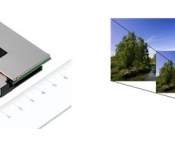
If your presentation audience is noticing pixels, then projector resolution may be the least of your problems. Nevertheless, Sony’s just introduced a new pico module that’ll allow manufacturers to build pocket-sized projectors with high-def, 16:9 images using laser beam scanning (1,920 x 720 with rectangular pixels). That’ll bring sharp focus regardless of screen distance, along with high contrast, wider color gamut and reduced laser “sparkle,” according to Sony. There’s also built-in screen distortion correction for off-kilter situations. If you’re now scheming about some kind of shark-mounted entertainment system, though, it’ll have to wait — the tech is only available to projector makers.
Filed under: Home Entertainment, HD, Sony
Source: Sony

Compare two generations of gaming across four platforms with Metal Gear Solid V: Ground Zeroes

Like so many games launching at the end of 2013 and throughout 2014, Metal Gear Solid V: Ground Zeroes straddles both last generation (Xbox 360/PlayStation 3) and the current one we’ve just entered (Xbox One/PlayStation 4). Given Metal Gear‘s history of gorgeous visuals, the question asked itself: what will Ground Zeroes look like on aging game consoles compared to the new shiny ones? It turns out that Kojima Products, the studio behind Ground Zeroes, has exactly the answer we were looking for in the form of a brand new comparison video.
If anything, we’re most shocked by how great it still looks on the older consoles! Of course, for those of you still fighting the console wars, there’s the (negligible) difference between Xbox One and PlayStation 4 to analyze. Head below to take a look for yourself.

Switched On: The leader, the bleeder and the reader
Each week Ross Rubin contributes Switched On, a column about consumer technology.

Sony recently bid farewell to three device categories. The long-struggling Japanese consumer electronics giant is selling off its PC division, spinning out its TV group into a separate company and getting out of the e-book business by handing it over to Kobo. While each has a unique history, they all demonstrate the difficulties Sony has had in dominating any one category.
Sony’s introduction of the Trinitron in the 1960s accelerated its ascent to the top of the consumer electronics food chain in the following decades. By the 1980s, virtually any TV buyer knew that nothing compared to Sony and the company’s big-screen offerings were bolstered by the arrival of CRT screens that lacked the convex curve of the time. (Back then, curved screens were passé, not leading edge.)
But that all changed with the arrival of the flat-panel. While Sony sets were still regarded as among the best, they were more seriously challenged by old rivals such as Panasonic with plasma, new rivals like Samsung chasing the design and picture quality and Costco kings such as Vizio building a brand at much lower price points. The company tried to play up its HD heritage in noting that so much HD content was captured on Sony professional gear, but consumers could not keep up with Samsung’s advertising and sponsorship blitz. And Sony’s attempt to capitalize on a “3D World” certainly didn’t help when that world ended not with a bang, but with a whimper.
Unlike with TVs, Sony was a latecomer to the PC market that never found footing for its expensive footwear in the US. Along with a clever logo for VAIO that embraced both the analog wave (the “VA”) and digital data (the “IO”), Sony products featured imaginative industrial design and form factors. They not only included astonishingly thin and lightweight laptops and the elongated VAIO P, but also entrants in doomed categories like the cake-like, round home theater PC and the VAIO UX hand-held PC. While the recent allegation that Steve Jobs offered Sony an exclusive opportunity to use Mac OS on its computers was surprising, the surprise was that Apple would have licensed at all, not that the one company chosen would be Sony.

Compared with the TV and PC markets, the e-reader market is a small one. Its decimation at the hands of tablets has been far more drastic than the declines we’ve seen in TVs and PCs. That said, Sony was a pioneer with its original Japanese Librie product and the plainly named Reader in the US. While pricey, it was a hit at launch, selling out in Sony stores in its debut holiday season. Sony followed up with several more models, adding touchscreens and other enhancements. However, it missed the integrated cellular connectivity that Amazon added. That, plus the retailer’s built-in audience of book enthusiasts, quickly escalated the Kindle to the top of the e-reader category.
As Sony hands off its digital bookstore to Kobo, the company might have been more successful had it partnered with Barnes & Noble in the early days, heading off the Nook and allowing both companies to get an early jump on the Kindle. But for now, the tale of the reader is just a shorter version of what Sony saw with the Walkman without the latter product’s long stretch of success.
Ross Rubin is principal analyst at Reticle Research, a technology, media and telecom advisory firm, and founder of Backerjack, which covers crowdfunded product innovation. He blogs at Techspressive.
 AIVAnet