


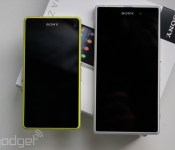
KitKat now rolling out to Sony’s Xperia Z Ultra, Z1 and Z1 Compact

An Android 4.4 KitKat update for the Xperia Z Ultra, Z1 and Z1 Compact is rolling out as of today, Sony’s announced. In addition to what the newer OS version itself brings, Sony’s folded in some tweaks of its own, like a reworked status bar and quick-settings menu, a couple of PS4-inspired UI elements and updated forms of Sony’s stock and media apps. While KitKat might be ready for this trio of devices, remember that availability depends on where you live and what carrier your handset may be bound to, so don’t bet on a notification popping up this very afternoon. Sony confirmed back in November that the Xperia Z, ZL, ZR and Tablet Z, too, were eligible for a KitKat update, but they’ll have to wait until at least “mid-Q2″ for their snacks. In better news, the Xperia T2 Ultra, E1 and M2 have been added to that exclusive list, though we can’t give you even vague timelines for when these updates might be available just yet.
Filed under: Cellphones, Software, Mobile, Sony
Via: Android Central
Source: Sony

Sony’s bringing Hulu Plus and Redbox to the PlayStation Vita

Assuming you like to do more than just play games on your PlayStation Vita, the latest batch of media-centric apps available on Sony’s handheld may be of interest. Crunchyroll, NHL GameCenter LIVE and Qello Concerts are now live on the PlayStation Store, catering for those with a taste for anime, sport and music. Sony also revealed that Hulu Plus and Redbox Instant apps will come to the Vita on March 25th, with fitness app Gaiam TV following later this spring. It’s a nice boost for gamers who remain welded to their Vita, but the wide availability of smartphone and tablet apps means Sony is continually playing catchup.
Filed under: Gaming, Internet, HD, Sony
Source: PlayStation Blog
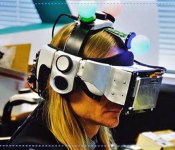
Sony’s early VR headset prototypes looked pretty silly

Head-mounted display, movement sensors…. done. Sony Computer Entertainment’s Shuhei Yoshida says that the company’s been working on its Project Morpheus VR hardware for over three years and it’s fair to say it’s come a long way: the early model above features three Move controller modules, attached in what could be described as the Mickey Mouse formation. It’s somehow cute, but also hilarious.The luminous pearl-finish headset revealed on stage is apparently still nowhere near complete, although SCE appear to have taken on board some of the design cues of Sony’s existing head-mounted display series. There’s more pictures after the break, with Yoshida himself channelling some Star Gladiator vibes with two different prototypes.

Filed under: Gaming, Home Entertainment, Wearables, HD, Sony
Live from PlayStation’s ‘Driving the Future of Innovation’ panel (the VR one)

What is the “Future of Innovation”? Sony’s gonna tell us tonight, but we’re pretty sure we can tell you what it is right now: bacon-scented alarm clocks. Oh, right, the future of innovation is also the rumored virtual reality headset from Sony’s PlayStation team. At least we’re pretty sure that’s the case, both based on the rumor mill and our own cabal of sources on the ground here at GDC 2014. We’ll certainly find out soon enough, as the event kicks off shortly. Stick around, as we’re starting shortly.


‘Project Morpheus’ is Sony’s virtual reality headset for the PlayStation 4

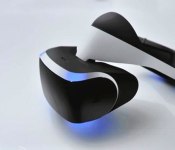
The rumors are true: Sony’s working on virtual reality. The hardware is called “Project Morpheus” and it’s headed to the PlayStation 4. The headset is two pieces: a closed display and what looks like a PlayStation Move sensor built in. SCE Worldwide Studios head Shuhei Yoshida unveiled it on-stage tonight at GDC 2014; he said the “prototype” is “by no means final.” It’s the culmination of over three years of work, Yoshida said, and the prototype unveiled tonight will also double as a dev kit.
As seen above, a subtle PlayStation-themed blue light is emitted by Morpheus. A single wire can be seen exiting the unit on-stage; it’s unclear how the device will work with consoles. Sony’s clearly drinking the VR Kool-Aid: there’s serious talk about “presence” on-stage (the term Valve coined as the target for “true VR”). What are the specs in the headset? It’s got a 1080p display and just over a 90 degree field of view. There’s positional head tracking, 1000HZ refresh rate, a 3-meter working volume with full 360 degree tracking — it looks like anyone who wants to use Morpheus needs the PS4 camera. In terms of sound, the device has “true spatial sound” using binaural audio — pretty neat! It’s also apparently “highly adjustable” and support custom headphones if you’d prefer your own audio choice (it plugs right into the headset). Head below for more!
The current dev kit is wired, though the wire is “very long” (around 5 meters, we’re told). The dev kit also has a “breakout box” between the headset and your television.
PlayStation R&D engineer Richard Marks dug into the nitty gritty a bit: he said Morpheus needs a high-resolution, high-quality screen (“no problem,” he quipped), great sound (SCE is developing binaural tech to produce sound, incorporating that into the experience), tracking (he pointed out that the PS4 camera is “almost custom-built for VR”), and control (Sony’s sticking with DualShocks, cameras and Move, apparently).
Marks admitted that VR needs to be easy to use — as in, as simple as picking it up off the coffee table and quickly jumping in. So, perhaps no wire then? That’s still unclear. He finished with a plea to devs to create content for Project Morpheus, “which is why we’re announcing this at GDC.” Sony’s already working with a handful of devs, including Epic Games and Crytek. We expect it won’t be too long before the large world of game devs jumps in.
Update: In a Q&A following tonight’s session, we were told by R&D engineer Anton Mikhailov that the headset was given its project name for “the god of dreams” (he’s not lying). In terms of first-party Sony studios working on content for Morpheus, the Sony trio on-stage stayed mum, pointing to the handful of titles revealed tonight as the first example.

Sony’s new VR headset being shown at GDC 2014 with playable demos of EVE Valkyrie, Thief
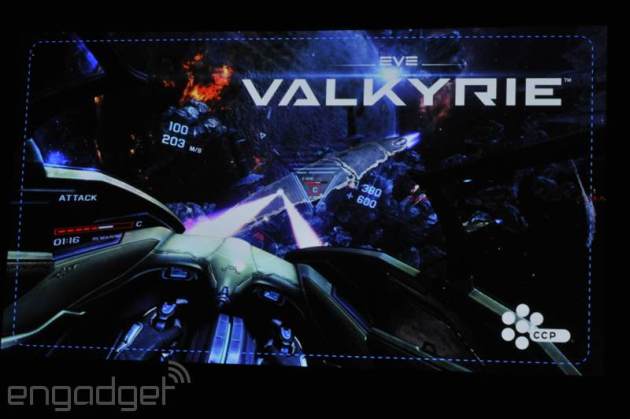
What’s a virtual reality headset without software? Nothing — and Sony knows it, which is why the company is treating GDC attendees to four demos on the conference show floor, starting tomorrow morning. Some of them are familiar: when EVE: Valkyrie was announced as a playable demo, Sony’s GDC audience erupted into cheers and applause. Gamers stopping by Sony’s booth will also get a chance to play a special build of Thief created specifically for virtual reality. Although these traditional gaming experiences are likely to steal the show, Sony’s also trotting out two demos that sound more passive: The Deep and The Castle, which lets players experience at a shark infested lagoon and a medieval fortress, respectively. So, how do these games play? We’ll let you know as soon as the GDC show floor opens tomorrow.
Filed under: Sony
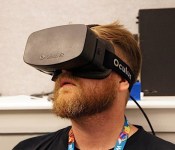
This is the week virtual reality goes wide

After attending the first day of the annual Game Developers Conference, the only games I played were in virtual reality. In the following four days, many, many more VR experiences will happen. Some will be good, some will be great, some will be not-so-great. One thing’s for sure: when this week’s over, the VR landscape will look very different.
SONY

Let’s get the elephant in the room out of the room right now: yeah, we’re all pretty sure that Sony’s got a VR headset and it’s going to be shown at GDC. This panel right here — which takes place this evening and we’ll be liveblogging — features a trio of big names at Sony’s PlayStation arm: Worldwide Studios head Shuhei Yoshida and PlayStation hardware R&D guys Richard Marks and Anton Mikhailov. Those three are particularly interesting for a few reasons. First, Yoshida already professed his love for VR to us last year. Second, the latter two gentlemen were previously involved with another major PlayStation hardware initiative: PlayStation Move. We’d call it less than shocking if some form of PlayStation-branded virtual reality headset is announced during tonight’s panel.
Of course, what Sony’s rumored headset can do is what matters most. Even the rumor mill is relatively light on this one; the only suggestion of its ability is that it’s superior to the original Rift dev kit and more similar to the Crystal Cove prototype from CES. Here’s hoping we’ll find out tonight!
OCULUS VR

Will we finally see the Oculus Rift retail unit at GDC? Sorry to tell you, but our money’s on no. Last we checked, there’s no launch window for the retail version of the Rift. And, wouldn’t you know it, the original Rift dev kit just recently stopped production. It’s no secret that, after the Crystal Cove prototype was shown at CES, another development kit would eventually have to exist. Now seems the perfect time to introduce a newer model dev kit with a higher-res screen, depth tracking, and “low persistence” — one giant step closer to what we’ll eventually be able to buy in stores.
VALVE
 This is a VR prototype headset from Valve
Valve insists it isn’t creating any consumer-grade VR tech just yet, but the folks behind Steam are still a presence at this year’s GDC. Besides coming for the business side of the show (finding new employees, brokering deals with other companies, etc.), we’re hopeful that the new Steam Controller iteration will be at the show for a fresh hands-on. In case you missed it, Valve added eight buttons in place of the touchscreen in the original prototype.
There’s also no indication that Valve’s updated game building tech, Source Engine 2, is getting any real showing. It makes most sense to show off fancy new engines with games, though, and that’s best saved for a private event or E3. We’ve not heard anything on the former, and the latter is approaching quickly (this June).
Oh, and Half-Life 3 will finally be re-announced and given a release date: it’s available right now! Hooray! … No no, not really. Sorry y’all.
THE REST

Yes, I did only mention two VR headsets. So what about the rest? GameFace Labs is here, albeit with the same prototype from CES (which uses Rift optics). We spoke with CEO Ed Mason yesterday morning and his company is working toward its next prototype for soon after GDC. His company was the only other VR headset maker we found at CES this year. At GDC, however, they’re one of five or six (that we know of thus far). Some may be hangers-on to the sudden mass interest in VR, but we also expect to see some very interesting new entries in the field of VR by weeks end.
We’ll of course bring it to you live, as fast as we can, from sunny San Francisco.

Metal Gear Solid Ground Zeroes: The Joystiq Review

It’s a pleasure being lost in the universe of Metal Gear. With every game, and with every return of director Hideo Kojima, the fascinating stealth series redraws the boundaries of its dense military fiction, pushing them back to include more and more characters and conspiracies. We feel like time-travelers in Metal Gear’s byzantine blend of fact and fiction, leaping back and forth between the future and past of a legendary soldier named Snake. Now we enter 1975 in Metal Gear Solid 5: Ground Zeroes, and bless its prequel heart – there’s a spot in the statistics screen reserved for time paradoxes.
Kojima’s fiction may be impenetrable to the newcomer, but one man’s convoluted is another man’s complex, and it’s your job to infiltrate the latter. Ground Zeroes effectively acts as the cold open for the upcoming and separately released Metal Gear Solid 5: The Phantom Pain, sending Snake through a massive rain-drenched encampment in Cuba. It’s not quite the glorified demo your cynical self might suggest, but this tantalizing playground does show how Metal Gear Solid will change its crouching silhouette yet again.
The mission to rescue Chico and the duplicitous Paz, two important figures from Metal Gear Solid: Peace Walker, is just the first step in a new, freely explorable environment. It feels daunting at first, but clear goals keep you pointed in the right direction. Ground Zeroes is a confident game for the confident player – the one who sees the playground hiding beneath Metal Gear’s tankers and army bases. This one’s just a whole lot bigger.
Click here for more
Filed under: Gaming, Software, Sony, Microsoft
Source: Joystiq
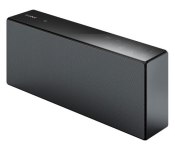
Sony’s SRS-X7 and SRS-X5 wireless speakers ship today starting at $200

If you’re still looking for the ideal wireless speaker, Sony is adding two more options to the fray with the arrival of its SRS-X7 and SRS-X5. The audio gadgets pack Bluetooth streaming with AAC and aptX support, ClearAudio+, one-touch listening, aux input, subwoofers with dual passive radiators, USB gadget charging and a relatively minimal design. With 32W of power and six hours of playback, the SRS-X7 (shown above) wields WiFi support — should you prefer the DLNA or AirPlay route. For the SRS-X5 (pictured after the break) is concerned, there’s 20W of power, three color options and eight hours of easy listening; however, the wireless connectivity is limited to Bluetooth here. Both units start shipping today, with the SRS-X7 priced at $300 and the SRS-X5 set at $200. Anxious to nab one, or see the full spec sheet? Consult the source links below to do just that.

Filed under: Portable Audio/Video, Sony
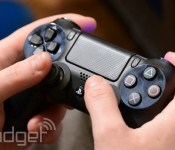
PlayStation 4 tops US console sales in February, but Xbox One narrows the gap

It looks like Sony’s commanding lead in next-gen console sales didn’t last long in the US. The NPD Group reports that the PlayStation 4 was the top-selling game console in the country this February, but only just — the Xbox One managed to get over 90 percent of the PS4′s sales volume. Microsoft says that it sold 258,000 units of its flagship, which suggests that Sony moved roughly 287,000 PS4s. Neither of these figures compare to what we saw during the systems’ launch windows, but they’re very healthy. Total hardware sales were up 42 percent year-over-year, and 44 percent over January. While Nintendo isn’t divulging its numbers, it may have performed relatively well when analysts saw “double-to-triple digit increases” in month-to-month sales for most consoles.
Software was another story. Overall game revenue was down 11 percent in February, and the aging Xbox 360 was the platform of choice for six out of the top 10 releases; the PS4 and Xbox One rarely fared better than second place. The decline isn’t surprising, the NPD Group says, since game sales are “expected” to taper off as the old generation makes way for the new. That transition should happen relatively quickly. Titanfall is considered an early system seller for the Xbox One, and high-profile releases like Watch Dogs may help Microsoft and Sony alike.
NPD Group: PS4 is #1 again for the month, and cumulative sales, in the United States. Thanks for your support!
– PlayStation (@PlayStation) March 13, 2014
Oh, and NPD says the PS4 led hardware sales, but only by a narrow margin. Xbox One unit sals were 90% of PS4.
– Ian Sherr (@iansherr) March 13, 2014
Filed under: Gaming, Sony, Microsoft, Nintendo
Source: PlayStation (Twitter), Xbox Wire, Ian Sherr (Twitter)
 AIVAnet
