



Watch Sony explain Project Morpheus and its VR plans for PlayStation

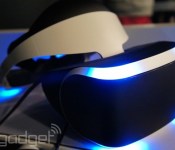
Virtual reality is (quite suddenly) a big deal. Sony introduced its Project Morpheus prototype headset for the PS4 at GDC, just days ago, and now the company has uploaded the hour-long presentation, including its development, awkward prototypes, the criteria it’s eventually aiming for and some early demos. It’s almost like you were there — which is entirely the point of VR.
Update: As a bonus, there’s even a special PlayStation-sanctioned hands-on.
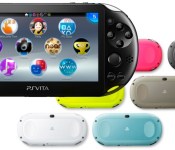
PS Vita gets more apps on its home screen and a memory card manager

With the amount of rad digitally distributed games in the PlayStation Vita’s library, your system’s home screen could be getting a little crowded. Well, after downloading the handheld’s latest firmware update, you’ll have a lot more room for all of those high-res bubbles. Another 400 of them to be exact, as software version 3.10 allows a total of 500 apps and games on the touch-based UI. What’s more, Joystiq noticed the patch adds a memory card management feature that separates saved data based on what type of content created it. Bizarrely enough, the portable PlayStation didn’t have an auto setting for daylight savings time before this either. Sony has also included a calendar app that syncs with your Google account, as well as a voice messaging system for sending quick soundbites to your Vita or PS4 owning-pals. Just try keep ‘em PG-rated, okay?
Via: Joystiq
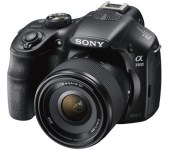
Sony’s mirrorless A3500 looks like a rebadged A3000 with a new lens

According to a listing on its Australian site, Sony’s just launched the A3500 mirrorless camera, but don’t get too excited yet. It seems to be a mild re-working of the A3000 released just six months ago with an identical body and specs, like the 20.1-megapixel Exmor APS sensor, 1080p video and 3.5fps continuous shooting speed. The new model has the same 499 Australian dollar price as the A3000 did (the older model is no longer available there), and it comes with a brand new 18-50mm f/4-5.6 lens. There could also be some changes under the hood, as the footnotes mention a phase-change focus option coming via a firmware update. We can’t be sure, though, since there’s been no formal announcement to go along with the listing. In the meantime, we’ve reached out to Sony for an explanation.
Via: Slashgear
Source: Sony

UK government closes tax loophole on digital media, could mean the end of the 99p song download

Buried within the latest budget plan for the UK, Chancellor George Osborne announced new laws that would ensure internet downloads from the likes of iTunes, Google Play Amazon and game networks would be taxed in the country they’re bought in. In the case of the UK, that would be around 20 percent VAT, substantially more than selling through countries like Luxemburg where the rate can be around 3 percent. Separate to the government’s grand plans for its digital future, the new rule would start January 1 2015 — “ensuring these are taxed fairly and helping to protect revenue.” According to the government’s estimates, it could net around £300 million in extra tax income, although it’s likely to bring digital download pricing (unfortunately) closer to physical media in the process.
Filed under: Internet, Apple, Sony, Microsoft, Amazon
Source: The Guardian
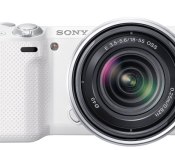
How would you change’s Sony’s NEX-5R?

Most camera geeks agree that Sony needed to make up for the NEX-F3, and that it did so with style by producing the NEX-5R. When we placed this in the hands of our in-house camera guru, he was “thrilled.” In fact, he described it as one of the best compact ILCs of 2012-2013, and that people should keep it in their mind the next time it came time to buy a camera. The question that needs to be asked, however, is did our man Honig get it right? If you’re a shutterbug who put one of these through its paces, then share with us your impressions and feelings over on the forum.
Source: Engadget Product Forums

Weekly Roundup: the Moto 360, Sony’s Project Morpheus, NSA transparency reports and more!

You might say the week is never really done in consumer technology news. Your workweek, however, hopefully draws to a close at some point. This is the Weekly Roundup on Engadget, a quick peek back at the top headlines for the past seven days — all handpicked by the editors here at the site. Click on through the break, and enjoy.

This is Motorola’s new Android Wear smartwatch: Moto 360
Motorola’s new wearable, the Moto 360, takes smartwatch form factor back in time (har), boasting a seriously eye-catching design and circular watchface. Powered by Google’s Android Wear, owners can utilize the power of Now from their wrists. What’s more, this isn’t the Moto 360′s only design. It’ll come in a variety of styles once it launches this summer.

Using the PlayStation 4′s virtual reality headset, Project Morpheus
Last week at GDC, Sony unveiled Project Morpheus. We got to try out the company’s VR headset, destined for the PlayStation 4 — and yes, it’s pretty awesome. Engadget’s own Ben Gilbert donned a virtual sword and took the prototype for a spin while we caught the action on camera.

The NSA may release its own transparency reports
Earlier this week, NSA general counsel Rajesh De stated that companies like Apple or Google are fully aware of its data collection practices due to its “compulsory legal process.” Now, the agency may take that claim one step further by releasing its own transparency reports.

Peter Molyneux wants more from VR than what’s available
Without failing to realize how far VR has come, Peter Molyneux told us at GDC that the tech still leaves him wanting. According to the famed game designer, it’s all about innovation, and the latest next-gen tech, like Sony’s Project Morpheus, doesn’t push the limits.
You also might like:
Filed under: Misc

Gadget Rewind 2005: Sony PlayStation Portable (PSP)
It’s our 10th birthday, and to celebrate we’ll be revisiting some of the key devices of the last decade. So please be kind, rewind.

Engadget was lucky enough to get ahold of one before the end of 2004, but the Sony PlayStation Portable (PSP) was officially launched in the US in March 2005. This made picking a portable a difficult decision for impatient consumers who were wavering between the Nintendo DS and the PSP. The DS had already arrived by late 2004 and details about the Sony release were still a bit fuzzy. So, you decided to wait and snag the PSP, and according to the 2004 Engadget Awards, both editors and readers agree that you made the right decision. It offered several options including external storage, a 1.3-megapixel camera add-on and the ability to handle an array of image, audio and even video formats. The PSP also had a high-resolution 480 x 272 LCD and content looked great … at least as long as the battery held out. The PSP had a rechargeable 1800mAh battery, but all the bells and whistles led to rapid depletion if you used it as a truly portable device.
All those extras packed into the PSP ran the price up well past the competition. The Nintendo DS retailed at around $150, while Sony slapped a $250 price tag onto the PSP. You did have the whole PlayStation franchise behind it, though, with games like Twisted Metal, Wipeout, Metal Gear and plenty more. Although the PSP had a lot going for it, battery life and device size left room for improvement and that’s just what Sony did over the next few years. By 2007, the PSP had shed some weight and arrived as the Slim & Lite (PSP-2000) version. After numerous iterations, the PlayStation Vita arrived in 2012, still looking a bit like the original PSP — and still taxing the battery like the IRS — but rocking a stunning 960 x 544 OLED display.
Did you own a Sony PSP? Add it to your Engadget profile as a device you had (or still have) and join the discussion to reminisce or share photos of your device with other like-minded gadget fans.

Daily Roundup: Turkey bans Twitter, Peter Molyneux talks VR and more!

You might say the day is never really done in consumer technology news. Your workday, however, hopefully draws to a close at some point. This is the Daily Roundup on Engadget, a quick peek back at the top headlines for the past 24 hours — all handpicked by the editors here at the site. Click on through the break, and enjoy.

Leaked documents detail how and why NSA targets network admins
Thanks to several screengrabs uncovered by Edward Snowden, The Intercept derived new details regarding the NSA’s ability to monitor calls and emails. Once the agency gains access to a telco’s system admin PC, a user’s Facebook or web-mail account is susceptible to its surveillance malware.
Peter Molyneux wants more from VR than what’s available
Without failing to realize how far VR has come, Peter Molyneux told us at GDC that the tech still leaves him wanting. According to the famed game designer, it’s all about innovation, and the latest next-gen tech, like Sony’s Project Morpheus, doesn’t push the limits.

Sony shows (and tells) us why 4K on a phone isn’t crazy
Ultra HD is on the rise, but with the lack of 4K displays in the wild, are smartphones with such technology really that useful? We asked Sony’s Kichiro Kurozumi, and his answer, not surprisingly, was yes. According to the VP, “There’s no dependency on 4K TVs.” “[Video] will look best on those, but even when downscaled to 1080p, the higher-resolution video looks good.”

Turkey bans Twitter but users can still tweet via SMS
If you glanced at your Twitter feed this morning, you probably already noticed that Turkey joined ranks with Iran and Egypt by restricting access to the social network. Apparently, some users from the country posted voice recordings and documents regarding the Turkish prime minister’s political corruption.
You also might like:
Filed under: Misc
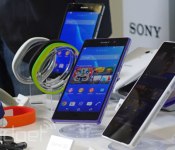
Sony shows (and tells) us why 4K on a phone isn’t crazy

At Sony Mobile’s HQ in Tokyo, Kichiro Kurozumi is itching to go into detail about the new flagship Xperia Z2. The VP says it’s “all in the details.” We really hope so, because it’s getting increasingly hard to tell Sony’s recent smartphone iterations apart, especially when it comes to the Xperia Z2 and Z1. Kurozumi emphatically states that it’s all the work done behind the scenes (reengineered frame, a 20.7-megapixel camera that records in 4K) that makes the Z2 stand out. “2014 is about premium smartphones, tablets and the smartwear experience but we… Sony has to do it differently.”
Take the Xperia Z2′s 4K-recording camera sensor. Sony’s certainly not the only smartphone maker with a device capable of recording video in Ultra HD, but Kurozumi reckons the company’s software-based “SteadyShot” stabilization keeps the Xperia Z2 ahead of the pack. Because of the relatively large camera sensor, it can compensate for more movement than its rivals — up to 21 percent. He offers up a professional-level clip and his own real-world sample from a few weeks earlier in Barcelona, and (courtesy of a 4K Sony TV in the room) the level of detail is noticeably beyond that of 1080p video, but won’t the lack of 4K screens (UHD TVs are still pretty rare) limit the usefulness? We asked Kurozumi exactly that.
No surprises — the Sony exec didn’t see it that way:
“There’s no dependency on 4K TVs. [Video] will look best on those, but even when downscaled to 1080p, the higher-resolution video looks good — better than simply recording in 1080p.”
We got to test out the Xperia Z2′s 4K recording for ourselves — embedded below — which should offer a good estimation of what you can expect. (You should be able to play it back in 1080p or 4K, if you’ve got the hardware.) We gave it a tough order: filming Tokyo’s lit-up skyline at night. Sony is fairly proud of the still-photo capabilities of its top smartphone imaging sensor. We’ve already documented the performance of its predecessor, but this time there’s image stabilization (a wish-list item from our last review), so it wouldn’t hurt to try the Xperia Z2 before our review, right?
You can immediately check out the lack of bluish noise and haze in the video, despite the mostly pitch-black subject material. Those image-stabilization skills also appear to dramatically boost the low-light photos too, even in our short testing time, although it made some shots look a little unnatural — Sony tells us that this Xperia Z2 wasn’t the final retail model. Sure, it’s got the same megapixel count as the camera inside the Xperia Z1, but it’s different. (A lot of Sony people stressed this during our playtime with the sequel.)
The video results are surprisingly pleasing. The image stabilization smooths away our handshakes, and our biggest complaint is the sporadic refocusing. Once it does lock on, however, you can see the extra pixels there on the video — if your monitor’s got the resolution for it.

So when will we get a smartphone with a 4K display? Kurozumi and Sony’s VP of Mobile Development Akihiro Hiraiwa both laugh. Hiraiwa says, “Some day! There was the idea that users wouldn’t be able to discern any increases in resolution once it got to a certain level, but that’s wrong. People can tell.” Kurozumi adds, “We now need the right size for phones, the right processors capable of running 4K. We’re looking for [these] solutions.” Smartphones would also need enough battery power to run on such a high resolution for a respectable amount of time.
“We now need the right size for phones, the right processors capable of running 4K. We’re looking for [these] solutions.”
But back to the displays we’re using right now. Sony has taken on board the criticism for its existing — often middling — smartphone screens. “Live color LED” is the solution, swapping out a blue LED and yellow phosphor for a combination of blue LED plus red and green phosphors. Sony reckons this makes the screen substantially brighter, and expands the color palette beyond previous models. The company had some of those weird color gamut graphs to prove it, but it’s there for you to see on the new phone — it’s a substantial improvement on what came before.

Another change from the Z1 to the Z2 was to rethink how it made the smartphone’s frame. Instead of three separate parts, Sony managed to craft the same structure in one piece, and in the process reduced the number of seams and weak points, making the phone easier to water protect. Oh and it made the entire thing lighter and thinner, too: there are those details.
Earlier in the day, Sony Mobile’s CEO (and Kurozumi’s boss) Kunimasa Suzuki told us how 2013 was Xperia’s breakout year. However, Sony still hasn’t breached the global top 5 smartphone sellers list yet. In its native Japan, it’s the top Android manufacturer — it sells more phones and tablets than Samsung. He says, “The best of Sony is realized in these products” — something we’ve heard many times before, with mixed results. The Sony Mobile CEO elaborates on his MWC presentation: “But … without being bolder, we cannot be a bigger player. We can’t make better products.”
“Without being bolder, we cannot be a bigger player. We can’t make better products.”
“This year, we’re taking a bolder mindset.” With a new lifelogging wearable on the horizon, that’s the plan, but Sony could find it difficult to push its new Xperia Z2 as another big step forward, regardless of its attention to detail. “We think the similarities are a positive thing,” says Kurozumi. “If you already owned the Xperia Z (or Z1), then you’ll see the Z2 in stores and know what it is … what it can do. You’ll also see the extra features, like 4K recording and the free noise-canceling headphones.”
“The issue is marketing. We need to show everyone these are great products and communicate this.” Will that be enough to create a top-selling smartphone? “If we didn’t have Apple, then we wouldn’t be here. iPhones are still very innovative.” (Earlier, he also said that Sony has no plans to introduce a fingerprint sensor — not yet.) “…But we don’t think that we’re losing in this game, either.”
Filed under: Cellphones, Mobile, Sony
Exploring virtual reality on PlayStation 4 with Shuhei Yoshida and Richard Marks (video)

It was 2010 when Sony engineers first explored virtual reality concepts. The idea of a VR headset sprang from another project at the company: PlayStation Move, a wand-like motion controller for the PlayStation 3. Company engineers attached the controller to head-mounted displays, enabling a form of homemade VR via motion and depth tracking. Sony Computer Entertainment Worldwide Studios head Shuhei Yoshida was asked to try these early prototypes, one which put the player into the role of Kratos in God of War 3 and the other a mod of Half-Life 2 where you could lift up and look at your own gun. “That was a totally compelling experience, so I became a believer,” Yoshida told us in an interview this week, post-Project Morpheus announcement. “It was a ‘wow’ moment!”
So, what’s Project Morpheus? It’s the somewhat silly code name (from the Greek God of Dreams) for the virtual reality headset planned for the PlayStation 4, and Sony unveiled it this week during the 2014 Game Developers Conference in San Francisco. Yoshida himself announced Morpheus, flanked by R&D engineers Richard Marks and Anton Mikhailov who dug into the technical chops behind the prototype headset. The trio chose GDC for an important reason: this is where they can send a rallying cry to game developers. Marks made their call to action clear when he finished his portion of the presentation by saying that this moment, right now, is the beginning of a new field of gaming. “This is the Wild West,” he said. And he’s right. There are no VR standards (though efforts are being made), no VR game “tropes” yet. The folks making VR games are at the forefront of an unexplored genre, and that’s thrilling.
Morpheus is as close to the quality of Oculus VR’s latest Rift prototype as anything out there, though it lags behind a bit in a few key areas. Specifically, vision blur, field of view and image quality aren’t as refined as the Rift’s latest dev kit (read our full hands-on here). Nor is Morpheus up to Sony’s standards for the consumer version. Marks acknowledged as much in our interview (seen above), and he also spoke to the hurdles ahead for VR as a medium going mainstream.
As ever, with VR it’s about making a product that’ll convince people. But what about that whole “putting electronics on your head” issue? That “encumbrance” factor is a concern, Marks admitted — one that Sony’s trying to minimize with the design of the headset, but only so much can be done with existing technology that keeps it within a reasonable consumer price range.
Whereas Oculus has put a firm price on its Dev Kit 2, Sony’s not talking cost for this first iteration of Morpheus, and that same silence extends to its particular specs, and eventual consumer release. The prototypes/development kits at GDC are the base level of workable hardware for developers to start developing games. Yoshida’s hoping we’ll see some of the fruits of those developers’ labor by E3 this June — Morpheus dev kits head out to game developers next month, and the only way to get one currently is to get in touch with Sony directly (Yoshida suggested tweeting at Adam Boyes and Shahid Kamal Ahmad).

Morpheus will inevitably evolve towards a final consumer version. It’s just not coming this year — and that’s the closest thing to a release window we’ve got right now. But we expect Project Morpheus won’t remain so mysterious for too long.
 AIVAnet