


Weekends with Engadget: GS5 and Fire TV reviews, Sony’s Yoshida on VR, and more!

Welcome to Weekends with Engadget, a quick peek back at the top headlines from the past seven days — all handpicked by the editors here at the site. For even more action, subscribe to our Flipboard magazine!

Samsung Galaxy S5 review: a solid improvement, but don’t rush to upgrade
Samsung’s latest handset, the Galaxy S5, has a slightly larger screen and squared edges, but nontheless recognizable as part of the Galaxy family. Packing a heart rate monitor, fingerprint scanner and extensively revamped TouchWiz UI, it’s a solid upgrade from the GS4. But is it worth an early upgrade?

Getting to know Microsoft’s new Xbox lead, Phil Spencer
There’s a new sheriff in Xbox town, and his name is Phil Spencer. While most of us know him as the E3 guy who speaks about games during Microsoft’s keynote, Spencer is a longtime Redmond employee who worked his way up from the bottom.

The Micro is a $200 3D printer that can make a teacup in an hour
If you’ve been expectantly waiting for 3D printer that wouldn’t require you to wring out your wallet, now might be your chance to pick one up. This week, M3D’s Micro hit Kickstarter — for only $200.

Lightroom mobile arrives for iPad with touch-friendly interface, realtime sync
Lightroom mobile for the iPad is here! Adobe’s latest companion app brings photographers most of the most of the funtionality found in the desktop version, and any changes you make will be pushed to your Lightroom cloud.

Neil Young on digital audio: You’re doing it wrong
Neil Young has a plan to serve up high-resolution audio, and it’s called Pono. But why would anyone spend $400 on a somewhat chunky media player and re-buy all of their music library in FLAC format? We sat down with the rock icon to find out.

My First Time on the World Wide Web
Do you remember the first time you cracked open the treasures of the World Wide Web? Our editors sure do. Read on for a look into the lives of Engadget’s biggest nerds and their first experience with the “internet.”

Amazon Fire TV review: the set-top that tries to do everything
Is it a gaming console? Is it a media streamer? Well, Amazon’s Fire TV is a little of both. Sure, the $99 set-top box is lightning fast thanks to its “ASAP” technology. But in an ecosystem all to its own, will the Fire TV be able to attract enough development and content to stay afloat in an already saturated market?

Sony’s Shuhei Yoshida loves that Facebook bought Oculus, says it helps validate PlayStation’s efforts
Most of us were surprised (maybe even appalled) once we learned that Facebook bought Oculus VR for $2 billion. Shuhei Yoshida, head of Sony Computer Entertainment’s Worldwide Studios, however, was thoroughly excited.

Play Nintendo’s rarest game on your Wii U
Back in the 90s, Nintendo released 90 copies of a three-part, competitive play cartridge called Nintendo World Championships. In the spirit of nostalgia, the company’s adding said game into its next iteration of NES Remix for the Wii U.

Amazon phone reportedly coming in September with glasses-free 3D
According to the Wall Street Journal, Amazon’s planning to release its own smartphone this coming September. What’s more, the handset’s reported to have four cameras with retina-tracking tech, making it possible to project 3D images without needing glasses.
Subscribe to Weekends with Engadget on Flipboard today!
Filed under: Misc
Daily Roundup: Galaxy S5 review, Sony’s Shuhei Yoshida on VR and more!

You might say the day is never really done in consumer technology news. Your workday, however, hopefully draws to a close at some point. This is the Daily Roundup on Engadget, a quick peek back at the top headlines for the past 24 hours — all handpicked by the editors here at the site. Click on through the break, and enjoy.
Samsung Galaxy S5 review: a solid improvement, but don’t rush to upgrade
Samsung’s latest handset, the Galaxy S5, has a slightly larger screen and squared edges, but nontheless recognizable as part of the Galaxy family. Packing a heart rate monitor, fingerprint scanner and extensively revamped TouchWiz UI, it’s a solid upgrade from the GS4. But is it worth an early upgrade?

An oral history of the last 20 years of gaming, as told by PlayStation’s Shuhei Yoshida
Since the beginning, Shuhei Yoshida’s been an integral part of Sony’s PlayStation arm. From initiating franchises like Crash Bandicoot and Uncharted, to daily interacting with thousands of customers on Twitter, Yoshida helped build the foundation of the modern gaming industry.
Sony’s Shuhei Yoshida loves that Facebook bought Oculus, says it helps validate PlayStation’s efforts
Most of us were surprised (maybe even appalled) once we learned that Facebook bought Oculus VR for $2 billion. Shuhei Yoshida, head of Sony Computer Entertainment’s Worldwide Studios, however, was thoroughly excited.
Amazon phone reportedly coming in September with glasses-free 3D
According to the Wall Street Journal, Amazon’s planning to release its own smartphone this coming September. What’s more, the handset’s reported to have four cameras with retina-tracking tech, making it possible to project 3D images without needing glasses.
You also might like:
Filed under: Misc

An oral history of the last 20 years of gaming, as told by PlayStation’s Shuhei Yoshida

The three weeks out of every month that Shuhei Yoshida’s in Japan, he has the same routine every day. He wakes up, opens a tablet, and gets back to work on PlayStation consumer feedback via his favorite interaction tool: Twitter. The man who heads Sony’s PlayStation group is incredibly, perhaps detrimentally, accessible on social media. It’s not his job, but a role he’s taken on. “It’s my personal time, but since lots of people tweet to me, I’m doing this almost official customer service,” he says.
After 20-plus years working on PlayStation, Yoshida’s beyond overqualified for customer service. He’s been with Sony’s PlayStation arm from its creation, and helped shepherd franchises from idea to mainstream norms: Gran Turismo, Crash Bandicoot, Uncharted. The list goes on.
Yoshida spoke with PlayStation 4 lead architect (and other game industry legend) Mark Cerny last evening in California, where he detailed his storied history in the game industry.
Before we get to that, though, it’s important to establish that Yoshida is an incredibly prolific gamer. He owns two of every game console. Why? So he can play Japanese and US games alike. He also says that he’s been banned from Nintendo’s MiiVerse social network. Twice. “The first time was because I had my Twitter account in my profile and that’s against the rules,” he says. “The second time is because I wrote, ‘I love PS.’ You’re not supposed to promote a commercial product in MiiVerse, so they correctly interpreted ‘PS’ as ‘PlayStation,’” he says with a laugh.

Life Before Sony
Prior to joining Sony, Yoshida flirted with studying physics and the work of Einstein, but his dad quickly shot that down, pushing him to a more practical major. So in college he studied economics and business — when he actually went, that is. He says that in Japan, business students don’t really attend class, and that the four or five students who would, took notes and shared them with everyone who wasn’t there. He spent six months working in Australia at the time, and when he got back to Japan he had all the answers to the tests waiting for him. “In my senior year in Japan, I didn’t go to any classes at all.”
Immediately after graduating, Yoshida joined Sony. In hindsight, his reasoning is a little selfish, though. Because his dad more or less forced him to switch majors, he wanted to get out of the country. “I wanted to run away from home as soon as possible because of that,” he says, half-joking. “When I say this, it might sound incredible… but I was thinking, ‘maybe Sony will make games in the future and when they do, I’m going to join that group.’”
Sony being an international company helped Yoshida make his decision, too. The firm sent him to study at UCLA for two years, and only then did he finally start learning about business principals like statistics and microeconomics. Since he was getting a paycheck, Yoshida had the resources to spend time traveling around the Western states and even Europe during summer break, when other students were typically working.
After graduating, he traveled back to Sony HQ in Japan where he spent nine months working with the PC group on a project that was ultimately cancelled. He bounced over to the corporate strategy group after that. It was here that he met then-Sony chairman Ken Kutaragi and work on the PlayStation began.
The formation of Sony Computer Entertainment
Sony Computer Entertainment, Yoshida says, started in Japan as a joint venture between Sony’s hardware division and its music wing. In the team’s early days, it approached signing and curating development teams much like it would a band — something that Parappa the Rapper mastermind (and J-pop singer) Masaya Matsuura loved. The scrappy PlayStation team had a lot to learn from the game industry, Yoshida admits, but it wanted to create something new at the same time.
“We believed that a game could become entertainment for everyone,” he says — not just kids. “The reason the company was named Sony Computer Entertainment instead of Sony Game Company or something like that is because we believed that games could be bigger than they were.”
Four years later, SCE had all of Japan’s major publishers signed on to make games for the platform. Yoshida explains that the big thing for the market was getting the Final Fantasy and Dragon Quest franchises on PlayStation, but after he’d achieved that goal he lost interest a bit. “What’s next? We got all the support from the industry, where do we go?” he asks. It was then that he moved from business development to a producer role on the product side.
The Birth of Crash Bandicoot
If it wasn’t for Nintendo, Crash Bandicoot might have been too difficult to play. Yoshida says that one of the benefits of being new on the scene was that Japanese publishers were keen to pass wisdom Sony’s way. The Mario-house “really helped others” by using test feedback generated from consumers play-testing in-development games. “As soon as I moved into game production, I was the heaviest user of the (testing) group,” he says.
Up to that point, Cerny says, his Crash Bandicoot team was making a game for seasoned gamers like themselves and it was too difficult for the average consumer or kid. “You (Yoshida) were not familiar with games, so you thought you had to do testing,” Cerny says. “We were familiar, so we thought we didn’t have to, ironically.”
Cerny taking his input seriously and using Yoshida’s testing more made Yoshida “so happy,” he says. One of his associate producers would count every player-death and send it to Cerny, who’d then realize where a checkpoint should be added. “We started to think about difficulty. Are our games something consumers play?” Cerny asks. “The idea was you had to find real consumers, study their real behaviors and report back in.”
Working with “The Father of PlayStation”

Yoshida spent 10 years working under Ken Kutaragi, and he admits that without him that PlayStation wouldn’t have happened. Humbly, Yoshida says that without Kutaragi, he wouldn’t have a job, either. “I have nothing but respect for what he has done for me,” he says. At dinner once, Kutaragi turned to him and said that he knew Yoshida didn’t necessarily like him, but he knew that Yoshida liked working for him because he could do exciting work as a result. “I said ‘yes, exactly.’“
Working with Kutaragi was incredibly difficult, Yoshida says, because he could do an immediate 180 in terms of what he wanted. On the engineering team, trying to predict where he might alter direction was “a very difficult job,” Yoshida says. “Every week his direction and instructions could change.”
Also tough was that he struggled to give compliments to coworkers. “I was complimented by Ken twice!” says Yoshida. “When I say this to my colleagues, they say ‘twice? That’s a lot!” Those flow much more freely from Yoshida. “For me, giving a complement is free, it’s like a smile from McDonald’s,” he says. “But still, we all love Ken.”
Working with Kutaragi was incredibly difficult, Yoshida says, because he could do an immediate 180 in terms of what he wanted.
After Kutaragi’s sudden departure in 2006, Yoshida felt threatened by internal conversations at Sony that questioned the need for its worldwide studio team’s existence. After consulting then-chairman Akira Sato, he pitched Kutaragi’s successor Kaz Hirai on leading Sony Worldwide Studios. A few years later, work began on the PS Vita and PS4 — with direct involvement from Yoshida’s army of developers.
Enough digital ink’s been spilled about the partnership between developers and the new PlayStation hardware team, though. What’s notable in this story is that Worldwide Studios went from teetering on the brink of extinction to becoming the backbone of Sony Computer Entertainment in a few short years.
Sean Buckley and Ben Gilbert contributed to this post; Image Credit: AP Photo/Kevork Djansezian.
Filed under: Gaming, Home Entertainment, Software, HD, Sony

Sony’s Shuhei Yoshida loves that Facebook bought Oculus, says it helps validate PlayStation’s efforts

“I woke up that morning and saw the announcement,” Shuhei Yoshida tells us, remembering the day Facebook acquired Oculus VR. “And I was like, yeah!” Yoshida laughs and thrusts his arms in the air like an excited child. “For me, it was a validation for VR.” As head of Sony Computer Entertainment’s Worldwide Studios, virtual reality (and Sony’s Project Morpheus) has become important to Yoshida. He wants to see it, as a medium, to succeed.
“We meant to validate Oculus by announcing Morpheus, and the Oculus guys knew what we were working on. I think they were waiting for us to make the announcement, so it would be Sony and Oculus together,” he explains backstage at the Computer History Museum in Mountain View, CA. “…but now Oculus being acquired by Facebook is helping to validate our efforts.” It’s big-picture thinking. Yoshida already liked the idea of Sony and Oculus calling attention to each other’s efforts, but adding the Facebook name to the mix broadens the duo’s exposure. “More people will know about VR!”
Oculus being acquired by Facebook is helping to validate our efforts.
Zuckerberg’s vision for the purchase intrigues him too. “Mark said be believes VR can be the next platform after mobile,” Yoshida said. “That’s big thinking, and kind of excites our thinking.” Sony’s team has already been exploring uses for VR outside of traditional gaming, he explains, but nothing as broad as Zuckerberg’s statements. “We’ve thought of doing virtual travel or something, but talking about a new platform? What does that mean?” Yoshida says it’s given him something to think about.

Of course, a broader platform for VR means the technology will see more use — and that technology still has several usability hurdles to conquer. “VR of the past, including our own prototype, has been very difficult to use in terms of getting headaches and becoming nauseated,” he said. “Those early prototypes had larger latency and the positional tracking may not have worked as well. I feel really sorry for people developing VR stuff! They have to test it! With the kit we have now, what we demonstrated at GDC, I think its the first time we can really provide developers with something and say, you can use ours, and you’ll be alright.”
Sony’s been talking to medical professionals about overcoming simulation sickness, Yoshida explains, and wants hardware to be comfortable and usable without adjustment. “The Oculus DK1 has lots of adjustments available, but the Morpheus just works, the optics design. We’ll continue to improve it.” Eventually, the company wants to create guidelines for how old users should be, and how long they should use it for, but it’s not quite there yet. Even Yoshida admits he hasn’t spent extended periods of time in virtual reality, usually keeping his sessions at under ten minutes.
The Oculus DK1 has lots of adjustments available, but the Morpheus just works
Yoshida’s plan for building those guidelines relies heavily on collaboration. “We need to share knowledge,” he explained. “We can’t just make the hardware, it’s the game applications that need to be designed well. We need time for developers to experiment and find the killer application, and at the same time we need to learn how VR applications should be designed.” Providing the Morpheus dev kit to developers, Yoshida says, is the first step.

Sony warns users that its VAIO Fit risks catching fire

As Sony prepares to get out of the PC business, reports of a battery defect in one of its new notebooks will do little to preserve a happy memory of its legacy. The Wall Street Journal reports that an issue with Sony’s VAIO Fit 11A could cause the laptop to overheat and catch fire, so the company’s asking owners to stop using the hybrid PC immediately. Sony’s already sold 25,905 units in total, with the majority shipping to Europe, but has not yet issued an official recall for the device. That is the expected outcome, however, leaving the struggling electronics giant with another major headache just as it completes the sale of its VAIO arm to Japan Industrial Partners (JIP).
Filed under: Sony
Source: Wall Street Journal
How PlayStation Move shaped the PS4

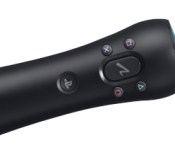
The PlayStation Move has been called a lot of bad names. It’s the PlayStation peripheral that’s least used by game devs, least purchased by console owners, and least spoken of by Sony itself. Some of that sentiment’s been turning lately, ever since Sony showed off Project Morpheus a few weeks ago and demonstrated what an impact something like Move has on virtual reality immersion (the controller works for both PS3 and PS4). And the guy who heads up PlayStation’s worldwide game studios, Shuhei ” Shu” Yoshida, says Move is responsible for far more than it’s given credit.
“This project was one of the very first hardware projects formed with three groups: the software engineering team at SCEA, the hardware engineers at SCEI in Japan, and the Worldwide Studios team making games using the motion controller,” Yoshida told attendees of a presentation tonight at the Computer History Museum in Mountain View, California. He and PlayStation 4 lead architect Mark Cerny explained that this trifecta was the first in a string of major collaborations: PlayStation Vita, PlayStation 4, and now Project Morpheus.
The Move was originally called the “Y-con” (we’re checking on the spelling). Cerny highlighted the name on purpose: it’s representative of the trio of groups coming together on a single device. Three points in a Y, three groups at Sony — thus, the Y-con. Sony R&D engineer Richard Marks may be the man debuting new PlayStation peripherals (he’s based at SCEA), but his team’s work is the product of a collaboration with the folks actually making the games.
More than just three groups coming together, it was three groups at Sony working as one. It signaled a change from the previous approach to hardware in the gaming world. Yoshida offered an example by contrast: PlayStation 3′s Sixaxis controller.
Yoshida: I was managing the west development group at the time and I get a call from a product manager in Japan, like, three weeks before E3. And she told me that we should know that the new controller we’re developing, it has motion sensors in it. And I’m like, Oh, okay, great! So, look at that!
So she said, “We have a prototype we’ll send you, so can you make something to show at E3.”
Cerny: So they’d managed to develop a new controller without ever involving the person who made games for a consumer.
Yikes, right? Thankfully, the concept of “Y” solidified as time went on, and now we’ve got great devices like the PlayStation 4 and Vita to enjoy as a result. It won’t change our opinion of the Move’s lacking software library, but we can’t say we won’t look a bit more fondly on the poor old Move as the years roll on.
Filed under: Gaming, Handhelds, Peripherals, Software, HD, Sony

Sony’s A7s turns night into (very noisy) day with ISO 409,600

This week, Sony announced the A7s, a full-frame mirrorless camera that captures 4K video. But the 12-megapixel shooter has a few more tricks up its sleeve, including a phenomenally high top sensitivity of ISO 409,600, matching the Hi4 setting of Nikon’s much larger (and pricier) D4S. Sony commissioned DP Den Lennie to shoot a demo reel that highlights the camera’s 4K capabilities, but he had another chance to test out the cam at NAB. This time, Lennie put high-ISO video capture to the test, comparing ISO 6400 through 409,600 in a single clip. The difference is staggering, and while that top sensitivity brings more noise than you’d tolerate for a formal production, it could definitely come in handy for surveillance activities. See for yourself in Lennie’s high-sensitivity demo video, embedded at the bottom of his post.

Via: sonyalpharumors
Source: Den Lennie

Bizarrely, the next Borderlands game is for Xbox 360 and PlayStation 3

The hugely popular first-person shooter series Borderlands is getting a new entry in Borderlands: The Pre-Sequel, a game set between the story of previous two games. Not exactly shocking, but neat nonetheless. What’s shocking is where we’ll play Borderlands: The Pre-Sequel when it arrives this fall: Xbox 360 and PlayStation 3. Despite the Xbox One and PlayStation 4… ya know, existing, the next major Borderlands game apparently isn’t headed their way. That said, there’s one other platform that fans can snag it on: PC. And given the PC-like architecture of the new consoles, you’ll forgive us if we don’t feign surprise when the game eventually arrives on newer platforms.
The game’s development is being handled by both the series creators at Gearbox Software and 2K’s Australian arm. Thus far, the only footage available is pre-Alpha (read: early), but, well, it looks an awful lot like the Borderlands games you already know and love. Perhaps you don’t already know and love the series? We’ve got a trailer below the break that’ll help get you up to speed.
DxO Labs crowns the Sony Xperia Z2 the best in mobile photography, for Now
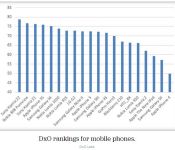
 DxO Mark, created by DxO Labs, is a favourite among photography enthusiasts for seeing which mobile devices have the best camera performance on the market. According the latest findings, DxO Mark crowns the Sony Xperia Z2 the best in mobile photography, even beating out Nokia’s latest effort, the PureView-toting Nokia 808. The tests take into account all facets of the camera’s properties including aperture, exposure time, lenses and even focal length; a comprehensive test indeed.
The Xperia Z2, announced at MWC 2014 earlier this year, is Sony‘s answer to the Samsung Galaxy S5 and HTC One M8 (which are disappointingly missing from the DxO Mark results) and improves on its stalwart predecessor, the Xperia Z1, with a Qualcomm Snapdragon 801 processor, 3GB RAM and a up-sized 5.2-inch Triluminos display. The Xperia Z2 will be the third device (after the Xperia Z1 and Xperia Z1 Compact) to boast Sony’s 20.7MP camera, but also adds the ability to take 4K resolution videos.
What do you think of the Sony Xperia Z2′s abilities as a mobile camera device? Have these results swayed your decision-making? Let us know what you think.
//<![CDATA[
ord = window.ord || Math.floor(Math.random()*1E16);
document.write('’);
//]]>

Slimmer, lighter, juicier: Sony’s revamped PS Vita hits the US on May 6th

Sony’s slimmer, brighter PlayStation Vita has been making the rounds in Japanese and European game stores for months now while we in the States had to make do with the original. Well, the wait is nearly over: Sony today confirmed that antsy Americans can lay claim to the rejiggered portable on May 6th in a bundle that includes a digital copy of Borderlands 2 and an 8GB memory card. If the lure of a lighter handheld with a more robust battery (our review unit hung in there for about 8 hours, compared to the original’s 5) wasn’t enough, you can rub that copy of Borderlands in your friends’ faces — it won’t be available to the masses until May 13. Just be warned: This redesigned model uses an LCD screen instead of the original’s OLED panel, which makes for some less vivid colors on-screen. The other potential bummer? It looks like the black model is the one getting bundled, so those of you hoping to sear some eyeballs with a jauntily colored Vita (like the one above) will just have to keep the faith for now.
Via: GamesIndustry.biz
Source: PlayStation Blog
 AIVAnet