


Weekends with Engadget: Windows Phone 8.1 and Gear 2 reviews, the anonymous internet and more!

Welcome to Weekends with Engadget, a quick peek back at the top headlines from the past seven days — all handpicked by the editors here at the site. For even more action, subscribe to our Flipboard magazine!

Windows Phone 8.1 review: Microsoft’s mobile OS finally feels whole
Microsoft’s mobile OS just got a whole lot better. Complete with keyboard swipe gestures, a notification center and Cortana, the virtual assistant, version 8.1 brings Windows Phone into adulthood.

My connected home turned me into a spy and an addict
Ten years ago, adjusting the temperature of your home from a smartphone might have seemed like something from a science fiction movie. But in this age of hyper-connectivity, it’s easier to get wrapped up in the quantifiable aspects of life than you might think. Just ask our own Joseph Volpe.

Sony Xperia Z2 review: a big, powerful slab of a phone
The Xperia Z2 is just as waterproof as the original Z1 and it packs a slightly larger display and better battery life — not to mention it’s several grams lighter. But at 5.2-inches, Sony’s curveless flagship might be too big for its your britches.

Shh, it’s a Secret: The allure of the anonymous internet
You can say almost anything you want on the internet, often without consequence. But are there advantages to being truly anonymous? Our own Nicole Lee spent some time with an app called Secret to find out.

Samsung Gear 2 review: much improved, but that doesn’t mean you should buy it
Samsung’s next gen smartwatch, the Gear 2, is indeed an improvement over its predecessor. It sports a slimmer design and a much longer battery life, though it’s $50 more than the original. Add in a skimpy app selection, and it still might not be worth investing in Samsung’s wrist-worn platform.

Here’s Amazon’s phone: six cameras and a 4.7-inch screen
We’ve all heard the rumors, but BGR claims it’s gotten hold of Amazon’s first phone — and it has six cameras. The 4.7-inch handset (shown above) might not appear very sleek or attractive. But don’t worry, that’s just an enclosure.

Apple CarPlay coming to Pioneer’s in-dash systems this summer
Pioneer’s NEX line of five in-dash entertainment systems will get Apple’s CarPlay support through a firmware update set to arrive this summer. Owners with an iPhone 5, 5c or 5s will be able to take advantage of Apple Maps, Siri and more!

Google beats Facebook to acquisition of drone maker
Earlier this week, Google agreed to buy Titan Aerospace, a solar-powered drone manufacturer that had previously been in talks with Facebook. According to the Wall Street Journal, the company plans to use the high-flying aircraft in collaboration with its Project Loon.

MSI GS60 Ghost review: a gaming rig in Ultrabook’s clothing
Thin, light and simple: MSI’s latest gaming laptop is all of those things and more. Dubbed the GS60 Ghost, this slim aluminum machine has a bright 15.3-inch display and ultrabook-esque buttonless trackpad. All in all, the Ghost is a great choice for serious gamers, provided they can endure its less-than-average battery life.

Sony pumps up its PS4 update with game pre-loading and SHAREfactory video editor
In a recent blog post, Sony announced it’s preparing a 1.70 firmware update for the PS4 that will include a brand new video editor (called SHAREfactory) and pre-game loading functionality. Exactly when it will be released, however, is still to be known.
Daily Roundup: Xperia Z2 review, Oculus VR lets a terminal patient travel and more!

You might say the day is never really done in consumer technology news. Your workday, however, hopefully draws to a close at some point. This is the Daily Roundup on Engadget, a quick peek back at the top headlines for the past 24 hours — all handpicked by the editors here at the site. Click on through the break, and enjoy.
Sony Xperia Z2 review: a big, powerful slab of a phone
The Xperia Z2 is just as waterproof as the original Z1 and it packs a slightly larger display and better battery life — not to mention it’s several grams lighter. But at 5.2-inches, Sony’s curveless flagship might be too big for its your britches.

Oculus Rift helps terminally ill woman take one last stroll in the sun
Sure, exploring the world of Minecraft with an Occulus Rift is fun, but pure entertainment isn’t the VR headset’s only use. Roberta Firstenberg may be a home-bound terminally ill cancer patient, but Oculus let her take a virtual trip to Tuscany before she passed.

Wu-Tang fans hope to liberate ‘Shaolin’ for $5 million but have a ways to go
Yes, the Wu-Tang Clan is selling the only copy of its upcoming album, Once Upon a Time in Shaolin, for $5 million. Don’t have that kind of cash? Not to worry, a group of fans put together a Kickstarter in hopes of putting its latest jams in the hands of ordinary people.

NASA just crashed a satellite into the moon on purpose
Remember NASA’s LADEE satellite? Well, it’s no more. According to the agency, the vehicle didn’t have enough power to maintain orbit… so they gave it a proper galactic burial and slammed it into the lunar surface.
You also might like:
Filed under: Misc
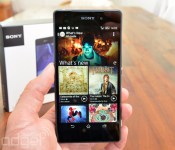
Sony Xperia Z2 review: a big, powerful slab of a phone

It’s been nearly three years since I reviewed the Xperia Neo, manufactured by what was then Sony Ericsson. The Neo represented just the second generation of Xperia phones running on Android, from a period when Sony was finding its feet in the world of mobile and still chucking out plenty of duds (I’m looking at you, Tablet P). Fast-forward to today and things have changed dramatically under Kaz Hirai‘s stewardship. I’ll tell you this right now: The Z2 is an easy phone to recommend, at least for those living in countries where it’ll definitely be available (a list that includes the UK and Canada, but not yet the US). The only real caveat is the handset’s huge, monolithic construction (a far cry from puny, 126-gram Neo). As you’ll see, if you can get past its size, the Z2 addresses some of the most serious gripes we had with its predecessors, the Xperia Z and Z1, particularly with respect to its LCD display. In fact, in some respects, it’s far ahead of any other Android phone currently on the market.
Let’s deal with the size thing right away. It’s not merely a question of weight, because the Z2 is only 18 grams heavier than the Galaxy S5, which is about as light as phones in this category come nowadays. Sony has actually done an excellent job of keeping the Z2′s weight down: Somehow, magically, it’s a few grams lighter than the Z1, yet it packs a larger display and a waterproof/dustproof casing, with tough, heavy flaps around the slots and micro-USB port.
No, the problem here is with the weight distribution. The Z2 feels wider and taller than it needs to be, and its center of gravity just doesn’t feel very… centered. By contrast, the similarly heavy HTC One (M8) feels like its density is gathered around the spine of the device, so that it rests solidly in the hand. None of these handsets are especially conducive to one-handed use, but the Xperia Z2 is the worst of the bunch in this respect; I dropped it four times in the space of a week, which is a record even for me, and I found it unwieldy for reading in bed, too.

The other issue with the Z2′s design is its blockiness. Visually, I find this attractive — it’s part of Sony’s metal-and-glass design statement, which is further aided by the thinness (just 8.2mm, or one-third of an inch). In daily use, however, the absence of curvature and shaved-off corners can be annoying — even for someone who’s used to carrying something enormous like the Galaxy Note 3. Check out the video above and you’ll see a shot of our own Jamie Rigg putting the phone into his pocket. The ridges of all four corners of the phone are actually visible through the denim of his jeans. (Seriously, watch the video. I had to go through the awkwardness of filming a colleague’s crotch just to make it for you.)
Having said this, it’s worth remembering just how much technology is packed into the Z2: a 5.2-inch display, a big camera module, the extra ruggedness I’ve already mentioned, a microSD slot, a widely compatible LTE modem and all the other gubbins listed in the table below.
| Sony Xperia Z2 | |
|---|---|
| Dimensions | 146.8 x 73.3 x 8.2mm |
| Weight | 163g |
| Screen size | 5.2 inches |
| Screen resolution | 1,920 x 1,080 |
| Screen type | Triluminos LCD with 16.7 million colors |
| Battery | 3,200mAh Li-ion (non-removable) |
| Ruggedness | IP55 and IP58 waterproof and dustproof |
| Internal storage | 16GB (12GB free) |
| External storage | MicroSDXC |
| Rear camera | 20.7MP (1/2.3-inch sensor, f/2.0 lens with 27mm equiv. focal length) |
| Front-facing cam | 2MP stills, 1080p video |
| Video capture | 1080p, 4K |
| NFC | Yes |
| Radios |
HSPA+ (850/900/1700/1900/2100); GSM GPRS/EDGE (850/900/1800/1900); LTE (Bands 1, 2, 3, 4, 5, 7, 8, 13, 17, 20) |
| Bluetooth | v4.0, aptX, A2DP |
| SoC | Qualcomm Snapdragon 801 (MSM8974AB) |
| CPU | 2.3GHz quad-core Krait 400 |
| GPU | Adreno 330 |
| RAM | 3GB |
| Entertainment | MHL, USB OTG, WiFi Direct, DLNA, Miracast, FM radio |
| WiFi | Dual-band, 802.11a/ac/b/g/n |
| Wireless Charging | No |
| Operating system | Android 4.4.2 (Sony-specific UI) |
Something not mentioned in the table: The Z2 apparently has active noise-canceling, to reduce background hubbub when you’re talking to someone through a headset. This only works with specific Sony headsets, and our review sample didn’t come with one, so I didn’t test the feature. Nevertheless, you may see some retailers bundling a pair of compatible earphones (the MDR-NC31EM). And they’re worth a look, too, if only because they’re worth £30 ($50) as a standalone purchase.
More usefully, Sony has also made room for stereo speakers. These are still a bit tinny compared to HTC’s BoomSound, but they’re infinitely better than the single speaker on the Z1. The old model’s speaker was easily blocked by the palm of your hand when the device was held in landscape mode, but now, the speakers are forward-facing and very hard to block — a big tick for Sony.
Display

If any of the above paragraphs left you glum, it’s OK — things mostly get more positive from here on out, and this section is perhaps the most glowing of the lot. The dodgy display that prevented me from wholeheartedly recommending the Z1 has been replaced by something infinitely better: an entirely new, enlarged 1080p panel that has much better brightness, contrast and viewing angles. The difference is obvious and totally welcome, but as a result the Z2′s “Triluminos” display is also a bit less Sony-ish.
This is a manufacturer that has historically trodden its own path with respect to displays, to the point where Sony TVs and, to some extent, Sony phones, have forsaken deep black levels and vivid colors preferred by the likes of Samsung in favor of more detail and more natural color reproduction. With the Z2, however, it looks like Sony has seen a commercial need to deliver something more akin to its rivals and more familiar to potential buyers. I know a couple of people (just one, actually) who really liked the Z1′s display and who might be annoyed by this change of heart, but to my eyes it’s all good. We’re now looking at a display that is at least on a par with other top-end LCD panels.
A couple of notes about setting up the display: Colors tend to be a bit warm, but you can adjust white balance and add a touch of blue in the settings — a tweak that I tried and then decided to keep. I also permanently disabled Sony’s “X-Reality for mobile” engine, because this post-processing effect has gone too far: It makes things look unnaturally saturated, and it also makes 1080p movies look pixelated due to over-zealous edge sharpening.
Software

When you first boot up the phone, you’ll be confronted by Sony’s typical array of media and social feed widgets, which I reckon many users will remove as they begin to personalize the device. By the time you’re done tailoring (perhaps by switching out the stock keyboard for something better, and losing the swirly PlayStation-style animated wallpaper), Sony’s skin and various additions shouldn’t get in your way.
Nevertheless, the manufacturer does leave some residue on your Android experience, and it has to be said that this lingering aesthetic feels dated. Whereas HTC and even Samsung have recently tarted up their skins, and Apple has made the stark shift to iOS 7, Sony’s icons, fonts and layouts feel like they’re stuck in 2012.
Accessing settings is also a bit old-fashioned: You have to open the notifications pulldown, select “quick settings” and then make do with basic toggles, which means most settings (like brightness or selecting a WiFi network) then take a couple more taps before you actually make the desired change. Stock Android, HTC Sense and TouchWiz all handle these mundane things with fewer presses.
One bit of software that’s unnecessarily obnoxious is called “What’s New,” which promotes recent (and mostly paid-for) content from Sony’s music, video and gaming empire. It might be of occasional interest in its app form, but it’s an unnecessary widget and — more seriously — it’s an encumbrance to those who make regular use of Google Now. Instead of just swiping up from the onscreen home button to get into Google’s special card-based interface, which was all that was required on the Z1, you now have to sweep up and to the right, so as to avoid accidentally launching “What’s New” instead.
Having said all this, if you’re a Sony fan, it could be nice to have Sony’s ecosystem readily at hand on the Z2. This is especially true if you already have a Music Unlimited or Video Unlimited subscription, or if you want to play a few Android games using your PS3 controller, or quickly mirror your phone on your Sony smart TV using NFC. The PlayStation Mobile store, however, is still lackluster and short on compelling games.
Camera

Still photography
The Xperia Z2′s 20-megapixel camera is carried over from the Z1, and that’s a good thing. You can check out our Z1 review for an in-depth look at picture quality, including comparisons to the current king of mobile imaging, the Lumia 1020. Suffice to say, this is still the closest you can get to the image quality of a traditional point-and-shoot on a standard-shaped Android phone (i.e., not a Galaxy “Zoom” phone). That means you’ll be able to capture decent snaps even if you decide to leave the house without a dedicated camera.
The Z2′s meaty images don’t result solely from the high resolution, but also from the size of the sensor: at 1/2.3 inches, the chip can suck in significantly more light than any of its Android rivals. Coupled with large JPEG sizes of up to 9MB (albeit, unfortunately, with no RAW option), this yields photographs with less noise and less of the flat “digital” feel that you’d normally expect from a phone camera.

With this sort of optical strength, the camera app almost doesn’t need its plethora of effects and gimmicks, but it supplies them anyway. This extends to the now-obligatory “background defocus” effect, which is a hollow imitation of what the HTC One M8 can do with its depth sensor.
On the whole, I wish Sony had concentrated more on making its camera app more flexible and more suitable to manual photography, the way Nokia has done in recent years. There’s no easy way to control ISO or shutter speed in order to get creative using the stock app; the only quick adjustments that can be made are white balance and exposure compensation. It could have also helped us out with better post-production tools, as the one supplied is extremely basic. As things stand, we’ll just have to go elsewhere for our photography tools.
Video recording
To some extent, Sony’s unnecessary gimmicks also stretch to video recording, since we now have a 4K recording option that only a few people with 4K displays might be able to appreciate. (If you’re reading this on a 4K display, make sure you choose the full-res setting on the YouTube video above and, unlike the rest of us, you’ll be able to see what these clips really look like).
The good news with 4K is that Sony hasn’t crushed the frame rate as much as I feared, so the footage isn’t ruined by compression artifacts. The camera stores about 450MB of data for each minute of 3,840 x 2,160 footage, which equates to 7.5 MB/s — that’s nearly four times higher than the data rate of video recording on the Z1, befitting the quadrupling of the resolution. This is a roundabout way of saying that 4K clips from the Z2 should at least look similar to the 1080p clips we’re already used to, with the bonus of higher resolution if and when it’s needed.
Unfortunately, my sample footage was let down by the Z2′s microphone, which couldn’t really handle a windy day by the river, as well as by its lack of optical image stabilization (there’s only digital stabilization on offer here) and the fact that it’s almost impossible to keep your left index finger away from the lens. If you intend to use the Z2 for serious videography, consider investing in a decent mount, along with Sony’s new stereo microphone accessory, the STM10 (£30/$50).
Battery life and performance
| Sony Xperia Z2 | Xperia Z1 | HTC One (M8) | |
|---|---|---|---|
| Quadrant 2.0 | 19,100 | 22,145 | 25,548 |
| Vellamo 2.0 | 1,597 | 2,891 | 1,804 |
| AnTuTu 3.2 | 32,574 | 29,377 | 30,100 |
| SunSpider 1.0 (Chrome browser) | 935 | 762 | 772 |
| GFX Bench T-Rex Offscreen (fps) | 27.2 | 23 | 28.2 |
| GFX Bench Manhattan Offscreen (fps) | 11.8 | N/A | 11.1 |
| CF-Bench | 36,699 | 31,702 | 38,526 |
|
Minion Rush median frame rate* |
31 | 31 | 28 |
| Minion Rush battery drain (% per hour)* | 22 | 24 | 22 |
| Battery rundown test | 13.5 | 12.5 | 11.5 |
| *Measured using GameBench Beta. | |||
Our usual battery of benchmarks largely confirmed my expectations: The Z2 benefits hugely from its upgraded processor, the Snapdragon 801. There are a couple of freak numbers in the table — especially the poor Quadrant and SunSpider scores. However, a number of the other disparities between the Z2 and the HTC One M8 could potentially be explained by the fact that the M8 has been programmed to run benchmarks in a so-called High Performance Mode — so it could simply be that Sony doesn’t mess with clock speeds to the extent that its rival does. On the whole, the performance scores are strong, with gaming benchmarks being broadly on par with the M8.
Moreover, due to the inclusion of a larger 3,200mAh battery, the stamina has increased greatly and is now probably the best of the recent batch of flagships. I say “probably” because these things depend largely on how often it’s under load and how much use you make of the various battery-saving features. From our experience with the Z2, it has great longevity when it’s mostly in standby, but it gets hot and can occasionally be inefficient when asked to handle more taxing activities. This led to a couple of instances where the battery depleted faster than I expected, but on the whole, I never had less than a third of the battery left by late evening. Our standard looped video corroborates (and perhaps slightly exaggerates) this advantage: The phone lasted a full 13 hours and 30 minutes — three and half hours longer than the Galaxy S5.
LTE and HSPA+ performance was solid, with connection strength and data speeds being consistent with other phones we’ve tested on O2′s network in London. The phone didn’t drop its data connection even when, during a couple of instances, the reception indicator showed zero bars. With a couple of bars of signal strength, I got up and down speeds of around 7 Mbps, which is what I expected. Call quality and reliability held no nasty surprises either. I tried calls with and without background-noise suppression and “speaker voice enhancement,” and neither I nor the other party noticed much difference, but in all cases, the audio quality was good.
Wrap-up

I’ve had a bit of a roller coaster ride with the Xperia Z2, but I can at least summarize it all with one last trough, and one crest.
The downer is that, personally, I wouldn’t buy this phone. If I wanted the Z2′s camera, coupled with its high-quality display and fast processor, I’d wait to buy it in a smaller version of the handset — which hasn’t been confirmed yet, but must surely be on the horizon given the level of interest in the Z1 Compact. If I wanted a phablet, I’d get a Galaxy Note 3 or hold out for a Note 4. And if I wanted a big, premium non-phablet, I’d probably go for the HTC One M8 — it has a more enticing, more comfortable design, along with a nicer UI and better stock apps (especially in the camera department).
More objectively, though, I can see what Sony was trying to create with the Z2, and it has arguably succeeded in the areas that matter most. There’ll be people out there who appreciate its gorgeous display, solid battery life and granite-like charm, and these attributes are inextricably linked to the phone’s size. If you think that might be you, go ahead. This is a safe purchase, the best Sony phone that has ever been, and definitely among the top three Android phones currently on the market.
Filed under: Cellphones, Mobile, Sony
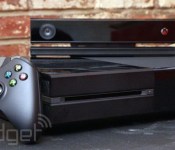
Titanfall pushes Xbox One sales to 5 million total, but it can’t pass PlayStation

Sony and Microsoft’s console sales were neck and neck for awhile, but the gap is starting to widen: according to the latest NPD numbers, Sony is winning the race. Yesterday, the Japanese hardware manufacturer announced that it has moved more than seven million PlayStation 4s worldwide — today Microsoft countered with a total of five million, trailing Sony in both monthly and lifelong sales. A stark difference, sure, but it’s not all bad: the Xbox exclusive Titanfall is the industry’s top-selling title right now, and the second highest selling for the platform overall. The new console is also outpacing the Xbox 360′s first-year sales by more than 60 percent; it’s doing well, it’s just not top dog. The latest inFamous game (a PS4 exclusive) ranked the second highest selling game for the month of March, followed by multiplatform titles like South Park: The Stick of Truth, Call of Duty Ghosts and Dark Souls II.
Filed under: Gaming, HD, Sony, Microsoft
Via: Joystiq
Source: Xbox
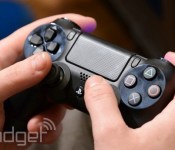
Sony pumps up its PS4 update with game pre-loading and SHAREfactory video editor

Sony just announced sales of seven million PlayStation 4 consoles and promised more details on its upcoming software update would follow soon, now here they are. We still don’t have an exact timetable for when firmware 1.70 will arrive, but now we know more about its new “SHAREfactory” video editor and that game pre-loading is in the update. Many people are familiar with pre-loading via Steam and other PC services, which allows gamers to download pre-ordered games ahead of their release, then simply unlock the digital copy on the day it’s “released.” All it takes is enabling the PS4′s “auto download” feature, and you’re done, no more waiting while overloaded servers choke on release day.
The other big addition is SHAREfactory, a rich video editor app that will let gamers spice up their game recordings (which are getting a resolution bump to 720p) with filters and effects, music and picture-in-picture feeds from the PlayStation Camera. The music element is particularly interesting because it mentions both provided tracks and the ability to import your own original songs, even though the PS4 can’t play MP3s right now. If that’s a surprise addition to the list later, we won’t argue. One other tweak is letting users decide which friends they will share a clip or screenshot with from the Share menu itself, instead of having to go back into settings first. Additionally, a Japanese press release indicates the update will bring Remote Play to Sony’s Vita TV mini-console and the ability to archive those HD Ustream / Twitch broadcasts online.
While the Xbox One’s Upload Studio shares some of the same features, Sony is going a step further by letting users post SHAREfactory videos directly to Facebook, or move them directly to an external USB storage device to upload them elsewhere (YouTube). We called out the PS4′s lack of a video editor when we compared the two system’s services and apps, and while we’ll have to wait for some hands-on time to be sure, that gap may be closed. Of course, if you prefer DIY capture and editing, FW 1.70′s HDCP-off that will allow video capture of games over HDMI will be the big addition, but this makes it easier for anyone to try it. Now, if only we knew when we will get to see the new update (and, hopefully, successive ones to fill in missing features like MP3, Blu-ray 3D, DLNA).
Filed under: Gaming, Home Entertainment, HD, Sony
Source: PlayStation Blog
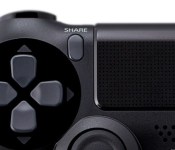
Sony sold seven million PS4s already, beating its own predictions

Sony was quick to pat itself on the back for passing five million PlayStation 4s sold more than a month earlier than it predicted, and now that the fiscal year is over there’s more to celebrate. As of April 6th, Sony says it has sold more than seven million PS4s worldwide, covering more than 72 countries/regions. Games are moving too, with 20.5 million sold in stores or as downloads since launch, while players have already punched that Share button over 135 million times. We’ve had multiple updates on Sony’s stats since the last time we heard specific worldwide numbers from Microsoft, which seems to still trail in the hardware sales race — we should know more about the situation in North America after the NPD reports for March come out tomorrow. Despite relative radio silence on sales, updates on the Xbox One have added a number of features to its software recently, and Sony has revealed the PS4 will get a big update with external drive support, HDCP off and more soon. A post on the PlayStation Blog claims information on that is close by, but for now gaming fans (bored of Infamous: Second Son / Titanfall) can focus on what’s really important: which system moved more units.
Thanks to you, PS4 hardware sales have surpassed 7 million units worldwide: http://t.co/QoMlbo7VOe pic.twitter.com/w4xqhDBejf
– PlayStation (@PlayStation) April 16, 2014
Source: Sony (PRNewswire), PlayStation Blog
Sony continues to trim the fat, dumps Square-Enix stock

The PlayStation 4 may be leading home console sales, but that doesn’t mean Sony’s bank account is in the black. The company has made a minor habit of garnishing its quarterly earnings reports with notable losses, and it’s been selling off assets (including its own headquarters) to help balance its budget. Its latest liquidation is the company’s 8.25 percent stake in Square-Enix, the outfit behind jRPG hits like Final Fantasy and Dragon Quest. The ¥4.8 billion ($46.9 million) Sony expects to pocket from the sale is only a dent in the $1.1 billion it estimates it lost last year, which leaves the sale of Sony’s other headquarters and its VAIO PC business to help make up the difference. This might mark the end of Sony’s financial support for Square-Enix, but gamers shouldn’t be worried: The game developer has a long, loyal history with the PlayStation brand.
Source: Wall Street Journal

Sony has a 4K TV for every budget (that’s at least $2,099)

Sony has nailed down the final launch details for its newest 4K Bravia TVs, and surprise — they just might be affordable this year. The “entry-level” XBR-X850B series will start at a relatively frugal $2,099 for a 49-inch model, with prices peaking at $5,499 for a 70-inch set. If you’ve got a bit more cash and want upgrades to both audio and wall mounting, the XBR-X900B line starts at $3,999 for a 55-inch set and scales up to $8,999 for a 79-inch variant. There’s still a couple of models for the money-is-no-object crowd, of course. The improved LED lighting of the 65-inch XBR-X950B will set you back $7,999, while the display’s 85-inch sibling costs an eye-watering $24,999. All of the 4K sets ship in June.
The company also hasn’t forgotten about those with earlier Bravia sets. It’s releasing an updated version of its 4K media player, the FMP-X10, this summer. There’s no pricing just yet, but it has 1TB of storage for downloaded Video Unlimited movies and supports the same 4K Netflix movies as newer Bravia TVs. The previous model sold for $699, although Sony has bundled it with sets for free or at a discount — whatever the new one costs, you may not have to pay full price.
Filed under: Home Entertainment, HD, Sony
Source: Sony

MLB 14 The Show: The Joystiq Review

The term “simulation” is appropriate for MLB 14: The Show, but not just because of its beautiful presentation, a defining trait of the series that’s become a benchmark for other sports video games. Rather, MLB 14: The Show earns its simulation stripes by continuing the series’ tradition of challenging players with mechanics and statistics that mirror the real sport. While MLB’s gameplay has changed little this year, no matter what option players select for pitching, fielding and hitting (we’ll get to that later), they will fail or succeed as regularly as athletes do in the big leagues.
Yet much like the faithfully-recreated and wildly differing batting stances of hitters in the game, MLB 14: The Show truly makes its mark in the baseball sim series by being one thing: dynamic.
Click here for more
Filed under: Gaming, Software, HD, Sony
Source: Joystiq

Joystiq weekly wrap-up: Fire-breathing lizards, big bad wolves and giant robots

Welcome to the first edition of the Joystiq Weekly Wrap-up, where we present some of the best stories and biggest news from our beloved sister-publication. After the break you’ll find, among other things, Pokémon, the Big Bad Wolf and the final word on Titanfall’s ongoing multiplayer examination. Our brothers and sisters in arms are on the ground in Boston this weekend for PAX East too, and you can find all of that coverage right here. Pour a frosty beverage and join us for the week’s gaming news, won’t you?
News
Arguably the biggest news this week came from Nintendo’s Super Smash Bros-themed Nintendo Direct broadcast. The franchise hits the 3DS this summer and the Wii U this fall with two online modes (For Fun and For Glory) and a unique spin on series-staple Adventure mode, Smash Run. Perhaps the biggest news, though, is the addition of all around bad-ass Charizard to the game’s roster.
One of the more intriguing games shown at Microsoft’s E3 press event last year was indie-puzzler Below. It’s being developed by Capybara Games (Super Brothers Swords and Sworcery EP) and news hit this week that if you don’t feel like shelling out $500 for an Xbox One — it was previously announced as a platform-exclusive — that the game is coming to Steam, too.

In Borderlands: The Pre-Sequel you’ll travel to the moon when it releases this fall for PS3, PC and Xbox 360. The last-gen title takes place between the first two games, and you’ll be fighting for antagonist Handsome Jack this time around.
If you’ve beaten Bastion countless times while waiting for developer Supergiant Games’ follow-up Transistor to hit, it’s almost time to let The Kid rest. The action-RPG releases on the PS4 and PC for $20 on May 20th.
Reviews
This week Joystiq reviewed Xbox One exclusive Kinect Sports Rivals and episode three of Telltale Games’ The Wolf Among Us. Critic Jessica Condit lamented Rivals is another instance of Kinect’s crippled functionality.
The Xbox One Kinect is more responsive than its predecessor, but it still doesn’t seem ready for this level of gameplay. My set-up meets the requirements – a clear, open floor and seven feet of playable space from Kinect to the front of my couch. Still, Kinect had trouble deciphering who was playing if anything moved in the background or just off to the sides, and it tracked motions inconsistently.
Joystiq‘s managing editor Susan Arendt was much more positive in her look at Biggby Wolf’s latest chapter. Although The Crooked Mile narratively occupies the middle of Telltale’s Fables yarn, that shouldn’t be held against it she says.
Taken by itself, it’s unsatisfying and half-missing, but of course it’s not meant to be taken by itself. It’s the centerpiece of a larger whole, the lock that will let everything eventually make sense.
Original stories
Road-trip season will be here before you know it, but with the price of gas still pretty high, getting out and exploring the open road can be an expensive proposition. If you’d still like to see some of the US though, Ubisoft’s The Crew will let you do just that, virtually. The constantly-connected racer lets you and three buddies drive from San Francisco to Salt Lake City and other cities (including Detroit), completing challenges and collecting cars. Joystiq‘s video preview gives an overview of the game’s look and feel.
As part of its ongoing look at crowdfunded game development, Joystiq notes that the month of March continued the space’s continued slump. What’s more, March was the second-worst month of pledges in the prior 10 (when Joystiq started the series).
PC gamers are a proud people: they tend to invest heavily in their rigs and expect the best possible experience from their games as a result. For them, playing a console game that’s been ported can be a crap shoot in terms of performance. With the brutally difficult Dark Souls 2, however, that isn’t the case. The PC version is prettier than its PS3 and Xbox 360 counterparts, and is the best version of the game that’s available.

In the wake of games like Battlefield 4 and its still-rocky performance, Joystiq has started an ongoing look at how a game’s multiplayer fares in the first month after launch. With Titanfall, the outlet says that despite a few brief outages, the experience remains solid, dubbing the game’s state of service “good.”
That’s it! Be sure to check back next Sunday for another recap, or if you’re impatient, click over to Joystiq and catch the news as it happens.
[Image credit: Miguel Angel Garrido / Flickr]
Filed under: Gaming, HD, Sony, Microsoft, Nintendo
Source: Joystiq
 AIVAnet