


Sony’s Playstation 4 will be available in white this September, comes with Destiny and 500GB

Not only did Sony just announce that the beta of Bungie’s next title, Destiny, is coming as a beta next month, it also let the cat out of the bag that you’ll be able to get the game bundled with a “glacial white” Playstation 4 on September 9th. The new-hued console will come with 500GB of storage and a free 30 day membership to Playstation Plus.
Follow our liveblog at Sony’s E3 2014 conference for the latest updates!

Sony announces ‘Little Big Planet 3’ with loads of new characters and abilities

You know you want it. We don’t even have to ask, and Sony is delivering! Little Big Planet 3 is coming. The most immediately notable change is the slew of new characters, like the quadrupedal Oddsock and the flying Swoop. Flying is an obvious new trick, but there’s also a the ability to wall jump and a larger character that can shove obstacles out of the way and generally hurl his girth around the level. The idea is that multiple character can cooperate to extend the world of Little Big Planet in interesting ways. And don’t worry, if you and your friends have invested countless hours crafting levels for the first two titles, they’ll actually be playable in the newest installment — complete with automatically upscaled graphics! There’s also sorts of great new mechanics and beautiful new graphics to enjoy. Though, you’ll have to be patient, Little Big Planet 3 won’t hit the Playstation 4 until the holiday season.

PS4 owners will be able to play ‘FarCry 4’ with friends who don’t own the game

Looking forward to playing FarCry 4 with your friends? Sony says if you buy it for the PlayStation 4, you’ll only need one copy between you. Taking the stage at the company’s E3 2014 PlayStation event, Sony VP of developer relations Adam Boyes explained that folks playing the game on PSN will be able to invite their friends to play with them even if they don’t own the game. How is this possible? Boyes didn’t say, exactly, but it sounds like an ideal use case for PlayStation Now — Sony’s Gaikai-sourced cloud streaming service.
Developing…

What you need to know about the Electronic Entertainment Expo (E3)

Spring rains are ending; the R train tunnel is nearly through with repairs (after being ravaged by Hurricane Sandy); and we’re nowhere near Engadget HQ in downtown Manhattan. Alas, it’s early summer: time for the Electronic Entertainment Expo once more. The annual game industry trade event, commonly referred to as “E3,” unofficially kicks off today in Los Angeles. A quartet of press conferences start at 9AM PT, with Microsoft and Sony bookending the day’s proceedings. But wait — what’s all the fuss about? “What’s the deal with E3?” you say in your best Jerry Seinfeld voice.
In short, E3 is a big marketing event for the game industry. In reality, E3 is much, much more than that.
WHAT IS IT?
E3 — the so-called Electronic Entertainment Expo — is a three-day game industry trade show in Los Angeles, California. It draws game makers, publishers, marketing and press all into the same venue, the Los Angeles Convention Center, for an annual marketing blitz aimed at showcasing the coming holiday’s big games. It’s where the CEOs, executives and game makers of Sony, Microsoft, Nintendo and many others make grandiose stage presentations announcing new hardware and software. It’s where game consoles are announced, interviews take place and deals are brokered. It’s where Nintendo of America President Reggie Fils-Aime originally said, “My body is ready,” and where former PlayStation head Kaz Hirai said, “Riiiiiiiidge Racerrrr!” It’s the place where many, many gaming memes originated.
To understand the event more clearly, you must first know that a tremendous portion of the game industry’s money is earned during holiday sales. What’s “tremendous” in this case? Try over one-third in 2013 alone. “But last year, right around the holidays, both the Xbox One and PlayStation 4 launched!” you protest. Fair point! In 2012, the number was even higher: Just shy of 40 percent of the game industry’s money was earned in the holiday season (Oct. 1st through Dec. 31st). That’s not an aberration; it’s the standard.
As such, the game industry cares an awful lot about making a big splash with holiday plans in… June. It might sound early, but there are just four months between June and October; for many game publishers, it’s the beginning of a final marketing push before a game’s big holiday release.
Of course, the world of video games is wide and varied; much of what you read above applies directly to the biggies: Call of Duty, Battlefield, Madden, Halo, etc. Though smaller games have a bigger presence than ever at E3, it’s still primarily a trade event aimed at showcasing blockbuster games that cost millions of dollars.
HOW DOES IT WORK?
Though the show “officially” runs from Tuesday through Thursday of whatever week it falls on (the second week of June in recent years), the show really begins on Monday. This year, Microsoft’s starting the show with a press briefing at 9AM PT, followed by Electronic Arts, then Ubisoft, then Sony in the evening. None of the briefings are in the same venue, and they occasionally overlap. If you were standing outside of downtown LA’s Orpheum Theater, for instance, around noon PT today, you might find an Engadget editor scurrying out ahead of the presentation ending. They’re not just going to get more coffee; they’re heading to the next event to hold a spot in line. Such is the first day of E3.
In the case of us, we liveblog; we interview; we run from place to place while sharing our favorite Luigi death stare GIFs along the way. Heck, last year we even did live broadcasts before and after the presentations.
E3 goes “official” on Tuesday at noon PT as the doors to West and South Hall inside the LACC open. Why noon? Well, you might be wondering why Nintendo’s press conference wasn’t mentioned yet. That’s because, as of last year, Nintendo no longer holds a dedicated press briefing event, instead opting for a direct-to-consumers video presentation ahead of the show floor’s noon opening (think: Nintendo Direct). But the long and short is this: Tuesday morning used to be Nintendo’s press conference, but not anymore. It’s as simple as that.
When the doors to each hall do open, swathes of attendees flood in: Approximately 50,000 people walk E3′s two enormous halls over the three days it exists each year.

WHY SHOULD I CARE?
Well, for starters, because video games are rad, but you probably already know that. The actual reasons you should care about E3 are far less esoteric. Want to know what the next major steps are from the megacorporations that make your favorite games? E3 is where to find out. How about never-before-seen games? E3 is also great for that. It’s also, occasionally, a venue for new hardware announcements. Both Project Natal (which became Kinect) and PlayStation Move were E3 announcements, as was Nintendo’s incredibly popular 3DS handheld.
In short, regardless of the marketing-driven angle, and the spectacle of two sprawling convention halls full of multi-million dollar booths erected for just three days per year, E3 is a hugely important event for both the game industry and the people who sustain it.
Also, it’s full of hilarious memes.
WANT EVEN MORE?
And who wouldn’t?! Last year, Sean Buckley wrote an incredibly thorough history of E3 — if you’re into learning more about E3, that is a must-read. For the Nate Silvers in the crowd, the body that runs E3 — the Entertainment Software Association — releases an annual statistical study of gaming, including E3 trends (PDF). And finally, Polygon’s Chris Plante made a pretty hilarious video walking through even more details about “America’s biggest video game event” (he means E3).
[Image credit: AP Photo/Jae C. Hong]
Filed under: Gaming, Software, HD, Sony, Microsoft, Nintendo
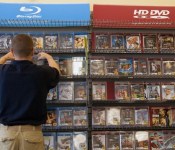
Format Wars: Blu-ray vs. HD DVD

The format war. Over the last few decades it has played out across various forms of tech — AC vs DC, VHS vs. Beta — usually with fierce battle lines drawn and millions or even billions of dollars at stake. Recently, none have burned so brightly as the battle of HD DVD vs. Blu-ray (read our blow-by-blow retrospective here). And it brought all the classic elements: Sides were divided between titans of the industry, led by Sony pressing the Blu-ray side and Toshiba backing HD DVD, with the PS3 and Xbox 360 ready to serve with as trojan horses. As if the the stakes weren’t high enough already, the specter of an oncoming internet streaming winter loomed like Game of Throne’s army of White Walkers. So what really happened, and who won in the end?

Looking back to 2005, HDTVs were finally available everywhere, but not everyone had one yet. A study by Leichtman Research Group would put the adoption rate at about 12 percent by the end of the year, and Nintendo even declined to make an HD-ready version of its new game system, the Wii. It was nearly impossible to buy movies in high definition, with cable or satellite broadcasts left as the only easy option. DVD player-based upscaling promised to make movies look better on HDTVs, but couldn’t quite compare with the resolution of the real thing. There was a light on the horizon, however: Sony and Microsoft were both ready to place calculated bets on the “HD Era” of gaming, and the PS3 would even arrive with a Blu-ray player built-in. Microsoft stuck with plain DVDs, but promised an HD DVD add-on for the future.

The consoles’ arrival turned out to to be particularly welcome too. The first dedicated players to ship were crudely designed, made from left-over laptop parts, slow, glitchy and retailed for around $500 (HD DVD) or $1,000 (Blu-ray). At the time, concerns over DRM like the “Image Constraint Token” that could block HD playback on TVs without copyright protected HDMI jacks ruled the day and we weren’t sure 50GB Blu-ray discs would actually appear — neither issue amounted to much. In time, the players got better and cheaper, and after a while, it was actually normal to see new movies released on HD formats alongside DVDs. In the end, Sony’s Blu-ray format eventually prevailed and is still going strong as we speak. But the path to that victory was a costly one for Sony.
The Competitors: Sony vs. Toshiba
On one side, Sony promised its Blu-ray format could handle capacity (50GB) and even interactivity (BD-J) that we’d never seen before. While Toshiba claimed HD DVD could make up the gap in capacity (30GB max) and technology by being cheaper and easier to manufacture with plants that were already making DVDs. As for content, major studio support weighed heavily in Blu-ray’s favor, whereas only Universal stood in favor of HD DVD. I hedged my bets by purchasing both the HD DVD add-on for the Xbox 360 (it was bundled with Heroes season one — a decision I stand by), and a PS3. Considering the content advantage, it’s really no surprise that HD DVD failed as the only viable alternative was some sort of hybrid push that incorporated Blu-ray. That was a gap both LG and Samsung tried and failed to close with hybrid players. Warner Bros. considered making a play for the space with expensive dual-sided discs, but never actually put them on sale.
And the winner is…

Once Warner Bros. dropped support for HD DVD on the eve of CES 2008, the war was over. Sony had successfully pushed Blu-ray into millions of homes with its PS3 trojan horse; this, despite trailing Xbox 360 and Wii in sales during the early days of the console war. Effectively, it was Sony’s decision to make HD discs standard for the PS3, as opposed to an optional add-on, that led to a hardware gap HD DVD could never surmount. Add in the overwhelming studio support on the Blu-ray side, and it’s clear in retrospect that only stubbornness (and a few contractual obligations) kept things going as long as they did. Toshiba threw in the towel just over a month after Warner Bros.’ CES announcement, and the fledgling HD DVD library was rendered obsolete; now mere collector’s items for a scant few.
The price of success

So to the victor goes the spoils, right? Not quite. While Sony’s Blu-ray format prevailed, it never quite turned into the cash cow its backers originally predicted. Blu-ray still hasn’t unseated DVD as the primary physical movie delivery format, and it’s being squeezed out of relevance on the other end by the rise of video on-demand and streaming. This year Sony took a $240 million hit because of “demand for physical media contracting faster than expected,” something that’s not helping its ongoing attempts to dig out of a massive financial hole. It could be worse though, as Toshiba is suffering the indignity of selling Blu-ray players of its own and facing the same declining PC and TV sales that have hit and crippled Sony.
LG and Samsung took a different approach to the format war with (token) attempts to support both sides, and by shifting focus to mobile, have seen significant growth. Microsoft failed to see the HDi interactive tech it contributed to HD DVD catch on, but its Xbox 360 led the video game console sales charts for years — and never once, despite many rumors, appeared with an internal HD DVD drive. Microsoft also jumped on the Netflix streaming fad early in 2008 before even the PS3 and Wii scored access. Now, the Xbox One plays games and movies alike from Blu-ray discs, to go along with cable TV hooks and streaming apps, and it’s almost not weird.
Despite years of rumors it would jump into the format war, Apple never did, and never has. It ran the other way, largely ditching support for optical discs on its machines and to this day, it still doesn’t make a Blu-ray drive for Macs. Its iTunes video on-demand store is a leader in digital movie sales, and the Apple TV hockey puck has ridden a rising tide for streaming boxes to sales of over $1 billion last year. Internet movie services and connected devices are rising rapidly in popularity, with Netflix topping 40 million subscribers and Google’s Chromecast dongle selling “millions” of units.

Sony’s win has its benefits though, and company has definitely turned things around with the PlayStation 4. The console hasn’t ushered in a new format, but it’s enjoying a sales lead that continues to grow. The PS4′s also built with an eye to the future: Sony’s hosting a beta program (PlayStation Now) for streaming games and promising an internet-delivered TV service later this year adding to its Blu-ray movie playback and healthy suite of streaming video apps.
Blu-ray isn’t ready to be written off either, as disc sales continue to grow slowly, and studios pack in digital copies to increase their appeal. The advent of Ultra HD could also be a bonus, as execs have told us a spec bump is being discussed.
So what did we — the consumers who actually buy all this stuff — get?
Unfortunately, the format war separated content for exclusives and caused studios to stagger movie rollouts. Partially as a result even now, some classics (or cult classics) are either still unavailable in HD or are just hitting shelves. Also, copy protection is both as tight as ever, and as ineffective. Movies are consistently available as rips at or before their disc release. And even the PS4 requires a workaround just to enable video capture for games, among other DRM headaches. While schemes like digital copies and Ultraviolet have provided some portability, promised features (managed copy) have never arrived and moving content beyond the disc is still far more complicated than it should be.

On the other hand, we were promised a movie experience at home that finally truly rivaled what’s available in theaters, and I think that bar has been met. The streaming push is bringing set-top boxes that support more than one service, but that doesn’t mean the days of the video format war are over, they’ve just changed battlegrounds. Every delivery service (i.e., Netflix, Amazon, Hulu, cable TV) has its own exclusive content, and it’s nearly impossible to get them all in one place — with the amount of money at risk, it seems we’ll never learn a different way to do this.
[Image credit: Gary Gardiner/Bloomberg via Getty Images, ASSOCIATED PRESS, Justin Sullivan/Getty Images, ASSOCIATED PRESS, BUILT Images / Alamy]
Filed under: Home Entertainment, HD, Sony
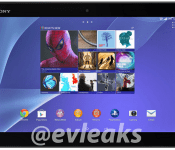
Verizon Xperia Z2 tablet on the way

Sony Xperia Z2 is one of the most powerful smartphones on the market today, same goes for its tablet counterpart. According to a new leak Z2 tablet is going to reach Verizon soon.
@evleaks is at it again, this time he brings us an image of an alleged Xperia Z2 tablet for Verizon (LTE variant). This device should pass certification soon and make its way to Verizon’s lineup. To refresh your memory we’re talking about a device carrying a Snapdragon 801 processor along with an Adreno 330 GPU and 3GB of RAM. On the front it has a 10.1 full HD Triluminos display with Sony’s X-Reality Engine and a 2.2MP secondary camera, while on the back it sports an 8.1MP shooter. The device is powered by a 6000mAh battery.

Are you going to buy one when it becomes available?
SOURCE: @evleaks

The post Verizon Xperia Z2 tablet on the way appeared first on AndroidGuys.

Sony’s $99, life tracking SmartBand lands in the US

Let’s flash back to the heady days of CES 2014, shall we? Sony embraced the wearable bandwagon (again) with the “tiniest gadget” it’s ever made, and now the Americans reading this can go out and nab one of their own. Here’s what you’ve got to remember: it’s not just an activity tracker. No, Sony fancies it as a “life tracker,” and for once that’s not complete marketing doublespeak. It works in tandem with an Android app to paint a portrait of what did you each day that extends beyond mere movement — the sensor and the app track how you slept, where you went, what content you consumed, and when all of that happened. It’s a neat enough twist on what otherwise could’ve been a dry formula, but there are (as always) some caveats to be aware of. Alas, the SmartBand only syncs with devices running Android 4.4 KitKat, and anyone hoping to use this wrist-worn gadget as a timepiece will be sorely disappointed. Does it stack up well against other players in the field? Did Sony stumble over a winning wearable formula? Our review unit just landed, so stay tuned for more detailed impressions to come.
Source: Sony

Rumour says that Sony Xperia Z3 will be here in September and will be 7mm thick, and no new Z Ultra
 Very soon after the announcement of the Sony Xperia Z2, Creative Director of Sony Mobile, Kurozumi Yoshiro, went on record to say that they were hoping to adopt a biannual flagship cycle, not-so-obviously dropping the hint that a probably Sony Xperia Z3 might be due sometime in the latter half of 2014. Now that we’re on the cusp of that second half of the year, Sony leaker, DooMLoRD, has come out of the woodwork to give some new info on the Xperia Z3. According to DooMLoRD, the Xperia Z3 will be here in September but not have the elusive Snapdragon 805 processor that everybody in the Android community has been hoping for. He mentions that the Xperia Z3 will have a new design, though we would expect Sony not to stray too far from the Xperia formula, and also that the bezels will be slimmer (a sticking point for some) and will be 7mm thin. That’s more than a millimetre thinner than the Xperia Z2, and only a hair thicker than its form factor cousin, the Sony Xperia Z2 Tablet.
While the lack of a Snapdragon 805 is probably bad news for some enthusiasts holding out for the Xperia Z3, the news that took me by surprise the most is the suggestion that there won’t be an Xperia Z Ultra successor. Just a few days ago, we thought Sony was teasing a new device that would succeed the Z Ultra, however it turned out to be a teaser for the Xperia T3. Even so, the Z Ultra was critically acclaimed as a brilliant device despite its size and if this is true, then that is truly disappointing.
What do you think about the rumours about the Sony Xperia Z3? Are you disappointed it might not be powered by the Snapdragon 805? Let us know your thoughts in the comments.
Source: Twitter via Phone Arena
//<![CDATA[
ord = window.ord || Math.floor(Math.random()*1E16);
document.write('’);
//]]>
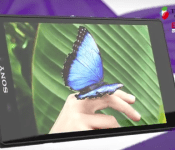
Sony Announces the Xperia T3 and Touts it as the Worlds Slimmest
 Sony has certainly been making strides in their devices over the last couple years. The Xperia Z line is one of my personal favorites. The follow up device to the Xperia T2 Ultra has just been announced by Sony, the Xperia T3.
The Xperia T3 shrinks the Ultras screen from the previous 6-inch to a 5.3-inch screen. It does retain the 1280 x 720 resolution though. They packed a quad-core 1.4GHz Qualcomm Snapdragon processor inside, 1GB of RAM, an 8MP camera and 8GB internal storage with an SD card slot for expansion. As for physical size, it is coming in at 120.7 x 77 x 7 mm, the Xperia Z2 is 8.2mm thick as a comparison.
The Xperia T3 doesn’t follow suite with the Xperia Z line though as the T3 is not dust or water resistant. The T3 will come with Android 4.4 KitKat along with the various Sony apps like Walkman an Sony Unlimited. It will also get all the camera bells and whistles such as Social Live and AR Effect. It is expected to to be released by the end of July this year, but lacks a price point.
Now, if Sony, or rather the U.S. carriers, could just get together and catch up to each other, that would be great. We doubt the T3 will make an appearance in the U.S. anytime soon. The Xperia T2 is still rumored for T-Mobile at some point. Oddly enough it is supposed to bring similar specs but offer a 13MP camera, 3,000 mAh battery and hit a particularly sweet full price price point that should entice plenty of buyers.
Source: Mashable
//<![CDATA[
ord = window.ord || Math.floor(Math.random()*1E16);
document.write('’);
//]]>

Sony unveils the ultra-thin mid-range Xperia T3

Sony on Tuesday announced the Xperia T3, a mid-range Android 4.4 KitKat smartphone due before August. Featuring a 5.3-inch 720p LCD display, the phone offers users a 1.4GHz quad-core processor, 1*GB RAM, and 8GB internal storage. The rear has an 8-megapixel camera while the front side gets a 1.1-megapixel shooter; the main camera has image stabilization, red-eye reduction, HDR, panorama, and other touches.
Like the flagship Z2, the T3 has a metallic rim and thin, 7mm profile. It has all of Sony’s design language on the outside as well as the company’s apps and services. Users will find Xperia SociaLife, Stamina Mode, Xperia Care, Xperia Transfer, and Box.
While it might not be the most powerful of devices out this summer, we can’t knock Sony’s efforts in the lower price range. The Xperia T3 will be offered in white, black, and purple color options when it arrives later this summer.
The post Sony unveils the ultra-thin mid-range Xperia T3 appeared first on AndroidGuys.
 AIVAnet