


Sure, why not: Pay $2 to fart and plank in a PlayStation 4 game

Look, we’re not gonna tell you how to spend your hard-earned money. If you want to spend two actual dollars enabling your Killzone: Shadow Fall character to fart — yes, that kind of fart — and “plank” (this) on PlayStation 4, go for it. But allow us this moment of plea: please don’t. Here’s the description of what your $2 gets you:
“It’s all fun and games until someone loses a game. (Or so they say). Show your fallen enemies, not everything need [sic] be taken seriously. This pack contains Fart, Planking and Comedy spotlight moves.”
One part of us wants to know what “Comedy spotlight moves” could possibly be given that the highly comedic farting and planking verbs have already been used.
We’re not gonna make the guilt plea (“there are children starving all over the world”), and we’re not gonna appeal to your financial sense (it’s just two bucks, right?). Your common sense, however, is fair game. The long and short is this: forking over any cash for this kind of junk DLC sends the wrong message to both the game’s developer (Guerrilla Games) and its publisher (Sony). We’re not saying it isn’t funny — it very well may be! — but we are saying you shouldn’t have to pay for it. It is indeed optional, yes, which is exactly why we suggest you optionally choose to skip this. Vote with your dollars, y’all! Or end up like the angry lady above.
[Image credit: Shutterstock]
Filed under: Gaming, Software, HD, Sony
Via: GameSpot
Source: PlayStation Network

You can buy a PlayStation 4 for £300 right now

New consoles are never easy on the wallet, so anything to take some of the sting out of that purchase is always appreciated. Case in point: well-known retailer ShopTo has just dropped the price of a brand-new PlayStation 4 to a penny under £300, which is quite simply the lowest price we’ve come across yet. That’s basically a £50 saving compared with almost every other retailer (barring one that’s selling the console for £325 via Play.com). This particular deal is only available through ShopTo’s eBay storefront, and we’ve no idea how long the discount will be in effect for, so you might wanna ride that impulse straight to the checkout to be sure you don’t miss out.
Via: HotUKDeals
Source: eBay (ShopTo)
Xbox Live and PlayStation Network are both having issues, but Nintendo Network is fine

Excited to play the Destiny on PlayStation Network? You’re not the only one, and demand as the game’s beta opened its doors today seems to have the service stumbling. A message on the PlayStation Knowledge Center says PSN access is “Intermittently available” so if it’s working, great but don’t be surprised if you notice some odd behavior. Xbox fans shouldn’t be too quick to point fingers though, since besides waiting another week to try out an early version of Bungie’s next big game you may also experience issues with Xbox Live. The Xbox Live Dashboard points out problems for some users signing in or accessing the Video and Music services, but says there is a team working on it and promises another updated within the half hour. Since Nintendo Network appears to be running just fine, we can only assume which culprit is behind this.
Update: The PlayStation Network status has been upgraded to “online” so go forth and beta test freely.
Having Xbox Live connectivity issues on the Xbox One? The proper teams are on it! More updates being posted here: http://t.co/99xfLNeme4 ^AC
– Xbox Support (1-5) (@XboxSupport) July 17, 2014
If you are having issues connecting to PSN, please try again later. Thanks for your patience as we look into it.
– Ask PlayStation (@AskPlayStation) July 17, 2014
Filed under: Gaming, HD, Sony, Microsoft
Via: Joystiq (1), (2)

PlayStation 4 still best-selling console, six months running

It looks like Sony still has bragging rights that the PlayStation 4 is the top-selling console. Not to be outdone by the latest NPD report, the PlayStation Twitter account announced that the Sony’s new console is still outselling the Xbox One, for the sixth month in a row. Yesterday, Microsoft said that following the Xbox One’s $100 price drop it’d seen a “strong spike in interest” and sales of the console jumped by “more than double” the previous month. It’s worth noting however, that Redmond didn’t release specific sales numbers for May and, to be fair, neither did Sony. The latest report from the NPD Group plays it a bit vague, too, but says that combined sales of the PlayStation 4 and Xbox One were higher than combined totals for the PlayStation 3 and Xbox 360. What’s more, compared to last June, hardware sales saw a 106 percent increase overall. Sales of home consoles combined represented a 200 percent jump compared to last year, which is likely due to the two new consoles being available.
In terms of software, the reason most people buy new consoles in the first place, six of the same games from last month’s top ten remain the same. including Mario Kart 8, Wolfenstein: The New Order and Watch Dogs. However, overall software sales for June dipped some 67 percent compared to last year, which the NPD group attributes to last June’s launches of The Last of Us on PS3, Animal Crossing: New Leaf on Nintendo’s 3DS handheld and the disc-based version of Minecraft for the Xbox 360. It seems like the summer drought is a bit drier this year than last, but hey, at least we’ve got the Destiny beta now, right?
Breaking news: PS4 is #1 top-selling US next-gen console in June, 6th month in a row. Thanks for your support! ❤ pic.twitter.com/r5bTKg4wYf
– PlayStation (@PlayStation) July 17, 2014
Ok, #NPD time: Hardware sales still jumping (up 106% to $292.7M) while game sales fall again (down 5% to $298.2M). Accessories were up 1%
– Ian Sherr (@iansherr) July 17, 2014
Filed under: Gaming, Home Entertainment, HD, Sony, Microsoft, Nintendo
Source: PlayStation (Twitter), Xbox Wire

Nyko is ready to give your PS4 controller the battery life it deserves

Although the PlayStation 4 is a fine gaming console, it has a definite Achilles’ heel — the very, very short battery life of the bundled DualShock 4 controller. It’s a good thing, then, that Nyko has at last shipped the PowerPak add-on that it promised back in January. Shelling out $20 gives you a 1,000mAh lithium-ion battery that roughly doubles the longevity of Sony’s official gamepad. That’s not saying much when the DualShock normally gets just a few hours of play time per charge, but the extra capacity should be good enough to handle a marathon Destiny session.
Filed under: Gaming, Peripherals, Sony
Via: IGN
Source: Nyko (TriplePoint)

Alleged Sony Xperia Z3 sized up next to the original Samsung Galaxy Note

In past few weeks, we have seen the Sony Xperia Z3 a few times, and according to the information we have so far, it looks like a worthy successor to the Sony Z series. Xperia Z3 will be running a Snapdragon 801 chip with the latest version of Android. However, folks over at XperiaBlog managed to get their hands on some new pictures of the Xperia Z3, alongside the Samsung Galaxy Note.
 The picture above gives us an idea about the dimensions of the Z3, it’s almost equal to the original Galaxy Note, but a little less wider. Also, another picture is shared below which shows that Xperia Z3 will have slightly round edges unlike the predecessors.
 Do you think the Xperia Z3 will be the best ‘Z’ yet? Let us know in the comment box below.
Source: XperiaBlog
The post Alleged Sony Xperia Z3 sized up next to the original Samsung Galaxy Note appeared first on AndroidGuys.

IRL: The Retina display MacBook Pro and Sony’s SRS-BTX300 Bluetooth speaker

We’ve got a twofer this week, folks. As that lead shot up there suggests, we’ll be revisiting the Retina display MacBook Pro — the 13-inch version, to be exact. And then, past the break, we’ll also give you a mini-review of Sony’s SRS-BTX300 Bluetooth speaker.
Apple MacBook Air
 My history with laptops reads like a Goldilocks tale: some were too big, some were too small and some were definitely too hot (hello, 12-inch PowerBook). However, I might have found something “just right” in the 13-inch MacBook Pro with Retina display that I bought at the end of 2013.
To me, it’s a good balance between size and power. It’s portable enough that it’s no major burden in my bag — important when hiking around trade shows — but there’s still plenty of screen area and performance (at least on my unit with a 2.4GHz Core i5 and 8GB of RAM) when I need to do some serious media editing. The Retina screen also gets around the limited workspaces that I’ve seen on many small laptops. While the computer isn’t going to have as big a virtual workspace as some of its rivals, there’s still plenty of room to breathe.
The real highlight, though, is the battery: it’s a monster. I have yet to run low on power when unplugged, even when I go out of my way to drain the energy cells dry. At Expand New York, I only managed to use half a charge after five hours of near-constant writing, chatting and media editing. Even the wireless display support doesn’t tax the battery all that much. There are other laptops that manage this kind of longevity, but most of them are Ultrabooks that won’t be as quick.
It’s not quite a jack of all trades. I’d rather have a 14-inch Razer Blade if I were looking for a small gaming rig, and Samsung’s ATIV Book 9 Plus has both a higher-resolution screen and touch input. For me, though, the MacBook Pro ticks a lot of checkboxes. It can do everything I want it to do for as long as I need on any given day. I’m sure I’ll eventually need to replace it, but for now, I can’t ask for much more.
– Jon Fingas
Sony SRS-BTX300 bluetooth speaker

Bluetooth speakers have become increasingly popular over the past few years, but I for one didn’t learn how handy they could be until fairly recently. And while the Sony SRS-BTX300 I’ve been using isn’t nearly as portable as, say, the Jawbone Jambox or Beats Pill, I could still easily fit it in my messenger bag and carry it with me if I wanted to. To put its size in perspective, it’s about as long as a 13-inch MacBook Air and wee bit shorter than an iPhone 4s, while its weight clocks in at nearly four pounds. Needless to say, it’s a solid piece of hardware.
Looks aside, the SRS-BTX300 can push out some very loud sound, so much so that I never turn the volume to more than 50 percent when listening to music — it’s one of those things you have to hear to believe. The full-range 70mm speaker has a few different audio settings to choose from, including a Mega Bass mode that’s intense enough to make the tenant below my apartment throw a temper tantrum and think about filing a noise complaint.
What I love the most about the BTX-300 is that I can pair devices via Bluetooth, NFC or an audio jack to play my tunes, allowing me to seamlessly switch between my HTC One, iPad and sixth-gen iPod nano at any given time. Sony claims around eight hours of battery life, which is on par with what I experienced, and sometimes even longer if I use it periodically rather than in one long jam session. For $200, its appearance may be utterly subtle, but there’s no doubt the SRS-BTX300 sounds just as good if not better than all those other wireless speakers it’s up against.
– Edgar Alvarez
Filed under: Laptops, Portable Audio/Video, Apple, Sony

Sony’s next flagship phone allegedly shown off with new body, same camera

The jump from Sony’s Xperia Z1 to the Xperia Z2 was relatively minor, so don’t be surprised if this familiar-looking leak turns out to be legit. According to a Baidu Tieba user from China, we’re looking at a prototype of Sony’s upcoming Xperia Z3 aka L55t (China Mobile variant with TD-LTE) which is, surprise surprise, running on a more powerful Snapdragon 801 MSM8974AC chipset (the Z2 uses MSM8974AB) plus Android 4.4.4. Judging by the photos, this device shares the same height as the original Galaxy Note and hence the Xperia Z2, meaning the screen size should stay at 5.2 inches. Likewise, the Z2′s 20.7-megapixel camera is here to stay. What makes this prototype stand out is its new, simpler body design, which is a surprise given how the range’s appearance has changed little since the Xperia Z. That is, unless, this phone turns out to be just a variant of the Z2, so only time will tell if our guess is right.
Filed under: Cellphones, Mobile, Sony
Source: Baidu Tieba
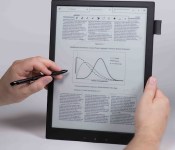
Sony’s latest target market for its $1,100 ‘Digital Paper’: legal researchers

Sony’s still searching high and low for the kind of folks that need a replacement for regular paper and aren’t too worried about the cost ($1,100). The latest potential buyers (after lawyers and HR departments) of its 13.3-inch E Ink Digital Paper? Legal researchers. Sony’s teamed up with William S. Hein & Co. (which runs the LexisNexis-like HeinOnline database that gives access to documents from legal libraries) so anyone who uses the device can pull from its more than 100 million pages and see them just as they were originally laid out, without zooming or scrolling. It’s still a pretty pricey upgrade from tech that’s worked effectively for around 2,000 years, but legal librarians and law students can probably do without the reams of paper they’ve been printing out until now.
Source: William S. Hein & Co.
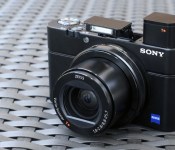
Sony RX100 III review: a fantastic point-and-shoot, but it’ll cost you

There are good cameras that look cute, take passable pictures and don’t cost an arm and a leg. And then there are incredible cameras that can really do it all, but come along with comparatively astronomical price tags. The Sony RX100 is the latter — the original model, which cost $650 and first appeared in 2012, was already wildly popular with camera enthusiasts, and 2014′s version cashes in on two additional years of R&D. The result is a more capable point-and-shoot that’s even pricier, at $800, but still worth every penny: It’s the RX100 III.
There are a few major changes in the third iteration. For some photographers, the most significant is the new pop-up OLED viewfinder that’s available when you need it, but retracts completely into the housing when you don’t. Sony removed the full-size hot shoe to accommodate the new EVF, but that’s a trade-off few will mind. Another big swap is the new 24-70mm lens, which sports an f/1.8-2.8 maximum aperture range, giving you more bokeh and better low-light performance when zoomed all the way in. Finally, there’s a new video codec on board, called XAVC S. On paper, it’s not tremendously exciting, but it does result in some pretty spectacular video footage, rivaling what you’d get with a higher-end (and much larger) rig, assuming you add on the mandatory Class 10-plus SDXC card.
Hardware

You’ll still get better performance from a top-of-the-line mirrorless camera or DSLR, but those aren’t nearly as portable, and they’re certainly not small enough to carry in your pocket. The RX100 is plenty capable, but its greatest strength is its size. While heavier than many other point-and-shoots, it’s not much larger. Its powerful 24-70mm f/1.8-2.8 Vario-Sonnar T* zoom lens does make it quite a bit thicker than your run-of-the-mill compact, but assuming you can deal with a moderate bulge, it can fit in a pants pocket.
You’ll more likely be dangling the RX100 III from your wrist, using the included band, or from a third-party neck strap (the requisite adapters are in the box). Despite its small size, however, the camera offers all of the necessary buttons and dials, including a dedicated mode dial, a video record button, a scroll wheel (for adjusting aperture and/or shutter speed) and a button for accessing the integrated WiFi mode, which lets you transmit images from the camera directly to a smartphone or a tablet.

This time around, the greatest engineering feat is the pop-up electronic viewfinder. It’s located at the far-left corner, and extends up about one inch when in use. The clever design includes a slide-out magnifier, complete with a diopter adjustment dial. The camera powers on as soon as you extend the EVF using the release switch on the left side of the housing, though it also turns off when you push it back down. Like most other EVFs, there’s a proximity sensor that activates the finder and disables the LCD when you raise it to your eye. Of course, grazing the viewfinder with a finger or other appendage has the same effect, but you can simply push it back into the housing to eliminate the issue.
Because the EVF takes up quite a bit of space within the housing, Sony had to move the pop-up flash a bit to the right. It’s now centered just above the lens, though it extends far enough to reach beyond the zoom, even at the widest focal length. Given that the flash has now taken over the real estate previously allocated to the full-size hot shoe, that component is a casualty of the RX100′s redesign, though (as mentioned earlier) with the exception of perhaps a few hardcore shooters, it likely won’t be missed.
User interface

For a spell, Sony began including touchscreens with its mirrorless cameras, such as the NEX-5N, but newer models, including the Alpha 6000 and flagship A7s don’t offer that feature. All three RX100 models also lack touch functionality, including this year’s iteration, which may be a disappointment to some. On the other hand, no touchscreen means Sony needed to include a range of dedicated controls and dials, which ultimately work to improve the experience. The trade-off, of course, is that you can’t tap to focus, which many shooters have come to count on when capturing video.
The user interface hasn’t changed much since the original RX100. The menu layout is more or less identical, though there have been some slight cosmetic tweaks. The quick-access menu has been refined — it’s a bit more straightforward to use now — but indicators and the camera’s general workflow are consistent with past models. Like with the RX100 II, you can transfer images over WiFi using Sony’s PlayMemories Mobile app for smartphones and tablets, but unlike competing products, you can’t control the camera remotely.
Performance and battery life

The first model in this series was lauded for its incredibly fast focusing, and the RX100 III performs just as you’d expect. It focuses very quickly, and it’s accurate nearly all of the time. Focus hunting is perceptible, particularly with dim subjects when you’re not using the AF-assist light, but if you miss a shot due to speed, the camera probably won’t be to blame. Granted, it’s not the fastest gun in the West, but it’s definitely one of the best in its class. As with any compact camera with a power zoom lens, it takes a second or two to get the camera powered on and ready to capture its first shot. If you’re anticipating an upcoming capture, it’s best to leave the RX100 powered on — once the camera’s standing by, shutter lag is barely noticeable.
As for battery life, I took the RX100 on vacation and managed to get through three days of exploring without charging up. On average, I probably used the camera for a few hours each day, so if you tend to capture hundreds of shots and dozens of video clips during each day of touring, you’ll need to charge up overnight. During that period, I was able to snap more than 500 stills and 13 minutes of 1080p/60 video, which was captured with the high-bit rate (and processor-intensive) XAVC S codec.
Image quality
Since we’re already on the topic of video, I’ll start with some analysis there. The XAVC S codec available with Sony’s latest cameras is a significant step up from AVCHD. Video looks great on the camera, of course, but when evaluating footage on a laptop, it’s hard to believe this level of quality came from a camera you can slip in your pocket. The new f/1.8-2.8 lens also deserves some of the credit, I’m sure, but the improvement is clear. The one con is that you’ll need to use a file converter to edit and output your footage using a computer. I used Pavtube ($35), which worked very well.
Unfortunately, once you convert footage and upload it to the web (with further compression), you lose a lot of that captured detail. The resulting clips, as you’ll see in the footage reel above, look better than what you’d shoot with some other compact cameras, but unless you’re maintaining that high 50 Mbps bit rate, you’ll notice some degradation for sure. In the reel above, exposure was spot-on, and the RX100′s integrated optical image stabilization helped keep things steady, even as I moved around.

Moving on to still images, the RX100 exposed this late afternoon, backlit shot beautifully, with an aperture of f/4 and a shutter speed of 1/640 second at ISO 125. Details are very sharp and colors are accurate.

This plate of cacio e pepe, a typical Roman dish, is slightly underexposed, at f/4 and 1/320 second, with a sensitivity of ISO 125. The camera may have been thrown off by the metal fork, but it’s nothing a slight levels tweak in Photoshop won’t fix.

I saw dozens of tourists shooting tablet photos each day during my short trip to Rome. Moments like these come and go in only a few seconds, so this was a great test for the RX100. I was able to turn the camera on and snap a few shots as I walked by on the sidewalk. Details are sharp and colors are accurate in this 1/200-second, f/5 exposure at ISO 125.

This is where gelato cups go to die. The camera opted for an exposure of 1/100 second at f/4 here, with a sensitivity of ISO 125. Details are sharp; colors are accurate; and the exposure is spot-on.

Like the iPad shot above, this is another opportunity that came and went in only a few seconds. Fortunately, the RX100′s speed enabled me to grab this sharp shot, at 1/50 second and f/2.8, with a sensitivity of ISO 125.

The Pantheon is remarkably dim, yet the RX100 did a fine job of capturing this stranger with sharp details, assuming you’re uploading for the web. In-camera processing counteracts the high sensitivity of ISO 6400, but results in softer details, as you can see in the inset of this 1/60-second, f/2.8 exposure.

The RX100 really excels at night, capturing consistently exposed images with limited noise. The camera’s optical image stabilization helped keep details sharp in this 1/20-second, f/2.8 exposure at ISO 800.

I returned from Italy just in time to capture this shot of New Yorkers making their way home after the July 4th fireworks. With plenty of vapor light, colors are accurate, believe it or not, though details are soft due to in-camera processing in this ISO 6400, 1/50-second, f/2.8 exposure.
The competition

Given all of the features that Sony’s managed to pack into the RX100 III, including a 1-inch sensor, an f/1.8-2.8 lens, an LCD that flips forward 180 degrees and that one-of-a-kind pop-up viewfinder, this is currently the only camera you can buy that includes that identical feature set. There are a few similar options on the market, though, with Canon’s PowerShot G1 X Mark II offering the most comparable specifications while still maintaining a point-and-shoot form factor. That camera, also priced at $800, includes a larger 1.5-inch sensor and a longer 24-120mm f/2-3.9 zoom lens. And while there’s no pop-up EVF, you can attach one to the hot shoe.
If you’re looking for even more power, you’re not going to find it in a pocketable form factor. Instead, consider stepping up to a mirrorless camera or a DSLR. Our mid-range pick in the mirrorless category, the Sony Alpha 6000, which also retails for $800, offers many of the same features as the RX100, such as an integrated EVF and plenty of hardware controls, with the added benefit of a larger APS-C sensor and interchangeable lenses. You should also consider purchasing last year’s RX100 II ($650) or the original RX100 ($500) at a discount. Both are excellent cameras, and they’re considerably less expensive than this year’s model.
Wrap-up

When Sony launched its first RX100 back in 2012, we were very impressed. The camera offered tremendous functionality in a pocketable package. Then, when the RX100 II came around last year, Sony added WiFi along with a full-size hot shoe (which can accommodate high-end audio gear, among other accessories), besting the original model. This year’s iteration is by far the most capable yet, with a superior lens, XAVC S encoding and a unique pop-up EVF. At $800, it’s a significant investment, particularly within the point-and-shoot category, but if you need a ton of power in your pocket and you don’t mind paying for it, you can’t do any better than this.
 AIVAnet