



Nothing says you’re a Sony fanboy like a pair of PS4-themed Air Jordans

There’s nothing like a set of fresh kicks to add the finishing touch to your get-up, but then there’s the problem of tracking down the perfect pair. We know that’s exactly why you haven’t been cracking out your PS4-themed outfits recently, but luckily there’s now a shoe for that[TM]. Custom kick designer Jonny Barry from FreakerSNEAKS has seen this gaping hole in the market, and intends to fill it with the “JRDN X PS4,” a remix of the Air Jordan 4 that takes inspiration from Sony’s latest console. They’re actually one of his less-extensive mods, with the PS4/PlayStation logos replacing the normal dunking graphics on the back of the sneakers, and an image of the mischievous robots from Playroom on the tongue. What’s more, there’s a (completely non-functional) HDMI port built into the sole, and a Jordan-branded cable for plugging them into, well, each other. As Barry tells DualShockers, he intends to produce a limited run of ten pairs, and sell them at around $950 each. Finally there’s something that just works with that PS4 jumpsuit you’ve been dying bust out, and what a bargain at more than double the price of the actual console!

Via: The Verge
Source: DualShockers
.CPlase_panel display:none;

How would you change Sony’s Xperia SP?

You know the deal, we trawl our reviews archive, and then ask you what you think would have improved the product. This week it’s Sony’s Xperia SP, and in the hands of Jamie Rigg, it was deemed to be imperfect, but charming nevertheless. It was full of bloatware, had terrible WiFi reception and had a bland design, but the capable camera, snappy performance and long battery life more than made up for it. But what about you lot? Would you care to weigh in on what made this phone a delight or otherwise? Head on over to the forum.
Filed under: Cellphones, Sony
Source: Engadget Product Forums
.CPlase_panel display:none;

Engadget Daily: Sony’s dwindling empire, Acer’s selfie sombrero and more!

It’s Friday, folks. You made it. But before you checkout for the weekend (i.e. Destiny-filled all-nighters), take a look at all our news highlights from the last 24 hours.
.CPlase_panel display:none;

Sony, the catch-up king

Sony’s not making PCs any more. It recently announced it wouldn’t be making new e-readers, either. The company’s also taking a long hard look at the TV business that it dominated for decades. In the ’90s, its TVs stood up alongside the Discman, Walkman and even that new games console that could play CDs. Sony was cool; it had cachet. But a narrow focus on proprietary technology and its slowness to adapt to the dizzying speed of consumer tech in the last two decades have taken their toll. While it’s created a new department solely dedicated to making the next big thing, it remains to be seen if the company can bounce back from decades of failures.
The Walkman, the PlayStation, all those TVs, countless radios in increasingly smaller sizes, studio cameras and equipment, the compact disc and (possibly) AIBO, the robot dog. These are old success stories.
For decades, Sony practically defined high-end TVs, and they were everywhere. The Trinitron series even won an Emmy in the ’70s. But success didn’t last. Flat-screen TVs killed chunky CRT sets. Around 1992, companies like NEC and Hitachi, both Japanese rivals, became some of the earliest companies to manufacture bigger LCD displays with decent viewing quality. By 1996, Samsung had also figured out its own techniques for flat-screen TVs and by the end of 2007, LCD TVs were outselling CRTs globally.

Sony was slow to adopt, confident in its then-popular Trinitron TVs. But by 1996, its patents on the design ran out, and cheaper competition emerged. Instead of moving into LCDs like other companies, Sony revealed its slightly flatter FD Trinitron series, which was unable to recoup the popularity of the original. In 2002, it finally launched its debut WEGA LCD TV, but by Christmas of 2004, despite a 5 percent increase in TV sales, it suffered a 75 percent plunge in profits. It’s been an increasingly tough market ever since. In the last decade, Sony’s TV arm has bled nearly $8 billion. The company, in its entirety, has also had a few rough years. Make that several rough years. Losses in 2013 totaled 128 billion yen, roughly $1.2 billion.
In 2007, Sony developed the first OLED TV: a tiny, (beautiful) 11-inch TV on an articulated arm, but the company ceased production in 2010 when it decided 3DTV was the next big thing. Not soon after, Korean rivals like LG and Samsung introduced 55-inch, actual TV-sized OLED screens that were deemed the future of television. And it happened again more recently with curved TV sets: LG and Samsung got there first and Sony came after.
Was the company unlucky? Nearsighted? Arrogant? Take its Blu-ray disc business. According to Sony’s own news alert earlier this year: “Demand for physical media contracting faster than anticipated” led to the company reducing its estimates even further. The alert later states, “The fair value of the entire disc manufacturing business also has decreased.” Sony totaled this loss at an incredible 25 billion yen. Blu-ray is a Sony invention — the latest, though not the last, proprietary technology it’s tried to sell. The idea was to keep us, its dear customers, close to where we were spending our money — on media, on content, on software. This myopic aim is partly to blame for why it’s been slow to deliver on new trends: It’s been trying to get value for money from its physical media inventions.
Tech’s history books paint an unflattering picture in that regard: Sony’s Memory Stick was beaten by USB and SD card storage; Betamax was bested by VHS; and while Blu-ray won the battle with HD-DVD, it looks like it’s losing the real war with downloadable, streamable content. We don’t need discs so much — something that also hit the MiniDisc. Remember ATRAC? Sony’s heavy-handed DRM music format? The other options won out. Sony likes control and relinquishing it — or changing with the times — has been a big problem. (Interestingly, after the failure of Betamax, Sony turned its knowledge there into crafting smaller videocassette recorders, adding cameras and ushering in the age of camcorders.)
Maybe the recent lack of a hit, and weak business performance has been due to arrogance. The company’s latest CFO, Kenichiro Yoshida, put it surprisingly bluntly earlier this year: Sony has been very slow to respond to consumer trends. But thanks to previously strong movie and financial arms (Sony sells health insurance in Japan), the poor performance of its electronics company had been buffered. That was until its movie business suddenly turned sour last year and a very harsh spotlight was thrust upon its electronics arm. Yoshida added that to strengthen the company, it was cutting down on pricey (prime) Tokyo real estate, likely to be seen as another dent to Sony’s battered pride.

Another sell-off, its VAIO PC business, was an “agonizing decision,” according to CEO Kaz Hirai. The machines even caught Steve Jobs’ eye at one point. Both its laptops and desktop PCs commanded premium prices, but underneath those classy exteriors were the same components you’d find in far cheaper machines. In the last few years, however, it hasn’t even been a price issue: PCs simply aren’t selling as well as they did 15 years ago. They’ve been taken over by the smartphone, by the tablet — and unfortunately for Sony, these now-ubiquitous gadgets aren’t Xperias. They’re iPads; they’re Galaxy S devices. While it was the fourth largest mobile phone maker in 2009, by 2010 it had dropped to sixth, and its smartphone sales dropped last quarter.
Many believe Sony should be right up there, battling for smartphone dominance with Samsung and Apple, but it isn’t. It may have defined big-screen TVs and the personal music player pre-iPod, but it’s struggled to grab another product category and dominate it like it did before.

Sony was an e-reader pioneer, however. The company launched the first e-ink reader, the LIBRIe (above), in 2004, but hamstrung it with an e-book rental system. The Sony Reader series followed in 2006, but a year later, Kindle arrived and Sony’s limited book selection (along with Amazon’s sales strength) decided the rest. It helped that Amazon continued to refine (and discount) its e-readers. Backlit displays arrived inside Kindles in the second half of 2012, but Sony’s latest (and last) e-reader — announced a year after — still didn’t have one. Sony was slow. Again. Kindle now dominates e-readers. According to the Codex Group, in the US it’s responsible for around 64 percent of all e-book sales.

And now, Project Morpheus, a VR headset, arguably the coolest Sony hardware we know about isn’t coming from its electronics arm, but from Sony Computer Entertainment. SCE has somehow managed to hold onto that Sony magic: The PS4 is off to a very good start, after the messy launch of its predecessor. Perhaps SCE maintains enough distance from the rest of the Sony corporation that it can react and develop faster — whatever it’s doing, it’s working.
Sony’s huge successes in the preceding decades have thrown the weight of expectations onto whatever it does. “The difficulty Sony faced was that we could not forget the success of the past,” Sony’s former CEO Nobuyuki Idei explained in Sea-Jin Chang’s Sony Vs. Samsung. “Sony’s success was based on the tape format, CD format and transistor TV.” In recent shareholder meetings, investors cried out for another hit and complained that it’s another Japanese company, SoftBank, that’s making headlines by selling humanoid robots, not Sony.
Can it get back on track? The company wants to show that it’s at least trying. Earlier this year, Sony announced a new business-development department, aimed at tapping into the creativity and ideas of its youngest employees and people with ideas for The Next Big Thing. Its head, who apparently has a degree of autonomy outside Sony’s chain of command, insists there are still a lot of passionate people inside the once-dominant Japanese multinational. However, the onus will be on delivering new businesses and products that people want — definitive ideas that beat the competition — if it’s to ever return to its influential peak. Then, it’ll have to keep doing it.
Filed under: Cellphones, Portable Audio/Video, Tablets, Wearables, Software, HD, Mobile, Sony
.CPlase_panel display:none;
Sony bids adiós to future updates for the Xperia L, M, C and SP

“There is no real ending. It’s just the place where you stop the story.”
The above line is just a hint about the news we want to present to you i.e.: Sony has reached the end on updating the Xperia L, M, C, and SP. The end to software update is indeed a bad news, We simply tried to ease the hard blow by reminding you that there is no certainty with end. Did it help? We hope it helped.
Anyway, all of these Xperia devices are presently running Android 4.2 Jelly Bean, and that’s the highest they will ever go. Sony confirmed this earlier today when it updated each device’s respective software update page with an end-affirming “Latest and final version” tag. Ah! That hurts.So now, let’s take a look at the lighter side: Our lives are still updating and (as of now) there is no end to it. Deep insight. Period.
Feel free to check out each devices update page at Sony.
//<![CDATA[
ord = window.ord || Math.floor(Math.random()*1E16);
document.write('‘);
//]]>
The post Sony bids adiós to future updates for the Xperia L, M, C and SP appeared first on AndroidSPIN.
.CPlase_panel display:none;

Viacom brings 22 channels to Sony’s upcoming internet TV service

Sony’s future cloud-based TV service shouldn’t be hurting for content. Viacom has forged a deal that will bring 22 of its networks (including Comedy Central and Nickelodeon) to the streaming platform when it launches late this year — the first time Viacom has provided its channels to any live internet TV service. The media giant thinks its “young, tech-savvy” audiences are a good match. That’s a slightly ironic statement given its years-long battle with YouTube, but it makes sense. Not that the company is leaping into the internet era with both feet as it is; you’ll have access to on-demand content, but only through authenticated access to the same material you’d find in TV Everywhere apps. It’s still not clear when Sony’s video portal will be ready for action, but you may now have a good reason to give it a close look.
[Image credit: AP Photo/Carolyn Kaster]
Filed under: Home Entertainment, Internet, HD, Sony
Source: Viacom
.CPlase_panel display:none;
Back to School 2014: The 8 best HDTV devices

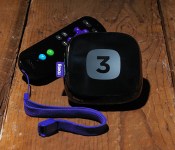
Even if you aren’t hauling a 55-inch smart TV with you to campus, you can do better than watching Netflix on your laptop. Our picks include an affordable Blu-ray player, set-top boxes and a few big-screen stunners. There’s more where that came from, too — check out the rest of our guide here.
Filed under: Home Entertainment, Samsung, Sony, Google, LG
.CPlase_panel display:none;

Bungie’s leap forward with ‘Destiny’ isn’t gameplay: it’s social

“Waffles. Waffles with Swedish fish in them!” Destiny developer Bungie’s community manager Eric Osborne is telling me about his crew’s Halo LAN-party ritual. Lugging bulky CRT TVs everywhere (“You didn’t have a 36-inch [Sony] Trinitron Wega?” he asks), snaking ethernet cable around a possible stranger’s house, sipping Mountain Dew in the kitchen between games of capture the flag, eating lots of cheap pizza. Or, in Osborne’s case, breakfast food sprinkled with candy. “That was my experience!” It’s easy for him to chuckle at how ridiculous his go-to game fuel sounds in retrospect.
Back then, host advantage wasn’t having non-lagging bullets – it was knowing where the bathroom was and not having parents home. Times were a lot simpler.
When Halo 2 released in 2004, though, that all stopped. Mostly because Bungie more or less made LAN parties obsolete by taking them online with a sort of “virtual couch” that let you keep playing with the same buddies all night long in a, err, party. Fast forward ten years and much of the groundwork that the team laid for Halo 2 is boilerplate for any successful online game regardless of genre. Hell, much of Bungie’s conventions for online play (party chat, ranking systems, game invites) are baked directly into the online infrastructure of modern consoles.
Our interview with Destiny publisher Activision’s CEO Eric Hirschberg
The leap in social interactions between Halo: Combat Evolved and its sequel was nothing short of a paradigm shift, but where does Osborne see the change between its last game, Halo: Reach and its latest, the just released Destiny?
“I don’t know if you call it community or social play; I’ve heard some people call it ‘mingleplayer.’ I’m in a world, it’s my story, it’s my character. All the gear is mine; I’ve earned it in a bunch of different story missions,” he says. “I encounter some random people and we do a lot of stuff together and it’s super fun. But, I’m not bound to them in any way. I don’t need to lug a TV or even send them a friend request.”
He’s speaking of course about Destiny‘s unique take on traditional single-player campaigns in shooters. Though Bungie hasn’t quite come out and said the game is a massively multiplayer online title (MMO) like World of Warcraft, at its core that’s what the game is. When you start a new character, you drop into a world, quickly find an assault rifle and start shooting at aliens. In pretty short order, it becomes apparent that you aren’t alone. There are hundreds (if not thousands or even millions if pre-order numbers are to be believed) doing the same thing as you, and some are even doing it right alongside you. Should you desire, you can jump into their pick-up group – or, as they’re called in Destiny – a fire-team, and fight through scads of aliens together without much effort.

“In previous games, sending a friend request took you out of the flow of gameplay,” Bungie’s server software engineering lead Roger Wolfson says. He describes meeting someone online, then backing out of the actual game and wading through layers of menus and a massive list of recent players, just to interact with someone that you just met. It’s a hassle.
“And then you find out they’re a racist later,” Osborne says. He’s joking, but unfortunately that situation is’t far from the truth.
It’s why I, and most people I know, choose to not play online with anyone but a carefully curated group of friends. For me it helps preserve a shred of that LAN experience.
“A lot of times, you want to have a multiplayer experience where you don’t want to have to send a friend request,” Osborne says. “It can take a lot even in person to say, ‘Oh, I’ll give that person my phone number.’ Or, ‘I’ll give that person my email address.’ We’re cognizant that these types of things need to be lightweight and positive – that’s where the term ‘mingleplayer’ comes from.”
This, more than anything, is what Bungie thinks sets Destiny apart from any of its previous games: it’s taking all of the knowledge of how people interact online and how people want to interact online, that its gleaned even since launching Minotaur on the Mac in 1992, and putting it into motion. It’s what the team refers to as “lightweight social connections” that make the difference in Destiny. Stuff like walking up to a warlock with bad-ass armor and emoting a salute at him or her. Or, just kicking a ball around in The Tower, the in-game social plaza, with another player while she waits for her fire-team member to grab a new rifle or armor piece.

“You can choose to have positive interactions and you can choose to have negative interactions,” Wolfson says. “The most pestering a person can be is just running up to you and emoting a lot.”
That’s a far cry from tea-bagging the corpse of the flag carrier you just pistol-whipped from behind. What the team is trying to do at its core is eliminate a lot of the barriers that make it hard for people to have fun together.
“It’s so important to remember that what we’re doing is making a game, and a game is just a rule-based system that allows people to have fun and challenge themselves, share victory and social connections,” he says. “I think we’re celebrating that with Destiny.”
We’ll fire up the waffles.
Filed under: Gaming, Home Entertainment, Software, HD, Sony, Microsoft
.CPlase_panel display:none;

Sony’s sold over a million PlayStation 4 consoles in the UK

With over 10 million worldwide sales, Sony’s PlayStation 4 has enjoyed a very solid start. It’s consistently outselling Microsoft’s Xbox One, and in the UK, it’s already become the company’s fastest-ever selling console. In an interview with Eurogamer, Sony UK boss Fergal Gara revealed that it took the PS4 just 42 weeks to reach one million sales, beating the PlayStation 3 and the PS2 to the same milestone by four and eight weeks respectively. By contrast, the Xbox 360 took a total of 60 weeks, while Xbox One figures remain undisclosed.
Although impressive, the PS4’s race to one million only ranks it as the second fastest-selling home console ever. The top spot actually belongs to the oft-forgotten Nintendo Wii, which notched its first million sales in just 38 weeks. Like this editor, many UK gamers chose Sony when it introduced The Last of Us: Remastered — we wouldn’t be surprised if the same happens again now that the white PlayStation 4 and Destiny bundle is on sale.
Source: Eurogamer
.CPlase_panel display:none;

Unboxing Sony’s white-hot PlayStation 4 ‘Destiny’ bundle

Remember this (glacier) white beauty Sony announced at E3? Well, after three long months of anticipation, it’s finally here.
The $450 PS4 Destiny bundle, which goes on sale tomorrow in time for the game’s official launch, will net you a physical copy of Bungie’s first person shooter/MMO hybrid, 500GB of hard disk storage, a 30-day trial to PlayStation Plus and, of course, that stark white next-gen console and DualShock 4. But we know how it is: you want to preview the goods before you plunk down the cash. And since we had one in-house here at Engadget, we took the liberty of tearing open the box to show you what’s inside. So go ahead and click. You’ll be glad you did.
.CPlase_panel display:none;
 AIVAnet