


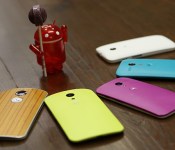
Here’s every device getting Android 5.0 Lollipop so far

If you’re a die-hard Android fan, you’re probably champing at the bit waiting for that Lollipop upgrade — when will you get it? Are you going to get it? Thankfully for you, a number of companies have already promised to upgrade some of their devices to this candy-flavored OS. Google’s Nexus 4, 5, 7 and 10 models are naturally first in line, as are Android One and Google Play Edition hardware; its outgoing Motorola brand is equally on top of things with plans to patch the Moto E, G and X alongside Verizon’s Droid Mini, Maxx and Ultra. HTC and OnePlus don’t have full details, but they’re both pledging to give their recent flagships a taste of Lollipop within 90 days of receiving finished code. NVIDIA and Sony, meanwhile, are being vague. While they’re respectively teasing plans to update the Shield Tablet and the Xperia Z series, they won’t say when just yet.
As for other manufacturers? Well, don’t hold your breath. LG tells TechRadar that it has nothing to say on “if / when” Lollipop will reach the G3, let alone older gear. The upgrade is likely coming, but the statement is far from reassuring. Mum’s the word from Samsung as well, although leaks show that a Lollipopped version of TouchWiz is in the works. It’s also reasonable to expect that relatively large brands like Acer, ASUS, Huawei and Xiaomi are on deck — just don’t be shocked if their older devices don’t make the cut.
Filed under: Cellphones, Tablets, Mobile, Samsung, Sony, HTC, Google, LG, NVIDIA
Via: TechRadar, MobileBurn
Source: HTC (Twitter), Motorola, Sony Mobile Blog
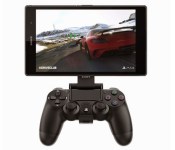
Sony accidentally confirms PS4 Remote Play is en route to Xperia Z2 and Z2 Tablet

Back in September, Sony announced PS4 Remote Play — a revolutionary new feature which equips users with the facility to take a PlayStation 4 controller and stream games from their console to an Xperia smartphone or tablet that supports the service.
At the time, the Japanese company revealed that the application would be an exclusive to the Xperia Z3, Z3 Compact and Z3 Tablet Compact. But now, thanks to a blunder on the ‘Xperia Lounge’ app, it appears that Remote Play will be coming to the Xperia Z2 and Xperia Z2 Tablet after all, when the app launches next month.
Hit the break below to see the slip-up in all its glory.

Source: Xperia Blog
Come comment on this article: Sony accidentally confirms PS4 Remote Play is en route to Xperia Z2 and Z2 Tablet
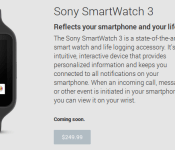
Sony SmartWatch 3 makes its appearance in the Play Store as ‘Coming Soon’
A new Android Wear powered smartwatch has surfaced in the Play Store today. The Sony SmartWatch 3 is Sony’s take on the Android Wear sporting game.

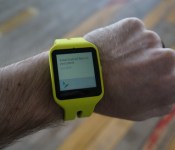
The Sony SmartWatch 3 offers much of the same thing the others on the market do, but there are a few key differences. The SW3’s main display is removable and can be placed in a variety of colored bands that Sony sells. That does rule out the use of more traditional style watch bands that you might already own, but it does give it an additional option that a few of the others don’t. Sony has four color options on display on their site. It is unclear if you will be able to choose from just the black as the Play Store image shows, or if there will be other choices hen it becomes officially available. I am certain you can order it through Sony in any color you want.

Internally it carries the same Qualcomm Snapdragon 400 processor, 512MBs of RAM and 4GB on board storage. A slight differentiating addition is the battery size, coming in at 420 mAh vs the competitions highest device being the LG G Watch at 400 mAh. It also offers its own GPS chip that allows you to record your runs and adventures without being connected to a phone. I would imagine the bump in battery is to help offset the GPS battery use as well as give it a reported 2 day battery life. Although I have found conflicting information that states 1 day of active use and 4 days of standby with a 1 hour charge time. It will all depend on your use of course.

As you can above, the SW3 offers a small flap on the rear, which is where you will charge the watch via a micro USB cord. Even though Sony went a little more sporty with this one, it doesn’t look all that terrible. I am really liking the look of the clasp.
A previously released video of the device from Sony also shows off some other cool features. Like long pressing on the screen to “wake it up” and placing your hand over the display to “put it to sleep.” I do not have any of the Android Wear watches, so if that is a common feature, excuse me. Either way, check out the video to see a bit more about this device.
There is a curious little addition in the connectivity section about the watch as well. It says Bluetooth 4.1, which is great, but also that the watch is Wi-Fi ready. At this point I am going to assume that it will connect to open WI-Fi networks as you pass by to sync up your GPS and activity logs with the LifeLogging software that Sony provides. That is strictly theoretical until I can find out more in regards to the Wi-Fi aspect.
Anyone considering this one when it finally goes live for the $250 price tag?
Feel free to poke about the Sony SmartWatch 3 on the Play Store and on Sony’s own site.
//<![CDATA[
ord = window.ord || Math.floor(Math.random()*1E16);
document.write('‘);
//]]>
The post Sony SmartWatch 3 makes its appearance in the Play Store as ‘Coming Soon’ appeared first on AndroidSPIN.
Sony SmartWatch 3 shows up in Google Play as “coming soon”

Google has just listed the Sony SmartWatch 3 on the Play Store. Unfortunately, the device isn’t available just yet, it’s catalogued only as “coming soon,” but we do know that it will have a $249 price tag when it eventually displays ‘add to basket’.
For those unaware, the SmartWatch 3 was first introduced at IFA back in September and is Sony’s first Android Wear accessory. The unit packs a 1.6-inch display with a resolution of 320×320 pixels, 4GB of internal storage, built-in GPS, an integrated microphone and a loudspeaker.
To see the full listing over on the Google Play Store — click the source link below.
Source: Google Play Store
Come comment on this article: Sony SmartWatch 3 shows up in Google Play as “coming soon”

First details for Sony Xperia Z4 suggest Quad HD, Snapdragon 810

The Sony Xperia Z3 is one nice device, bringing all the goodies of the Z2 and giving it a nice hardware and software bump. While the Z3 is just now getting into the market, Sony is bust prepping their next flagship, the Sony Xperia Z4.
According to AndroidOrigin, they have obtained a leak from a reliable source (the same source they received another leak from that turned out to be spot on) about the upcoming Sony Xperia Z4. It will have the new Qualcomm Snapdragon 810 octa-core 64-bit chipset clocked at 2.8GHz, and the all-new Adreno 430 GPU, 4 GB of RAM. It will get a bump from 16GB as the lowest option to 32 GB. It will also get some new LTE technology, and Bluetooth 4.1. The camera will also be upgraded with a new sensor, but with a similar resolution to 20.7 MP. The design will be very similar to the Z3, but with a display bump up to 5.5″ and a QHD resolution.
Their source also said that Sony will no longer update their flagship Bi-annually, but just every year as we’ve gotten to the point where we’re getting small changes in technology.
Does this device sound good to you?
via AndroidOrigin
 |
The post First details for Sony Xperia Z4 suggest Quad HD, Snapdragon 810 appeared first on AndroidGuys.
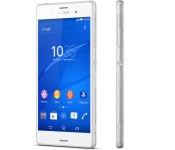
Sony Z4 to be a hardware juggernaut according to tipster
 Not so long that the newly announced Xperia Z3 has lost any if its newness yet are we seeing information leaked regarding the Z4. Now before you groan and roll your eyes about seeing the Z4 in six months, know that Sony is looking to somewhat future proof its next flagship, at least if this tipster is correct.
If the source can be believed, the Z4 will sport a 5.5-inch screen of the qHD variety. Under that screen will be a Snapdragon 810 at 2.8GHz, 4GB of RAM, and 32GB of internal storage. It looks like the camera for the Z4 will take advantage of a curved Exmor RS CMOS sensor with a similar resolution of previous Z# flagships.
Sony is also planning to create a superior audio experience by adding amplifiers behind its stereo speakers on the front. However, it should be said — not that it needs to, really — these are highly unsubstantiated specs. Should they pan out though, you’ll be able to rest assured that this will be it for Sony for 2015 as the company is suggesting that it’ll be getting rid of its six-month update cycle.
source: Android Origin
via: Phone Arena
Come comment on this article: Sony Z4 to be a hardware juggernaut according to tipster
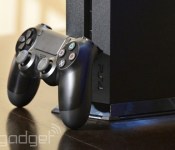
PS4 2.0: MP3s, themes and better dashboard organization

We’re creeping up to the PlayStation 4’s one year anniversary and the system is finally getting its 2.0 firmware update. Even better, there are a bunch of surprises; let’s dive in. First up we have the expected: SharePlay which lets you virtually pass the controller for help, YouTube exports and themes. A post PlayStation Blog notes that in addition to those, a USB music player, the ability to change colors of the PS4 dashboard (if custom themes aren’t your thing), as well as improvements to streaming are en route. There’s content organization, voice commands and, last but not least, a new backup feature that lets you archive all your settings, media and data to a USB device coming too. Like the Xbox One patch that hit this week, this adds a whole slew of features that ideally would have been available when the system launched last year. Join us after the jump for a breakdown, yeah?
PS4 System Software 2.00 new features: http://t.co/sjlyHsde67 USB Music Player, broadcasting enhancements, more pic.twitter.com/ZwFbiJRKlN
– PlayStation (@PlayStation) October 16, 2014
Sony came under some fire from fans when it was announced that the only way to listen to music on the PS4 was with a Music Unlimited subscription. That changes with this patch, though, and soon you’ll be able to plug in a USB device full of MP3, MP4, MP4A and 3GP files and listen to your heart’s content. The PS Blog says that music can’t be copied to the system’s hard drive, nor can it be used in conjunction with Music Unlimited. When we’ll see CD support is anyone’s guess, however.
We’re betting that custom playlists won’t be available in-game either. Not happy with the theme pictured below? Well, you can opt for a handful of solid colors for the system UI like those at the bottom of this post.

The patch also addresses a major gripe many have had with the system since launch: decluttering the system dashboard. Now the dashboard will only show the 15 most-used games and apps, with the rest going into the Library, which also is getting some new sorting options. What’s more, lets say you’ve been stocking up on the pretty great, free releases each month that are a part of your PS Plus subscription but you’re running out of storage on your console. Well, from the PlayStation Store you’ll be able to add them to your Library without downloading — perfect for grabbing stuff before it’s no longer free and saving for later, or once you install a bigger hard drive.
Speaking of which, the 2.0 patch also adds the ability to back your system data, media and settings to a USB device. This should make transferring all the stuff you’ve accumulated over the past year to a roomier HDD a while lot faster and much more convenient if you’re living under a data cap. There’s a ton more than that, though! For the rest of the patch notes be sure to hit the PS Blog — sadly, however, it’s missing a release date.

Filed under: Gaming, Home Entertainment, HD, Sony
Source: PlayStation Blog

Sony is updating their entire Xperia Z line to Android Lollipop
 Google unveiled Android Lollipop yesterday, so now we’re seeing device manufacturers clarify when they plan on updating their devices to the latest version of Android. Fortunately for owners of Sony devices, it looks like several devices will see the update at some point in the future.
Sony has stated that the entire premium Xperia Z lineup will be getting the Android 5.0 update. This includes the Xperia Z, Xperia Z2, Xperia Z3, and all of their variants.
The full list includes the Xperia Z, Xperia ZL, Xperia ZR, Xperia Tablet Z, Xperia Z1, Xperia Z1S, Xperia Z Ultra, Xperia Z1 Compact, Xperia Z2, Xperia Z2 Tablet, Xperia Z3, Xperia Z3v, Xperia Z3 Compact and Xperia Z3 Tablet Compact. The Google Play Edition of the Xperia Z Ultra will be the first to see an update, but that’s handled by Google, not Sony. As far as Sony’s own devices, the Xperia Z3 and variants of the Z2 will see the update in early 2015, and Sony will clarify details on the rest of the devices after that.
source: Sony
Come comment on this article: Sony is updating their entire Xperia Z line to Android Lollipop

Sony to bring Android 5.0 to entire Xperia Z line
Yesterday Google announced the new Motorola Nexus 6, HTC Nexus 8 and the ASUS Nexus Player devices. They also confirmed that Android L is Android Lollipop and is Android 5.0. We know the Nexus line dating back to the Nexus 4 will get an Android 5.0 update at some point. We also know a number a Motorola devices will also be picking up the sweet new treat. Now we hear from Sony what their plans for the new OS will be.

According to a blog post on the Sony site this morning, Sony plans to bring Adroid 5.0 to the entire premium Xperia Z line. That include:
- Xperia Z
- Xperia ZL
- Xperia ZR
- Xperia Tablet Z
- Xperia Z1
- Xperia Z1s (T-Mobile)
- Xperia Z Ultra
- Xperia Z1 Compact
- Xperia Z2
- Xperia Z2 Tablet
- Xperia Z3
- Xperia Z3v
- Xperia Z3 Compact
- Xperia Z3 Tablet Compact
The Xperia Z Ultra Google Play Edition will the first device to see the update. From there they will work toward the Xperia Z3 and Xperia Z2 series beginning in 2015.
Timing and availability of those updates will be announced by Sony as they become available and will trickle through specific regions and carriers too. I do have a distinct feeling though that the Xperia Z3 here in the sates will be a pretty hard push for Sony. I certainly hope the carriers play nice and make it happen quickly and without issue. It would boost the carrier images as well as get Sony rolling in the right direction stateside.
Source: Sony
//<![CDATA[
ord = window.ord || Math.floor(Math.random()*1E16);
document.write('‘);
//]]>
The post Sony to bring Android 5.0 to entire Xperia Z line appeared first on AndroidSPIN.
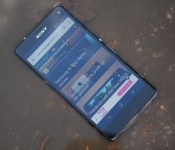
Sony Xperia Z3 Compact review: small size, big deal

Smartphones are getting bigger with every generation, every new model. Even Apple, champion of the small screen, has finally caved to the trend. Over the past few years, however, some of the major smartphone players have taken to creating “mini” versions of their top handsets to satisfy those who still crave a smaller device. While these petite imitations benefit from shared design and branding, their hardware specifications are usually no match for the flagships they mimic. Sony does things a little differently, though, shunning the “mini” moniker and preserving as many high-end features as possible in its smaller devices. Case in point: the new Xperia Z3 Compact, which crams the best of the 5.2-inch Z3 into a 4.6-inch body, and is basically everything you could want in a smaller smartphone.
Hardware
http://www.engadget.com/embed-5min/?sid=577&playList=518463717&responsive=false
The Xperia Z line hasn’t changed much since Sony revealed the original flagship Z handset nearly two years ago. In fact, the vast majority of Sony devices in recent history have followed the same, strict design language. Thus, the Z3 Compact is essentially a rectangular block with pillowed perimeters, like most of its brethren. In this respect, the Z3C won’t be everyone’s cup of tea, with its hard, serious lines being a far cry from the sexy curves of HTC’s One series, to name just one example. If you’re a fan of Sony’s blocky styling, however, then the Z3C is certainly a well-executed model of that.
The Z3C doesn’t have any one, standout design feature, but as always, the devil is in the details. The matching tempered-glass panels covering the front and back, the aluminum power key, the metal detailing around the main camera lens and headphone jack — all reminders you’re handling a premium, albeit understated device. Even the branding strewn across the back is pleasingly arranged, with silver Sony and gray Xperia/NFC logos stacked neatly along its length. A small note of the main camera specs also sits between the relatively large lens and small, circular LED flash.

There’s slightly less going on up front. A small, silver Sony logo sits just above the 4.6-inch display; oblong stereo speakers live near the top and bottom; and the front-facing camera is tucked away in the upper-right corner, with a multicolor notification LED on the opposite side. The only buttons, physical or otherwise, are located along the right-hand edge; you’ve got a two-stage camera key, volume rocker and power button, all of which are one kind of metal or another. The latter two aren’t in what I’d call a standard layout, both being close to the middle. However, the size of the device actually makes the positioning of the power and volume keys rather convenient: right where your thumb instinctively rests when holding it, assuming you’re clutching it with your right hand.
Along the top edge, you’ll find the headphone jack and secondary mic; the primary mic is on the bottom edge, naturally, alongside a strap hole for attaching charms to the thing, or whatever the kids do to their phones these days. The left border is by far the busiest, with two sealed cavities hiding the micro-USB port/microSD slot and nano-SIM tray, respectively. These flank Sony’s magnetic charging dock connector, because every phone the company makes apparently must be compatible with these niche accessories. It’s definitely the ugliest feature of the handset; it breaks up the “flow” of the pillowed border, but it’s not so offensive as to spoil the overall look.

As I’ve hinted at before, not every facet of the Xperia Z3 has made the leap to its smaller counterpart. You can spot they’re related from a mile off, but where the Z3 is wrapped in a metal frame, the Z3C is bound in a hard, translucent plastic, with the same nylon corner caps adding extra durability to these higher-risk impact zones. Sony calls the transparent effect “liquid reflection,” probably because it’s an easier sell than “see-through plastic.” Some might not like the fact that the premium, metal rim has been omitted from the Compact, but I actually prefer the plastic’s added sense of depth, just because it’s a little… different.
What the Z3C lacks in metal accents, it more than makes up for in build quality. The thing is solid as a rock, and everything is put together with absolute precision — it kind of has to be to qualify for its IP65/68 waterproof and dustproof rating (that’s higher than you’ll ever realistically need unless you plan on freediving while on the phone to mom and dad). The serious-looking black model with dark-gray wrapping I’ve been using complements the tight build nicely, but you can expect the same robustness from the white, minty-green and copper-orange options too.

At a glance, the Z3C might not look like the most comfortable device to hold. For starters, there’s a thin, sharp rim around the two glass panels on either side of the curved border, and the corners of the device are only slightly off-square. Furthermore, the back panel offers minimal grip, it being slick glass and all. These initial observations are moot, however, because the phone is small enough, at 127 x 64.9 x 8.6mm (5 x 2.56 x 0.34 inches), that you don’t need to apply a ton of pressure to these potential problem areas to keep it safely in-hand. The Z3C is slighter heavier than I expected for a phone of this size, at 129g (4.55 ounces), but its weight has no negative impact on usability. It’s as easy to hold and operate one-handed as it is to forget about when stuffed in a jean pocket.
This basic facet of the everyday user experience is something smartphone manufacturers seem to be ignoring en masse. It’s been refreshing to use a smaller device as my daily driver, not because I have tiny hands, but because I believe an emphasis on portability has been lost somewhere in the race for the biggest display. There’s obviously a huge demand for big-screen devices, but with the Z1 Compact and newer Z3 Compact, Sony’s continuing to cater to those who want a smaller handset without giving up high-end specs. Personally, I prefer having something that’s painless to use and carry around in lieu of “enhanced content consumption,” or whatever tagline marketers want to use to promote the newest 6-inch monster.
| Sony Xperia Z3 | Sony Xperia Z3 Compact | |
|---|---|---|
| Dimensions | 146 x 72 x 7.3mm | 127 x 64.9 x 8.6mm |
| Weight | 152g | 129g |
| Screen size | 5.2 inches | 4.6 inches |
| Screen resolution | 1,920 x 1,080 | 1,280 x 720 |
| Screen type | Triluminos LCD with 16.7 million colors | Triluminos LCD with 16.7 million colors |
| Battery | 3,100mAh Li-ion (non-removable) | 2,600mAh Li-ion (non-removable) |
| Ruggedness | IP65 and IP68 waterproof and dustproof | IP65 and IP68 waterproof and dustproof |
| Internal storage | 16GB (12GB free)/32GB (D6616 model) | 16GB (12GB free) |
| External storage | MicroSDXC (128GB) | MicroSDXC (128GB) |
| Rear camera | 20.7MP (1/2.3-inch sensor, 25mm-equiv. focal length) | 20.7MP (1/2.3-inch sensor, 25mm-equiv. focal length) |
| Front-facing cam | 2.2MP stills, 1080p video | 2.2MP stills, 1080p video |
| Video capture | 1080p, 4K | 1080p, 4K |
| NFC | Yes | Yes |
| Radios |
HSPA+ (850/900/1700/1900/2100); GSM GPRS/EDGE (850/900/1800/1900); LTE (Bands 1, 2, 3, 4, 5, 7, 8, 13, 17, 20) |
HSPA+ (850/900/1700/1900/2100); GSM GPRS/EDGE (850/900/1800/1900); LTE (Bands 1, 2, 3, 4, 5, 7, 8, 13, 17, 20) |
| Bluetooth | v4.0, aptX, A2DP | v4.0, aptX, A2DP |
| SoC | Qualcomm Snapdragon 801 (MSM8974AC) | Qualcomm Snapdragon 801 (MSM8974AC) |
| CPU | 2.5GHz quad-core Krait 400 | 2.5GHz quad-core Krait 400 |
| GPU | Adreno 330 | Adreno 330 |
| RAM | 3GB | 2GB |
| Entertainment | MHL, USB OTG, WiFi Direct, DLNA, Miracast, FM radio | MHL, USB OTG, WiFi Direct, DLNA, Miracast, FM radio |
| WiFi | Dual-band, 802.11a/b/g/n/ac | Dual-band, 802.11a/b/g/n/ac |
| Wireless Charging | No | No |
| Operating system | Android 4.4.4 (Sony-specific UI) | Android 4.4.4 (Sony-specific UI) |
Display

You’ve probably already clocked by now that the Z3C sports a smaller-than-average 4.6-inch display. While the bigger Z3 has stuck with a 1080p panel instead of opting to join the QHD clan, the Z3C has a miserly 1,280 x 720 screen, which translates to a pixel density of 319 ppi. I’m kidding: A 720p display is more than adequate for the Compact’s size, and you’d struggle to find any meaningful difference if compared with a 1080p screen of the same dimensions (well, maybe a decline in battery life, but that’s about it). The panel at play here is an IPS LCD affair, with Sony’s Triluminos and X-Reality technologies that promise richer, more natural colors and enhanced contrast. The Z3C (and its bigger brother) are also said to pack a new “intuitive contrast-enhancement technology” that kicks in when the handset detects an external source of bright light, but I didn’t notice it having any effect in my investigations.
The white balance of the panel is spot on as far as I can tell (you can always tweak the default setting in the display menu if you find otherwise). Colors are bold and bright too. However, blacks aren’t quite as deep as they could be, but this is common to LCD technology, and it’s something OLED screens are inherently better at producing. Viewing angles are decent, even if you do start to lose color saturation past a certain tilt point. All things considered, the Z3C’s display is a high-quality one, but it does falter slightly when it comes to sunlight readability. Don’t get me wrong: It kicks out enough power to not be an issue in most cases. Still, the glare from the glass covering it isn’t entirely eradicated, so I doubt you’ll want to dive into YouTube on a lazy afternoon in the park.

In other miscellany, the tempered glass covering the display (and the rear of the device) is notably adept at repelling fingerprint oil and grime. It’s not completely immune to smudges, of course, but it never gets to that overloaded, slightly sticky point I’ve experienced on a few handsets (including Sony’s own Xperia SP). It took me a while to figure out the nuances of the auto-brightness setting. While it reacts appropriately to changing conditions, it’s always anchored to the manual slider setting, meaning it will only adjust within a range of that preset. From a user-experience point of view, I must admit that moving from a 5.2-inch device to the 4.6-inch Z3C brought about a remarkable decline in my touchscreen typing accuracy. But after getting used to a more condensed keyboard layout, I was more or less back to full speed within a few days.
Software

The Xperia Z3 Compact is running the latest consumer-ready version of Android (4.4.4 KitKat) beneath Sony’s proprietary user interface. Thankfully, it’s a fairly light skin that doesn’t differ all that much from stock Android, which I prefer to some of the heavier manufacturer customizations (*cough* TouchWiz *cough*). But, that also means there’s nothing particularly special about Sony’s UI. From my point of view, though, it’s intuitive and, well, it just works. Anyone vaguely familiar with Android will be able to dive right in, no tutorial required. That said, there are a few gems baked in here, like the easy-access screen-recording feature we told you about in our recent Xperia Z3 review.
Overall though, just like the design of Sony’s hardware, its software hasn’t evolved much over the years either. Thus, the UI does feel a little dated in comparison to, say, the most recent iterations of HTC’s Sense skin. The icons for Sony’s own apps are drawn in the same 3D style they have been for some time, and are perhaps a bit too cartoony given the Z3C’s all-business design. It’s a minor quibble, though, and shouldn’t be enough to drive anyone away from what’s otherwise a superb little handset.

Out of the box, every panel on the Z3C’s home screen carousel is absolutely sodden in widgets and shortcuts promoting Sony’s apps and services, so you’ll have to spend a little time organizing this to your liking. The app drawer is just as noisy, but that’s kind of expected when Sony creates so much of its software in house. Some of this is what I consider straight-up bloatware, like the preinstalled Kobo, OfficeSuite, AVG antivirus and Garmin navigation apps. Fortunately, you can uninstall these if you have no use for them, but services like Video Unlimited, the Xperia Lounge Sony-centric news app and Lifelog activity tracker are on there for good. You can always just ignore them if they’re of no use to you, however.
All of Google’s services are present, of course, but Sony has its own versions of several key programs. This means there are duplicate music players, video players and photo album apps. No big deal, but coupled with some of the new camera tricks having their own icons now, too, the app drawer is messy to begin with, let alone when you start loading whatever you want onto the device.
Additionally, the entire Z3 range (Z3, Z3 Compact and Z3 Tablet Compact) are the first Sony phones to support PS4 Remote Play, a feature previously found only on the PS Vita handheld console. Unfortunately, the app that enables this isn’t available until November. I’m disappointed I haven’t had the chance to try it out, but honestly, I can’t see myself playing the next Call of Duty title in bed on a 4.6-inch screen too often.
Camera

Since the Xperia Z1, Sony’s used the same 20.7-megapixel, 1/2.3-inch Exmor RS sensor across its flagship Z line. The Z3 and Z3 Compact are similarly equipped, with the addition of a new, wider 25mm, f/2.0 G Lens. The pair also share the same 2.2-megapixel front-facing camera, too, which isn’t exactly a selfie addict’s dream, but perfectly adequate for the odd video call. Before I get on to how the primary shooter performs, a quick walkthrough of Sony’s camera app. From the viewfinder, you can quickly adjust settings like scene selection, flash mode, exposure and white balance. One icon opens up a deeper menu that allows you to change everything from image resolution and ISO setting to smile detection and image storage location.
In addition to all these “quick” settings, you can jump into the camera-mode menu straight from the viewfinder. The options in here are similarly endless. There’s Sony’s “superior auto” mode, manual mode (you must use this if you want full 20.7-megapixel images), 4K video-recording mode, panorama, burst shot, background defocus, live-to-YouTube broadcasting, ad infinitum. New additions to this lineup include AR fun and effect modes, which let you pepper images with characters, objects and 3D text; Face in mode that creates a picture-in-picture image using both shooters; and Multi-camera mode, which stitches images from two paired Sony devices together. You can download even more, too, through a special store built into Sony’s camera app. I’m sure most of these are useful in the right situation, and it means you can make the most out of the 20.7-megapixels you’re given, but I find the app horribly cluttered due to the sheer number of modes and settings. I’m not saying the camera app should have fewer features, but there has to be a simpler, more user-friendly way of keeping them accessible without distracting from the primary camera functions.

I mentioned the dedicated, physical shutter key in the hardware section, but it’s worth revisiting here. The two compression points (first to focus, second to shoot) are very clearly defined, and I preferred them to the on-screen shutter button (you can also bring up the camera app with a long-press of the physical key). Shutter response is near-instant, by the way, so you have a good chance of catching whatever shot you’ve scrambled to capture.
Now onto the primary camera’s performance. Long story short, it takes some stunning pictures with perfect color saturation in well-lit conditions, whether you’re in the manual mode taking advantage of every megapixel, or using the superior auto mode, which only takes up to 8-megapixel photos. In particular, some of the close-ups I took have an incredible level of detail, beating out one of Sony’s NEX mirrorless digital cameras I happen to have. In favorable lighting conditions, the camera really excels, but it’s not completely without fault. The automatic white balance setting is extremely accurate, especially when faced with artificial lighting. Occasionally, though, images came out slightly overexposed, meaning the auto-compensator hadn’t judged the scene correctly. HDR mode didn’t quite live up to my expectations either: It only adds a little extra “pop” to images.

Low-light performance is disappointing, and all the photos I took in dark conditions came out horribly noisy, with any light sources in the image appearing blown out. The Z3 and Z3 Compact are the only smartphones that currently support an ISO setting of 12,800 (only available in the superior auto mode), which is said to “take your smartphone to new levels of low light.” The bigger the ISO value, the grainier you can expect an image to be, and yet my night shots were seriously noisy at ISO values under half that of the maximum 12,800. In manual mode, you can pick your ISO setting from 50 up to 3,200, but low-balling just results in crisper, pointlessly dark photos. Slow shutter speeds also mean you need to have an unnaturally steady hand to get anything other than a blurry mess. I’m not quite sure how Sony’s managed it, but the Z3C’s camera is fantastic in ideal conditions, and verging on terrible as soon as your available light fades. In some situations, you can use the LED flash to get a much better shot. It kicks out one hell of a blast, though, so anything too close will simply be an outline of white light.
Video performance is a similar story. On a bright day or in well-lit conditions, 1080p video at 30fps (it will also record at 60fps) has a lovely amount of detail. Not as good as stills, but almost. Recording moving subjects doesn’t result in many dropped frames either, but the autofocus can be jumpy if you’re panning around a lot. The Z3C is capable of recording 4K video too, which is gorgeous if slightly overexposed on the default setting. The audio quality here is also worth praising, but again, video performance falls off in poorly lit conditions — clips become extremely noisy, and any light source looks like an explosion.
(Full-resolution camera sample images are available here.)
Performance and battery life

A flagship name should come with flagship performance, which is something other “Mini Me” manufacturers don’t take as seriously. Like the bigger Z3, the Compact uses a quad-core 2.5GHz Snapdragon 801, except it has 2GB of RAM instead of 3GB on the Z3. There’s 16GB of internal storage — just under 12GB of that is available to the user out of the box — and a microSD slot ready to receive cards as large as 128GB. I shouldn’t really need to tell you that a quad-core 2.5GHz processor is beyond adequate for everyday use. The phone flies when I’m navigating the home screen and menus, or hopping in and out of apps. Web browsing, too, is a delight, with everything loading as fast as your current connection will allow; no tiling or performance hiccups anywhere.
Gaming is a similar story. Throw a graphically intensive racer like Asphalt 8: Airborne at the Z3C, crank the graphics settings up to the max and you won’t find anything to complain about. I expected as much from a Snapdragon 801, but it’s still worth pointing out the Z3C is an absolute beast. Don’t let its size fool you into thinking it’s anything but a top-tier performer.
The Z3C supports basically every connection protocol there is. The GPS module locks on to your location almost instantly, and maintains a solid connection with accurate positioning; the handset also works with Russia’s GLONASS and China’s BeiDou GPS technologies. It also has every radio you could imagine — dual-band 802.11ac WiFi, Bluetooth 4.0 LE, NFC, WiFi Direct, Miracast, MirrorLink, DLNA and MHL 3.0. There’s also a Cat 4 LTE chip (maximum download speeds of 150 Mbps). Actually, if we’re being precise, there are two variants of the device: The D5803 plays nice with LTE Bands 1, 2, 3, 4, 5, 7, 8, 13, 17, 20, while the D5833 supports Bands 1, 3, 5, 7, 8, 28 and TD LTE Band 40. That makes the D5833 the best SKU for Asian markets, and the D5803 the one European/North American buyers will want to spring for, but be aware that neither model is compatible with Sprint’s LTE network.

The music-listening experience is far from an afterthought here, with high-resolution audio support and a “Digital Sound Enhancement Engine” that promises to upscale compressed files and improve their quality. Paired with Sony’s now-standard ClearAudio+ tech, the Z3C makes for a solid portable music player. Songs have a clear, well-balanced tone when played through headphones, and you get an impressive amount of bass coming through, which is something a lot of smartphones struggle with. You’ll never want for more volume than the handset can throw out, and if you purchase Sony’s MDR-NC31EM headset, you’ll also benefit from the phone’s integrated digital noise-canceling tech. The stereo speakers on the front of the Z3C are no joke either. You can crank them up to 11 with minimal distortion, but you won’t get quite the same depth of sound as you do through headphones.
The Z3 Compact runs on a non-removable 2,600mAh battery, which is a lot of juice for a phone this size, especially since a 720p display isn’t as power-hungry as a higher-resolution panel would be. Sony could’ve slyly figured out cold fusion for all I know, though: The battery life is nothing shy of incredible. The company claims the Z3C has a “groundbreaking two-day battery,” but I consider this a modest claim, and only true for power users. If your phone tends to sit on your desk at work for most of the day, with you checking the odd email, taking a few calls and doing a bit of farm maintenance in Hey Day, then you’re looking at three to four full days of use without needing to recharge.
Considering every phone I’ve used in the past has, at most, made it through two days with relatively frugal use, I’m shocked at what Sony’s managed to achieve here. The Z3C’s battery life is simply outstanding, and that’s without resorting to any of the several power-saving modes available. In Engadget’s standard looping video test at 50 percent screen brightness, the Compact lasted an honorable 11 and a half hours before dying. That’s only 45 minutes less than the Z3, which carries a much larger 3,100 mAh battery, and is a nod to what you can expect with everyday use.
The competition

As I’ve mentioned, if you’re hunting for a smaller smartphone with flagship DNA, your options are extremely limited these days. The new iPhone 6 is obviously a direct competitor to the Z3 Compact, but really, your decision between the two is going to boil down to which platform you prefer: iOS or Android. While the iPhone 6 only has a slightly larger 4.7-inch display, it commands a significantly bigger overall footprint than the Z3C due to it being only 6.9mm thick (compared with the Compact’s depth of 8.6mm), and thus needing to spread its internal components around. You also need to consider how important battery life is, as well as what you want out of your smartphone’s camera.
In the Android space, there are really only three phones that come close to the size of the Z3 Compact. They are the HTC One mini 2, Samsung Galaxy S5 mini and the new Galaxy Alpha. Each has its own merits. The One mini 2 has a beautiful aluminum unibody design, but is bigger than the Z3C in every way despite having a smaller 4.5-inch 720p display. HTC’s shrunken flagship also has a quad-core 1.2GHz Snapdragon 400 processor and 13-megapixel main camera, as well as a smaller 2,100mAh battery. The Galaxy S5 mini is both taller and thicker than the Z3 Compact, with a 4.5-inch 720p screen, quad-core 1.4GHz processor, 8MP camera and 2,100mAh battery. Some of the Galaxy S5’s premium features have carried over to the smaller version, like waterproof certification, heart rate monitor and fingerprint scanner. The HTC One mini 2 is a lovely device, especially if you’re not down with Sony’s design ethos, but the problem with comparing these with the Z3C is that they simply aren’t in the same league as the Compact when it comes to computing power and imaging.

Samsung’s Galaxy Alpha is a stronger competitor. It’s one of Samsung’s best-looking handsets to date, and carries the same powerful processor as the Z3 Compact. It has a fingerprint scanner and heart rate sensor like the GS5 mini, as well as a 4.7-inch 720p display, but still isn’t as impressive as the Z3 Compact is several areas. It only has a 12-megapixel camera, for example, no expandable storage and a fairly meager 1,860mAh battery. It’s also much taller than the Z3 Compact, and thus isn’t as neat. Furthermore, it’s seriously expensive, at around $720 for an unlocked Galaxy Alpha.
No US carriers are currently ranging the Z3 Compact, leaving us raw, unlocked pricing to assess its competitiveness (UK pricing can be found here). Sony’s recently started selling the Z3C in the US for $530 online, but Expansys currently has the best deal at $510. Newegg will sell you one for $520, GSM Nation for $529 and Amazon’s price point tends to fluctuate within the $520/$530 range. Compared with the Galaxy Alpha, the Z3C is obviously the better option, but the HTC One mini 2 and Galaxy S5 mini do come in cheaper than the Compact. As a brief aside, a contract-free iPhone 6 is $649 from T-Mobile in the US, but again, they run different platforms, which I imagine will be the real deciding factor, not price. On Amazon, a One mini 2 retails for around $455, while the S5 mini (LTE version) goes for $430. Both are cheaper than the Z3 Compact, but I would say the $100 or so more you’d pay for Sony’s pint-sized flagship is worth every cent, if only for the extra battery life. If you’re not after top-of-the-range specs, though, the HTC One mini 2 is a striking device, even if it is bigger than the Compact.
Wrap-up

Having spent a decent amount of time with the new Xperia Z3 Compact, I can easily recommend it as the best small Android smartphone. Low-light camera performance aside, it’s got everything you want in a flagship handset, except maybe a fingerprint sensor or coffee maker, packed into a neat and portable package. Its rectangular design might not appeal to everyone, but it’s an extremely well-built device with a certain understated elegance. You’ve also got yourself a great camera as long as conditions are favorable, and all the power you could possibly need with a quad-core 2.5GHz CPU at its heart.
The Z3C’s endless battery life is truly something to behold, and compared with competing handsets of a similar size, it’s reasonably priced, to boot. The reality is you don’t have much choice if you’re after a top-spec device that comes in under five inches, but Sony’s shown once again that a smaller flagship doesn’t necessarily need to be a lesser flagship.
Filed under: Cellphones, Mobile, Sony
 AIVAnet