


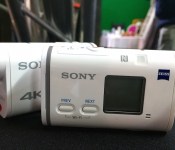
With 4K in mind, Sony refreshes its Action Cam and Handycam lines

CES 2015 wouldn’t be the same without Sony announcing new products. As such, the electronic giant is today revealing updated Action Cam shooters and Handycam camcorders. The main change across the board is the addition 4K to both lines, though there are still some models that will be limited to 1080p — not surprisingly, those are going to come with a lower price tag than its higher-resolution siblings. For starters, there’s the Action Cam FDR-X100V and FDR-AS100V, with the former being the one that supports 4K at 30 fps. Other than that main differentiator, both the FDR-X100V and FDR-AS100V feature a high-precision, ultra-wide angle lens, Advanced SteadyShot (to help with stabilization), stereo microphone, manual settings and the ability to control your frame with a companion mobile app.
Moving on, the Handycam FDR-AX433 and HDR-PJ670 are making their debut here in Las Vegas too. The AX433 is the model that comes with 4K shooting, alongside Balanced Optical SteadyShot and 4K photo capture. The HDR-PJ670, meanwhile, misses out on 4K but does have Balanced Optical SteadyShot built-in, a lens that’s 26.8mm at its widest angle, 50Mbps high-bitrate recording and the ability to livestream via Ustream.
Sony’s pricing the Action Cam X100V and AS100V for $500 and $400, respectively, with both set to arrive sometime in March. The AX433 and PJ670 camcorders, meanwhile, are going to sell for $1,100 and $700, while the entry-level models will start at $230. Those are due to ship in mid-February.
Filed under: Cameras, Misc, Peripherals, Sony
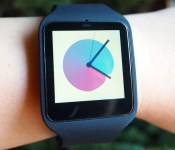
Sony SmartWatch 3 review: dull design, but great for runners

This here is the Sony SmartWatch 3. That might make it sound like it’s the third iteration in a line of gadgets, but really, it’s the first. That’s because even though this is Sony’s third smartwatch (fourth if you count the Sony Ericsson LiveView), it’s actually Sony’s first that comes with Android Wear. Both the original SmartWatch and the SmartWatch 2 ran Sony’s own proprietary platform, which, while Android-friendly, didn’t have nearly the same reach as Google’s Android Wear. It’s great that Sony has finally seen the light, but the SmartWatch 3 has arrived remarkably late to the party, letting rivals like Motorola, LG and Samsung gain ground. On the other hand, the SmartWatch 3 is currently the only Android Wear option with a built-in GPS radio, allowing for more precise workout tracking. Which, as it turns out, could be enough to help Sony stand apart from the pack.
Hardware

While some Android Wear watches like the Moto 360 and the ASUS ZenWatch make attempts at being stylish, Sony’s SmartWatch 3 seems to have given up that notion entirely. Its square watch face, in combination with a rubber strap, definitely gives it more of a sporty, utilitarian look than a fashionable one. Worse still, the band that encapsulates the watch makes the 1.6-inch display seem larger than it is. Indeed, while the bezel surrounding the screen is relatively small, it appears so much thicker when worn in the strap, giving it an unfortunately chunky appearance.
Yet, the fit is not altogether uncomfortable. The flexible strap is coated in what feels like a soft-touch velveteen material, and the weight of the core watch unit is only 45 grams (with the strap, it’s about 74 grams). It’s relatively easy to take on and off thanks to a simple metal clasp, which you can adjust to fit the size of your wrist. The watch might jostle around a bit when you’re running, but on the whole I found it pleasant enough to wear on a daily basis.
The SmartWatch 3’s wrist strap comes in a few different colors: white, black, pink and green. To swap them out, simply push the watch unit out of its rubber enclosure; it should pop out without much effort. That’s easy enough, but this does mean that the SmartWatch 3 isn’t compatible with standard 22mm straps, so you’re stuck with whatever bands Sony offers.
Unlike a lot of other smartwatches, Sony’s latest doesn’t need a proprietary charging dock or cradle. It actually has a micro-USB port housed right in the watch itself, over on the backside, covered by a removable rubber stopper. Though portable charging docks generally contribute to slimmer and more streamlined designs, I actually really like that the watch has this built-in port. If it means not having to carry around yet another thing with me when I travel, I’m all for it. I do recommend popping the watch out of its rubber strap before plugging in the charging cable, however, because it’s rather awkward otherwise.

If you want the watch to survive a dunk in the pool, you should definitely keep that micro-USB port sealed. Once covered though, the SmartWatch 3 is IP68-rated for dust and water resistance, which means it can withstand submersion in up to 4.9 feet of water for 30 minutes. That’s a touch better than the IP67 rating for most other watches like the Moto 360 and the LG G Watch R, which can supposedly be submerged in up to a meter (3.28 feet) of water for half an hour.
Though you’ll be doing most of your navigation via the watch’s touchscreen display, the SmartWatch 3 does have a physical button on the side for when you need to quickly wake it up (or put it back to sleep). You can also hold it down as a shortcut to the Settings menu. The button sits slightly above the surface of the strap and has a nice give when pressed. Internally, the SmartWatch 3 makes use of a rather beefy 1.2GHz quad-core ARM Cortex-A7 processor along with 512MB of RAM, plus 4GB of built-in storage so that you can load it with apps and music from Google Play. Other sensors include an accelerometer, a gyroscope and a compass. Of course, it also has Bluetooth, which you can use to pair with your phone, or connect to a set of headphones.
As I noted earlier, the SmartWatch 3 is also the first Android Wear device to have built-in GPS, which I’ll return to in much greater detail in just a moment. It’s also said to have WiFi and NFC capabilities on board, but as Android Wear doesn’t quite support those two functions just yet, I wasn’t able to test them. Still, it’s comforting to know that the SmartWatch 3 is future-proof in this regard — something I can’t say about most earlier Android Wear devices.
Display

While the design of the SmartWatch 3 might not exactly dazzle you with its style, its display is something else. It’s not round like some of the fancier Android Wear options and it’s a hair smaller too, but its clarity more than makes up for it. The 1.6-inch screen has a 320 x 320 resolution, which amounts to a pixel density of 283 ppi, making it one of the sharpest panels you’ll find on any Android Wear device. I had no problems reading text, even on such a small display. I did, however, find the colors to be a bit muted and the whites to be a little yellow. Suffice it to say, it’s not quite as stunning as the OLED screen we saw on the LG G Watch R.
In exchange for some dull colors, though, a transflective LCD screen makes the SmartWatch 3 easy to view in direct sunlight. I left it on auto brightness most of the time, and thanks to the ambient light sensor, I was able to tell time and find out what song was playing with a quick glance, regardless of how bright it was outside. Like most other smartwatches, the SmartWatch 3 packs an internal accelerometer that lights up the screen whenever you lift it to meet your eyes. This, however, takes a second or so longer than I would like. Normally, this isn’t a big deal, but when I was out and about, running errands, it got a little annoying.
In use

In a sign that Sony is finally coming to its senses, the SmartWatch 3 is blessed with Android Wear and not some proprietary Sony operating system like its previous smartwatches. That means if you’ve read any of our reviews of previous Android Wear devices — or maybe even own one yourself — you probably already know how to use the SmartWatch 3.
But perhaps you could use a refresher, so here’s a brief primer. You’ll need an Android phone to get started (obviously), at which point you’ll need to download the Android Wear application. From there, it’s just a matter of pairing the watch with the phone by following the onscreen instructions. Interestingly, I wasn’t prompted at all to install any additional software like some of the other Android Wear watches (the Moto 360, for instance, requires Motorola Connect, while the ZenWatch wants you to have the ZenWatch Manager installed).
As for navigating the watch itself, here’s how it works: From the default watch face, you can swipe down to reveal the date, battery life information and gain quick access to mute, Theater Mode (where it shuts down the display) and the settings. Whenever you get a notification, you can swipe up take a peek, and then swipe right to dismiss it or left to get a further look at it. Pressing down on the default watch face lets you swap out different watch styles. It’s all fairly intuitive and you should have no problems navigating it if you’re at all familiar with smartphones.
If you’d rather not go through the trouble of finger-swiping, you can also give voice commands thanks to the watch’s built-in microphone. Simply say, “OK Google,” and it’ll bring up a short list of eligible voice commands. You can tell it to do all kinds of things, like set a reminder, send a message or find directions, and it’ll do so. Voice recognition can be a little spotty — I sometimes had to repeat myself once or twice — but it worked pretty well most of the time.

As I mentioned up top, the most distinguishing feature of the SmartWatch 3 is that it’s the first Android Wear device with built-in GPS. This is a very important feature for runners, who often like having GPS in their watches to track their distance, route and pace. In previous Android Wear devices, you still had to lug your phone around with you in order to get that geolocation data, which can be a pain if you want to run with as little burden on you as possible. The SmartWatch 3, on the other hand, lets you keep track of your run completely phone-free.
Of course, this only really works if you use a running app that taps into the built-in GPS function of Android Wear. There aren’t too many of these available right now, but thankfully one of the more popular ones, RunKeeper, updated its app to take advantage of it. I simply downloaded RunKeeper on my phone and it automatically synced the app to my watch. I then left the office to go on a brief walk, leaving my phone safely in my desk drawer. Before I took off, I told the RunKeeper app on the watch to start tracking the workout, and it did. When I came back and reconnected the watch with my phone, it automatically transferred the route, along with the pace and distance information, to the RunKeeper website. In short, the SmartWatch 3’s GPS function works as advertised, and I can imagine it being a popular feature among runners and joggers.
While the SmartWatch 3 also has a pedometer for counting steps, it curiously doesn’t have a heart rate monitor like on the Moto 360 or ASUS ZenWatch. We’ve had mixed experiences with these optical heart rate sensors in the past, but omitting it completely in a supposedly sports-oriented watch seems like a big oversight. That said, the fact that the SmartWatch 3 includes two other uncommon features (WiFi and NFC) could make up for it. We just have to wait for the supported apps to arrive.
Performance and battery life

With a 1.2GHZ quad-core ARM Cortex-A7 processor along with 512MB of RAM, the SmartWatch 3 performs beautifully. I experienced little to no lag when navigating around the watch, and voice commands took no time at all to register. As I mentioned earlier, the accelerometer did seem a little slow to act when attempting to light up the watch with an elbow raise, but on the whole, performance was good.
Battery life, however, is where the SmartWatch 3 really shines. It packs in a 420mAh battery, which is the biggest battery we’ve seen yet in an Android Wear watch. The rated longevity is somewhere around two days. In practice, I found this to be mostly accurate. I left notifications on for Twitter, Facebook and my calendar appointments; used GPS to track the occasional walking route; listened to a few songs on repeat (which I loaded onto the watch via Play Music); and used voice commands extensively throughout the day. The watch kept trucking along for about a day and half before it started begging to be plugged in. When I switched over to Airport Mode and kept the display off for the rest of the day, it lasted almost a full 48 hours. Under what I’d consider moderate to heavy use, that’s quite impressive.
The competition

The smartwatch space is getting increasingly competitive, which makes it all the more important for newcomers like the SmartWatch 3 to stand out. Thankfully, it does. It’s certainly not as stylish as the Moto 360, LG G Watch R or ASUS ZenWatch, and it doesn’t have the sort of unique circular display you’ll find on the first two. At $250, the SmartWatch 3’s price is priced on par with the competition too; the 360 and G Watch R cost $250 and $299, respectively, while the ZenWatch rings in at a more affordable $200.
But what the SmartWatch 3 lacks in style, it makes up for in features. It has built-in GPS, which is great for runners and outdoor enthusiasts, and other goodies like WiFi and NFC mean that the SmartWatch 3 is far more future-proof than any of the other Android Wear devices on the market. Further, its battery life is relatively good, lasting a whole day longer than rivals like the ZenWatch and the Moto 360.
Wrap-up

Sony’s SmartWatch 3 certainly isn’t for everybody. It’s dull compared to its rounder, sexier rivals; its strap is made out of rubber rather than leather; and the display is not as bright or vibrant as others. But if you care more about function than form, the SmartWatch 3 suddenly looks a whole lot more interesting. For runners in particular, built-in GPS is a great feature that lets you leave your phone at home. It also has WiFi and NFC, making it more future-proof than the competition. It also eschews the need for a charging dock thanks to a built-in micro-USB port and has a battery life that makes it one of the longest-lasting smartwatches on the market. No, you shouldn’t get the SmartWatch 3 if you want a watch to impress people at a cocktail party. But if you want one that’s more suited for fitness, this is absolutely worthy of consideration.
Does Sony’s PlayStation apology compensate for a lost holiday?

Sony’s PlayStation Network was hit by a devastating denial-of-service attack over Christmas. Now that the gaming service is back online, should the company be offering players some sort of peace offering? If so, what’s a reasonable gift in this scenario? It’s quite a conundrum, because the festive downtime wasn’t predominantly Sony’s fault. A hacking group called Lizard Squad orchestrated the attack (they also targeted Xbox Live) causing all online functionality to collapse. It meant new console owners on Christmas Day were unable to redeem game download codes or create new PSN accounts, while existing PlayStation owners were locked out of the online multiplayer modes for their favorite games.
To make things right, Sony is giving PlayStation Plus members an automatic five-day subscription extension. This easily covers the extended downtime, although, because Sony obviously can’t give you those Christmas hours back, it’ll also be offering a 10 percent discount for one total cart purchase later this month. Is the gift a little ungenerous? Consider this analogy: You’ve paid to get into your favorite club on Friday night, but suddenly the music stops. It seems vandals have snuck in and destroyed the sound system, so the club’s owner apologizes and works hard to fix everything. Eventually the music comes back on and again, to say sorry, the bar manager offers everyone a free drink.
Was there an expectation for the club owner to offer everyone that drink? Or does it just add insult to injury, given your night is ruined and you paid to get into the club anyway? It could be argued that Sony is offering fair compensation (if not more) in terms of sheer monetary value for the PSN outage — but of course, it’s hard to put a price on a less than stellar Christmas. Regardless, Sony has over 7.9 million PlayStation Plus subscribers at the moment; an annual subscription costs $49.99, so this little gesture could cost the firm at least $5 million. Microsoft is yet to offer anything for its (albeit less disruptive) outage, so this could be a chance for the company to one up its closest rival with a better deal for the Xbox faithful.
Source: PlayStation Blog

DVDs of ‘The Interview’ will be airdropped on North Korea

Sony’s once-forbidden The Interview is now seemingly ubiquitous, but there’s one place where you can’t get it: North Korea, the country that inspired the movie (and allegedly, the hacking campaign) in the first place. If defector and activist Park Sang-hak has his way, though, North Koreans will see that movie whether or not their government approves. Park plans to use balloons to airdrop 100,000 copies of the comedy (both on DVD and USB drives) in the country starting in late January. In theory, North Koreans will have second thoughts about Kim Jong-un’s rule once they see him as less than perfect — and if you’ve seen the movie, you know how eagerly it knocks Kim off his pedestal.
It’s an ambitious plan that’s bound to irk the North Korean regime. However, the challenge isn’t so much getting the balloons to their targets as it is finding Northerners who can watch The Interview at all. Few in the isolated nation even own computers or DVD players, and those that do are likely to be either afraid of getting caught or pampered government workers who’d rather not rock the boat. Besides, more than a few people would argue that the flick isn’t a ringing endorsement for the democratic way of life. All the same, it’s fun to think that some Northerners will soon have a relatively easy way to watch a movie their leadership has been railing against for weeks.
[Image credit: Jung Yeon-Je/AFP/Getty Images]
Via: Ars Technica
Source: AP (ABC News)
#Bendgate comes to Android: Sony Xperia Z3 bends while in pocket
In the year just passed, there was one controversy that had Apple owners crying out and Android owners sniggering in secret: #BendGate. The controversy surrounded the iPhone 6 Plus and its ability (read: not a feature) to warp while in your pocket. While the official reports were minimal, the social media world took the controversy […]
The post #Bendgate comes to Android: Sony Xperia Z3 bends while in pocket appeared first on AndroidSPIN.
Sony commissions limited edition Xperia Z3 devices with artistic engravings of Berlin, Tokyo and Warsaw
Some phone manufacturers occasionally release limited edition versions of their flagship devices that seem a little excessive – the Swarovski crystal encrusted versions of Samsung devices immediately spring to mind. Sometimes, though, there will actually be a limited edition that is genuinely interesting, like the limited edition Xperia Z3 devices that Sony has just commissioned as part […]
The post Sony commissions limited edition Xperia Z3 devices with artistic engravings of Berlin, Tokyo and Warsaw appeared first on AndroidSPIN.

Use this workaround to get back the DRM functions that unlocking your Sony Xperia bootloader removes

One of the prices you pay for unlocking the bootloader of your Sony Xperia device is that you lose the DRM keys baked into the native Sony software. That means that special functions that Sony have deemed to be copyright are removed when these DRM keys are lost.
Luckily there is a workaround that will restore the functionality of these DRM keys, including the X-Reality image enhancement engine, the audio noise cancelling feature, and the BIONZ image enhancement engine among others.
It comes courtesy of the XDA forums and involves flashing a small package. Be clear though, this workaround does not restore the actual keys, only the functionality.
Head on over to the XDA forums to check out how to and to download the workaround for your Sony Xperia device now.

The post Use this workaround to get back the DRM functions that unlocking your Sony Xperia bootloader removes appeared first on AndroidGuys.
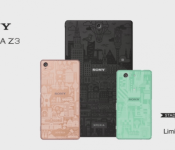
Sony releases limited edition Xperia Z3 devices inspired by Berlin, Tokyo, and Warsaw
 Sony has announced a very limited run of some unique Xperia Z3 devices with designs based off of major cities around the globe. The devices feature an engraved back design with illustrations inspired by Berlin, Tokyo, and Warsaw.
The Xperia Z3 landed the Berlin engraving, designed by Vesa Tapani Sammalisto, while the Xperia Z3 Compact bears a Tokyo-inspired design created by Shinpei Hasegawa. The Xperia Z3 Tablet Compact has a design based on Warsaw from Jan Feliks Kallwejt.
These are definitely some of the coolest designs you’ll see on a smartphone, but they’re only available in Germany in extremely limited quantities as of right now. Sony made about 33 of each model, so they probably won’t last long.
source: Xperia Blog
Come comment on this article: Sony releases limited edition Xperia Z3 devices inspired by Berlin, Tokyo, and Warsaw

The hackers who hit Sony Pictures also threatened CNN

The Guardians of Peace didn’t just threaten Sony Pictures and theaters that planned to show The Interview; it also shook its fist at the press, too. The Intercept has obtained an FBI alert noting that the group implied threats against a “news media organization” on December 20th. While the bulletin doesn’t name the company, The Desk‘s Matthew Keys has copies of the Pastebin-based messages (since removed) showing that CNN was the target. The GOP sarcastically complimented CNN on its “investigation” of the hacking group and linked a video calling the TV network an idiot, but didn’t warn of any specific consequences.
The news suggests that the GOP won’t rule out attacks against other companies if they support Sony’s cause, but don’t read too much into the group’s words — so far, this appears to be little more than saber-rattling. Nothing has happened to CNN in the 11 days since the messages went up, and both the FBI and the Department of Homeland Security note in their bulletin that many hacking outfits make “exaggerated threat statements” that never pan out. And, as we all know, Sony eventually showed The Interview both in theaters and online without incident. At this point, hacking CNN would accomplish little.
[Image credit: AP Photo/Ric Feld]
Source: The Intercept, The Desk

Android hardware profits estimated to have halved in 2014

2014 has certainly been an interesting year for Android, but hardware manufacturers have been having a tougher time over the past twelve months, especially when it comes to turning a profit.
According to analyst Chetan Sharma, global profits within the Android hardware market are estimated to have dropped by approximately 50 percent compared to 2013. Despite the continued growth in Android’s market share and record smartphone shipments, a worse than expected year for some of Android’s largest manufacturers and the growth in nibble low-cost competitors has eaten into manufacturing profit margins.
Samsung’s substantial market presence and poor financial year is one of the largest factors in this decline in averaged profitability. In Q3 2014, Samsung’s IT & Mobile Communications division saw a 74 percent decline in profitability compared with the previous year and has averaged a 35 percent quarterly decline in mobile profits this year.http://embed.chartblocks.com/1.0/?c=546b614dc9a61d340d999f8a&t=8d5a273b4d8afcfHTC and Sony are two other big smartphone brands that have seen profits squeezed lately. LG’s slightly lower cost hardware has seen its smartphone shipments improve, but profits are still hard to come by. The real winners this year have been low cost Chinese manufacturers, which have managed to substantially undercut the big brands with considerably cheaper, high-end hardware. Xiaomi has risen to become one of the global market’s largest players in a very short space of time due to its competitively priced hardware. This business model is proving profitable and has begun to spread to other Android manufacturers, but lower retail prices are resulting in smaller profits.
It is important for Google that the ecosystem stays healthy and balanced. Without profitability, some of these players will eventually disappear and it will primarily become a Samsung + Chinese OEMs ecosystem. – Chetan Sharma
Cheaper prices for the same hardware is clearly beneficial to consumers, at least in the short term, but Google will no doubt be keeping a close eye on the profitability of its essential partners. The risk is that the rise of cheaper Chinese OEMs will start hurting Google’s own profit margins, as these companies tend to ship their own customized versions of Android and often don’t include Google’s own services with their devices.
Others have a slightly less pessimistic view of this power shift in the Android ecosystem, seeing the rise of cheaper OEMs as a market efficiency. Samsung’s decline in profitability is no accident, other OEMs in the Android space may simply be doing a better job at providing the hardware consumers want at a price they are more willing to pay. Many have said that low cost manufacturers can’t sustain profits in the long term, but they are the fastest growing Android OEMs at the moment.
Android momentum in the broader startup ecosystem continues despite some of the near term profitability questions of the manufacturers, – Rich Wong, Accel Partners
The next twelve months will reveal whether or not this shift towards lower cost manufacturers will result in a changing of the guard, or if some of the traditional brands can rejuvenate their profits with superior products.
 AIVAnet