



The original Legend of Zelda goes first-person for Oculus Rift demo

What happens when you cross Being John Malkovich with NES classic The Legend of Zelda? You get the terrifying Oculus Rift demo seen in video below the break. The mod is currently just the game’s overworld and its first dungeon, but there are plans to scale up the whole game to VR playability by March of this year (yes, for free — this is Nintendo’s property, after all). Should you already have an Oculus headset and a strong constitution, the demo’s available right here.
Filed under: Gaming, Peripherals, Wearables, Software, HD, Nintendo
Via: Kotaku
Source: VirtualReality.io
[VIDEO] What are the differences between Jelly Bean and KitKat on the LG G2?
 Since the release of Android KitKat, many of us have accepted that the new Android OS is just simply better, though we don’t know exactly how much better it is. Particularly for owners of the LG G2 which was launched running Android 4.4.2 Jelly Bean, it might be a little difficult to imagine what the differences between Jelly Bean and KitKat on the LG G2 might actually entail considering the device is already so speedy. Well, LG has made a video to show in particular the speed increases you can expect from the LG G2 when it is updated to Android 4.4 from Android 4.4.2:
As you can see, there is a massive 9ms knocked off (excuse the pun) of the G2′s highly touted KnockOn feature. Jokes aside, the upgrade to KitKat looks like it will be bringing some hefty speed increases coming from Jelly Bean right across the board. Probably most impressive for me was the speed increase in accessing the Gallery, something which as a Samsung Galaxy Note 2 owner I am extremely jealous of. LG says that apps in general will be up to 17% faster on the newer software, which can make a pretty sizeable difference when you’re using these apps on a daily basis.
This is a great representation of how much of an improvement Android KitKat is over Jelly Bean, and it begs the question of why other manufacturers don’t also make videos like this to show exactly how much better their new software builds are. Let us know what you think about this video in the comments below.
Source: YouTube via Phone Arena

Netflix’s internet provider claims Verizon, Comcast and Time Warner are causing streaming bottlenecks

In the ongoing he said/she said saga surrounding Netflix streaming potentially being throttled, we’ve got a new, potentially volatile piece of information: the CEO of the company that provides Netflix’s bandwidth (Cogent) straight up says that Verizon, Comcast and Time Warner are causing the issues. “Every Internet user is suffering today in their ability to access all the applications, content, and other users across the Internet,” Cogent CEO Dave Schaeffer told Ars Technica in a recent interview.
Due to the consumer-based ISPs (Comcast, etc.) demanding money from Cogent for an already existing, free (though mutually beneficial) relationship, and Cogent refusing to pay, streaming internet (and all other bandwidth, for that matter) has suffered. Specifically, he claims, Verizon (and others) refuse to upgrade the equipment that handles ISP traffic across the country. “Once a port hits about 85 percent throughput, you’re going to begin to start to drop packets. Clearly when a port is at 120 or 130 percent, the packet loss is material,” he told Ars, in reference to the existing ports being overused.
We’d advise taking his claims with a grain of salt: Verizon’s demanding money that he doesn’t want to give, and he’s using the public forum to negotiate — that much is clear, regardless of the streaming situation. That said, he’s far from the first to make the claim of traffic issues surrounding Netflix streaming. For what it’s worth, Verizon contests the claims: “It is categorically false that we are doing anything to adversely impact Netflix traffic to benefit Redbox.” Meanwhile, those of us simply trying to marathon House of Cards‘ second season are left screaming at our TVs.
Filed under: Home Entertainment, Networking, Internet, Software, HD
Source: Ars Technica

Wi-Fi Calling comes to Sprint, on Select Devices
 One of the greatest little features T-Mobile has had over the competitors for a quite some time was their Wi-Fi calling function. Simply put, it let you use your Wi-Fi connection to make and receive calls. It was a great benefit to those that lived on the outskirts of a coverage zone. Of course it was a built-in function that was only sometimes able to work with custom ROMs and such. For the stock user out there, it was pretty good. Now Sprint is jumping on the bandwagon and is bringing Wi-Fi calling to two of their devices. Beginning today the Samsung Galaxy Mega and Samsung Galaxy S4 Mini will be granted an OTA that will enable the function.
- Enhanced coverage for in-building coverage or areas with challenging network conditions.
- Easy Setup: Once activated, everything is seamless and happens in the background.
- Unlimited voice calling and messaging on Wi-Fi: All domestic calling and messaging is FREE (standard CDMA international rates apply for international calls).
Sprint is fully planning to expand the Wi-Fi calling functionality in an OTA to more devices through-out the year.

Verizon Moto X Picking up Android 4.4.2 Update
The Moto X seems to be getting a lot of coverage today. Earlier we found out that the Sprint version of the device is currently undergoing soak tests for Android 4.4.2. Now we see that Verizon is well past that stage and is in the process of rolling the update out to their users.
 The update isn’t mind blowing by any means. Most of it will include a lot of stability improvements and various other little things. Improved battery life is always a nice one to see though.
The update will roll out in a traditional staged fashion, meaning you could see it today or in a couple weeks. You can check in through Settings -> About Phone -> Check for updates. Make sure you have a solid Wi-Fi connection and ample battery life if you have it available.
Source: Verizon Via Androidandme

Here’s an early look at Google Project Tango’s indoor mapping abilities

Yesterday Google announced Project Tango, a prototype smartphone with a sophisticated 3D sensing system for mapping and tracking your surroundings. One day later, we’ve already got a sneak peek at the phone’s indoor modeling capabilities, courtesy of TechCrunch and Project Tango partner company Matterport.
Matterport, which creates 3D models of interior spaces, used one of the prototype Tango devices to create a map of the room you see below. When a Matterport employee moves the phone around the room, the company’s software captures 3D data and color camera data, which it uses to construct a comprehensive model. The result is accurate enough to measure the height from floor to ceiling, and we imagine the company chose to map an insanely cluttered room to demonstrate the system’s ability to process complicated information. Matterport’s CEO says Tango’s 3D mapping will only get better with a higher-resolution camera, but the 4-megapixel shooter on the current prototype clearly does a respectable job at 3D capturing already. Head past the break to see the video demo.
Filed under: Cellphones, Software, Mobile, Google
Source: TechCrunch

Sprint Resumes Moto X Android 4.4.2 KitKat Soak Test
 Sprint pulled their soak test of the latest Moto X Android 4.4.2 KitKat software update last week after it was only live for roughly 30 minutes. Now it would appear that Sprint has resumed the the soaking process. A carrier will run a soak test for a new update to test its compatibility and to do their best to make sure that the process is seamless and works on multiple devices in multiple locations. Whatever issue plagued the first few soak test updates was sever enough for them to pull it entirely and fix it. While it might have taken a week to resolve, we would all much rather have a slightly longer delay then a shiny device that we can’t use after a carrier update.
The build number make its rounds is KXA20.16-1.32. Assuming everything is working as to be expected then the general public should start seeing the same build number update to Android 4.4.2 fairly soon on Sprint.
Source: AndroidPolice

Nokia Here Maps coming to all Windows 8.1 devices

Have you looked on with envy as friends with Lumia 2520 tablets use Here Maps to navigate around city streets? You won’t have to for much longer. Nokia has revealed that it’s bringing the mapping software to all Windows 8.1 PCs, including RT-based systems. The wider availability will come alongside a host of upgrades, too. In addition to the necessary additions of mouse and keyboard support, you’ll also get a search history, higher-resolution satellite images and faster map loading. Nokia will offer the app for free, beginning with those in North America and Europe; everyone should have access within a few days.
Filed under: GPS, Software, Nokia
Source: Here Three Sixty

Sailfish to invade Android devices first by launcher, then full firmware assault

There’s a certain glamor to new mobile platforms that offer something different from established players, but nobody wants to spend hundreds on a new device just for a dabble. For those intrigued by the MeeGo-derived Sailfish OS specifically, Jolla hopes to lead you into temptation soon with a launcher for Android that mimics the Sailfish UI. Also during the first half of this year, Jolla plans to offer full firmware downloads for your handsets if you want to end it with Android altogether. The community around open-source Sailfish has successfully ported the OS to a number of devices, but we believe a formal and user-friendly method of distribution is what’s being suggested here. We can picture the Jerry Springer episode already. The launcher was just a “friend,” you see, until the firmware moved in and Android became but a homeless ROM. But… who’s the father?
Filed under: Cellphones, Software, Mobile
Source: Jolla
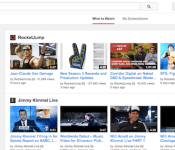
YouTube makes finding and following others’ playlists easier, debuts new card design for the web

We figured changes would be afoot after Susan Wojcicki (former chief ad guru at Google) became the head of YouTube, and it turns out, the first ones made since she got the job are all about playlists. Henceforth (or at least until the next round of UI tweaks arrive), the left rail on Youtube.com will have a dedicated “Playlists” pane that shows your personal playlists along with those from other channels that you’ve liked. Additionally, users will find a new “Playlists” tab on channel landing pages and get a new dedicated playlist editing page. The new features are rolling out worldwide over the next few days, and with them comes a new responsive, card-style design that fits “neatly on any screen size,” per the company, and should feel familiar to folks who use YouTube’s mobile apps. One YouTube for all, yo.
Filed under: Internet, Software, Mobile, Google
Source: Official YouTube blog
 AIVAnet