


Comcast Xfinity TV adds 18 live-streaming channels with USA, HGTV and more

Just in time for the official start of the NCAA Tournament on Thursday, Comcast has added a load of new channels to its Xfinity TV offering, including options for watching the first second round upsets. Alongside March Madness viewing with access to TNT, TBS and truTV, key additions to the live-streaming library include A&E, Bravo, Cooking Channel, E!, Food Network, HGTV, History, Syfy, USA and more. Of course, this is on top of the more than 25,000 on-demand options for watching at your leisure. All of the new channels are available via either Xfinity TV on the web or Xfinity TV Go for iOS and Android.
Filed under: Home Entertainment, Software, HD
Source: Comcast
The new Oculus Rift costs $350 and this is what it’s like

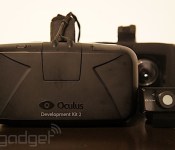
If you’re still not paying attention to Oculus VR and the Rift headset — the folks at the forefront of virtual reality’s recent rebirth — what are you doing? Okay, we’ll forgive you. It’s still just a development kit after all, and even the latest prototype (“Crystal Cove”) is far from the expected final product. Today though, you’ve got one less excuse to stay in the dark: The second Oculus Rift development kit is available for pre-order; it costs $350; and it’s really, really impressive. That’s two reallys.
The Oculus Rift has come a long way since we first saw it back in 2012. First there was the HD version, and the next big leap came with the Crystal Cove prototype (which took home our Best of CES 2014 award). The second development kit takes Crystal Cove and adds several bells and whistles, most notably a custom, in-house camera that faces you while playing to track depth. The IR sensors are now hidden below the front plastic, and a duo of ports (USB 2.0 and a one-eighth-inch audio jack) is just above where your left eye would be if it weren’t covered by a VR headset. A power button is on the right side, which is an important change as it also means that the intermediary box between the previous dev kit and the PC powering it is gone. A single wire exits the second Oculus Rift dev kit, which splits to USB for power and HDMI for video. It’s not quite the wireless standalone unit we’re waiting for, but cutting down on the mess of wires sure doesn’t hurt.

So, what’s it like to use it? We’d love to tell you it’s another staggering jump from Crystal Cove, but that’s just not the truth. It’s more polished than Crystal Cove in terms of finish, but the performance leap isn’t dramatic. The few games we tried — updated versions of the Tuscany and Unreal Engine 4 RTS demos were on-hand, as well as a new UE4 game with little sword-fighting characters in a multiplayer scenario — were fun, but the muddy graphics in the former two demos really stood out with the new screen (a low-persistence OLED pushing 1,080 x 960 in each eye).
“DK2,” as Oculus calls it, is simply the next step in the process, and that’s fine. Game developers (and gobs of enthusiasts, ourselves included) get updated hardware for the projects they’re working on and Oculus VR gets another injection of cash on its road to the consumer version.

Here’s the part where we tell you the same thing we’ve been telling you about the consumer version since 2012. Sadly, it still isn’t arriving any time soon. Company founder Palmer Luckey wouldn’t put a date on its release or give its target specs, but he did say it’ll be another great leap over the second development kit. For now, there’s another Oculus Rift dev kit that’s immersive, surreal and industry-changing. Things could be worse, right?
Photos and video: Michael Gorman, Edgar Alvarez and Sean Buckley.
Live from PlayStation’s ‘Driving the Future of Innovation’ panel (the VR one)

What is the “Future of Innovation”? Sony’s gonna tell us tonight, but we’re pretty sure we can tell you what it is right now: bacon-scented alarm clocks. Oh, right, the future of innovation is also the rumored virtual reality headset from Sony’s PlayStation team. At least we’re pretty sure that’s the case, both based on the rumor mill and our own cabal of sources on the ground here at GDC 2014. We’ll certainly find out soon enough, as the event kicks off shortly. Stick around, as we’re starting shortly.


‘Project Morpheus’ is Sony’s virtual reality headset for the PlayStation 4

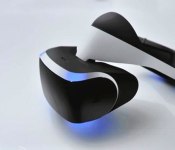
The rumors are true: Sony’s working on virtual reality. The hardware is called “Project Morpheus” and it’s headed to the PlayStation 4. The headset is two pieces: a closed display and what looks like a PlayStation Move sensor built in. SCE Worldwide Studios head Shuhei Yoshida unveiled it on-stage tonight at GDC 2014; he said the “prototype” is “by no means final.” It’s the culmination of over three years of work, Yoshida said, and the prototype unveiled tonight will also double as a dev kit.
As seen above, a subtle PlayStation-themed blue light is emitted by Morpheus. A single wire can be seen exiting the unit on-stage; it’s unclear how the device will work with consoles. Sony’s clearly drinking the VR Kool-Aid: there’s serious talk about “presence” on-stage (the term Valve coined as the target for “true VR”). What are the specs in the headset? It’s got a 1080p display and just over a 90 degree field of view. There’s positional head tracking, 1000HZ refresh rate, a 3-meter working volume with full 360 degree tracking — it looks like anyone who wants to use Morpheus needs the PS4 camera. In terms of sound, the device has “true spatial sound” using binaural audio — pretty neat! It’s also apparently “highly adjustable” and support custom headphones if you’d prefer your own audio choice (it plugs right into the headset). Head below for more!
The current dev kit is wired, though the wire is “very long” (around 5 meters, we’re told). The dev kit also has a “breakout box” between the headset and your television.
PlayStation R&D engineer Richard Marks dug into the nitty gritty a bit: he said Morpheus needs a high-resolution, high-quality screen (“no problem,” he quipped), great sound (SCE is developing binaural tech to produce sound, incorporating that into the experience), tracking (he pointed out that the PS4 camera is “almost custom-built for VR”), and control (Sony’s sticking with DualShocks, cameras and Move, apparently).
Marks admitted that VR needs to be easy to use — as in, as simple as picking it up off the coffee table and quickly jumping in. So, perhaps no wire then? That’s still unclear. He finished with a plea to devs to create content for Project Morpheus, “which is why we’re announcing this at GDC.” Sony’s already working with a handful of devs, including Epic Games and Crytek. We expect it won’t be too long before the large world of game devs jumps in.
Update: In a Q&A following tonight’s session, we were told by R&D engineer Anton Mikhailov that the headset was given its project name for “the god of dreams” (he’s not lying). In terms of first-party Sony studios working on content for Morpheus, the Sony trio on-stage stayed mum, pointing to the handful of titles revealed tonight as the first example.
MyCastScreen Fixes Toggles, Adds Custom Background Support and More
It seems like days ago we showed you guys a new app by musicalbigfoot called MyCastScreen. It just was launched and caught on rather quickly as a good start to a home screen, of sorts, replacement for you Chromecast device. It is just an app that casts various bits of information in a card style UI to your TV, not an actually home replacement.
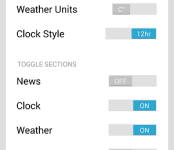
Today the dev has released an update for the app, yes already, that adds quite a bit of functionality to it. The first thing that was fixed, was the ability to actually turn off various cards like the traffic, weather, news and clock. Also in this update you can change the clock to a 24 hour format and the temperature read out to Celsius.

 Last, but not least, you can now plug in a Custom Background URL for setting your own backgrounds.
 Bad photo, I know, but the Moto 360 looks pretty awesome on a 39″ HD T.V. How about this one;
 Check out the app via the Play Store button below. It certainly seems the dev is going to be working forward with it and making it better as time progresses. It never hurts to show support to help encourage active development and updates.

New Skype for Android promises not to drain your battery

If you’re anything like us, then you know how valuable it is to have great battery life on mobile devices. Which is why a number of apps, like Skype, need to be monitored a little closer than others — in particular, ones that are constantly running in the background. Knowing this, Skype’s releasing a fresh version, 4.7, of its Android application that changes the way it handles your smartphone’s or tablet’s battery. “We are introducing aggressive battery life savings that will allow most of our users to leave Skype running without noticeably affecting battery life,” said Skype in a blog post.
In order to make this happen, message notifications in group chats had to be turned off by default, though there is an option to flip the switch for folks who would like to continue using them. According to Skype, we’ve only seen the beginning, as it expects to further improve battery usage in future versions of its mobile app. We’ll have to see it to believe it, but hopefully it turns out to be true — because mo’ juice, mo’ Flappy Bird.
Filed under: Cellphones, Tablets, Internet, Software, Mobile, Microsoft, Google
Source: Google Play
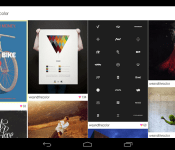
Dayframe Brings Chromecast Support for free, Prime on Sale for $0.99
Dayframe, from cloud.tv, went through some paces over the last few months. When Google pushed out the SDK for developers to launch Chromecast support into their apps, Dayframe was one of the first to go live with it. Not without some conflicts though. After having to pull it, offering the paid members the Prime access for free, bringing back Chromecast support and a few other hiccups, it finally made its way as a set feature option.When it did finally go live, it was only available to Prime (paid) members. Not anymore.
 Dayframe has pushed an update out for the app that hit late lastnight. it moved the app to version 2.3 and brings Chromecast support to everyone. That means anyone that installs this free app can have access to cast to their Chromecast devices. There will be a small logo on your screen though and a popup that will nudge you for Prime every so often.
The update also adds quite a bit of other things:
– users can now add multiple Facebook friends at a time– better support for wireless chargers (i.e. the Tylt)– now faster and easier to create playlists (as part of Prime)– slideshow got a lighter makeover– and of course: bug fixes


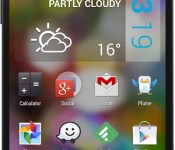
Beautiful Widgets Adds New Colored Widgets in Todays Update
LevelUp Studios has released an update to their Beautiful Widgets app today that brings it to v5.6. In the update you will find the usual bug fixes, but you will also find a new set of colored widgets to choose from along with a new color picker.


Beautiful Widgets has been around for a very long time and LevelUp has done a pretty good job at keeping updated with new features and ways to customize the look over the years. Many of you probably have the pro version of the since it has been on sale so many time. I know I still use it as my primary weather widget on all my devices.
Head to the Play Store and pick up the update, or go reinstall it if you forgot about it. The pro version will set you back $2.69 right now. You can always opt for the free version that also received the update today as well, you will just have a few in-app purchase option inside.
Beautiful Widgets Pro
Beautiful Widgets Free

Oculus VR exits first virtual reality collective

Just five days ago we told you about the Immersive Technology Alliance, a group of companies that are working on virtual reality coming together to support the burgeoning medium. At the time, we told you that Oculus VR — the company behind the Oculus Rift — was part of the group. That said, the announcement was notoriously missing any official statement from the Oculus folks. As it turns out, that’s because Oculus VR isn’t actually part of the group. Oculus offered Engadget this statement:
“There was confusion on March 13 about whether Oculus was a member of the Immersive Technology Alliance. We’ve spoken with the ITA’s leadership and clarified that we are not, and have not been, a member of the group. We appreciate the ITA moving so quickly to correct their website and media to reflect this.”
We’ve checked with the other members of the group, many of which responded to confirm their participation in the ITA, including EA and Technical Illusions. During the group’s first meeting today at GDC 2014, ITA Executive Director Neil Schneider kicked things off with a lengthy response to Oculus dropping support, heavily tinged with passive-aggressive criticism.
Schneider emailed us a similar statement, which detailed his side of the history between Oculus VR and the ITA (formerly the Stereoscopic 3D Gaming Alliance):
“Before Oculus started their Kickstarter, Oculus and MTBS had an agreement. We would give them free self-promotion on mtbs3D.com which started as the hotbed for Oculus’ launch and birthplace. All we asked of them was a basic level membership in the non-profit Stereoscopic 3D Gaming Alliance (S3DGA) valued at $5,000 US. This was conditional on their Kickstarter being successful, which it was. Oculus honored this.
During this formative period, Palmer Luckey has been in the loop on The ITA’s development since the beginning of this new movement. We had advisory board discussions through email featuring other members including Oculus VR (Palmer Luckey) and others who don’t need to be named. He was even invited to speak at the upcoming meeting, and couldn’t make it because of a scheduling conflict, but he said time permitting he was going to try and drop by.
In all our interactions, we have not received a single request to discontinue alliance membership. The Oculus logo has been on the site since they made their first payment some time ago, and they have not communicated to do otherwise. As it stands, we have an alliance of 20+ members. We have every expectation that they will continue to be industry leaders and continue to be part of this alliance.”
All that said, that is most certainly one side of the story. Though Oculus’ statement on the record comes off as flatly pragmatic, it’s clear here that Oculus VR — the industry standard in VR, at least for now — isn’t interested in participating in the ITA.
Fortunately for the ITA, many other verified members are making really cool products. Technical Illusions’ CastAR was the first device shown off at the meeting (after the somewhat awkward Oculus-related intro), and it’s clear that many of the folks here aren’t simply trying to cash in on VR while it’s a hot commodity. The messaging cooled as well, with a YEI Technology rep pointing out that there’s room in VR for lots of different ideas, and this first meeting is representative of that. We can’t disagree with that.
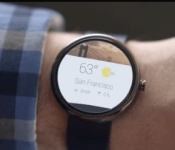
Google Announces “Android Wear”, The Android Based Smartwatch Platform
 Over the last few months there has been considerable speculation and rumor about Google bringing a smart watch to market with the help of LG. We fully expected the announcement to happen at Google I/O, but we also speculated that they would make it happen earlier so devs could get to work bringing great apps to it before it was available to buy. Today via their blog, Google has shared what the new Android Wear is going to be all about.
I am pretty convinced that Google has nailed it. Check out some details about the developer preview. Google is also launching the preview SDK for this next week.
After reading through the info and watching the videos a couple times, it is sounding like Android Wear is targeted as a software for smartwatches and wearables. If you watch the videos, you see various watch styles and designs. Google is already working with “Asus, HTC, LG, Motorola and Samsung; chip makers Broadcom, Imagination, Intel, Mediatek and Qualcomm; and fashion brands like the Fossil Group to bring you watches powered by Android Wear later this year.” That means that all these manufacturers will create their own slight twist or take on the look and options for a wearable using the Android Wear software. This doesn’t mean that Google isn’t going to produce one of their own to be sold on the Play Store. We are still convinced that LG will be making an Android Wear based Nexus branded watch for Google.
Google has brought the power of Google Now to your wrist. Utilizing the hot word, “OK Google” much like you can do on your device now without having to pull it out of your pocket. Reading through the blog post we also find out that you can tell Android Wear to cast content to your TV too.
Via Google Blog

