



Judge finds Grooveshark employees guilty of mass copyright-infringement

Grooveshark’s disappearing and reappearing act looks like it could finally come to an end; permanently. A Manhattan judge has ruled that because Grooveshark employees themselves had uploaded 5,977 songs to the service and infringing on copyrights in the process, the outfit couldn’t be granted safe harbor for hosting music from the likes of Jay-Z and Madonna. Meaning, the firm’s previous method of compliance under the Digital Millennium Copyright Act was null and void because it wasn’t users who uploaded the copyrighted material (which would be subsequently removed upon request), it was in-house staffers including CEO Samuel Tarantino and CTO Joshua Greenberg, according to The New York Times. Reuters notes that there was also evidence of internal communications from Greenberg that told employes to share music as much as possible from outside the office in an effort to foster growth — all as a condition of employment.
What’s more, it was found that the streaming service had destroyed evidence pertaining to the case, including lists of files that’d been uploaded. The amount of damages haven’t been set just yet and, naturally, Grooveshark is considering its future moves, which may or may not include appealing the judgment. It’s worth noting that the company is still facing litigation at the New York federal and state levels, too.
[Image credit: Brad Barket/Invision/AP]
Filed under: Home Entertainment, Software, HD
Source: Reuters, New York Times
.CPlase_panel display:none;
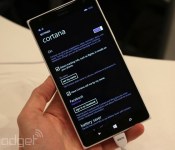
Cortana makes sure you don’t miss nearby concerts

Microsoft’s virtual assistant comes in handy for lots of things — especially reminders. Now, thanks to a hand from SeatGeek’s ticket engine, Cortana will alert you when bands you listen to on the regular have a tour stop close by. As you might expect, in addition to date and venue info, the add-on will also provide you with ticket prices and a handy link to purchase. A Concert Watch option is rolling out to the Music section of Cortana’s Notebook, and toggling the option on will keep you informed about performances in your area. Google Now does something similar for the Android faithful, displaying concert dates based on artists from your search queries. If you’re unable to see the new feature, sit tight: it appears to be on its way to handsets.
Filed under: Software, Mobile, Microsoft, HP
Source: WP Central
.CPlase_panel display:none;
Photoshop for Chromebooks begins long-awaited beta test

If you’ve been eyeing a Chromebook to replace that Windows or Mac machine, Google’s OS is about to get a massive boost in productivity. Starting today, Photoshop is headed to the machines thanks to a partnership with Adobe — if you meet certain criteria. A cloud-based streaming version of the creative software will be available for Adobe Creative Cloud education customers in beta form, and for now, there’s no word on when regular folk will be able to opt in. This version of Photoshop is designed to run on Chromebooks straight from the cloud and packs in Google Drive integration for easy file management. The rest of Creative Cloud is said to follow, however this trial run only includes the popular photo-editing app. As is usually the case with testing phases, there’s no clear indication as to when this version of Photoshop will see its widespread release.
Filed under: Laptops, Software, Google
Source: Google Chrome Blog, Adobe
.CPlase_panel display:none;

Jawbone’s trackerless Up app syncs with Apple Health and other fitness services

As it promised mere weeks ago, Jawbone has launched a new version of Up for iOS that syncs data from numerous health services and doesn’t require its own tracker. Confusingly, the Jawbone app which does require an Up or Up24 tracker is also called ‘Up’ and is still available. However, the new version is more of a fitness catchall app that works with Apple’s Health and over a hundred other apps (and their trackers), like RunKeeper and IFTTT. Interestingly, it even works with Nest’s thermostat to “create an ideal sleep environment.” In fact, the new Up wants to manage all aspects of your health by tracking your sleep, nutrition and workouts. Once it learns your habits, the “Insight Engine” will then give you personalized health tips and other info. There are also social functions, including team tracking and the ability to boast about fitness milestones. Apple had pulled HealthKit apps a few days ago due to bugs, but after some scrambling they’re now back — you can grab Jawbone’s UP for iOS here.
Filed under: Wearables, Software
Via: MacRumors
Source: Jawbone
.CPlase_panel display:none;
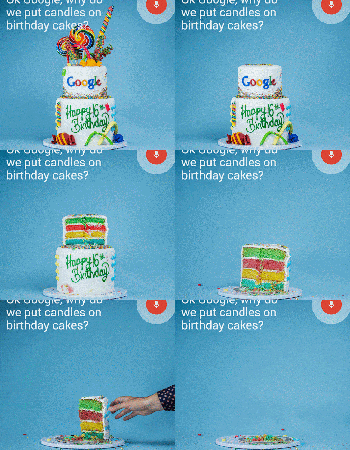
Interesting theory: Did Google out the name of its next build, Android Lollipop, in its birthday celebration?
 Fun fact: Google turned 16 years old yesterday. Other fun fact: A gif that Google posted on social media shows lollipops as the decoration on a birthday cake. Now, this next bit is going to be a bit of a stretch, but this is by no means beyond the subtle marketing of Google – could the lollipops on the top of the cake signify the name of the next build of Android, Android Lollipop? This was one of our earliest guesses for the name of Android L, even before we knew it as Android L, and it is at the very least plausible. Of course, it could equally be called layer cake, but we’d like to think there’s going to be a lollipop themed Android figurine on Google’s lawn in a month’s time. And yes, we know that’s a pretty indefensible reason.
As with every build of Android before it, everybody has been trying to guess the name of the next build of Android for the longest time, the most compelling theories of which have recently been Lemon Meringue Pie and Lion, the last courtesy of Google’s previous relationship with Nestle. Really, it’s anybody’s guess, so unless you’re into the whole business of speculation, you can probably afford to wait until an official announcement is made – Google is expected to announce a new tablet, the Nexus 9, and also a new phablet, the Nexus 6, come mid-October.
What do you think about this latest theory? Is it reading too deep into it, or is this totally something Google would do? Let us know your opinion.
Source: Phandroid
//<![CDATA[
ord = window.ord || Math.floor(Math.random()*1E16);
document.write('‘);
//]]>
The post Interesting theory: Did Google out the name of its next build, Android Lollipop, in its birthday celebration? appeared first on AndroidSPIN.
.CPlase_panel display:none;

The Shellshock command security flaw isn’t really fixed yet

Don’t get too comfy just because companies are rolling out patches for the Shellshock security bug — as it turns out, even updated websites and devices remain at risk. Developers are reporting that they can still run any code they like (and thus hijack systems) through the bash command shell simply by using instructions that aren’t covered by existing safeguards. You can use a common variable like “cat” (concatenate) to bypass the defenses, for instance. The only surefire fix may be a fundamental change to how the shell handles variables, which could break legions of apps and services. You still don’t have much reason to worry about your home Mac or Linux PC, but it’s now considerably less likely that the sites and connected gadgets you use will will be truly immune to Shellshock-based attacks.
[Image credit: Robert Graham, Twitter]
Filed under: Internet, Software
Via: Ars Technica
Source: Seclists.org, GNU.org
.CPlase_panel display:none;
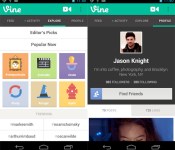
Vine now lets you use your Android phone’s existing video clips

Not too long ago Vine blessed iOS users with the ability to import pre-existing videos into the app, and now Google fans can get in on the action. Any clips in your Android camera roll are viable subjects to be trimmed down to six seconds or shorter now, and you can activate your device’s flashlight to work as a flash in low-light situations. There are a few other features too, and you can check those out on the app’s Google Play page. Now all that’s separating your from internet stardom is, well… you.
Filed under: Cellphones, Software, Mobile
Via: Android Central
Source: Google Play
.CPlase_panel display:none;

iOS 8’s WiFi location privacy isn’t as powerful as you might think

If you were hoping that iOS 8’s ability to hide your device ID from nearby WiFi networks would render you invisible to nosy hotspot operators, you’ll want to dial back your expectations a bit. AirTight Networks’ Bhupinder Misra has found that Apple’s hardware address randomization only kicks in under a very narrow set of circumstances. You not only have to put your device to sleep and turn off location services, you have to turn off cellular data as well — in short, your iPhone has to become a paperweight. Even then, the masking only appears to work with iOS devices using at least an A7 processor, like the iPhone 5s.
As such, it’s business as usual for institutions and stores that want to track your phone for the sake of stats and marketing. The only way to avoid giving out your hardware’s real ID is to… well, stop using your hardware. The risk of revealing anything truly personal is relatively slim, but you’re not going to be happy if you were hoping to go incognito around public WiFi access points. Not that companies would necessarily be deterred even if the location privacy feature was more useful. As AirTight’s Hemant Chaskar notes to The Verge, it’s possible for those monitoring WiFi data to toss out fake device info. Although they won’t get a complete view of the people wandering near their networks, they can still make use of whatever data is left.
Filed under: Cellphones, Tablets, Software, Mobile, Apple
Via: The Verge
Source: AirTight Networks Blog (1), (2)
.CPlase_panel display:none;

Google to require more of its apps on Android devices

According to a report by The Information, you may be seeing a few more Google apps preloaded on future Android devices. Confidential paperwork on new contract requirements details raising the amount of pre-installed software. Under the new guidelines, the number is set to total up to 20 apps– more than doubling the current set of 9. What’s more, Google’s wares will also have to be displayed in strategic locations on home screens and in “prominent” folders. This means that Android device makers like Samsung, HTC and others would need to retool where the requisite apps are positioned and factor in the increased volume. As you may recall, Google aims to reign in customization of its software too, and ZTE has already opted for the Google Now launcher by default on its upcoming devices.
Filed under: Software, Mobile, Google
Source: The Information
.CPlase_panel display:none;

Google’s data-transferring tool gets a shiny new interface

Google already makes it very simple for you to pull your data from some of its many services, via the Takeout transfer tool on the web. Up until today, however, Google Takeout wasn’t necessarily pleasing to the eye, despite being extremely useful at letting users extract their archives. As a way to alleviate that, the search giant has quietly given Takeout a design makeover, bringing the user interface more in line with its other products, like Gmail and Google Drive. Still, it’s not all about the visuals here — Google Takeout is now also more thorough, allowing you to pull specific data from each service. For example, with Google Play Books, you can choose to include select files, rather than only having the option to download all at once. Just don’t go too crazy creating archives, since they do take up space from your Drive’s free storage allotment.
Filed under: Storage, Internet, Software, Google
Via: Google Operating System, GHacks
Source: Google
.CPlase_panel display:none;
 AIVAnet