


iPad Air 2 is Apple’s thinnest tablet ever

Apple’s got a new iPad, and it’s a sequel to last year’s ultra-svelte iPad Air: it’s called the Apple iPad Air 2. CEO Tim Cook announced as much this morning from Apple’s Cupertino, California headquarters with a video of a pencil being shaved down, a nod to last year’s unveiling of the first iPad Air. The iPad Air 2 is 6.1mm, “18 percent thinner than the first iPad Air,” Apple’s Phil Schiller told attendees. “It’s the world’s thinnest tablet.”
Beyond thinning it down even further, Apple’s usual suspects of upgrades are on board: the iPad Air 2 has the newest A8 processor and M8 coprocessor, which Schiller said is 12 times more powerful than the original iPad. It’s also got a brand new camera out back: an 8MP iSight camera (f/2.4 aperture) that does 1080p video, burstmode, panorama shots, and auto HDR (that takes up a bit less space). The display remains 9.7-inches, which Schiller called, “a new Retina display.” He also said the new iPad Air has Touch ID, the Home button-based security system that enables login via fingerprint. With Touch ID, iPad Air 2 also has Apple Pay, albeit enabled for online purchases only.
Head below for more specs and info as it comes out of Cupertino!
The camera upgrades aren’t limited to the rear of iPad Air 2 — the front-facing camera is also getting improved, and it’s now known as the “Facetime HD” camera (1.2MP at f/2.2 aperture, 720p HD video, and a smattering of software features). In terms of connectivity, iPad Air 2 has WiFi standards (802.11a/b/g/n/ac, dual channel with MIMO) and Bluetooth 4.0; there’s also an LTE model that costs a bit more, and it’ll work with AT&T, Sprint, T-Mobile and Verizon in the US.
The screen remains 9.7-inches diagonally and has an “optically-bonded” IPS display (the same tech used in Microsoft’s Surface) — this means there’s no gap between the screen and the body. It also reduces glare (there’s an anti-reflective coating) and travels through time. Okay, maybe not that last bit about time travel. The chip inside is an Apple-designed A8X with 64-bit architecture, and it’s bundled with the M8 coprocessor (used mostly for motion data).

Of course, those following along at home saw this coming, right? A conspicuously-timed leak yesterday — just after Google’s big Nexus announcements — saw both the iPad Air 2 and iPad Mini 3 revealed ahead of today’s big event. Apple isn’t exactly known for accidentally leaking two of its own products one day ahead of those products being announced, and Google’s big news revolved around its own Nexus devices. You don’t need to be a cynic to suspect something is up with that.
Intentionally “leaked” or not, Apple took to its own theater today in Cupertino to officially unveil the newest iPad Air. An October reveal is par for the course when it comes to Apple’s iPad line in recent years: the first iPad Air was unveiled last year on October 22nd, and the previous model iPad was revealed almost exactly one year earlier on October 23rd, 2012.
The iPad Air 2 comes in three flavors: silver, space grey and gold. It also comes in three prices: 16GB ($499), 64GB ($599) and 128GB ($699) — add $130 to any of those models for LTE instead of WiFi-only. Pre-orders apparently go live tomorrow, and they’ll “begin shipping by the end of next week.”

HP calls time, will shut down webOS support on January 15th, 2015

Still hauling that Palm Pre around without a care in the world? Sorry to say but there’s a nasty surprise coming your way just after the holidays. HP has quietly announced that it’ll pull the plug on the catalog and cloud services that support webOS devices from January 15th of next year. That doesn’t mean that your hardware will shut down, but living with the gear is going to get considerably harder. Firstly, you won’t be able to purchase, download and restore apps, and you won’t be able to restore your phone from a backup either. Setting up a new device has also gone the way of all things, and if you lose your password, you won’t be getting it back. This is probably the excuse you need to buy a new phone, but don’t worry, because as long as we remember webOS in our hearts, it’ll never truly die, okay?
Filed under: Cellphones, Tablets, Software, Mobile, HP
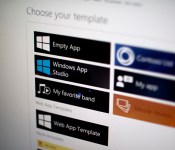
Microsoft wants to make it easier to build Windows Phone apps

Last year, Microsoft created Windows App Studio to get more Windows Phone apps into its Store, and it worked — developers added almost 50,000 new apps in 14 months. Redmond has just updated the beta web app with a feature that should help even more: Windows 8.1 sideloading. All you have to do is scan a certificate when generating a universal 8.1 app, and it’ll install it automatically on your Windows Phone 8.1 device. The update also lets you generate apps in nine extra languages and brings new layouts and templates, among other tweaks. If you want to sign up, the requirements aren’t strict — you just need a Microsoft account and an uncontrollable urge to build Windows Phone apps. Give it a whirl right here.
Filed under: Software, Microsoft
Source: Microsoft

Plex confirms app for Nexus Player; Blends in nicely
I can’t say that I am all that surprised that there will be a Plex app for the new Nexus Player. It is, after all, just a slick TV version of Android 5.0 Lollipop. However the Android TV toting Nexus Player will be getting wht looks like a completely new looking Plex app and I can’t say I am mad at how it looks at all.


Pretty slick looking. While you might notice that it has a totally different look than we are used to seeing and using on our phones, tablets, and other devices, there is good reason for it. Google built Android TV from the ground up. To me it looks like Plex did something similar to match the over all look and feel of the Android TV layout. That keeps the app looking more native than a separate app entirely. Elan from Plex has been answer questions all afternoon in the comments section of their post. he has confirmed that the Voice Search function of the Nexus Player works “great” inside the app. No answers were provided on is the app would be free or not. 9to5Google was able to confirm that it would be available on launch day for the Nexus Player, which is November 3rd.
Don’t forget, the Nexus Player is Google Cast ready, so you can still just cast Plex from your device through the Nexus Player too. You don’t necessarily need a new app, but I will certainly be installing it for ease of use and beautification.
//<![CDATA[
ord = window.ord || Math.floor(Math.random()*1E16);
document.write('‘);
//]]>
The post Plex confirms app for Nexus Player; Blends in nicely appeared first on AndroidSPIN.

Playdate: We’re livestreaming ‘Bayonetta 2’ on Wii U!

Nintendo’s big exclusive game for its Wii U home console is Bayonetta 2. It was Nintendo’s big coup announcement ahead of the Wii U’s launch. Bayonetta‘s notable not just for being good — the first game is critically-acclaimed — but also for being made by a developer other than Nintendo. And hey, it’s October, so that means games are being released into the wild. Among them is Platinum Games’ Bayonetta 2, featuring the stylishly appointed, combat-ready Rapunzel-alike you see above. The series is known for its over-the-top, goofy-yet-calculated style, and we’re gonna put the latest one through its paces in a stream for you just below starting at 4PM ET.
http://www.twitch.tv/engadget/embedWatch live video from Engadget on www.twitch.tv
http://www.twitch.tv/engadget/chat?popout=

Luxy dating app doesn’t care about poor people

Out of the many different app categories which exist today, dating is certainly among the most popular. Whether it’s Tinder, Grindr, OkCupid or Siren, there’s definitely something for everyone. And now that “everyone” includes arrogant, rich narcissists. Say hello to Luxy, a dating app that promises to “work just like Tinder,” except that it allows you to “weed out the poor and unattractive.” It’s so absurd you’d assume it’s a hoax. The app, which is available for iOS and Android, comes from the same humanoid creatures behind the website MillionaireMatch, where wealthy men and women can find other “successful and attractive” singles. Luxy takes that already questionable concept and races to the bottom with it. The press release even brags that Luxy is “basically Tinder without the poor people… In fact, the average income of male users on LUXY is over $200k and those who are unable to keep up financially are immediately removed from the service.”
The most bizarre part isn’t even the service itself, but rather the arrogant approach Luxy has taken in getting the word out. It’s been reported that the Luxy’s press representative and CEO went as far as emailing some journalists the following message: “What if you could just wipe the poors and uglies away like a bad Tinder match.” It’s so over the top that we’re not entirely convinced the app isn’t some satirical jab at the one-percent. But whether or not this is just a ploy by the company’s enigmatic CEO to see how many awful people he can get to sign up for an awful service doesn’t matter, because Luxy is real in one very important way — it’s an actual, functioning dating app filled with terrible human beings.
Filed under: Cellphones, Misc, Internet, Software, Mobile
Source: Luxy
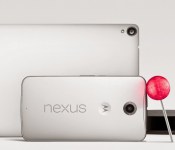
Google makes Android 5.0 Lollipop official; headed to Nexus 4, 5, 7, 10 and GPE devices in coming weeks
It is certainly a big day in the Android world. Google announced the Nexus 6, the Nexus 9 and the Nexus Player. All three are beautiful devices that many of us are eager to put to work in our lives. All the new devices were announced with Android 5.0, or Lollipop. Which is Android L’s official name. Sorry Lava Cake and Lemon Drop fans.

What’s new in Lollipop? A whole bunch of stuff that many already know about thanks to Google I/O and the developer preview. Material Design is the big key visual element that the new OS brings to the table. It also brings along over 5,000 APIs for developers to use towards making other products play nicer together. Like Google Fit and such. There is the new notification control, the trusted Bluetooth Connections, guest user modes, battery saver mode and few other goodies. Google outline much of it at Android.com.
While Lollipop is great news, even better news is where the new version of Android will land in terms of the previous Nexus family. There are no specific dates mentioned yet, but Google does note that the Nexus 4, 5, 7 and 10, along with Google Play Edition device will all see Lollipop updates in the coming weeks. I am sure that is going to make Nexus 4 owners particularly happy.
Source: Google Blog
//<![CDATA[
ord = window.ord || Math.floor(Math.random()*1E16);
document.write('‘);
//]]>
The post Google makes Android 5.0 Lollipop official; headed to Nexus 4, 5, 7, 10 and GPE devices in coming weeks appeared first on AndroidSPIN.

Microsoft’s got another Halo game for 2014: ‘Halo: Spartan Strike’ headed to Windows 8 and Steam
 Image from Halo: Spartan Assault
Apparently Halo‘s top-down mobile version was successful enough to warrant a second go, as Microsoft’s planning a December launch for Halo: Spartan Strike. But what is Halo: Spartan Strike? It’s a direct sequel to last year’s Spartan Assault, and it features an unnamed Master Chief-esque super soldier shooting, driving and grenading his way through a variety of Halo-flavored worlds. To be totally clear: it’s a twin-stick, top-down shooter made by the same folks who made last year’s mobile Halo (Vanguard). You’ll see New Mombasa! You’ll see a Halo-based area! You’ll see…some jungle! Sadly, we can’t actually show you any of that, as Microsoft’s worked out some form of exclusivity with another outlet. We even played a bit of it, but we can’t actually tell you how that went because of the aforementioned exclusive. Pretty dumb, right?
What we can tell you is that Halo: Spartan Strike will cost $6 when it arrives on Windows 8 devices (from Surface to phones to PC) and Steam this December 14th. The marketing gentleman from Microsoft said the game will remain exclusive to Windows 8 and PC — unlike the previous game, which ended up on consoles as well — but we don’t believe him. You probably shouldn’t either.

Google taunts Android fans with mascot audition teaser

There’s been a bit of speculation as to what moniker version 5.0 of Google’s mobile OS would take on when it arrives this fall. In a new promo video, the Android faithful are taunted with possibilities like Lemon Meringue Pie, Lemon Drop, Lady Finger and Lava Cake. Oreo is mentioned as a dark horse candidate, and it could be an option if Google decided to stick with the branded snack theme (and skips a few letters). A couple of rumored names are noticeably absent, too: Lollipop and Licorice. Of course, we’ll know soon enough when a new statue is installed in Mountain View.
Filed under: Software, Mobile, Google
Source: YouTube

What you need to know about Google’s battle with Oracle over Android

Two of the world’s most powerful companies are engaged in a legal battle that has its roots in the world’s most popular mobile operating system: Android. Google is playing defendant, while Oracle is laying claim to a crucial set of code in the foundation of Android. Doesn’t ring any bells? That’s likely due to the fact that this dispute goes back four years. Just this week, Google filed a petition with the United States Supreme Court to decide once and for all which company is in the right.
So, what are these two internet giants fighting about? The short answer is Java, which Oracle owns. The real answer, of course, is far more complex
Oracle is a seriously big company. Google is similarly huge. They’ve both got tremendous cash reserves (tens of billions of dollars), enormous profits each year and — most importantly — the will to see this dispute through. That’s evident from the past four years of shots from both sides.
Here’s a breakdown of the past four years, in short:
- Oracle files suit with Google (August 2010)
- Google hires Java founder James Gosling (March 2011)
- Jury finds that Google didn’t infringe patents, did infringe patents (May 2012)
- Judge William Aslup overturns copyright claim, says APIs aren’t copyrightable (May 2012)
- Oracle appeals to US Court of Appeals for the Federal Circuit (October 2012)
- Which finds APIs copyrightable (May 2014)
- Google appeals to SCOTUS to hear the case (October 2014)
That brings us to this week.
WHAT IS IT?

Okay, so we know that Oracle is suing Google, and we know that it has to do with Java and Android. The long and short is this: Making applications for Android and Java is very similar, and that similarity was on purpose. Google wanted it to be easy for developers who already used Java to make applications for Android. Google knew this, but didn’t want to license Java — owned by Oracle — for its big mobile OS.
Put more simply: Google didn’t want to pay Oracle for software, so it made its own, similar version of that software. Where things get messy is whether Google’s code, and the way that code is arranged, violates Oracle’s copyright. Is the code even copyrightable?
WHAT’S THE ARGUMENT?
US District Court Judge William Aslup didn’t think so when he mooted a jury ruling in May 2012. “To accept Oracle’s claim would be to allow anyone to copyright one version of code to carry out a system of commands and thereby bar all others from writing their own different versions to carry out all or part of the same commands. No holding has ever endorsed such a sweeping proposition,” he declared in a May 31st, 2012, ruling.
Aslup actually learned how to code in Java for the trial — there’s an amazing back-and-forth transcript at Groklaw that illustrates how deep he got (search for “We heard the testimony of Mr. Bloch…”).
The United States Court of Appeals for the Federal Circuit later overturned Aslup’s ruling, which resulted in Google appealing to the highest court in the US. “Because we conclude that the declaring code and the structure, sequence and organization of the API packages are entitled to copyright protection, we reverse the district court’s copyrightability determination with instructions to reinstate the jury’s infringement finding as to the 37 Java packages,” Circuit Judges Kathleen O’Malley, S. Jay Plager and Richard Taranto wrote in May 2014.
The important sticking point there is whether or not “the declaring code and the structure, sequence and organization of API packages” is entitled to copyright. Thus far, we’ve got two different courts with two differing opinions on the matter.
WHAT DOES EACH SIDE HAVE TO LOSE?

Each side has a lot to lose should their argument prove unsuccessful; it’s not about money as much as it is about precedent. Should Oracle win, it’s setting a much bigger precedent in the technology business: Certain types of code, and specifically API packages, may be copyrightable. If so, that could mean a lot more copyright infringement lawsuits.
For Google, it could mean a big payout to Oracle. Not so much that Google would really feel it, but that’s up in the air; Oracle originally demanded several billion, but that was significantly reduced over time. It was originally rumored that Oracle wanted royalties for every Android device out there, and that may still be the case. Time will tell.
WHY SHOULD I CARE?

Google’s argument is essential to why this matters to you. In its Supreme Court filing, Google said, “Early computer companies could have blocked vast amounts of technological development by claiming 95-year copyright monopolies over the basic building blocks of computer design and programming.” Because Google was built on computer technology fundamentals from decades earlier (before 1978), copyright extends for 95 years. Such copyright claims would’ve impeded the progress of modern computing technology — that’s Google’s argument, anyway.
Oracle’s argument is such that functional code is on par with that of creative works. Oracle actually cites Harry Potter specifically. Here’s Oracle’s opening argument to the US Court of Appeals:
“Ann Droid wants to publish a bestseller. So she sits down with an advance copy of Harry Potter and the Order of the Phoenix — the fifth book — and proceeds to transcribe. She verbatim copies all the chapter titles — from Chapter 1 (“Dudley Demented”) to Chapter 38 (“The Second War Begins”). She copies verbatim the topic sentences of each paragraph, starting from the first (highly descriptive) one and continuing, in order, to the last, simple one (“Harry nodded.”). She then paraphrases the rest of each paragraph. She rushes the competing version to press before the original under the title: Ann Droid’s Harry Potter 5.0. The knockoff flies off the shelves. J.K. Rowling sues for copyright infringement. Ann’s defenses: “But I wrote most of the words from scratch. Besides, this was fair use, because I copied only the portions necessary to tap into the Harry Potter fan base.” Obviously, the defenses would fail.
Defendant Google Inc. has copied a blockbuster literary work just as surely, and as improperly, as Ann Droid — and has offered the same defenses.”
WHAT’S NEXT?

That is, unfortunately, anyone’s guess. The US Supreme Court might take Google’s case (“Google Inc. vs. Oracle America Inc., 14-410″), and it might not. We’re not in the business of offering conjecture as to whether or not the Supreme Court accepts cases, but we sure are hoping it’ll take this one. If for nothing else, to hear the assuredly hilarious back-and-forth oral arguments over specific programming functions. There’s nothing quite like hearing Supreme Court justices grapple with technological jargon. It’s a delight!
WANT EVEN MORE?
Here’s hoping you do, because there’s a tremendous amount of writing about Oracle v. Google out there. Even just on Engadget, check out this tag. Groklaw was a vital resource throughout the research of this piece, as was Villanova law professor Michael Risch‘s writing at the Madisonian. The San Francisco Chronicle also published an explainer back in 2012 that helps to further elucidate the code dispute at the heart of Oracle and Google’s battle.
[Image credits: CSA Images/Getty Images (boxing robots), KIVILCIM PINAR/Getty Images (generic Java code), Wikimedia Commons (Oracle headquarters), AFP/Getty Images (Harry Potter books), Getty Images/Flickr RF (Supreme Court of the United States)]
Filed under: Cellphones, Handhelds, Tablets, Internet, Software, Google
 AIVAnet