



First: LG to roll out Android 5.0 Lollipop update for LG G3 this week
 Google. Motorola. These are names that we expected to be saying when we announced the first smartphone to be officially updated with Android Lollipop, but it appears LG has something to say about that. LG has today officially announced that the Android 5.0 Lollipop update for LG G3 will roll out this week in Poland with other markets soon to follow, which could definitely make it the first smartphone to be updated to the new version of Android seeing as Google has been radio silent on updating the Nexus 4 and Nexus 5, and Motorola has just pushed its soak test out. In their official announcement, LG detailed a few of the new features that the LG G3 will see after the update:
“This latest Android OS delivers a host of improvements including a new design language with added depth, shadows and animations. Notifications are improved with a new layout and color scheme and will be available on the new lock screen. A new security feature to strengthen the connectivity between devices will include enabling users to unlock their smartphone when it is physically near a pre-registered Bluetooth device such as the LG G Watch or G Watch R.”
This is pretty impressive form from LG, who says that it will announce a schedule for its other devices in the near future. Naturally though, the LG G3 was prime candidate to receive the update first, and it appears LG is keen to stress that they are the first manufacturer to offer an Android Lollipop update. We are impressed, LG; we are impressed.
What do you think about the Android 5.0 Lollipop update for LG G3 being the first smartphone update? Let us know your thoughts in the comments below.
Source: LG
//<![CDATA[
ord = window.ord || Math.floor(Math.random()*1E16);
document.write('‘);
//]]>
The post First: LG to roll out Android 5.0 Lollipop update for LG G3 this week appeared first on AndroidSPIN.

[VIDEO] A sneak peek at Android Lollipop on the Samsung Galaxy S4
 SamMobile has already gotten exclusive sneak peeks at Android Lollipop running on the Galaxy S5, and continuing in this vein of leaks, they’ve managed to get Android Lollipop on the Samsung Galaxy S4 in hand as well. Check out the video that they put together which demoed it below:
As they mention in the video, this is an early build of the Lollipop update, emphasized by the lack of operational Wi-Fi which means SamMobile won’t be making the build available to try out. What is clear from the video is that the Galaxy S4’s update to Android Lollipop will be incredibly similar to the Galaxy S5’s, with plenty of common screens and menus that we have seen in the previous preview. Obviously, many of the stock Lollipop aspects are hidden below Samsung‘s TouchWiz UI, though it’s unclear if Samsung has managed to get rid of the lag and performance issues that have given it a reputation. All the same, it’s good to see that Samsung is hard at work at updating its phones, no matter how close they are to the end of their 18 month update window.
What do you think of Android Lollipop on the Samsung Galaxy S4? Let us know your thoughts in the comments below.
Source: SamMobile via Phandroid
//<![CDATA[
ord = window.ord || Math.floor(Math.random()*1E16);
document.write('‘);
//]]>
The post [VIDEO] A sneak peek at Android Lollipop on the Samsung Galaxy S4 appeared first on AndroidSPIN.

Taylor Swift wants no part of the music streaming ‘experiment’

Just days ago, Taylor Swift shook off Spotify. The star opted not to leave her new album off of the service and pulled the rest of her catalog. Lucky for us, Yahoo caught up with the globe-trotting star during a promotional tour in Japan for more insight on the matter. As you might expect, she echoed the sentiment shared by some of her fellow musicians: streaming services don’t adequately compensate artists and the rest of the folks who have a hand in making albums. What’s more, Swift goes on to call Spotify and similar offerings “experiments,” and she isn’t “willing to contribute my life’s work” to those outfits that don’t properly pay up. Spotify, for example, has been around since 2008, so we’re a bit beyond the honeymoon phase. Subscription-based and ad-supported music streaming has taken root in our lives, and it’s not leaving anytime soon unless there’s some kind of drastic change.
She’s also well aware of the example she’s setting. And being the popular role model that she is, Swift doesn’t want folks thinking it’s okay to give their hard work away for free. In the end though, it apparently just didn’t feel right. “But I think it’s really still up for debate whether this is actual progress, or whether this is taking the word “music” out of the music industry,” Swift explainss. Of course, Swift’s previous releases are available elsewhere, and Rdio reaffirmed its commitment to artist choice today, while boasting that the star’s back catalog can still be streamed there. If you’re after the full quote from the interview, it’s just below. Oh yeah, Swift’s new album 1989 sold well over a million albums in its first week.
If I had streamed the new album, it’s impossible to try to speculate what would have happened. But all I can say is that music is changing so quickly, and the landscape of the music industry itself is changing so quickly, that everything new, like Spotify, all feels to me a bit like a grand experiment. And I’m not willing to contribute my life’s work to an experiment that I don’t feel fairly compensates the writers, producers, artists, and creators of this music. And I just don’t agree with perpetuating the perception that music has no value and should be free. I wrote an op-ed piece in the Wall Street Journal this summer that basically portrayed my views on this. I try to stay really open-minded about things, because I do think it’s important to be a part of progress. But I think it’s really still up for debate whether this is actual progress, or whether this is taking the word “music” out of the music industry. Also, a lot of people were suggesting to me that I try putting new music on Spotify with “Shake It Off,” and so I was open-minded about it. I thought, “I will try this; I’ll see how it feels.” It didn’t feel right to me. I felt like I was saying to my fans, “If you create music someday, if you create a painting someday, someone can just walk into a museum, take it off the wall, rip off a corner off it, and it’s theirs now and they don’t have to pay for it.” I didn’t like the perception that it was putting forth. And so I decided to change the way I was doing things.
[Photo credit: Fred Lee/ABC via Getty Images]
Filed under: Internet, Software
Via: TechCrunch
Source: Yahoo
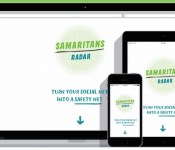
Samaritans pulls its controversial Radar Twitter app

After facing a tidal wave of negative publicity and staying quiet for almost a week, counselling charity Samaritans has decided to suspend its controversial Twitter app. Radar was designed to remotely listen in on Twitter conversations and warn users when a person they follow might need some friendly support. The idea was noble, but its anonymous (and automated) nature and potential to be abused by online trolls led many to call for Samaritans to pull it offline.
In a statement on the Radar website, Samaritans executive Joe Fearns apologised “to anyone who has inadvertently been caused any distress” by “information and opinion circulating about Samaritans Radar,” in an attempt to deflect some of the attention away from the tool itself. The charity says it will now engage with partners to possibly refine Radar by “testing a number of potential changes and adaptations to the app to make it as safe and effective as possible.” That suggests the Twitter app could return in the future, maybe with more privacy safeguards in place.
Filed under: Internet, Software
Source: Samaritans

Civilization Revolution 2 Slides on to the Play Store as a Straight up Paid Title
In the world of mobile gaming, developers are preferring the in-app purchase route vs a straight up full content title for a one time purchase. 2K Games has opted for the latter route with the release of Civilization Revolution 2.

The mobile variant of the widely popular turn-based strategy game has been out for iOS since July as the follow-up to the first Civilization Revolution. Civ Rev 2 is the first one to make its way to Android as well as being the first one built specifically for Mobile. With that, the graphics have been dramatically enhanced compared to the first run title and looks to be a bit more representational to the PC titles.


The release brings in a number of leaders like Lenin and Lincoln to choose from on your conquest to build the greatest civilization possible. I have never been a big fan of the titles, so I won’t attempt to go into any details about it. I do see a number of comments on the Play Store stating they are having login issues though. Not that claimed issues by others has stop many people from buying a title though. If you want to grab the new Civilization Revolution 2 title, hit the link below. Be prepared to drop $14.99 and make sure you have time to download the 447MB game files.
Civilization Revolution 2 on the Play Store
//<![CDATA[
ord = window.ord || Math.floor(Math.random()*1E16);
document.write('‘);
//]]>
The post Civilization Revolution 2 Slides on to the Play Store as a Straight up Paid Title appeared first on AndroidSPIN.
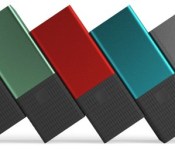
Lytro’s light field camera tech to boost night vision and space imaging

Lytro wants other companies to use its light field photo technology to improve their devices, and not just photography wares. In order to do that, the company outed the Lytro Development Kit (LDK) as part of its Platform initiative. At first, you might think this if for other consumer device makers, but it goes way beyond that. In the announcement, the outfit tossed out some examples of more commercial R&D-type scenarios for its imaging know-how. “Since Lytro’s inception, we’ve continually been approached by a number of organizations wanting to collaborate with us on a wide variety of new applications,” said CEO Jason Rosenthal. Things like NASA improving its imaging in space and Army Night Vision projects are already using the kit, and there’s potential for things like a gadget that analyzes soil samples for scientists. There’s a hefty fee to get access to the goods, so this is definitely a B2B move, but it’ll certainly be interesting to see the results.
Filed under: Cameras, Software
Source: Business Wire

Moto 360 metal bands arrive, gold option in tow

A few days before other retailers offer the option, and coming just after the goods appeared on Amazon, Motorola has officially put new bands on sale for its Moto 360. If you’ve already purchased one, or look to do so soon, the smartwatch now comes with your choice of silver or black metal bands for $299. Fancy the look of leather instead? There are the usual options in stone and black, with a congac hue on the way. In addition to those, stitched bands from DODOcase and silicone colors from TYLT are in the works. The gold model that broke from cover via the aforementioned retailer was properly outed as well in an 18mm width, but it’ll cost you a bit more at $329. The light silver metal band comes in the narrower option, too.
Thanks to a pending Motorola Connect update, you can build custom faces with the My Design tool. The background image and watch style are both available for tweaking. Moto Body is also part of the latest software version, tallying steps, distance, heart rate and calories. It’ll sort activity goals and offer a bit of extra motivation, too. And finally, Motorola is selling the Nexus 6, giving you an alternative to waiting for Google Play to restock and allowing you to pick up the pair — should you be tempted to do so. The site doesn’t show stock availability until checkout though, and the company has already warned that quantities are limited.
Filed under: Wearables
Source: Motorola

Five questions about VR beyond gaming with three people making it happen

Looking at Facebook, Sony and Samsung, you might think the future of virtual reality is all entertainment and social interaction. While video games and movie watching are both primary components of the recent virtual reality wave, there’s much more to the field. Matterport, a company focused on 3D-mapping tech, and BeAnotherLab, the group behind interactive art installation “The Machine to be Another” — are each pushing forward virtual reality, and neither are focused directly on game-like interactive immersion. The medium of virtual reality is young, but it is already varied. So, what does the future hold? We asked five questions surrounding that subject to three people who are shaping that future: the panelists for our “Back to Reality: VR Beyond Gaming” panel at Expand 2014 (which starts tomorrow!). Head below for their answers!
Where is virtual reality today?
BeAnotherLab’s Marte Roel: It’s a very exciting time; while research and development in VR has been ongoing since the initial boom of the ’80s and ’90s, it has not been focused on consumer markets since that time. What has breathed new life into the field of VR, and caused a renewal of public interest, is the radical shift in the ecosystem of technological development. Previously, the tools and knowledge were the sole domain of large corporations and research institutions, but now you have a lot of very creative individuals and groups working outside of this system; with alternative funding like crowdfunding, rapid prototyping tools, easier access to cheap manufacturing and open knowledge contributing to accelerated development and adoption of technologies.
This tension between large corporations and the maker ecosystem has injected a tremendous amount of energy into the field, which has, as of yet, not coalesced into a mass market. We see a lot of the same VR concepts that existed more than 20 years ago, but this technology does not exist without context; instead it works to co-create context. As such, we face an important question: Do we want to continue building over what is provided by our current socioeconomic and techno-cultural context? We see the high-energy and fluid state of VR as an opportunity to work toward creating a more human-centered context, which addresses some of the shortcomings of the previous VR boom and information technology in general.
Matterport Co-founder/Chief Strategy Officer Matt Bell: It’s where the web was in 1994 or social media in 2003. People agree that it’s going to change the world, but they’re working out how and when the various markets and use cases are going to go big.
Linden Labs CEO Ebbe Altberg: It depends on what you mean by “virtual reality” — I’d argue that term means something beyond just the head-mounted displays and other hardware that are often associated with it. An important aspect of virtual reality is the level of immersion and impact it can have on a person. Part of what qualifies an experience as virtual reality is that it impacts you in the same way as if it had really happened in the physical world — your brain fails to distinguish the difference between the virtual and the real.
Virtual reality is still in its infancy, still niche, but we’re nearing a massive inflection point. Not only is the hardware, software, networking, etc. all improving, but people are also increasingly comfortable with digital experiences, from communicating to shopping, playing, learning, creating and more. The combination of technical and cultural advancements [is] leading us toward a point where a huge number of people will be able to experience virtual realities.
What is the greatest challenge that the medium of virtual reality must overcome in the next five years?
Roel: There are three different domains in which we may find fundamental challenges: social, research and design. In terms of the social aspect, which is perhaps the most important, we have to talk about what will fit within the bounds of our current context; there are many technologies that may affect our conception of what constitutes a “virtual experience” — from transcranial magnetic stimulation to psychoactive drugs — but these are not commonly bound within our current social context. On the other hand, there are many virtual experiences, or virtual tools that are used and becoming much more accepted. Look at Tinder for example; 10 years ago, it was not as accepted to go on dates using online tools as mediators for real experiences. Whatever future applications become widespread in the near future, they will emerge from their bounding to our current context and there is where energy and creativity must be applied.
As far as recent and near-future research is concerned, we believe that research in multimodal perception is fundamental for our understanding of how to build robust virtual experiences, and perhaps even novel perceptual experiences. Under the conception of perception as a sensorimotor faculty, if we are able to manipulate sensorimotor contingencies, we might be able to construct new forms of perception.
Lastly, the central challenge of design is how to integrate all this in a user-friendly, perhaps portable, and inexpensive product that at the same time is meaningful in a variety of different social and cultural contexts.
Bell: Making VR mainstream will require getting people to adopt a technology that’s very fundamental to how they look and how they act in public. This is often difficult; Bluetooth headsets have been successfully accepted into the mainstream, but Google Glass has not. The rest of the 3D ecosystem needs to mature. For example, 3D input devices are needed to make the UI work well, since you can’t easily use a mouse and keyboard in VR. Fortunately there are options under development, such as Sixense, Leap Motion and Nimble Sense.
Altberg: Ease of use remains the greatest challenge. In order to truly reach the mainstream, virtual reality experiences will have to be easy, natural and comfortable to create, interact with and consume.
What is your vision for the future of VR?
Roel: Our vision of the future is perhaps similar to others on the panel; i.e., pervasive across different industries, accessible to everyone, integrated into [the] fabric of social interaction, collective virtual spaces and experiences becoming as culturally meaningful as real reality, etc. But for us, this cultural and technological shift toward the virtual, in which social interaction is happening more and more at distance and its cohesion is mediated through centralized information systems, is not something we see as inevitably utopian or even optimal. In simple terms, it doesn’t matter how you look at it; you still have your face in a box, and we are concerned about what that means for human culture. As a result, our approach is somewhat in reaction to this anticipated future, where we attempt to address broad social issues and interaction paradigms in a critical manner and co-opt existing technologies to shift the focus back toward the human.
Bell: This is such a broad category that it’s hard to answer. (e.g., “What is the future of the internet?”) I expect broad interest, not just gamers. We’re showing Matterport’s VR models of houses to people in real estate, traditionally a very tech-phobic industry, but they’re very interested in it. There’s something fundamentally valuable when you put on a VR headset and it gives you a sense of place.
Altberg: As things advance, VR experiences will get much richer, more interactive and more natural — they’ll get closer and closer to “reality” with both the interfaces and the emotional impact of the experiences.
One key for the future of VR is that it won’t be just a consumer experience. Today, many VR experiences are more like 3D movies, or games, but directed and passive experiences are only part of what VR will be. In the future, one way VR will move closer to reality is in the types of experiences one can have that go beyond being a consumer — you’ll be able to create things, connect and interact with other people, share and trade, work, learn and more.
What is VR’s “killer app”? Gaming? Media consumption? Virtual travel? Something else?
Roel: Framing the potential of VR as necessitating a “killer app” holds back the industry, which already suffers from being narrowly concerned with monetizing applications and marketing them within established structures. What we have before us is a much broader cultural shift in how humans interact with and through virtual, remote and informational spaces due primarily to the affordances of new interfaces, which are becoming multimodal and immersive. We are, of course, at the beginning of this shift, and have been since the ’80s in terms of VR, but one of the key aspects is that this is a complex process of co-evolution of technology and our own human perception of reality. The “killer app” for VR will be something a lot more dynamic that is bound by our cultural conception of reality and capable of having a wide impact on the behavior of humanity, not a single-use-case scenario.
Bell: There’s a wide range of apps that I believe will be successful, but I expect social virtual worlds, in all their flavors, to be a significant fraction of this. This will include real places, digitally constructed places and everything in between. There’s a lot of potential for social gatherings in these virtual worlds for whatever purpose, whether it’s a game, a business meeting, shopping, a training session or casual social interaction. Social media brought increased interactivity and personal relevance at a cost of media richness and immersion, but VR will let the immersion side catch up.
Altberg: This is a tough question — it’s a bit like asking, “What’s the killer app for the internet?” I’d say the killer app for the internet is communication, and the key for VR is creating a context within which to communicate that makes the experience like a real one.
With virtual worlds, the experience can be as impactful as real life, but the context for those experiences can far surpass real life. You have complete control over the virtual world — you have the freedom to be whoever you want (including someone else), and create anything you can imagine, with other people — and so the experiences you can have in VR can go beyond the bounds of reality. In the future, we will create, play, work, travel, learn, teach, heal, socialize and find love in VR experiences.
What is your company or project doing to make VR a consumer product?
Roel: The ambition driving our project is to develop technologies which facilitate empathy and social good. While other companies are focusing on existing industry-wide technological or market challenges, we are taking a leap in developing and designing for future applications which we believe will become pervasive.
We do this through a distributed research and development network where we can explore niche applications in various fields through partnerships with key players, such as MIT and [the] United Nations, while simultaneously interconnecting these developments with the broader open-source community. Concretely, we work developing tools for conflict resolution, human-centered design, interactive art and storytelling experiences as well as scientific research in cognitive science, embodiment, pain perception, phobias, body dysmorphia and neurorehabiliation.
Central to our methodology is developing technology through a process of co-creation. We are passionate about working in collaboration with members of the public in many different cultural contexts and testing these prototypes “in the field.” We believe this contributes to a much richer and deeper understanding of the user experience of the people who will ultimately benefit from these technologies.
Bell: Matterport makes it easy to bring real-world spaces into VR. 3D content is very difficult to create from scratch, but we’ve used our computer-vision expertise to build the 3D equivalent of the camera. With Matterport, the public can use the Oculus Rift and Gear VR to explore real-world sites. This could be for tourism (e.g., museums, historical sites, famous places), virtual shopping, looking at places to rent or buy, etc. It also lets you view transformations to real-world spaces, such as remodels or furniture purchases.
Altberg: Linden Lab is currently building a next-generation platform that will allow people to create their own virtual experiences that will be accessible with VR hardware, as well as via other devices. It will be in the spirit of Second Life and will empower people to create their own places and easily invite others into them for shared virtual experiences. This ambitious project will make it so that not only can anyone easily enjoy immersive virtual experiences, [but] they can also create their own.

Strategy RPG Title, Battle of Heroes: Land of Immortals, Launched by Ubisoft

Looking for another free-to-play strategy RPG game for your Android device? Ubisoft has just launched such a game called Battle of Heroes: Land of Immortals. The title gives you control over a your own fantasy world where you will control your Heroes to cast spells, train units, defend your city and fight to conquer Evagar.
There are multiple Heroes for you to unlock through your battles. Each one carries their own special skills and powers as well as being fully controlled by you which gives you the ability to select targets and carry out incantations on the battle field. The game brings you 5 types of units you can train with their own special skills. Like most games in this genre, you will need to build up your city, your citadel, and build up its defenses against attacks from others. You can assign units to guard city walls or patrol the inner sanctum. Add in outposts as well as catapults and fortifications.
Battle of Heroes: Land of Immortals features a standard PvE mode as well as PvP via online connection. It doe require an internet connection to play. Being a free-to-play title also means there are in-app purchases. Ubisoft has them listed from $4.99 to $79.99. I would assume that is for in-game currency to speed along construction and buy special items.


If strategy RPG style games are your thing, you might want to give this one an install. Be sure you have a sold connection and a little time to grab the title as it does weigh in at 99MBs. Hit the link below and let us know what you think of it.
Play Store – Battle of Heroes: Land of Immortals
Press Release:
UBISOFT INTRODUCES BATTLE OF HEROES: LAND OF IMMORTALS
New Strategy and Role Playing Game Takes Players on a Journey to Evagar
SAN FRANCISCO, CA – November 6, 2014 – Today, Ubisoft announced Battle of Heroes: Land of Immortals, a brand new free-to-play strategy and RPG mobile game is now available on the App Store, Google Play and the Amazon app store. Players will create their own fantasy world where they will be able to control their Heroes and cast devastating spells, train lethal units, defend their city and fight against other Heroes to conquer Evagar.
Players will use their Hero’s skills and abilities to cast meteoric spells and unlock new Heroes as they defeat foes and build up their citadel with outposts, catapults, archers, mages and warriors. Support units including archers, warriors, wall breakers, riders and mages can be trained to fight alongside Heroes to help turn the tide of battle. With 3D graphics players will get lost in the beauty and battlefields of Evagar.
Playable in single player or player versus player, Battle of Heroes: Land of Immortals lets players choose what type of experience they want to enjoy. For players looking for competition they can face off with rival players and pit their Heroes against each other to fight their way up the leaderboard.
Developed by Ubisoft Barcelona Mobile, Battle of Heroes: Land of Immortals will receive post-launch support with regular free content updates.


//<![CDATA[
ord = window.ord || Math.floor(Math.random()*1E16);
document.write('‘);
//]]>
The post Strategy RPG Title, Battle of Heroes: Land of Immortals, Launched by Ubisoft appeared first on AndroidSPIN.
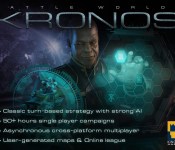
The Turn-Based Strategy Gameplay of ‘Battle Worlds: Kronos’ Makes its way to the Play Store
Looks like there are a number of new strategy games launching today. Ubisoft just released a new strategy RPG title, Battle of Heroes: Land of Immortals, earlier this morning. Now we see Battle worlds: Kronos. This one is your more typical turn based strategy title that was built and designed for experienced players only. The developer, KING Art Games, even makes mention of this in the description. It made its debut on PC after a successful Kickstarter campaign last year that raised just over $260,00 of their $120,000 goal.

Battle World: Kronos was orgininally design for PC gamers around the globe and has now been ported to mobile device with the target device being tablets with at least 1GB of memory. You are given two single player campaigns with two different factions to choose from. The game boasts over 50 hours of gameplay, over 40 units that range from land to air to sea. All of which have their own upgrades. Toss in Asynchronous cross-platform multipler action, user generated maps and an online league and you are looking a pretty spectacular experience.
The title is available today on the Play Store with a 33% launch discount making the price tag right now $9.99. There aren’t any ads or in-app purchases, you buy the game and you play to your hearts content. The one initial review that is already up compares it to XCOMM:EU and Boulder’s Gate. Both of which are stellar games as well. Hit the link below to go pick it up. Make sure you have some time and a solid internet connection as the download is listed at 397MBs.

 Play Store – Battle Worlds: Kronos
//<![CDATA[
ord = window.ord || Math.floor(Math.random()*1E16);
document.write('‘);
//]]>
The post The Turn-Based Strategy Gameplay of ‘Battle Worlds: Kronos’ Makes its way to the Play Store appeared first on AndroidSPIN.
 AIVAnet