


Humble Mobile Bundle 10 up and running with OTTTD, LYNE and 4 others for now
Looking for another great deal on multiple games for a low cost donation? The Humble Mobile Bundle is always a good way to fill up your gaming folder. In true fashion the HMB starts off with a few titles under a certain price and a few more if you beat the average. Any donation will […]
The post Humble Mobile Bundle 10 up and running with OTTTD, LYNE and 4 others for now appeared first on AndroidSPIN.
Magzter introduces all-you-can-read magazine subscription for $9.99 per month
The digital world is a big one that requires movie studios, music labels and print publications to eventually embrace or face their end. Bringing content directly consumer devices is the trick. While I personally still like physical magazines for many situations, it certainly isn’t something you find sitting around on coffee tables like they did […]
The post Magzter introduces all-you-can-read magazine subscription for $9.99 per month appeared first on AndroidSPIN.

Super Mario World AI learns how to play by listening to your advice

As fun as Super Mario World is to play, wouldn’t be nice if you could coach from the sidelines every now and then? The University of Tubingen has developed an artificial intelligence that lets you do just that. Its Mario AI project makes Nintendo’s plumber both aware of his environment and responsive to your advice on how he should behave. You can teach him that stomping on Goombas will definitely take them down, for instance. Mario even has his own systems of feelings and needs. He’ll explore the world if he’s sufficiently curious, and he’ll chase after coins if he’s “hungry.”
The concept of a computer-driven Mario isn’t completely new, and it’s doubtful that this AI will get so smart that it’s performing speed runs. However, the research shows how cognitive computing can help in games and other situations where you’d want software to adapt to unexpected conditions. If techniques like this catch on, you could see in-game enemies that learn to counter your moves, or autonomous cars and robots that can adapt to new hazards based on your suggestions.
Via: Hacker News, VentureBeat, SlashGear
Source: University of Tubingen

Best of CES 2015 Awards, Software: Sling TV
#fivemin-widget-blogsmith-image-278135display:none; .cke_show_borders #fivemin-widget-blogsmith-image-278135, #postcontentcontainer #fivemin-widget-blogsmith-image-278135width:570px;display:block;
 trydocument.getElementById(“fivemin-widget-blogsmith-image-278135″).style.display=”none”;catch(e)
Sling TV won many accolades at CES this year, and deservedly so. Not only did it walk home with awards for the Best of the Best and Best Home Theater categories, it won one for Best Software too. Not only is the service a game-changer for cord-cutters, the software itself is great – it’s intuitive, smooth and easy to use. Plus, it’ll be compatible with iOS, Android and most set-top boxes, making it easier for cable-scoffers everywhere to get their ESPN fix.
Filed under: Home Entertainment, Software
Android 5.0 Lollipop for the LG G2 is now live in South Korea
A few weeks ago, we got a sneak peek at Android 5.0 Lollipop for the LG G2 and now it appears the software update is now officially rolling out in South Korea. Prior to this, the update was in testing, which is presumably where the leaked footage came from, but the V30D update has been confirmed […]
The post Android 5.0 Lollipop for the LG G2 is now live in South Korea appeared first on AndroidSPIN.
Facebook, people, and arguing: my social network experiment

I refuse to “unfriend” people on Facebook.
Well, okay, that’s kind of false. I will unfriend you if we’re not actual, real life friends, and I eventually forget how we knew each other. But that’s not the point. The point is that my Facebook friends list is made up of people I know, or knew, in real life. They may not be people I speak to every day, or people I see in person with frequency, but they are or were a tangible part of my life: part of what makes me me. To put that more eloquently:
“I see it as my network: a digital representation of my network. An archive of the people I’ve encountered and come across. If I want to understand my story, my history, all of the ways that I’ve come about, this is one of those vehicles. It’s almost like this weird digital therapy space where you can get to the heart of where you are via the people you’ve interacted with.”
That’s WNYC contributor Ibrahim Abdul-Matin in a December episode of the radio show/podcast “New Tech City“. I fully agree with that sentiment: for me, Facebook is the one bastion of personal space left online. I’m only friends with people I actually know (unlike Twitter — shoutout to my man Mike Isaac for the hilarious tweets despite us never having met).
I’ve carefully curated my Facebook friends list (431 strong) from real life: It’s a virtual directory of my actual life since sophomore year of college (2006!). That is intentional. I’ve lived in a variety of places, worked a variety of different jobs, and gone to several different schools, so it’s a pretty broad mix of people. I lived in Barcelona for a year in college, so there are a handful of folks who live in and around Barcelona. I lived in Philadelphia and attended Temple University, so there are a few dozen folks from Philly and many of them attended school with me. I grew up in Connecticut and worked in a Tower Records for several years, etc. You get the idea.

Most of the time, at worst, Facebook is boring — a time-wasting dalliance of “I’m eating this fancy thing!” or “look at my baby!” or “Which Sex & the City character are you?” (I’m such a Samantha). The occasional friend I haven’t seen in 10 years might post a link to the National Report with accidental outrage, or maybe someone gets heated about guns; nothing that elicits anything beyond an eye roll.
Sometimes I add a comment, maybe even argue a bit. But always — always — it’s a discussion. These are real life friends after all.
2014 changed Facebook dramatically for me.

In early August, when an 18-year-old black man named Michael Brown was shot dead by a 28-year-old white policeman named Darren Wilson in Ferguson, Missouri, months of protest ensued. While the majority of the protests were non-violent, some involved looting.
This drove a wedge into my normal feed, as was assuredly the case with many other Facebook users. Instead of occasionally posting something I disagreed with, friends were suddenly posting things I found outright concerning. People I know to be not jerks — people who have shaped my life and the person I am — were saying all variety of ignorant nonsense. Not just any kind of ignorant nonsense, but the kind of base level, overtly racist junk that makes you ask what century you live in. Were these the same people I knew in real life?
I had a decision to make: whether to cut folks from my Facebook feed solely because I disagreed with them, or to engage folks I consider friends on contentious topics.
Given my stance on Facebook — of curating a list of people I know in real life — I felt obligated to respond. These are people I respect, who respect me. Perhaps more importantly, I don’t want to surround myself with an echo chamber. Studies have repeatedly shown that people who surround themselves with other people who share similar political views will become galvanized in those views (read: less likely to consider other points of view).
As the abstract of a 2006 study on political polarization puts it (the emphasis is mine):
“This essay reports the results of a kind of Deliberation Day, involving sixty-three citizens in Colorado. Groups from Boulder, a predominantly liberal city, met and discussed global warming, affirmative action, and civil unions for same-sex couples; groups from Colorado Springs, a predominately conservative city, met to discuss the same issues. The major effect of deliberation was to make group members more extreme than they were when they started to talk. Liberals became more liberal on all three issues; conservatives became more conservative. As a result, the division between the citizens of Boulder and the citizens of Colorado Springs were significantly increased as a result of intragroup deliberation. Deliberation also increased consensus, and dampened diversity, within the groups.”
I’m happy to report that the results have been largely positive. The vast majority of Facebook discussions I have which involve “contentious topics” (read: equality, racism, gun rights, abortion, etc.) turn out well — or at least amicably — with both people having learned something.
But few people take this approach. Facebook provides two different options for making your news feed experience more comfortable. These tools aren’t a bad idea, but they’re easily used (by accident, I’d guess) to virtually isolate yourself from different perspectives.

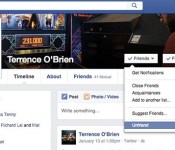
The first option is “I don’t want to see this,” which limits the number of posts you see from the user in question; the second is “Unfollow,” which is reserved for people you’re friends with (rather than, say, publications you follow). You remain Facebook friends, which removes any potential impact from a real life friend thinking you’ve unfriended them, but you stop seeing their posts in your news feed. It’s one step below the nuclear option (unfriending). Both options are just two clicks away.
I asked my Twitter followers (which pushes to my Facebook feed) how they handle “inflammatory stuff from real life friends” on social media. Of the twenty or so responses I received between Twitter and Facebook, less than a quarter said they engage friends when they find statements offensive or wrong in some way. Most answered like this (warning that the example status below the response text is racist / awful):

This was December 3rd, 2014, just over one week after the announcement that a Missouri grand jury chose not to indict Darren Wilson in the death of Michael Brown; The New York Times reported that “hundreds” were protesting outside the Ferguson Police Department that night. December 3rd was also the day that a grand jury in Staten Island, New York chose not to indict NYPD officer Daniel Pantaleo, a 29-year-old white man, in the death of Eric Garner, an unarmed 43-year-old black man.
In other words, it was peak timing for engaging with friends and discussing societal issues we often eschew in conversation — especially social media conversation — in favor of discussions about Kim Kardashian’s provocative magazine cover, or John Travolta’s hilarious mispronunciation of Idina Menzel’s name. Sadly, though understandable, many folks instead used Facebook’s built in tools to make their online lives a bit more digestible.
So, where am I going with all of this? Nowhere in particular — there’s no grand point — I’m just fascinated to hear how you handle these issues. Maybe I’m unique in how I use Facebook, but I doubt it! I’ve set up a poll to get a better idea of how you folks deal with similar issues, and I’d love to talk about it in the comments (or on Twitter, of course). Consider this one of those rare times that I’ll end a piece with, “Head into the comments below and tell us what you think!” At least it’s for a good reason!
How do you respond to inflammatory/offensive content from friends on social media?
Unfriend/unfollow/block/muteEngage in conversationTry to ignore itMessage that friend privatelyTalk about it in personOtherVote
Samsung Galaxy S5 Lollipop vs KitKat comparison: what was once old is now new
The Android 5.0 Lollipop update for the Samsung Galaxy S5 has been slowly rolling out around the world for a few weeks now, and it’s high time that we start seeing some comparisons between the outgoing Android KitKat software and the silky smooth Lollipop. Thanks to Phone Arena, we now have a Samsung Galaxy S5 Lollipop vs […]
The post Samsung Galaxy S5 Lollipop vs KitKat comparison: what was once old is now new appeared first on AndroidSPIN.
Android 5.0.2 factory images available for 2013 Nexus 7 Wi-Fi and Nexus 10
After the original Nexus 7 received in update to Android 5.0.2, we were left wondering whether any other devices would be updated to the elusive software version, or indeed, what it actually fixed. Google has today released more Android 5.0.2 factory images for the 2013 Nexus 7 Wi-Fi and Nexus 10 which leaves the Nexus 9 […]
The post Android 5.0.2 factory images available for 2013 Nexus 7 Wi-Fi and Nexus 10 appeared first on AndroidSPIN.
Deal Alert: 30 days free access to the OnLive Playback game streaming catelog
There are discounts, deals and then freebies. I personally like freebies the best, even if the freebie isn’t all that spectacular. In this case, however, it is a pretty killer deal on a service that some of you may greatly enjoy the chance to check out, OnLive. OnLive is a company that has been around […]
The post Deal Alert: 30 days free access to the OnLive Playback game streaming catelog appeared first on AndroidSPIN.
Adobe Lightroom Mobile makes its way to Android phones, but apparently not tablets
Adobe Lightroom 5 is an exceptionally powerful photo editing tool on desktops. I know a number of friends and associates who will live and die by it. Now the power of the Lightroom has made its way to Android for a more mobile user experience. The new addition to the mobile suite of Adobe apps […]
The post Adobe Lightroom Mobile makes its way to Android phones, but apparently not tablets appeared first on AndroidSPIN.
 AIVAnet