


What you need to know about social media activism

Protests in the Middle East, known as “The Arab Spring,” echoed around the world. On Friday, December 17, 2010, a fruit vendor named Mohamed Bouazizi covered himself in flammable liquid and lit a match. His body was quickly engulfed in flames and, despite attempts to save his life, Bouazizi died on January 4th, 2011. He was 26 years old. Like how Buddhist monk Thích Quảng Đức’s self-immolation in Saigon nearly 50 years earlier represented the frustration of many Vietnamese, Bouazizi’s action became symbolic of a much larger frustration in Tunisian society.
What happened next, however was a product of modern times: Word spread of Bouazizi’s action through social networks, with Facebook specifically becoming a flashpoint for protest organizations across the country. By the time Tunisia’s former leader, Zine El Abidine Ben Ali, resigned and fled the country in mid-January 2011, over a fifth of Tunisia’s population was on Facebook.
WHAT IS IT?

The term “social media activism” is ambiguous. That’s intentional, as its application varies depending on what it’s connected with. Both Occupy Wall Street and “#CancelColbert” fall under the umbrella of “social media activism,” so the term needs to be ambiguous by its nature. With those two examples, you already kinda know what it is, right? Social media activism can be as simple as a trending topic (“#CancelColbert”) for interested parties to engage in a bigger conversation, and as complex as Occupy Wall Street’s multiplatform, multimedia initiative. As the name implies, there’s no standard social network used for social media activism; YouTube, Twitter, Facebook, Sina Weibo and myriad others are employed as need be.
In the case of Tunisia, Facebook was the social service of choice, with hackers, protesters and everyday Tunisians using the service collaboratively. It served as a message board for sharing images, video and stories, in addition to creating a public forum for communication.
In response to the Santa Barbara shootings by Elliot Rodger, activists and general newsreaders alike used the “YesAllWomen” hashtag on Twitter. The hashtag is still in use over a month later, where it’s become an ongoing conversation about women’s rights versus how women are treated in reality.
WHY SHOULD I CARE?

Beyond the whole “you’re a participating member of human society” thing, social media activism is a fascinating modern version of protest and communication. Because of the internet, social media platforms and the ubiquity of mobile phones with cameras, activism and protest are now truly global events. Not interested in participating? That’s fair!
The other side of the coin is that, sometimes, these movements affect your life whether you like it or not. If you were in Egypt in early 2011, whether you were part of the conversation or not didn’t matter: The president was overthrown.
WHAT’S THE ARGUMENT?
While not an “argument” per se, some say that media coverage focuses on the medium — social media — over the message, and it ends up diluting the protest. Author Malcolm Gladwell argues as much in The New Yorker: “People protested and brought down governments before Facebook was invented. They did it before the internet came along. Barely anyone in East Germany in the 1980s had a phone – and they ended up with hundreds of thousands of people in central Leipzig and brought down a regime.” Gladwell’s also questioned the efficacy of social media in organizing physical protest; it’s easy for people to participate online, but far more difficult to turn those words into action (so the argument goes).
Back in May, a tweet from The Colbert Report‘s official Twitter account made a grave error: publishing a punch line from Colbert’s show that night without including the joke’s setup. In lampooning Washington Redskins owner Dan Snyder, Colbert made the following punch line in reference to a (fake) video that proposed Colbert was caught making racist remarks about Asians. The tweet, since deleted, said this:

In response, writer/activist Suey Park created the “#CancelColbert” hashtag. It became a rallying cry for some Asian Americans to speak about their experiences with racism in America. Except that some Asian Americans — notably Deadspin‘s Tommy Craggs and Kyle Wagner — found Park’s use of “hashtag activism” only served to misdirect the original conversation away from Snyder. It’s not the first, but it’s certainly the most prominent example of social media activism that many believe to be a misuse.
WANT EVEN MORE?

We sure hope you do, because there’s quite a bit on the subject that’s worth reading. The MIT Technology Review has a great piece from John Pollock digging in on the hackers behind Tunisia’s uprising. Al Jazeera America wrote about “#CancelColbert” and whether social media activism is effective; The New Yorker spoke with Park and discussed her background. The New York Times has a thorough background on Bouazizi and similar actions.
And finally, Jehane Noujaim‘s excellent 2013 documentary The Square both demonstrates the use of social media activism in a real-life revolution setting, and grippingly details the movement in Tahrir Square. It’s on Netflix, even! Don’t miss it!
[Image credit: AP Photo/John Minchillo (Zuccotti Park), The White House (Michelle Obama), Ferdinand Delacroix, Comedy Central, Twitter (@ColbertReport), AP Photo/Maya Alleruzzo (Facebook/Twitter)]
Filed under: Cellphones, Handhelds, Internet, Software, Facebook

Engadget Daily: ditching social media, sharpshooting with HUD goggles and more!

Today, we review Garmin’s new Forerunner 15 sports watch, learn how to escape social media, watch a sniper hit his target while looking in another direction and hear what our readers have to say about the new HTC One. Read on for Engadget’s news highlights from the last 24 hours.

How to Disappear (almost) Completely: a practical guide
Ever thought of dumping social media for a more private life? In this week’s installment of How to Disappear, Dan Cooper discusses some practical first steps toward going completely off the grid. Disclaimer: it’s incredibly difficult. You can find part one here.

Watch a sniper nail his target from 500 yards without even ‘looking’ at it
What’s scarier than a regular ole’ sniper? One who doesn’t have to see the target. Armed with a futuristic targeting system and Smith Optics I/O Recon Goggles, this sharpshooter nails a target 500 yards away… while looking in another direction.

Google will have sole control over the interfaces of Android Auto, Wear and TV
Google’s engineering director David Burke told Ars Technica that the company will retain official control of its new platforms: Android Auto, Wear and TV. Besides providing a consistent experience, this move allows for a much more streamlined update process.

Garmin Forerunner 15 review: sports watch first, fitness tracker second
If you’re already an athlete or active jogger, Garmin’s new Forerunner 15 might be the fitness accessory you’ve been looking for. At $170 ($200 with the heart rate monitor), this somewhat bulky device combines the functionality of a sports watch with fitness tracking basics.
You also might like:
Filed under: Misc

Supreme Court will decide when threats made on social media become criminal

We’re still waiting to see what the Supreme Court has to say about Aereo and warrantless cellphone searches, but in the meantime there are more cases to be heard! Including Anthony Elonis v. United States, which the highest court in the nation just agreed to hear. The decision will end up setting a precedent for when violent comments made online cross from protected speech to criminal threats. In 2011 Elonis was sentenced to nearly four in jail for posting status updates and self-penned lyrics on his Facebook page wishing death on his wife, the police and others.
The story really begins back in 2010, when Elonis’ wife left him, taking their two children with her. Around the same time he lost his job at an amusement park in Allentown, PA. His Facebook wall quickly filled with angry updates, some of which painted vivid pictures of the violence he hoped would befall his estranged wife and coworkers. Many of the rather dark posts took the form of raps that Elonis wrote, which he claims were therapeutic and not meant as legitimate threats. His wife however, was uncomfortable about his public professions that his son should “dress up as matricide for Halloween” She obtained a protection from abuse order against him, but this only seemed to fuel his rage.
It wasn’t long after that the FBI caught wind of Elonis’ posts. He was visited by an agent, but not arrested initially. When following that meeting he posted lyrics detailing a fantasy in which he slit his wife’s throat, the agency decided it had seen enough and took Elonis in to custody.
Now the supreme court will have to decide whether or not the Facebook postings crossed a line. The normal standard set for such cases is whether or not a “reasonable person” would feel threatened by the actions. But Elonis’ attorneys argue that isn’t appropriate given the venue for the missives. The defendant’s wife isn’t his friend on Facebook and he did not send menacing messages to her directly, instead he posted them publicly on own wall. Essentially he never meant for her to see what he wrote, and those who saw his words might misinterpret them because they didn’t know him personally. The government’s counter argument is that the law is designed to prevent not just physical violence, but the anguish that perceived threats can cause. Elonis’ conviction has been upheld twice, and regardless of how the court finds, the decision will have widespread implications for free speech, cyber bullying and the internet in general.
Filed under: Internet
Via: The Verge

Iraq blocks Twitter, Google, YouTube and Facebook in effort to stifle insurgency

The Iraqi government has essentially shut off all social networking in the country in an effort to stem the rising tide of insurgent group Isis (Islamic State of Iraq and the Levant). The country has found itself thrown into chaos recently as the Islamist militants have overrun the cities of Mosul, Falluja and Ramadi in a march towards Baghdad. Isis, like many of the rebellions in the region recently, has made heavy use of social media for both propaganda and organization. In particular the group has spread its hard line religious and anti-western message via YouTube. Presumably prime minister Nouri al-Maliki has had the services blocked in an effort to disrupt Isis’s movement and planning, and perhaps give the government’s troops an opportunity to strike back.
Of course, it’s no surprise that the militants have turned to social media (just as it’s no surprise to see the government block it when under threat). Plenty of organizations have turned to YouTube as a means to spread their message, even if it is one hate. And uprisings that perhaps we’re more sympathetic too have relied on Twitter for organizing protests and drawing attention to government abuses. And often the response of those in power has been to block those lines of communication at any cost — even if that means taking an entire country offline. Hopefully any censorship in Iraq will prove to be short lived and citizens there can carry on Instagramming their lunch without fear of becoming yet another victim in this tireless conflict.
Update: Both Twitter and Youtube have said they are looking into the situation, confirming to VentureBeat that “some users are not able to access” the services in Iraq, according to YouTube. Facebook chimed in too, though its statement address the political situation more directly:
We are disturbed by reports of access issues in Iraq and are investigating. Limiting access to Internet services – essential for communication and commerce for millions of people – is a matter of concern for the global community.
Filed under: Internet, Google, Facebook
Source: International Business Times, VentureBeat

Social Sweepster mines your accounts for beer pong and bad words

I must have some uncanny ability to hide bottles whenever someone busts out a camera, because I know I’m tagged in more than a few drunken photos on Facebook. According to Social Sweepster, though, the most scandalous images of me online include an Engadget group photo — the caption “final group shot” raised a red flag — and a pic of my mom and I drinking out of skull-shaped glasses. Seriously.

Social Sweepster, currently in beta, is a web app that uses language-processing and its own algorithm to comb your social media profiles for photos and text with “incriminating potential.” It looks for beer bottles, bongs and other party paraphernalia, along with words that could be construed as “potty language.” You simply sign in, allow the site access to your Facebook and Twitter accounts and specify how far back in time you’d like to search. Tom McGrath, the founder and CEO, told me that the service will scan Instagram and other platforms down the line, but currently only the two social networks are supported.
When you receive an email with the results, you’ll see images and text divided by high, medium and low confidence, indicating how sure the site is that the content is objectionable. (Objectionable, of course, being a very subjective matter.) You can filter results to see only photos or text, and you can exclude results you’ve already seen. You’ll have the option to delete tweets directly, while you’ll have to hop over to Facebook if you want to scrub any photos or posts. Another useful tool: You can use Google’s reverse image search to see if any of your photos have landed elsewhere on the internet.
For high schoolers applying to college or anyone looking to maintain an online reputation, Social Sweepster is an easy way to find and erase bongs and beer bottles from their searchable past. And as recruiters increasingly turn to social media for screening potential employees, having a squeaky-clean profile’s become more important than ever. But for someone like me, whose worst offenses include tweeting about champagne brunch and a band called The Knife, it’s just plain hilarious. I’m 99.9 percent sure none of this activity would count as a dealbreaker in a potential employer’s eyes, but it’s always better to be on the safe side.

When I scanned my Facebook and Twitter accounts, Social Sweepster turned up 180 high-confidence results, mostly Facebook posts and tweets containing allegedly controversial words like punch, smoke, stolen and alcohol. (Most of those were actually in work-related tweets.) The German article “die” showed up among my results; as it turns out English is the only language that’s fully supported for now. Several Facebook photos with alcohol in the shot were all the way down in the “low confidence” results, too.
This is a product in beta, after all, and testers can help Social Sweepster improve its algorithm by indicating inappropriate items that escaped detection. As the company’s algorithm improves over time, results like the inoffensive Engadget photo will hopefully be eliminated. If you’re interested in taking the service for a test drive, you can apply to become a beta user. Social Sweepster’s sending invites to the first 10,000 applicants, so hustle to it. It’s unclear when the service will be available to the general public, but the fee will likely depend on how many photos you want scanned and how quickly you need the results. The service’s also offering demos to enterprise clients, so it’s possible that companies and universities could use this same technology for vetting purposes.
Finally, if you do nab an early invite, I suggest taking advantage of the slideshow tool for revisiting all those ill-advised college shenanigans. Just add a YouTube link for Green Day’s “Time of Your Life” and you’re set.
Filed under: Internet, Facebook
Source: Social Sweepster

Secret: get things off your chest with anonymous social sharing [App of the Day]

You’ve got a lot of stuff running around in your head that you need to get out, right? The problem is, sometimes the stuff we want to say isn’t exactly fit for our friends and loved ones to hear. But, as many of us know, the truth can set us free. That’s the premise behind Secret, an app that lets you share your thoughts socially yet in an anonymous capacity.
Download the app, speak your mind, and share your thoughts. Nobody knows who is saying this stuff; it’s about the message and not the messenger.
To help better tell your little bite-size story, add a photo or color background, blur, or texture to help it stand out. Your friends won’t know who it is that they’re reading but your stuff could spread like wildfire. You might be surprised at how cathartic it is to get things off your chest.

The post Secret: get things off your chest with anonymous social sharing [App of the Day] appeared first on AndroidGuys.

Facebook reminds you to celebrate your first friend this Mother’s Day

Every now and again, Facebook likes to wheel out a clip to celebrate a special event, and today is no exception. If you are a mom, then congratulations, and if you have one, then why not take the Zuck’s advice and wish them a good one. Just remember, if you forgot to get a present, then breakfast in bed will do as a short-term solution until you can get to the store.
Twitter’s new profile pages are now available for everyone

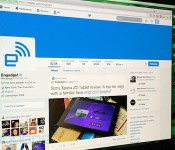
After a few weeks of test drives, Twitter officially rolled out its new profile pages to the masses today. Besides the sexy new look, the update includes a few tweaks like a running tally of how many times you’ve favorited tweets and a new page where you can see every photo and video you’ve ever uploaded. The month and year you joined Twitter is also now displayed right under your username — a big plus for early adopters who want bragging rights, and a way for everyone to see how long an account has been around (and possibly determine how legit it is).
New web profiles are now available for everyone. Update yours today with a pinned Tweet or a new header image. https://t.co/Y3VOV0XvRo
– Twitter (@twitter) April 22, 2014
Your “best tweets” are featured automatically in a larger font that makes them stand out. Posts can also now be pinned to the top of the page when you want to draw attention to something, or just really want to show off that epic chicken burrito you had for lunch. If you don’t have the shiny new version yet, you can snag it now by going to this page from your desktop and selecting “get it now” from the bottom.
Via: TechCrunch
Source: Twitter

Why the IRS wants to be your Facebook friend

If the fear of an audit wasn’t enough to scare you into being honest on your taxes, try this on for size: the IRS might be checking out your Facebook page. The good ol’ Internal Revenue Service is reportedly using robots to scope out public social media accounts to catch potential tax dodgers. That means that the government can question if the “business trip” you took to Hawaii was legit based on snorkeling photos from your Instagram account or where you got all those benjamins in that YouTube video.
Tax evasion is a big deal in the US, and accounts for an estimated $300 billion in lost government funds each year. Like it or not, the IRS is technically free to use any public posts on social media during the auditing process or even to profile potential liars. That means you don’t want to brag on Twitter about how much money your business is making if you’re actually about to go under. Likewise, if you are fudging your taxes (which we don’t recommend), you should consider revisiting your account privacy settings, and make sure you’re keeping any incriminating evidence to yourself.
Image credit: Stockmonkeys
Filed under: Internet, Facebook
Source: Marketplace

Daily Roundup: Sony Project Morpheus hands-on, new Oculus Rift dev kit and more!

You might say the day is never really done in consumer technology news. Your workday, however, hopefully draws to a close at some point. This is the Daily Roundup on Engadget, a quick peek back at the top headlines for the past 24 hours — all handpicked by the editors here at the site. Click on through the break, and enjoy.

Using the PlayStation 4′s virtual reality headset, Project Morpheus
Last night at GDC, Sony unveiled Project Morpheus. We got to try out the company’s VR headset, destined for the PlayStation 4 — and yes, it’s pretty awesome. Engadget’s own Ben Gilbert donned a virtual sword and took the prototype for a spin while we caught the action on camera.

The new Oculus Rift costs $350 and this is what it’s like
Oculus VR’s Rift headset is at the forefront of virtual reality, and is undoubtedly gaming’s “next big thing.” Starting today, the company’s second development kit is now available for pre-order. At $350, it brings several improvements over the previous “Crystal Cove” prototype, including a camera and 1,080 x 960 display.

EPIC GAMES’ UNREAL ENGINE 4 NOW AVAILABLE WITH $19 SUBSCRIPTION, HEADED TO OS X AND MORE
Fans of Gears of War and Mass Effect know firsthand of Unreal Engine 3′s gaming prowess. And today, Epic Games hopes to take its platform to the next level by releasing Unreal Engine 4 on a subscription-based model. For $19 a month, developers get access to the Unreal Editor and the complete source code hosted by GitHub.

10 YEARS OF SOCIAL MEDIA’S BIGGEST PLAYERS AND PAYOUTS, BY THE NUMBERS
One decade is a long while, especially in the ever-changing tech industry. Since 2010, companies, startups and public figures have invested a tremendous sum in their bid for social media dominance. Read on for our illustration of the biggest developments and players from the last ten years of Facebook, Twitter and the like.
 AIVAnet