


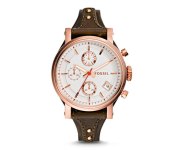
Fossil teams up with Intel to produce its line of wearables

We heard plenty about Intel’s wearable aspirations for 2014 back at CES, and since then it has announced collaborations with the likes of SMS Audio and more. Fossil was named as having a plan for Android Wear, and as of today the two are officially in cahoots. Unfortunately, details are scarce at this time, as we’re left with the announcement that the pair aims to team up on “emerging products and technologies that will be developed for the fashion-oriented consumer.” Judging by the wording of the PR, it seems that Fossil has more than watches on its agenda, and the outfit designs jewelry, handbags, wallets and more in addition to the traditional timepieces like the one pictured above. Of course, MetaWatch is an offshoot of the lifestyle company, and this is the latest in a group of accessory brands diving into the wearable craze.
Source: Intel
.CPlase_panel display:none;
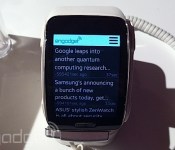
The Samsung Gear S’ real killer app is Engadget

See Samsung’s new conspicuously-screened wearable? Gear S made its debut this week and will be coming to a wrist near you (maybe) in October. That’s a long time to wait, but you’ll be able to speed read Engadget should you choose to get one of your own. Our app’s powered by Spritz technology that rolls through article words one at a time, efficiently combining our collective knowledge with your own. A preview awaits after the break.
Filed under: Wearables, Mobile
.CPlase_panel display:none;

The ugly truth about wearable technology

When it comes to putting computers on our bodies, everyone’s an armchair Anna Wintour. Take a look at the comments on any story about wearable technology, just about anywhere. Ugly is in the eye of the beholder. And with good reason. While some of us view our PCs, smartphones and tablets as status symbols, our clothing and accessories are more closely tied to our identities than anything else.
Over the past few years, the frenzy for wearables has reached its peak. This week alone, Sony, Samsung, LG and Motorola have all shown off their next attempts at wrist-worn technology. And with each announcement comes a new set of sartorial critiques.
And yet, despite a seeming consensus from the tech press about the aesthetic appeal of devices like the Moto 360 and Pebble’s Steel, the world is still waiting for the one wearable that will have us all strapping a computer to our wrists, faces, waists or whatever. But the real obstacle to wearable adoption isn’t a matter of style; it’s a matter of taste.
The real obstacle to wearable adoption isn’t a matter of style; it’s a matter of taste.
New York Times tech-scribe-cum-style savant, Nick Bilton recently penned a speculative editorial proclaiming the as-of-yet-unannounced iWatch as the device that could finally take wearables mainstream. Apple will no doubt roll out a beautiful piece of machinery — it has an excellent track record and a proven team of designers, engineers and businesspeople on board — but the truth is, no matter how good the software, no matter how innovative the functionality, no matter how versatile and beautiful the design, there will never be one wearable for everyone.
Almost every player in the wearable game thus far has proven an ability to produce successful consumer technologies. Some of us can even agree that they’re starting to get the style right, but the truth is we all fancy ourselves individuals when we get dressed in the morning. No single company, whether it’s Apple or Motorola or even Swatch is ever going to make a single device that we all want to wear.
Apple’s wearable device, whether it’s a watch or a fedora or even a condom, will no doubt be a meticulously designed piece of hardware, but it’s going to take a much more robust and diverse market, full of choice for wearables to really take off. It’s going to take more than NFC, fitness tracking and Jony Ive’s magic touch. It’s going to take more than killer features and refined hardware.
It’s going to take time.
[Images: Evgeny Dubinchuk and Fuse, Getty]
Filed under: Wearables, Apple, Samsung, Sony
.CPlase_panel display:none;
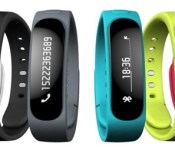
Huawei’s making an Android Wear smartwatch, too

Having built up a consumer-facing business over recent years with smartphones and tablets, Huawei made its first move into wearables this year with a fitness tracker-cum-smartwatch (pictured above). The company is far from finished in this burgeoning product category, though, as Huawei’s CEO Richard Yu has told us the company’s prepping another wearable that’ll launch next year — this time running Android Wear. He wouldn’t reveal too much more during an interview at IFA, but said it’ll be both “innovative and beautiful.”
Yu’s tight-lipped about what form factor the watch will take, but did say it’ll be “more beautiful” than Samsung’s latest effort, the Gear S. Huawei’ll have plenty of competition, of course — although perhaps none from HTC, which’s allegedly ditched its wearable plans for now. The likes of LG, Motorola, ASUS and Sony already have smartwatches running Google’s wearable platform, and there’ll likely be several more players and products by the time Huawei comes to market. Given the firm’s current smartband doubles as a Bluetooth headset, however, we wouldn’t be surprised if its smartwatch also had some kooky features to make it stand out from the crowd.
Filed under: Wearables
.CPlase_panel display:none;
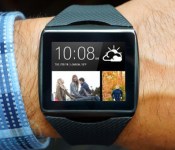
HTC reportedly pulls the plug on its smartwatch

These days it seems like nearly every smartphone maker also has a smartwatch under its belt? Motorola? Sure. LG? It’s got two. Samsung? We don’t even need to go there. HTC has generally seemed content to avoid the fray, but according to a report from Pocket-Lint it wasn’t because they wanted to. The company planned to launch a smartwatch of its own before shelving the idea thanks to ballooning costs and a dearth of pizzazz — we reached out to the company, which declined to comment. Earlier reports suggested that HTC was shopping around a wearable prototype that used one of Qualcomm’s Mirasol displays — they’re low-powered color screens that offer pretty impressive legibility in broad daylight, but they never quite caught on with gadget makers. As always, you’ll want to take those findings with a grain of salt, but if true HTC almost assuredly made the right decision. There’s a surge of Android Wear smartwatches come out of IFA, Apple’s got a wearable of its own barreling down the pipeline and there’s no clear indicator that the masses actually want these things on their wrists. For HTC (and other companies weighing their options), the winning move may be to not play the game.
Filed under: Mobile
.CPlase_panel display:none;
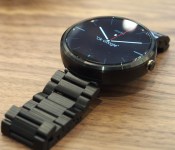
Moto 360 smartwatch on sale today for $250, metal versions coming this fall

Motorola’s long-awaited smartwatch is finally ready to be released, at least in the US. After roughly five months since being unveiled, the Moto 360 is due to hit the consumer market at last, one that’s been so patiently awaiting its arrival. Starting today at Noon ET, those of you in the States can order your very own for $250, from Motorola’s website, Google Play and Best Buy (both online and at retail stores). That’s not it, though, since Motorola also revealed that its circular Android Wear watch in metallic flavors will be coming later this fall — although those sleeker silver and black options are set to be priced for $50 more than its leather counterparts. That said, Motorola does want early adopters to feel blanketed, so it’s making the metal, swappable bands available separately for $80 a piece. Across other parts of the world, meanwhile, The Moto 360 smartwatch is going to hit the UK in “early October” for £199, and Canada in the fall for $279. Your move, LG.
Filed under: Misc, Peripherals, Wearables
.CPlase_panel display:none;
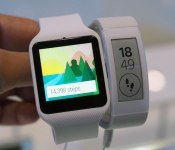
Sony tries to stay relevant in the wearables game with its new watch and fitness band

At today’s conference in Berlin, Sony quickly announced two smart devices that happen to fit on your wrist. Both wearables are followups to previous versions: The 229-euro Smartwatch 3, which is a plainly named Android Wear sequel, and the 159-euro SmartBand Talk, which takes last year’s fitness band and adds an e-paper display, mics and speakers. Each device got some face time during Sony’s presser, but were overshadowed by the rest of the company’s mobile lineup, so I spent a little extra time with them both after the show.
Let’s start with the Smartwatch 3, which uses a 1.6-inch square display. Compared to the ZenWatch, Moto 360 or the LG G Watch R, Sony’s new offering isn’t meant to be classy; it comes with a very sporty wristband that hugs the entire perimeter of the device, and unfortunately it just makes the watch look even larger than it already is. Keep this in mind if you’re small-wristed (like I am), because you might constantly worry that it’s going to eat your entire hand for dinner. You can replace the wriststraps, but they aren’t the normal 22mm kind you use on your analog watch; you’ll have to get them through more official channels, and there will be more strap color options beyond black and white sometime after its launch.
There’s no special charging cradle or secret sauce here, so you just need to use your run-of-the-mill micro-USB plug to get it juiced up. And according to Sony, once it’s fully charged, you can expect anywhere from two days of battery life to four days of standby. The sad news: That claim is actually an improvement over most other Android Wear watches, which are lucky to last that long on their best days. With a 420mAh battery, however, it’s really not that much better than the G Watch or Galaxy Live, so I’m curious to see if Sony has some tricks up its sleeves. Additionally, it also has NFC, a waterproof rating of IP68 (just like the Z3 series phones), an ambient light sensor and a physical power key.
And I believe there are a few things that Sony isn’t telling us. The devices on display at IFA are in the infamous retail mode, which means you can’t actually use it in real-life — it just shows the same screenshots over and over. A Vice President for Sony America told me that it may have some bells and whistles that other watches don’t have, but he couldn’t go into any more detail; given earlier rumors that the Smartwatch 3 may have a custom UI of some sort, I certainly won’t be surprised if we see a few more reveals between now and time of launch. Another clue: In its press release, Sony noted that this watch was the first one “specifically designed for the latest Android Wear updates” and would offer software innovation. Nothing like a good mystery!

What we do know is that the Smartwatch 3, in addition to the SmartBand Talk, is compatible with Sony’s Lifelog Android app, which is available in the Play Store. The idea is that it logs various parts of your life, and I’m not just talking about fitness; it’ll also track the music you listen to, the movies you watch, how much deep and shallow sleep you get each night and so on. All of the details will sync with your phone (if you’re away from your device, it’ll initiate the transfer once you’re in range) and displays it in a handy chart and even shows an animated graphic that lets you see where you were and what you were doing at any specific time.
The SmartBand Talk improves upon its predecessor by adding a mic, a couple of speakers, an altimeter for tracking hikes and climbs, and a battery-sipping e-paper display (the first SmartBand had no display at all). Thanks to this, the tiny 70mAh battery should last you up to 3 days, according to Sony. It charges in less than hour, apparently, so its time plugged in will hopefully be just a tiny blip in your lifelog instead of a major disruption. (If you’re using it to monitor sleep, however, just make sure it’s not going to power off on you in the middle of the night.) And much like the Smartwatch 3 and Z3 devices, the band is waterproof.
The display itself shows things like the time, music you’re playing and fitness activities like steps taken. It’s activated via accelerometer, so it changes screens when you move your wrist around. There’s also a volume button for your speakers if or when you want to make calls, and another button that changes the screen to preset panels that you can customize through your phone app.
Sony was one of the earliest manufacturers to come out with a smartwatch, but now that everyone else is joining the party, it’s tough to stay relevant. The watch is a tad on the expensive side, so whatever mysteries it holds needs to be unique enough to turn heads; the band is a great improvement over the previous version, thanks to its display, but I’m concerned that the inclusion of mic and speakers raised the price of the band a little too high. As always, we reserve our final opinions for the reviews, so be on the lookout for those sometime later this fall.
Filed under: Wearables, Mobile, Sony
.CPlase_panel display:none;
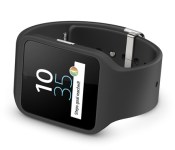
Sony announces the SmartWatch 3 with Android Wear

Sony’s been making smartwatches since before they were cool, and with the advent of Android Wear it was only a matter of time before they made another. Enter the Smartwatch 3, announced at IFA today, running Google’s new platform specifically for wearables. The third member of the family comes with a 1.2GHz quad-core processor, 1.6-inch screen and Sony’s now trademark IP68 waterproofing. Other key features include 4GB of storage, 512MB of memory NFC support, GPS and a 420mAh battery (charged over micro-USB).
Sony has also made it clear that the Smartwatch 3 will make use of the incoming Android Wear features we recently heard about (that make the watch more useful on its own). It’s also promising “better” battery life from that 420mAh cell — suggesting it’ll be good for up to two days of use, or four days on standby. If you’re a believer in “third time lucky,” then you can pick one up for 300 Euros starting this fall.
Filed under: Wearables, Mobile, Sony
.CPlase_panel display:none;
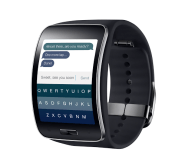
The Samsung Gear S makes Fleksy its day-one integrated keyboard
 Fleksy is one of the more recognizable names when it comes to third-party keyboard apps and it’s about to get a little more recognizable. Fleksy has announced a new partnership with Samsung which will see the new Samsung Gear S smartwatch make Fleksy its only fully-integrated keyboard at launch and is going to be free for all Gear S owners. This makes a lot of sense for the Gear S seeing as it will be a standalone device able to make calls and access mobile data, and having Fleksy there will make it all the more simple to type commands on the Gear S’s curved display.
Of their partnership with Samsung, Fleksy founder Ioannis Verdelis had this to say: “We are delighted to announce our first OEM partnership today, and we are excited to be part of the Samsung ecosystem… This is a big milestone for Fleksy, and we plan to solidify our position as the leading typing technology for smart devices over the coming months.”
Fleksy is already available as an option on the Gear 2 and Gear 2 Neo with their messaging app, so this new move seems like the next logical step in their relationship with the Korean tech giant.
Press Release
Fleksy partners with Samsung to bring its keyboard to Samsung Gear S
First OEM partnership for Fleksy keyboard
SAN FRANCISCO — September 03, 2014 — Fleksy, the fastest keyboard in the world, announced a partnership with Samsung today to bring its keyboard to the newly launched Samsung Gear S smartwatch.
The partnership makes Fleksy the only fully integrated third-party keyboard on Gear S on launch day, allowing users to type in every app right from their wrist. Through the partnership, Fleksy will be available for free for all Gear S users.
“We are delighted to announce our first OEM partnership today, and we are excited to be part of the Samsung ecosystem” said Ioannis Verdelis, Founder and CEO of Fleksy. “This is a big milestone for Fleksy, and we plan to solidify our position as the leading typing technology for smart devices over the coming months”.
Fleksy confirmed it will also continue support for its Fleksy Messenger app, available for Samsung Gear 2 and Gear 2 Neo smartwatches, with a major update coming soon.
“With thousands of daily downloads of Fleksy Messenger, we are already publishing one of the Top 3 selling apps of the Gear ecosystem” said Kosta Eleftheriou, Founder and CEO of Fleksy. “We are very excited by the growth of the wearable tech market, and proud Fleksy has already established itself as the leader for typing on watches”.
Fleksy confirmed that it will be providing demonstrations of its keyboard on Samsung Gear S during the IFA trade show taking place in Berlin this week.
About Fleksy
Fleksy is a next-generation keyboard powered by patent-pending technology that makes typing on any device fast, accurate and so easy you can even type without looking. Fleksy recently broke the Guinness World Record for fastest typing on a touchscreen keyboard (May 2014).
Its unique language algorithm founded on Geometric Intelligence moves beyond text prediction and autocorrect, to give a much more accurate and easier typing experience than last-generation keyboards.
Winner of the prestigious “Golden Apple” award, Fleksy is the first keyboard to enable full-speed typing by blind iPhone users. Winner of the 2013 CES “Innovations Design and Engineering Award”, Fleksy is also the first keyboard app to be shipped on a SmartWatch, the first to arrive on iOS, the first to work on 3D gesture systems (Leap Motion) and the first app developer to integrate with the Samsung Gear 2.
Fleksy’s award-winning design and technology is backed by venture capital including Highland Capital Partners and Kleiner Perkins Caufield & Byers. To learn more about Fleksy, visit http://www.fleksy.com.
About Samsung Electronics Co., Ltd.
Samsung Electronics Co., Ltd. is a global leader in technology, opening new possibilities for people everywhere. Through relentless innovation and discovery, we are transforming the worlds of TVs, smartphones, tablets, PCs, cameras, home appliances, printers, LTE systems, medical devices, semiconductors and LED solutions. We employ 286,000 people across 80 countries with annual sales of US$216.7 billion. To discover more, please visit http://www.samsung.com.
//<![CDATA[
ord = window.ord || Math.floor(Math.random()*1E16);
document.write('‘);
//]]>
The post The Samsung Gear S makes Fleksy its day-one integrated keyboard appeared first on AndroidSPIN.
.CPlase_panel display:none;
Samsung Gear S preview: What’s it like to type emails on a 2-inch screen?

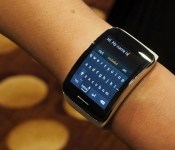
Six. That’s how many smartwatches Samsung has unveiled in the past 12 months. If these devices were Friends episodes, there’d be the original Galaxy Gear (“The one announced last year at this time”), the Gear 2 (“The one with fewer bugs”), the Gear Fit (“The one designed for fitness tracking”), the Gear 2 Neo (“The one that didn’t cost as much”) and the Gear Live (“The one that ran Android apps”). If nothing else, it shows that Samsung is willing to experiment — and maybe even listen to feedback from users, and reviewers like us. Now, as the original Gear turns one, Samsung is showing off its sixth watch, the Gear S: the one that can run without a smartphone. Thanks to its very own nano-SIM card, the Gear S can make calls, as well as show you emails in full, with the option to reply directly from the device using a tiny on-screen keyboard. To Samsung’s credit, it’s unlike any other device it’s made before. But the age-old question still remains: Was anybody asking for this?
In addition to being the first of the company’s watches that you can use without a smartphone, this is also Samsung’s biggest wearable to date. With a curved screen that measures two inches diagonally, it absolutely dwarfs my (admittedly dainty) wrists, as you can see in the above hands-on photos. Even so, some of my bigger-boned male colleagues also tried on the watch, and they too found it rather bulky. Not that style was a top priority here. The key selling points — making calls and responding to emails — require extra space, and frankly, even two inches is pushing it. The kind of 1.63-inch display used on the Gear 2 and Gear Live (a big, honking watch face in its own right) wouldn’t have cut it here.
Other than the fact that it’s not very conspicuous, the design isn’t what I’d call fancy. Certainly, it’s no Pebble Steel, nor even a Moto 360. True, it’s marked by metal accents around the clasp and edges, but my guess is that you’re more likely to notice the removable plastic band, available in white and black. It’s comfortable on the wrists, no doubt thanks to the curved screen shape, but ultimately, it feels more functional than it does stylish. When you’re ready to swap bands, for instance, you basically just pop out the watch face like a piece of Fruit Roll-Up. The design feels functional, but also like an afterthought.
Although Samsung recently came out with its first Android Wear watch, the Gear S runs Tizen OS, just like the Galaxy Gear, Gear 2 and Gear 2 Neo. That means getting around is much the same as it is on those older devices. If you want to navigate backward out of a page, for instance, you swipe down from the top. Likewise, you can swipe up from the bottom of the Super AMOLED display to see a full menu of apps, including the settings menu. Otherwise, the watch only allows up to five home screen widgets. In addition to notifications, the defaults include things like calendar appointments and news headlines, but you can, of course, customize all that to your liking. Ditto for watch faces: There are around a dozen preloaded watch faces, with a mix of new ones, as well as some that were included on older models.

Because things like emails and calls are a big part of the story here, they’re always within easy reach: Just swipe to the left of the main home screen to see a list of your messages, emails and fitness stats from Samsung’s S Health app. Once you’re in the emails page, you can read the full text of a message, as well as see the rest of the conversation listed below it. From there, you can reply using an on-screen keyboard. As it happens, the keyboard allows for both traditional pecking, as well as Swype for dragging lines between letters.
I had the chance to test the feature on multiple test units in various stages of development, none of them final. In some cases, I had an easy time both typing and swiping out letters, with very few typos to speak of. With certain cruder devices, I had trouble getting it to register an “H” instead of a “J.” Either way, the word prediction is hit-or-miss: Sometimes it was spot-on; other times it served up the most unhelpful word possible (“My name is…’included’”?) Obviously, then, the precision here is something we’ll have to revisit in our full review. Until then, I’m quite sure it would have been easier for me to just pull out my phone and type out “My name is Dana” with two thumbs.
Another thing we’ll have to save for our eventual review: the whole phone call thing. Samsung wasn’t demonstrating this feature when we saw the watch in its non-final state. Sorry, folks.

Elsewhere on the device, there’s a heart rate sensor built into the watch’s underbelly. So, in addition to tracking your steps and recording workouts, the device can give you a beats-per-minute rating. Of course, some older Samsung devices like the Galaxy S5, Gear Fit and Gear 2 had similar capabilities, and none of them gave particularly accurate readouts. So I don’t have super-high hopes for the Gear S when we eventually try out a more polished unit, but I’m ever hopeful that Samsung has continued to tweak its algorithm.
As you can see, there are all sorts of things we can’t fairly test until we take home a final unit, like the kind you’d buy in stores. That won’t happen until sometime in October, when the Gear S becomes available. No word on price yet, or whether any mobile carriers will be selling it, but all will be revealed eventually. For now, check out our video walk-through if you haven’t already — it might be the closest you get to the device for a couple months yet.
Ben Gilbert and Zach Honig contributed to this report.
Filed under: Wearables
.CPlase_panel display:none;
 AIVAnet